The LRWP invites you to join us for a great series of FREE workshops and trainings in advance of our Summer 2026 pathogens monitoring kick-off on May 21. Pre-registration required for all events:
Monday May 18, 5-8pm @ the Middlesex County EARTH Center in North Brunswick: Pathogens Monitoring Training with EPA and the Interstate Environmental Commission.
Flyer Photo Credits: Alison M. Jones, image taken on flight compliments of LightHawk and No Water No Life.
Heather Fenyk, image from Summer 2020 pathogens monitoring.
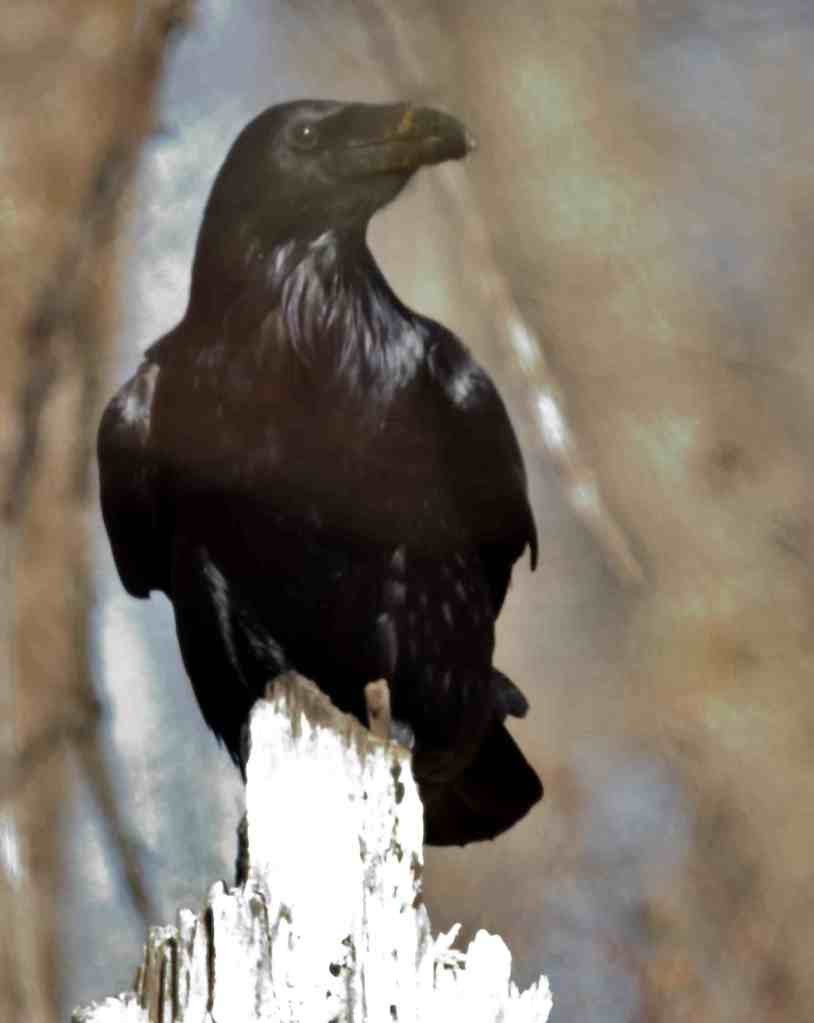
“The winds of March beneath my wings to herald the song the bluebird sings”, quoth the raven, as she charms the month to deliver the spring.
March stages the battle between the last frozen screams of winter wind and the warm breath that whispers spring’s arrival.
Through the turmoil visited upon the land by extreme expressions of weather, the earth tilts, to avert its glance from winter. As a result, celestial light increases in duration to overcome the dominance of winter darkness. The instant before the light overtakes the dark, the universe comes into perfect balance known as the vernal equinox.
This moment of equilibrium recognizes the dark and the light as a single entity, not in conflict, but in concert, to direct the orchestra of life on earth. The periodicity of the light is the one constant and critical reference point to guide all living things through the vagaries of seasonal change.
Predictability of the future is a critical survival tool when unpredictable physical conditions prevail. Before March can remove her winter coat of snow to melt in the heat of the sun, the march to spring is underway, guided by the beckoning light.
This is best illustrated in seasonal migration where species have evolved receptor organs to monitor increasing daylength and react. No matter the weather, the events of emerging life are kept on schedule.
Situated on the Atlantic flyway, a major bird migration route, many examples of distant travelers grace us with their presence. Our rivers are the off ramps from this major highway, with both north and south transients.
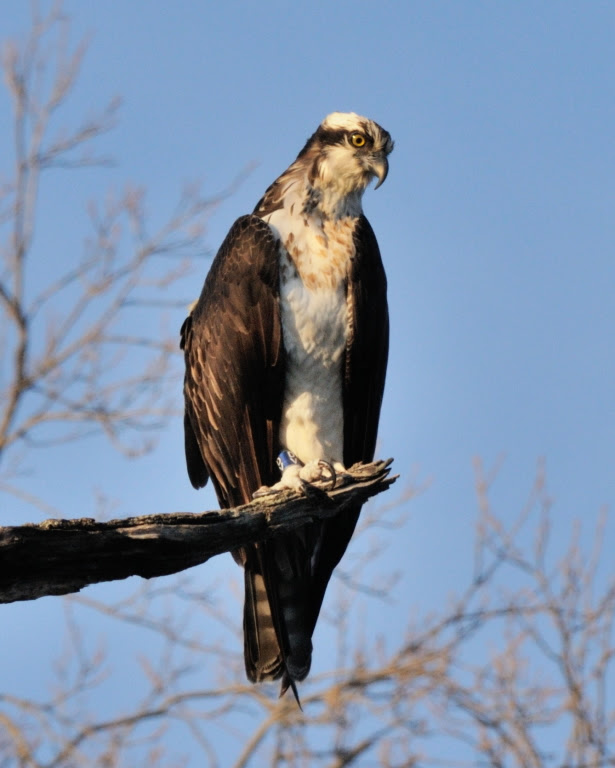
Locally, the South Branch of the Raritan River was chosen as a stop over in one osprey’s journey from Maine to central America, and back to Maine to breed each year. The blue leg band indicated the osprey was born in Maine on a bulkhead in Portland harbor, where it was banded shortly after hatching. This osprey traveled many thousands of miles in the few short years of its life. Its itinerary determined by a choreography of intricate movements of celestial bodies, held in equilibrium to each other by the invisible force of gravity.
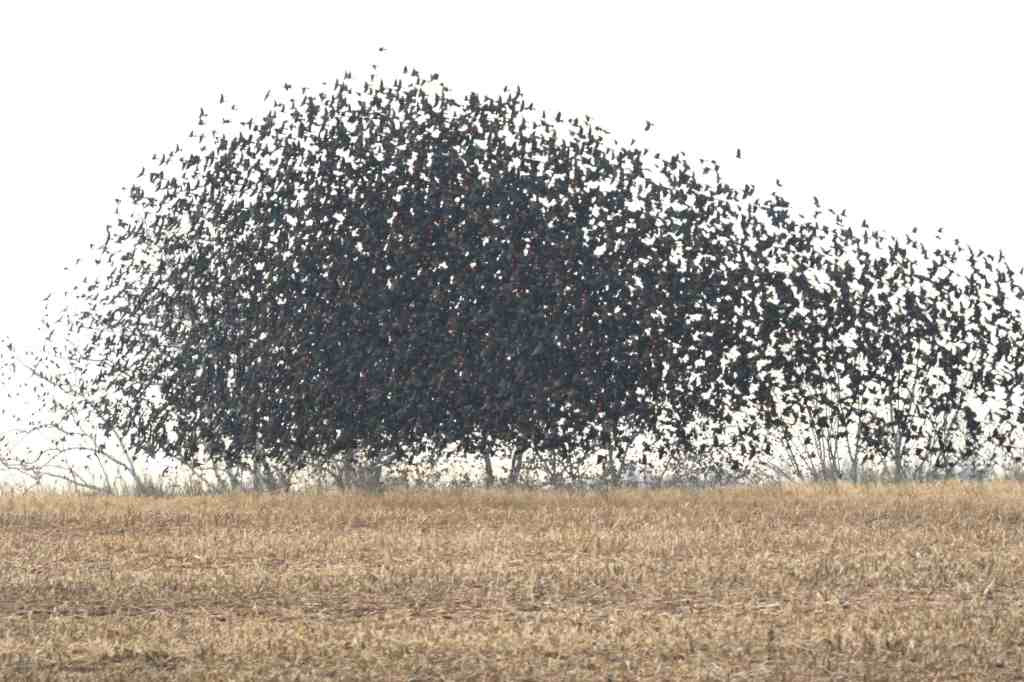
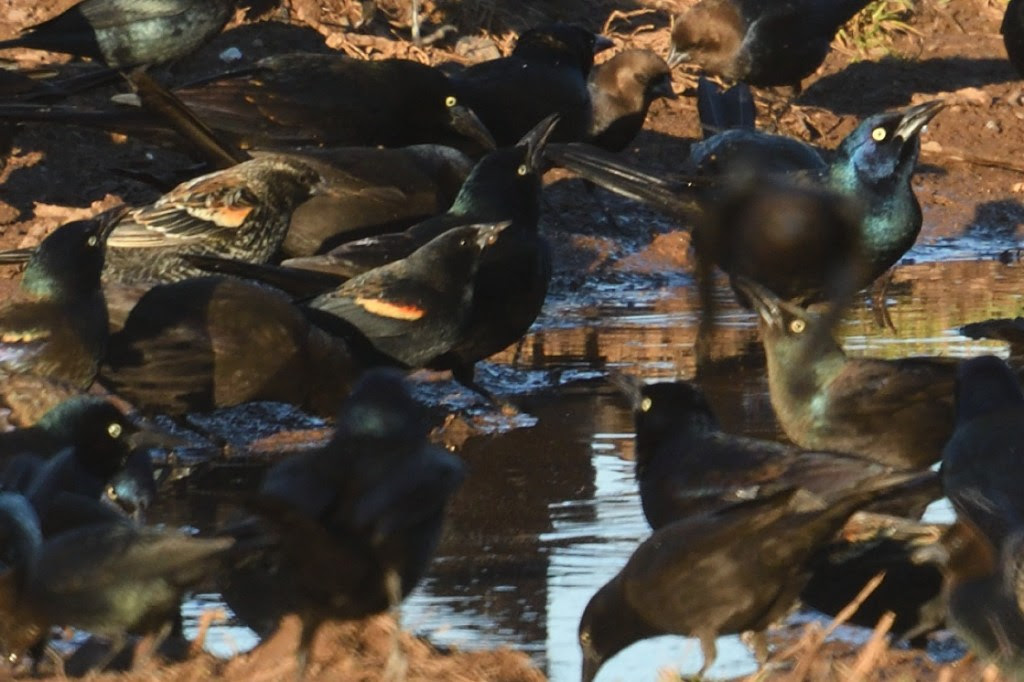
Science aside, flocks of feathered reminders deliver the guarantee of spring as anticipation grows with increasing daylength. Grackles and starlings form large monochrome, black flocks, blotting out the sky, to deliver their message. Often these flocks perform incredible jaw dropping, synchronized flight maneuvers, involving hundreds of birds turning and pivoting as if they were one. The impromptu displays of co-coordinated flight are known as a murmuration.
Mesmerizing aerial acrobatics defy explanation to temporarily reside in the realm of magic. A sure attention getter to alert the viewer to the change in season.
Like a black throw rug on a white carpet of early spring snow, the message is clear when a flock of grackles land and scour the ground to fuel their journey north. On occasion, red wing blackbirds join the large flocks to relieve the unbroken black feathered pall with slashes of intense red and yellow decorating their wing coverts.
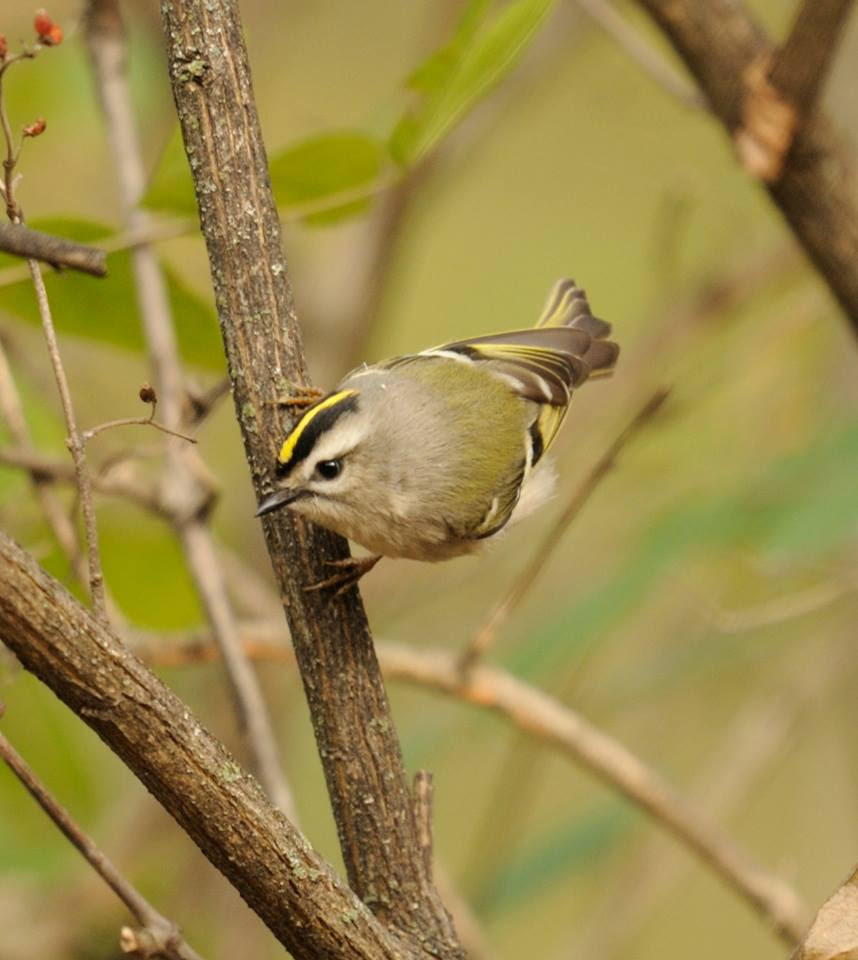
The peak migration is marked by the parade of colorful warblers passing through. The profusion of patterns and colors draws in observers to scan the tree tops for these fragments of color. Just the names are enough to arouse curiosity, yellow throat, myrtle warbler, black and white warbler, magnolia warbler, American redstart, chestnut sided, blackburnian warbler are just a partial list of diminutive packets of flying color you would never know existed if not made aware of their spring migration. These birds pass through in small groups rather than large flocks and so provide an extended viewing season and endless variety of species.
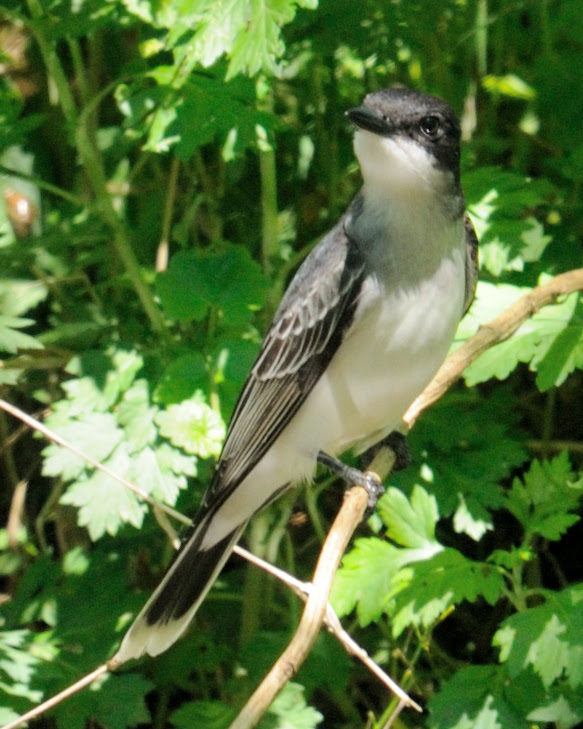
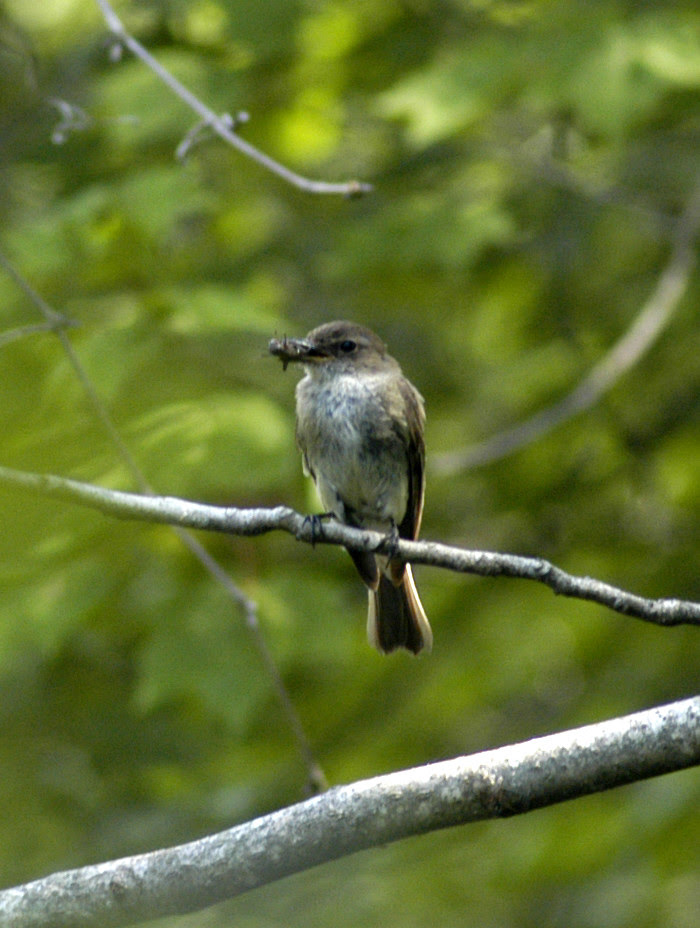
First to settle in for the season along pasture and river are the flycatchers and phoebes. King birds so named as being the largest of the flycatchers, rule the grassland edges and are commonly seen along roadside pastures. White breast, dark cape and head, and a narrow white band along the edge of the tail feathers. These birds will hover above potential insect prey and are easy to identify by this behavior.
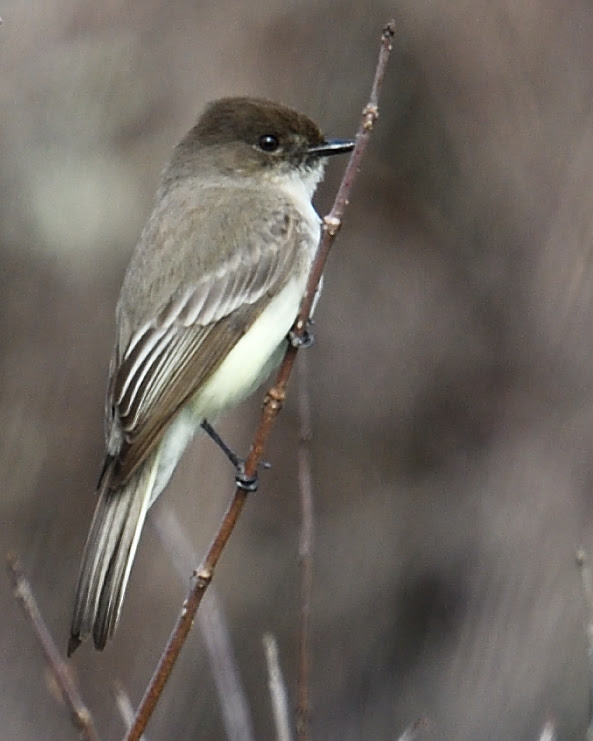
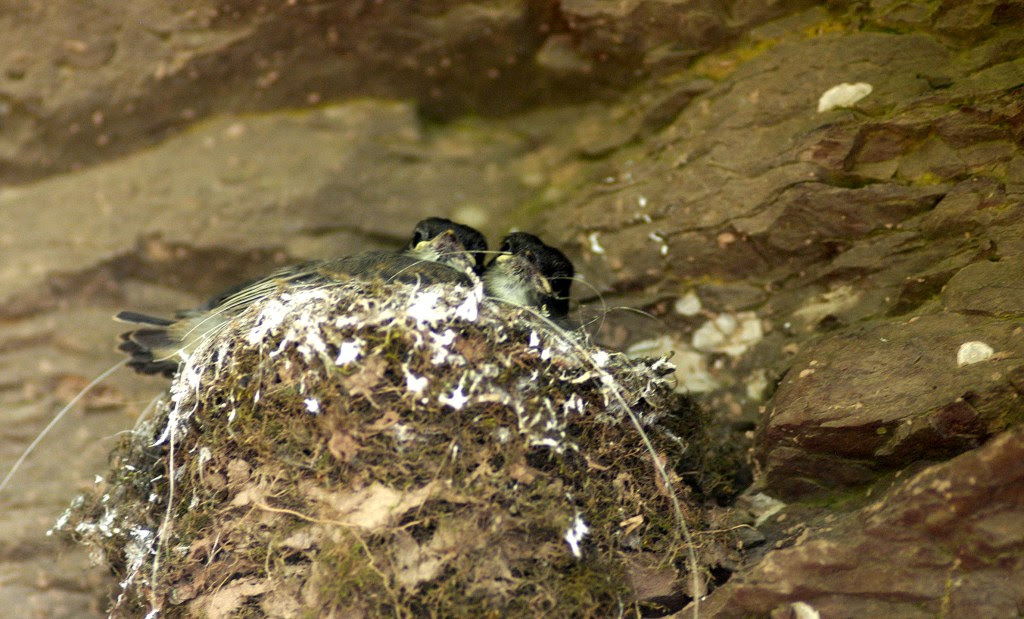
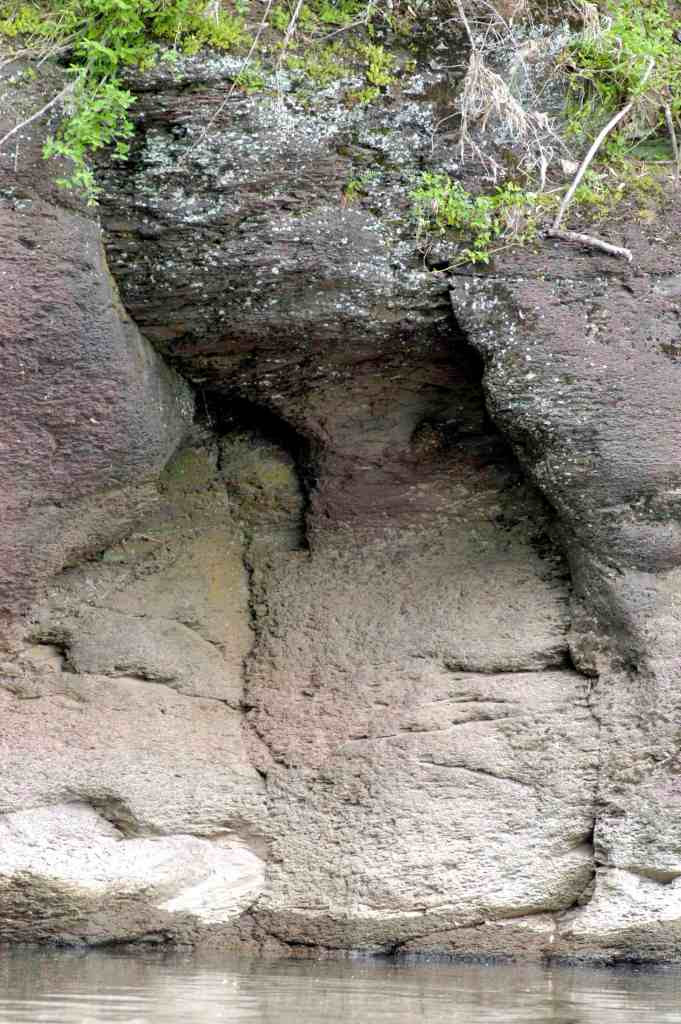
Phoebes are also flycatchers, and live along the water’s edge. They share the same general gray and white coloration as kingbirds and other flycatchers, and have a distinctive habit tail twitching. One year a flycatcher constructed a nest on the vertical wall below a cove like overhang in a red shale cliff. The nest was well protected from the weather and just out of reach of spring floods. How the nest was secured to that vertical wall still mystifies me. An early season start ensured her nesting season and two flycatchers were fledged.
In like a lion, out like a lamb, the dichotomy of this month’s personality is legend. March is the perfect candidate to host the last gasp of winter and the emergence life from its frozen grasp.
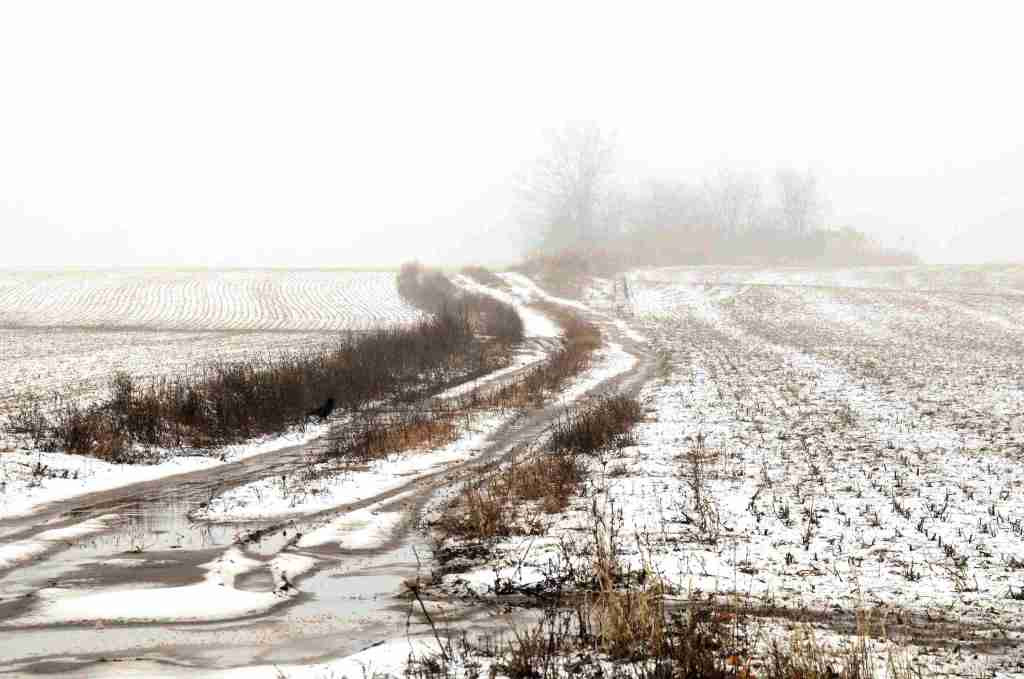
March is mud season. Snow fades to reveal the gravid earth
“The winds that accompany the arrival of spring have been known to be so strong, that the letters in the month of MARCH, were scattered and realigned, to reveal its essential CHARM”. So quoth the raven.
Author Joe Mish has been running wild in New Jersey since childhood when he found ways to escape his mother’s watchful eyes. He continues to trek the swamps, rivers and thickets seeking to share, with the residents and visitors, all of the state’s natural beauty hidden within full view. To read more of his writing and view more of his gorgeous photographs visit Winter Bear Rising, his wordpress blog. Joe’s series “Nature on the Raritan, Hidden in Plain View” runs monthly as part of the LRWP “Voices of the Watershed” series. Writing and photos used with permission from the author.
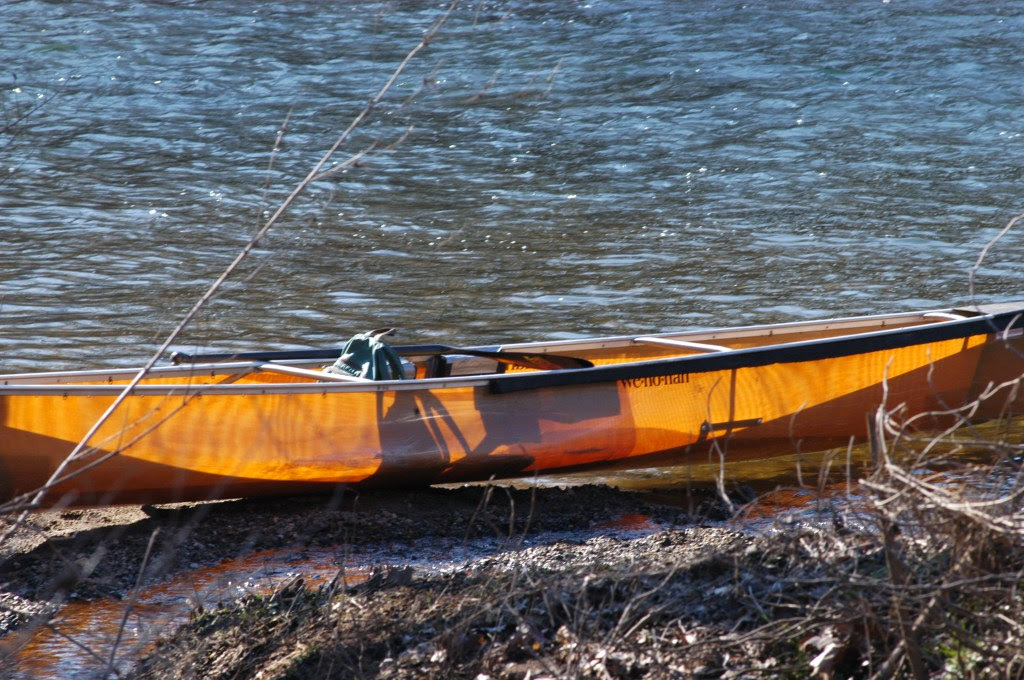
This magic carpet of woven Kevlar is one way to escape the earth’s gravitational constraints and hasten the journey from winter to spring.
Asleep for the winter, life begins to stir under the blanket of the late season snow. Despite the ferocity of freezing precipitation, the wakeup call provided by the well-choreographed dance of heavenly bodies is unmistakable. Every life form on earth has evolved to respond to changes in daylength and when daylight reaches a critical threshold in February, the howling winter wind cannot silence the promise of spring.
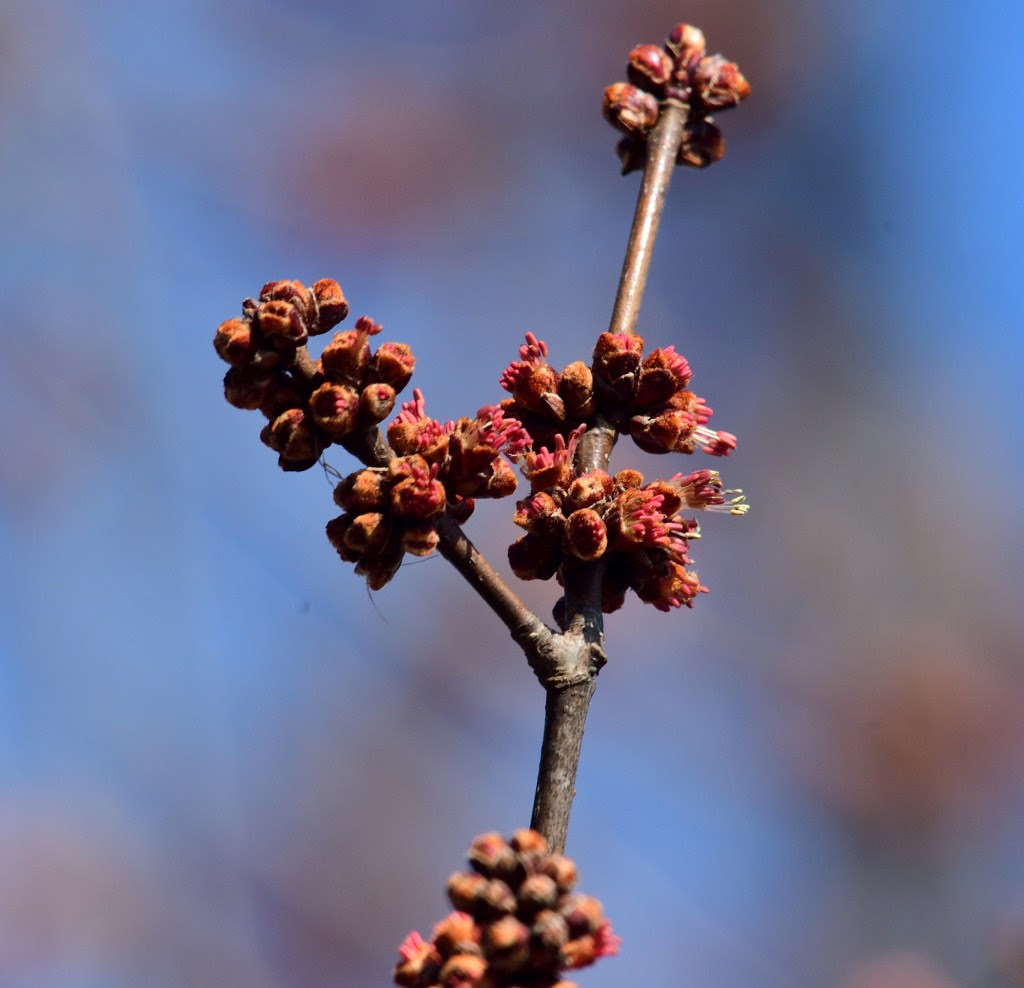
As late winter inhales to take another deep frigid breath, renewed energy cannot be suppressed as tree buds appear and tint the gray hair of woodlands a deep shade of maroon. Nutrients begin to flow through the branches when daytime temperatures rise above freezing, as if to gain ground in a fierce battle with winter chill. Then retreat when overwhelming forces bring a subfreezing counter attack to own the night.
Cold winter winds snap fine branches, in an attempt to block the energy flow and thwart its nighttime retreat, as the tree’s blood and treasure drips from these insults to form long, clear icicles saturated with sweet sugar.
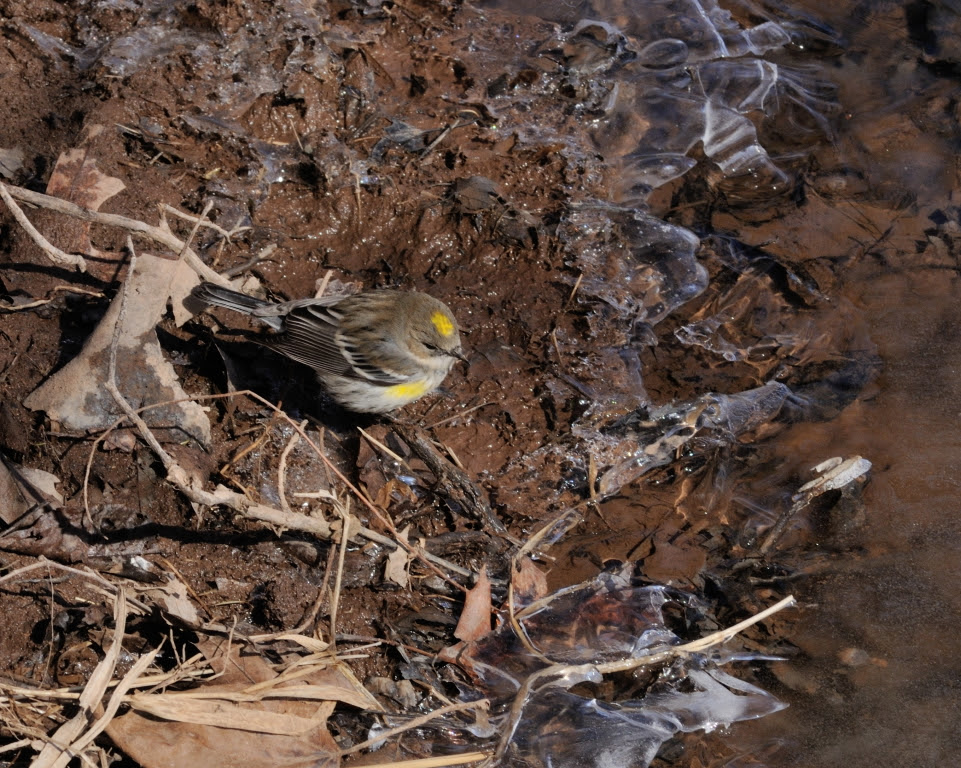
Bird migration begins as diminutive, bright colored warblers, challenge the fierce winter weather with blind faith, as they advance north each time winter is forced to take deeper and longer breaths between outbursts of snow and ice. The image of one of the smallest birds, dressed in a colorful uniform, facing a raging white February blizzard, is a study in faith, persistence and confidence borne of evolutionary predictability.
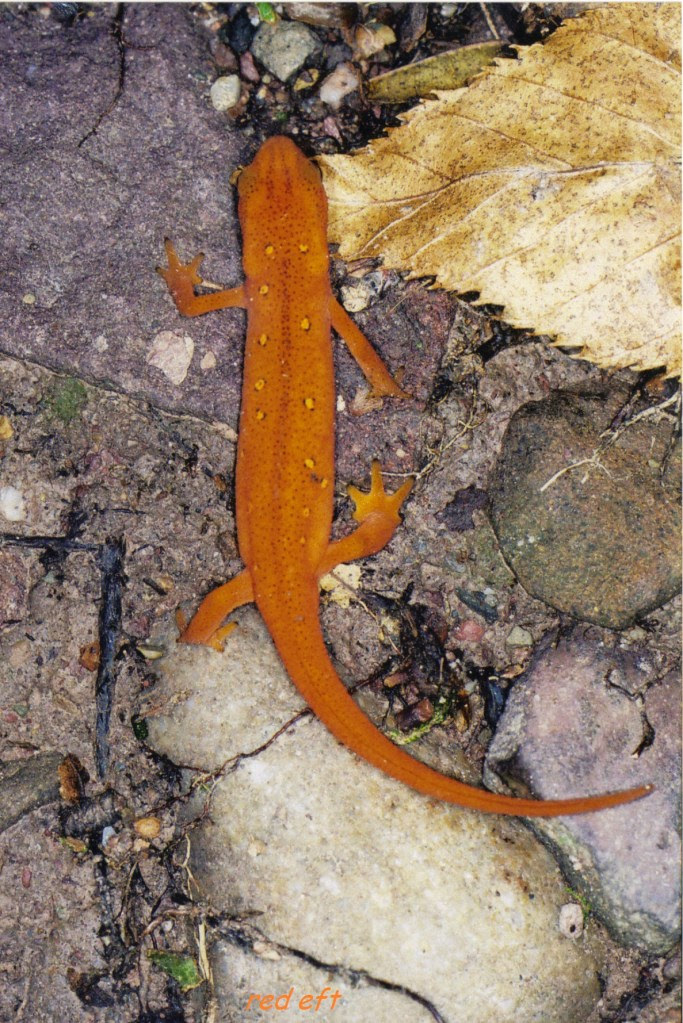
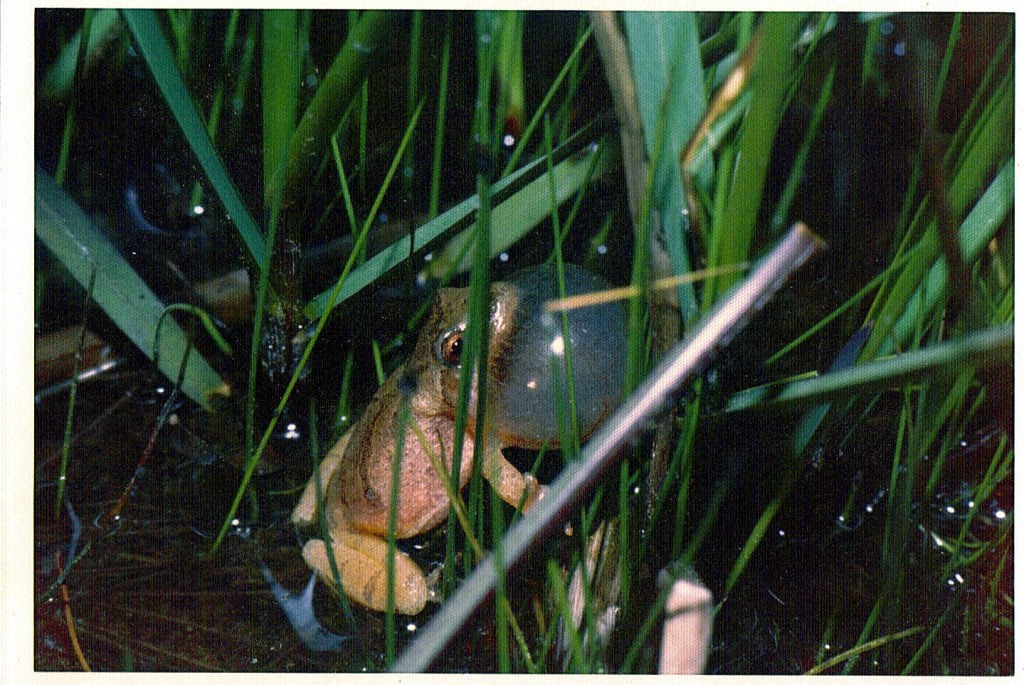
Spring peepers and salamanders begin their migration to as snowdrops appear through holes in the threadbare white blanket of melting snow. When nights stay above freezing, salamanders and spring peepers begin their march to congregate in vernal pools.
These temporary shallow ponds filled with snowmelt, soon echo with the din of spring peepers advertising for a mate along with a variety of other small frogs. The nighttime amphibian chorus heralds the arrival of spring, while winter retains full control for weeks to come.
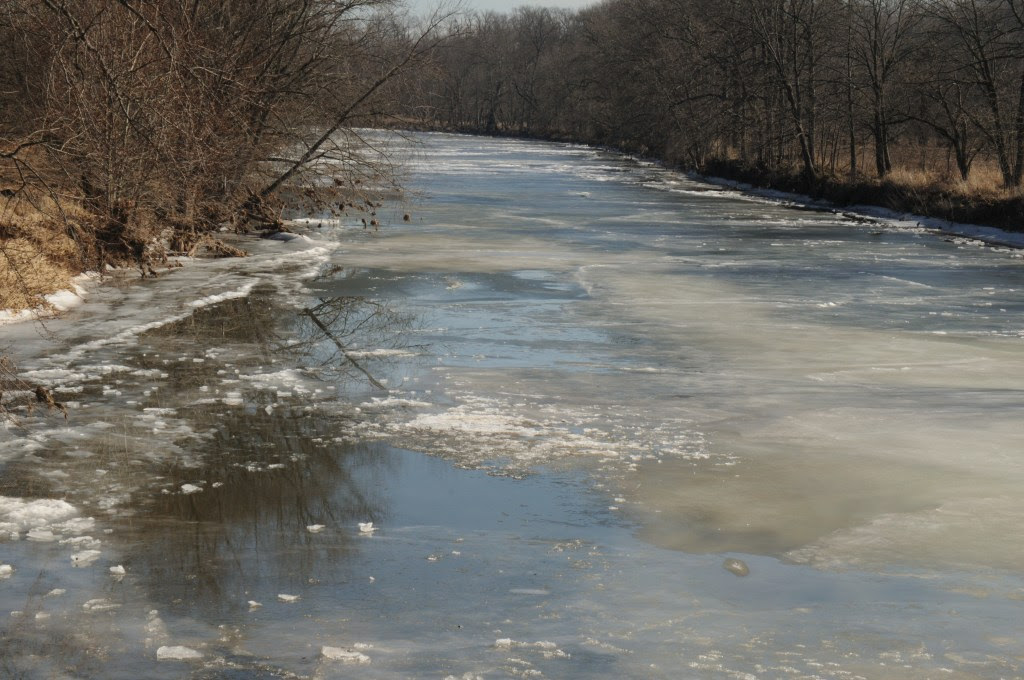
I was not immune to the blast of vernal energy that coursed through the land. I stood on the riverbank watching the water escape its icy shackles; the visible current gave the water life. This was a siren call to join in, as the live water was really a manifestation of its otherwise invisible energy.
Even when the river ‘s surface is frozen solid, the water beneath the ice flows freely to the sea. The water is the wire through which the current flows. Touch the water, feel its energy. We are attracted to movement and energy and this cold dark temptress was too much to ignore.
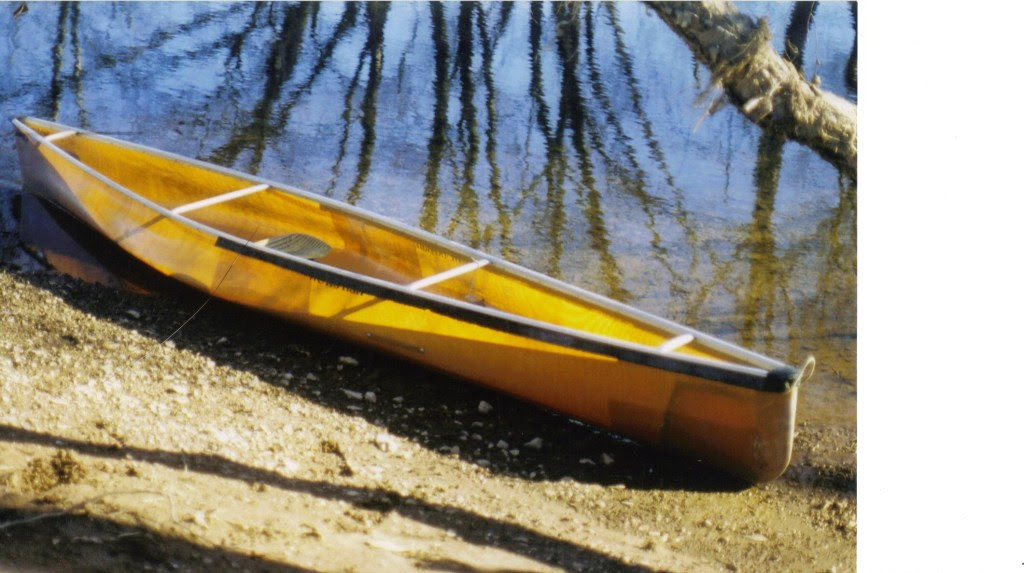
I set the yellow Kevlar hull on the dark brown, clear water; the contrast in color was dramatic and complimentary. Once aboard, I adjusted the sliding saddle seat to keep the bow slightly low, as under power, the bow would rise, giving the boat a more neutral feel and easier to maintain a straight course. A foot brace and a strip of firm padding on the gunnels about where my thighs hit, locked me into the hull as an integral part of the boat. All preparation meant to take advantage of enhancing the ride on the river’s high energy.
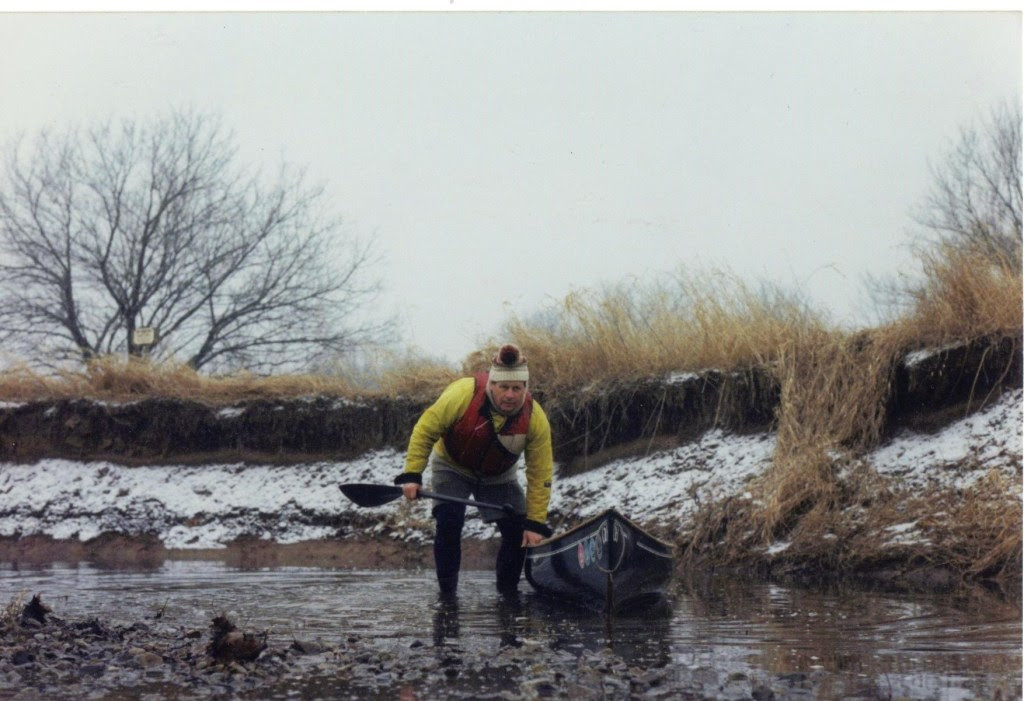
A quick stroke with the carbon, bent shaft paddle, set the canoe into the main current. For a long moment I sat still and let the river express its enthusiasm for its newfound freedom. Reference points along the shore marked the progress of the drifting boat, purposely aligned with the direction of the current. With the first strong paddle strokes, the boat slipped through the water and begged for more speed as the bow lifted slightly to achieve perfect trim.
The response of the canoe to my measured paddle strokes heightened my enthusiasm to race the current. Running a boat fast is secondary to the choreography of the paddle stroke. There is satisfaction in a rhythmic cadence and physical effort, much like a lively dance. Movement becomes effortless as the perception of speed allows a meditative escape from the earth’s gravitational constraints as if riding a magic carpet.
LEAD Technologies Inc. V1.01
Rivers are the major migration route for wildfowl and songbirds and are one of the first places to see spring emerge from the frozen grip of winter. The longer daylength during the shortest winter month sweeps away the dust of inactivity accumulated during the long winter nap.
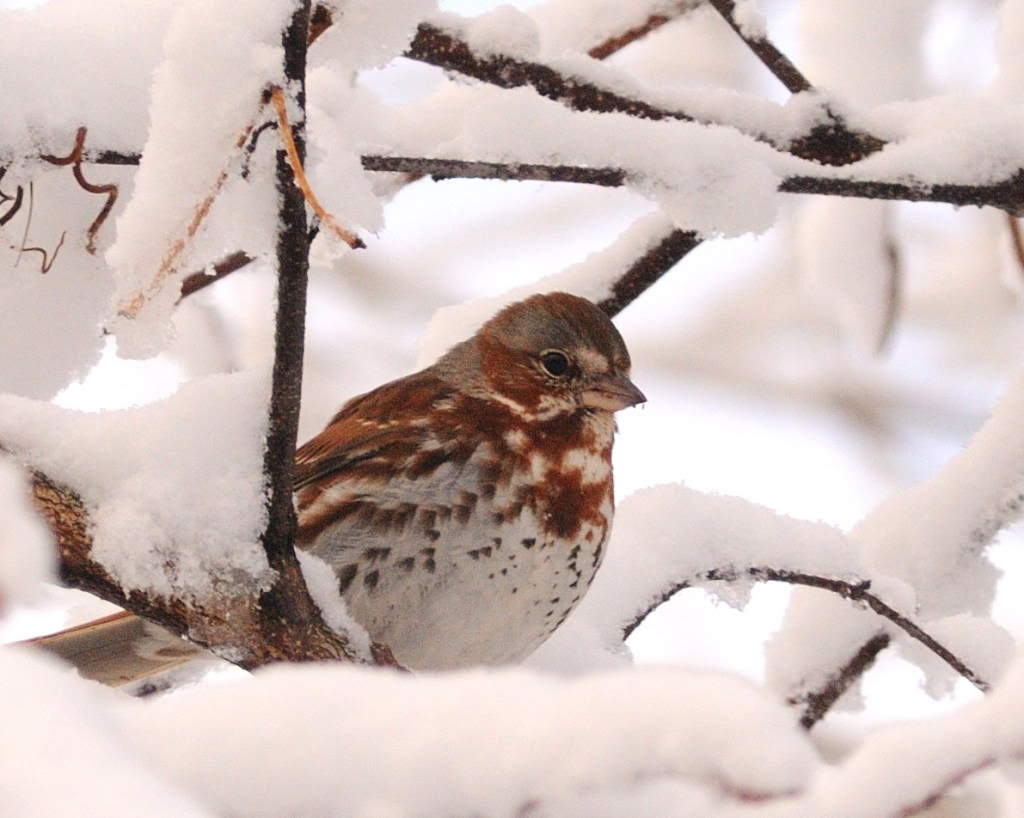
Early migrator, male fox sparrow waits out a late winter snow in the holly tree.
Author Joe Mish has been running wild in New Jersey since childhood when he found ways to escape his mother’s watchful eyes. He continues to trek the swamps, rivers and thickets seeking to share, with the residents and visitors, all of the state’s natural beauty hidden within full view. To read more of his writing and view more of his gorgeous photographs visit Winter Bear Rising, his wordpress blog. Joe’s series “Nature on the Raritan, Hidden in Plain View” runs monthly as part of the LRWP “Voices of the Watershed” series. Writing and photos used with permission from the author.
Tons of rubbish. A great pyramid of rubbish. Bulldozers scoop up the rubbish and prepare it for recycling, but, miraculously, the pile doesn’t diminish. This is Bayshore Recycling Corp. a group of recycling companies in Keasbey, New Jersey, a company that the Lower Raritan Watershed Partnership recently visited along with a few members of Sustainable Highland Park.
Inside a cavernous shed, a bulldozer dumps plastic bags stuffed with paper and cardboard into a dumpster; the dumpster unloads the bundles onto an upward-moving conveyor belt. Two sorters remove the plastic bags and insert them into suction tubes. The paper and cardboard continue merrily along the conveyor belt until they reach the sorting machine. While the paper swirls around in the machine, optical sorting technology sorts it by light; different thicknesses of paper reflect different amounts of light. The sorted paper floats down into compartments: One for cardboard, one for the paper sheets, and one for shredded paper. Eventually, the cardboard is mechanically tied into large bales where a sorter pulls out any remaining pieces of plastic and the bale is moved to a pile of other large bales of cardboard, ready to be converted into pulp. Likewise, the plastic is baled and and moved to the plastic section.
The cardboard/paper operation is a small part of Bayshore Recycling. According to Michael Oppelt, the operations manager, Bayshore also recycles the hard stuff: Construction debris, asphalt, bricks, concrete slabs, metals, soil contaminated with oil. Concrete slabs, asphalt, and blocks are smashed, then sorted into three sizes, 3/4”, 1 1/2”, and 2 1/2”, and resold as fill material for projects such as road beds. Meanwhile, the dump trucks keep coming. They roll into the Bayshore compound, get weighed, jettison their products, get weighed again, and roll out. Over and over, round and round, like a bicycle chain, the trucks holding recyclables keep coming.
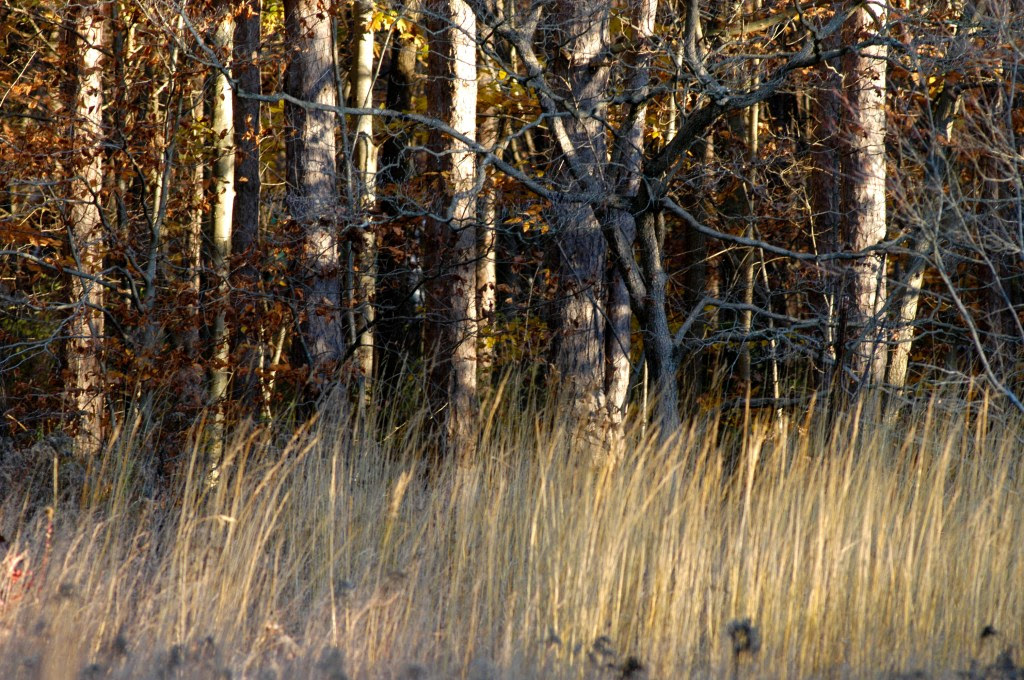
Champagne colored grass borders the dense forest, a scene which begs the question, Who lives in these woods so well kept?Open woods, where shadows hide from the moon and dance in the cold wind.
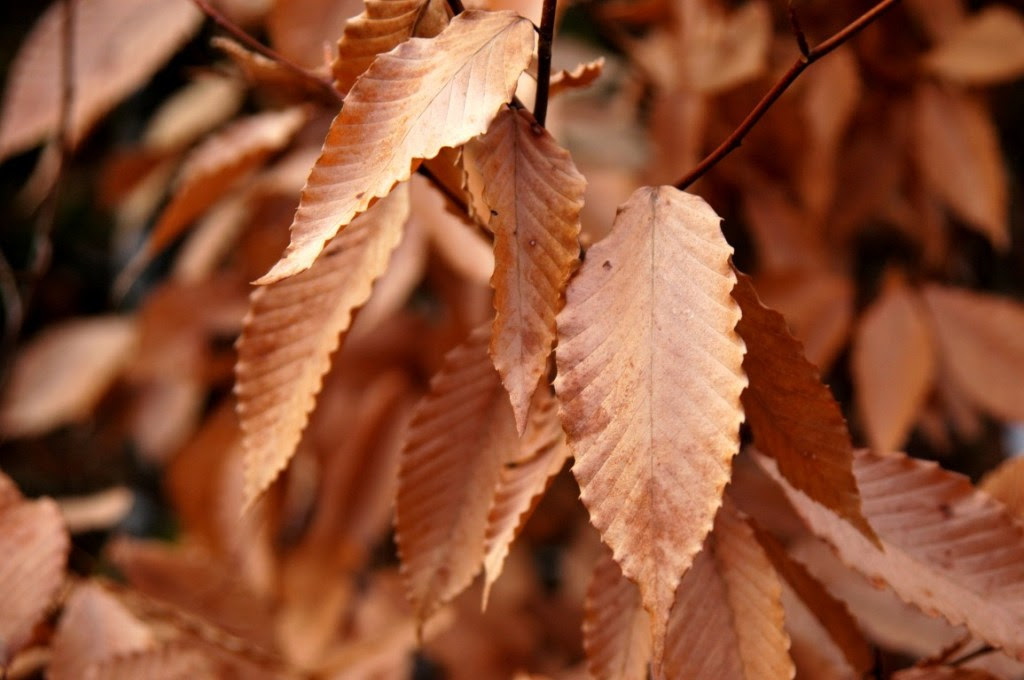
The natural progression of fall color fades in the late November woodlands, leaving amber-tan islands of American beech groves to stand as lighted guideposts against the bare, dark brown wooded landscape.
The vast track of mature woodlands had been cut for lumber over the centuries; old property lines defined by the maturity of the trees. The major species harvested over the last century has been tulip poplar, also known as yellow poplar which grows tall and straight. Non targeted species like sugar maple, shagbark hickory, green and white ash had a chance to vie with the fast-growing prolific tulip poplars in a race for sunlight when the dense canopy was removed by timber harvesting. The sunlight also allowed understory trees and shrubs to get established and proliferate to further define natural events, timbering and property lines.
Dogwood, various viburnums like arrowwood and ninebark, spice bush and witch hazel pioneered the new sunlit spaces.
Walking through the dark pre-dawn woods, I once came across an isolated grassy patch among the tall trees which produced a loud metallic rattle as if I stepped on some long forgotten wire fencing or tripped on a baby’s toy rattle. I thought the sound to be unnatural, its source hidden in the darkness, was loud enough to startle me and betray my presence in the quiet woods. Later I identified the plant as a rattlebox, a plant known to thrive in disturbed soil and pasture edge. So here was evidence that this tall timber was once in pastureland. The rattlebox became another signpost for me as I travelled the big woods.
While the initial dark encounter with the rattlebox suggested an unnatural origin, the fresh yellow blooms of the witch hazel appearing in November surely fires the imagination as it demands an explanation easily satisfied by myth. The name, ‘witch’, is a leading clue to make a lone traveler uneasy and unsure of his path. Witch hazel a native plant, was used as a medicinal by early cultures and a dowsing rod by later generations. Drug stores like CVS still carry witch hazel, most of it produced in Connecticut by the TN Dickinson company, a family branch of the original EE Dickinson company. The small yellow blooms of witch hazel stand out a like a cluster of decorative lights to contrast against the stark bare woods. The color is bright enough to be easily seen in the dark, and moonlit nights.
Spicebush is another color bearer providing the November woods with festive red berries quickly consumed by wildlife, especially migrating birds. Spicebush is an aromatic giving off strong citrus scent and does best in damp woods as an understory species. When ruffed grouse were plentiful, I once watched a grouse hop up to grab the red berries. The energy lost did not seem worth the effort, but this grouse felt it was worth the cost. The spicebush swallowtail, promethea moth and a variety of butterflies rely on this plant, and of course humans have found many medicinal uses as well as teas and flavoring. It is always a refreshing treat to crush a leaf and enjoy its fresh scent. Spicebush is scattered beneath the tall timber taking advantage of partial sunlight to thrive and propagate using decorative seeds and spring flowers to attract wildlife and pollinators.
While poplar was the targeted species to harvest in modern times, some oaks and hickories would be selectively harvested, likely in colonial times, for furniture and farm implements. Some of the oaks and hickories showed age and size inconsistent with younger growth of the poplars, as they had no commercial value and were left standing or survived the harvesting process of giant trees crashing to the ground. Standing in isolation, few and far between, the survivors stood like giant monuments, easily identified, as if they were labeled with a street sign on a map. These outsized trees gave confidence to wayward wanderers keeping them on course in the day or in darkness.
Having been lost in the big woods, I have learned to use the natural topography, wind, sun, stars, sound and scent, plants and trees, to navigate, and eliminate the weight of worry that robs the pleasure of immersing oneself in nature. Still, the quivering call of a screech owl, the squeal of large branches kissing in the wind and shadows dancing in the moonlight, will raise the hackles on my neck and cast doubt on my confidence, though in retrospect , this is the spice that flavors the trek in November woods.
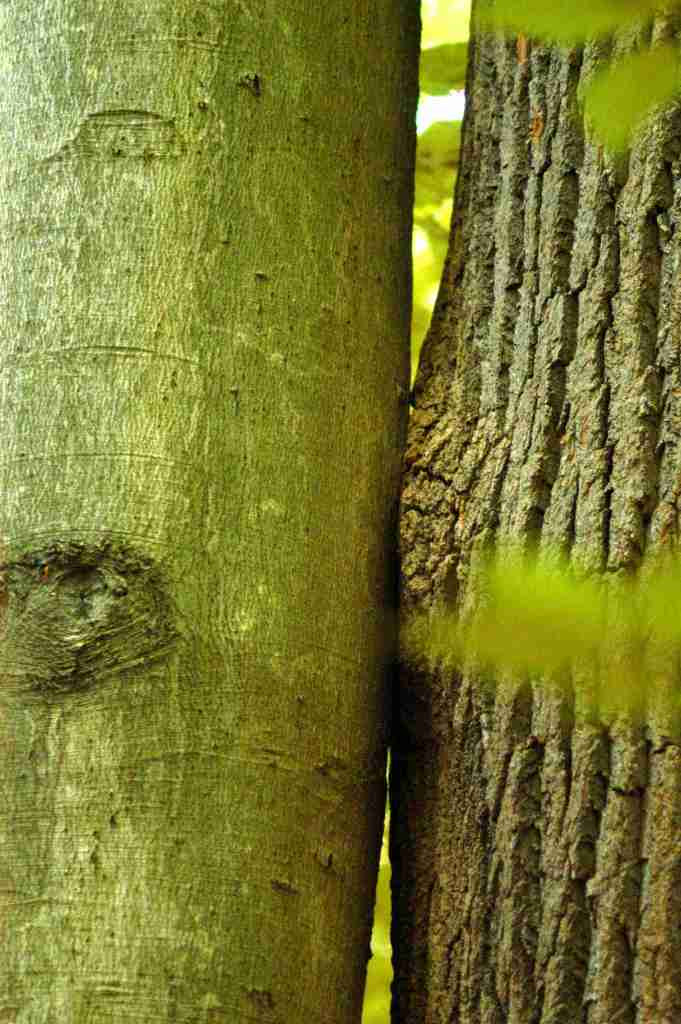
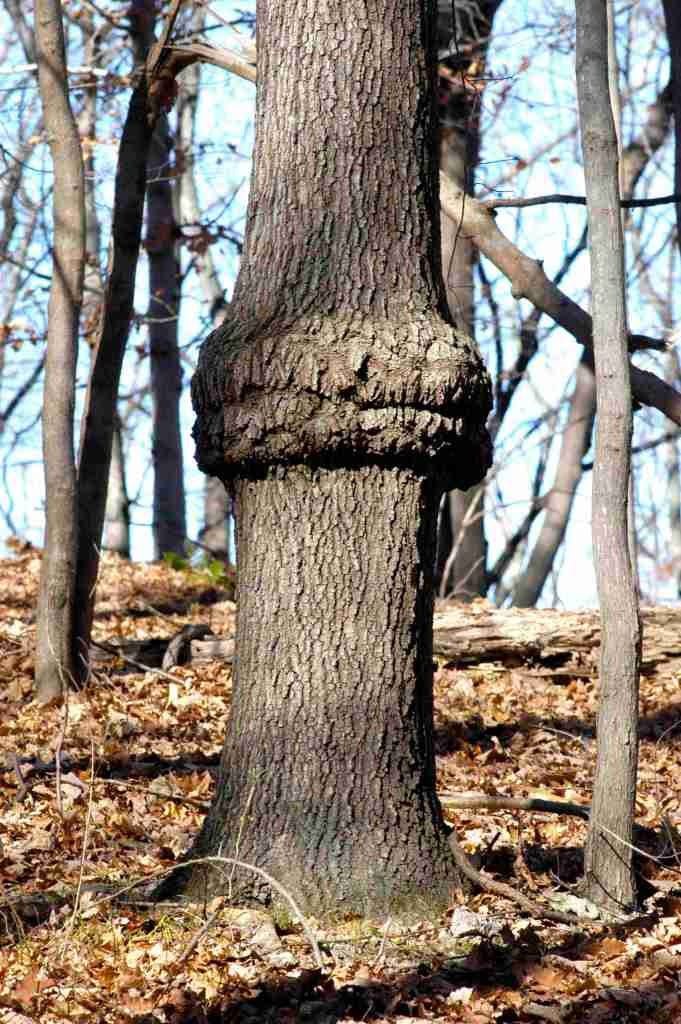
One of my favorite images, as it conjures deep thought and parallel application. In competition for sunlight this beech and yellow poplar have straight limbless trunks reaching toward the sky. The only contact they have is this butterfly kiss about 15 feet off the ground. The competition has strengthened their growth w/o hurting the other. So close together they defy the wind and reinforce each others roots inthe boulder strewn soil.
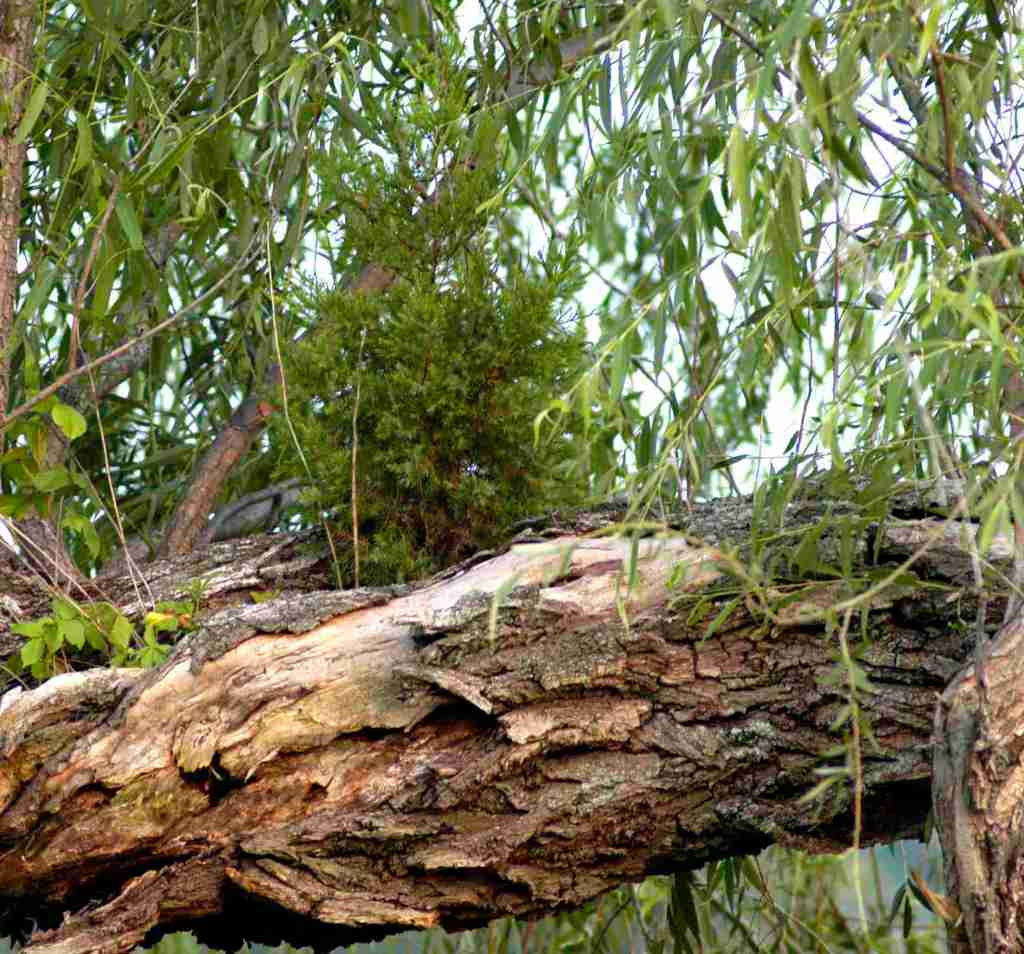
An eastern red cedar lives at the pleasure of a tattered willow 5 feet off the ground. Cedar lived for many years until the storm blew the willow over.
So much in the eastern woodlands to fire the imagination and the lessons learned from a variety tree species sharing a common ground. This should be a mandatory course in sociology!!! The Rosetta stone for civility, security, relationships, and dealing with constant change and battle scars.
Remnants of an old wire fence long forgotten, except by this tree.
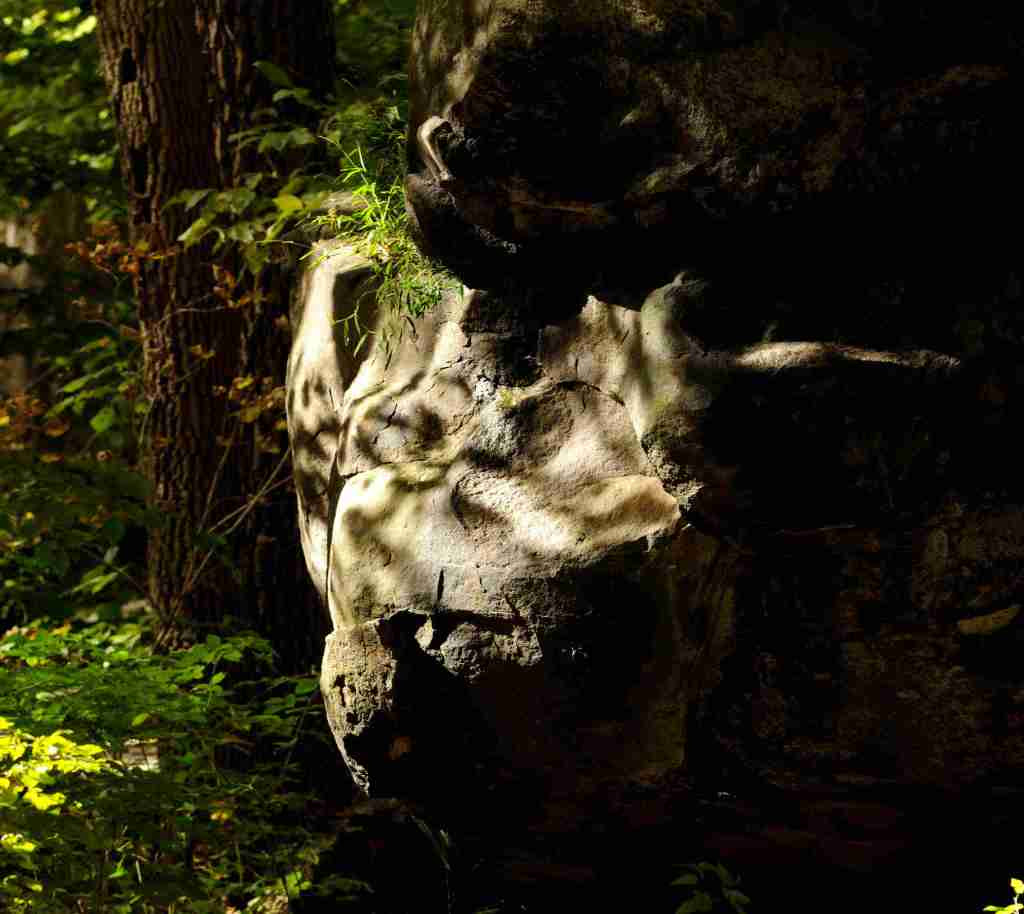
What you think you see is not necessarily what actually exists. You realize how important your imagination is and how it impacts your reality. This gorilla only appears at sunset.
Author Joe Mish has been running wild in New Jersey since childhood when he found ways to escape his mother’s watchful eyes. He continues to trek the swamps, rivers and thickets seeking to share, with the residents and visitors, all of the state’s natural beauty hidden within full view. To read more of his writing and view more of his gorgeous photographs visit Winter Bear Rising, his wordpress blog. Joe’s series “Nature on the Raritan, Hidden in Plain View” runs monthly as part of the LRWP “Voices of the Watershed” series. Writing and photos used with permission from the author.
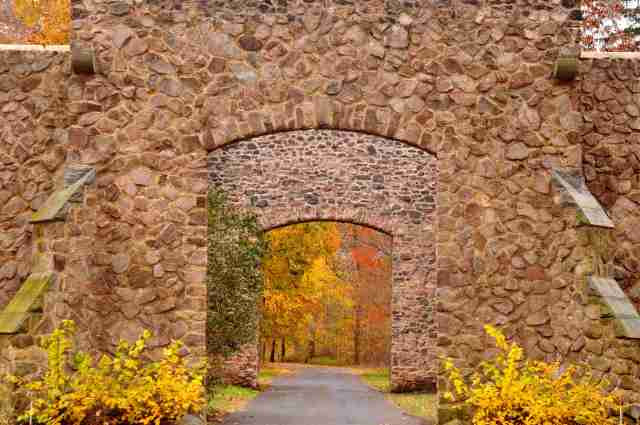
The arched doorway through the width of the old stone barn, openeded a portal into the heart of the autumn woods, now ablaze with brilliant color. The opening in the far barn wall appeared smaller and focused the uninterrupted view directly down an abandoned woods road, paved with fallen yellow leaves, to vanish within the dense autumn foliage.
The scene created a sense of timelessness, a blend of the peak fall seasons past, all travelling down an endless circular path, bridging its fore and aft companions, summer, and winter.
Autumn took the leaves summer provided, tinted them a variety of brilliant colors, and wove a bright carpet to cover the bare land before the white quilt of winter snow is delivered.
The palette of fall color covers the visible spectrum with red, orange, yellow, blue, green, indigo and violet stirred, shaken, and swirled to create ambers, scarlets, magenta and purple tints. Red and yellow are primary colors that combine to produce various shades and intensities of orange. Yellow dominates in nature and serves as a background to emphasize the mosaic of red and yellow variants.
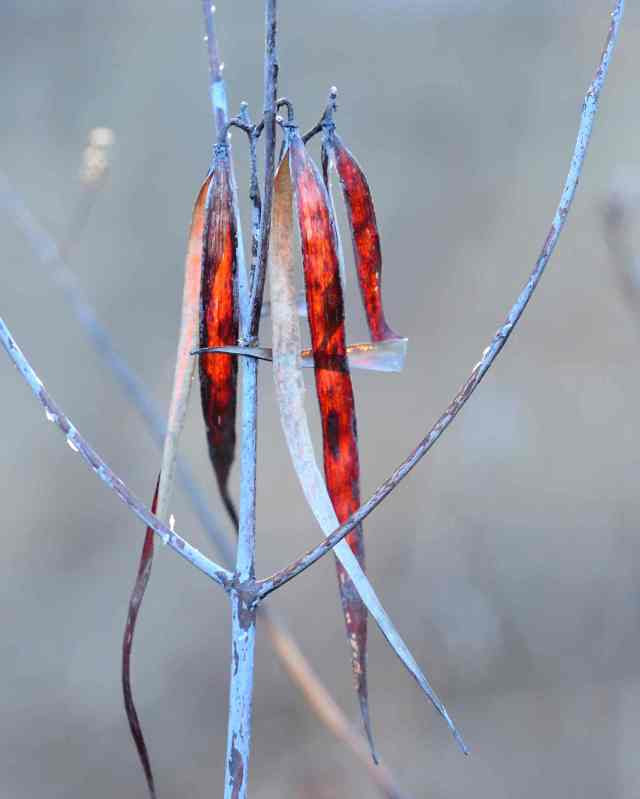
Slight blue tint on the dogbane pods and nowhere else, is a display of nature’s subtle use of tints and shades.
Red often needs a bright companion color in a mixed woodland to stand out, as the intensity of the red lacks in brightness. Native red maples will produce leaves with irregular splotches of red on yellow, the red often the color of fresh blood.
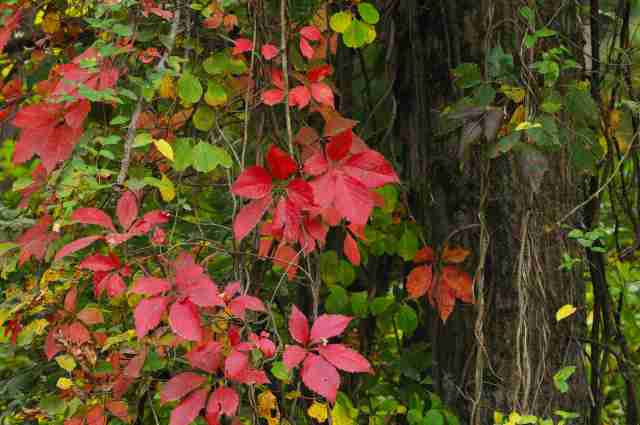
Early in the season splotches of red will appear among green foliage as virginia creeper, poison ivy and staghorn sumac, these are the preliminary sparks lit, to start the fall conflagration of flaming color.
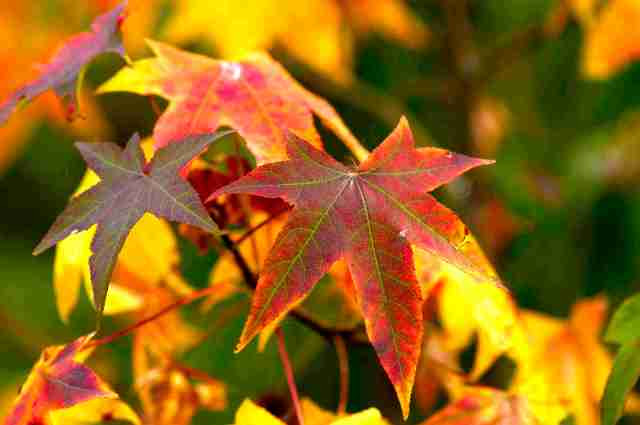
Red variants include the bright salmon color of black gum and the purple wash common to sweet gum leaves. Sweet gum displays quite a variety of scarlet tints ranging from pale reds to shades of purple on a yellow canvas.
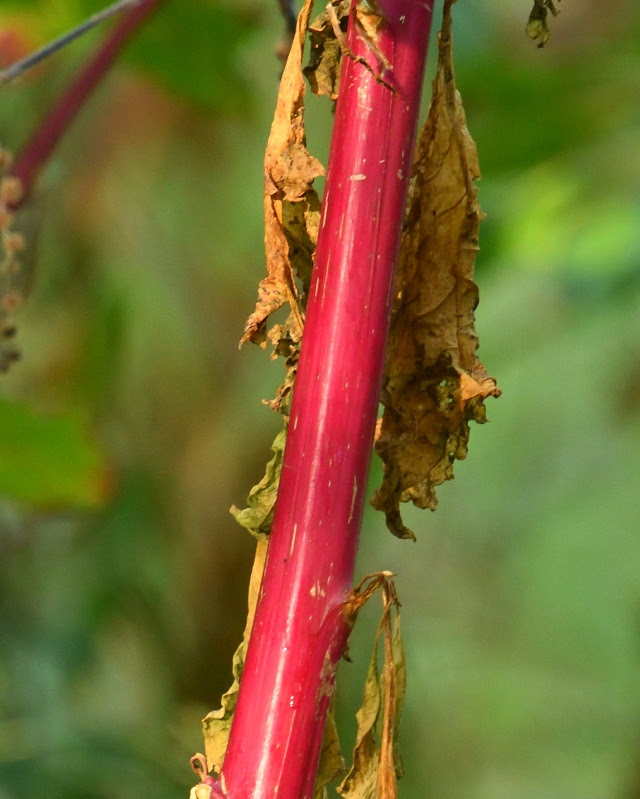
The brilliance of deep magenta stems of poke weed, vie only with the intensity of fluorescent orange oak leaves. The magenta is so brilliant and stems so straight, it appears alien to the natural landscape. The stems are unmistakable exclamation points impossible to miss.
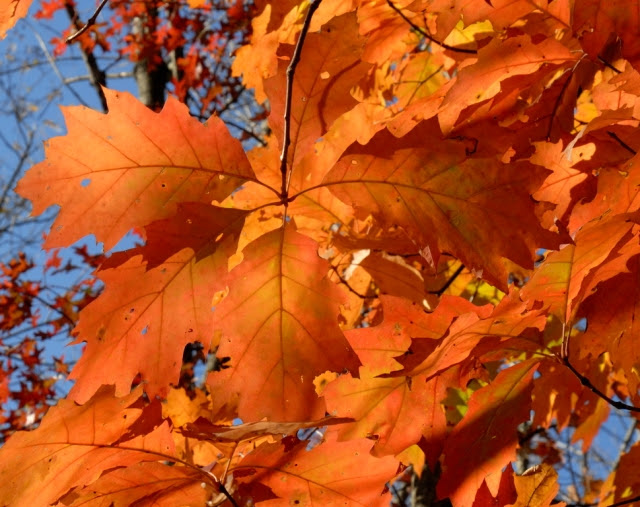
Some individual red and black oaks produce an orange leaf so brilliant as the be described as fluorescent. The leaves appear to glow with an incandescence that acts as a visual magnet. It has been established that colors affect mood and behavior and from that theory, chromotherapy has evolved. Chromotherapy is a holistic healing technique and nature provides that treatment with fall colors. Orange, associated with boosting energy and creativity comes appropriately after the green therapy session of summer where peace, balance and calm dominated. Heightened energy and creativity provided by the orange variants are choreographed to arrive in time to meet the challenges of the coming winter. In that way the autumn blaze translates the subtle impact of decreasing daylength into a visual announcement; a planned redundancy by nature to ensure human survival.
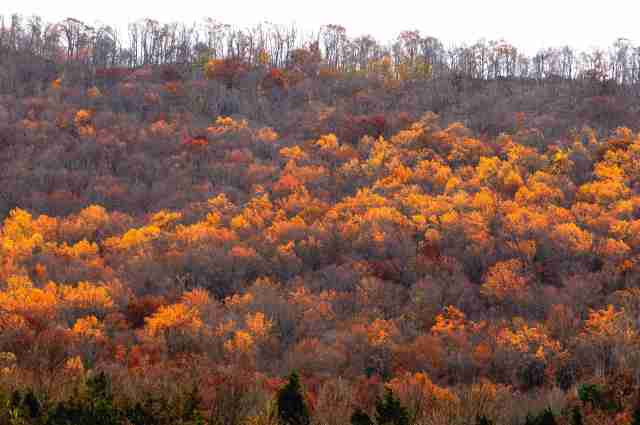
The fall color can be appreciated in layers as the focal length of the lens is adjusted. A single leaf becomes an individual portrait looking like no other under high magnification. Reduce the focal length and see an entire mountainside draped in waves of yellow color.
An aerial view, seen through a time lapsed camera, animates the arrival of fall as is slowly moves south, the bright colors consuming the green foliage.
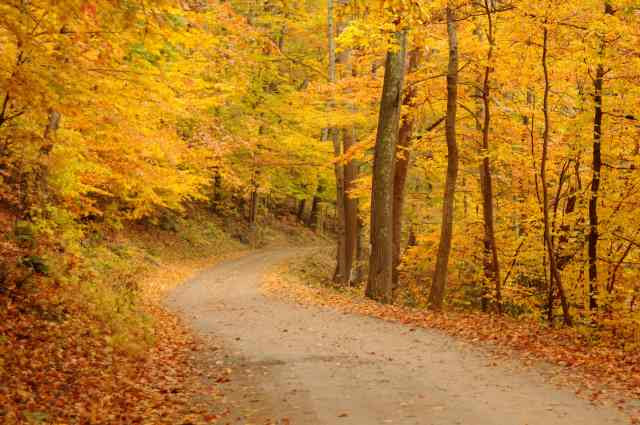
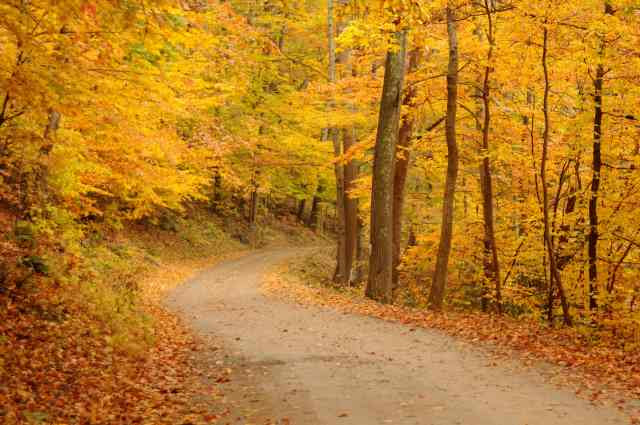
A classic fall scene of a leaf littered winding dirt road disappearing around a distant bend, into the embrace of a mass of flaming foliage, invites you to step inside the image. Walking down that old time forgotten road, curiosity beckons you to travel further, beyond the curve, into a world where time stands still and memories of autumns past eagerly await your arrival.
Author Joe Mish has been running wild in New Jersey since childhood when he found ways to escape his mother’s watchful eyes. He continues to trek the swamps, rivers and thickets seeking to share, with the residents and visitors, all of the state’s natural beauty hidden within full view. To read more of his writing and view more of his gorgeous photographs visit Winter Bear Rising, his wordpress blog. Joe’s series “Nature on the Raritan, Hidden in Plain View” runs monthly as part of the LRWP “Voices of the Watershed” series. Writing and photos used with permission from the author.
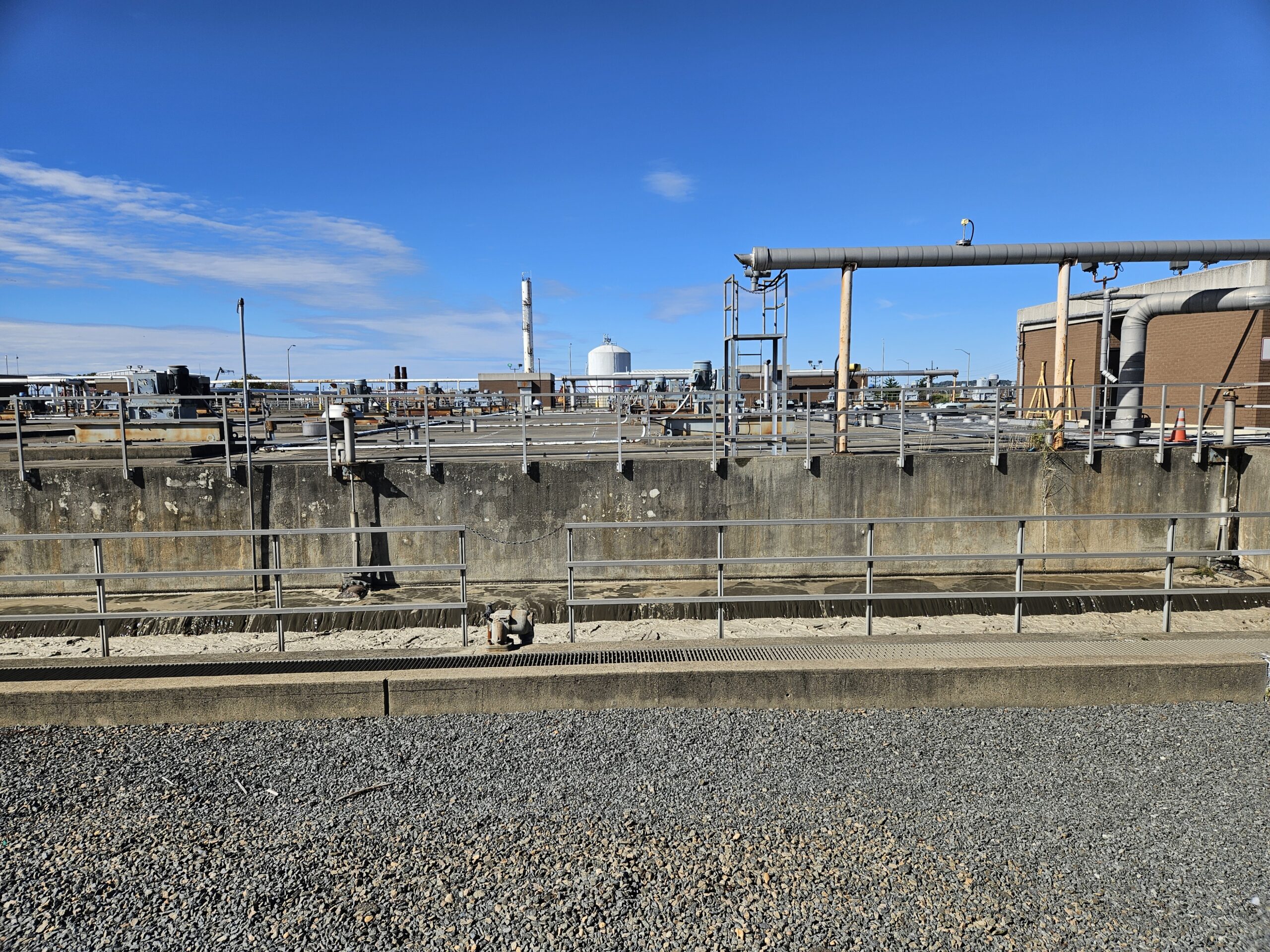
On Friday October 17 the LRWP toured the Middlesex County Utilities Authority (MCUA) wastewater processing and treatment plant. While there we learned about the processes of removing and eliminating contaminants from wastewater, and gained understanding of how wastes are converted into an effluent that can be returned to the water cycle through primary outfalls in Raritan Bay and the Raritan River.
With many thanks to Lisa Oberreiter, General Superintendent at Middlesex County Utilities Authority and her staff for a fascinating explanation of how things work “behind the scenes”. You can hear Lisa’s voice in this youtube video as she explains the important process of aeration in sewage treatment.
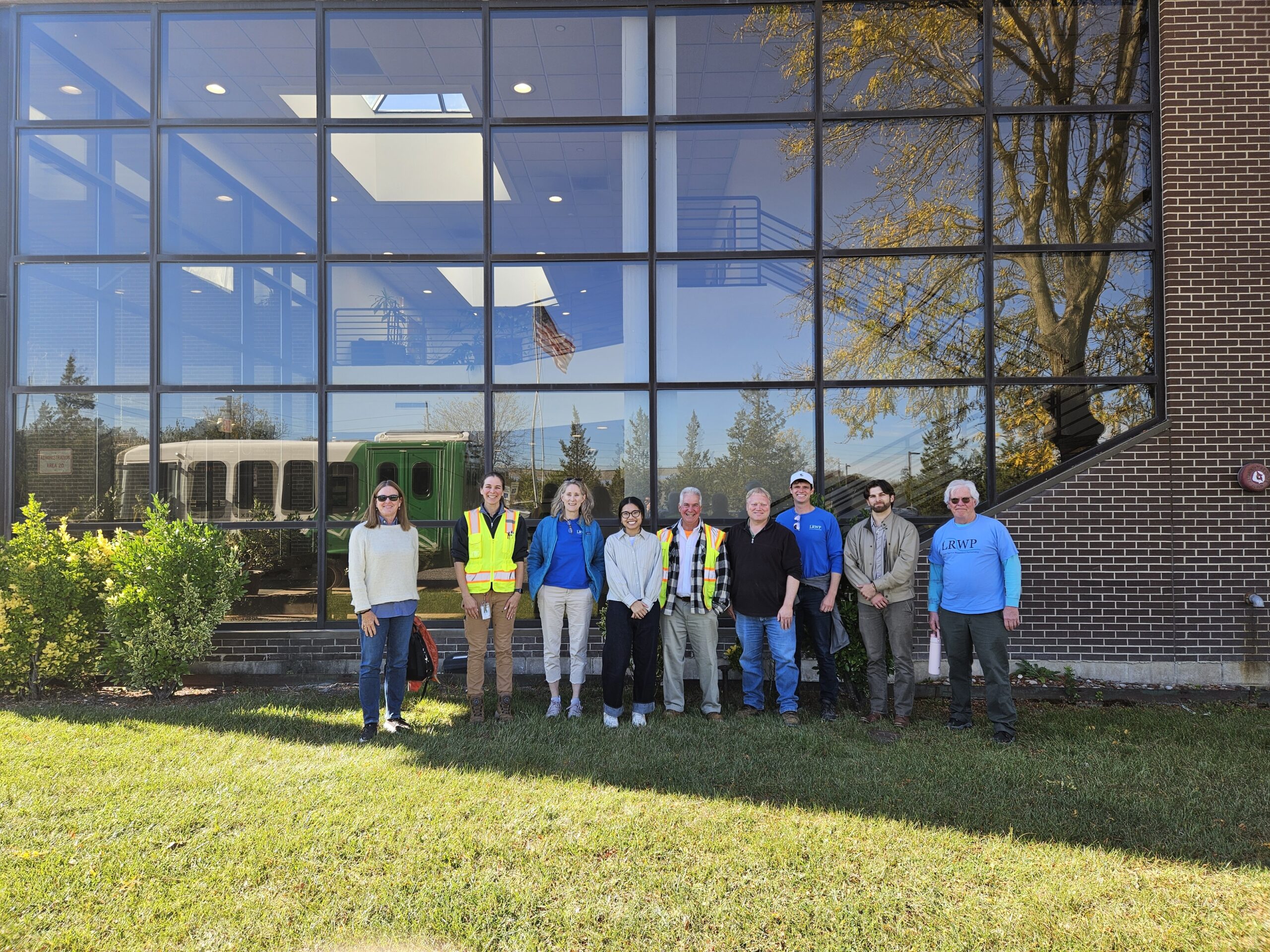
MCUA’s Lisa Oberreiter is second from left. Pathogens monitoring team members Johnny Meyer, Frank Dahl and Heather Fenyk also joined the tour.
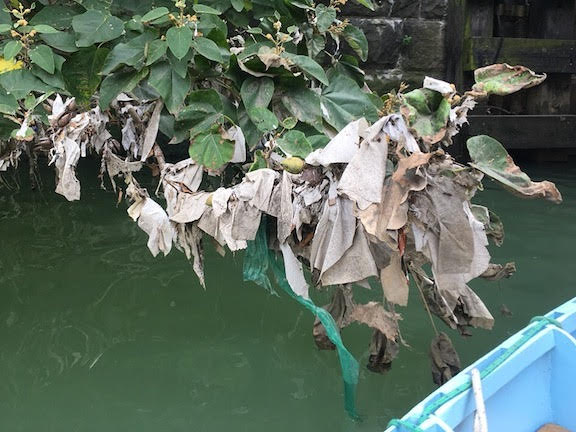
During the LRWP’s pathogens monitoring work we often observe “flushable” sanitary wipes floating in the River and caught in vegetation along the riverbank. So-called “flushable” wipes are non-flushable! They are typically made from synthetic materials and do not easily break down in sewer systems.
There is no such thing as a “flushable” wipe!
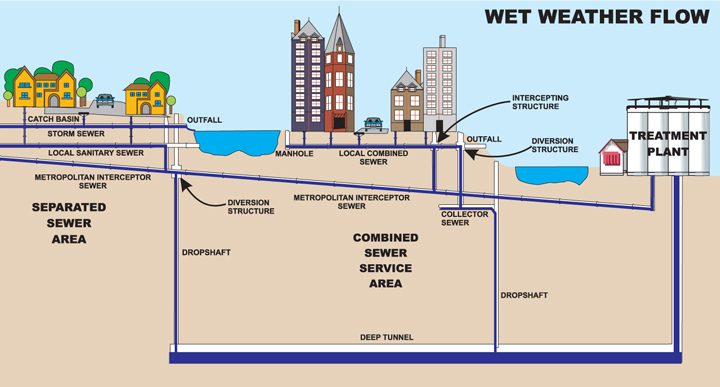
These materials escape the process of wastewater treatment, most typically at the point at which sanitary sewage infrastructure and stormwater infrastructure meet, in an outdated system called a “combined sewer”. As these materials escape the processing system, they contribute to the presence of disease-causing pathogens in our waterways and cause beach closures. As they are caught up in the processing activity, they lead to huge costs to wastewater systems like the treatment plant in Sayreville, causing clogs and damage to wastewater pipes, pumps, and treatment equipment.
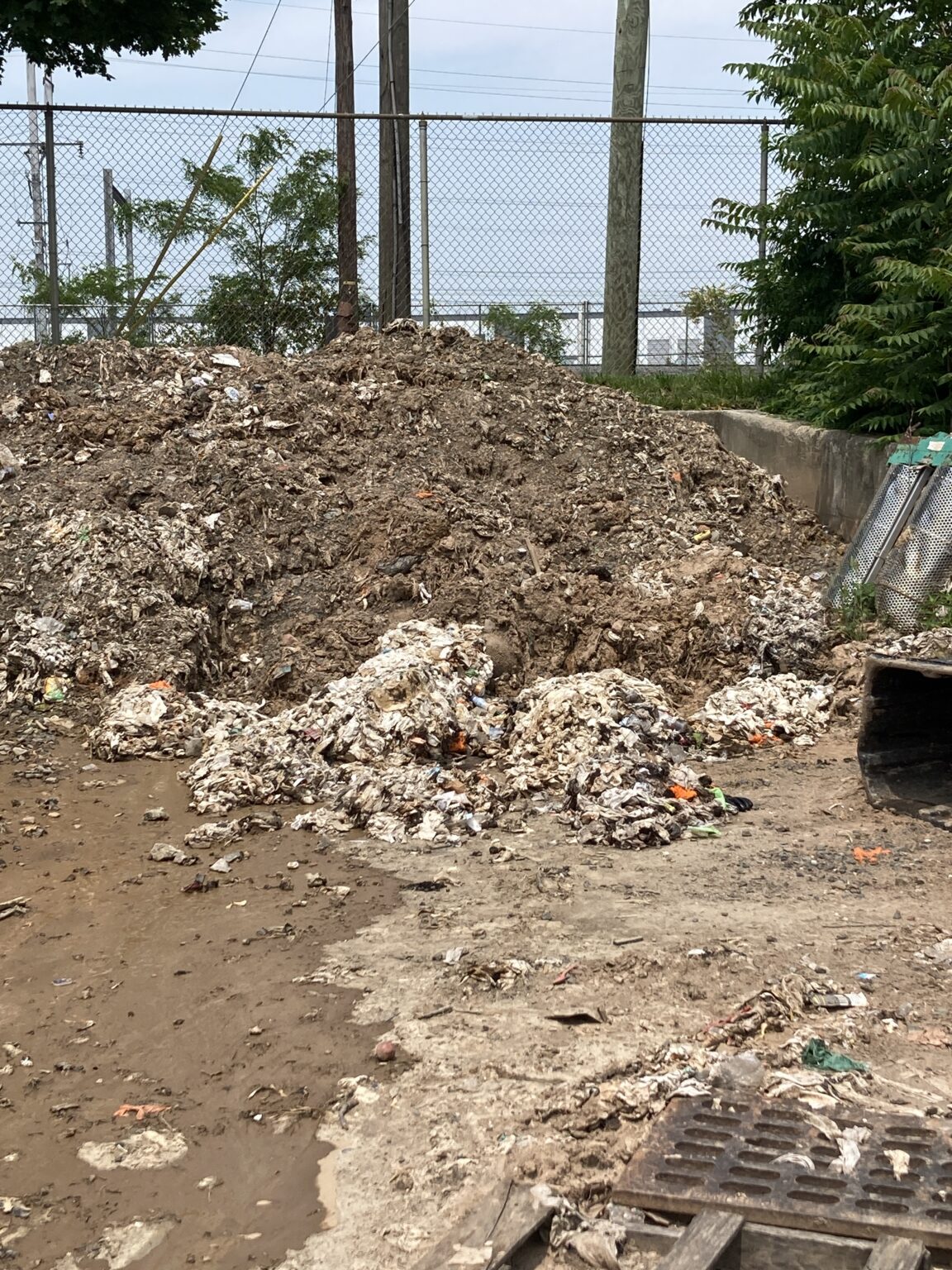
Wastewater collection systems must periodically cleared of the clogs of sanitary wipes and other materials that become trapped in underground intercepting structures to limit the flows of this waste through the CSO outfalls. While conducting pathogens monitoring on June 5, 2025 at our water monitoring station near Perth Amboy’s Wilentz Elementary School, the LRWP team observed a pile of the waste cleared from an intercepting structure near the City of Perth Amboy-managed CSO. Approximately four tons of wipes and feces were removed from the interception point and deposited on land to await transport to a landfill.
This practice of removing wipes from interception points and dumping them on land to minimize flush into waterways and damage to sanitary sewage infrastructure is not unique to managers of such properties, or even to managers of CSOs in New Jersey. This is a permitted practice under the Clean Water Act that is managed by the state Department of Environmental Protection. Each CSO has a separate permit, and each municipality must adopt a Long Term Control Plan (LTCP) for CSO management.
Taking Action
Could present day practices be improved for our local CSOs? Absolutely. All utilities should be working to identify and elevate best practices with respect to CSO management.
In addition, in March 2025 Republican Conference Chairwoman Lisa McClain of Michigan introduced H.R. 2269, the Wastewater Infrastructure Pollution Prevention and Environmental Safety (WIPPES) Act. On June 23, 2025 it passed the Senate and moved to the House where its companion S. 1092 (Merkley) was favorably reported out of the Committee on Commerce, Science, and Transportation in late May. The WIPPES Act would establish a national “DO NOT FLUSH” labeling standard for non-flushable wet wipes. If WIPPES is signed into law, wet wipe manufacturers would be required to place symbols and standard language labeling on products that recommends consumers not flush the wipes after use. It would further restrict any verbiage on packaging that would imply that the product is actually flushable. Regulation of the policy would have the teeth of the Federal Trade Commission, with violations punishable as an unfair or deceptive practice.
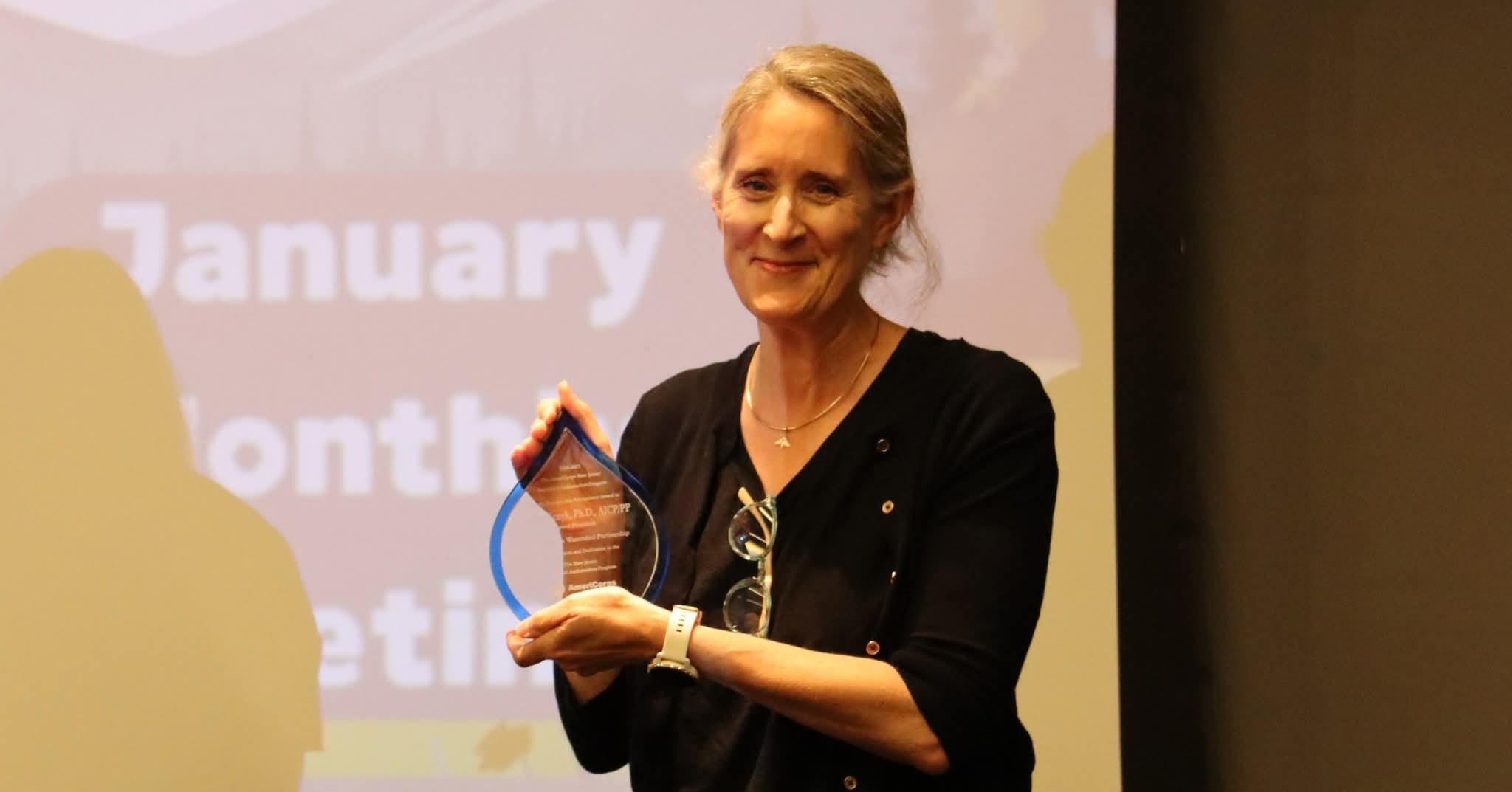
On July 9, 2025, LRWP Board Member Heather Fenyk joined the 2024-2025 class of New Jersey Department of Environmental Protection Watershed Ambassadors at Monmouth Battlefield to celebrate the graduation of these special humans. We were thrilled to be recognized as the NJDEP AmeriCorps Watershed Ambassadors Program “partner of the year.” The LRWP’s annual Green Brook Clean-up has grown to engage eight (8) municipalities through the partnership work with these Watershed Ambassadors – we should be thanking them!
A heartfelt thank you to the graduating 2024-2025 cohort: Olivia Stettler: WMA 1, Team Leader Jenna Black: WMA 2 Peyton Curley: WMA 3 Emilie Wigchers: WMA 4 Isaiah Leach: WMA 5 Toni L. Tamberelli: WMA 6 Kaitlyn Pinto: WMA 7 Daniel Magda: WMA 8 Brianna Casario: WMA 9, Team Leader Claire Paul: WMA 10, Team Leader Mike Sherr: WMA 11 Forrest Jennings: WMA 13 Cameron Shapiro: WMA 14, Team Leader Morgan Crouch: WMA 15, Team Leader Courtney Lacombe: WMA 16 David Ferrara: WMA 17 Jessie Lisanti: WMA 20 Emily Vasquez: SWP North Sheyla Casco: SWP Central Gina Freshcoln: SWP South
The AmeriCorps NJ Watershed Ambassadors Program is administered by the New Jersey Department of Environmental Protection, Division of Water Monitoring, Standards and Pesticide Control. The goals of the program are to promote watershed stewardship through education and direct community involvement, and to monitor stream health through performing visual and biological assessments. Individual AmeriCorps members are assigned to each of New Jersey’s 20 watershed management areas (WMAs) to serve as “Watershed Ambassadors” to their watershed communities. In addition to the 20 full time Watershed Ambassadors, 3 part-time Source Water Protection Ambassadors are assigned to a region in Northern, Central, and Southern NJ. The Source Water Protection Ambassadors serve 900 hours from September – May, conducting education and stewardship projects that relate to sources of drinking water.
Dear Governor Murphy and the NJ Department of Environmental Protection –
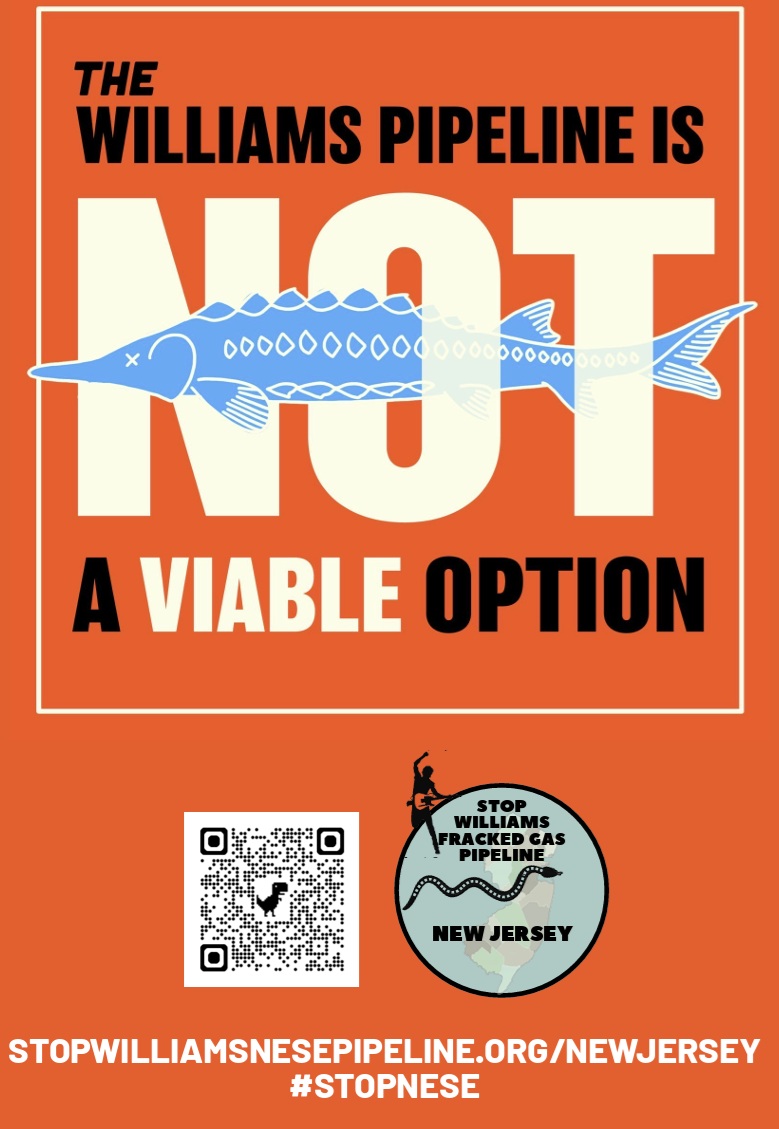
I am writing on behalf of the Lower Raritan Watershed Partnership (LRWP) regarding Williams Northeast Supply Enhancement (NESE) Pipeline project. The LRWP is opposed to construction of a fracked gas-powered compressor station in Franklin Township, including 3.5 miles of connecting pipeline through a portion of the Lower Raritan Watershed (New Jersey Watershed Management Area 9) in Old Bridge Township. The LRWP is also opposed to a core component of this project, the proposed 23.4-mile-long, 26-inch-diameter pipeline loop (called the “Raritan Bay Loop”) extending from the Middlesex County coast crossing under Raritan Bay and New Jersey and New York State marine waters.
The LRWP formed in 2015 to address industrial pollutants that left a legacy of contamination in the Raritan River and the Lower Raritan Watershed. Our Lower Raritan Watershed communities have worked hard to restore landscapes destroyed by decades of industrial dumping and toxic pollution. Many of these areas are now thriving, and others are natural Heritage sites, part of the NY/NJ Harbor and Estuary, which provide habitat for federally threatened and/or endangered species.
The LRWP’s most specific concern is with the project’s impact to the marine ecosystem, including the benthic habitat of Raritan Bay. Estimates indicate that as many as 14,100 acres of Raritan Bay may be impacted, with potential serious adverse impact on the Bay’s fisheries. These fisheries include many species of anadromous fish with established spawning grounds in the up-stream Raritan River area, and vulnerable populations of horseshoe crabs, sea turtles, and many other marine mammals.
The LRWP respectfully requests that NJDEP deny permits for the NESE Pipeline project that would result in significant environmental degradation of our Lower Raritan Watershed and Raritan Bay.
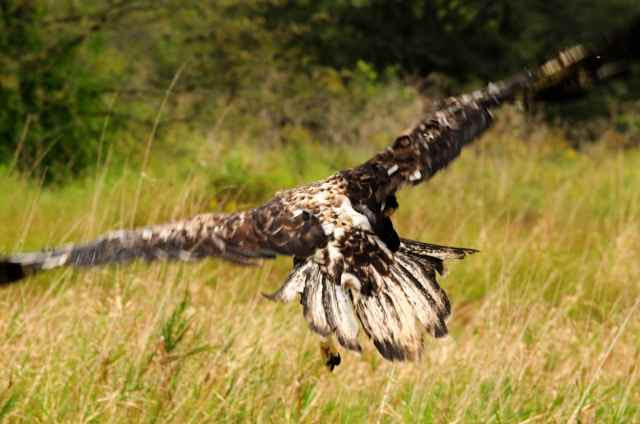
This lady of the sky left the cage in full flight as if shot out of a cannon. The green band on the right leg reads, H 52. she is a large 3 year old female, born locally, with no guarantee she will remain anywhere in NJ. Sky is the limit to her future travels.
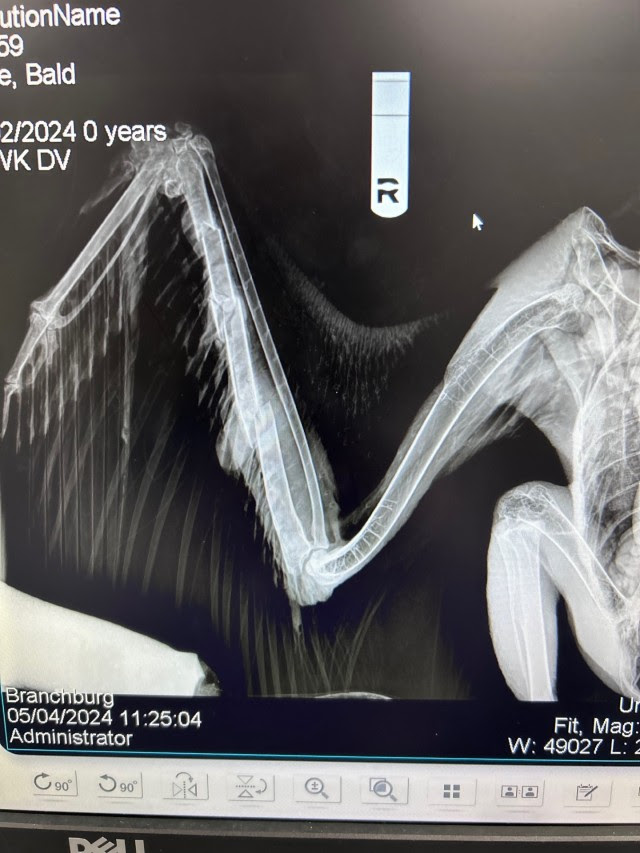
The X-ray revealed the three year old female eagle’s ulna, broken in three places. Her prognosis was uncertain, as her bone could not be pinned because some healing had already taken place. My heart sank at the news, this would be the third eagle rescue in which I was involved, where two of the three rescued birds had to be euthanized despite appearing very healthy; this feisty eagle looked to be another failed effort.
I was beginning to feel more like the messenger of death, than a rescuer.
The good news was the preliminary field diagnosis of possible lead poisoning tested negative. She was a large female and otherwise appeared healthy with a feisty attitude and voracious appetite. All that could be done was to wrap her wing and hope for the best; a case of tincture of time and scientific neglect. The prospect of hope was slim, but glowed brightly, compared to the absence of all hope in the other rescues.
The weight of the effort to locate her and affect a rescue, given her location amid a steep grade and blow downs covered in wild underbrush, personalized the physical and emotional expenditure. Her survival was as important to me as it was for the species. What a joy it would be to see the shadow of her wings pass over the earth! A symbol of hope and undiminished spirit flying across the heavenly regime of open sky.
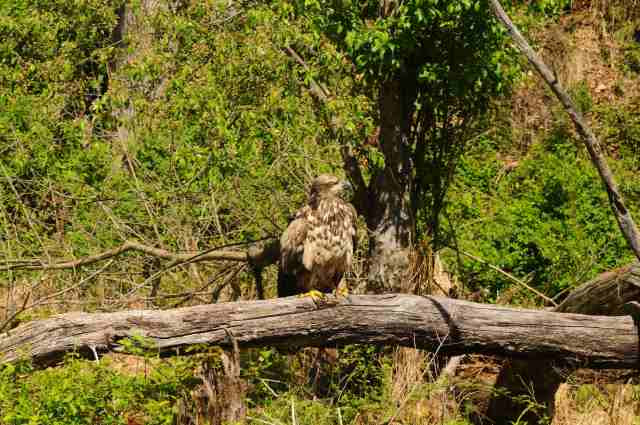
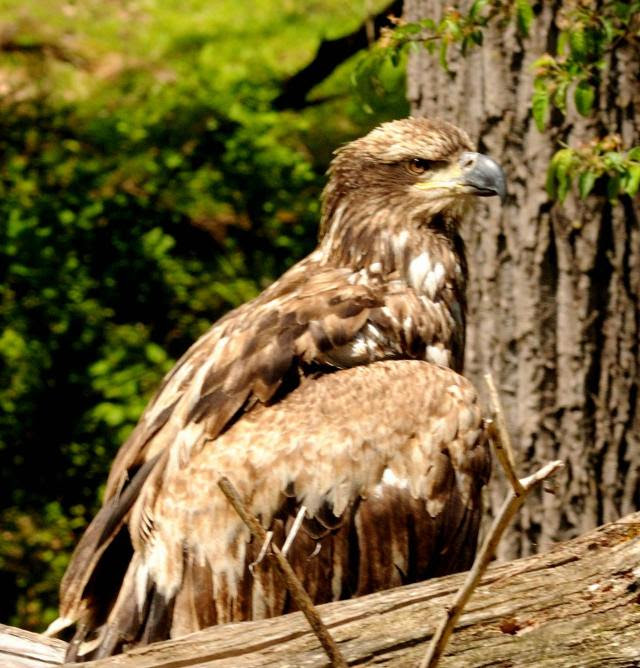
This injured eagle was in a difficult location to capture. Her condition and behavior had to be evaluated before making an attempt to reach and constrain her, without doing further injury. The mottled plumage, color of eyes and beak, indicated she was a three-year-old eagle.
Every few weeks from her capture on May second, I would text Cathy at Raptor Trust for an update. Hope was still holding as the eagle remained full of spirit, despite confinement, her was appetite undiminished and notably voracious. Imagine a creature whose domain was the heavens, now confined to a flightless cage. Taking an unavoidable anthropomorphic view, what sustained mental gymnastics would it take to survive that unimaginable confinement? This eagle is a role model for adaptability and emphasizes the critical importance of undiminished spirit in the face of adversity. Hope on a wing and a prayer.
Her wings were eventually unwrapped when it was certain the fractures healed; the next step was to release her into a flight cage. This would be a test of the strength of her healed wing and a final determination of her fate. There is always some feather loss during treatment, so that would delay her recovery further. Her appetite was insatiable as she ate her way back to health and the heavens where she might rule for the next thirty years.
On the afternoon of September 18, 2024, I got a call from Cathy at Raptor Trust and in cooperation with endangered species director, Kathy Clark, told to come get the eagle and release it near where it was rescued. So September 19, I drove to Raptor Trust and loaded the caged eagle in the back seat of my truck for the long awaited release.
On the way to Raptor Trust what song comes on the radio? Englebert Humperdinck singing, “Please release me, let me go”. The hair stood up on the back of my neck! Eagle magic?
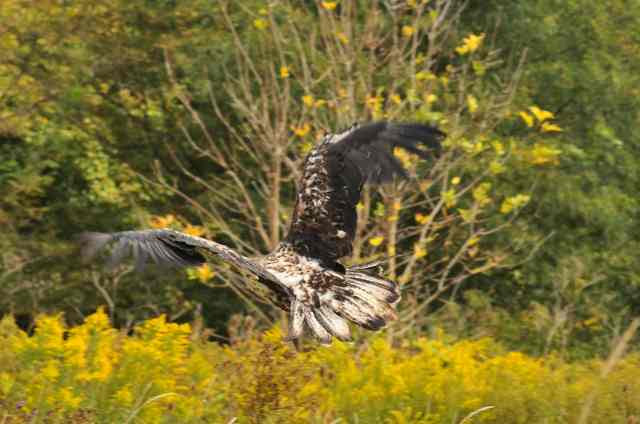
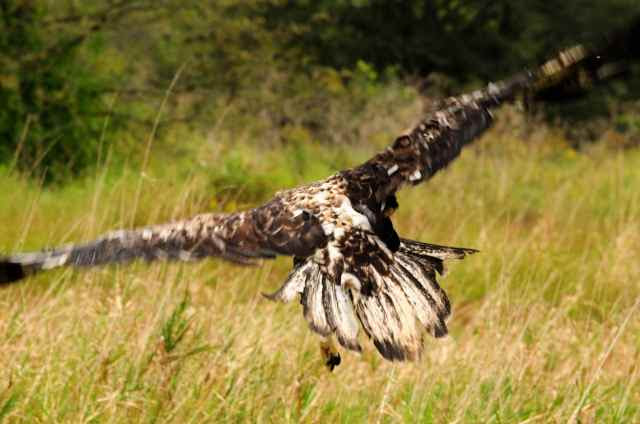
The negative outcome experienced on previous rescues, made this release especially meaningful in a very personal way. This lady of the sky left the cage in full flight as if shot out of a cannon. Eagles will dive from a perch to catch air under their wings, as she took off from ground level; she needed a long runway to get airborne. She flew parallel to the ground for about 200 yards and then quickly disappeared in the tree line along the stream. I was hoping she would land on a high perch where I could confirm a successful release, no such luck. I took about 20 minutes to get back to the truck and drive in the direction she flew, to park on the other side of the treeline. I waited for half an hour and finally gave up, leaving her to her fate. Just as I started the truck, her majesty did a fly by directly over me! By the time I unbuckled my seat belt, grabbed the camera, and stepped out of the truck, she was gone. What the heck just happened? More eagle magic! It is no wonder why so many cultures hold the eagle in high esteem.
Nothing official, but this eagle convinced me her name was, Angela.
Angie has been banded for identification with a silver federal band on her left leg and a green anodized aluminum band on her right leg. The green band can easily be read with binoculars or a good camera. Be on the lookout for H52. If you see her, report her to the state AND let me know. People who band birds celebrate any time a band has been reported. It is almost like putting a note in a bottle and tossing it out to sea. What are the chances of a response? Note from the images she still has that immature mottled plumage, orange eyes and dark beak. In a year or two the white head and tail will be more prominent; eyes and beak will turn yellow. Her life expectancy can be 30 years or more, so make sure you tell your kids and grandkids to keep an eye out for Angie and tell her story to their kids. We collectively wish her a long and healthy life, and long may her shadow glide across the earth wherever she may go.
What a pleasure to announce the successful release, 9.19.24. 3 year old female, NJ green band H52
Author Joe Mish has been running wild in New Jersey since childhood when he found ways to escape his mother’s watchful eyes. He continues to trek the swamps, rivers and thickets seeking to share, with the residents and visitors, all of the state’s natural beauty hidden within full view. To read more of his writing and view more of his gorgeous photographs visit Winter Bear Rising, his wordpress blog. Joe’s series “Nature on the Raritan, Hidden in Plain View” runs monthly as part of the LRWP “Voices of the Watershed” series. Writing and photos used with permission from the author.