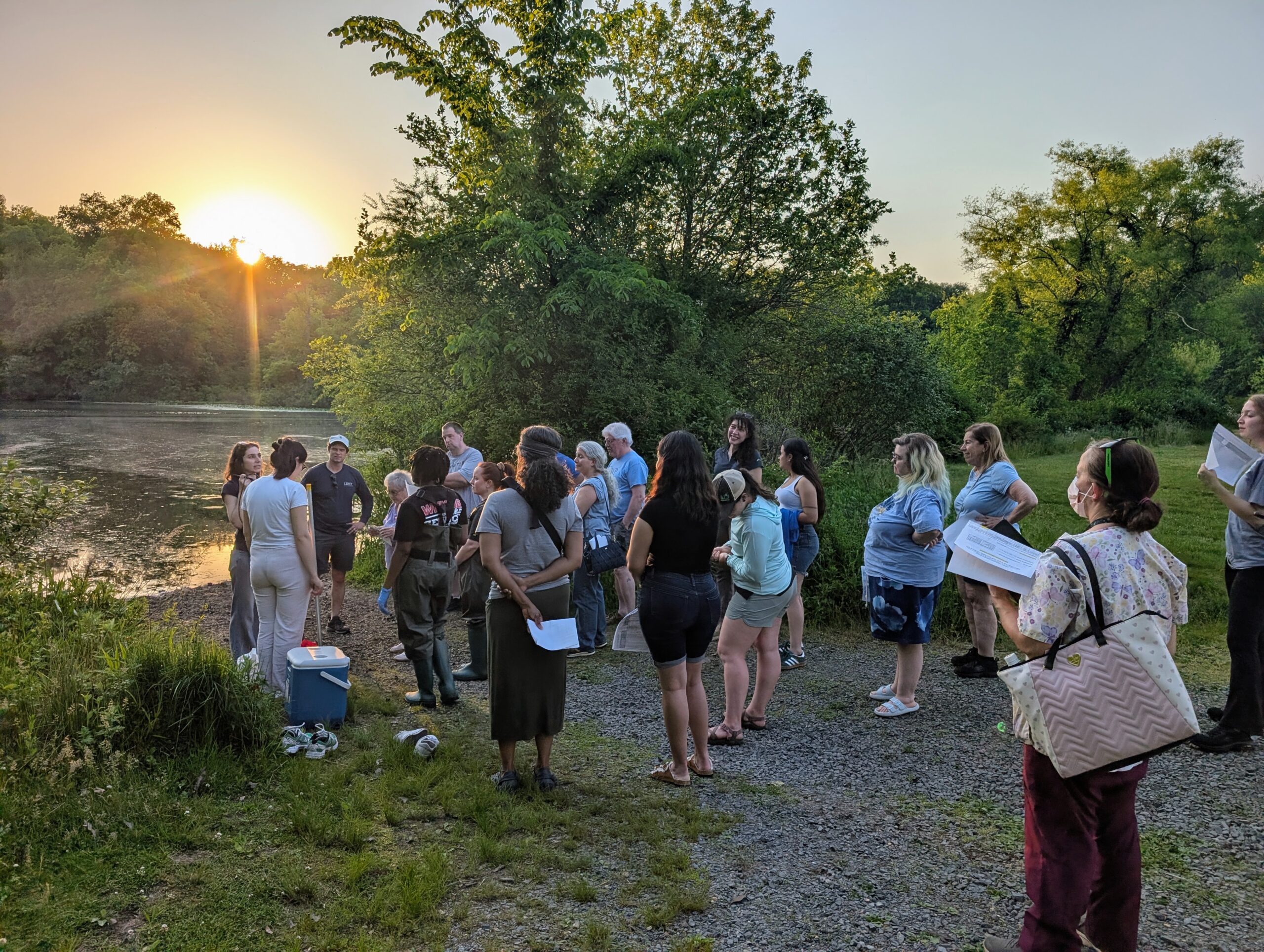
The second pathogen monitoring session of the season took place on Thursday, May 28th. Each week during the summer, from May to October, the Lower Raritan Watershed Partnership and Rutgers Cooperative Extension of Middlesex County run a volunteer-based monitoring program along the Raritan River. We collect water quality samples at six non-bathing public access beach sites, provide our samples to the Interstate Environmental Commission for analysis in their laboratory, and report the results to the public. Our mission is to share this data with the community and partners to ensure the safe use of the Raritan river for all.
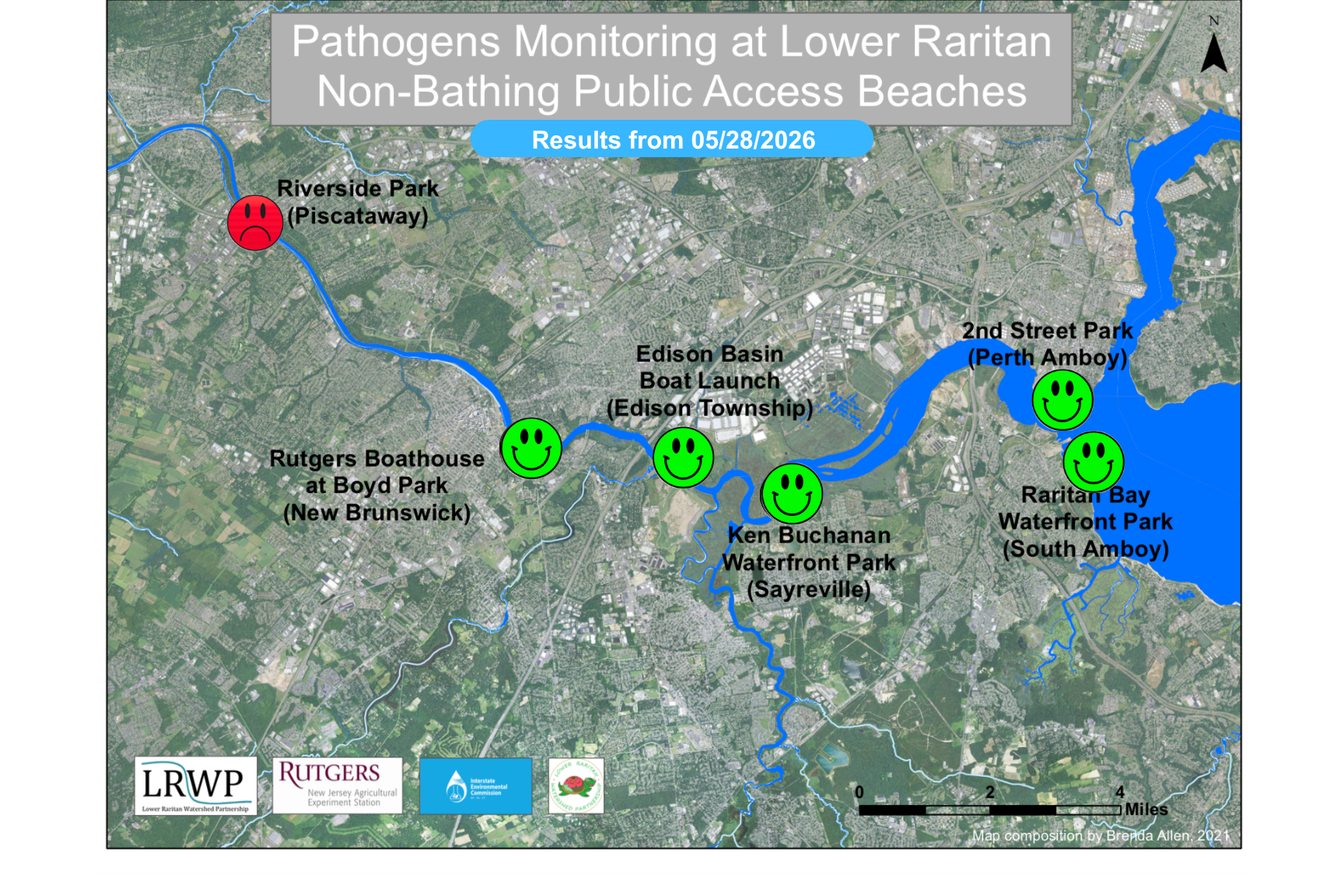
Our lab results for water quality samples taken on Thursday, May 28th, 2026 show Enterococcus bacteria levels exceeding the EPA federal water quality standard of 104 cfu/100mL at one of our monitoring sites this week. The problem site is indicated by the red frown on the map and chart: Riverside Park (Piscataway). Green smiles on the chart and map indicate the sites with bacteria levels safe for recreation, and include the following: Rutgers Boathouse (New Brunswick), Edison Boat Basin (Edison), Ken Buchanan Waterfront Park (Sayreville)2nd Street Park (Perth Amboy).
Interestingly, while the presence of fecal coliform indicates the presence of fecal matter, it is not considered to be a good predictor of disease causing bacteria. Thus, our sites in New Brunswick, South Amboy, and Perth Amboy all received green smiley faces even though our samples had thousands of fecal colony forming units…
Pathogens/Enterococci levels are used as indicators of the possible presence of disease-causing bacteria in recreational waters. Such pathogens may pose health risks to people coming in primary contact with the water (touching) through recreational activities like fishing, kayaking or swimming in a water body. Possible sources of bacteria include Combined Sewer Overflows (CSOs), improperly functioning wastewater treatment plants, stormwater runoff, leaking septic systems, animal carcasses, pet waste, wildlife waste, and runoff from manure storage areas.
In order to better understand why Riverside Park, Piscataway is our worst performing site over the past six years, we have started sampling further upstream. On May 28th, we sampled the Raritan Canal, Lock 11 in South Bound Brook. The lab analysis produced an estimate of 41 enterococci per 100 mL. That’s good news for folks who fish or paddle in the canal!
Our goal in reporting these results is to give residents a better understanding of the potential health risks related to primary contact during water-based recreation. If you are planning on recreating on the Raritan this weekend, make sure to stay safe and wash up after any activities!
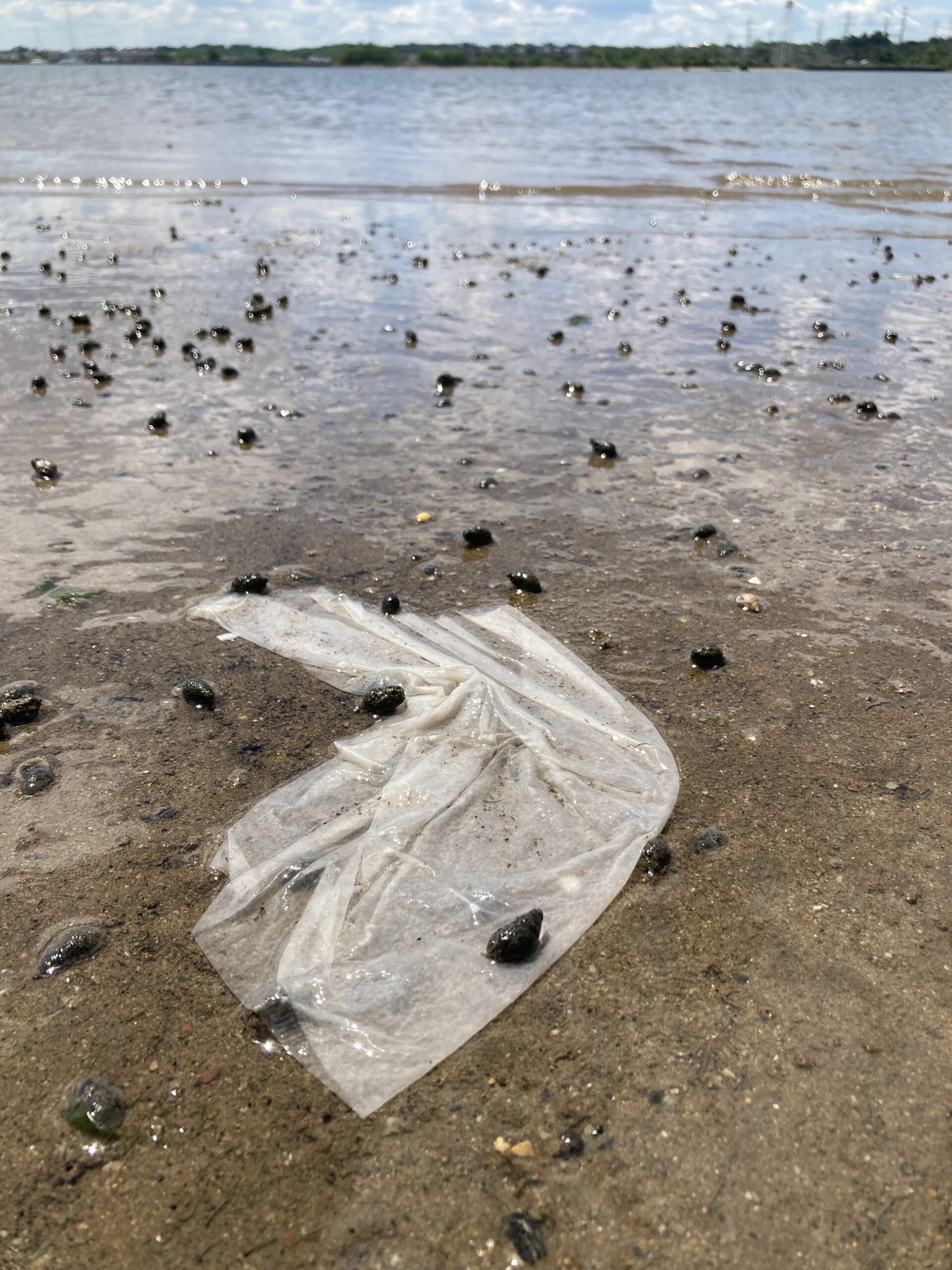
The ebbing tide leaves Eastern mud snails (Ilyanassa obsoleta) and baby wipes on the beach at Perth Amboy. Perth Amboy is believed to have the only remaining combined sewer outfalls in Middlesex County. During dry weather, their sewage gets pumped across the river to the Middlesex Sewage Authority’s sophisticated modern plant. During wet weather, the pumps get overwhelmed and the sewage gets discharged into Raritan Bay. Ergo the numerous baby wipes on the beach.
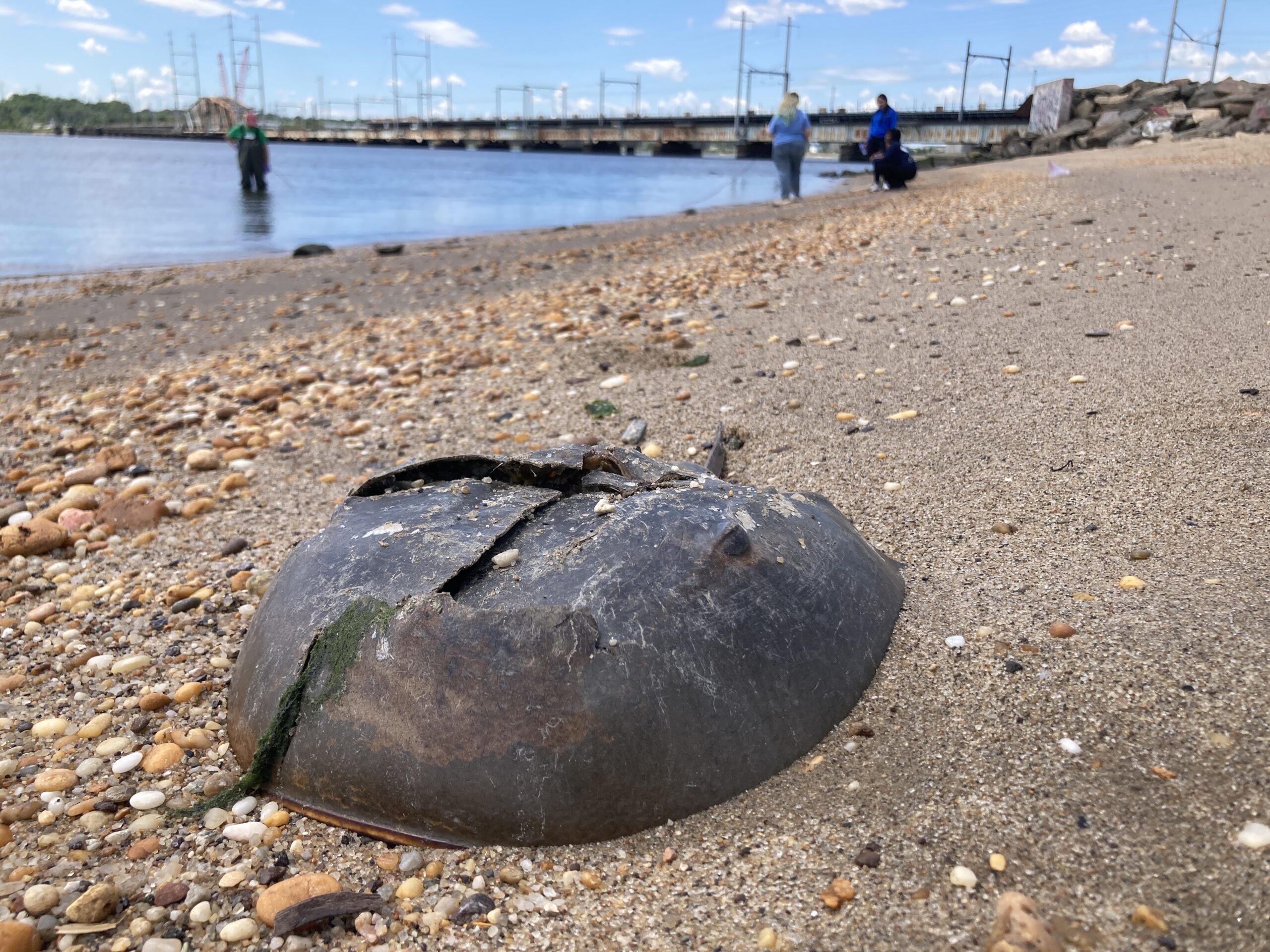
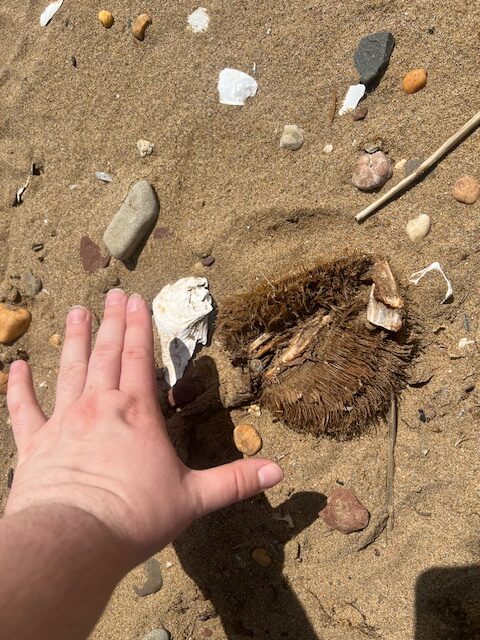
May is a wonderful time to spot horseshoe crabs along the shore. As this carcass attests, not all horseshoe crabs survive mating season, as they sometimes die of exhaustion and stranding. The shell of this large horse shoe crab stands sentinel as our volunteers (Art, Sofi, Paula, Endurance) gather the sample and record the data.
This summer, we have asked some of our pathogen monitoring volunteers and interns to share their story of encountering the Raritan River during out sampling sessions. Our first contributor is Rutgers student Endurance Laryea.
May 28th, 2026.
Today was a lovely, clear, and sunny day. It was about 65°C when we started calibrating the measuring probe used to collect data. Calibration started around 7:30 AM and was done by 8:00 AM.
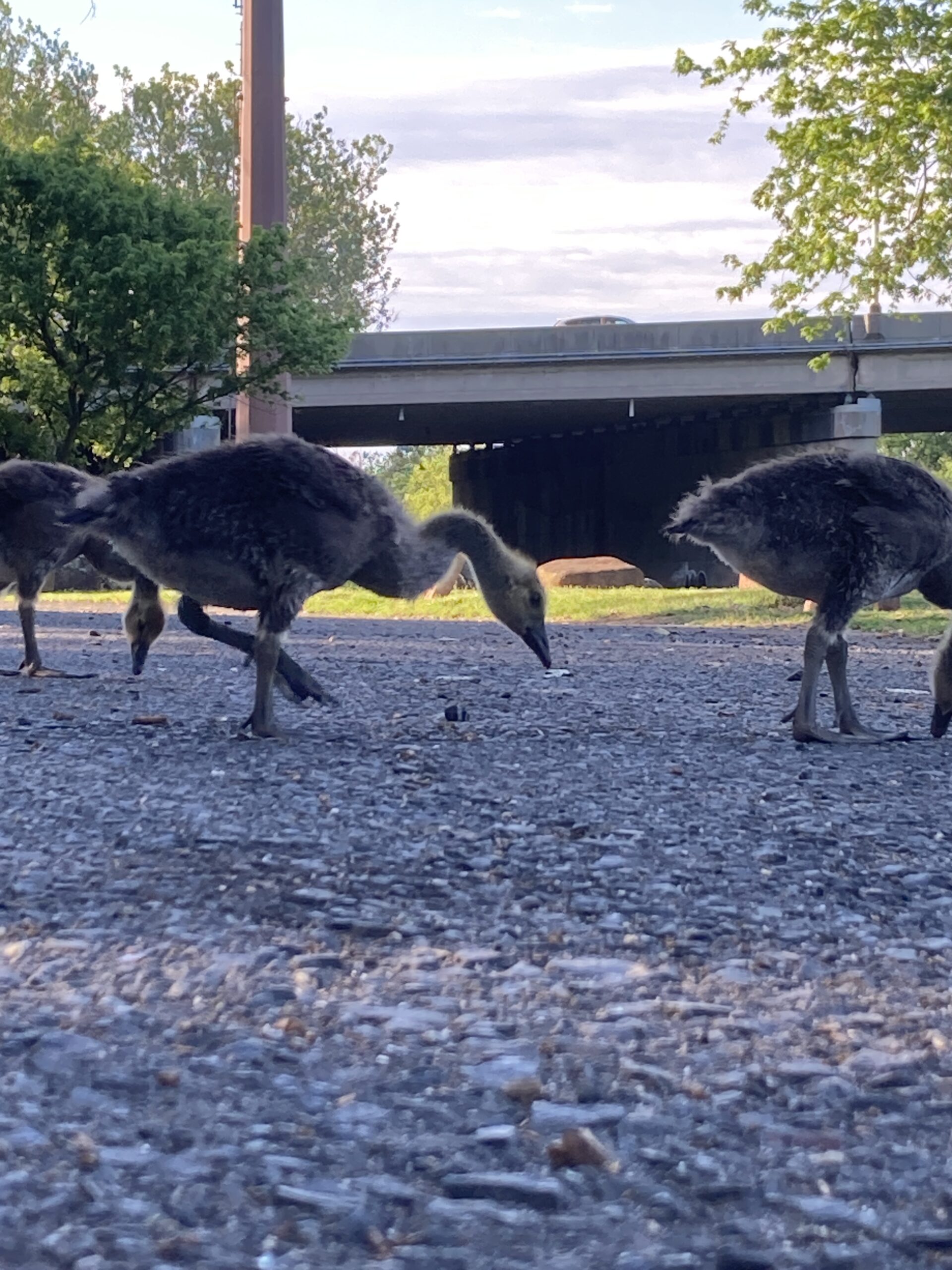
By 8:00 AM, all participating volunteers had arrived, and we began sampling the water at our first site. Riverside Park was calm and beautiful. Some parent geese guided their goslings across the playground and the parking lot close to us, and we were surprised that they didn’t hiss at us.
Canada goslings march past. — Photo by J. M. Meyer.
We also noticed a disturbance in the middle of the river — Art told us it was two carp rushing through the water together.
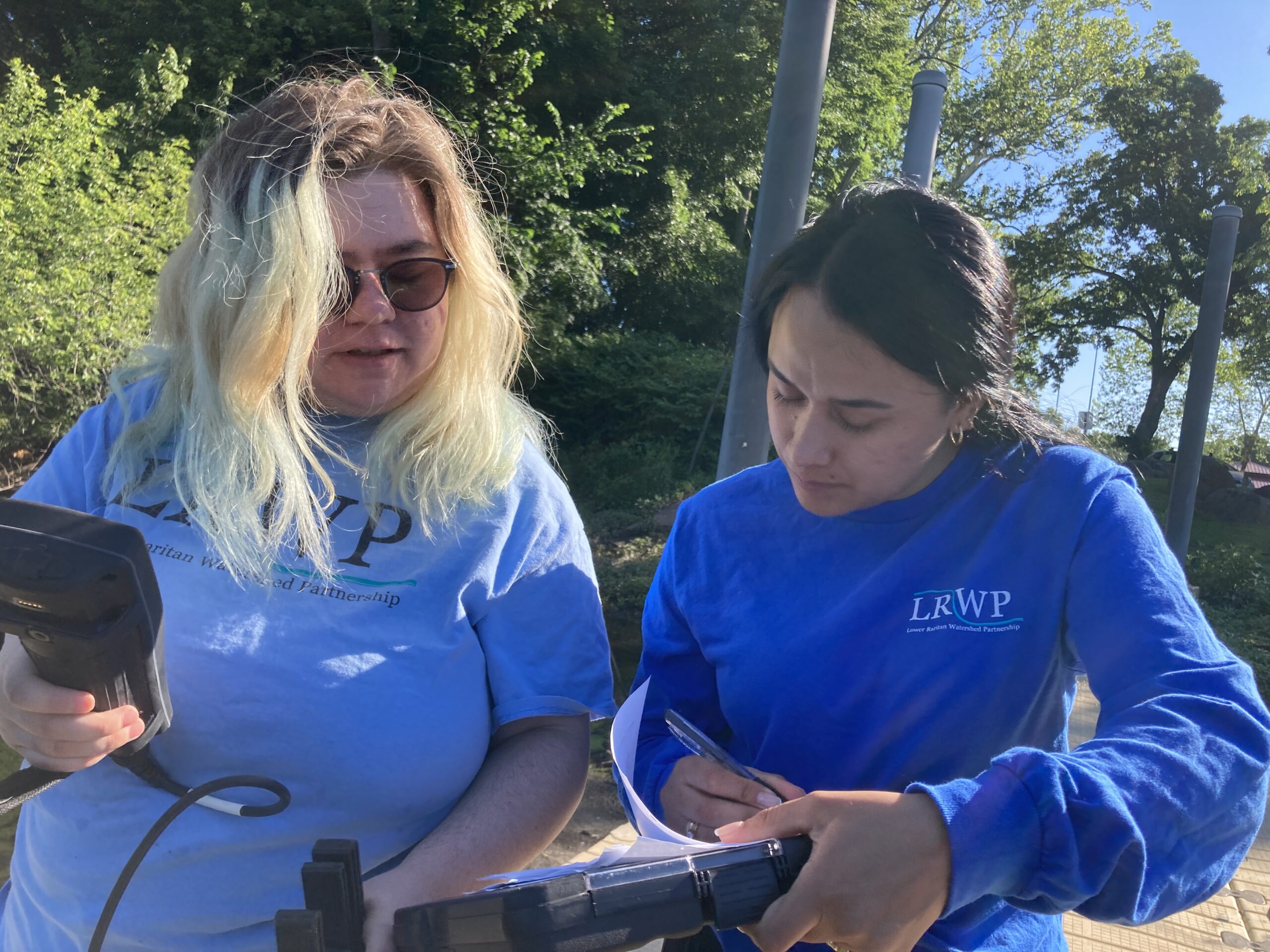
Sofi and Paula record data from the YSI sonde. — Photo by J.M. Meyer.
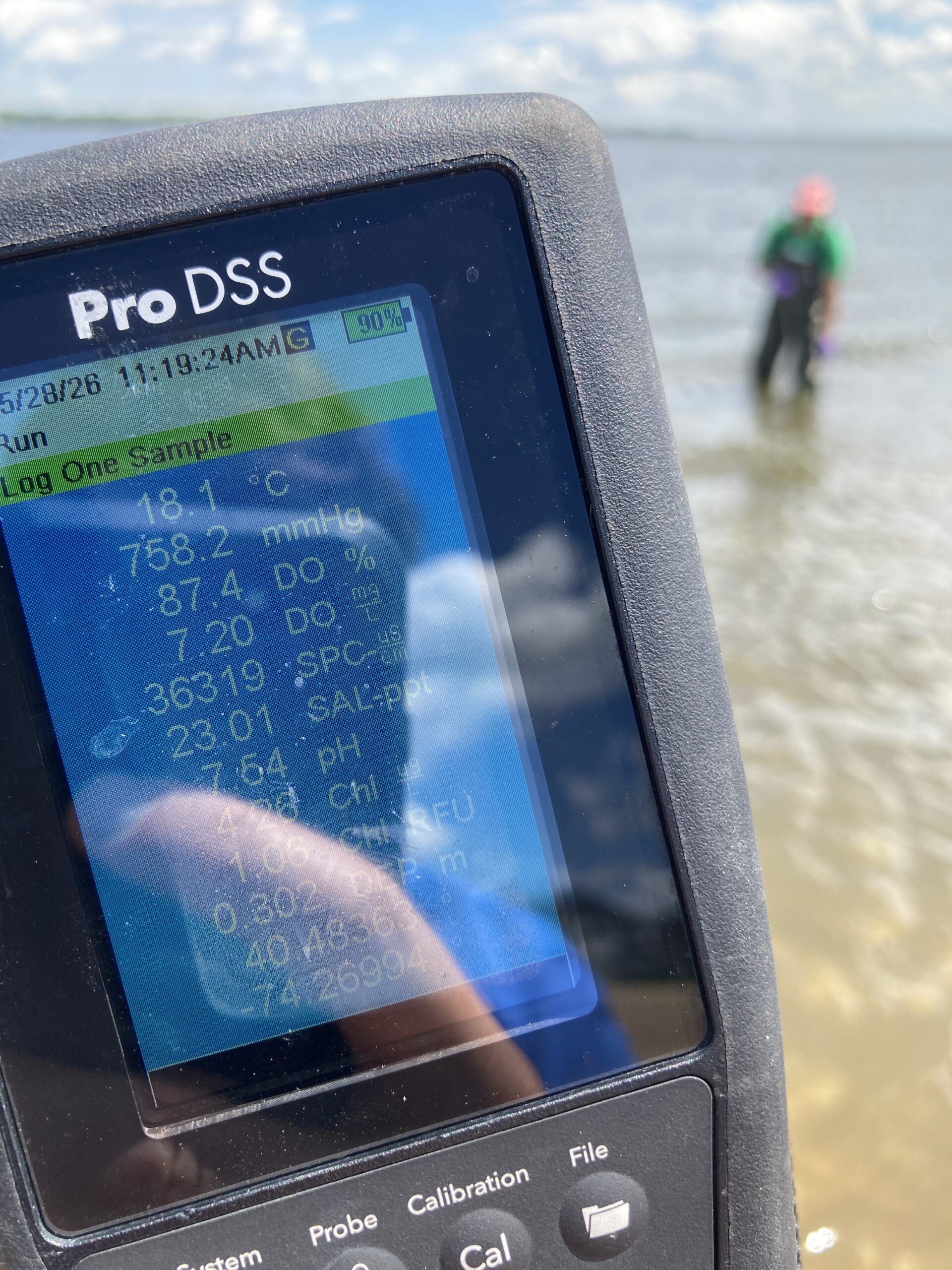
This site does not have a dock that extends very far into the current, so whoever is taking the sample must put on waders and a pair of gloves to get into the water. The person with the measuring probe in the water reads out the values of temperature, pH, salinity, oxygen saturation, etc., while another records the values. As I stepped into the river to collect a sample and take measurements, my colleagues noticed a carp swim around my leg, and it moved too fast for anyone to get a picture. It was a nice start to our day.
While preparing to take a sample the river, I look for the carp swimming past me. — Photo by J.M. Meyer.
The next site was the canal at South Bound Brook. The first thing you notice when you get there is the loud noise of the water rushing through small outlets and falling steeply into a lower canal–it sounds exactly like a natural waterfall. The speed of the water is also faster compared to the previous site; hence, it is very dangerous to get into the water! We collected the sample by dipping a sampling rod into the canal along with the measuring probe.
The third site was at the Rutgers Boat House in New Brunswick. There Dr. John thought he spotted two bald eagles on the other side of the river across from the dock. One of the volunteers used his binoculars to verify and lo and behold, two bald eagles! Unfortunately, they were so far away that we could not take clear pictures of them.
At Edison Boat Launch, groups of men were gathered under a pavilion at the bank conversing, a couple of them in their cars, and two men with their line and hook in the river as they sat at the dock to wait for their catch. We had not observed any human interactions with the river at the previous sites, so this was a lovely sight for me. I was happy to see people relax and enjoy the river, and I was reminded of the reason this pathogen monitoring program is so important. Our goal to monitor the conditions of the lower Raritan is to preserve it for the organisms whose habitat is the river and ensure that it is safe enough for individuals such as these men to enjoy.
Our next site at Sayreville also a couple of men and kayaks at the dock. My view of the water was beautiful and wide, and I wondered how freeing it would feel to be on the water. At this site, the three-hour mark for pH calibration on our probe had been met so, we recalibrated it and went on to take our samples and measurements. At the parking lot, a huge osprey nest has been built on an electricity pole, and I learnt that it had been there for a long while. Ospreys are fish-only eating birds, known for their notorious habit of building nests on poles.
The next site, Raritan Bay Waterfront Park, South Amboy made me feel as though I was at the seashore. But I must emphasize that there are many rocks at the bank. It is the site closest to the sea, and our salinity measurement for this site is testament to that fact. It also has the highest tides of all the sites. Once again, one of the volunteers got to put on the wader and get into the water for the sample and measurements. At the bank of the river we discovered a mysterious looking animal part; Art later told us that Jenna from Save Coastal Wildlife believed it was the gills of a striped bass. She explained that fishermen may have discarded the heads and guts on the beach.
Photo (and hand) by Art Allgauer.
We made our final stop at 2nd Street Park, Perth Amboy. This side of the river also has beachy vibes to it because of how wide it is and its salinity, but the tides are lower than they are at the South Amboy site. The same sampling method as the previous site was used here. I was told by one of the volunteers that they had encountered schoolchildren from a school nearby exploring this site with their teachers in the past. The team got to share information about their work, and the children were genuinely happy to learn about it.
By the time we finished our work at about 11:48 am, the sun was fully out, and it was about 78°F. We dried our waders and recalibrated the measuring probe. It was an exciting day out, and it was heartwarming to be able to communicate so easily with volunteers I barely knew prior to today.
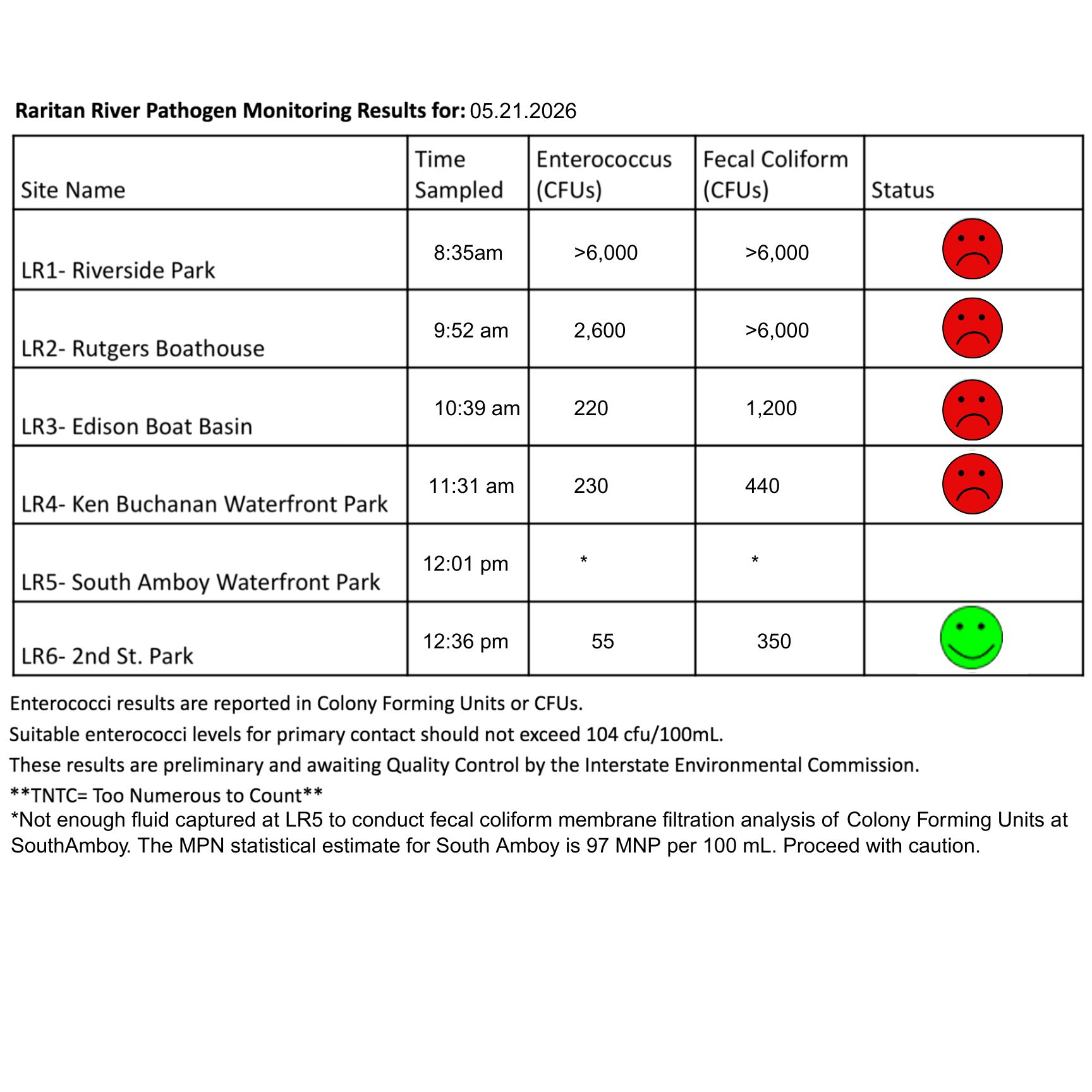
The first pathogen monitoring session of the season took place on Thursday, May 21st. Each week during the summer, from May to October, the Lower Raritan Watershed Partnership and Rutgers Cooperative Extension of Middlesex County run a volunteer-based monitoring program along the Raritan River. We collect water quality samples at six non-bathing public access beach sites, provide our samples to the Interstate Environmental Commission for analysis in their laboratory, and report the results to the public. Our mission is to share this data with the community and partners to ensure the safe use of the Raritan river for all.
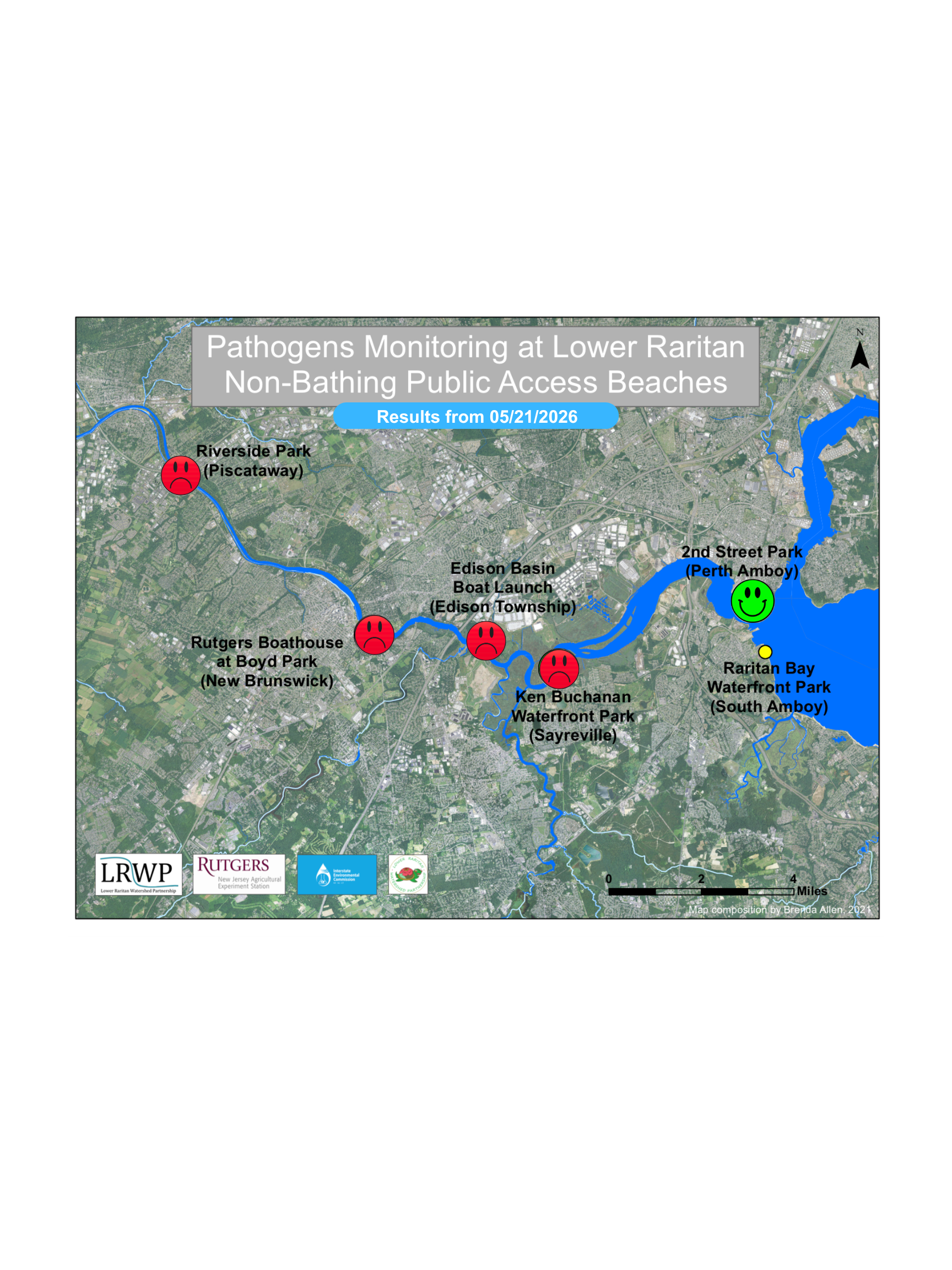
Our lab results for water quality samples taken on Thursday, May 21st, 2026 show Enterococcus bacteria levels exceeding the EPA federal water quality standard of 104 cfu/100mL at four of our monitoring sites this week. Problem sites are indicated by red frowns on the map and chart: Riverside Park (Piscataway), Rutgers Boathouse (New Brunswick), Edison Boat Basin (Edison), Ken Buchanan Waterfront Park (Sayreville). Green smiles on the chart and map indicate the sites with bacteria levels safe for recreation, and include the following: 2nd Street Park (Perth Amboy). For South Amboy, we were unable to analyze enough fluid to complete the membrane filtration process required to measure Colony Forming Units. We have therefore marked that site with an asterisk. Statistical analysis of the sample produced a ‘Most Probable Number’ of 97 enterococci per 100 mL. If this estimate is correct, it would place South Amboy right at the border of acceptable levels of bacteria, so please proceed with caution.
Pathogens/Enterococci levels are used as indicators of the possible presence of disease-causing bacteria in recreational waters. Such pathogens may pose health risks to people coming in primary contact with the water (touching) through recreational activities like fishing, kayaking or swimming in a water body. Possible sources of bacteria include Combined Sewer Overflows (CSOs), improperly functioning wastewater treatment plants, stormwater runoff, leaking septic systems, animal carcasses, pet waste, wildlife waste, and runoff from manure storage areas.
Rainy weather, such as the Thunderstorm we saw on Wednesday evening, often flushes fecal matter into our waterways, and so it is not surprising that so many of our sites failed to meet the safe standard for primary contact.
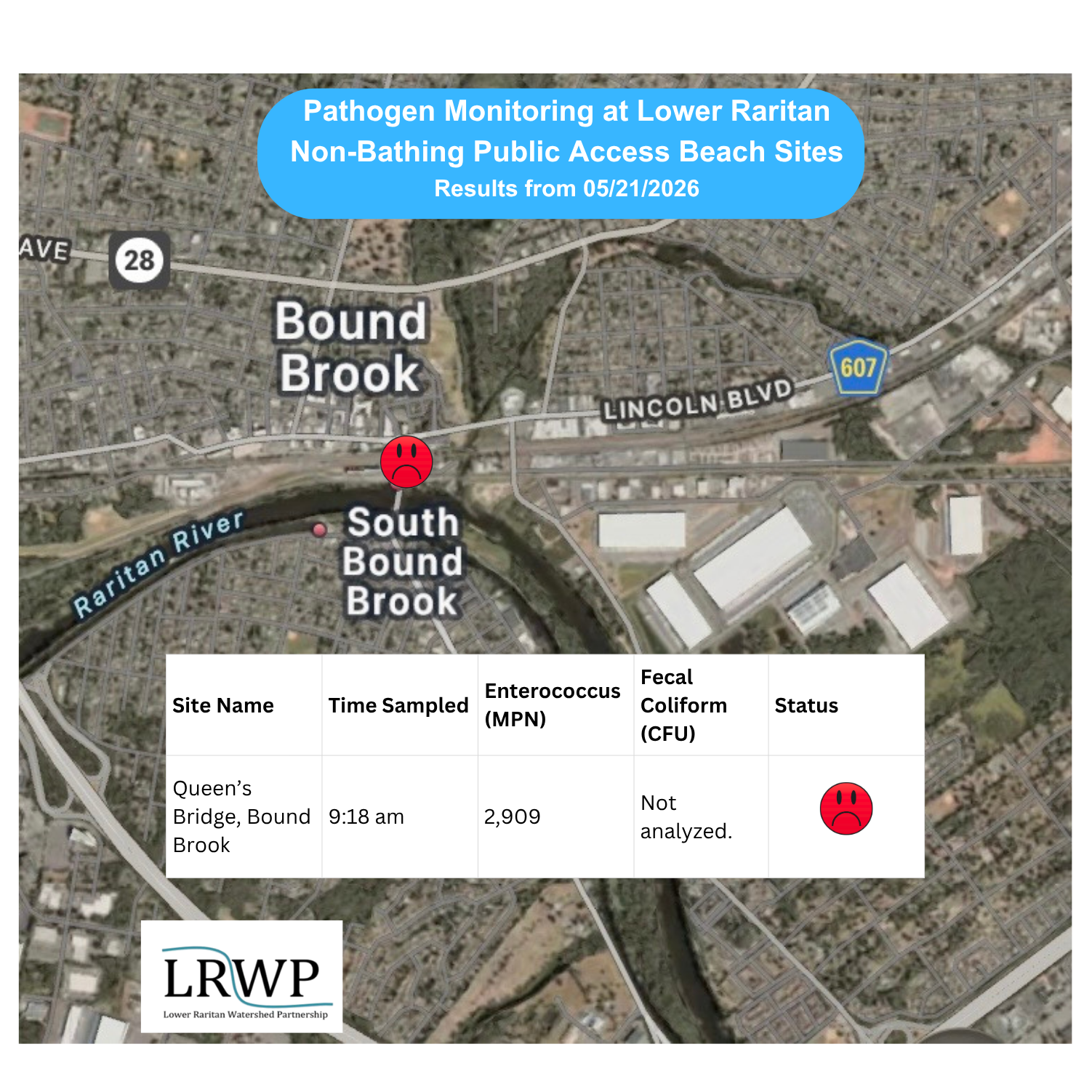
In order to better understand why Riverside Park, Piscataway is our worst performing site over the past six years, we have started sampling further upstream. On May 21st, we sampled the Queen’s Bridge in Bound Brook. The lab analysis produced an estimate of 2,909 enterococci per 100 mL.
Our goal in reporting these results is to give residents a better understanding of the potential health risks related to primary contact during water-based recreation. If you are planning on recreating on the Raritan this weekend, make sure to stay safe and wash up after any activities!
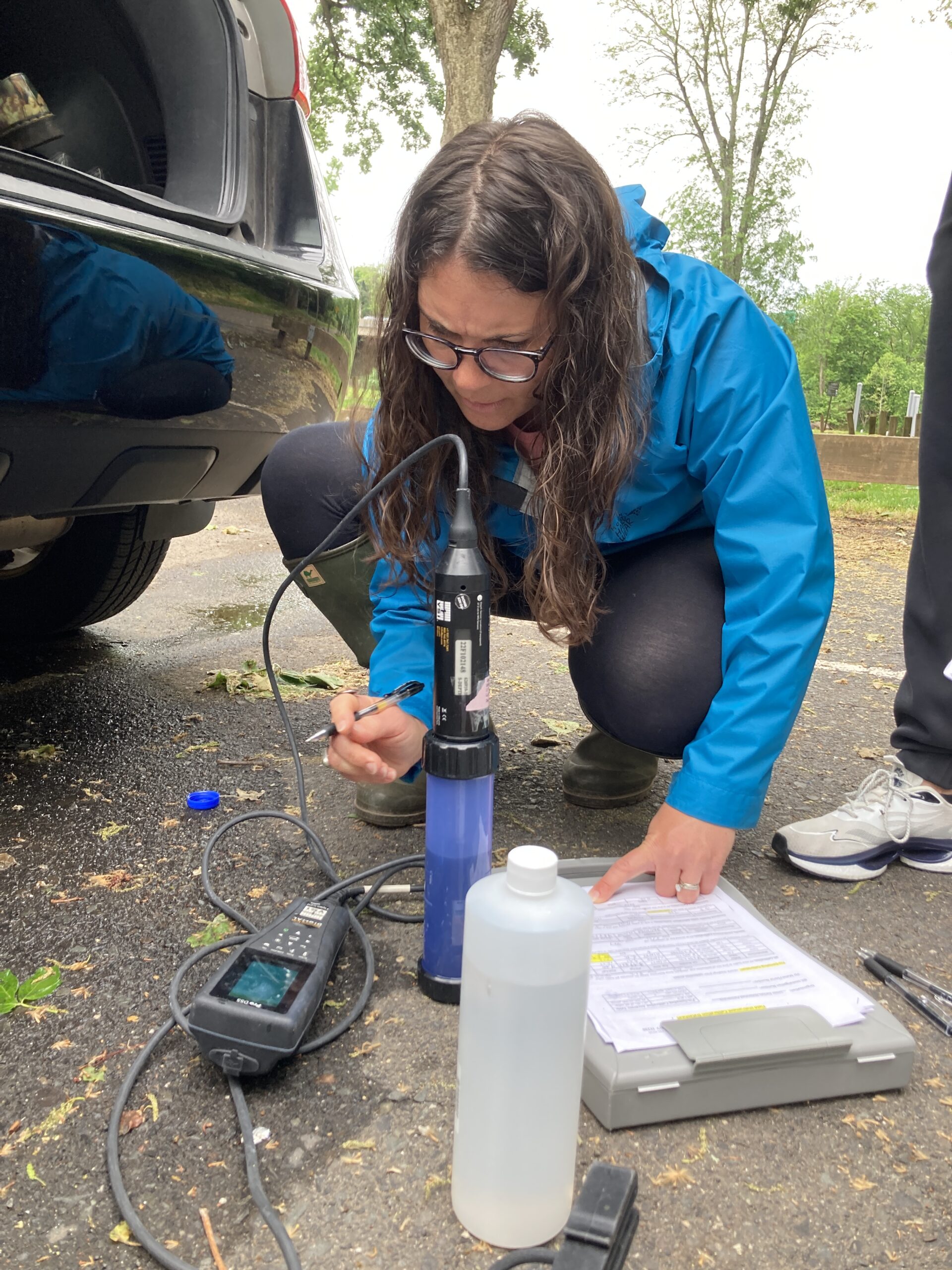
Before sampling begins, Christina calibrates the sonde. Photo credit: — J. Meyer.
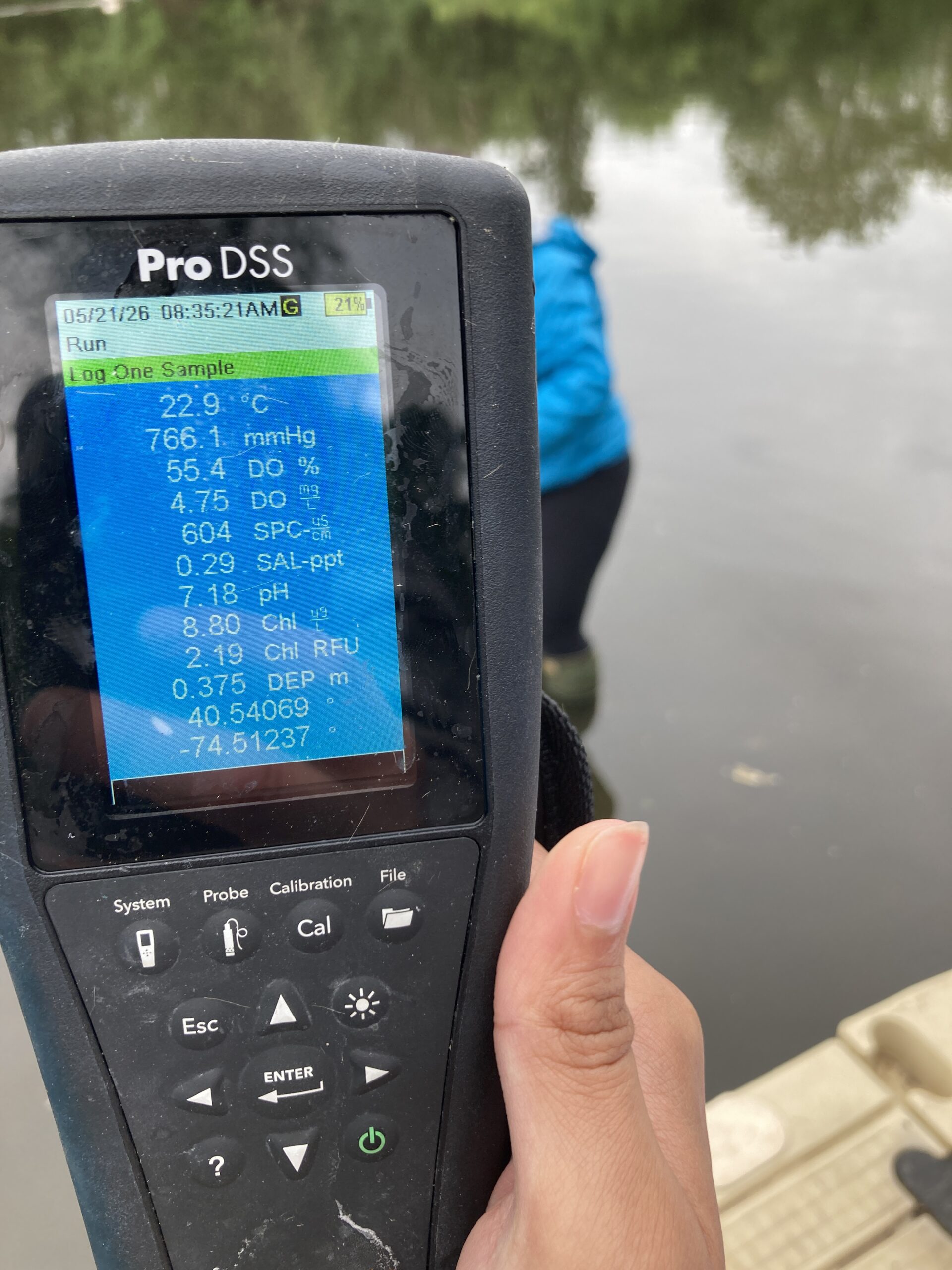
Once calibrated, the sonde provides a rich array of data about each our sites. This week, we noticed unusually low levels of oxygen at Riverside Park. — Photo credit: J. Meyer.
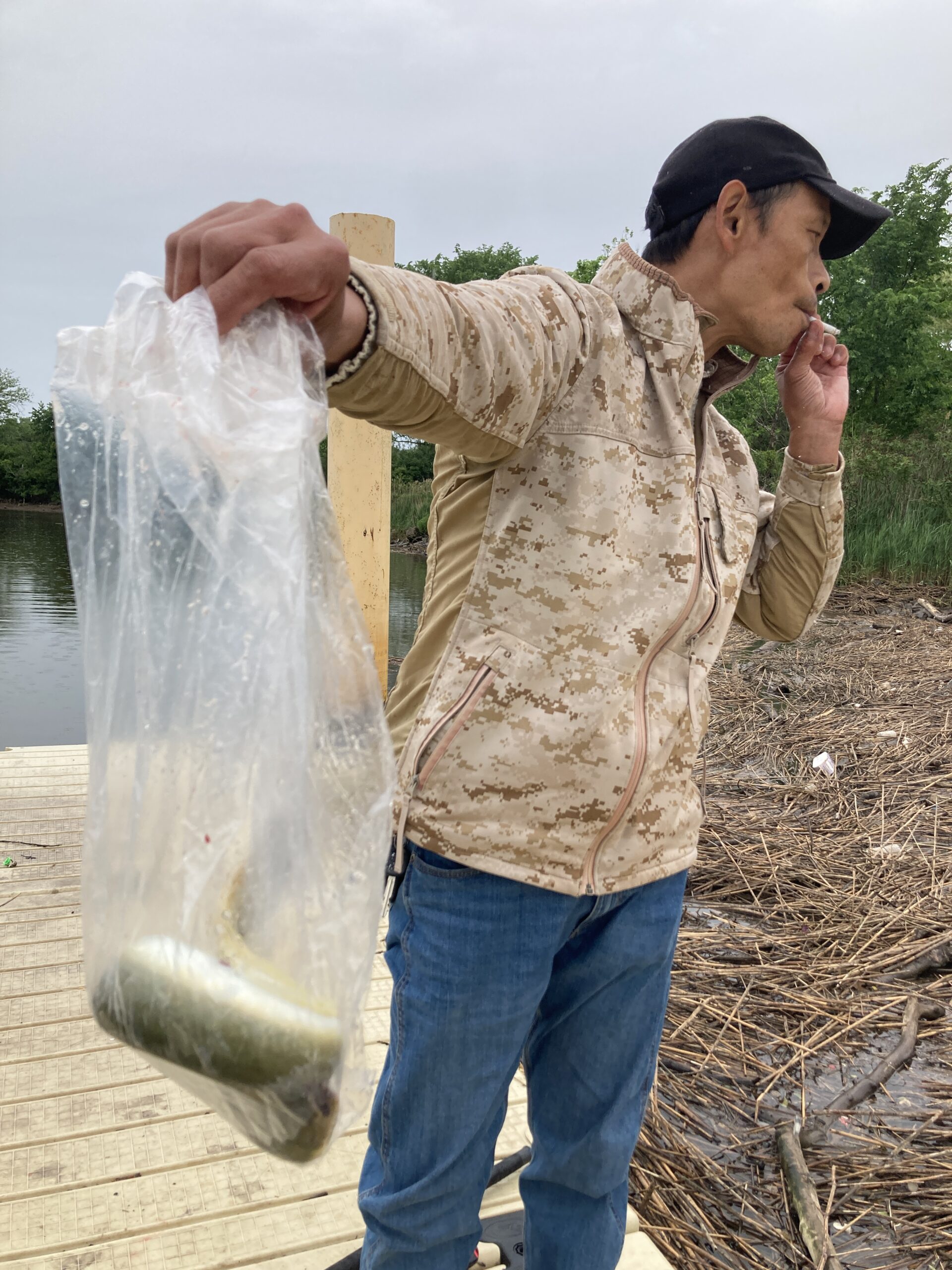
A fisherman bags a large American eel at the Edison Boat Basin. Eels are an important part of the diet in many cultures, but they are also extremely vulnerable to environmental degradation and climate change. Photo credit: — J. Meyer.
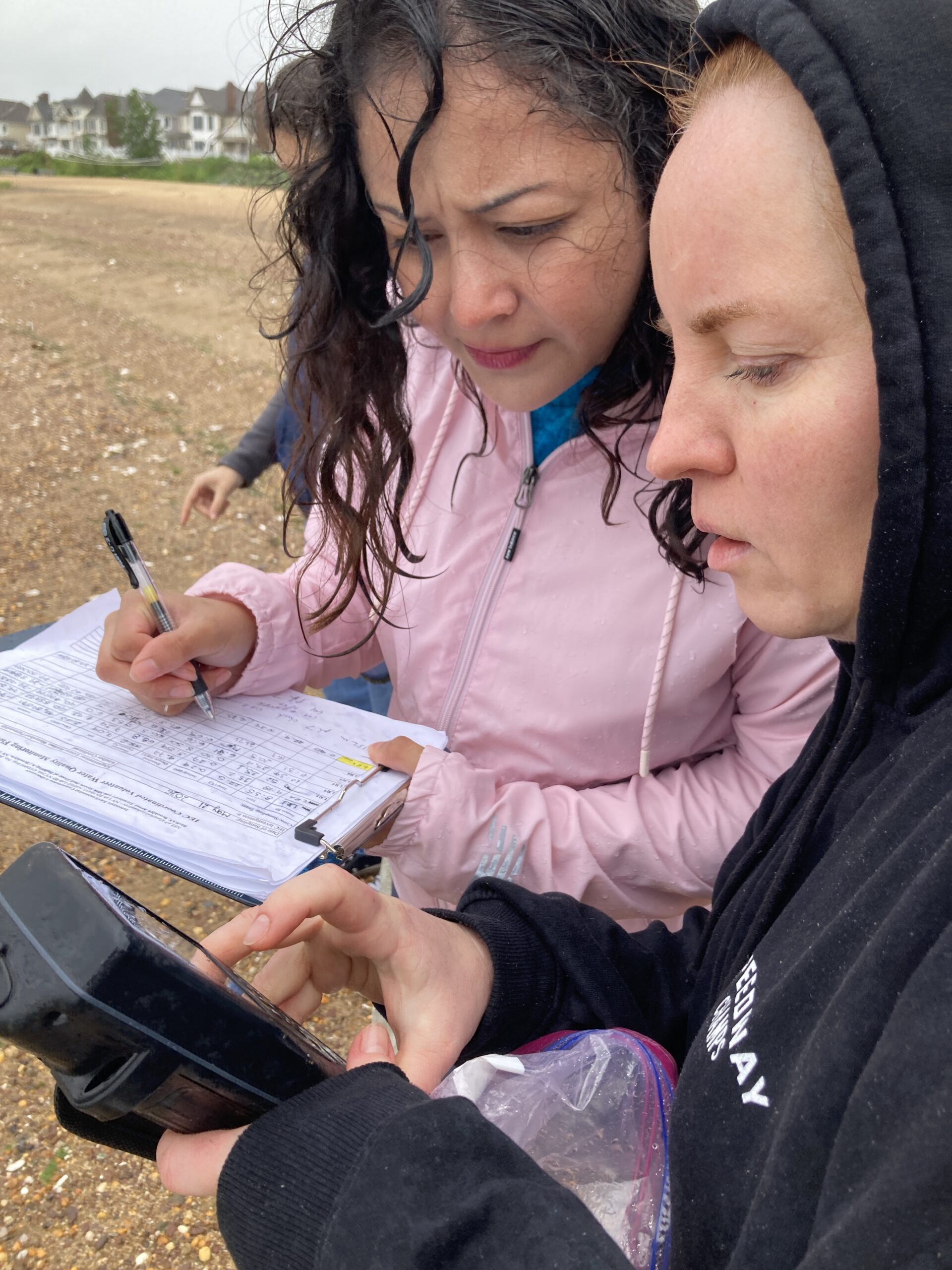
Despite the rain, Susana and Olesia continued to record crucial data in South Amboy.
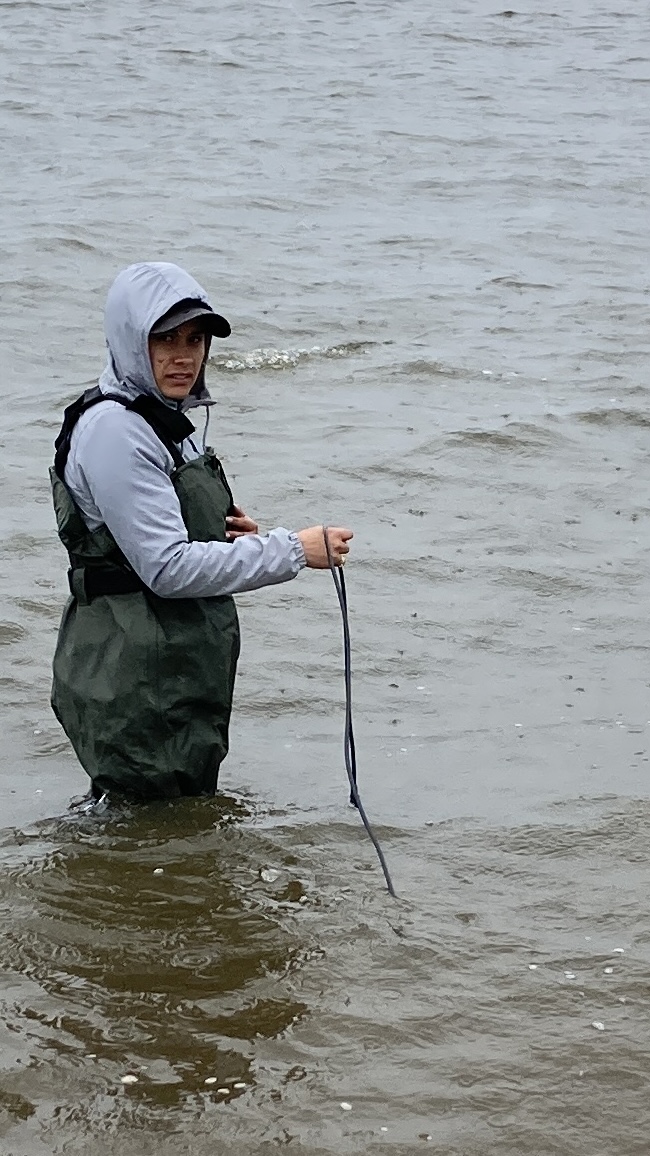
Paula grips the sonde in the chilly waters off South Amboy Waterfront Park.
This past Monday, the Interstate Environmental Commission joined us to train our volunteers. We learned how to collect samples and data with safety and scientific rigor.
Having completed this training, our volunteers will be able to sign-up to help with sample collection, sample preparation, analysis of findings, and science communication. Thank you to all our volunteers, and to the Interstate Environmental Commission!