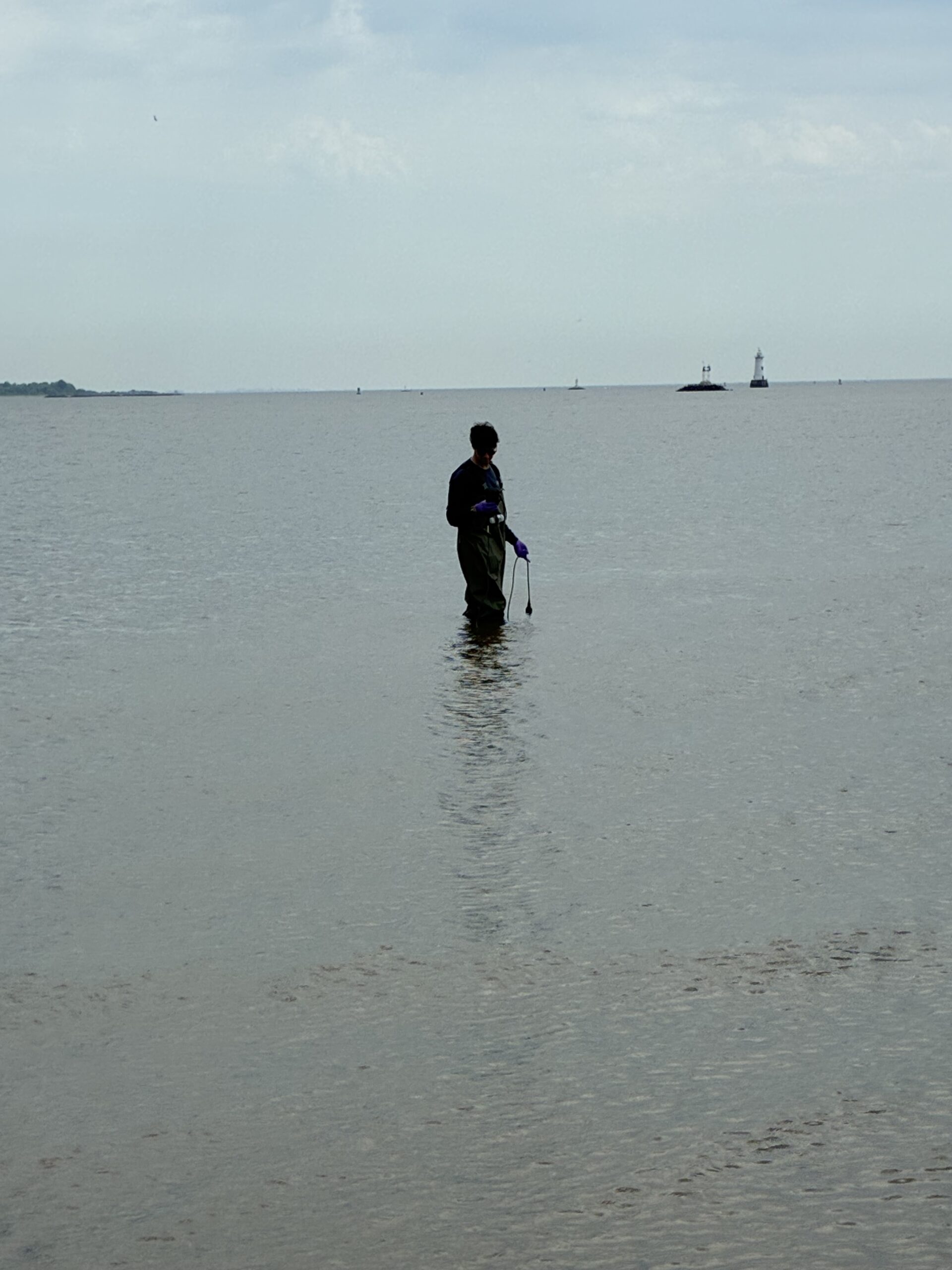
By Endurance Laryea, LRWP Summer Research Intern and J.M. Meyer.
The last pathogen monitoring session of the month took place on Thursday, June 25th. Each week during the summer, from May to October, the Lower Raritan Watershed Partnership and Rutgers Cooperative Extension of Middlesex County run a volunteer-based monitoring program along the Raritan River. We collect water quality samples at six non-bathing public access beach sites, provide our samples to the Interstate Environmental Commission for analysis in their laboratory, and report the results to the public. Our mission is to share this data with the community and partners to ensure the safe use of the Raritan River for all.
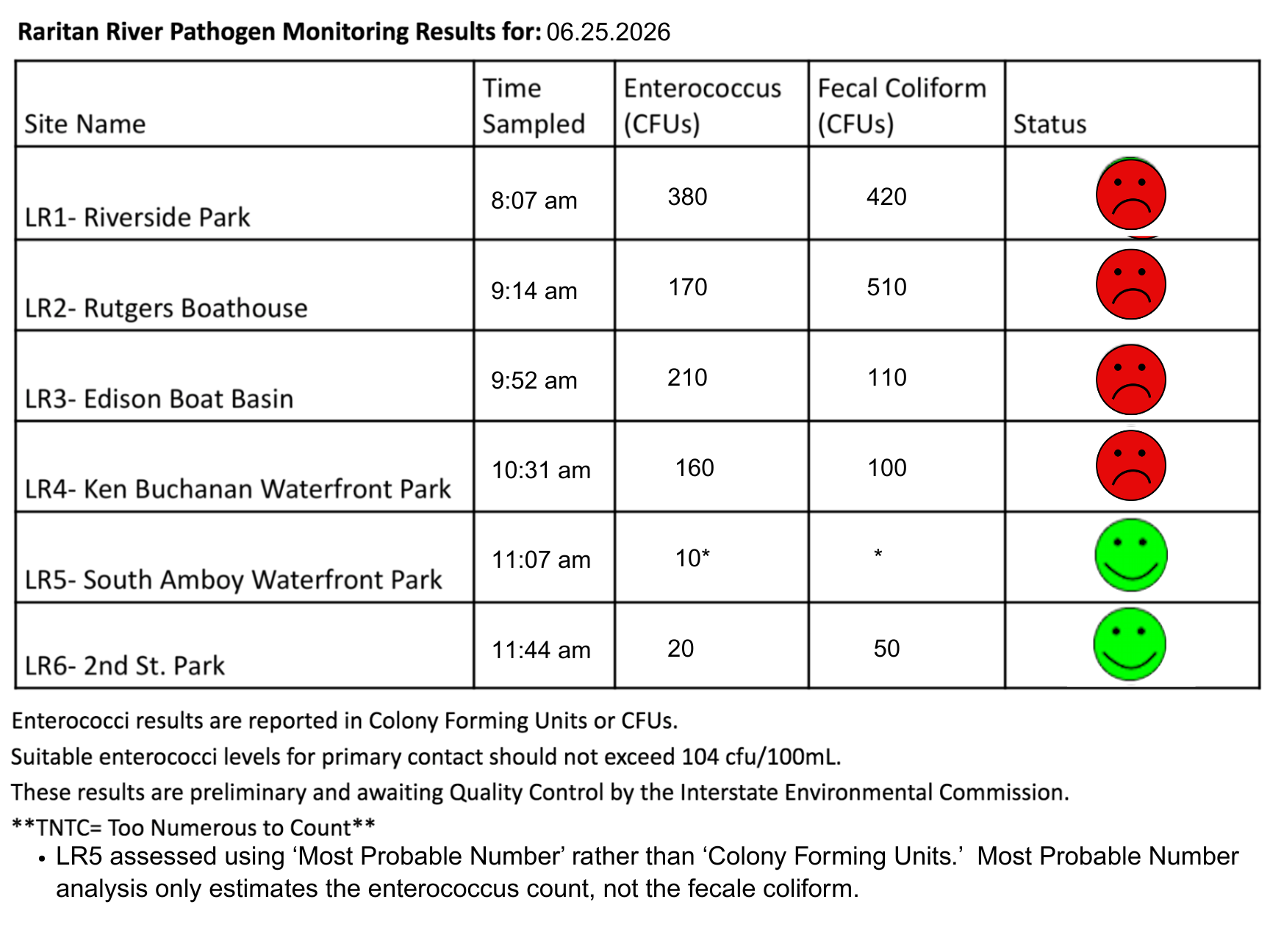
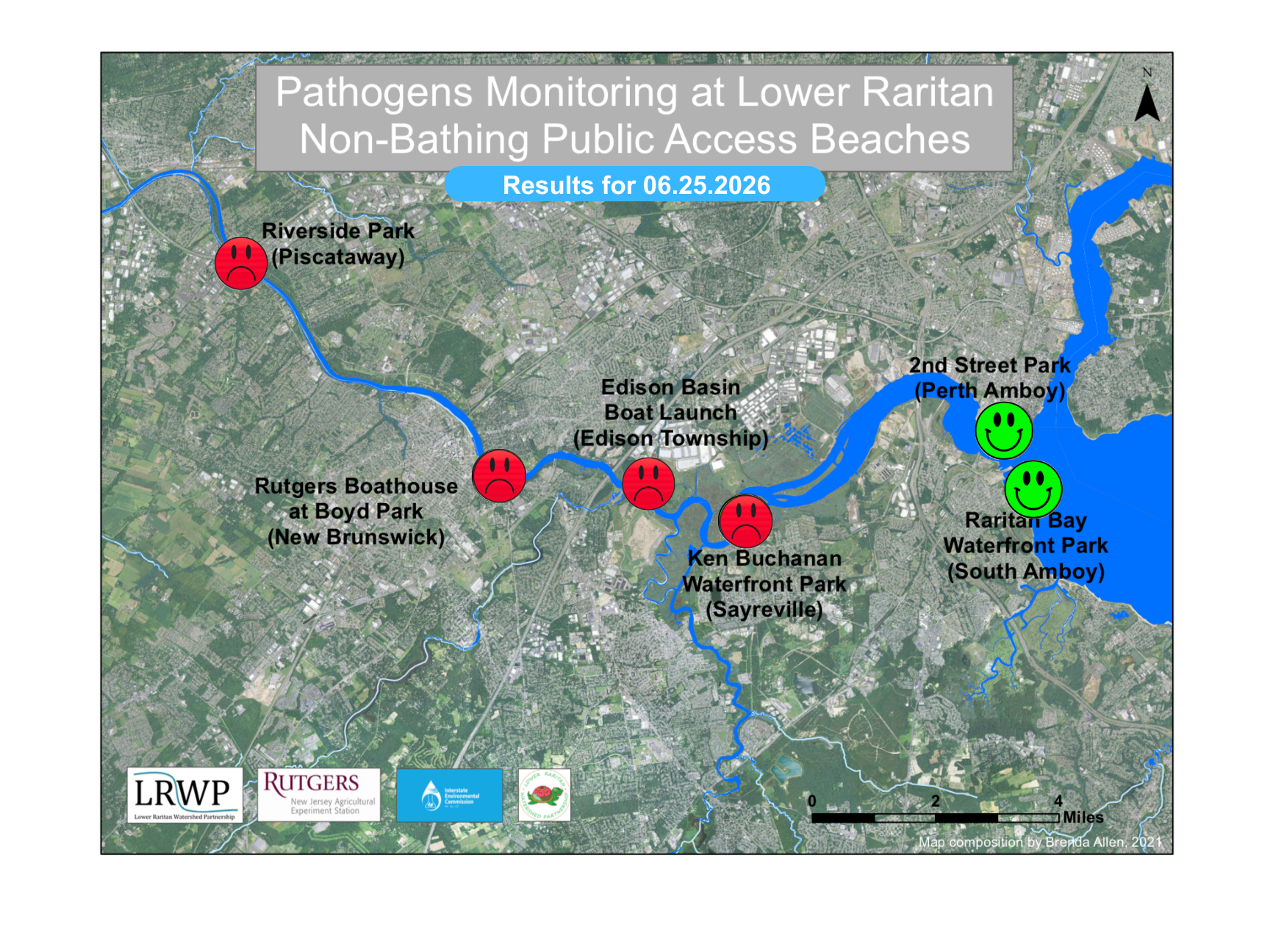
Our lab results for water quality samples taken on Thursday, June 25th, 2026, show Enterococcus bacteria levels exceeding the EPA federal water quality standard of 104 cfu/100mL atone of our monitoring sites this week. The problem site is indicated by the red frown on the map and chart: Riverside Park (Piscataway), Rutgers Boathouse (New Brunswick), Edison Boat Basin (Edison), Ken Buchanan Waterfront Park (Sayreville). Rutgers. Green smiles on the chart and map indicate the sites with bacteria levels safe for recreation and include the following: 2nd Street Park (Perth Amboy), and South Amboy Waterfront Park.
Pathogens/Enterococci levels are used as indicators of the possible presence of disease-causing bacteria in recreational waters. Such pathogens may pose health risks to people coming in primary contact with the water (touching) through recreational activities like fishing, kayaking or swimming in a water body. Possible sources of bacteria include Combined Sewer Overflows (CSOs), improperly functioning wastewater treatment plants, stormwater runoff, leaking septic systems, animal carcasses, pet waste, wildlife waste, and runoff from manure storage areas.
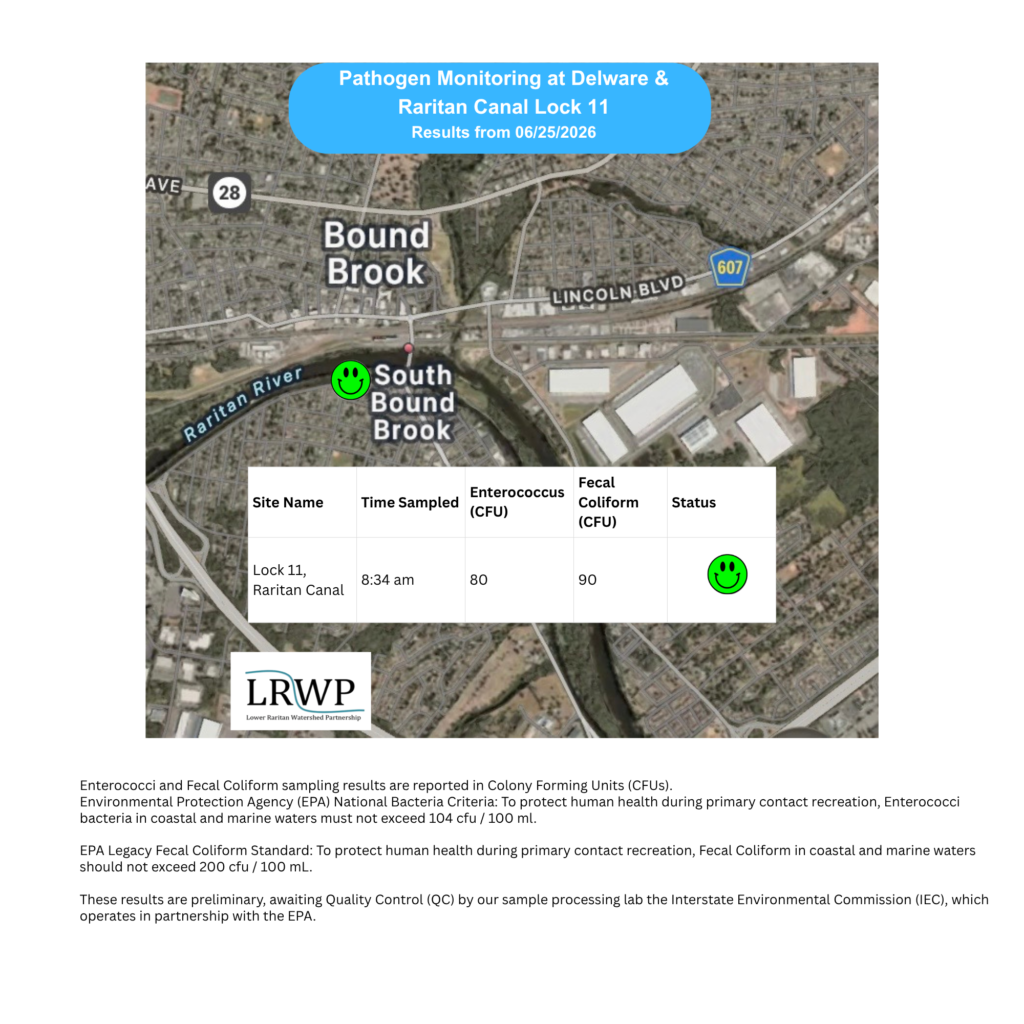
In order to better understand why Riverside Park, Piscataway has been our worst performing site over the past six years, we have started sampling further upstream. On June 25th, we sampled the Lock site a second time since we started pathogens monitoring this season. The lab analysis produced 80 enterococci cfu per 100mL which flies beneath the EPA federal water quality standard of 104 cfu/100mL. Once again, the D&R Canal has proved cleaner than the site at Riverside Park, Piscataway.
Our goal in reporting these results is to give residents a better understanding of the potential health risks related to primary contact during water-based recreation. If you are planning on recreating on the Raritan this weekend, make sure to stay safe and wash up after any activities!
On a clear and sunny morning, the team set out today for the fourth monitoring session of the month. Most of the sites were serene with little activity. A beautiful reminder that rest is part of nature.
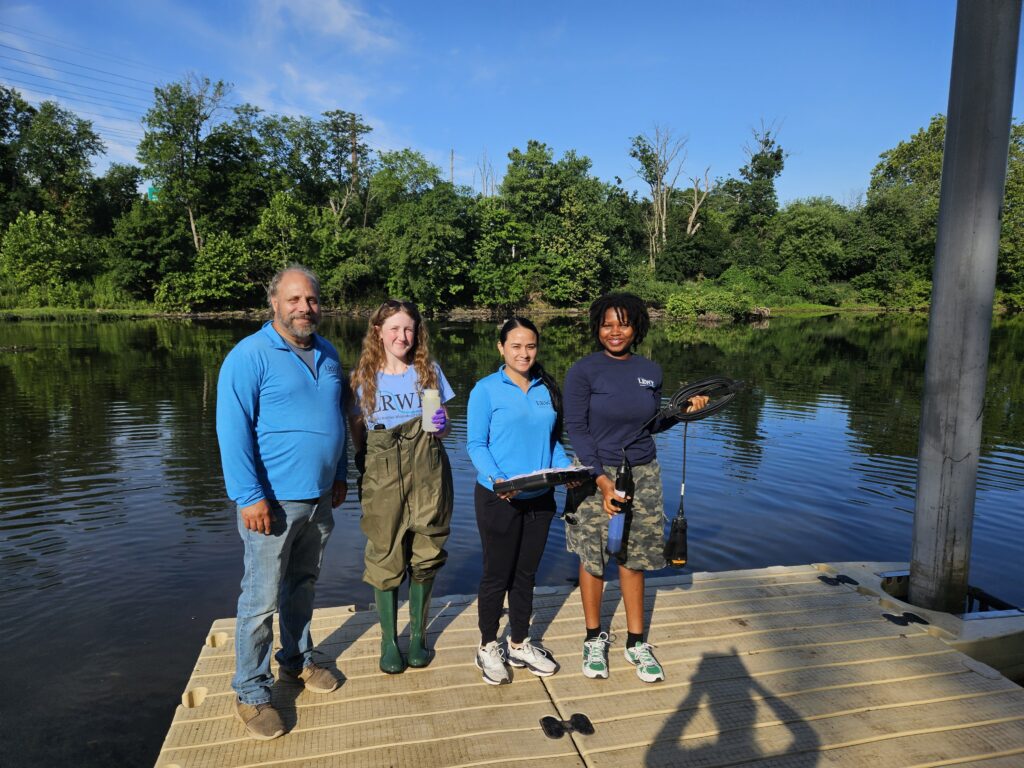
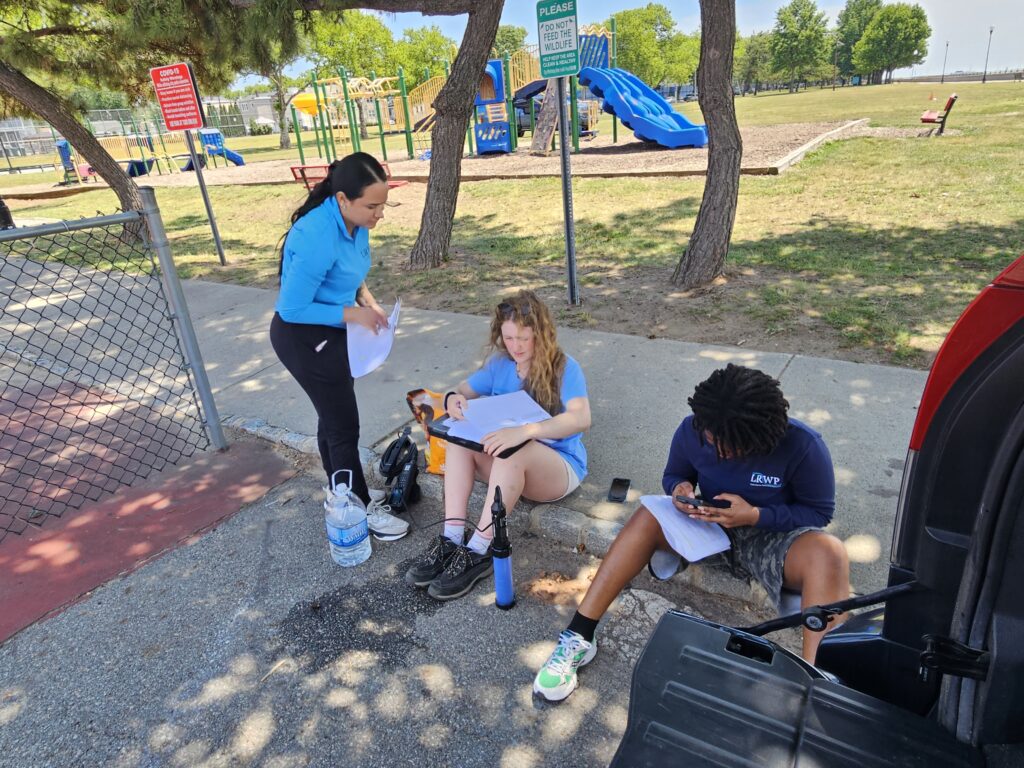
The team, today! Mike, Ashley, Paula, Endurance and Heather (taking the photo)- Photo by Heather Fenyk.
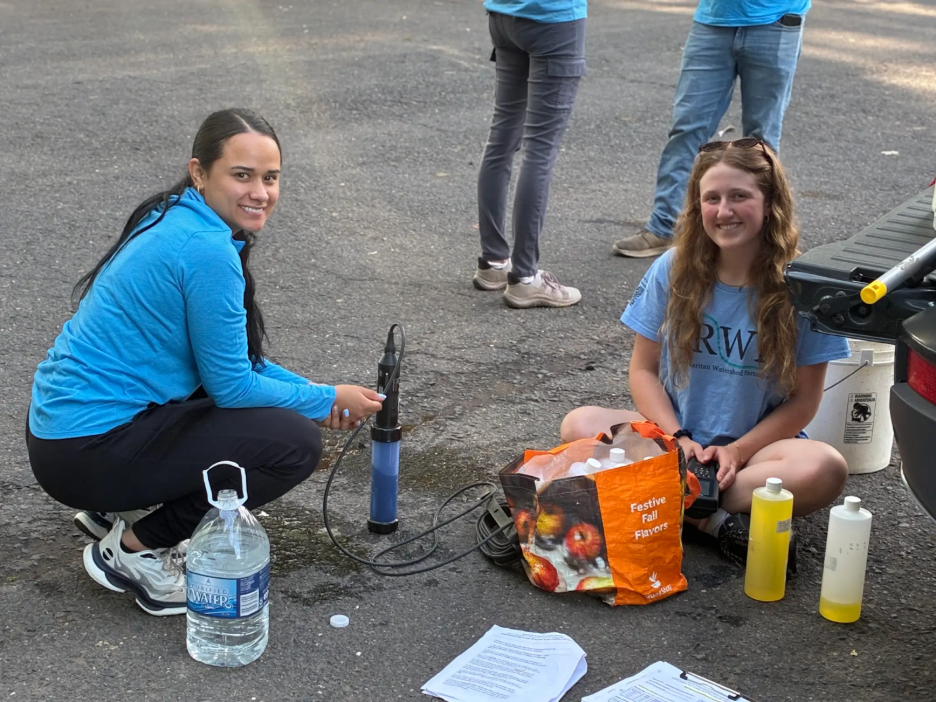
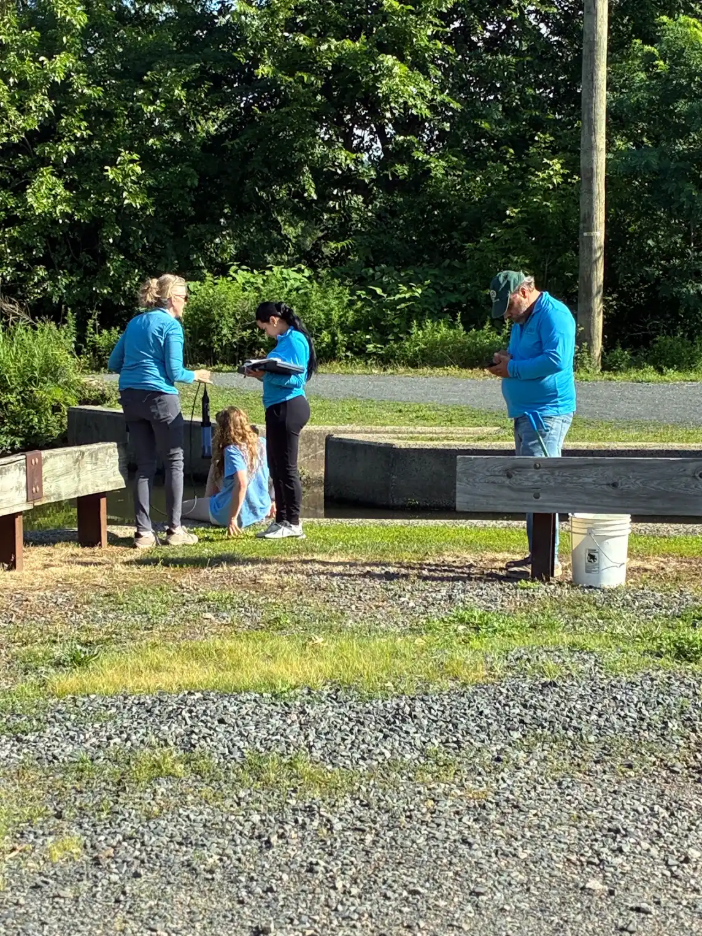
With beautiful smiles, Paula and Ashley pause quickly for a moment from calibrating the sonde to pose for a quick photo. Photo by Endurance Laryea.
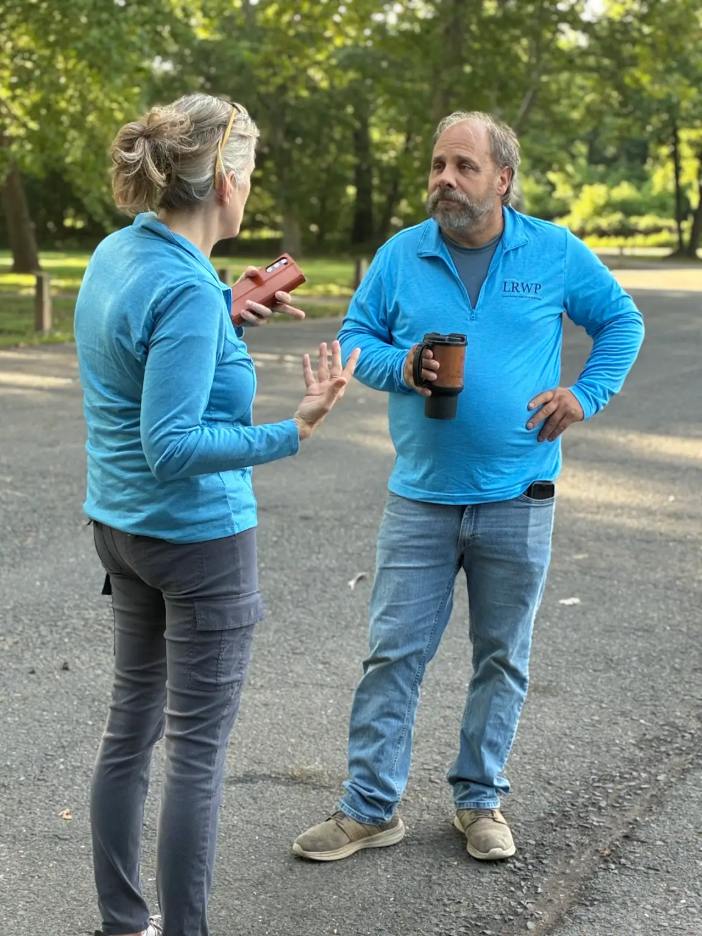
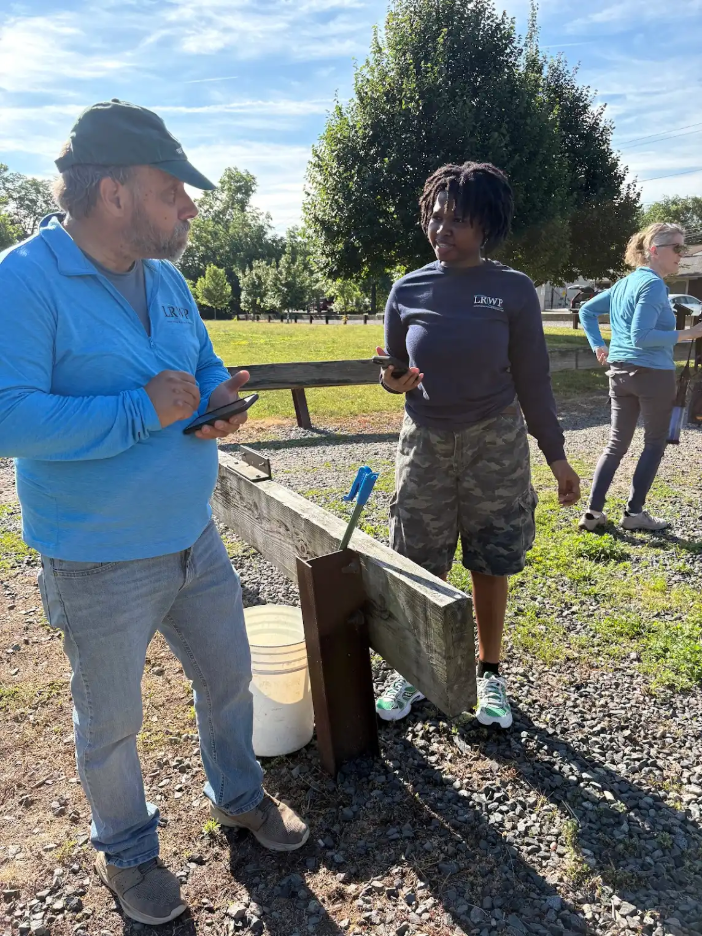
Mike and Heather had an intriguing conversation about landscape development—discussing ways in which the environment around the river sites we visit can be improved to help water safety.
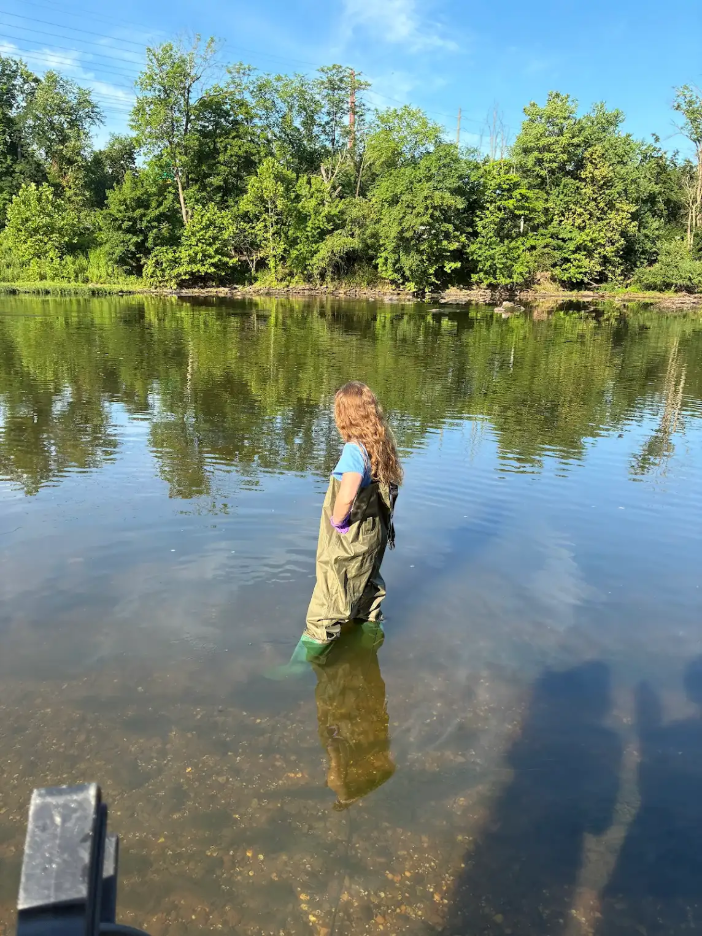
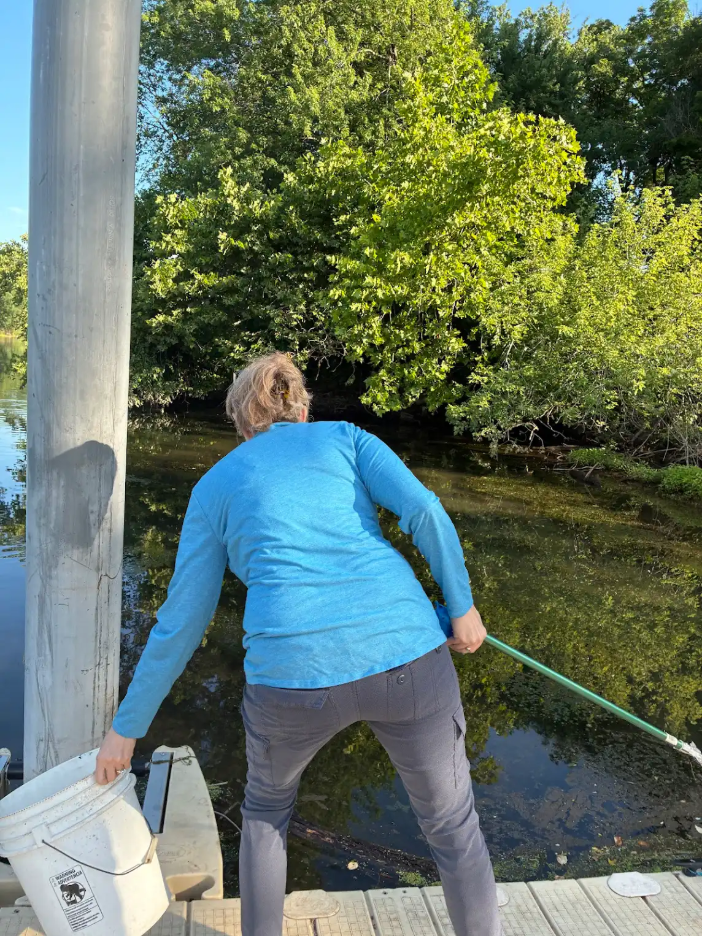
Launching the day’s sampling at our first site, Riverside Park, is Ashley taking the sample. Photo by Endurance Laryea.
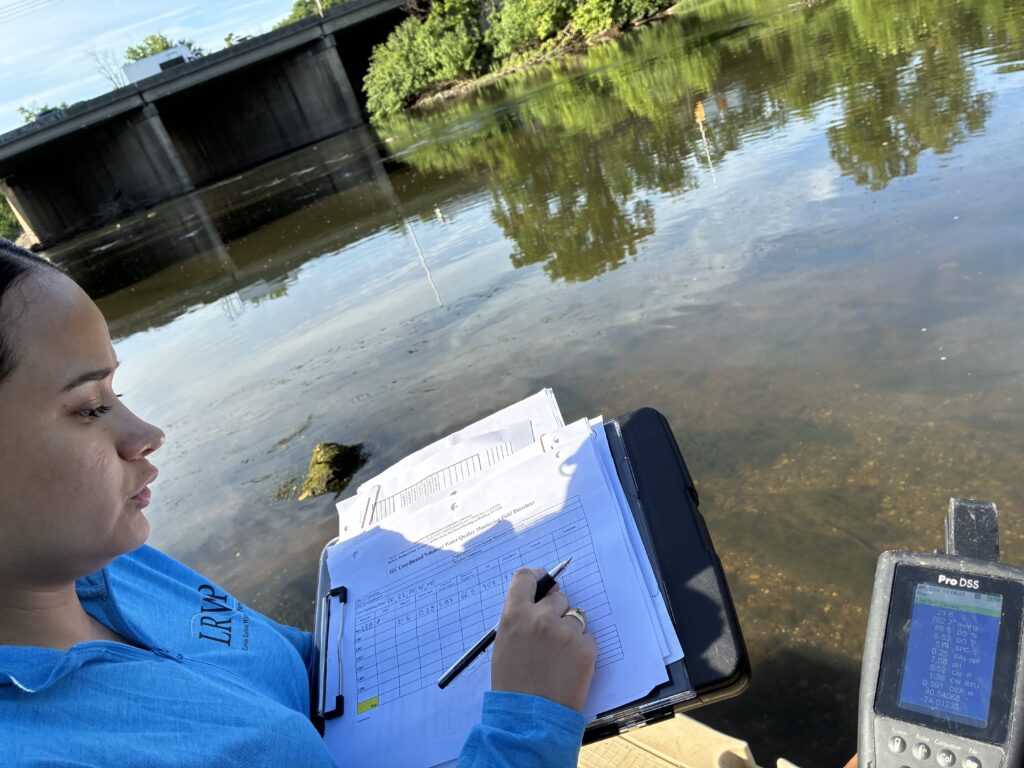
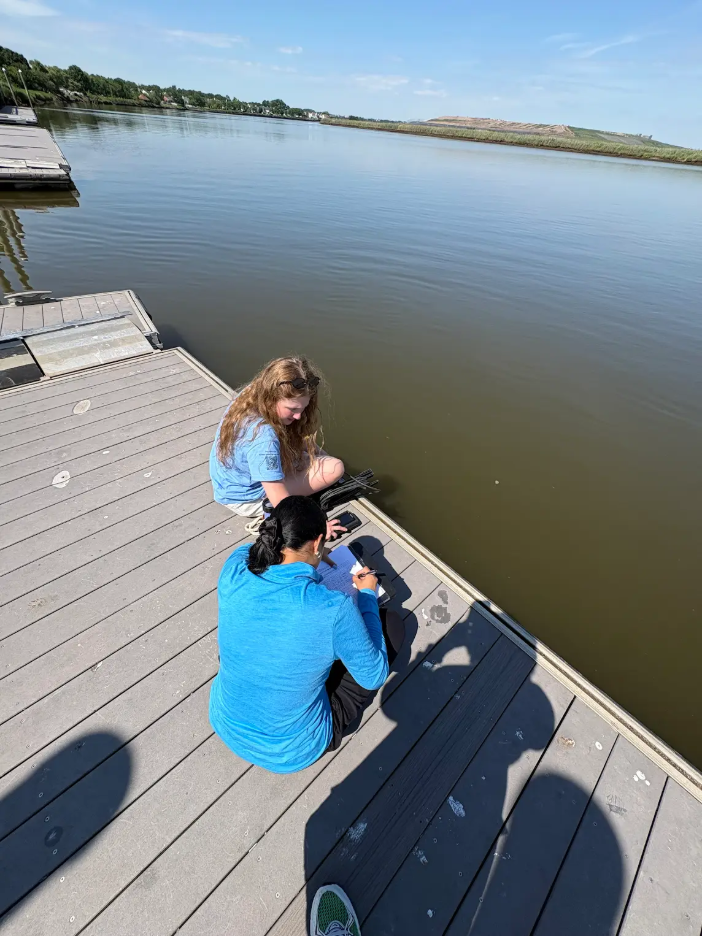
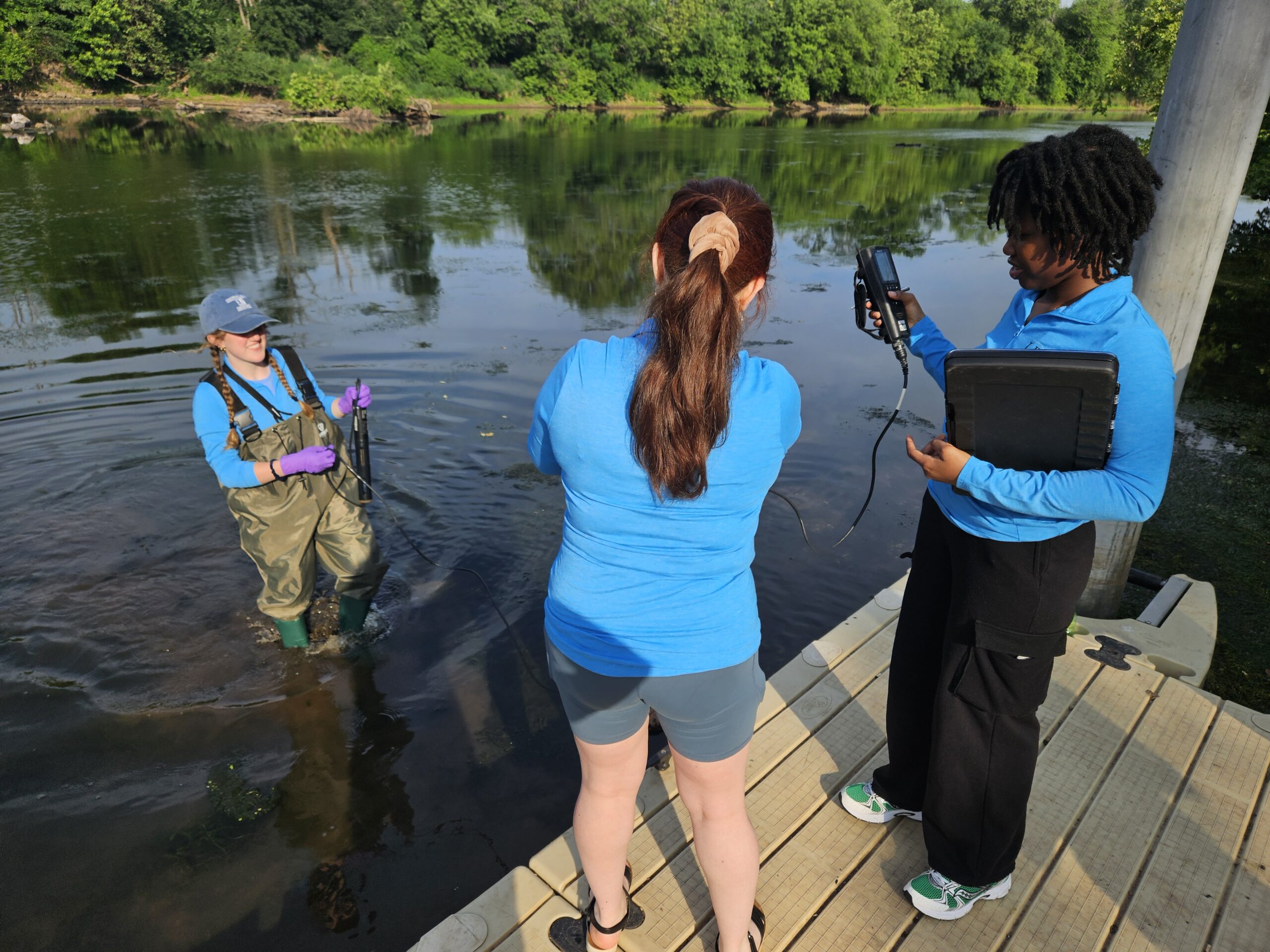
Paula records the values of pH, salinity, chlorophyll RFU, oxygen saturation, temperature amongst others from the sonde. Photo by Endurance Laryea.
Heather on trash pickup duty at Riverside Park. Photo by Endurance Laryea.
We visited Lock 11 for the second time. It is amongst the four new sites we are investigating this summer, and it passed the EPA safety level for enterococcus CFU on our last visit, and it passed again this time with a value of 80 CFU, below the safety level of 105 CFU.
Heather, Ashley, and Paula take measurements from the canal at Lock 11 while Mike completes the visual assessment form. Photo by Endurance Laryea.
Photo by Paula Rubio.
Of all the sites, New Brunswick was our busiest site today.
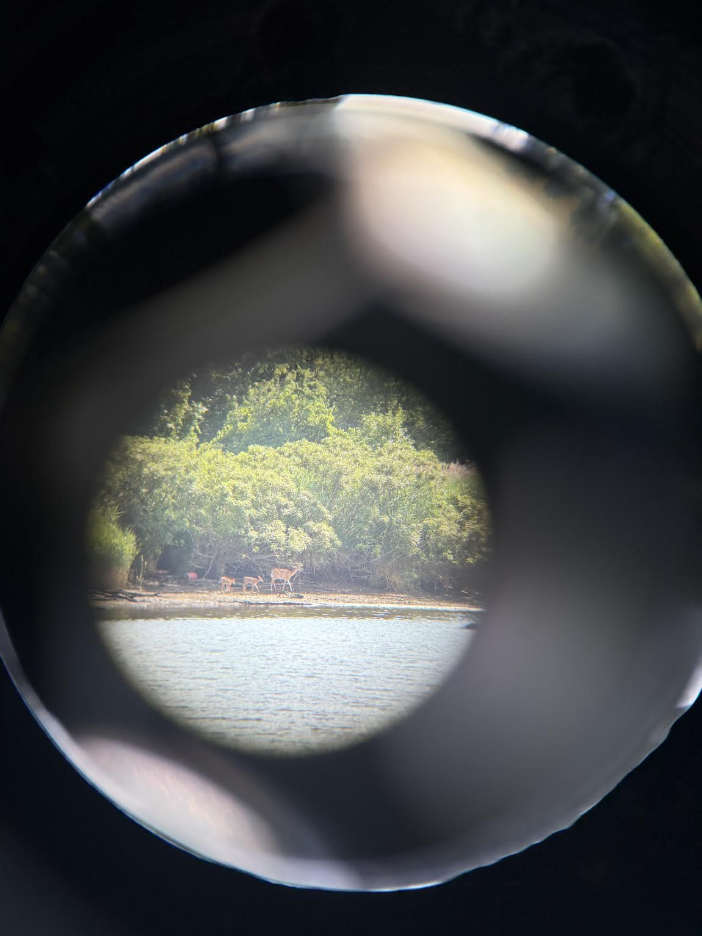
At Rutgers Boat House, two fawns and a doe were spotted on the other side. We thought they were the cutest things we saw today! Photo taken by Ashley Fritz.
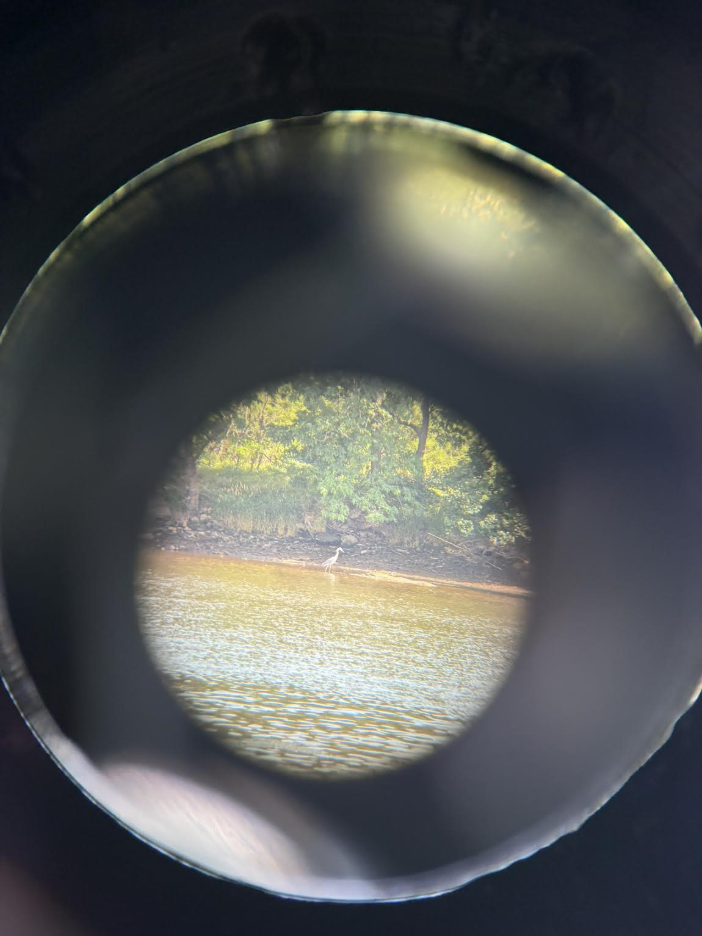
That’s Asley’s favorite bird, the Great Blue Heron! Photo by Ashley Fritz.
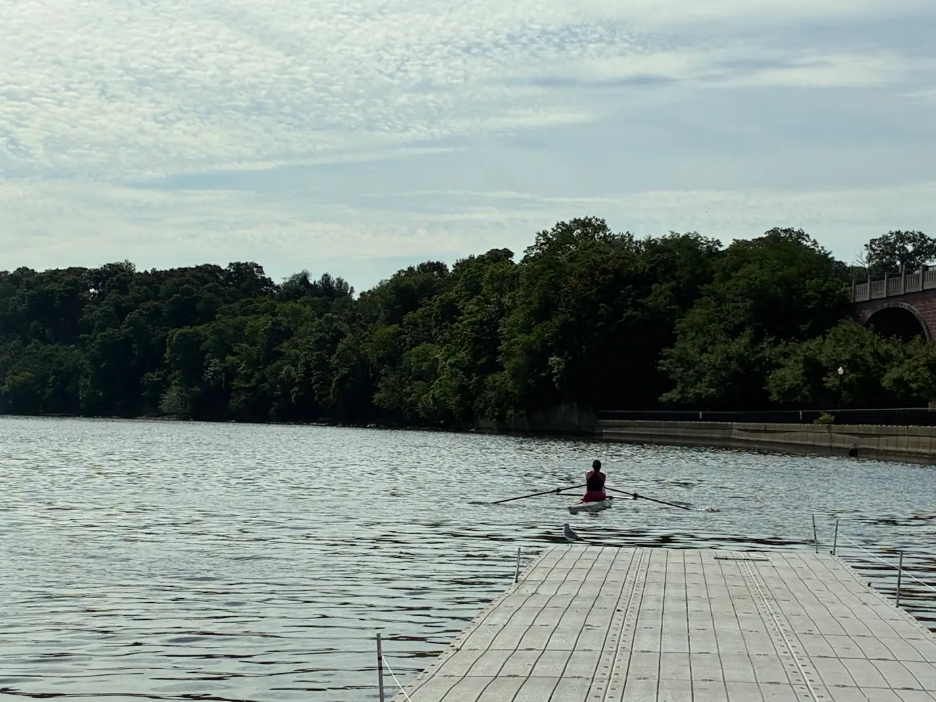
Today is not the first time seeing this Rutgers rower and her coach. But today, the team had the opportunity to explain what the Lower Raritan Watershed Partnership and its team does.
Photo by Ashley Fritz.
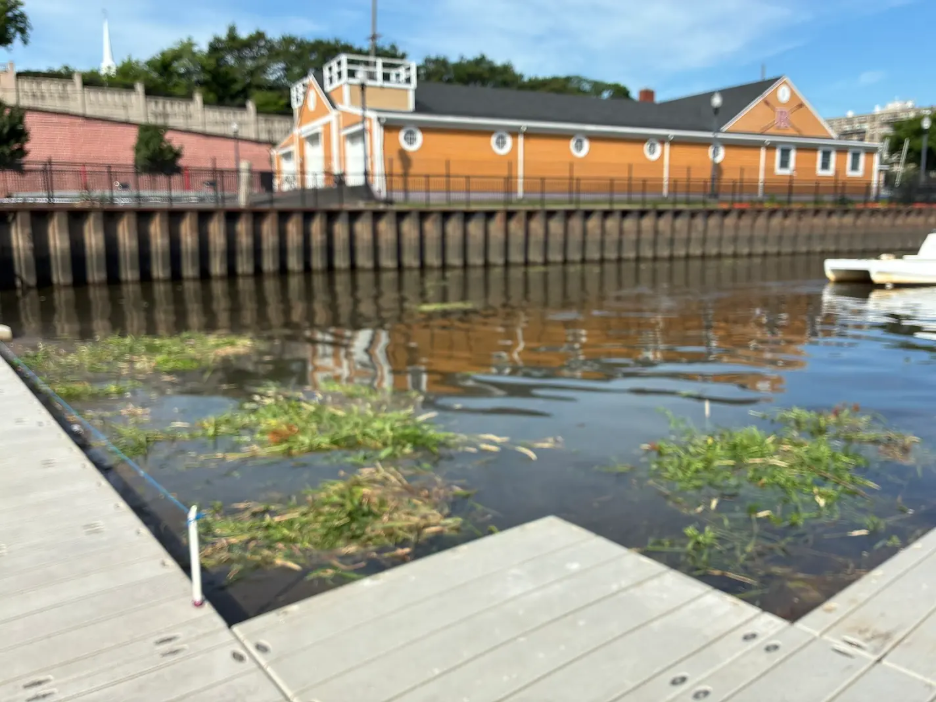
Grass being cut from the vegetation near the boat house floating near the dock. Photo by Endurance Laryea.
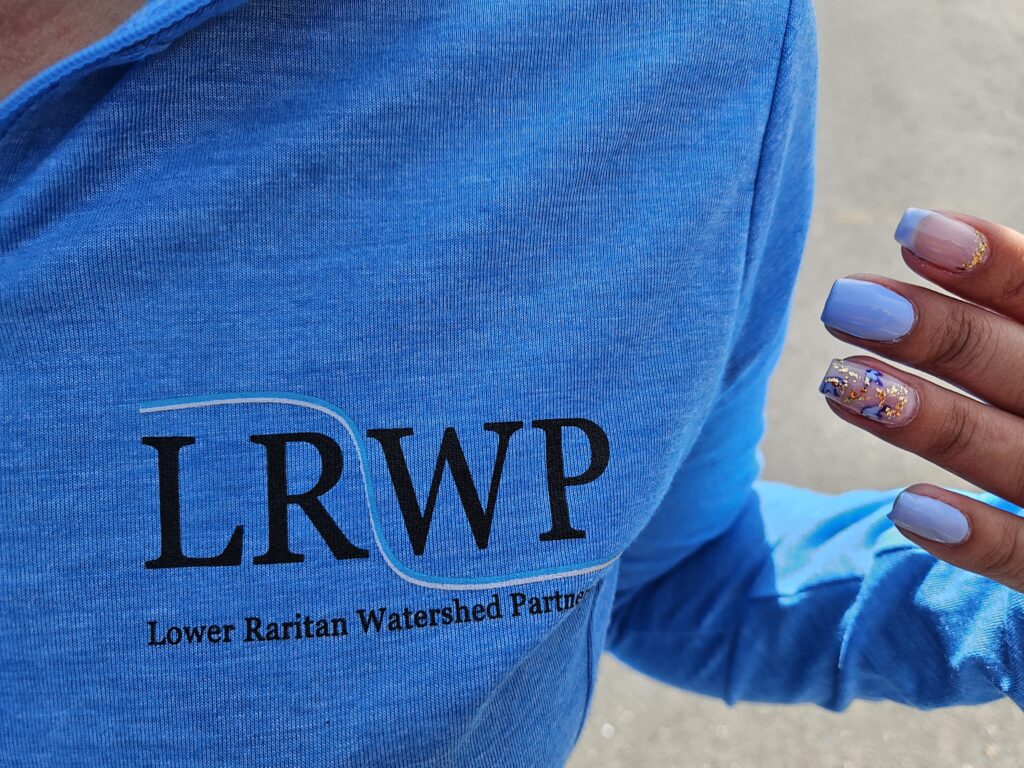
Heather was so excited about Paula’s nails matching LRWP’s colors that she had to take a picture! Photo by Heather Fenyk.
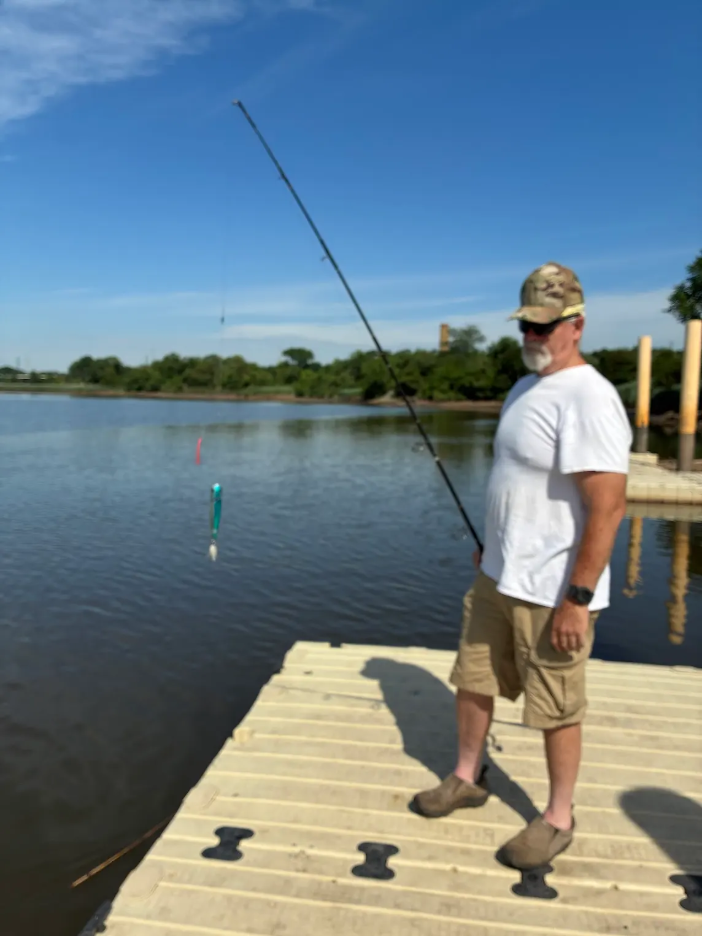
Not much was happening at Edison Boat Launch today, but we did speak to this nice fisherman with his line and hook and bait. He had not caught any fish at the time of our conversation and reasoned that it may be due to low tides. He was the only one at the boat launch by the time we were done and leaving. Photo by Endurance Laryea.
Ashley and Paula recording values at Sayreville. Photo by Endurance Laryea.
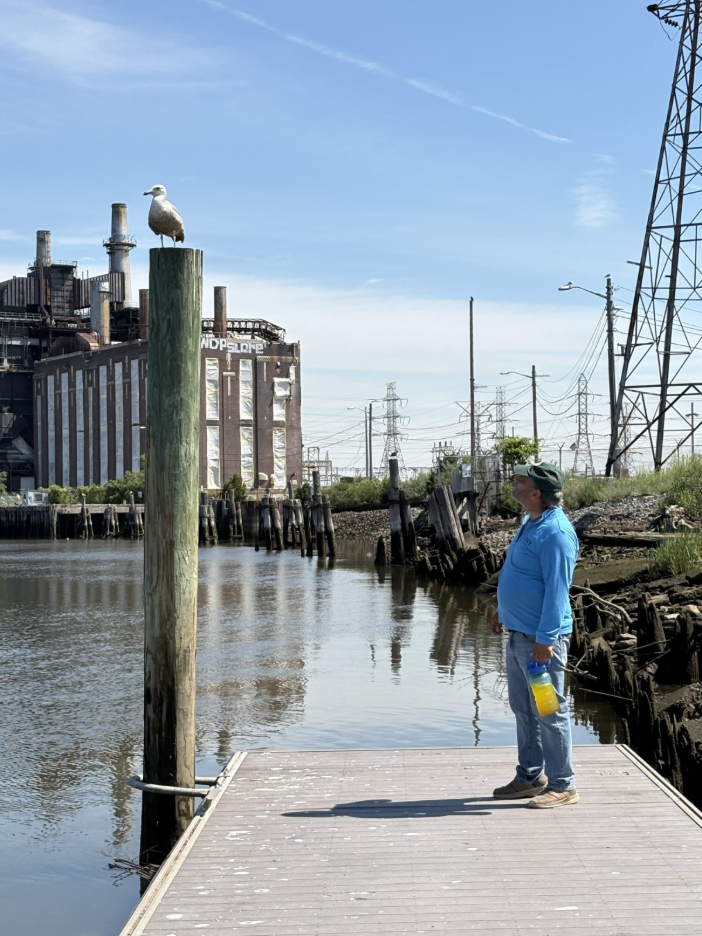
Taken aback by the presence of the seagull on the pole, after he has stood by the pole for a while without noticing it, Mike expresses his surprise to the seagull as though it can understand him. A funny encounter that I had to capture. Photo by Endurance Laryea.
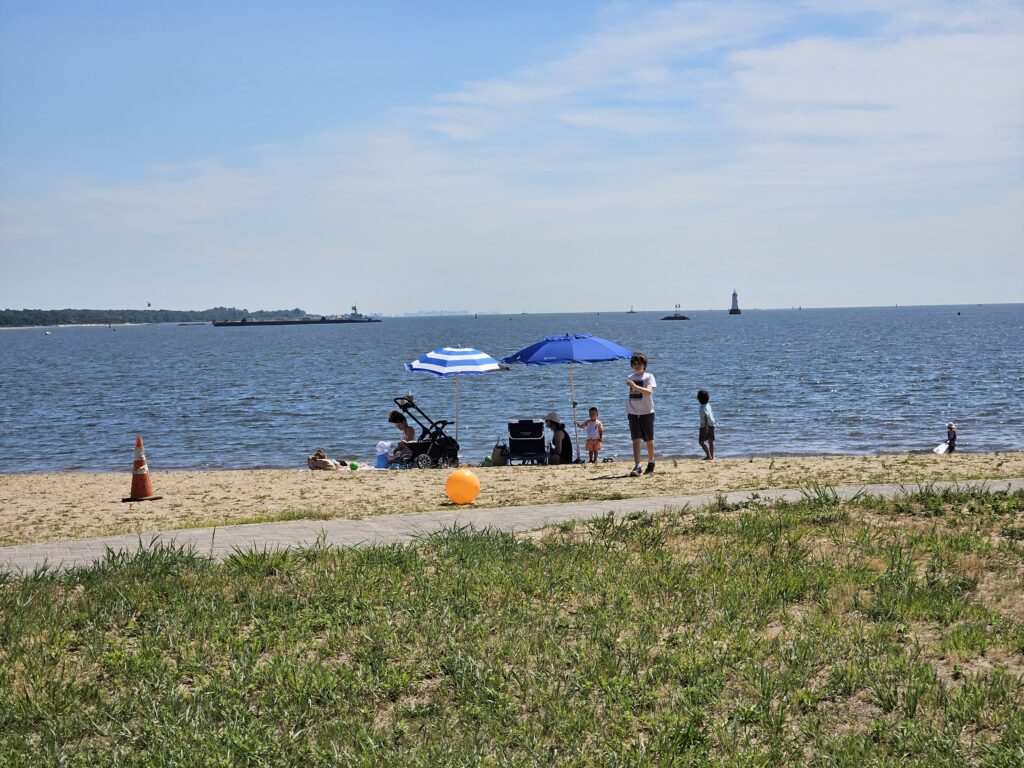
A family spotted picnicking at Waterfront Park, South Amboy. Photo by Heather Fenyk.
Paula on sampling duty at South Amboy. Photo by Endurance.
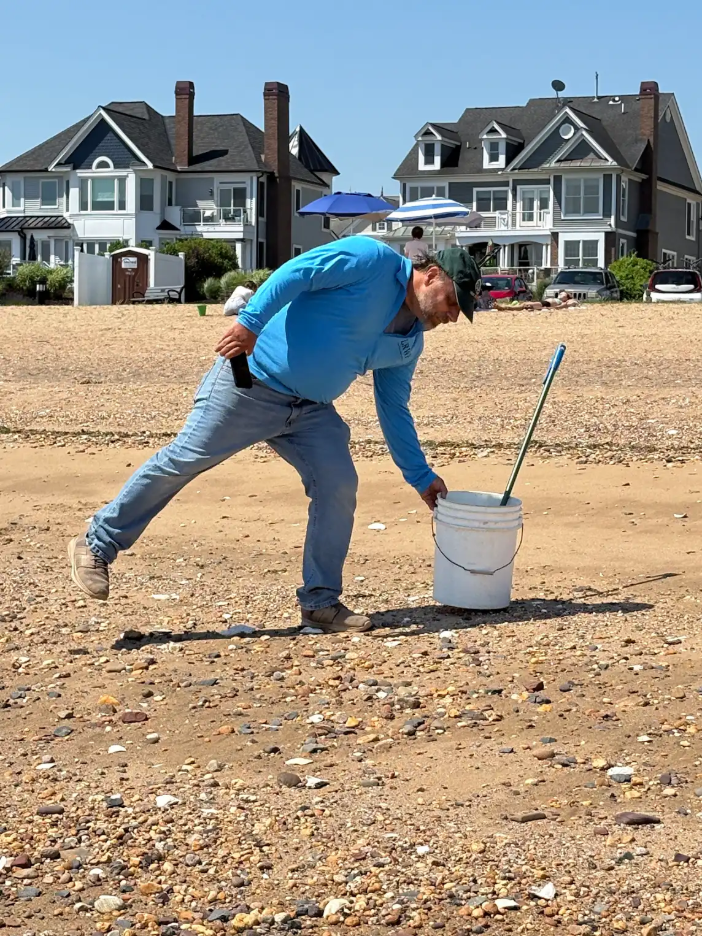
Mikeon trash pickup duty. Photo by Endurance Laryea.
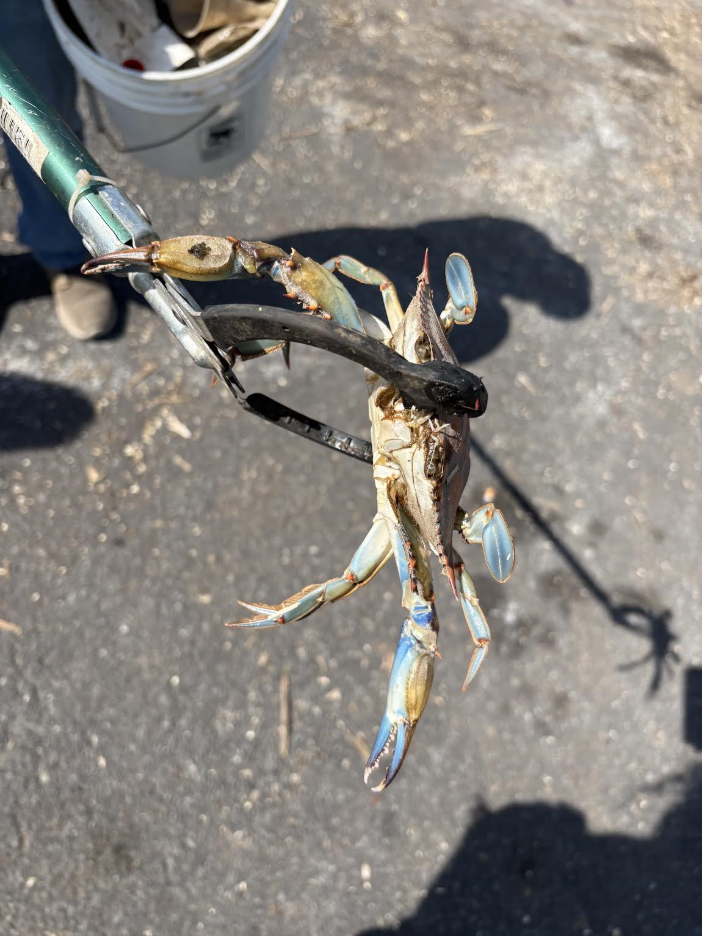
A dead blue crab on the shore at Waterfront Park, South Amboy.
Our monitoring session was wrapped up at 2nd Street Park, Perth Amboy. The last sample bottle of the day was added to the cooler. We proceeded with the post-sampling calibration of the sonde as we waited for Alexa, a representative from the Interstate Environmental Commission (IEC), to pick up our samples and send them to the lab for testing.
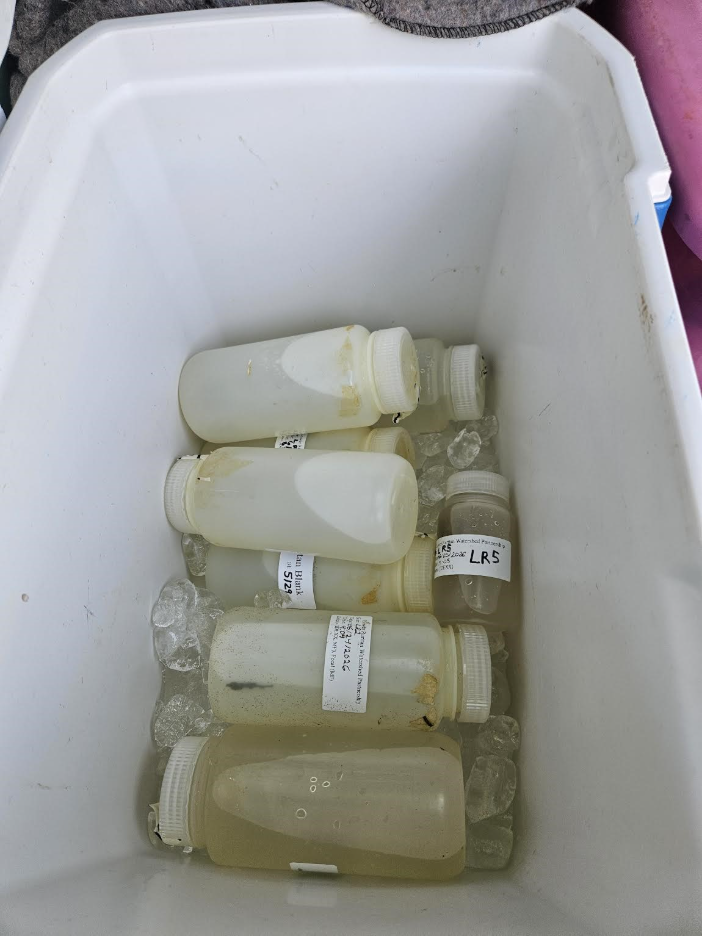
Samples from all seven sites visited today and a blank sample. The blank sample is a sample of pure water which is placed together with the samples in the cooler and used as a reference for comparison during testing—it serves as a control. Photo by Heather Fenyk.
Paula, Ashley, and Endurance handling post-sampling calibration and visual habit evaluation. Photo by Heather Fenyk.
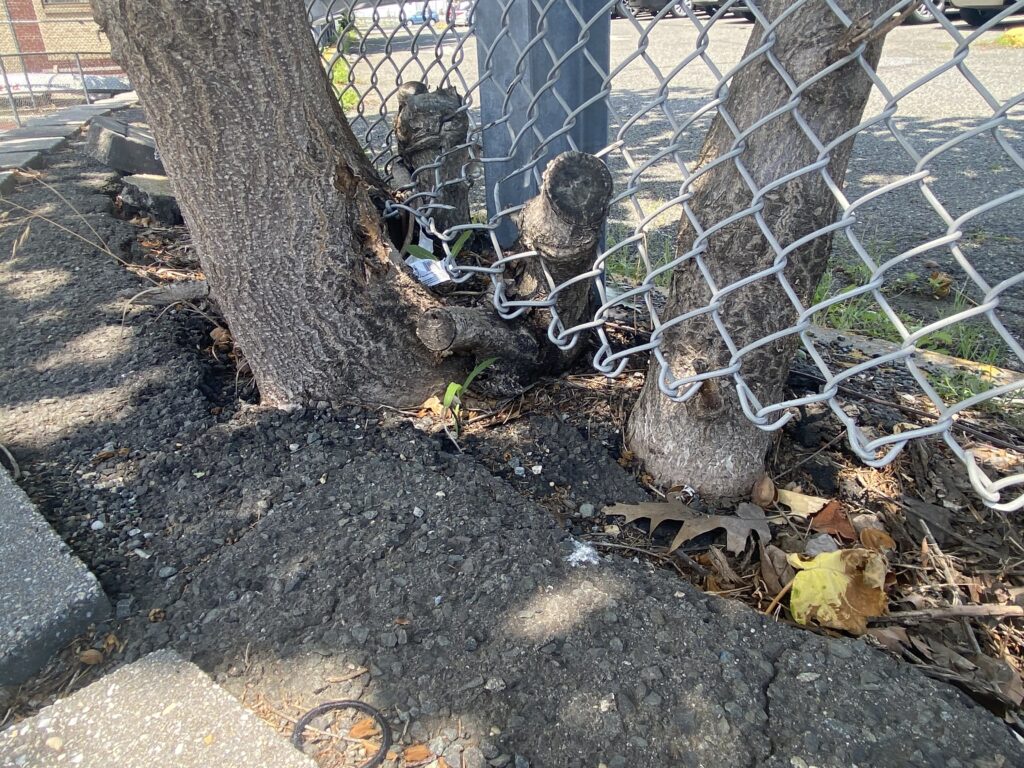
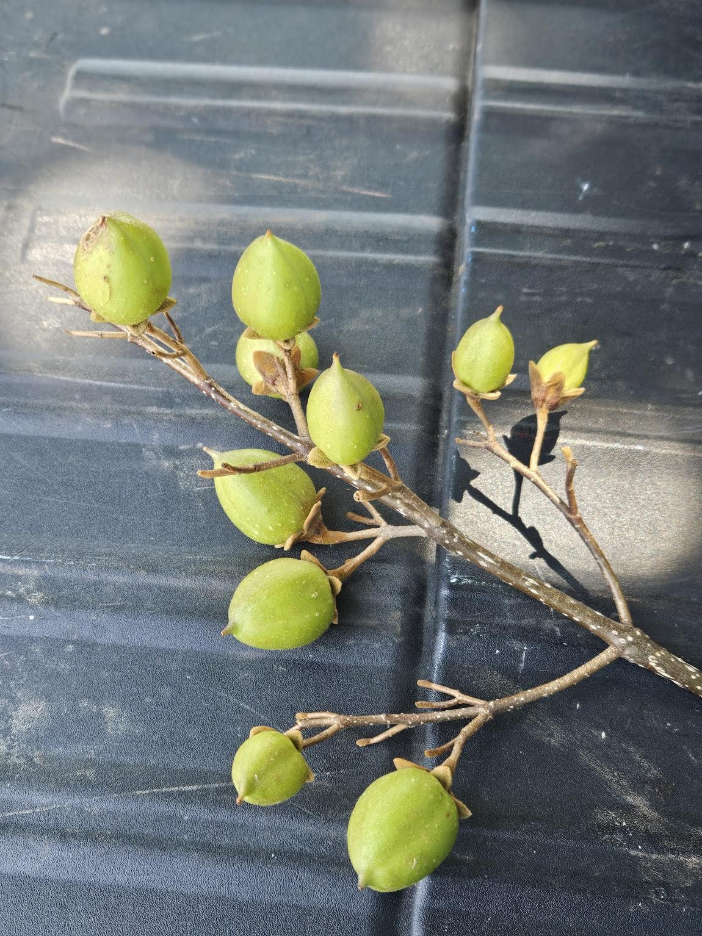
We ended the session today with a lesson on resilience from this tree. The tree grows through the chain link fence of a parking lot in the elementary school at Perth Amboy. Regardless of its compromising habitat, the tree is keeps thriving and bearing fruits!
By Endurance Laryea, LRWP Summer Research Intern and J.M. Meyer.
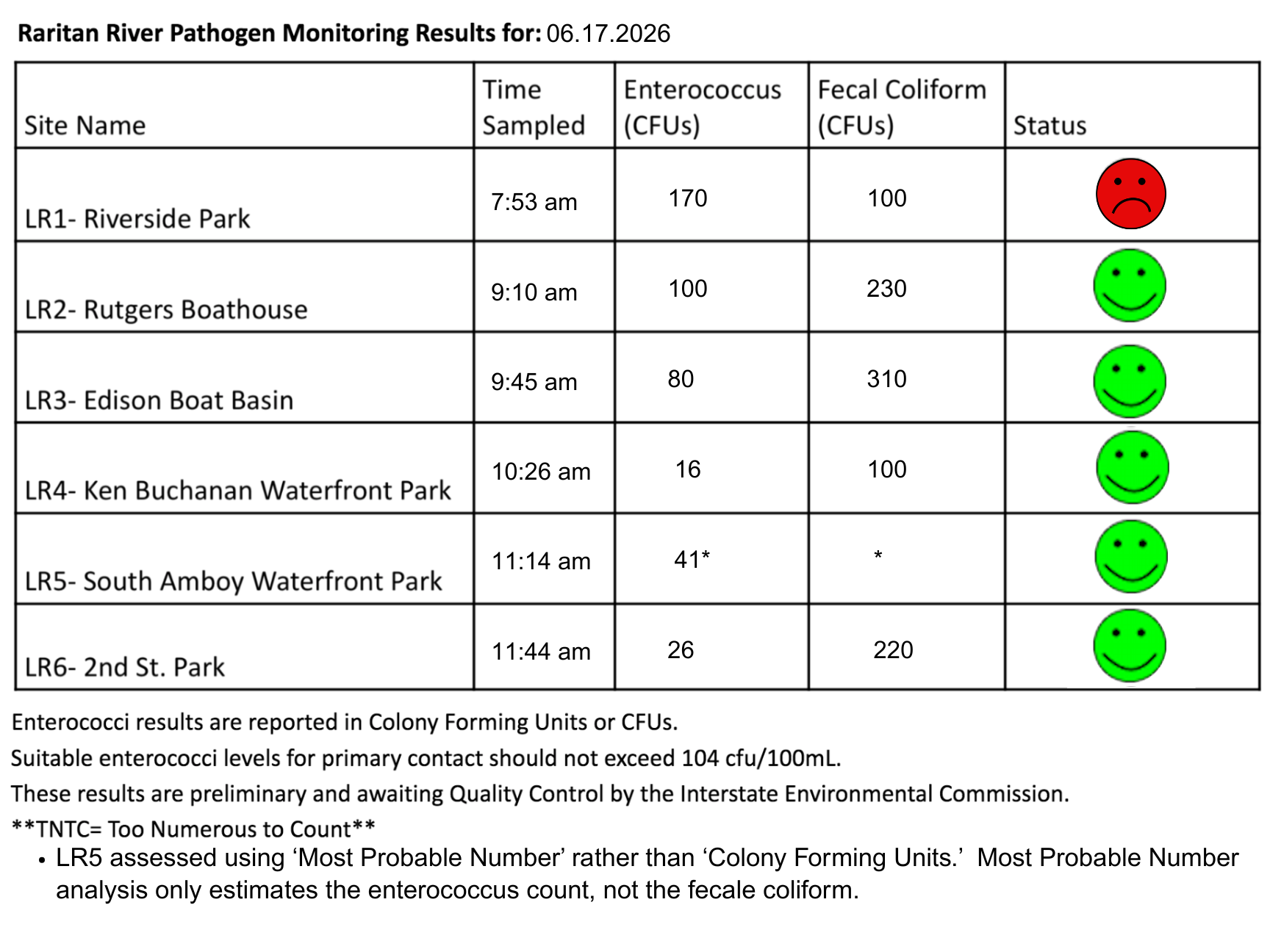
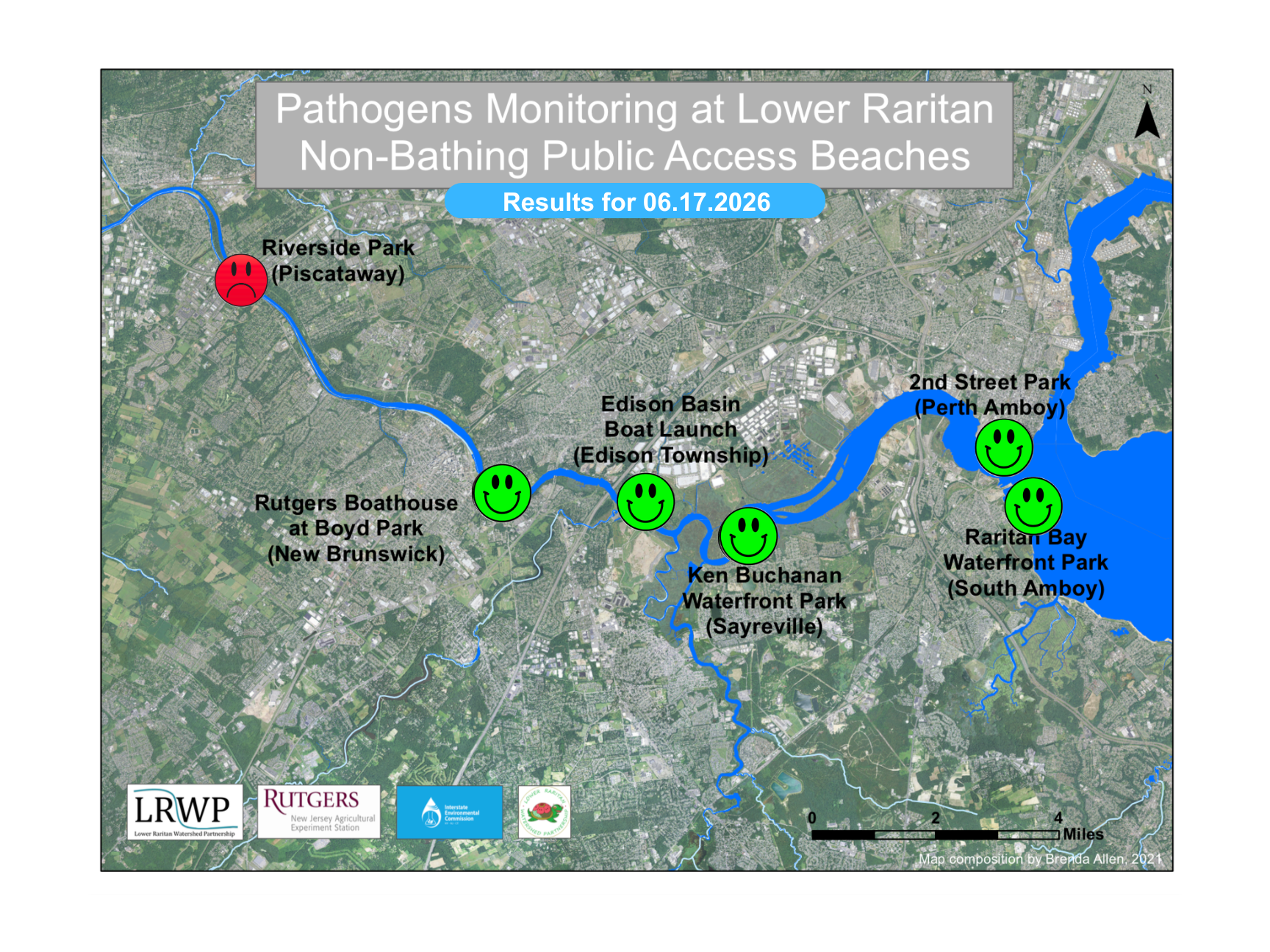
The second pathogen monitoring session of the month took place on Thursday, June 17th. Each week during the summer, from May to October, the Lower Raritan Watershed Partnership and Rutgers Cooperative Extension of Middlesex County run a volunteer-based monitoring program along the Raritan River. We collect water quality samples at six non-bathing public access beach sites, provide our samples to the Interstate Environmental Commission for analysis in their laboratory, and report the results to the public. Our mission is to share this data with the community and partners to ensure the safe use of the Raritan River for all.
Our lab results for water quality samples taken on Thursday, June 17th, 2026, show Enterococcus bacteria levels exceeding the EPA federal water quality standard of 104 cfu/100mL at one of our monitoring sites this week. The problem site is indicated by the red frown on the map and chart: Riverside Park (Piscataway). Green smiles on the chart and map indicate the sites with bacteria levels safe for recreation and include the following: Rutgers Boathouse (New Brunswick), Edison Boat Basin (Edison), Ken Buchanan Waterfront Park (Sayreville)2nd Street Park (Perth Amboy).
Pathogens/Enterococci levels are used as indicators of the possible presence of disease-causing bacteria in recreational waters. Such pathogens may pose health risks to people coming in primary contact with the water (touching) through recreational activities like fishing, kayaking or swimming in a water body. Possible sources of bacteria include Combined Sewer Overflows (CSOs), improperly functioning wastewater treatment plants, stormwater runoff, leaking septic systems, animal carcasses, pet waste, wildlife waste, and runoff from manure storage areas.
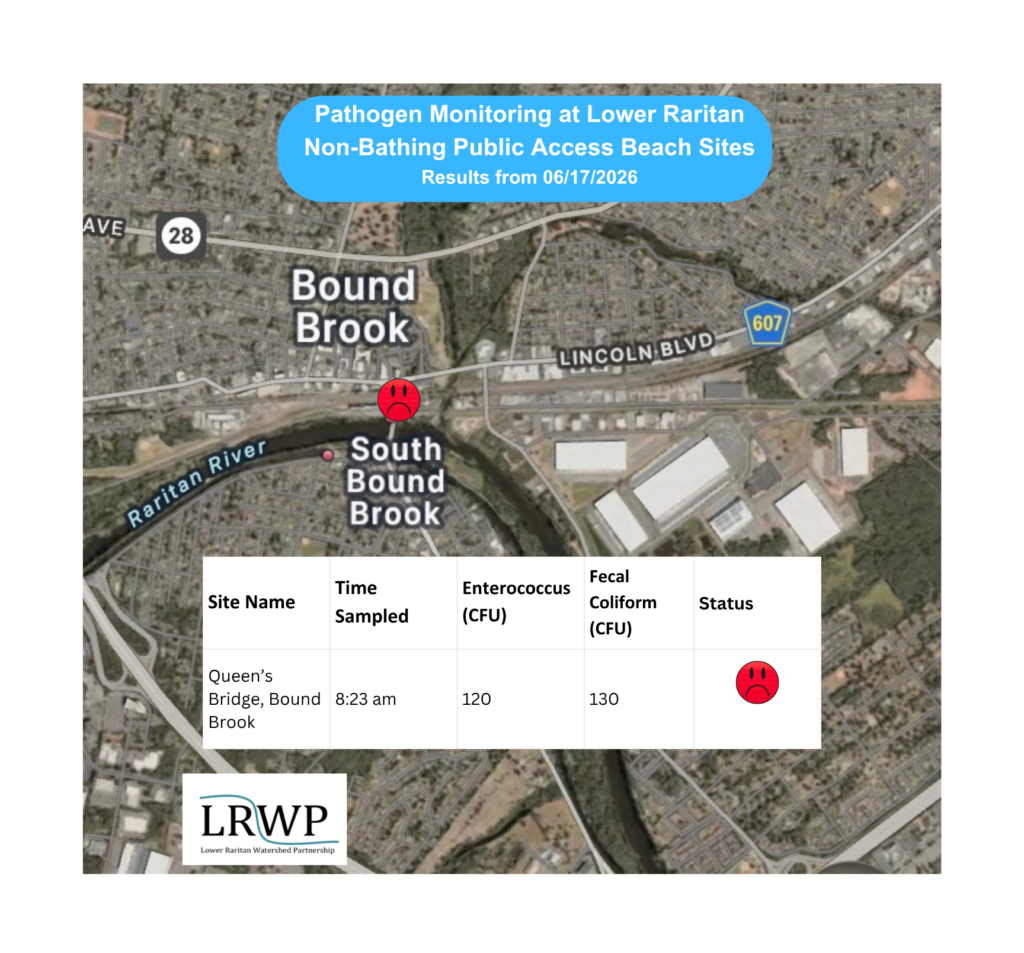
In order to better understand why Riverside Park, Piscataway has been our worst performing site over the past six years, we have started sampling further upstream. On June 17th, we sampled The Queens Bridge Recreational Access/Kayak Launch site a second time since we started pathogens monitoring this season. The lab analysis produced 120 enterococci cfu per 100mL exceeding the EPA federal water quality standard of 104 cfu/100mL. It also failed the test during our first week of monitoring; it was an especially rainy week, and our sample scored a most-probable-number of 2909 entero per 100 mL! Gross! Yet that same rainy week Riverside Park registered a score of more than 6,000 colony forming units per 100 mL.
Perhaps in dry weather we might suggest that upstream flow accounts for most of the bacteria numbers in Riverside Park, but that in wet weather there are many other sources of pollutants. These are interesting if preliminary results.
Our goal in reporting these results is to give residents a better understanding of the potential health risks related to primary contact during water-based recreation. If you are planning on recreating on the Raritan this weekend, make sure to stay safe and wash up after any activities!
This morning’s weather was just perfect for all the exciting adventures we were going to embark on. It was a clear and sunny morning with temperatures in the 70’s.
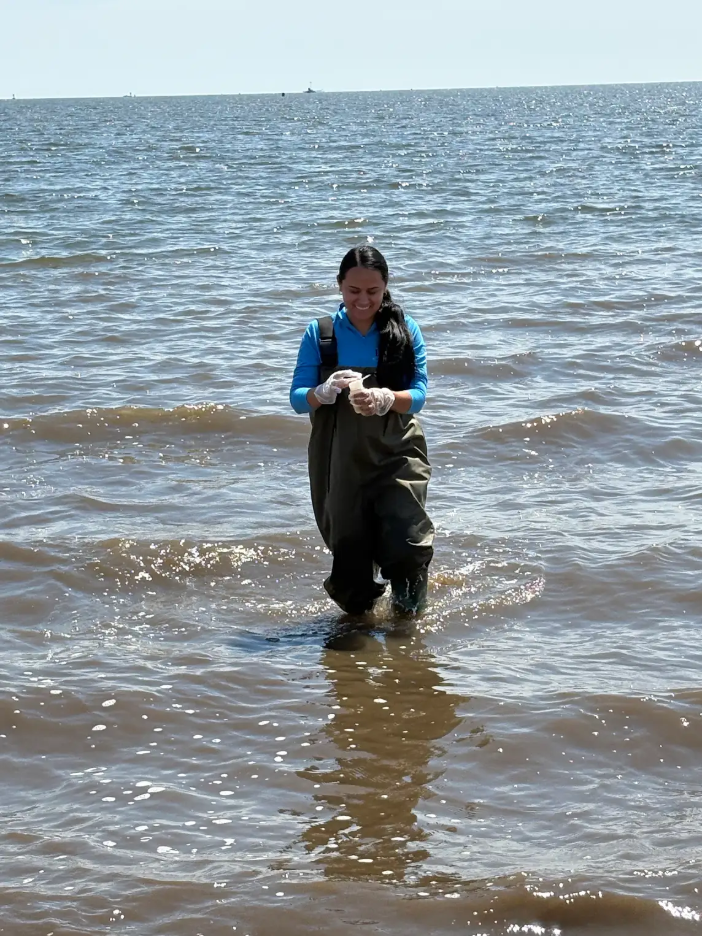
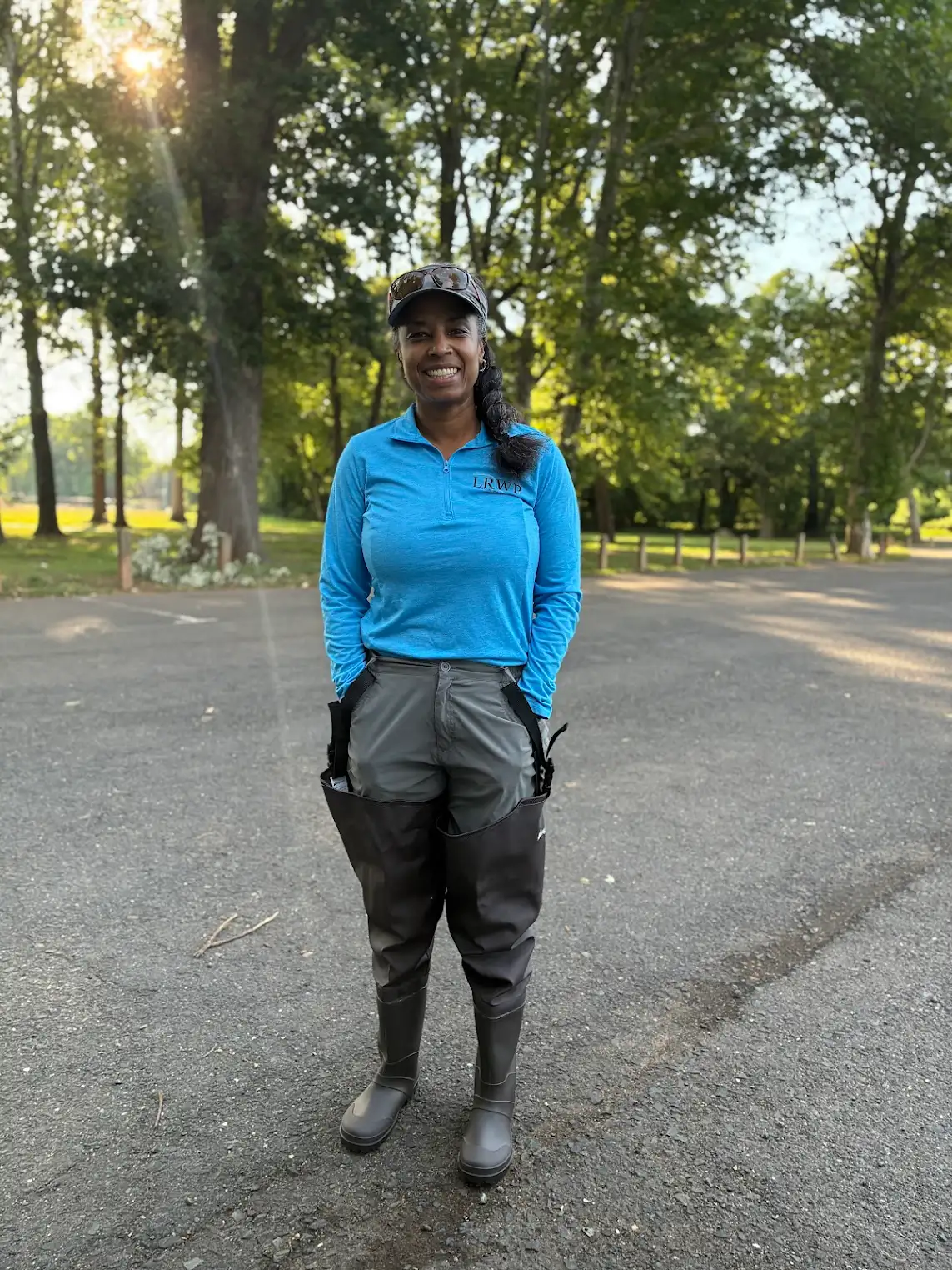
Ready to kick off June 17th’s pathogens monitoring session, Lydia came prepared and excited in her hip waders! Photo by Endurance Laryea.
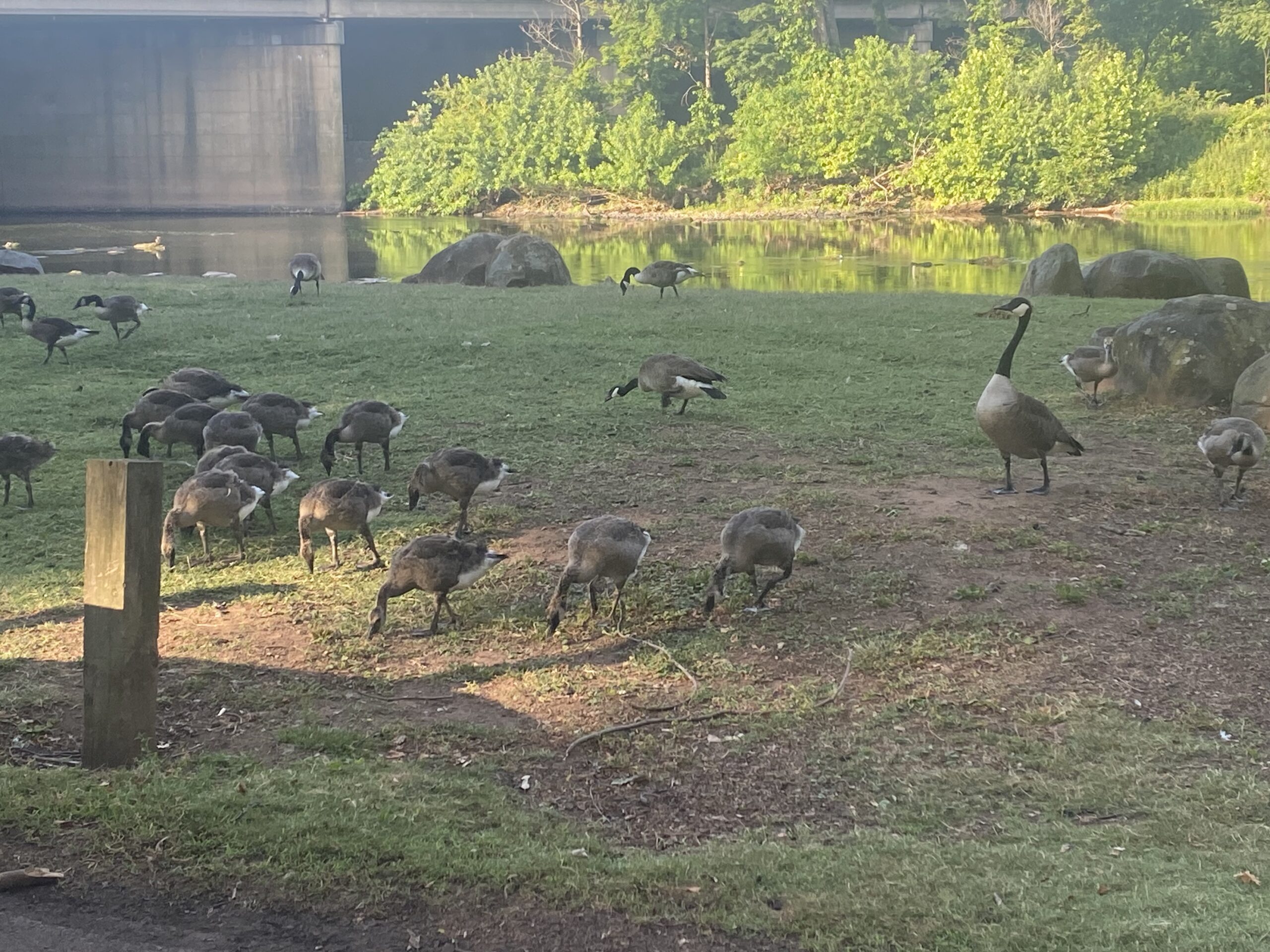
Our friends at Riverside Park were seen going about their day peacefully. Can you guess why? No Geese chasers to rattle their morning! I am not sure if the Geese Chasers ever came today but for the entire duration of our pathogens monitoring at this site, we did not see the geese and goslings fleeing into the river at the sight of a Geese Chaser car. We were surprised to see how big the goslings have become since we last saw them. Almost the same size as their parents-incredible! Photo by Mike Orsini.
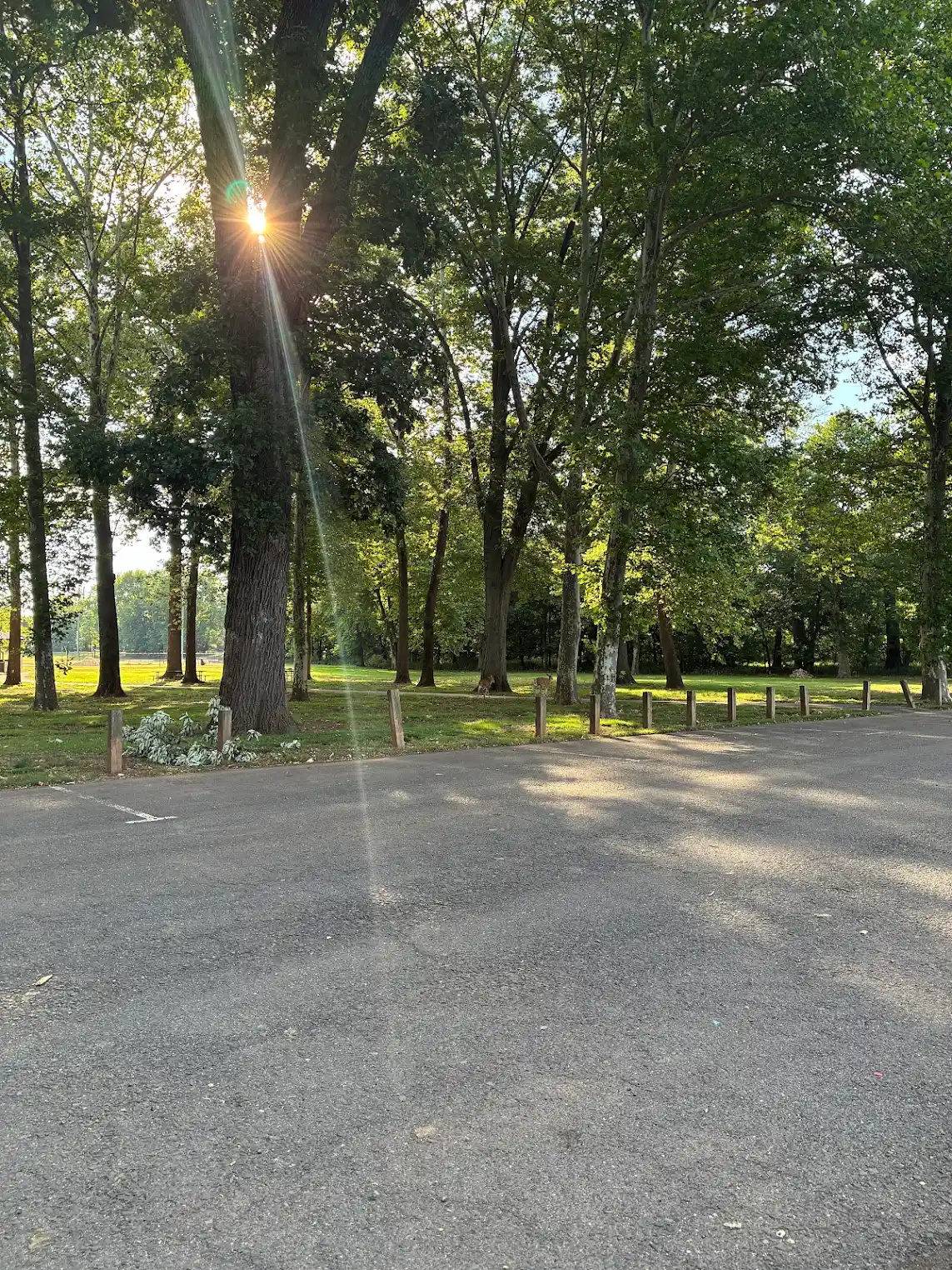
Four deer spotted dashing across the park at Riverside Park. Photo by Endurance Laryea.
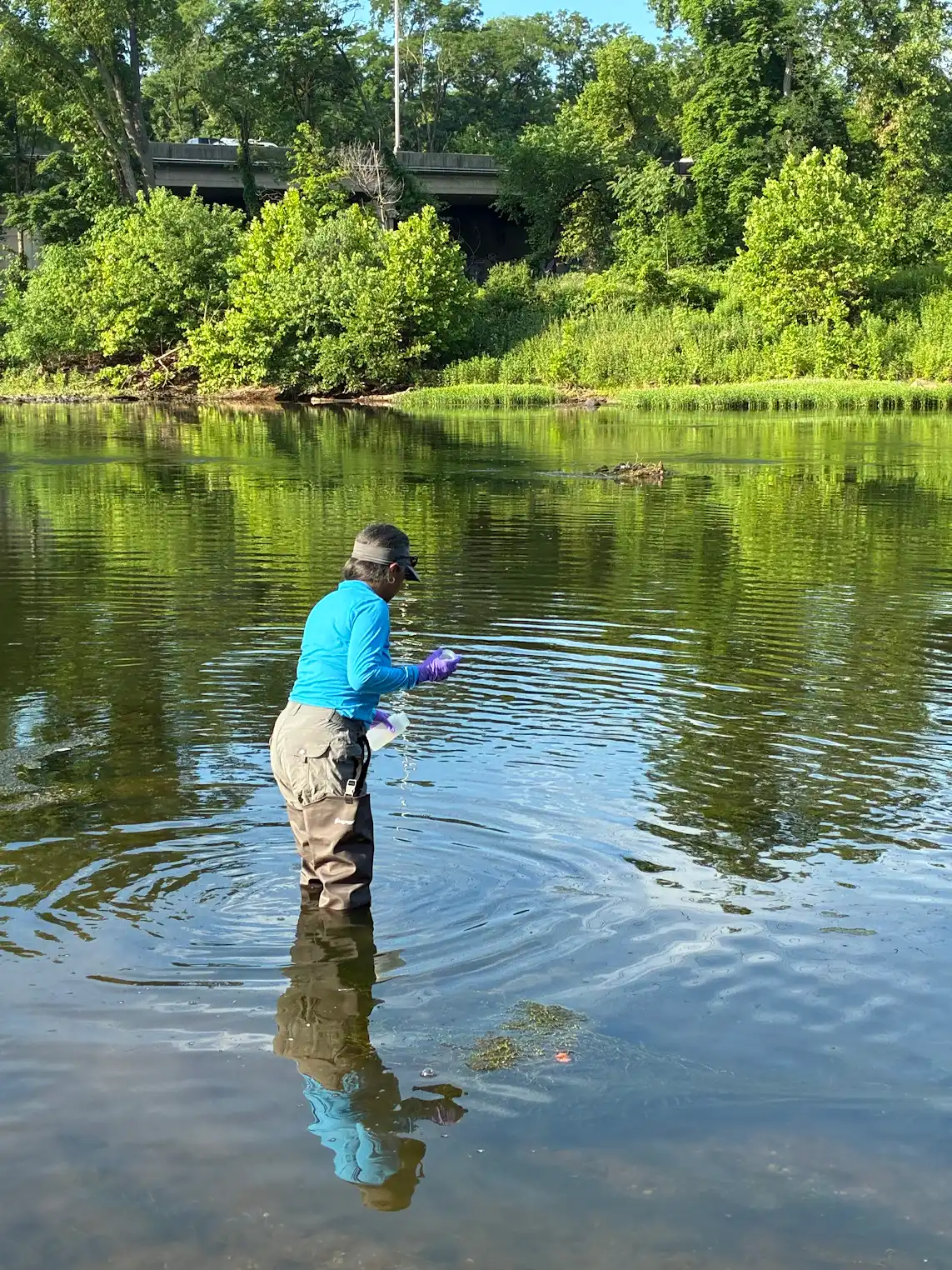
Lydia taking a sample at Riverside Park. Photo by Endurance Laryea.
Our second site today was The Queens Bridge Recreational Access/Kayak Launch site. It is one of our four new sites this season and today was the second visit. So much was going in this one site that we would have spent the whole morning exploring it if care was not taken! John and Mike talked about the trees; Lydia, some other plants like lady’s thumb and poison ivy; and Art about the birds. Their enthusiasm for what they knew was so contagious that it made me excited even if I did not know what they were talking about.
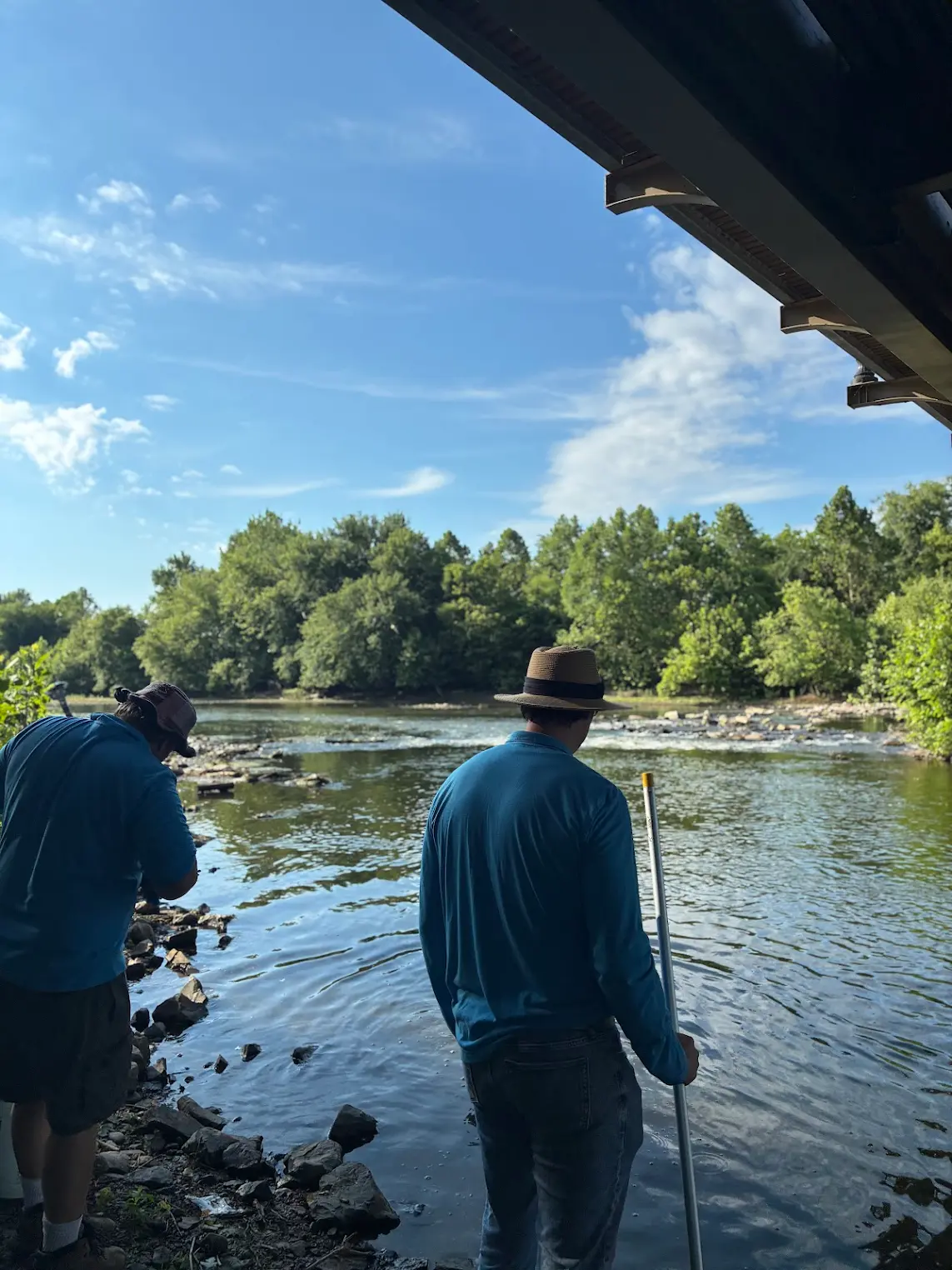
Mike and John sampling duties at Queens Bridge. Photo by Endurance Laryea.
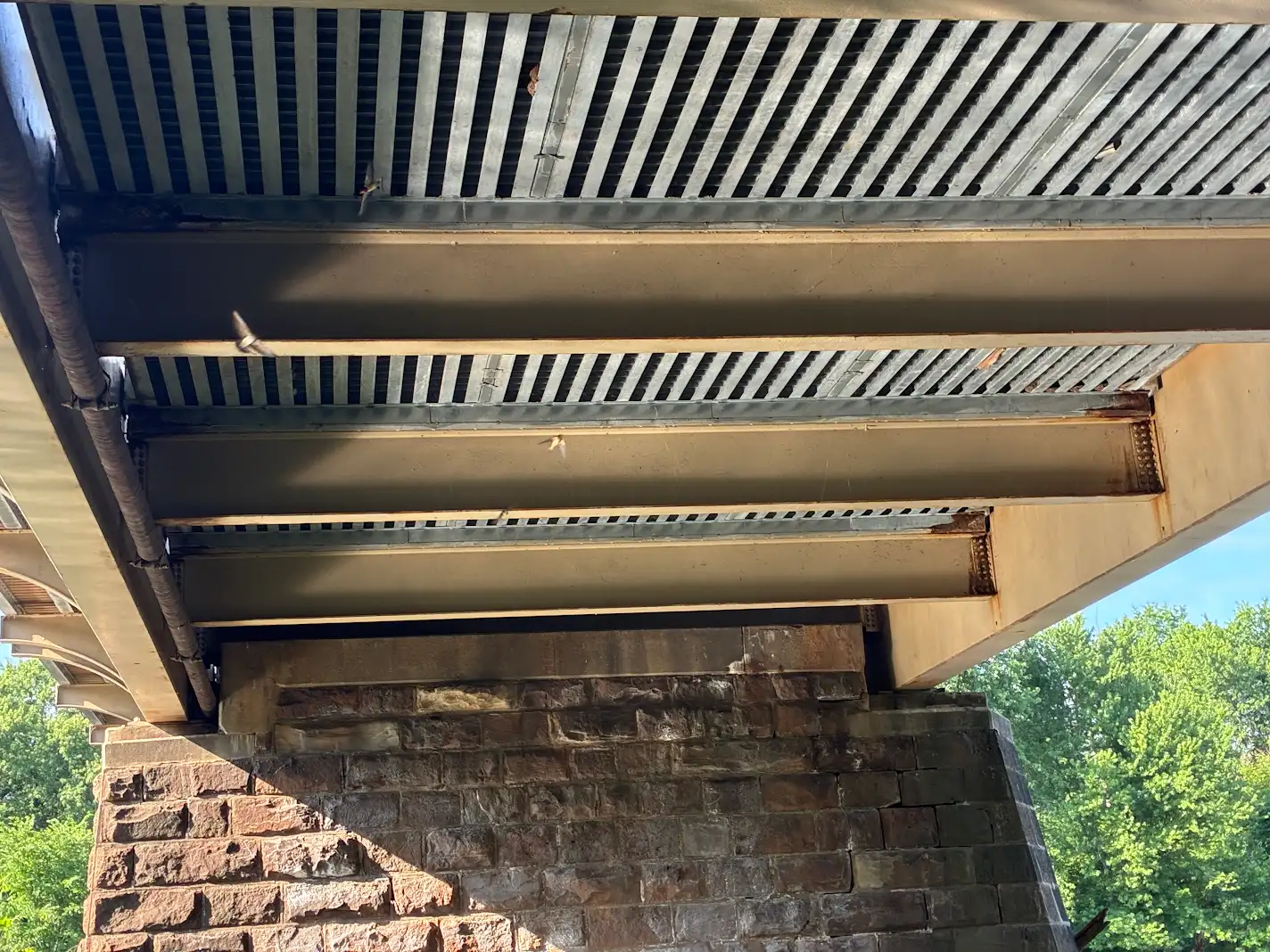
Barn swallows spotted under the bridge at Queens Bridge. Art explained that they got their names because of their habit of building nests in barns, sheds and similar man-made structures. John noted that they were not present the last time they visited this site in the first week of pathogens monitoring. Photo by Endurance Laryea.
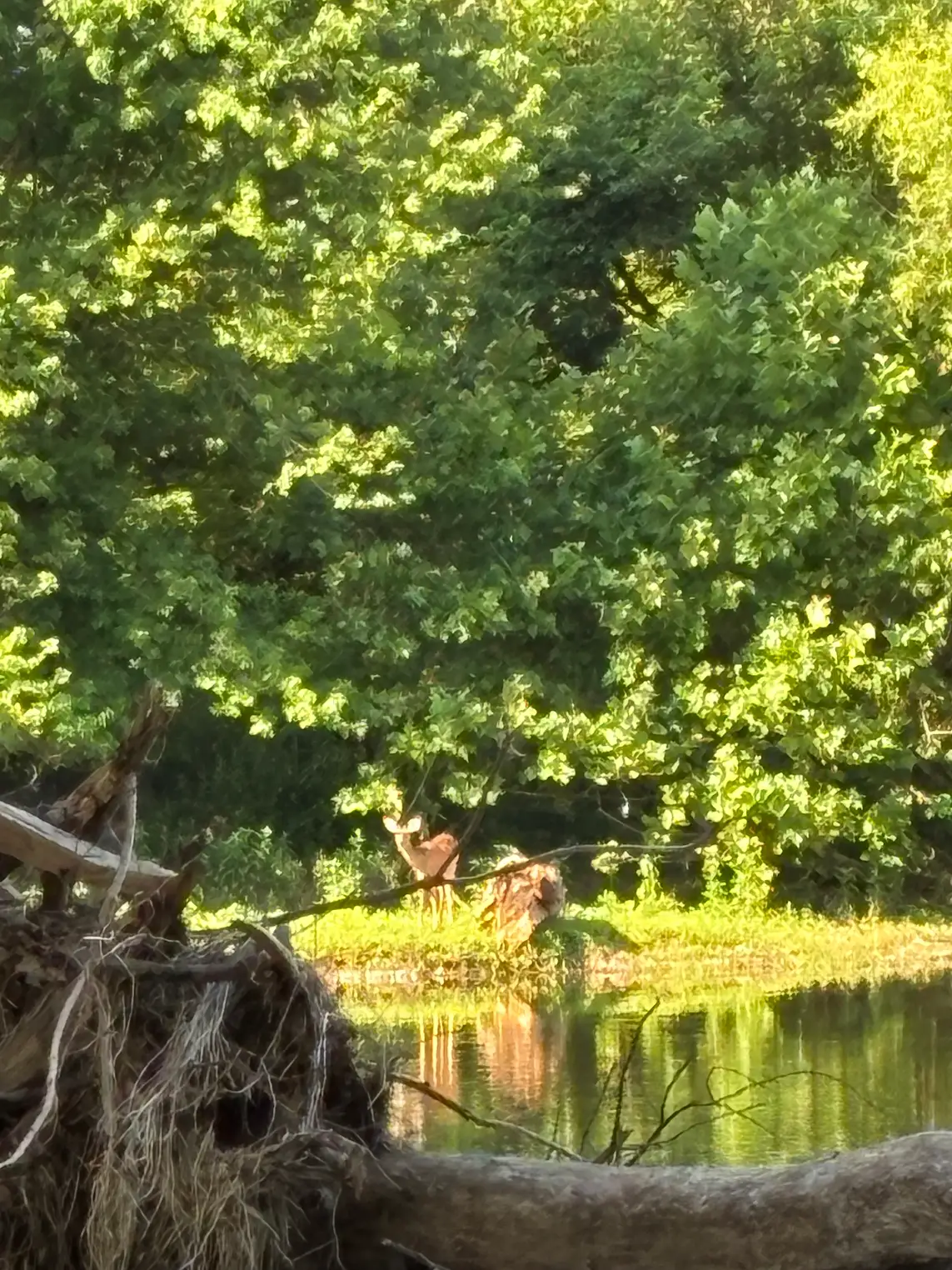
A deer sighted across the river from us. Photo by Endurance Laryea.
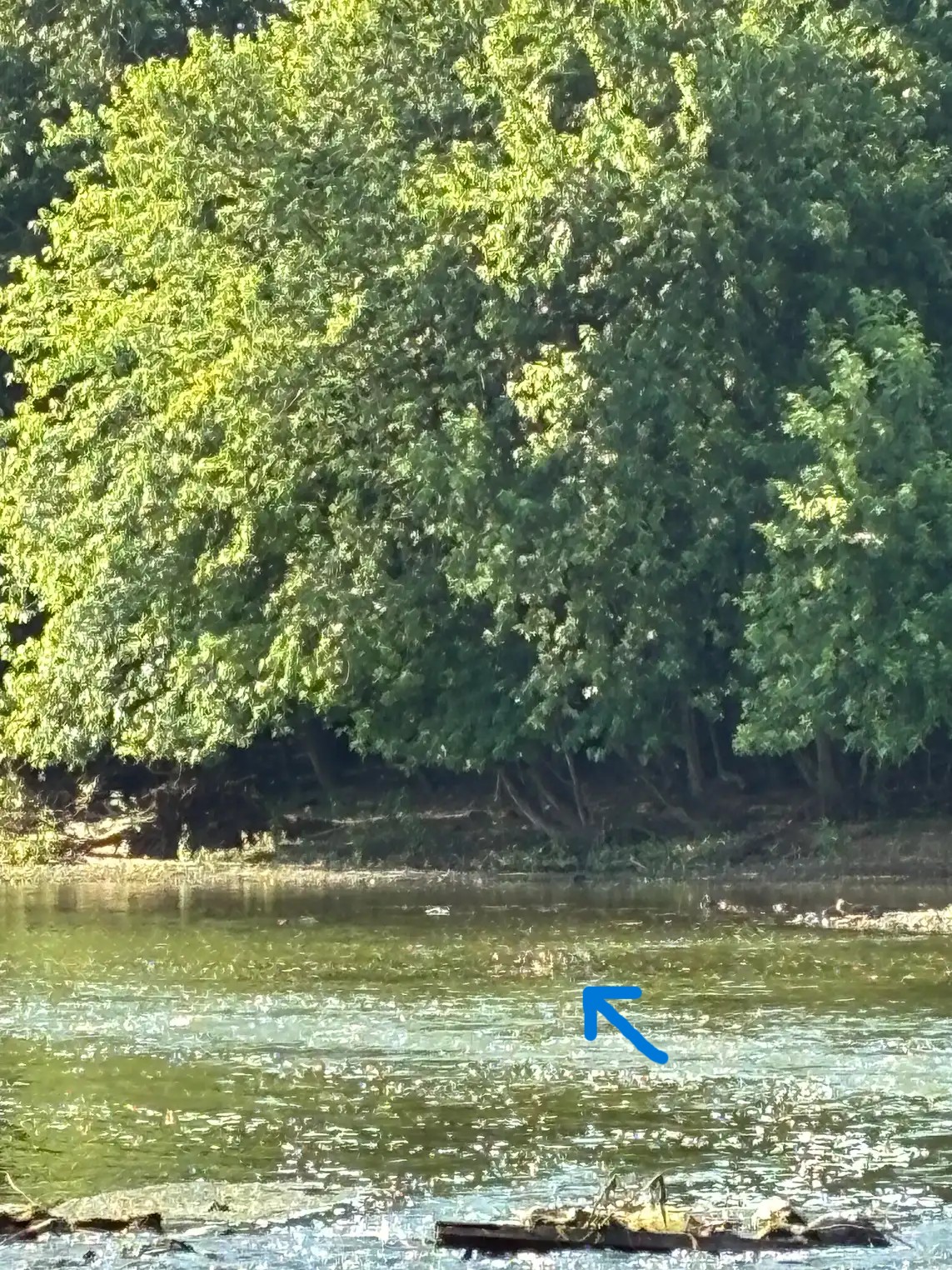
We also saw a flotilla of goslings paddling across the river without a parent goose. Photo by Endurance Laryea
At Rutgers Boathouse today, we noticed high tide. And for the second time, we saw the minnows. It seems to me that they are observed when there is high tide because we did not see them last week when there was low tide.
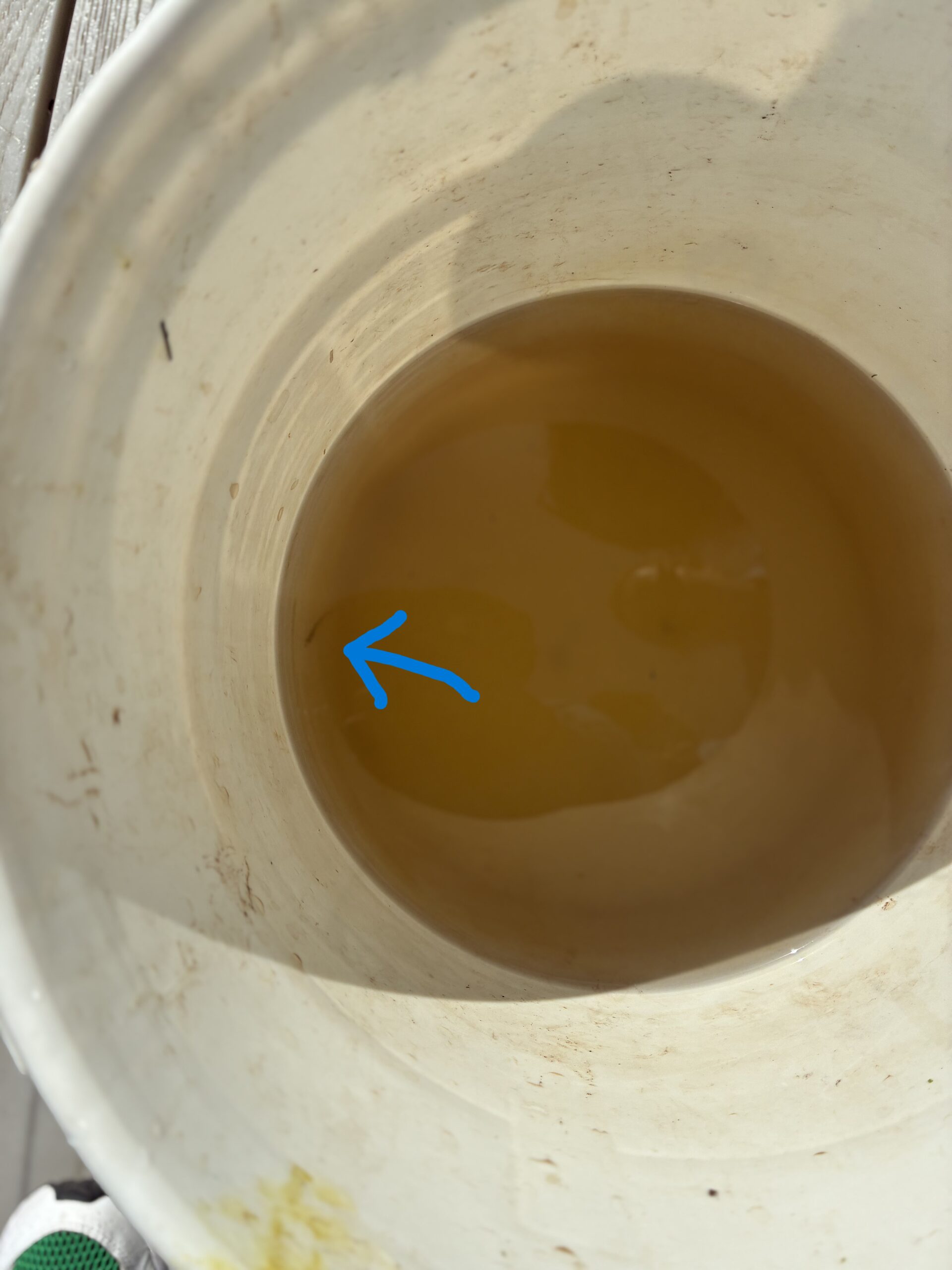
In our grand effort to capture them in a bucket so that we get a better view of them, we only caught one-barely noticeable- out of the thousands we saw. They are incredibly sensitive to disturbances. Photo by Endurance Laryea.
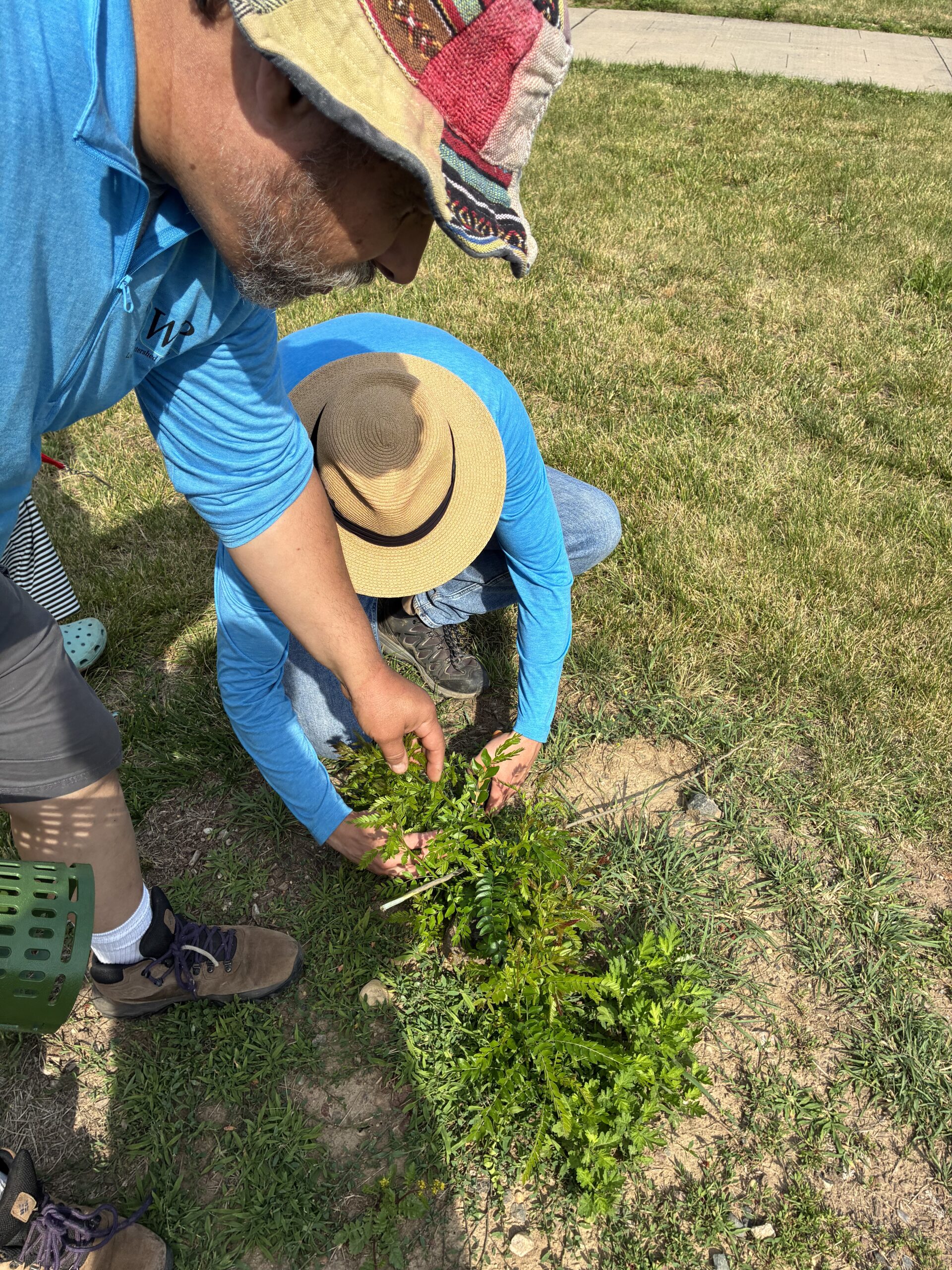
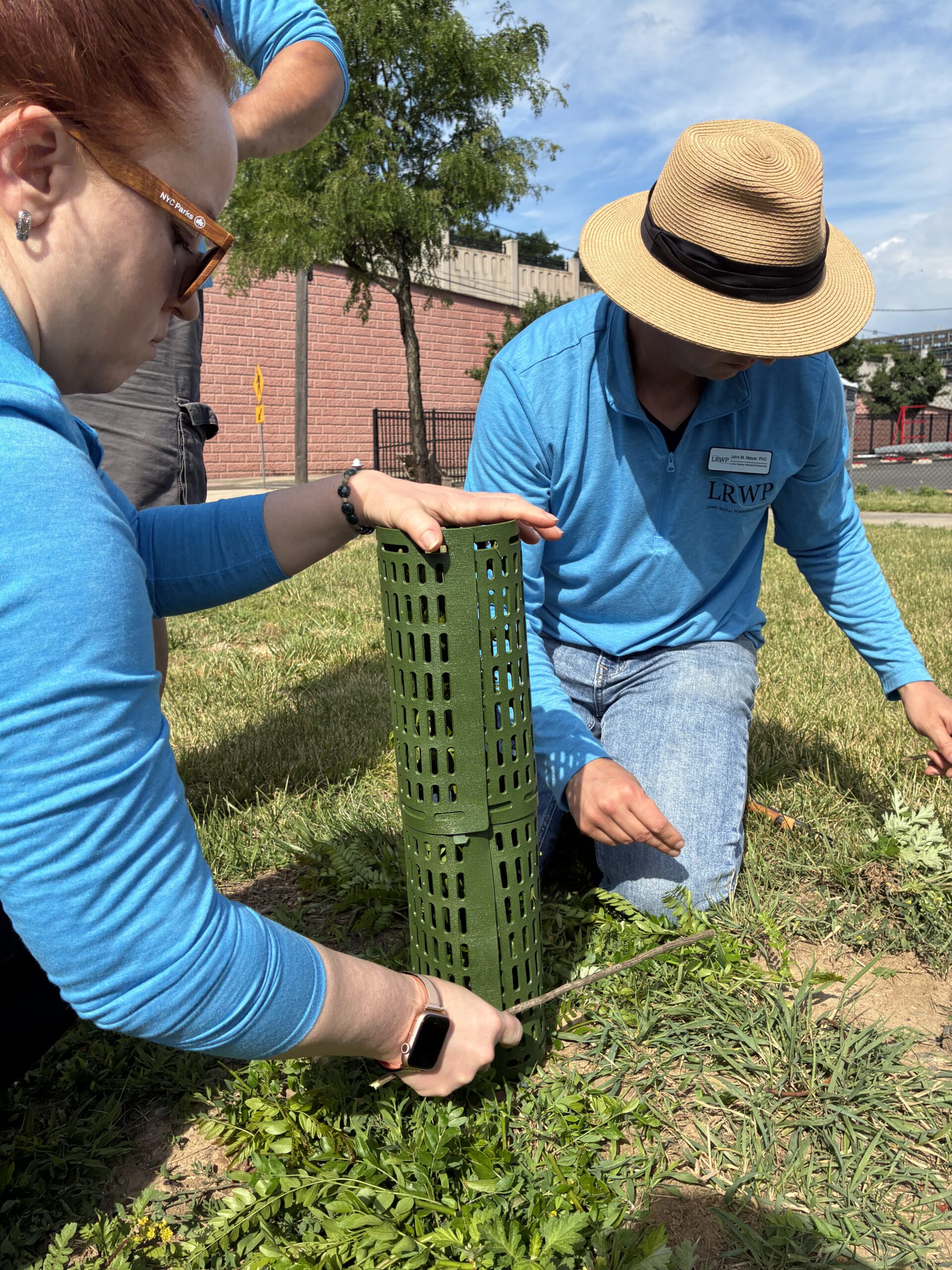
There are a few honey locust stumps that have started to grow little sprouts at the New Brunswick site. John and Mike have chosen one to put a guard around and see how it fares for the week. The smaller branches were pruned, and the guard was put around the tallest branch to enable it grow as a ‘leader’ without significant competition from rival sprouts.
Mike and John pruning the little branches of the honey locust stump. Photo by Endurance Laryea.
Olesya and John stabilizing the guard with twigs. Photo by Endurance Laryea.
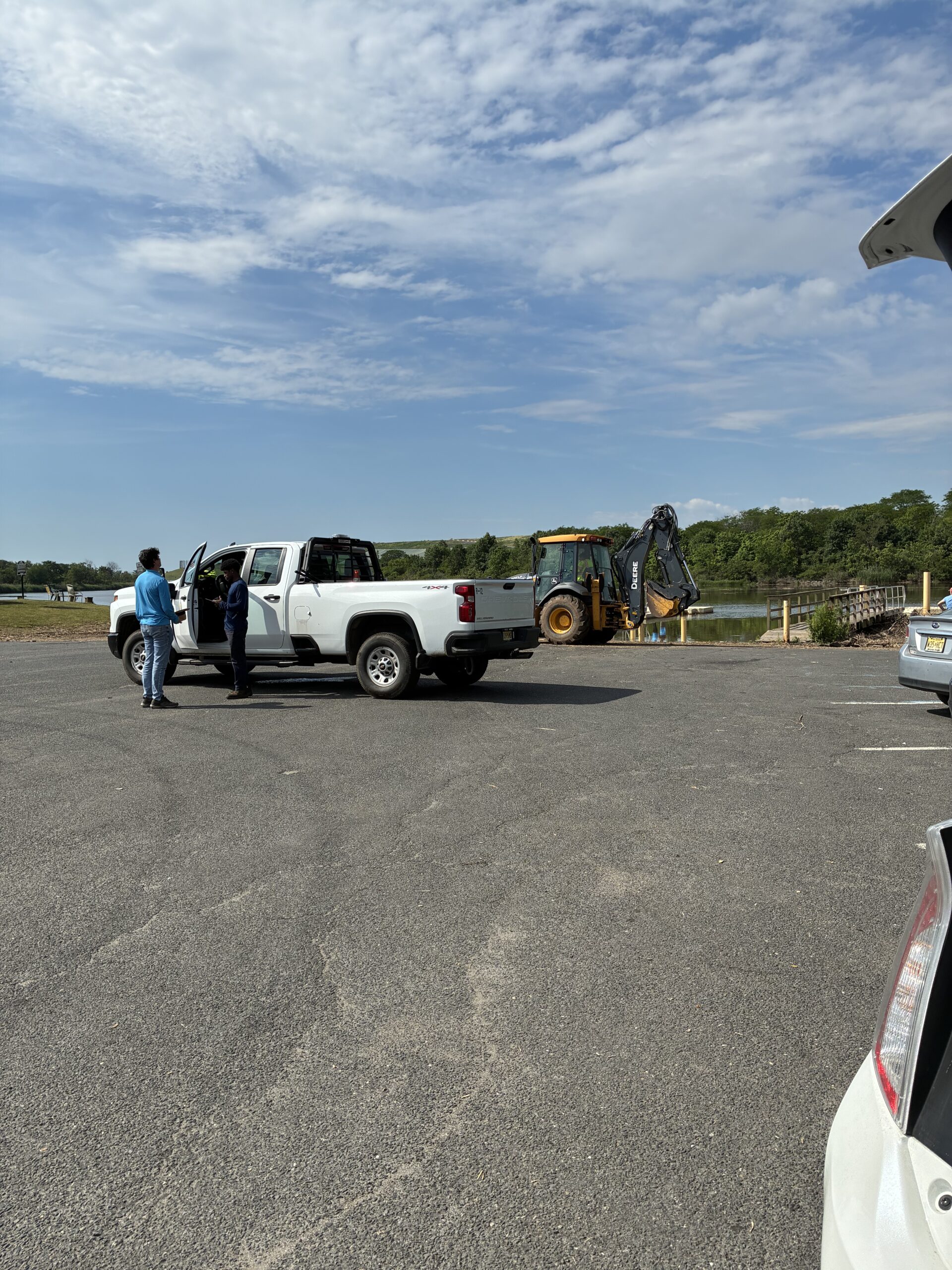
Clean up at Edison Boat Launch today!
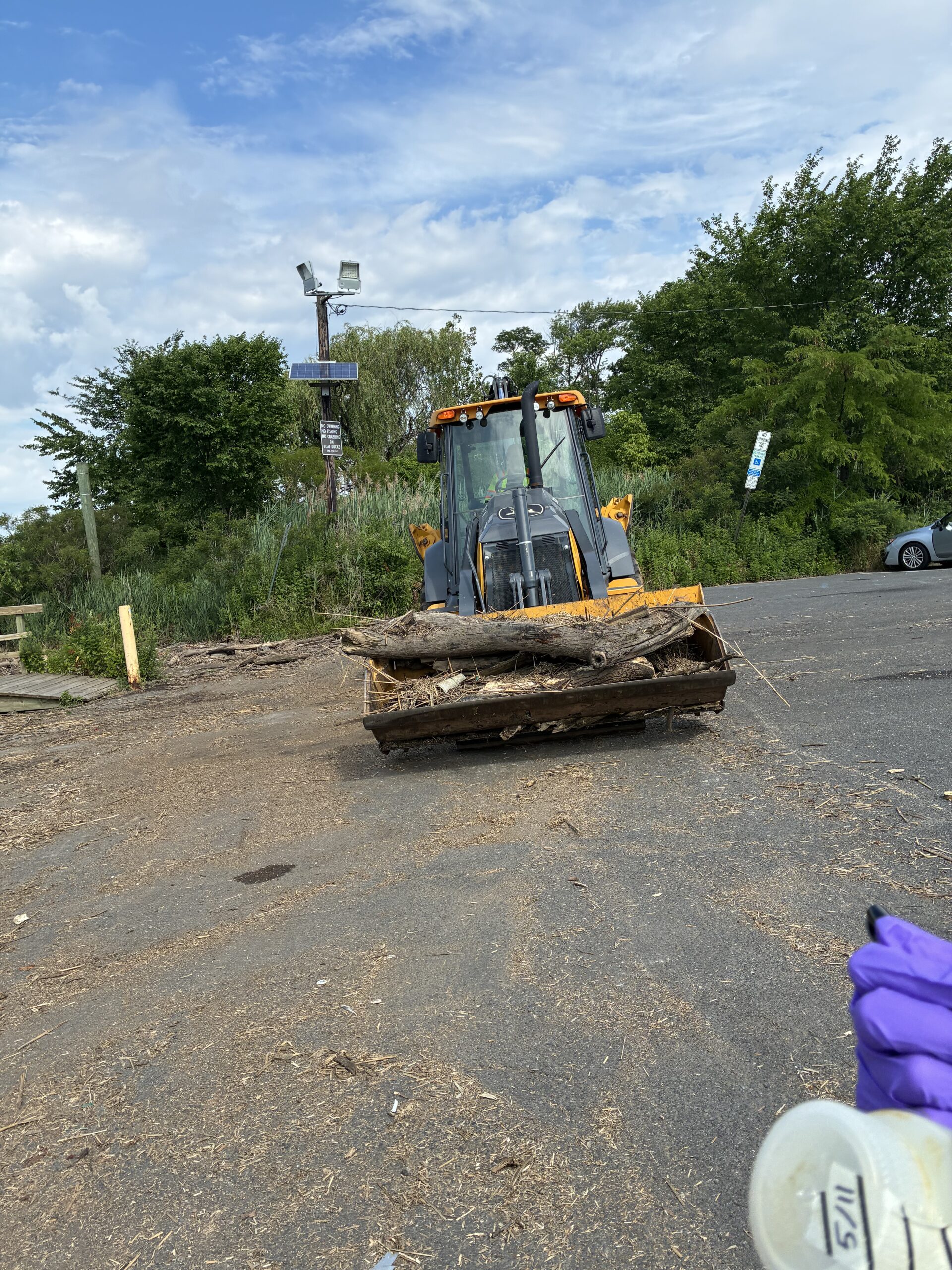
After John inquired about what they were doing, the public service workers explained that they were cleaning up the debris between the two docks on the river to allow easy access by boats and kayaks.
A backhoe loader used in the debris clean up. Photo by Endurance Laryea
Every time we visit this site, we try our best to pick up trash caught up in the debris. It is so much that we only do what time allows. It would be lovely if everyone who visits picks up a few pieces of garbage-with proper protective wear, of course 🙂
Art and Mike on trash duty. Photo by Endurance Laryea.
Not much activity other than our familiar friends were spotted at Sayreville — several seagulls, but only one osprey in the nest, instead of the mated pair we saw last week.
Photos by Endurance Laryea.
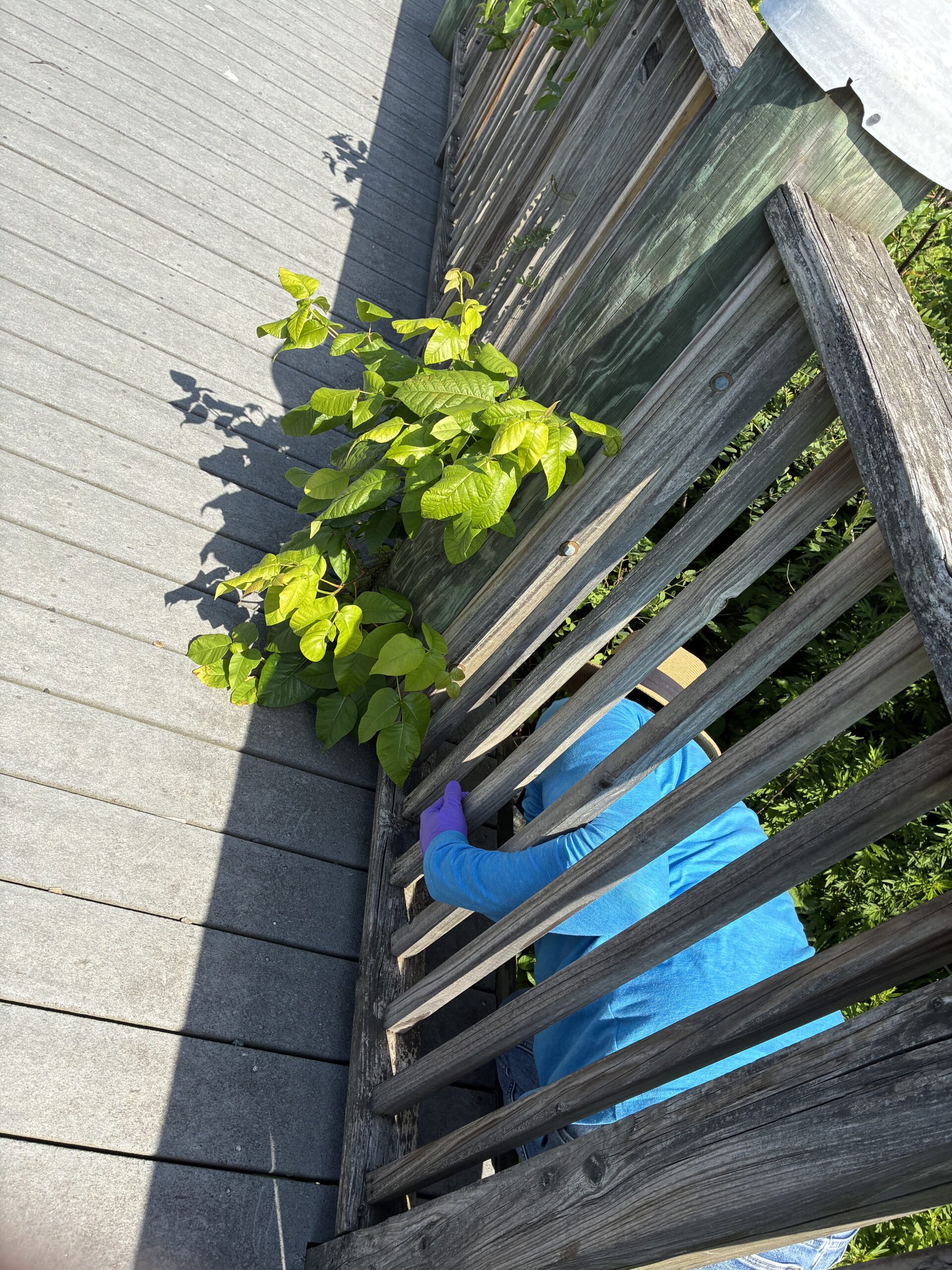
John cutting the roots of a Poison Ivy plant that has grown through the dock railings. With the number of Poison Ivy plants pointed out today, I am certain that I will be able to spot them in the future–hopefully. Photo by Endurance Laryea.
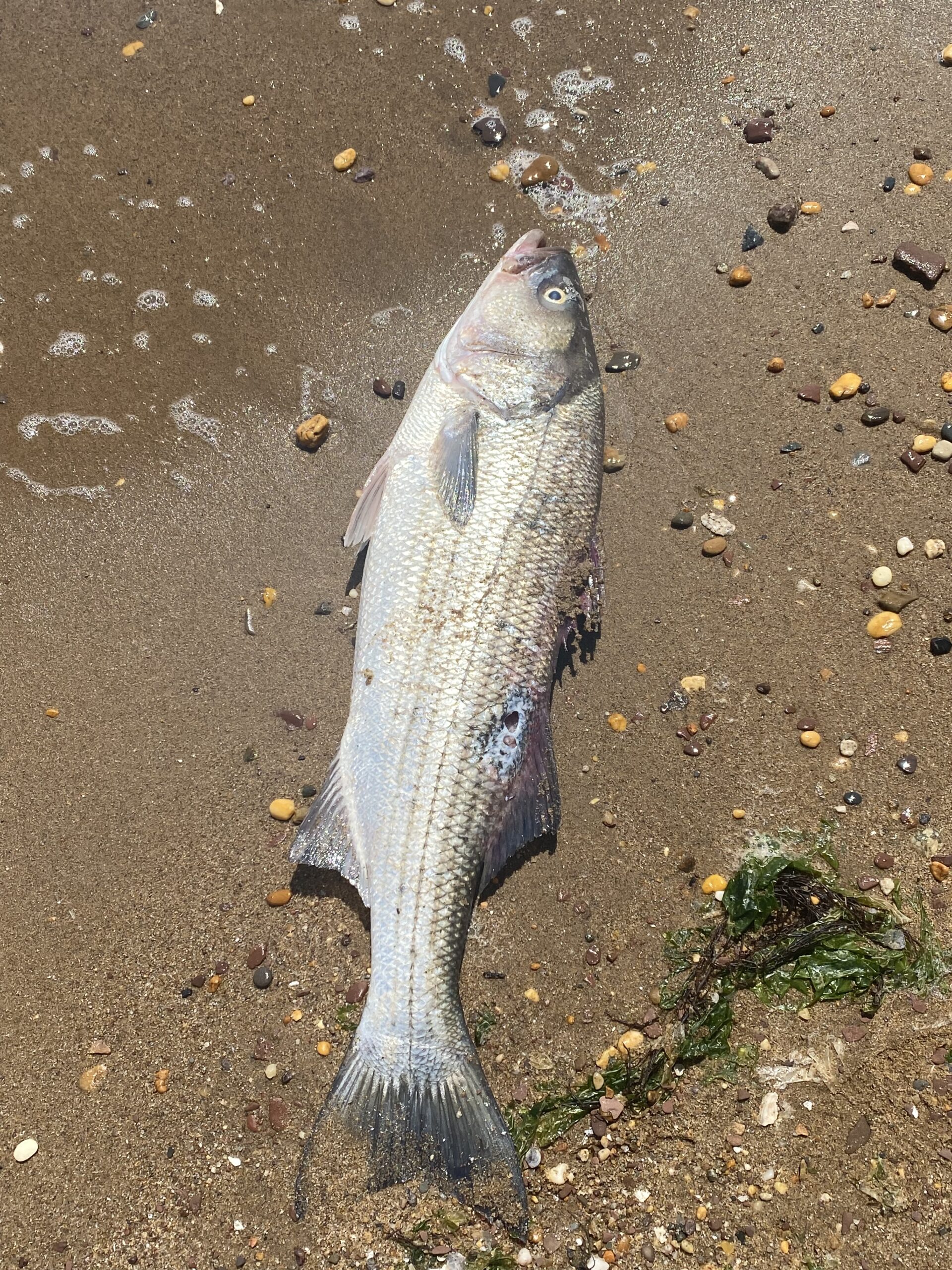
If you have been following our blog posts this summer, you may have read that it striped bass season. In our second week, we saw what seemed to be the gills of a striped bass on the shore of the Raritan Bay Waterfront Park in South Amboy. Today, we saw a dead striped bass on the shore with a decaying hole close to the second dorsal fin. It could have been washed to the shore a few minutes or hours before we got there because it did not give off a decaying odor and it looked pretty fresh.
A dead striped bass at the shore on Raritan Bay Waterfront Park, South Amboy. Photo by Art Allgauera.
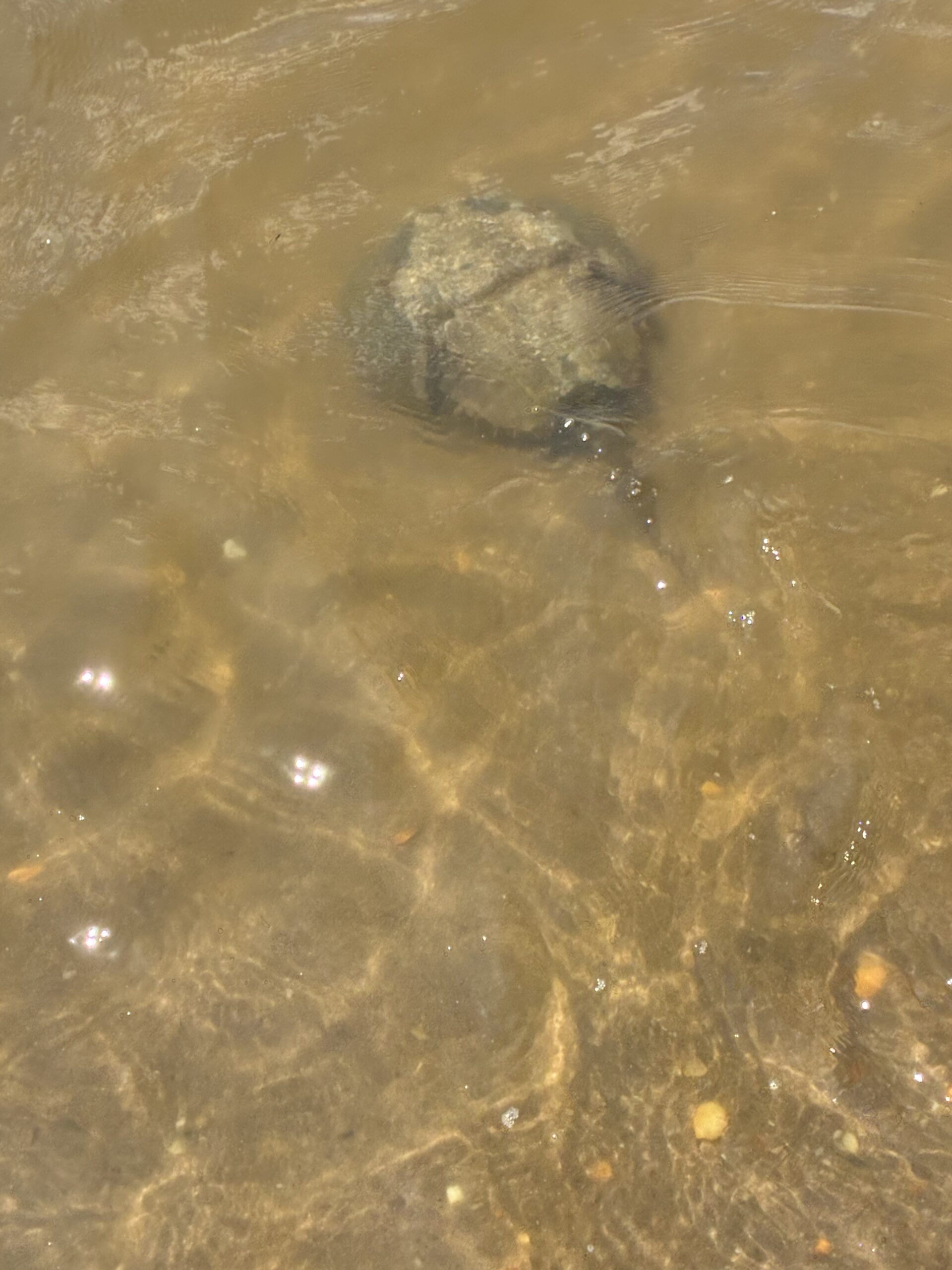
It is also horseshoe crab mating season. I felt something tap the boots of my waders in Perth Amboy while collecting the last sample of the day. I looked down to see a curious horseshoe crab coming towards my boots a second time. They are not dangerous so try not to panic the next time you encounter them 🙂
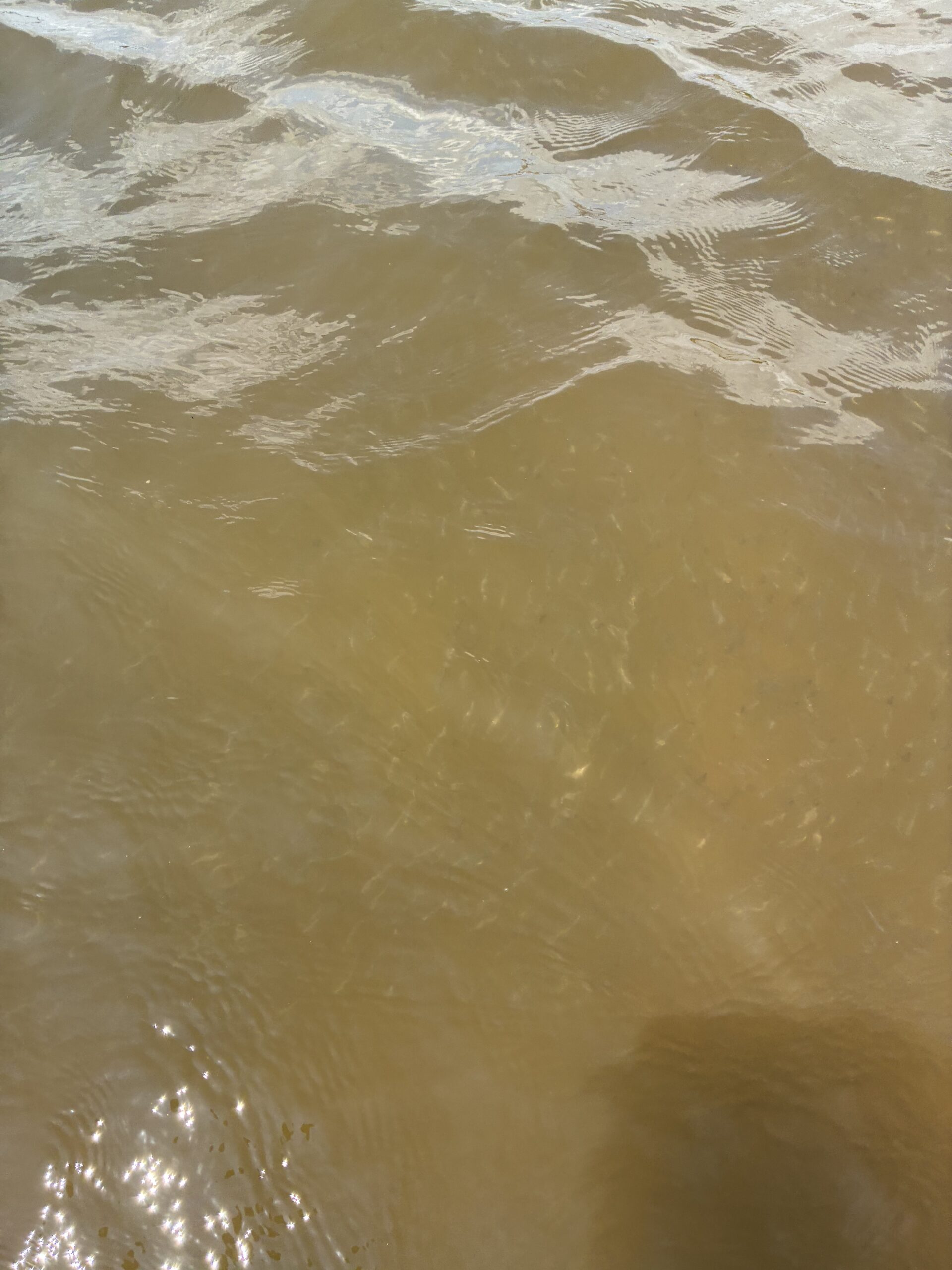
As I looked down to figure out what tapped my boots, I also noticed a cluster of minnows circling around me. Photos by Endurance Laryea.
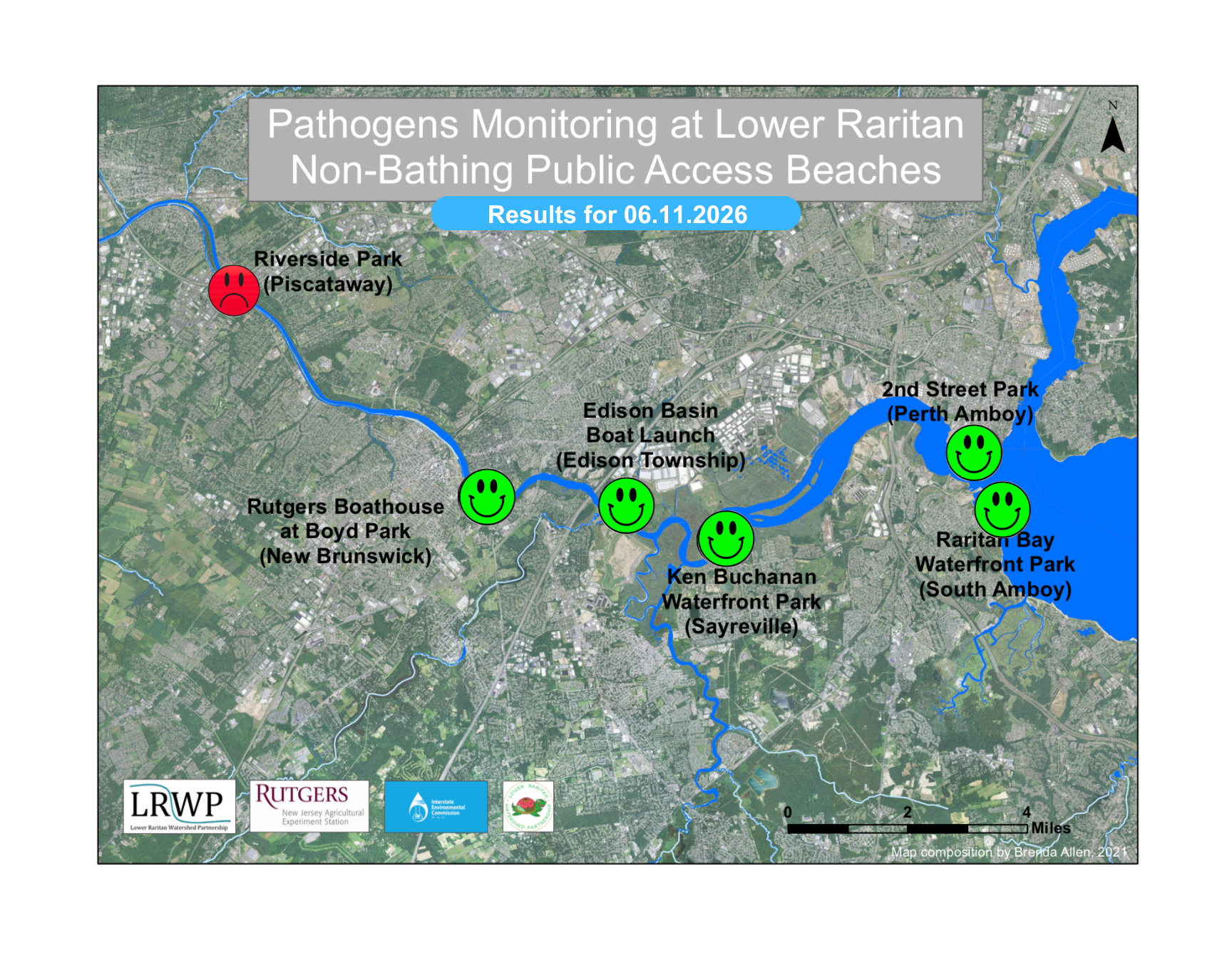
The second pathogen monitoring session of the month took place on Thursday, June 11th. Each week during the summer, from May to October, the Lower Raritan Watershed Partnership and Rutgers Cooperative Extension of Middlesex County run a volunteer-based monitoring program along the Raritan River. We collect water quality samples at six non-bathing public access beach sites, provide our samples to the Interstate Environmental Commission for analysis in their laboratory, and report the results to the public. Our mission is to share this data with the community and partners to ensure the safe use of the Raritan river for all.
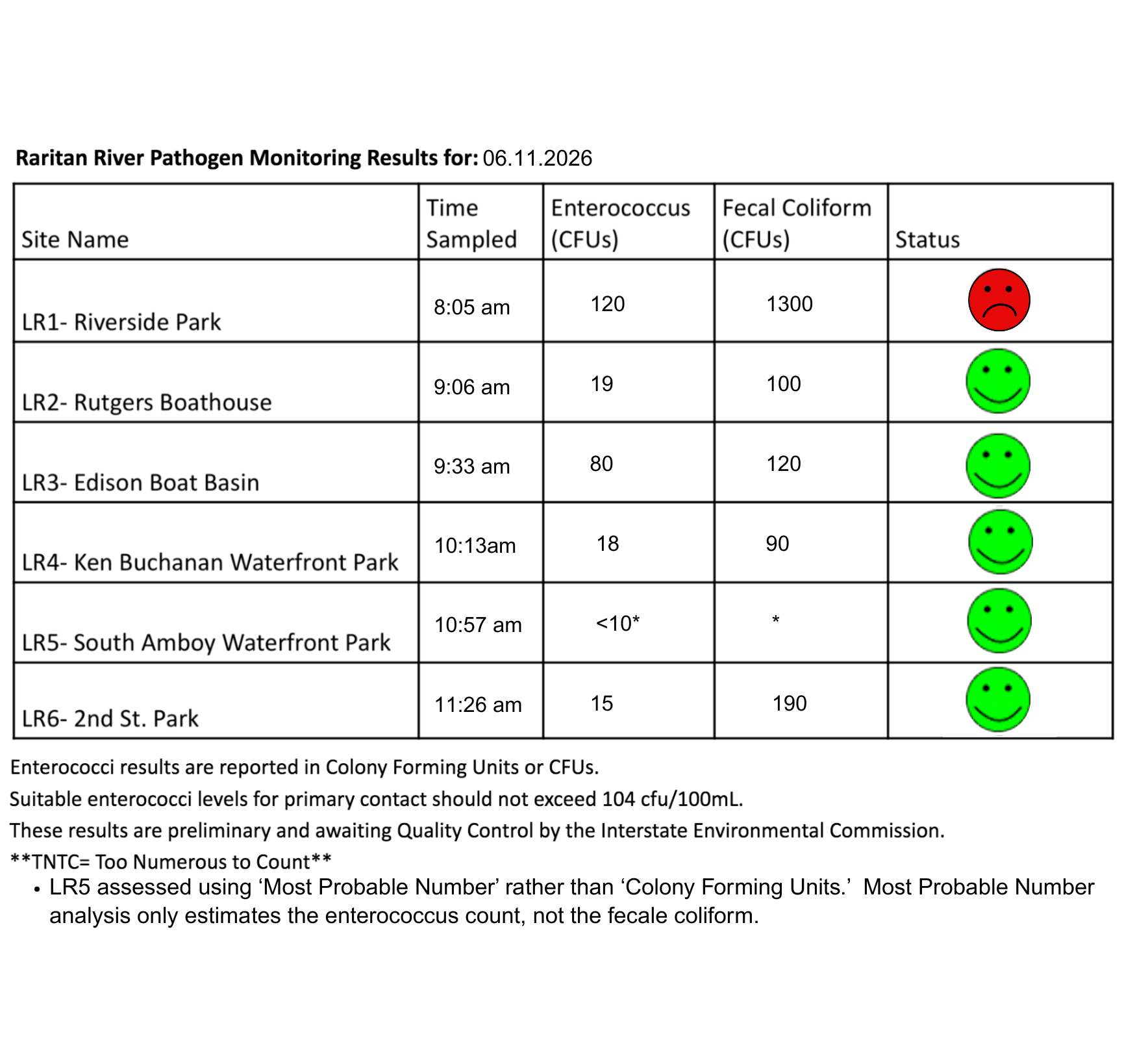
Our lab results for water quality samples taken on Thursday, June 11th, 2026, show Enterococcus bacteria levels exceeding the EPA federal water quality standard of 104 cfu/100mL at one of our monitoring sites this week. Problem sites are indicated by red frowns on the map and chart: Riverside Park (Piscataway). Green smiles on the chart and map indicate the sites with bacteria levels safe for recreation and include the following: Rutgers Boathouse (New Brunswick), Edison Boat Basin (Edison), Ken Buchanan Waterfront Park (Sayreville), Raritan Bay Waterfront Park (South Amboy), 2nd Street Park (Perth Amboy). For South Amboy, we were unable to analyze enough fluid to complete the membrane filtration process required to measure Colony Forming Units. We have therefore marked that site with an asterisk. Statistical analysis of the sample produced a ‘Most Probable Number’ of <10 enterococci per 100 mL, and we were unable to assess fecal coliform.
We also want to advise the public that after we finished testing, our area experienced a brief thunderstorm. The rain almost certainly flushed more entero and fecal pathogens into the river, and so the green smiley faces on our chart and map should be taken with a grain of salt … or a grain of … something.
Pathogens/Enterococci levels are used as indicators of the possible presence of disease-causing bacteria in recreational waters. Such pathogens may pose health risks to people coming in primary contact with the water (touching) through recreational activities like fishing, kayaking or swimming in a water body. Possible sources of bacteria include Combined Sewer Overflows (CSOs), improperly functioning wastewater treatment plants, stormwater runoff, leaking septic systems, animal carcasses, pet waste, wildlife waste, and runoff from manure storage areas.
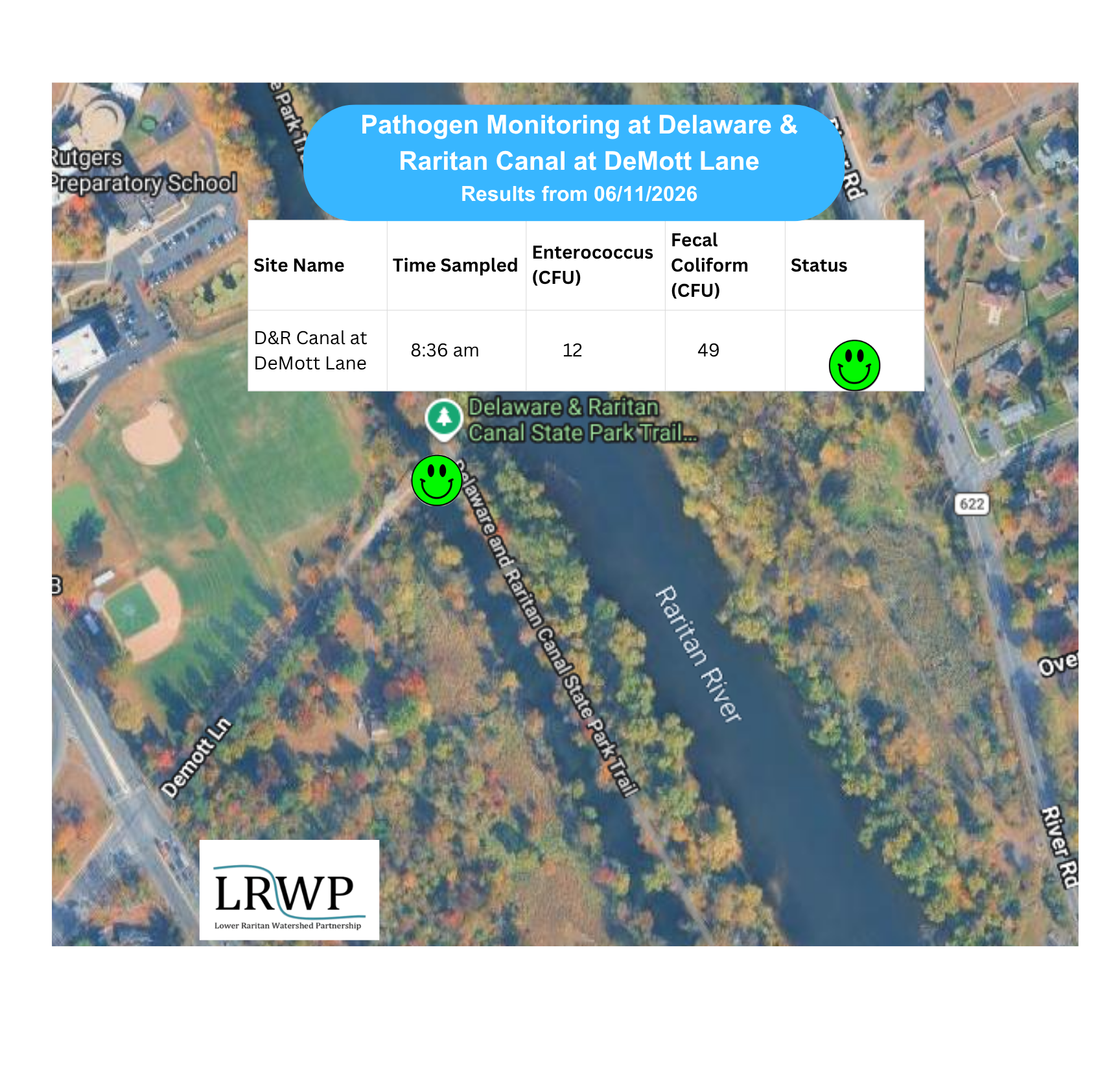
In order to better understand why Riverside Park, Piscataway is our worst performing site over the past six years, we have started sampling further upstream, as well as in the Delaware & Raritan Canal. On June 11th, we sampled the D&R Canal at DeMott Lane in Somerset County, New Jersey. We took our sample at the bridge adjacent to the Van Wickle House. The lab analysis produced an estimate of 12 enterococci ‘colony forming units’ per 100 mL, and 49 fecal. We find it interesting that our first three canal sites have had less entero and fecal than the adjacent river. The waters in the canal appear relatively stagnant and we expected worse results than we see.
Our goal in reporting these results is to give residents a better understanding of the potential health risks related to primary contact during water-based recreation. If you are planning on recreating on the Raritan this weekend, make sure to stay safe and wash up after any activities!
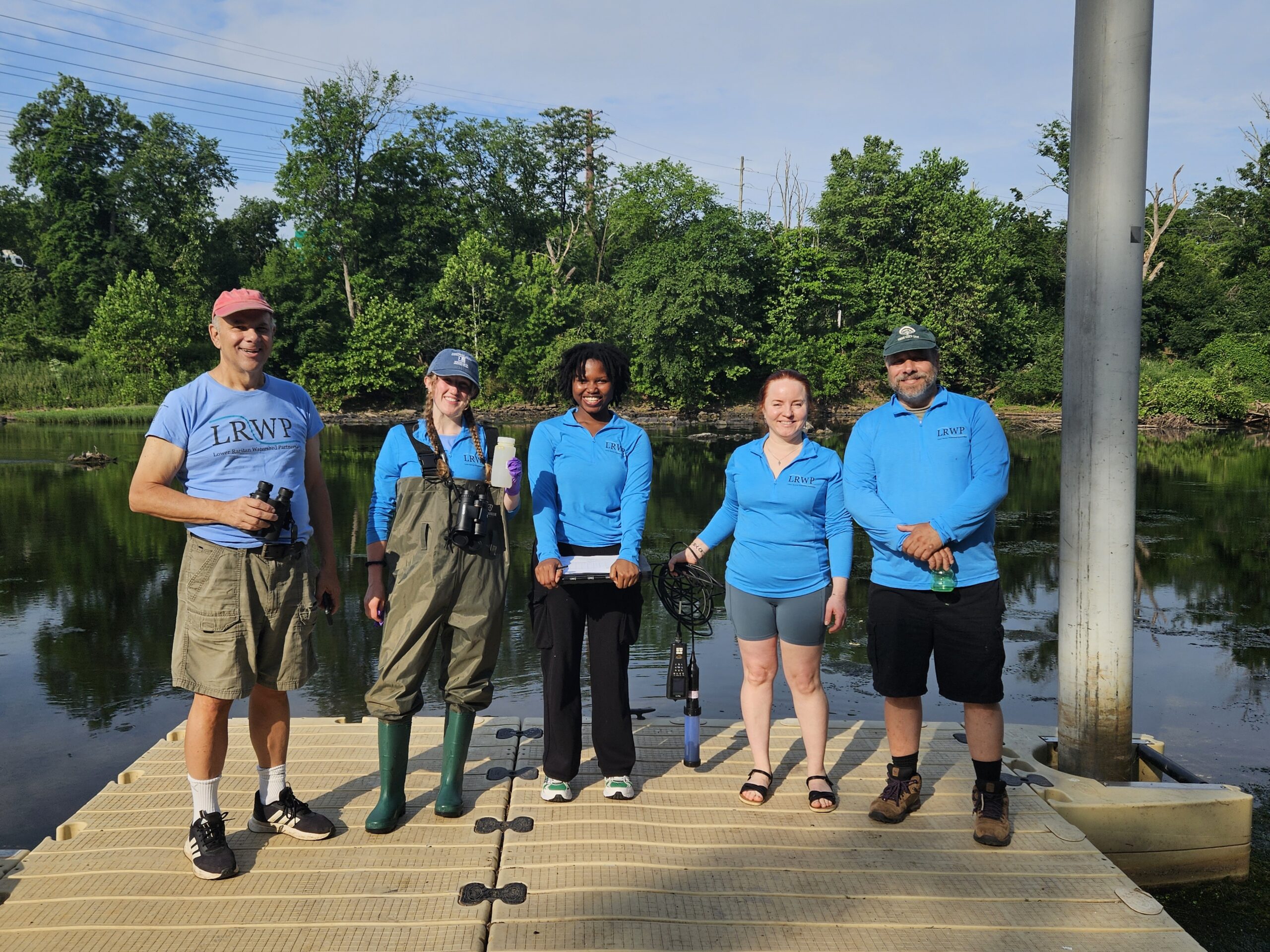
Art, Ashley, Endurance, Olesya and Mike (left to right) kick off pathogens monitoring at Riverside Park on Thursday morning. Photo credit: Heather Fenyk.
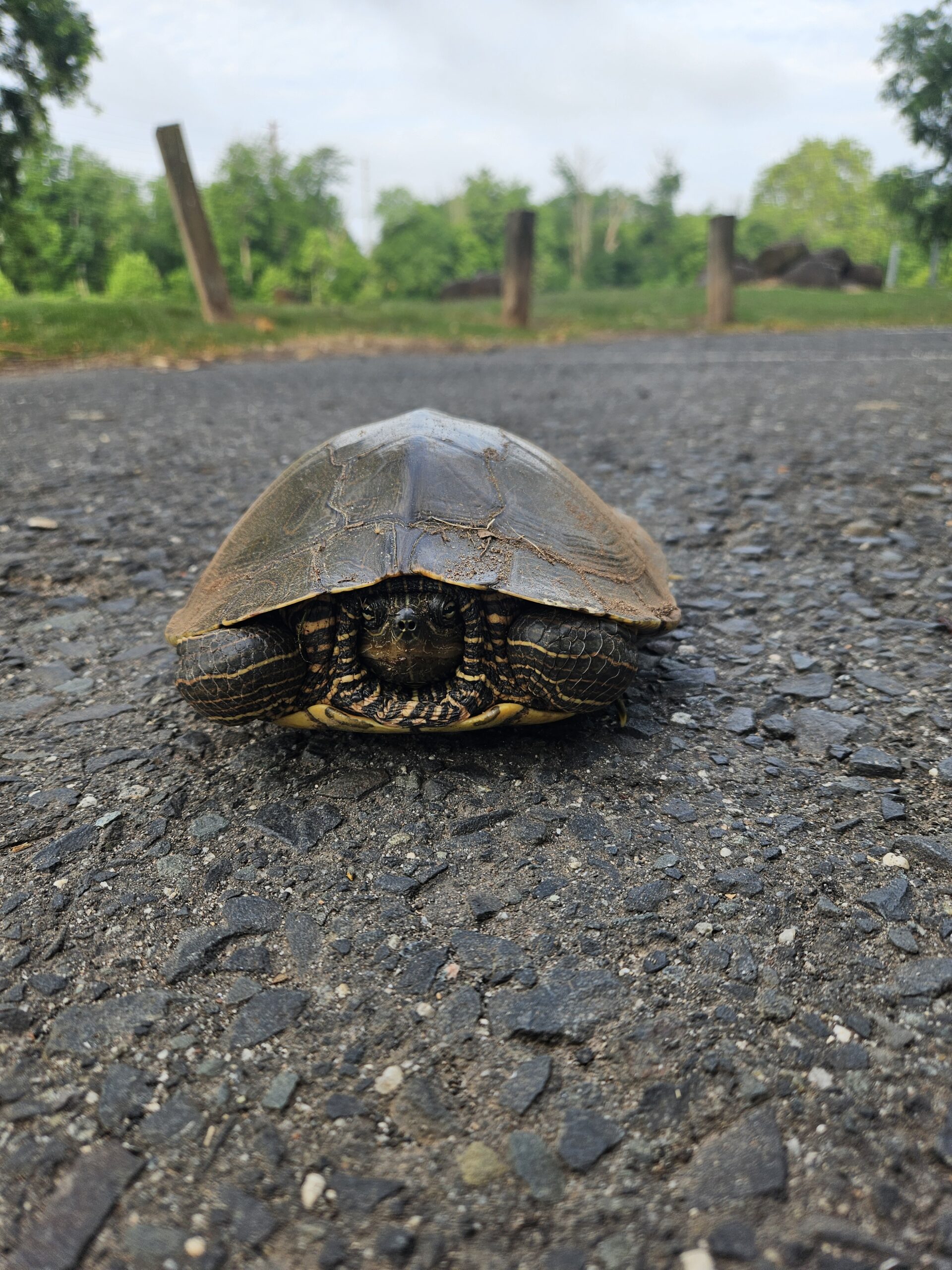
This adorable turtle was spotted on the parking lot by John when we arrived at Riverside Park to start calibrating. It was carefully evaded by the Geese Chasers driver from last week, who succeeded in scaring the gaggle of geese away from the parking lot into the river just by the sight of the car. Photo credit: Heather Fenyk.
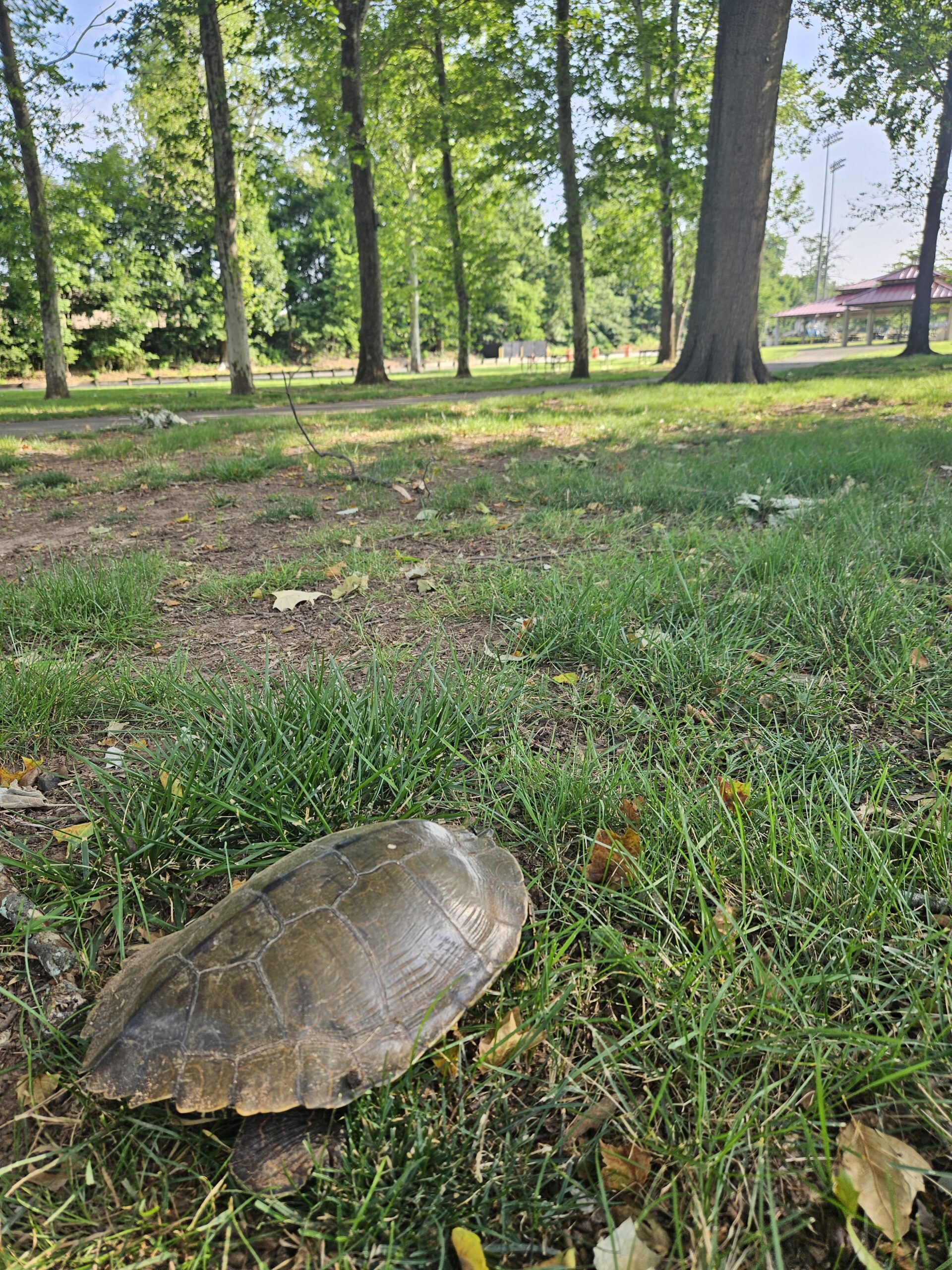
Heather later moved it into the grass for safety in the direction it was initially going. Turtles are likely to return to the path they were on if you moved them away from the direction that they were initially headed which may put them at risk later on when you or anyone else is there to help. Photo credit: Heather Fenyk
Ashley, Olesya and Endurance wrapping up measurements at Riverside Park. Photo credit: Heather Fenyk.
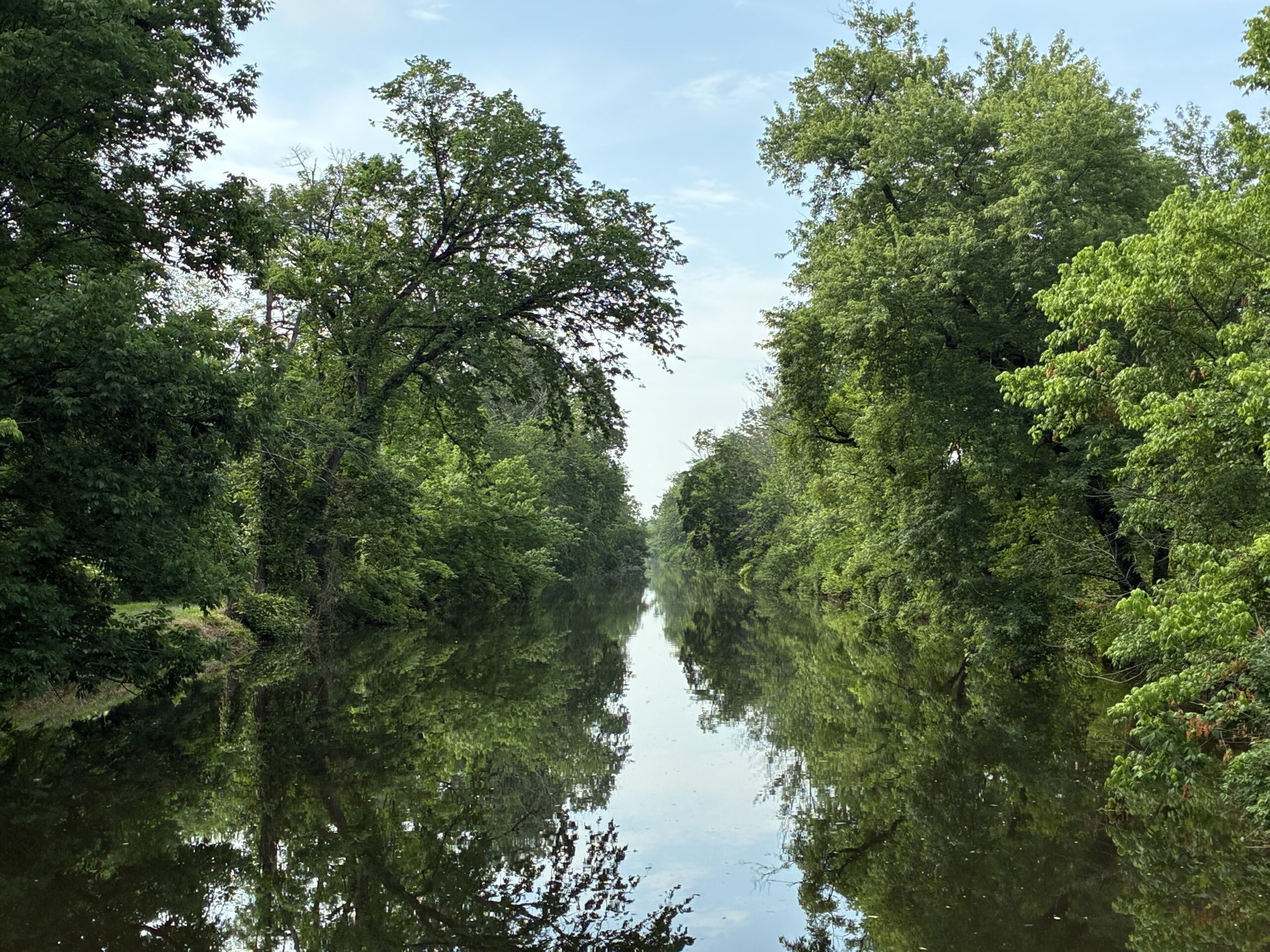
This serene and breathtaking view was taken from the bridge of the D&R Canal, DeMott Lane, Somerset County, near the Van Wickle House. This is the fourth of our new sites this year. Unlike the previous three new sites, this canal does not have lock, just a beautiful bridge. It is a perfect place to go for a walk and just appreciate nature. Photo credit: Endurance Laryea
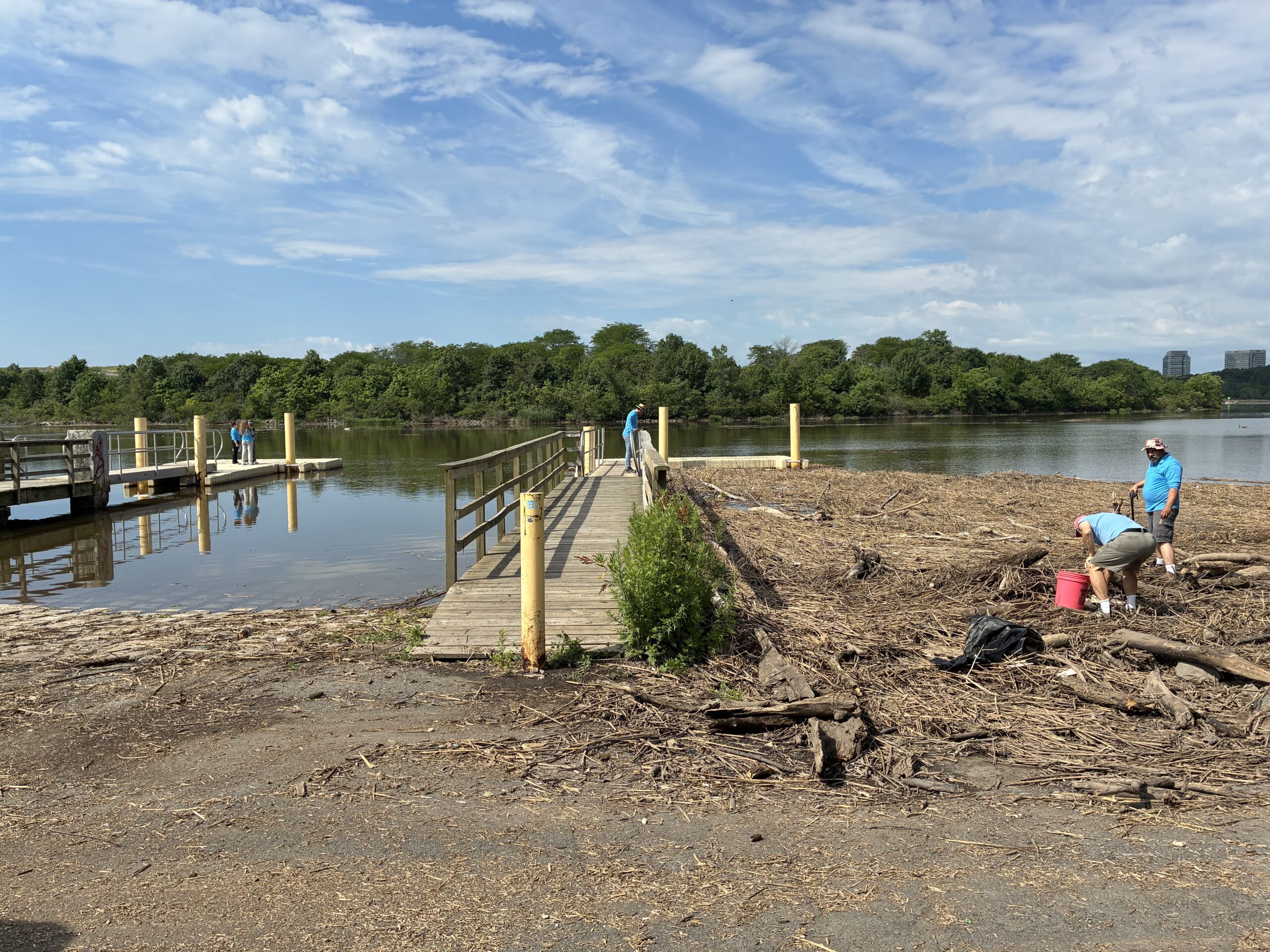
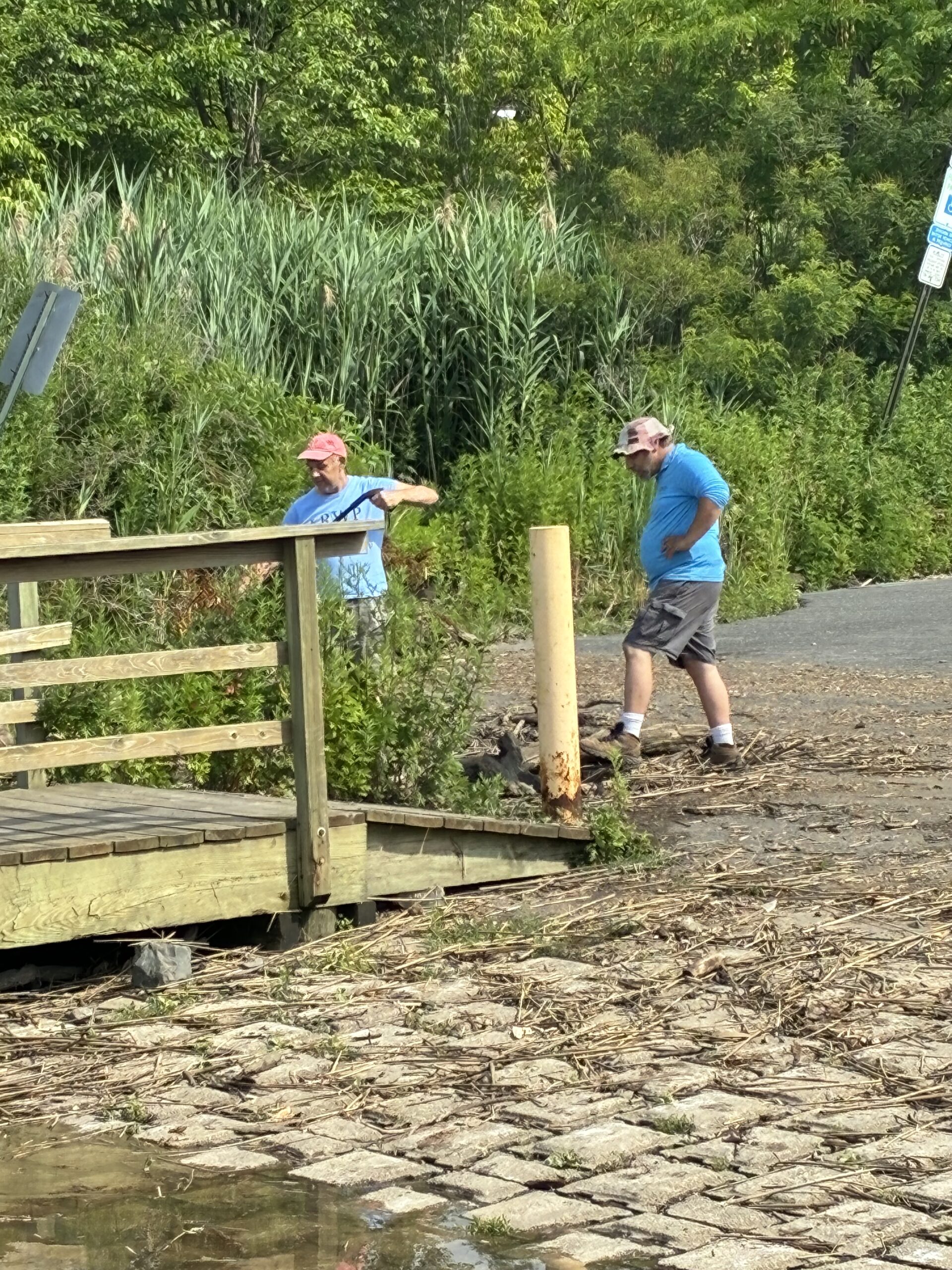
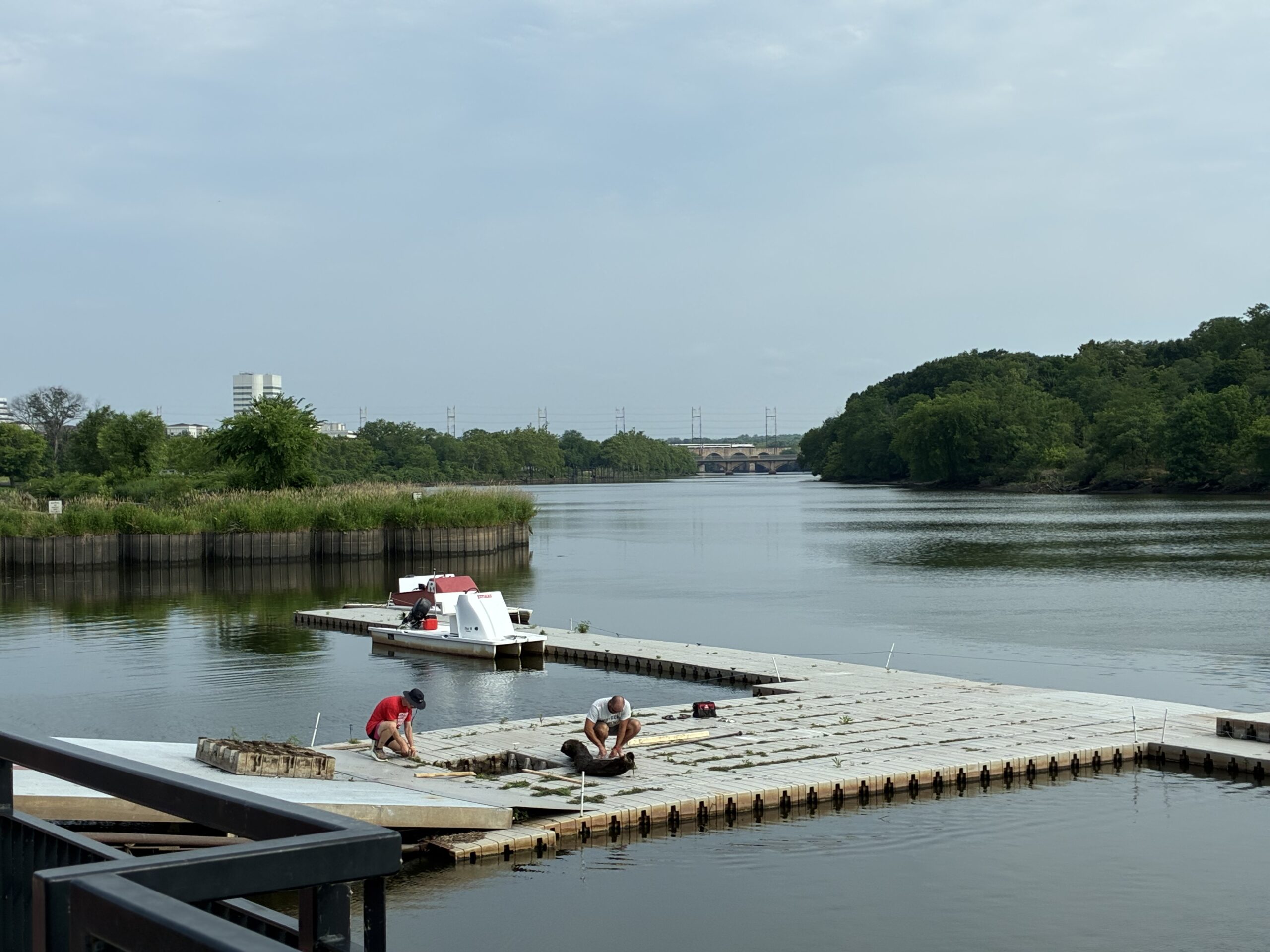
At Rutgers Boat House, New Brunswick, two men work to take out a log that had been caught under the dock and was causing it to be lifted in that area. Photo credit: Endurance Laryea
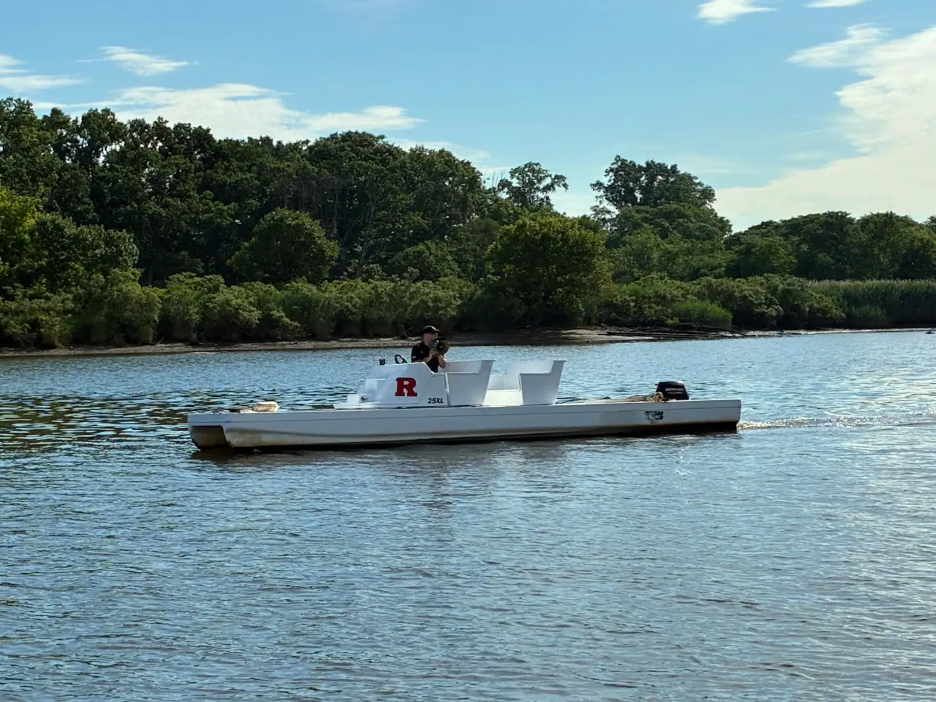
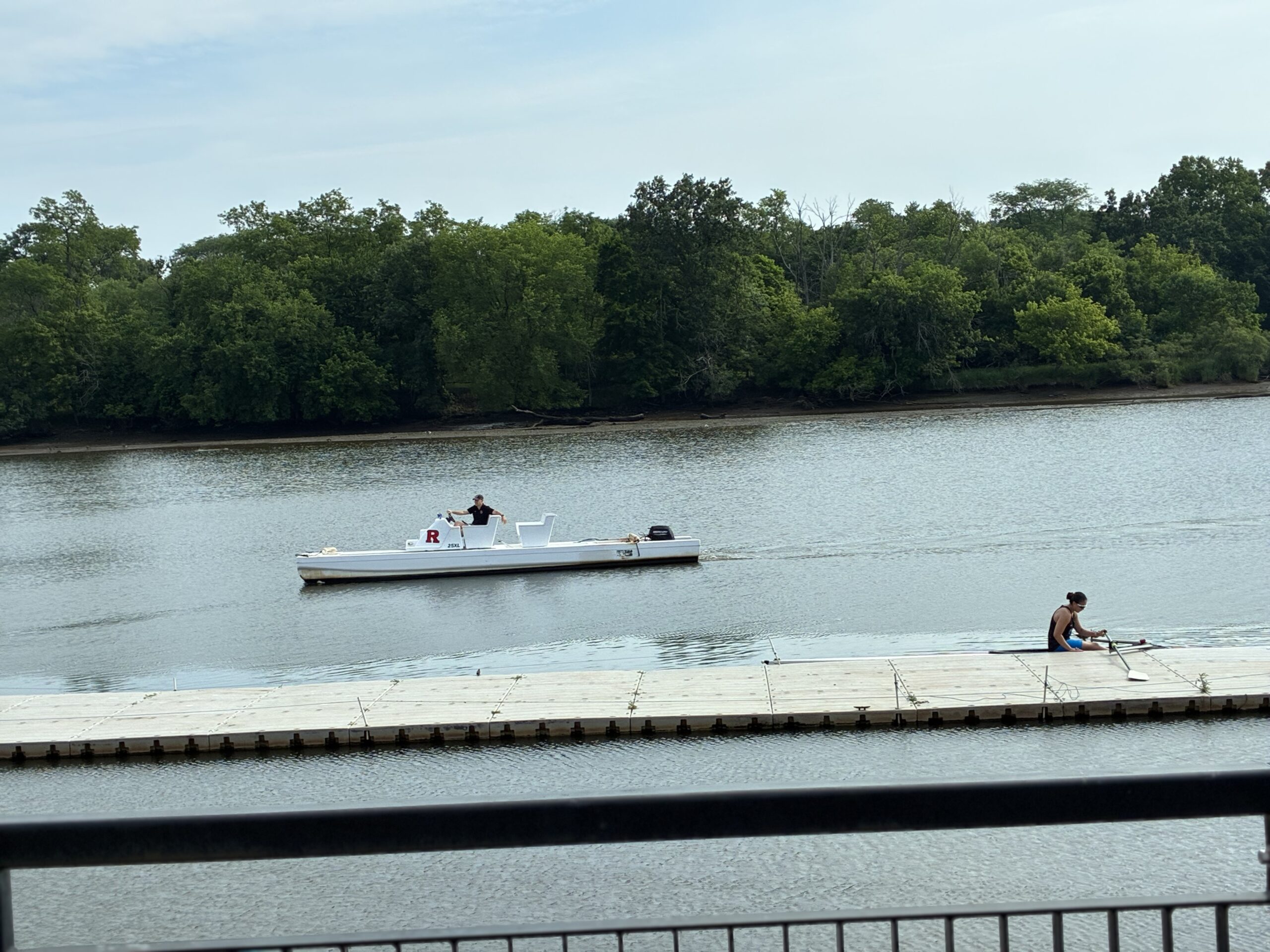
Coaches from the Rutgers rowing team approach the dock. Photo credits: Endurance Laryea.
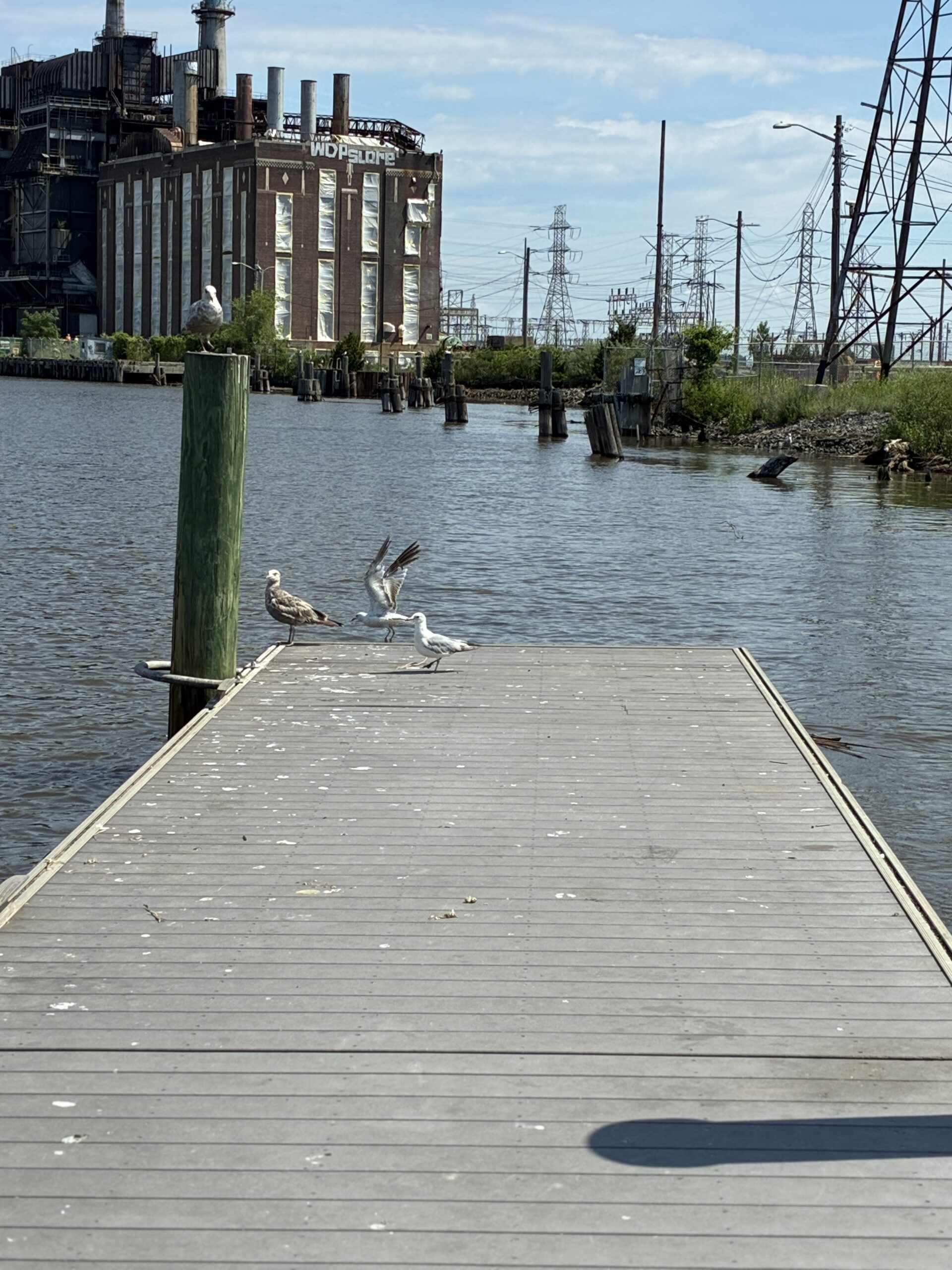
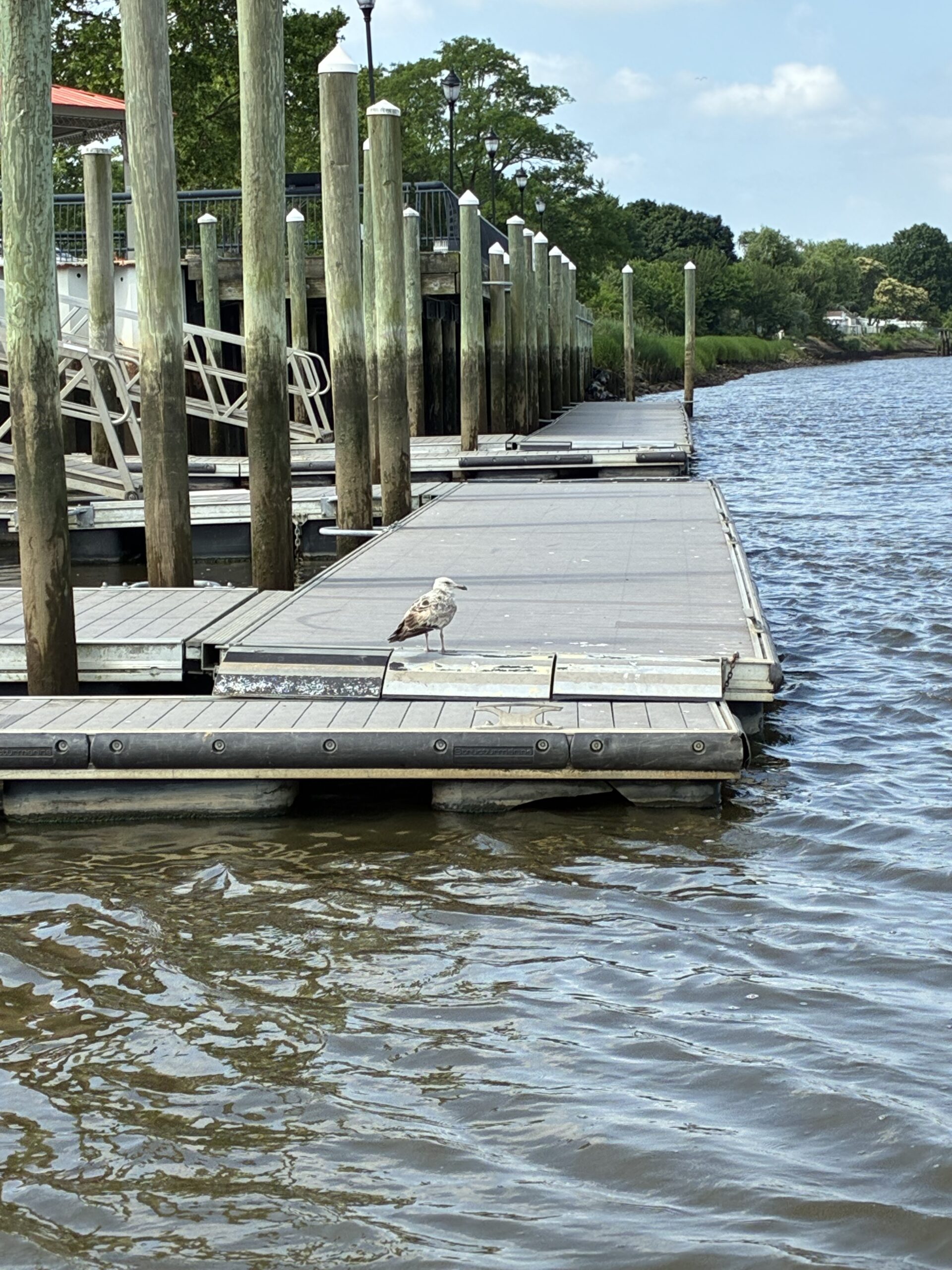
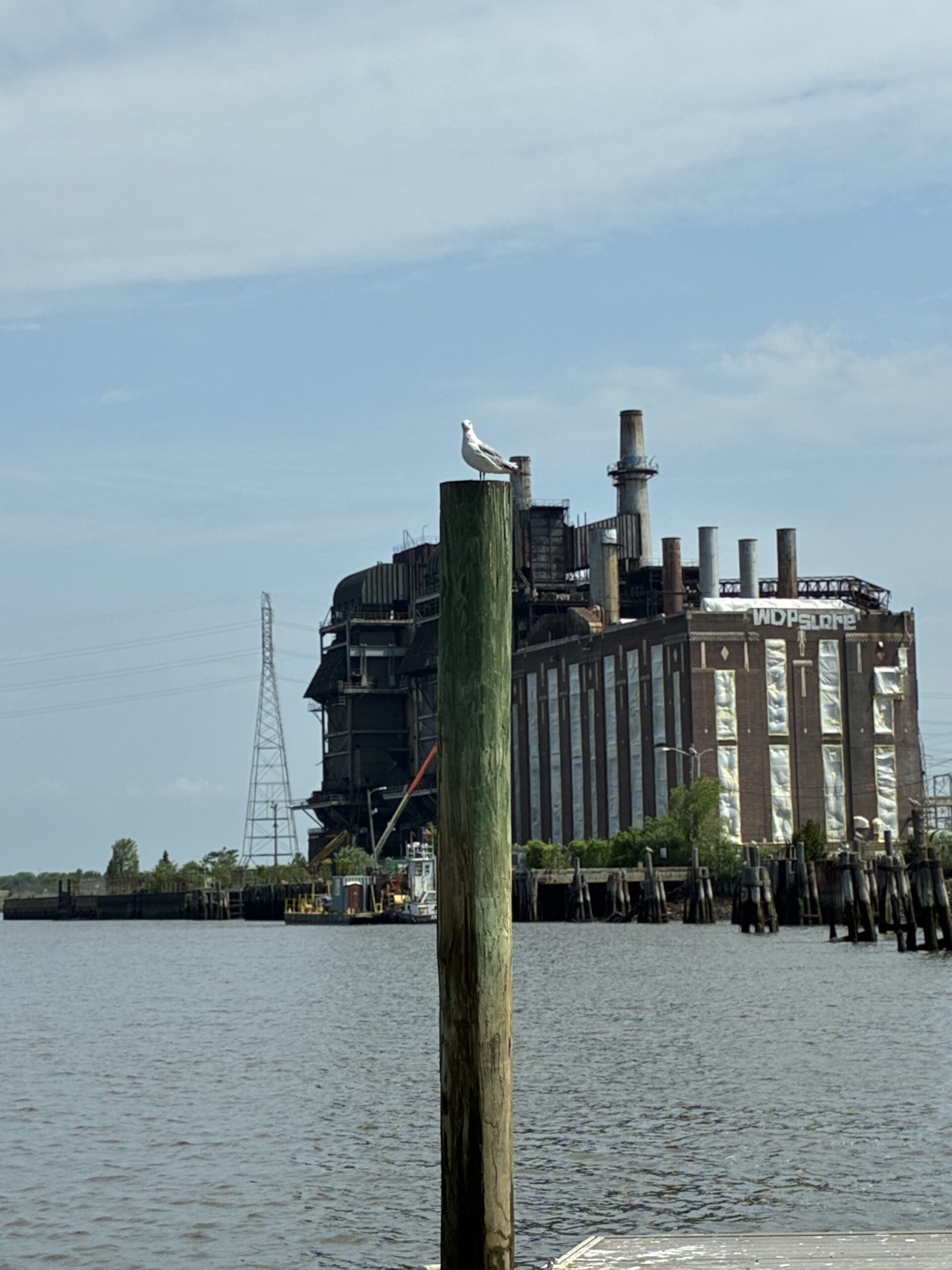
Two different types of seagulls spotted at Ken Buchanan Waterfront Park, Sayreville. Photo credits: Endurance Laryea.
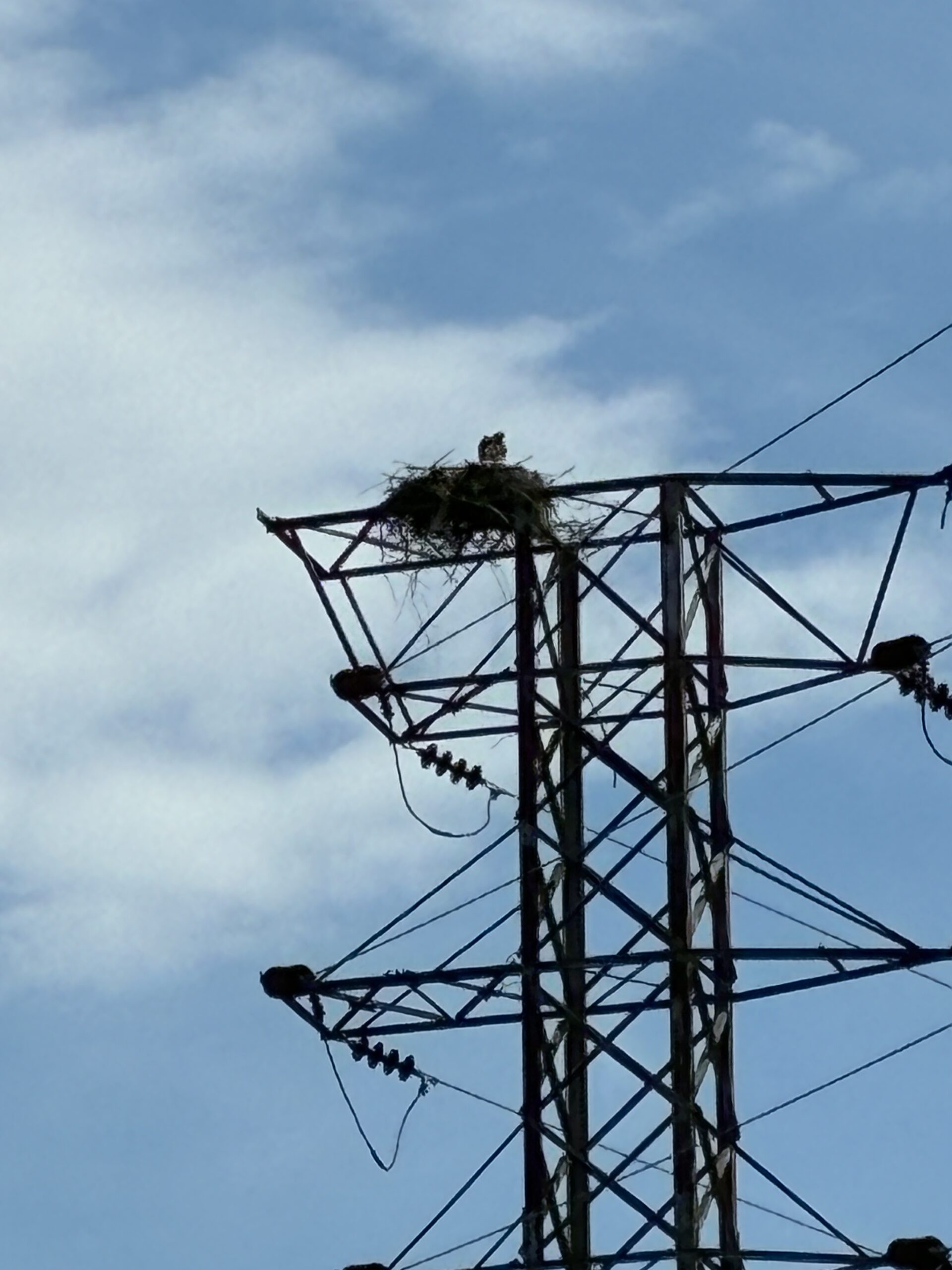
We also spotted the ospreys in their nest today! There were two of them and we watched as one caught a fish in swift dive into the water. For some reason, it did not go directly into its nest after the successful catch but rather lingered around. Unfortunately, we did not catch that on camera.
John calling out the measurements to Ashley because he had to take the sonde with him further into the river due to the low tide.
It was a low tide day on the river this morning. Most of the banks were shallower than usual so we had to go further into the river to get samples and measurements. A couple of the banks revealed filamentous algae that would usually be hidden or not clearly seen.
Today’s pathogen monitoring was smooth and fun as always- meeting new people and having great conversations and good laughs. We were done and celebrating a job well done just before the sun hit its full strength! Looking forward to another great time next week 🙂
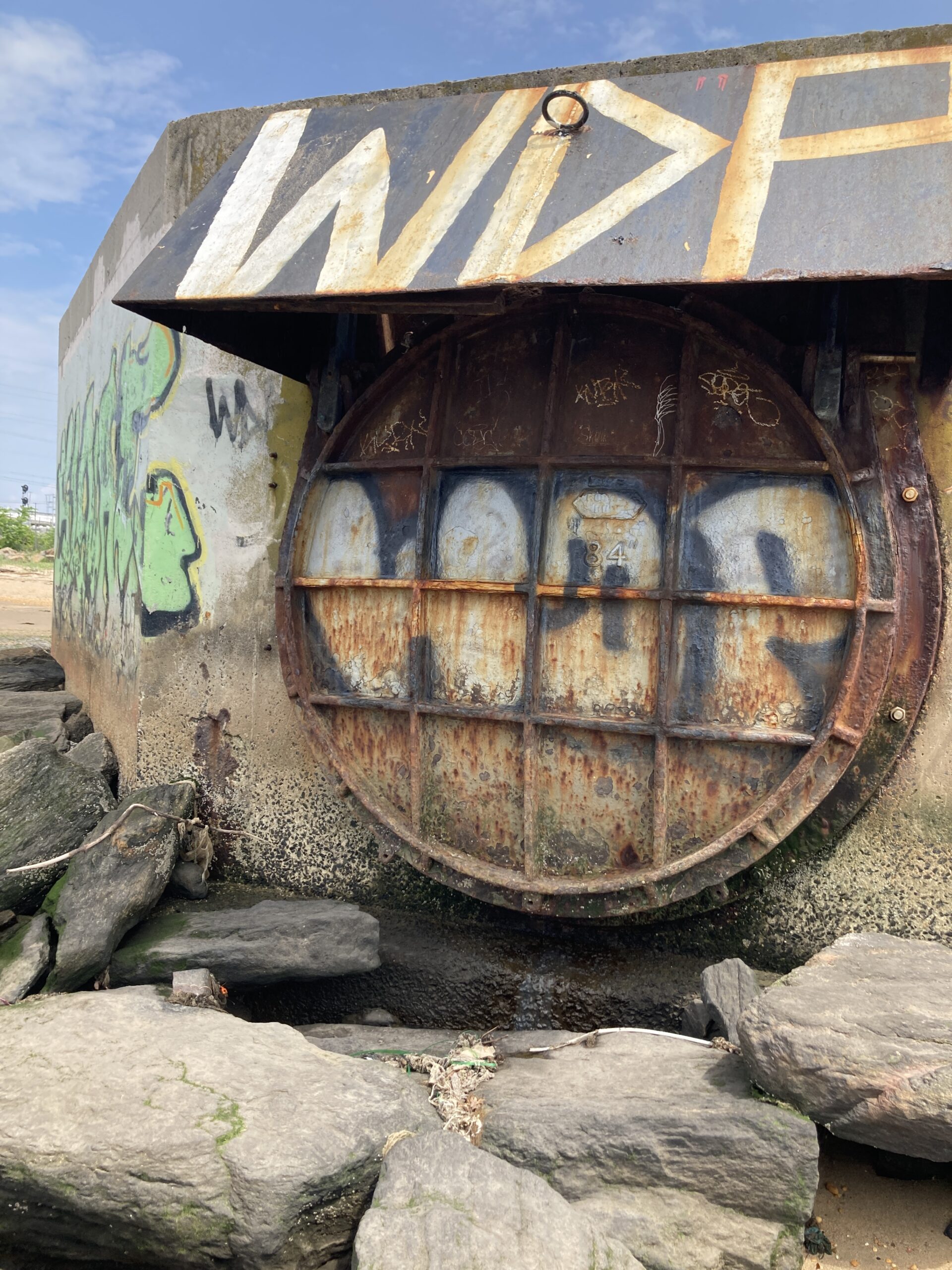
This behemoth of a pipe is one of Perth Amboy’s notorious combined sewer outfalls. At low tide, it is completely visible. Unlike in South Amboy, sanitary wipes litter the shore line. While this outfall will probably be necessary for decades to come, Perth Amboy could greatly reduce the amount of sewage flowing into Raritan Bay by disconnecting roof gutters from the sewer system, daylighting streams, creating simple catch basins, and installing rain gardens. With a few simple steps, Perth Amboy could have one of the best waterfronts in America, and prevent the spread of infectious disease. — Photo credit: J.M. Meyer.
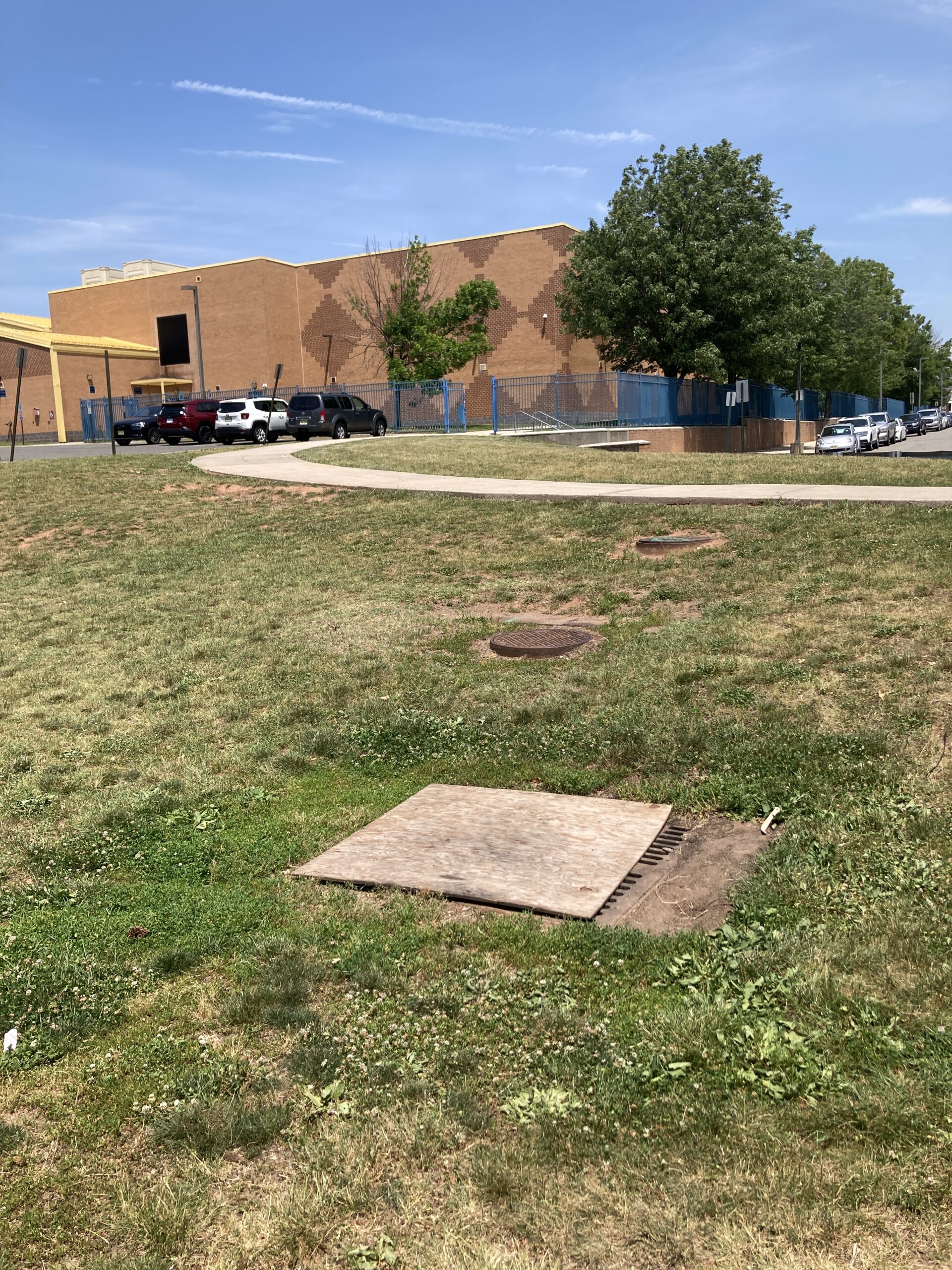
Teachers at the nearby Robert Wilentz elementary school try to mitigate the smell of sewage by covering the storm drains with plywood. — Photo by J. M. Meyer.
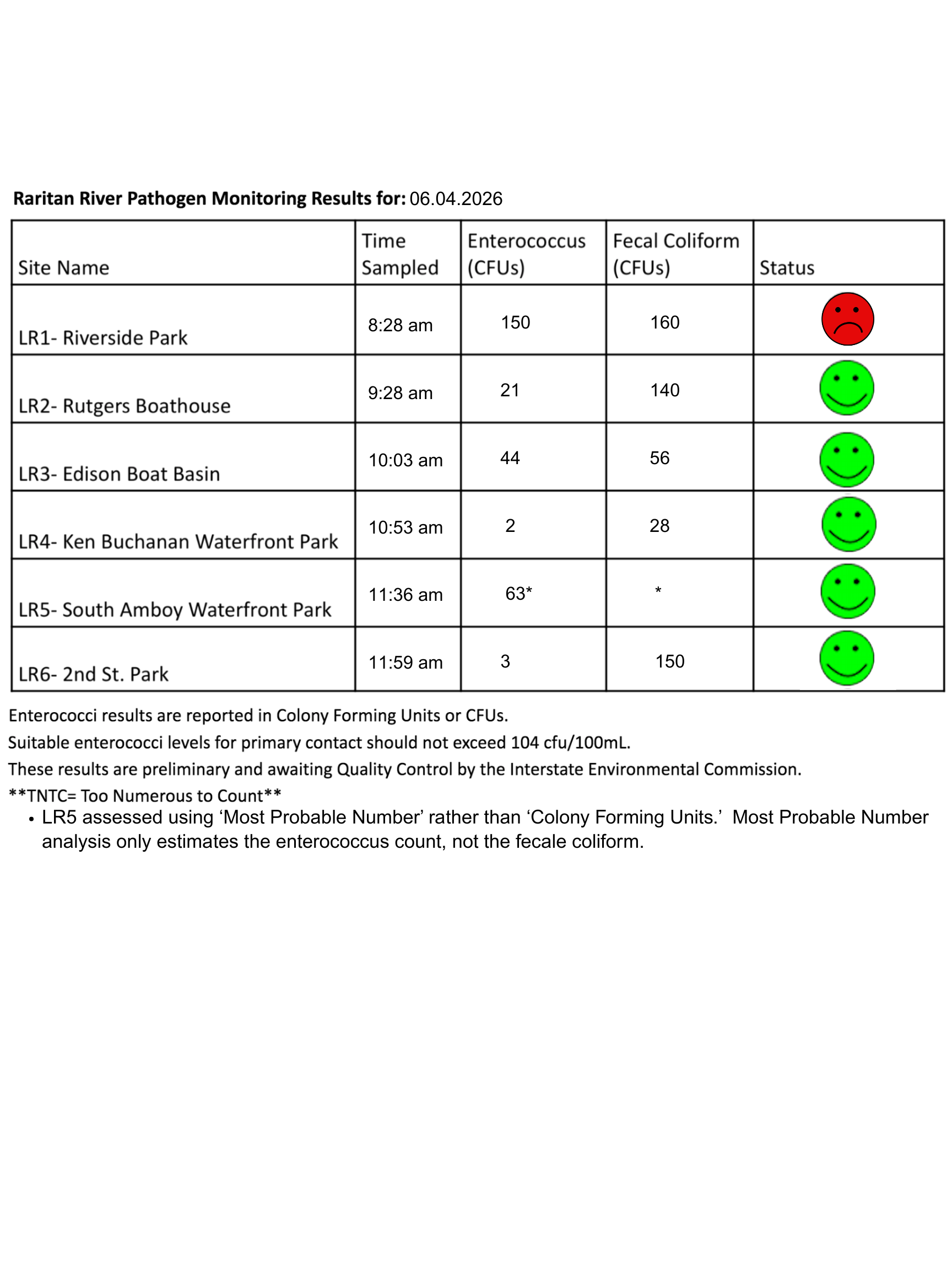
The first pathogen monitoring session of the month took place on Thursday, June 4th. Each week during the summer, from May to October, the Lower Raritan Watershed Partnership and Rutgers Cooperative Extension of Middlesex County run a volunteer-based monitoring program along the Raritan River. We collect water quality samples at six non-bathing public access beach sites, provide our samples to the Interstate Environmental Commission for analysis in their laboratory, and report the results to the public. Our mission is to share this data with the community and partners to ensure the safe use of the Raritan river for all.
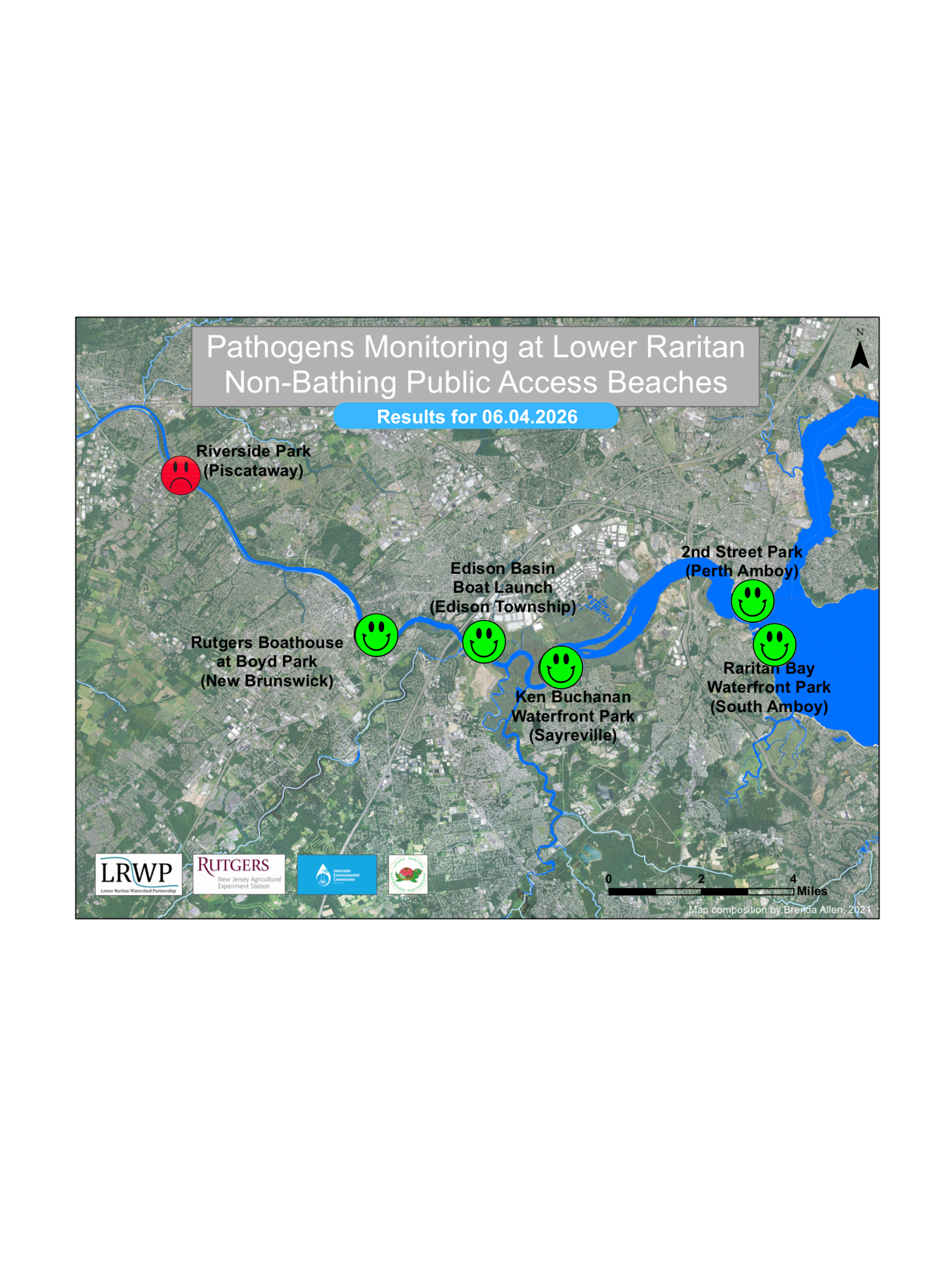
Our lab results for water quality samples taken on Thursday, June 4th, 2026 show Enterococcus bacteria levels exceeding the EPA federal water quality standard of 104 cfu/100mL at one of our monitoring sites this week. Problem sites are indicated by red frowns on the map and chart: Riverside Park (Piscataway). Green smiles on the chart and map indicate the sites with bacteria levels safe for recreation, and include the following: Rutgers Boathouse (New Brunswick), Edison Boat Basin (Edison), Ken Buchanan Waterfront Park (Sayreville), Raritan Bay Waterfront Park (South Amboy), 2nd Street Park (Perth Amboy). For South Amboy, we were unable to analyze enough fluid to complete the membrane filtration process required to measure Colony Forming Units. We have therefore marked that site with an asterisk. Statistical analysis of the sample produced a ‘Most Probable Number’ of 63 enterococci per 100 mL, and we were unable to assess fecal coliform.
Pathogens/Enterococci levels are used as indicators of the possible presence of disease-causing bacteria in recreational waters. Such pathogens may pose health risks to people coming in primary contact with the water (touching) through recreational activities like fishing, kayaking or swimming in a water body. Possible sources of bacteria include Combined Sewer Overflows (CSOs), improperly functioning wastewater treatment plants, stormwater runoff, leaking septic systems, animal carcasses, pet waste, wildlife waste, and runoff from manure storage areas.
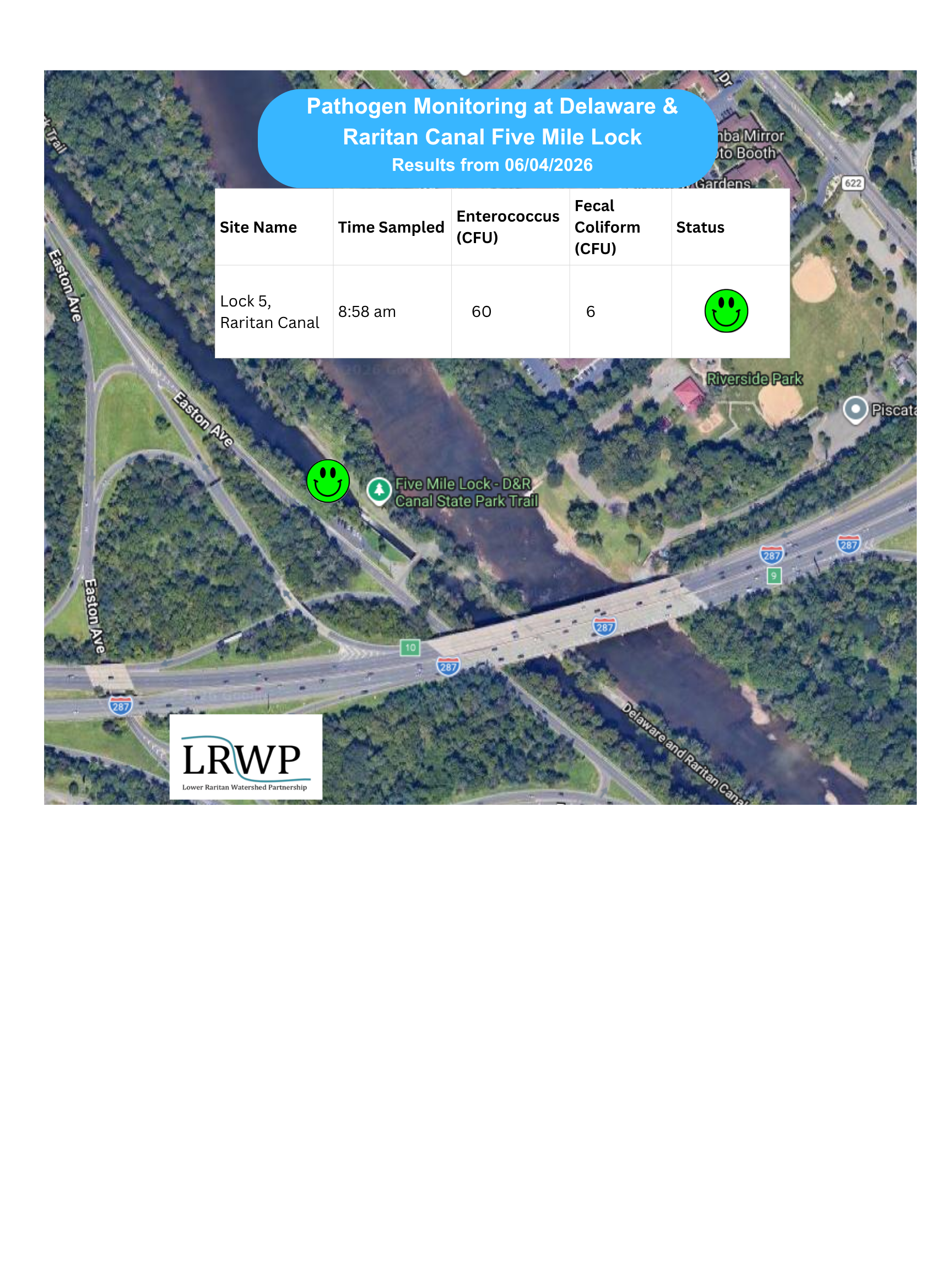
In order to better understand why Riverside Park, Piscataway is our worst performing site over the past six years, we have started sampling further upstream, as well as in the Raritan-Delaware Canal. On June 4th, we sampled Five Mile Lock in Somerset County, which is in the canal just across from Riverside Park. The lab analysis produced an estimate of 60 enterococci ‘colony forming units’ per 100 mL, and 6 fecal. We find it interesting that our first two canal sites have had less entero and fecal than the adjacent river. The waters in the canal appear relatively stagnant and we expected worse results than we see. The pH level of the canal read as 8.35, so perhaps the canal receives some kind of chemical treatment? We know that the canal is treated with the acidic herbicide fluridone, but that would not explain the high pH level on its own.
Our goal in reporting these results is to give residents a better understanding of the potential health risks related to primary contact during water-based recreation. If you are planning on recreating on the Raritan this weekend, make sure to stay safe and wash up after any activities!
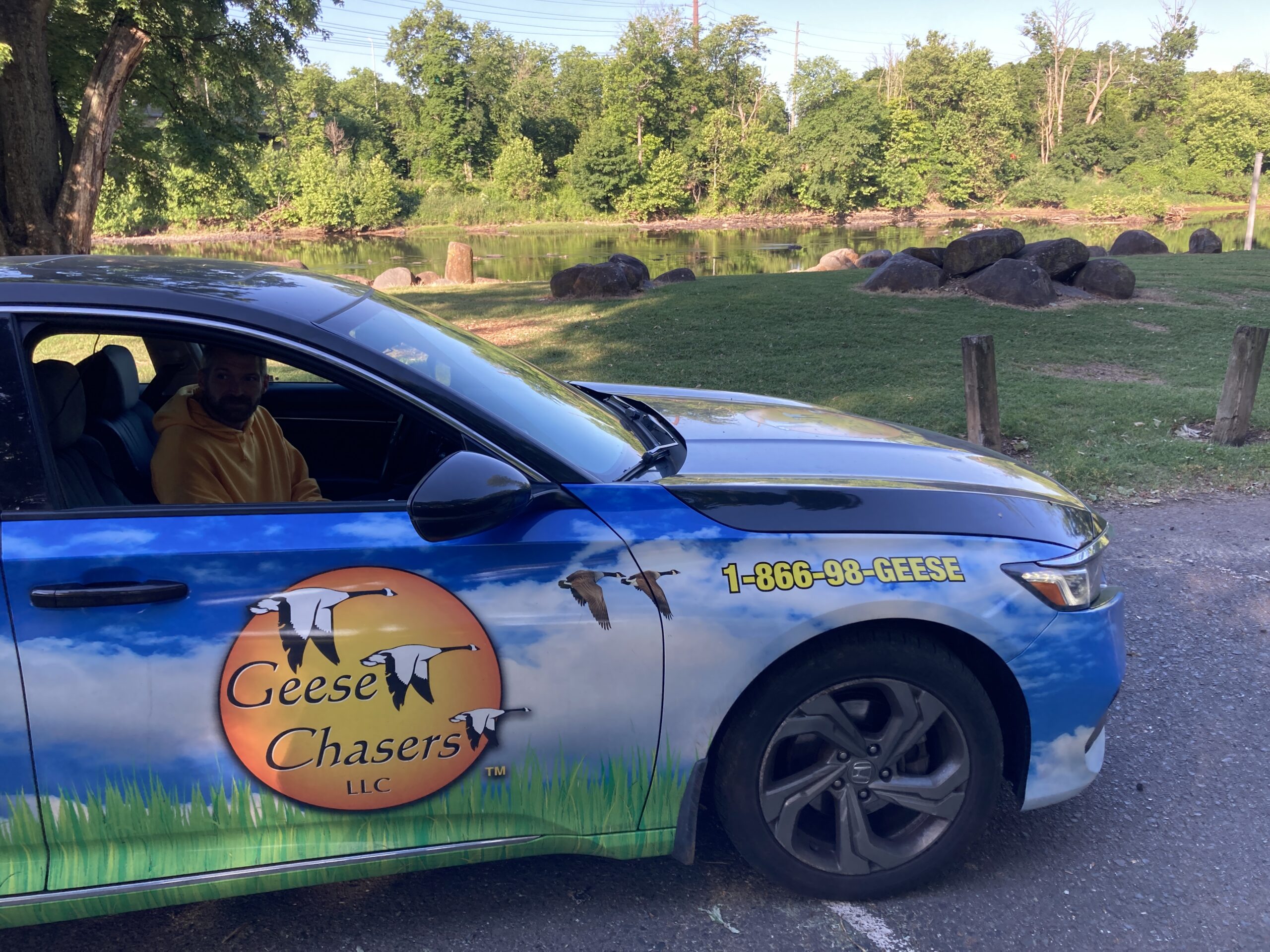
Did you know that geese chasing is a job?! The Geese Chasers are hired by municipalities across the world to ward off geese. Their colleagues include a pack of border collies. The border collie in this car stayed in the vehicle because 1) its gosling season and they are not allowed to chase goslings, and 2) the geese ran off as soon as the vehicle appeared. We spotted this interesting event at Riverside Park, Piscataway. — Photo by J.M. Meyer.
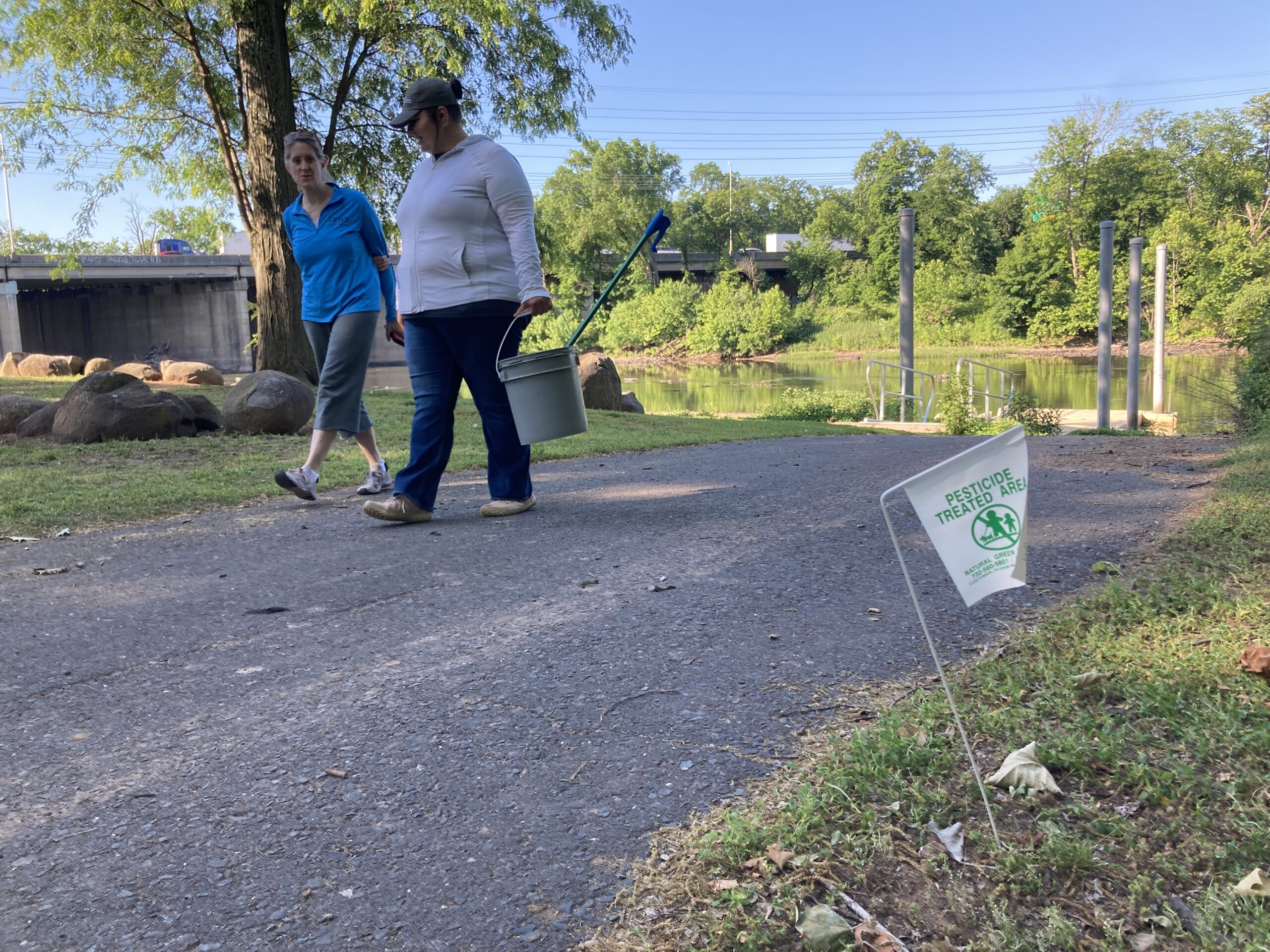
Heather and Rose prowl for trash along the banks of Riverside Park. In the foreground you can see a flag left by a chemical company. Typically, chemical treatment companies use a mix of broad leaf herbicide and fertilizer for grasses. We continue to advocate for Piscataway to establish a ‘no mow’ zone along the banks of the Raritan. A ‘no mow’ zone would help filter the runoff, discourage the geese, provide habitat for pollinators … and help prevent herbicide and fertilizer from spilling into the Raritan River. — Photo by J. M. Meyer.
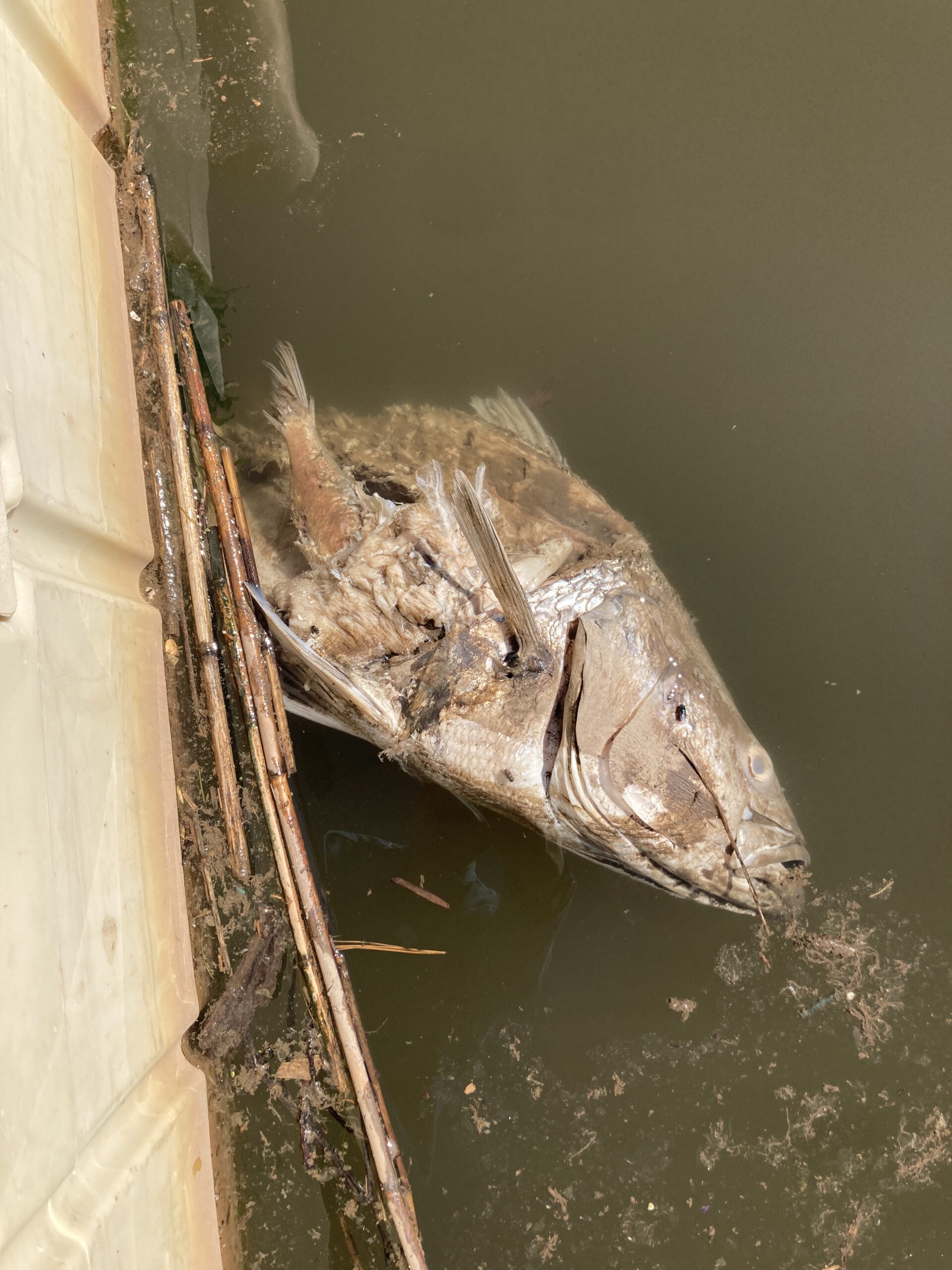
A dead striped bass, stripped to the fins, floats in the water at Edison Boat Basin. A bait fish (commonly called ‘bunker’) protrudes from its gut. A local fisherman explained to our volunteers that this particular fish looked ‘oversize’, which means it exceeds the 31″ permitted by law. A common tactic to avoid enforcement is to immediately filet the fish, keep the meat, and toss the remainder into the water. — Photo by J.M. Meyer.
In Sayreville we met Denise. Denise is an animal advocate who traps, neuters, and returns stray cats. This helps control the population of stray cats, and protects the avian population. If you know of any strays in Sayreville, you are welcome to contact Denise via the card pictured above. — Photo by J.M. Meyer.
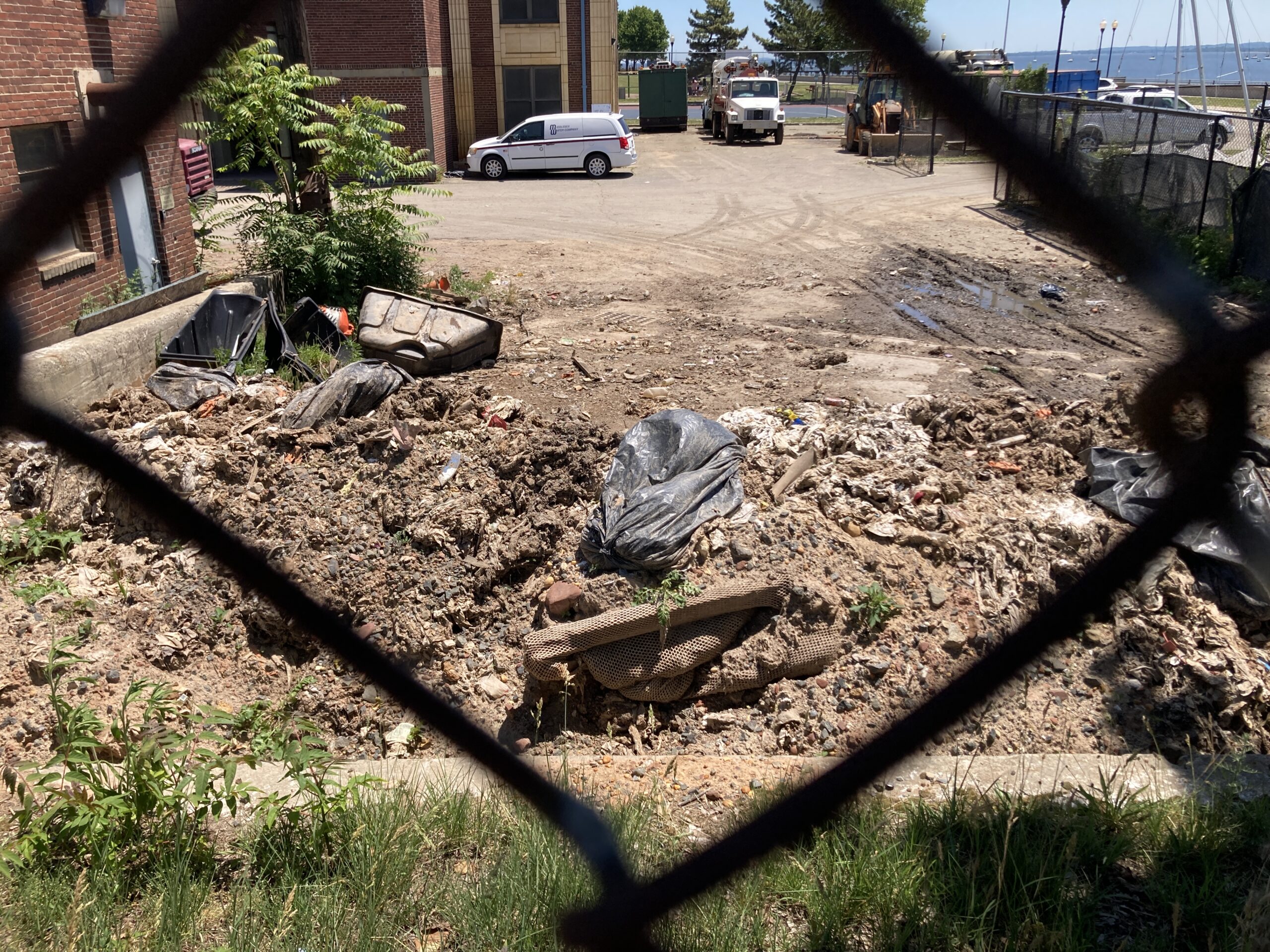
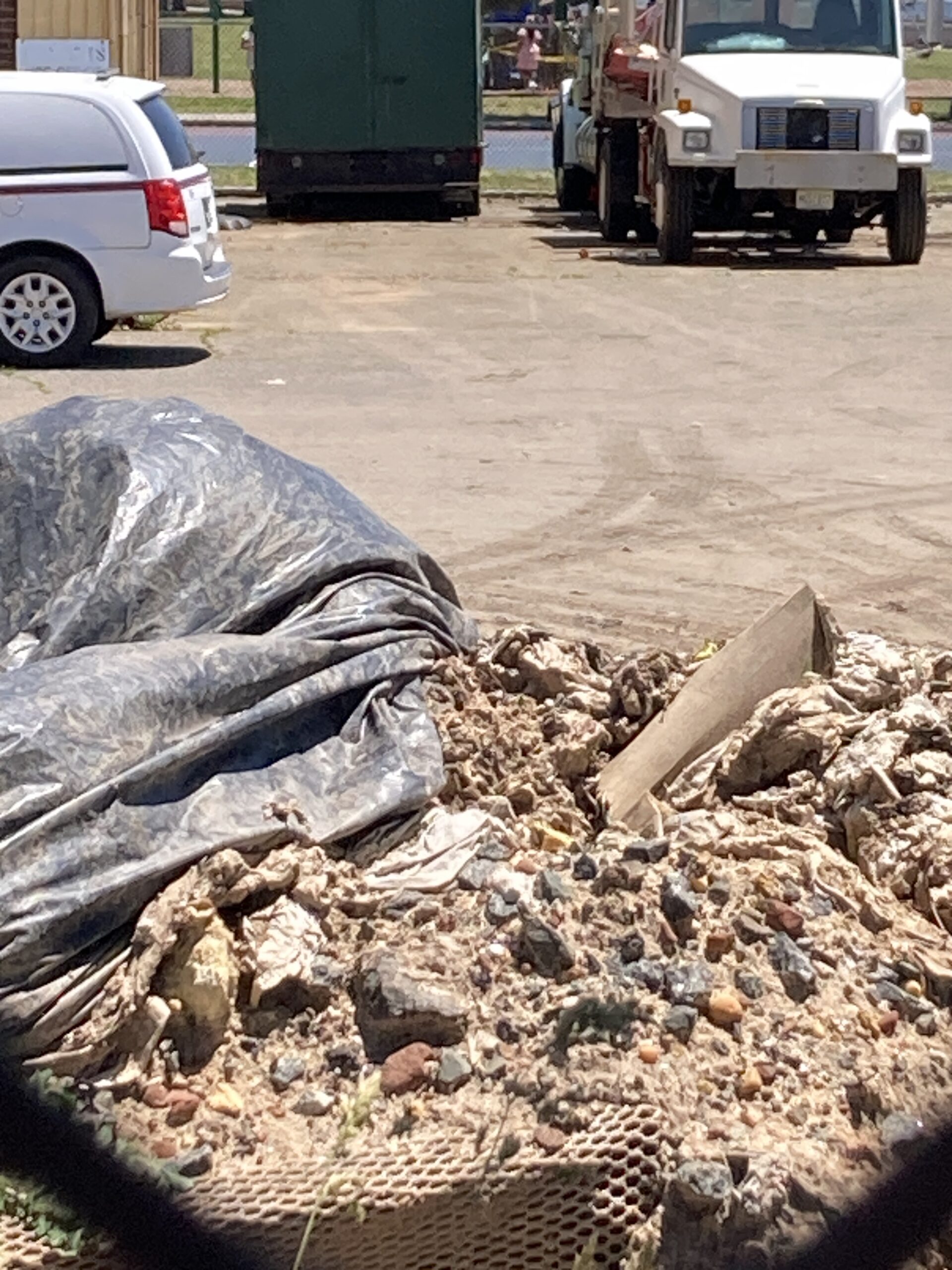
By the end of last season, we had persuaded the sewage management team in Perth Amboy to use tarps to cover their catch of baby wipes, clay, and feces to prevent the smell from reaching the nearby beach and schoolyard. Unfortunately, they have buried the tarps under more sewage, and the smell is back in full force.
In the background you can see children on the playground at Robert M. Wilentz elementary, directly downwind of several tons of sewage and sediment. — J.M. Meyer.