Raritan River Pathogens Result 07.16.2026
By Endurance Laryea, LRWP Summer Research Intern and J.M. Meyer.
The third pathogen monitoring session of the month took place on Thursday, July 16th. Each week during the summer, from May to October, the Lower Raritan Watershed Partnership and Rutgers Cooperative Extension of Middlesex County run a volunteer-based monitoring program along the Raritan River. We collect water quality samples at six non-bathing public access beach sites, provide our samples to the Interstate Environmental Commission for analysis in their laboratory, and report the results to the public. Our mission is to share this data with the community and partners to ensure the safe use of the Raritan River for all.
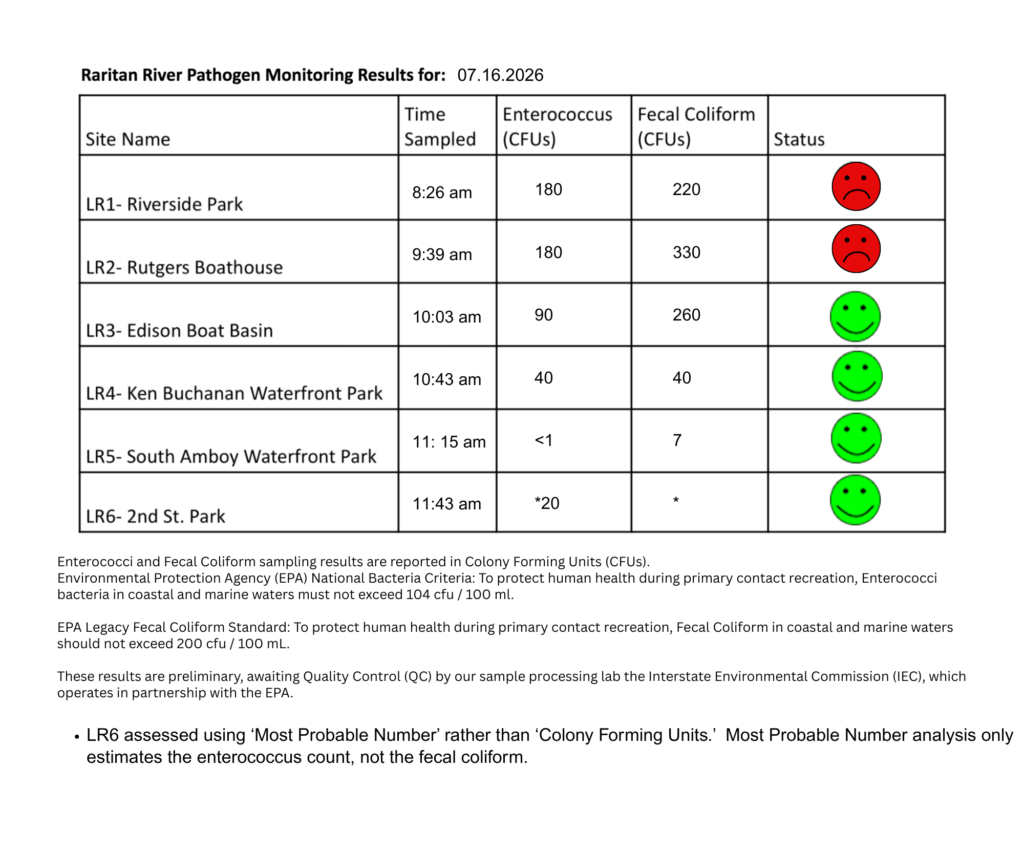
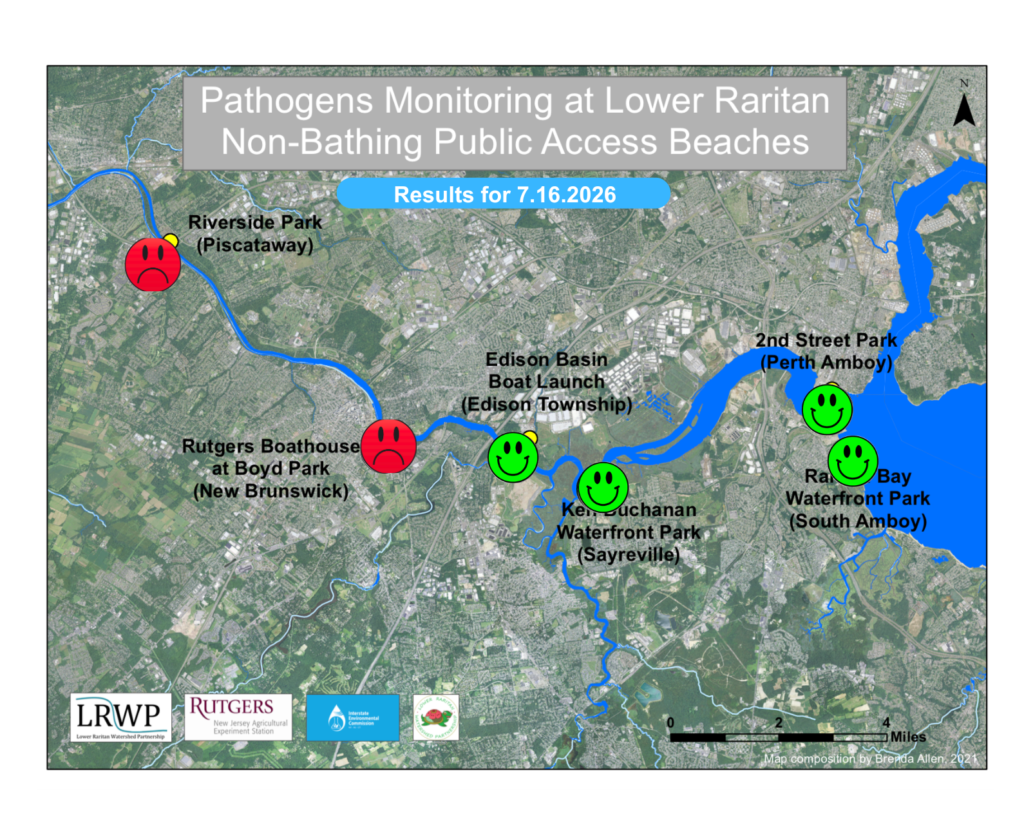
Our lab results for water quality samples taken on Thursday, July 16th, 2026, show Enterococcus bacteria levels exceeding the EPA federal water quality standard of 104 cfu/100mL at two of our regular monitoring sites this week. The problem sites are indicated by the red frown on the map and chart and include Riverside Park (Piscataway), and Rutgers Boathouse (New Brunswick). Green smiles on the chart and map indicate the sites with bacteria levels safe for recreation and include the following: 2nd Street Park (Perth Amboy), and South Amboy Waterfront Park.
Pathogens/Enterococci levels are used as indicators of the possible presence of disease-causing bacteria in recreational waters. Such pathogens may pose health risks to people coming in primary contact with the water (touching) through recreational activities like fishing, kayaking or swimming in a water body. Possible sources of bacteria include Combined Sewer Overflows (CSOs), improperly functioning wastewater treatment plants, stormwater runoff, leaking septic systems, animal carcasses, pet waste, wildlife waste, and runoff from manure storage areas.
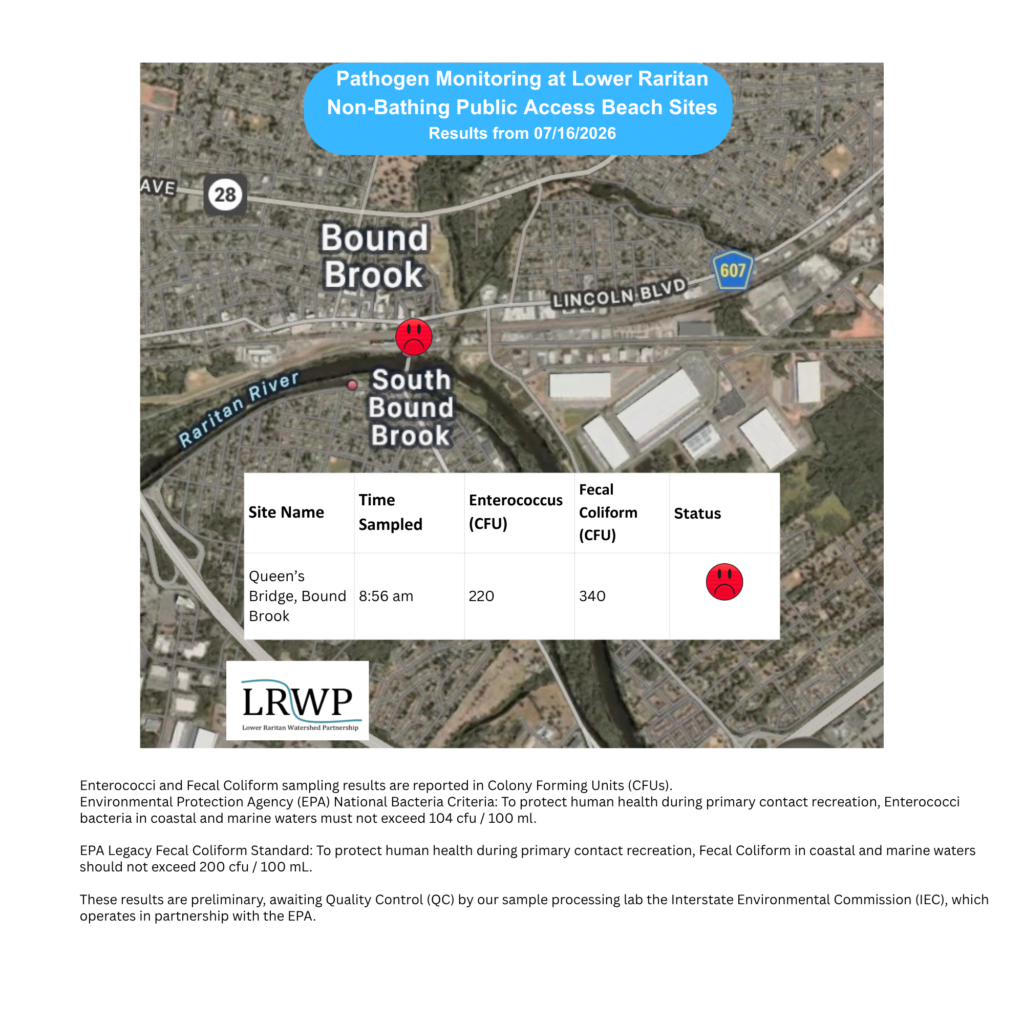
In order to better understand why Riverside Park, Piscataway has been our worst performing site over the past six years, we have started sampling further upstream. On July 16th, we sampled the Queen’s Bridge, Bound Brook site a third time since we started pathogens monitoring this season. The lab analysis produced 220 enterococci cfu per 100mL which crashes into the EPA federal water quality standard of 104 cfu/100mL. Again, this site failed the test, as it has every week that we’ve tested it. In contrast, the D&R canal has passed all six of its tests.
Our goal in reporting these results is to give residents a better understanding of the potential health risks related to primary contact during water-based recreation. If you are planning on recreating on the Raritan this weekend, make sure to stay safe and wash up after any activities!
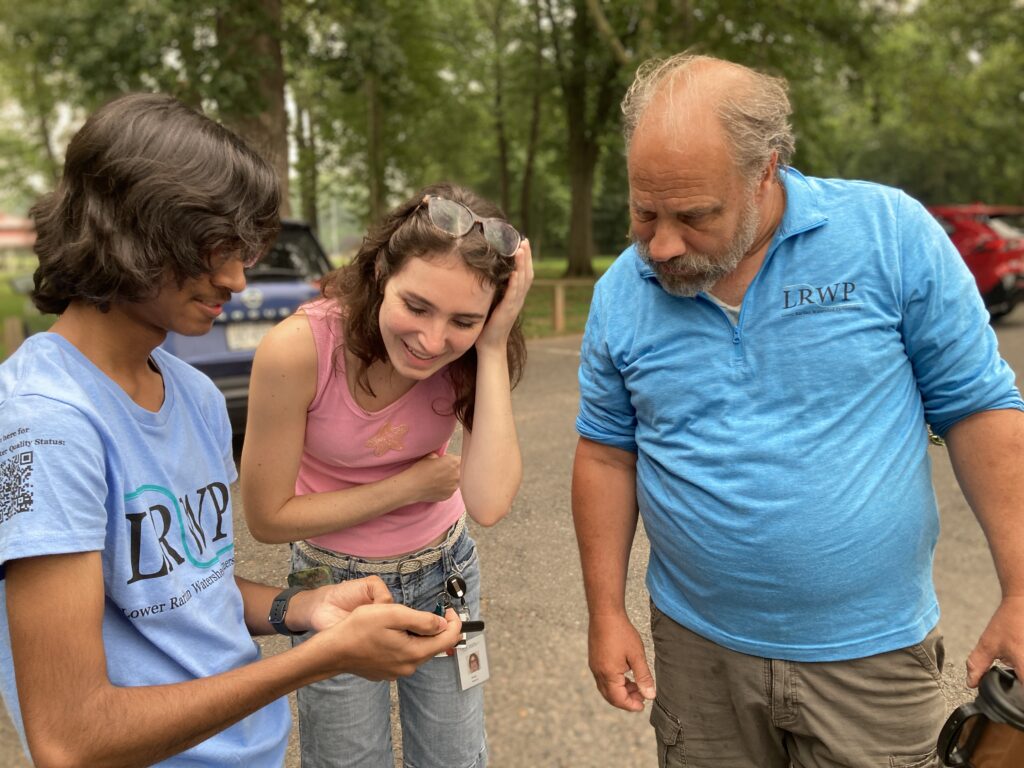
Nilesh, one of our key Sewa International volunteers at last year’s Green Brook project, is working with Olyessa and other team members to plan a riparian restoration effort in Piscataway! In the above photo, Nilesh receives feedback on his proposal from Mike and Ruby.
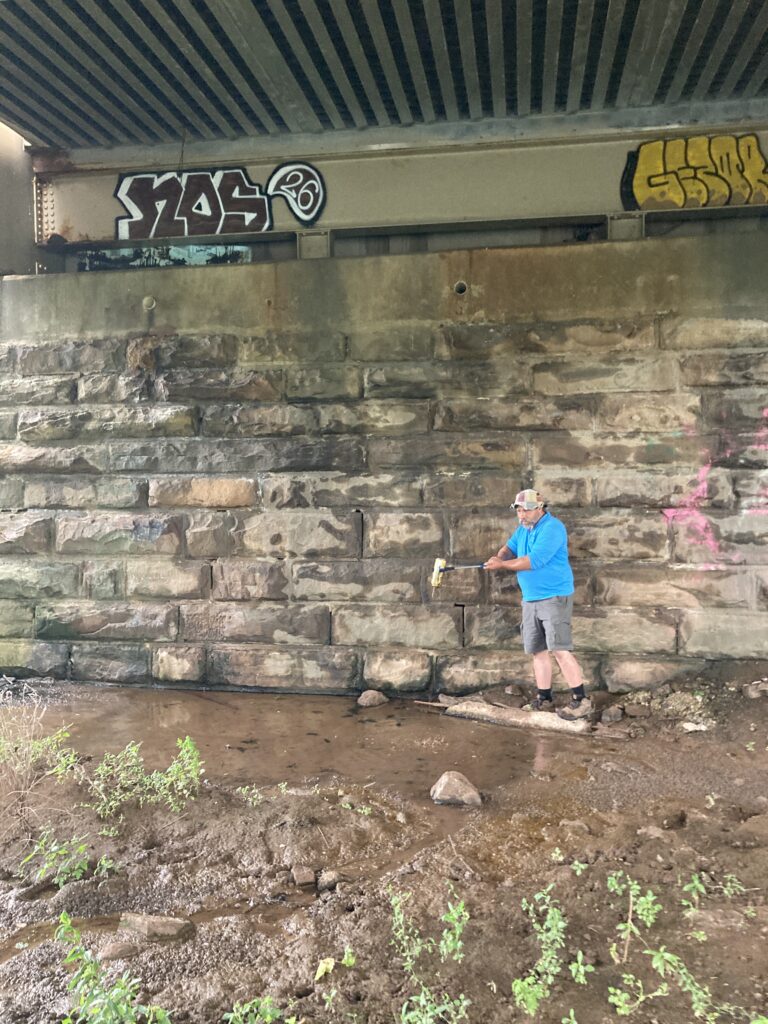
In this photo, Mike is cleaning litter out of a backwater pool, an important part of the Riparian Zone. This backwater is particularly interesting because it is situated beneath a bridge.
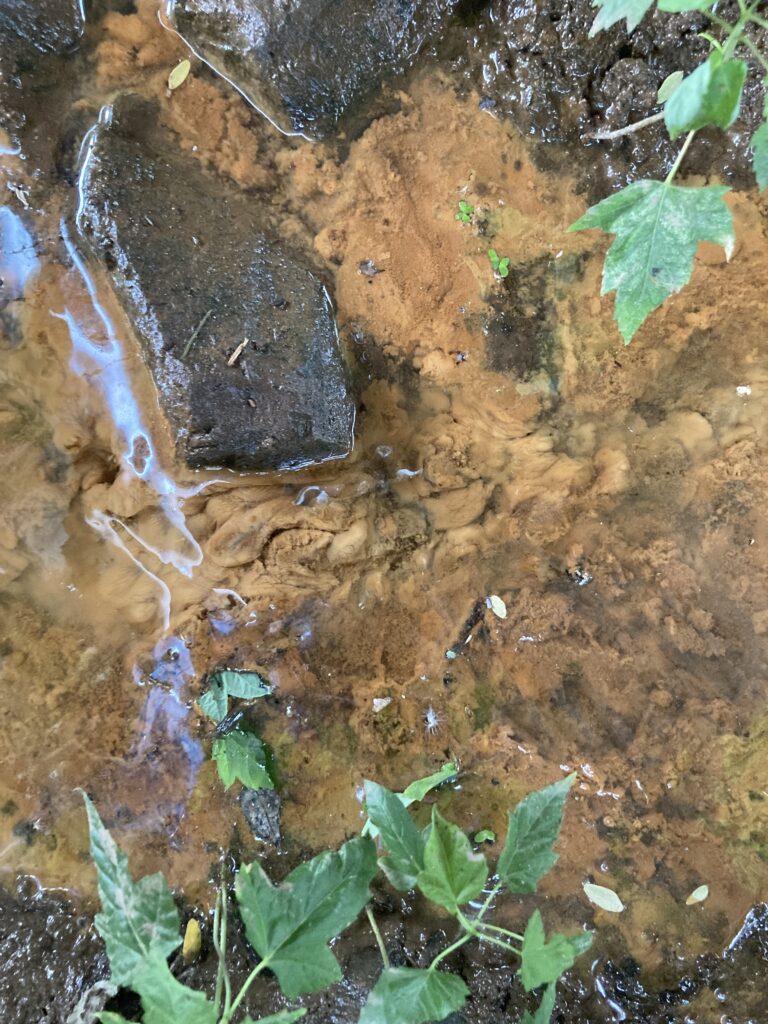
Have you ever noticed reddish, slimy water seeping out of the shale layers in western Middlesex County? You might have seen iron-rich bacteria! These tiny creatures are microorganisms that get energy by oxidizing dissolved ferrous iron (Fe²⁺) into ferric iron (Fe³⁺), which creates rust-like, reddish-brown, slimy deposits in water and soil. These bacteria are common in iron-rich groundwater, streams, and wells, and while generally not harmful to humans, they can cause foul odors, staining, and pipe blockages. Ancient peoples used these invisible critters to gather iron which could then be processed into a crude iron ore.
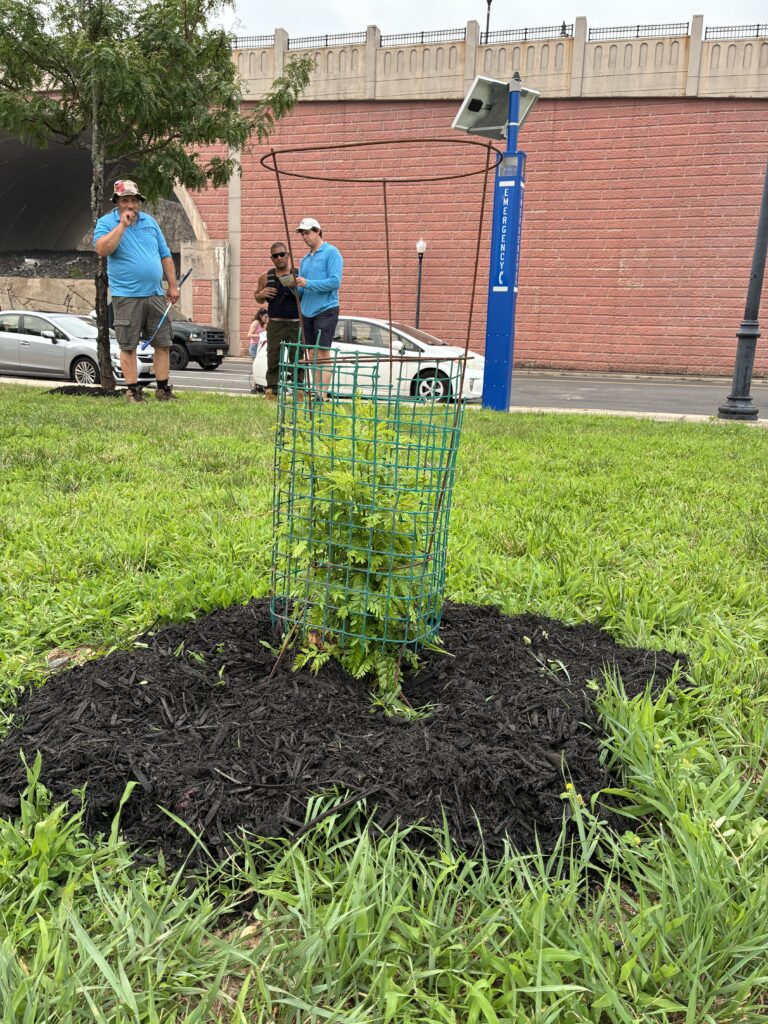
Mike, Eddy, and John installed new guards around the recovering honey locust trees. Photos by Endurance Laryea.
Thanks to the wonderful folks at New Brunswick Parks, we met with the lead steward of Boyd Park, Eddy, to discuss strategies for growing more shade trees in New Brunswick. Boyd Park is a huge tract of land separated from New Brunswick by state route 18; despite limited walking paths between New Brunswick and Boyd Park, the city currently struggles to maintain the park with extremely limited resources. The LRWP is currently lobbying the D&R canal to stretch an additional three miles to encompass the historic downstream Raritan lock. This would enable the D&R State Park, one of New Jersey’s greatest treasures, to reach our diverse, community-oriented citizens in eastern New Brunswick.
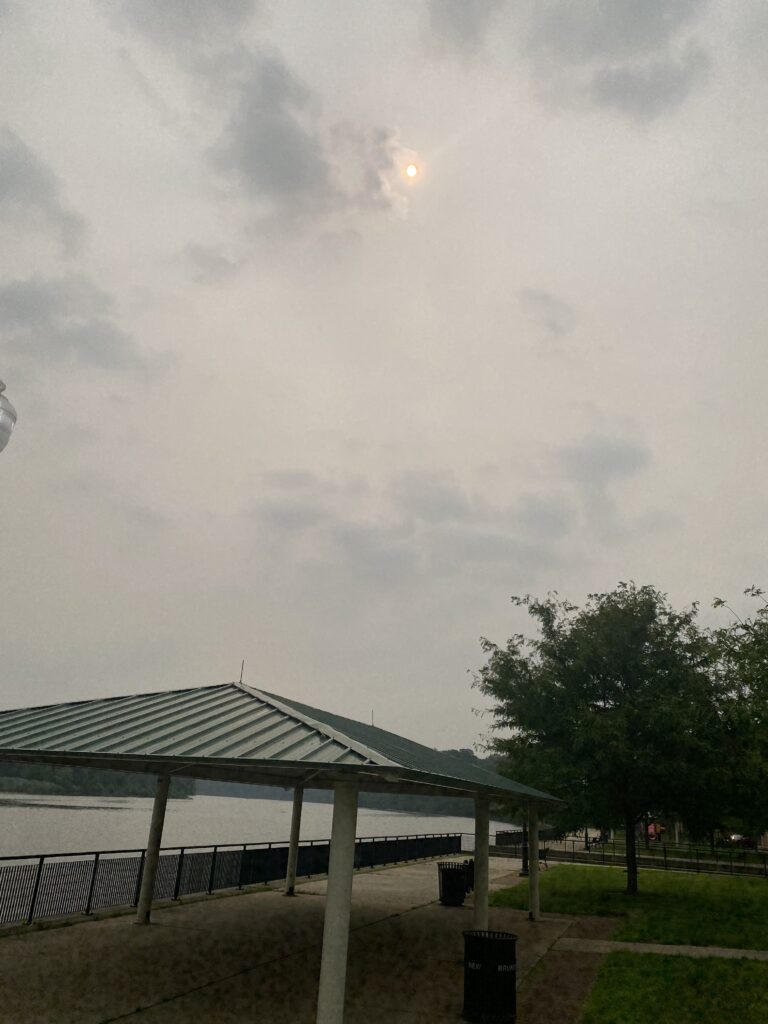
In the above photo from Mike Orsini, we can see the thick blanket of wildfire smog that smothered much of the mid-Atlantic this week. Breathing in fine particulate matter is associated with a myriad of health problems, including dementia. Please consider breaking out those pandemic-era n95 masks before going outdoors.
As the summer progresses, it is not unusual for chlorophyll counts to explode and for oxygen levels to drop. In Middlesex County, it is still common practice to fertilize parks and gardens, even in the riparian zone. By this time in the summer, the fertilizer has washed into the Raritan and out into Raritan Bay, where it feeds numerous aquatic plants; when those plants die, the bacteria that feed on the dead plants rapidly consume much of the oxygen in the water. The state’s ariel monitoring of Raritan Bay shows increasing evidence of chlorophyll.
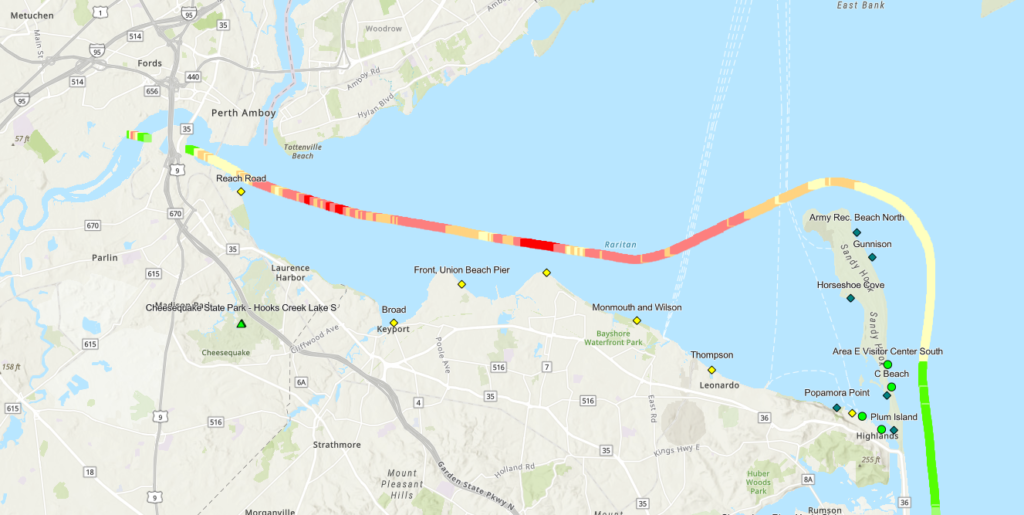
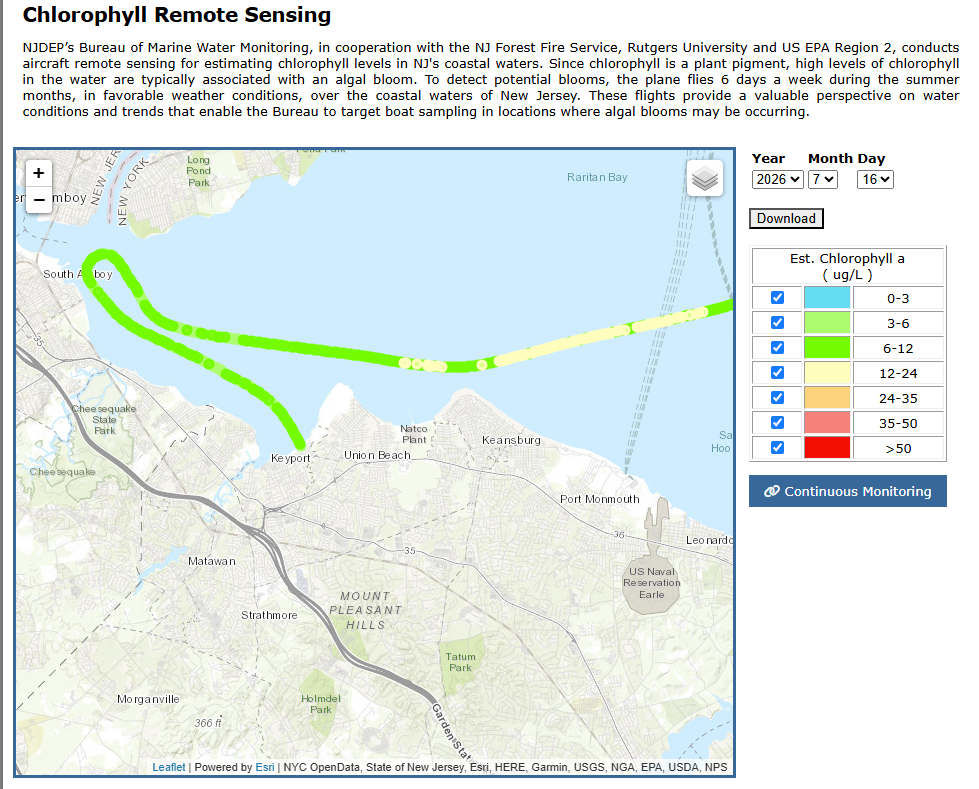
At the time of sampling, dissolved oxygen (DO) levels were below average at all of our sites except Perth Amboy. Dissolved oxygen is important for aquatic life. The lower the DO level the more stressful it is for fishes. On the other hand, higher DO levels support spawning, growth and activity of the fishes.
All the sites visited this week, except Perth Amboy, experienced low levels of oxygen in the ‘stressful’ range according to the EPA. If the oxygen levels do not increase in the next 48 to 72 hours, we may see our first fish die off of the season.
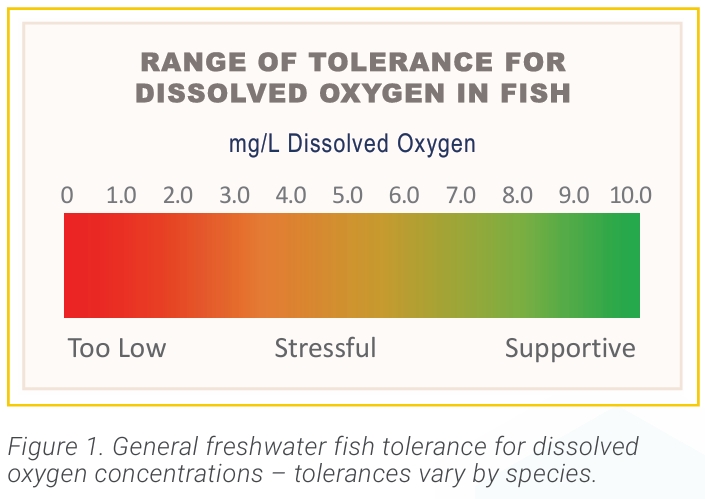
Photo from the EPA website. Dissolved Oxygen
It is important to note that dissolved oxygen levels change throughout the day and waterbody, hence, the values we took at the time of sampling may not reflect the overall levels of the water at the sites.
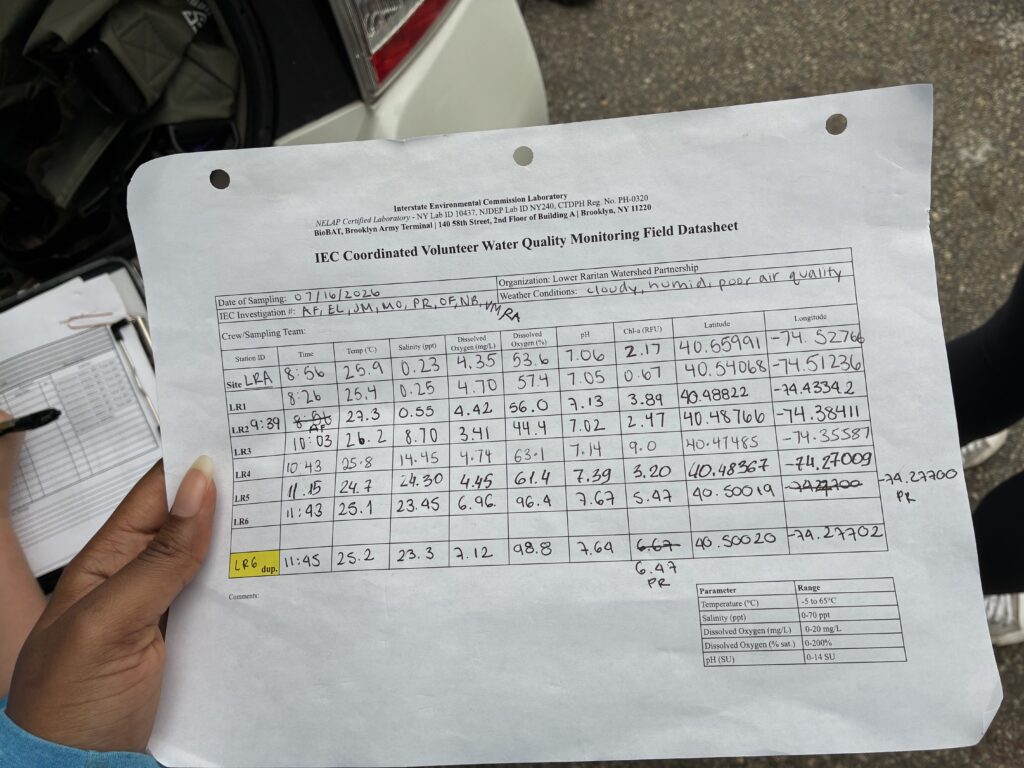
LRA-Queen’s Bridge, LR1-Piscataway, LR2-New Brunswick, LR3-Edison, LR4-Sayriville, LR5-South Amboy, LR6-Perth Amboy. Photo by Endurance Laryea.
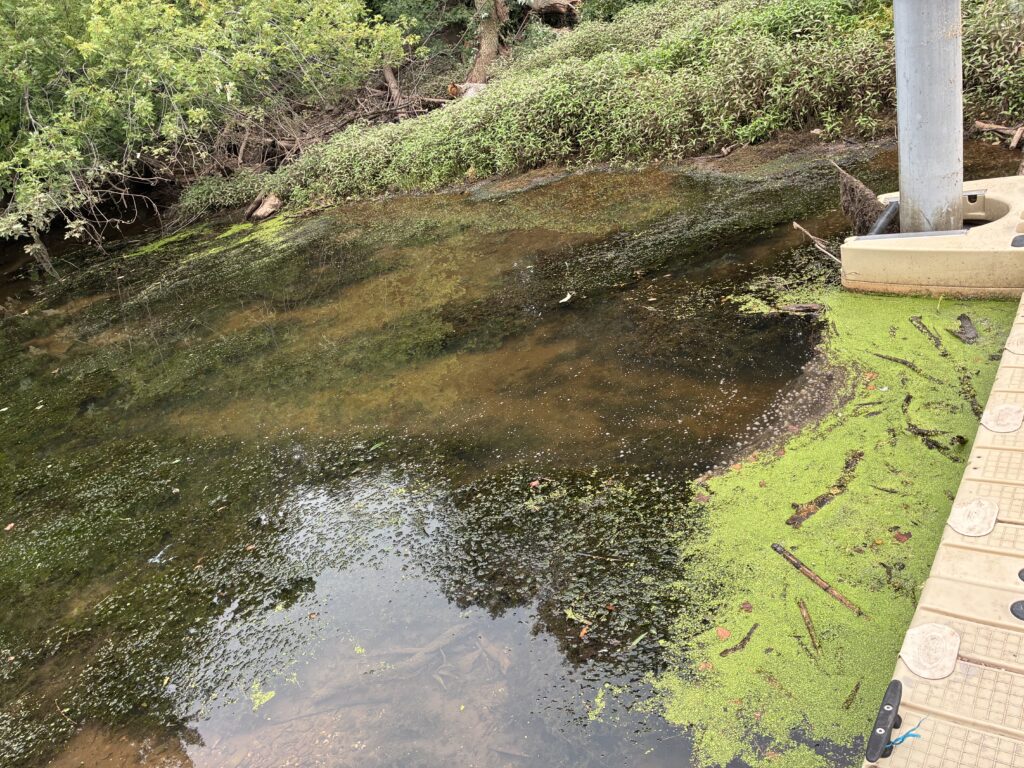
Algal bloom and duckweed growth sighted on the tidal flats of Piscataway. An indication of low oxygen levels and possible high phosphorous levels. Photo by Endurance Laryea.
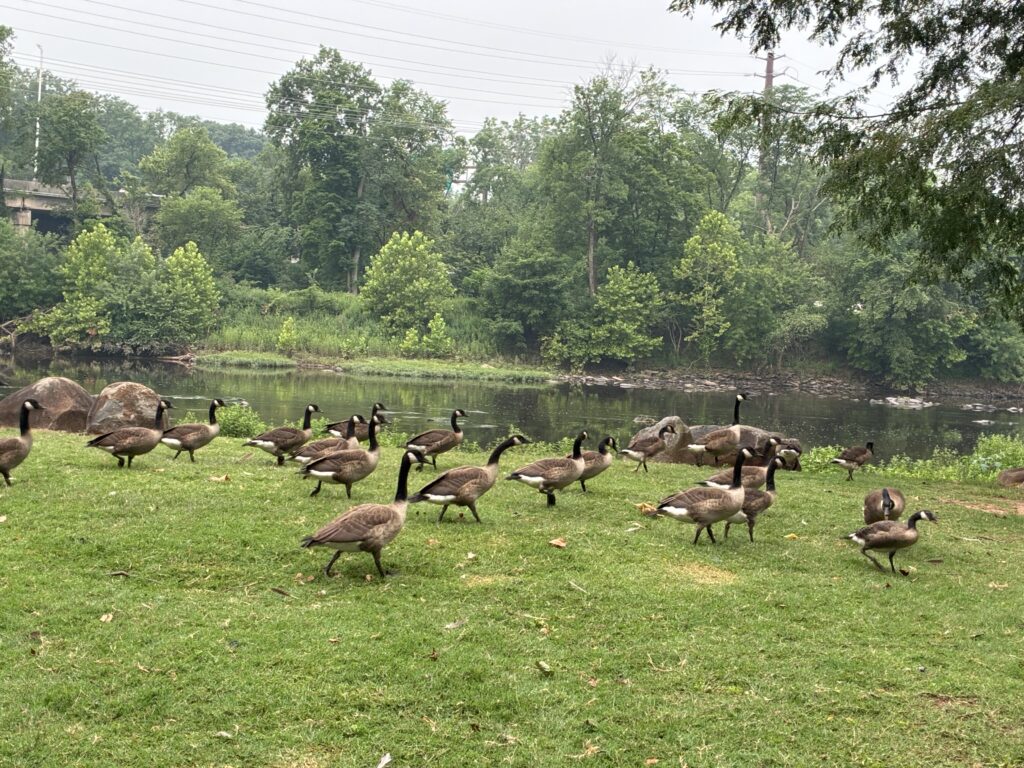
Did you know that goslings can grow as big as the parent geese in 8-12 weeks? We can no longer tell the difference between the goslings we saw when we started monitoring this season. Photo by Endurance Laryea.
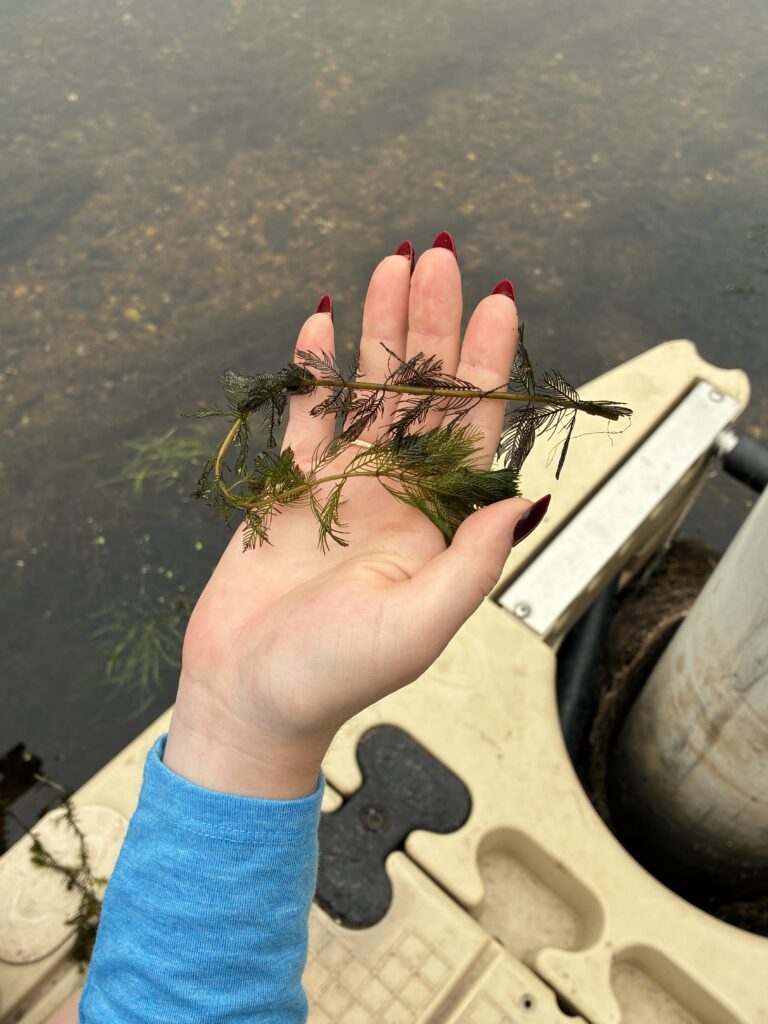
Ashley holds up a Eurasian Watermilfoil plant, an invasive species in large parts of the United States but native to Europe, Asia and North Africa. Photo by Endurance Laryea.
Invasive species are organisms that are not native to a particular ecosystem but can reproduce very quickly and out compete native organisms. The issue with this is that it erases the biodiversity in the ecosystem. Why is biodiversity important? In simple terms, different species in the ecosystem play different and important roles. If all other species were wiped out by one species, the system becomes imbalanced, and the equilibrium that holds the ecosystem together may crash. Though non-native plants may play a similar role in an ecosystem to native plants, they may
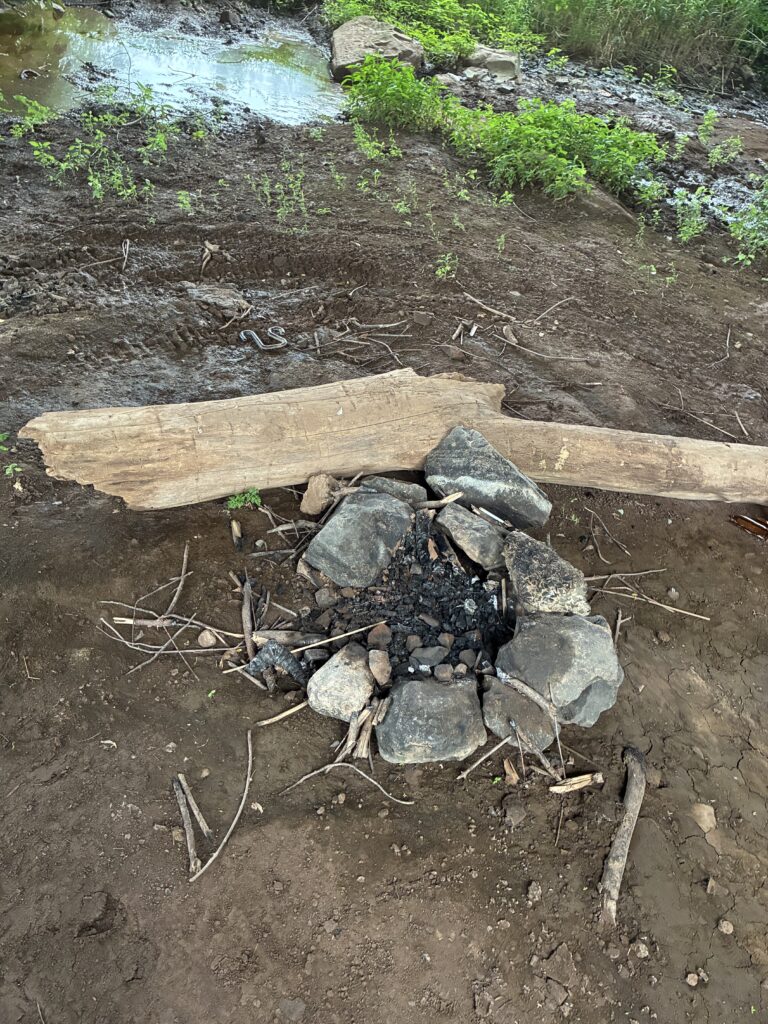
Mike was impressed with the neatness of this campfire ring under Queens Bridge! Photo by Endurance Laryea.
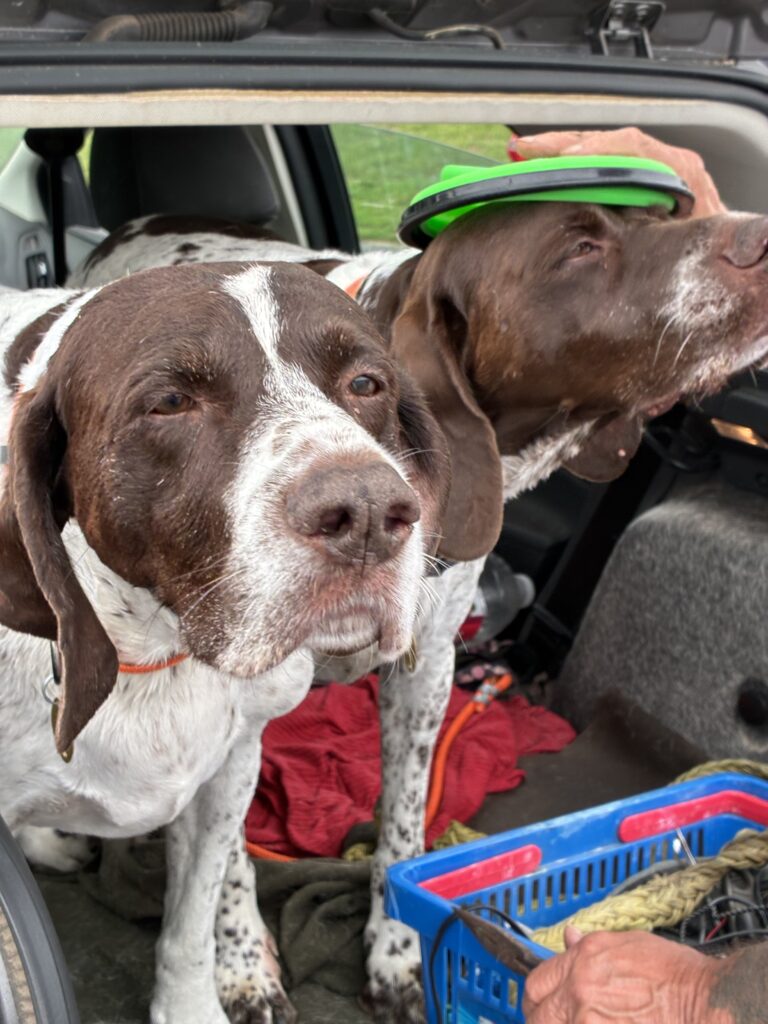
Melting hearts is what they do: Meet Bow and Junior, brothers who captured the hearts of the team at Edison. Photo by Endurance Laryea.
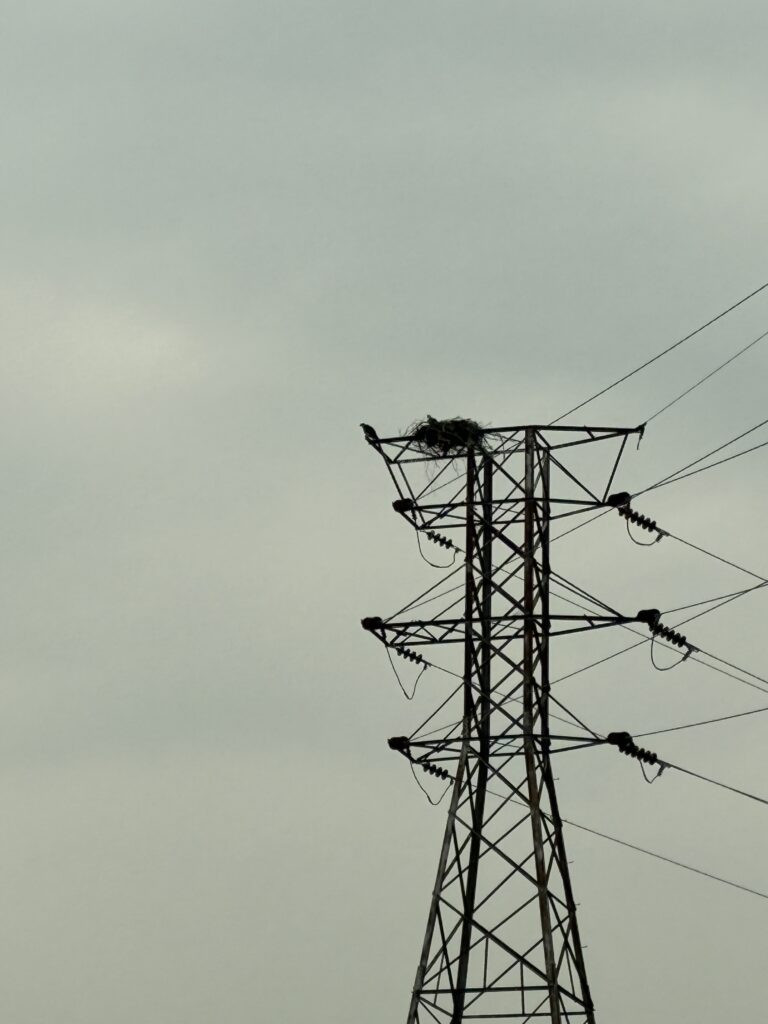
Baby ospreys at Sayreville confirmed! We couldn’t tell how many though. Photo by Endurance Laryea.
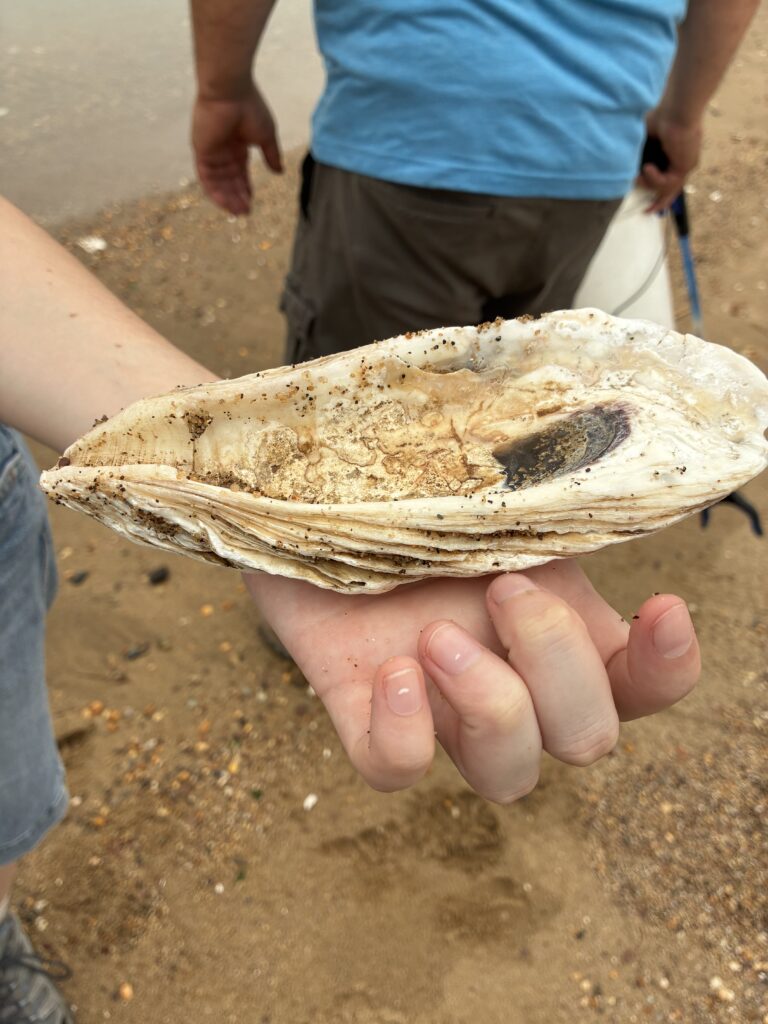
South Amboy is always giving us souvenirs. Today’s was a shell of an oyster, maybe? Photo by Endurance Laryea.
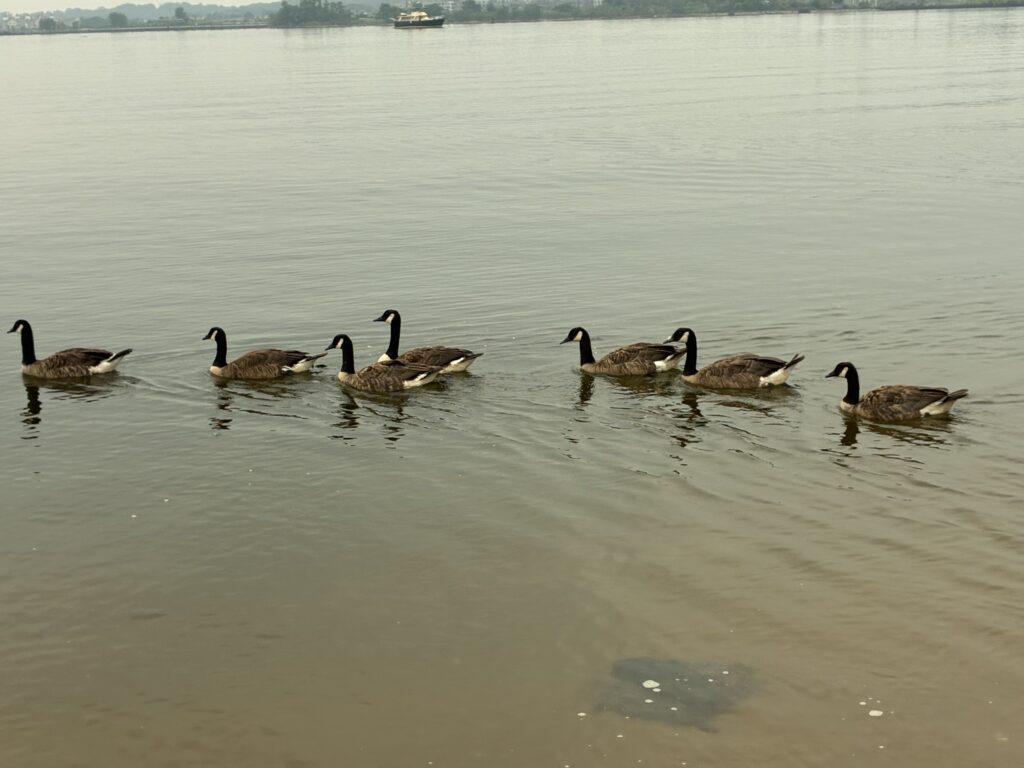
Last but not least, geese were sighted for the first time at Perth Amboy. Photo by Endurance Laryea.
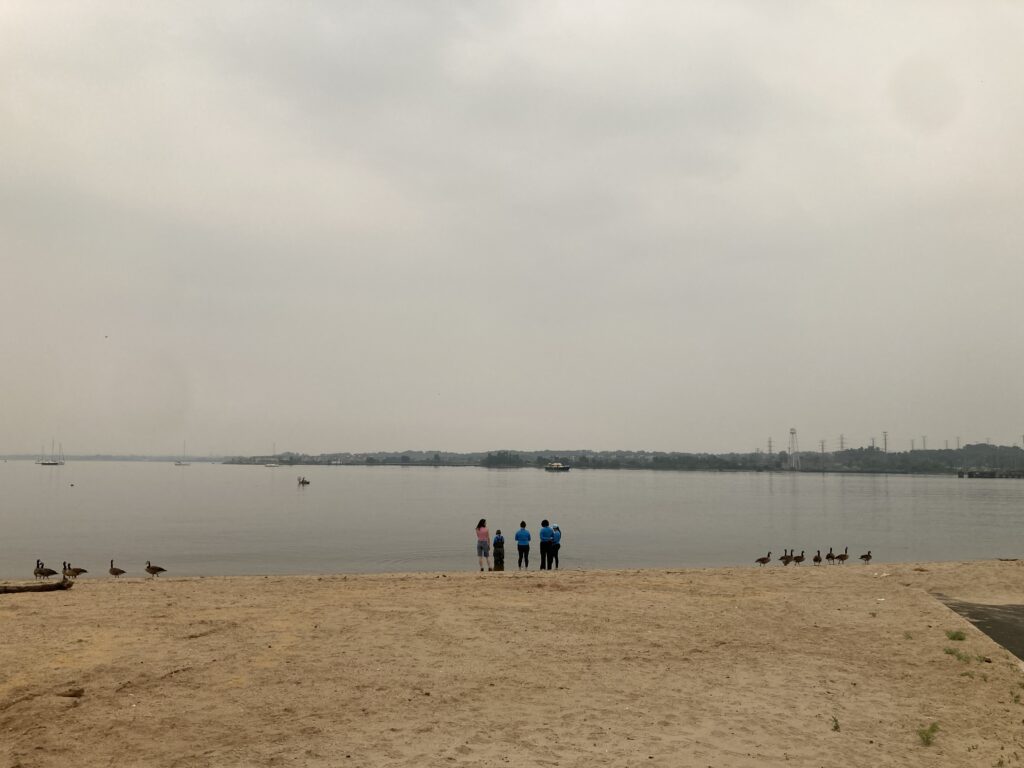
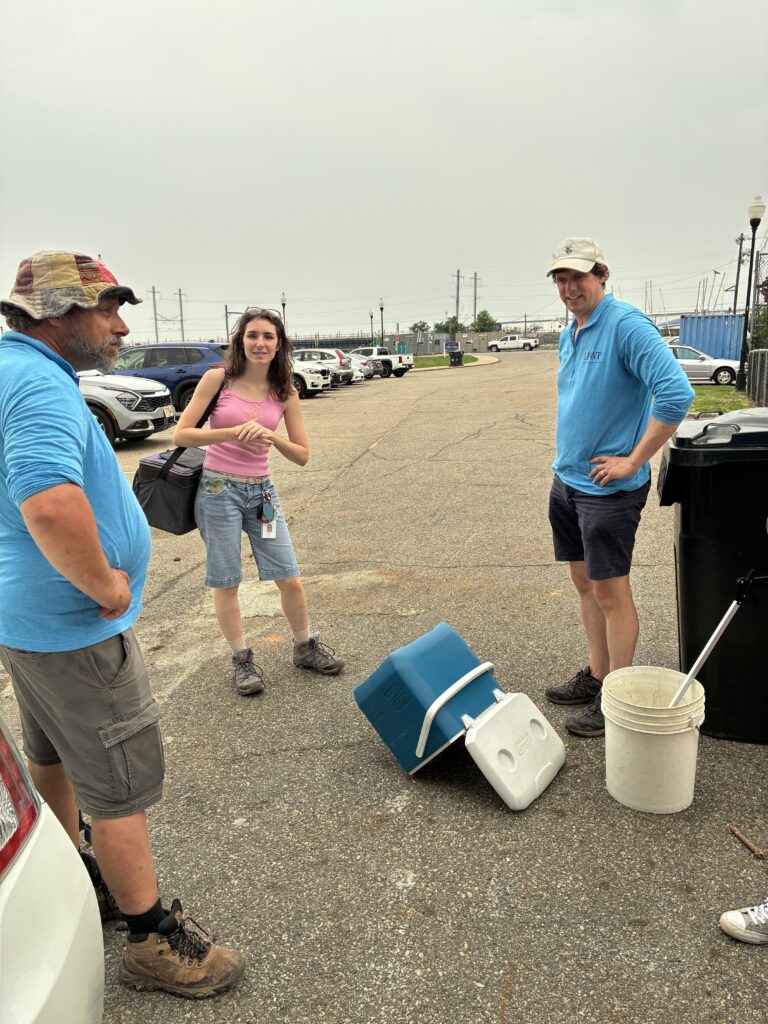
The session came to an end on a happy note and Ruby, from the Interstate of Environmental Commission (IEC) picked up the samples to take to the lab in Brooklyn. Ruby joined the team today to audit the sampling and monitoring session. Photo by Endurance Laryea.
Stay safe and hydrated!
