The first pathogen monitoring session of the month took place on Thursday, October 8th. Each week during the summer, from May to October, the Lower Raritan Watershed Partnership and Rutgers Cooperative Extension of Middlesex County run a volunteer-based monitoring program along the Raritan River. We collect water quality samples at six non-bathing public access beach sites, provide our samples to the Interstate Environmental Commission for analysis in their laboratory, and report the results to the public. Our mission is to share this data with the community and partners to ensure the safe use of the Raritan River for all.
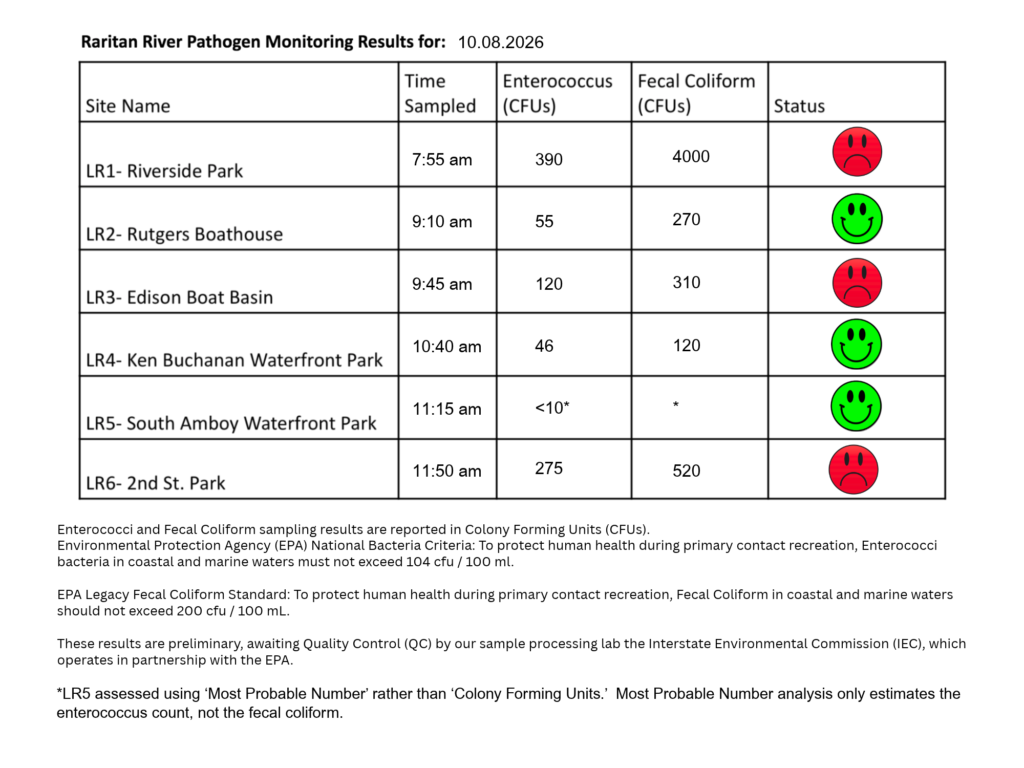
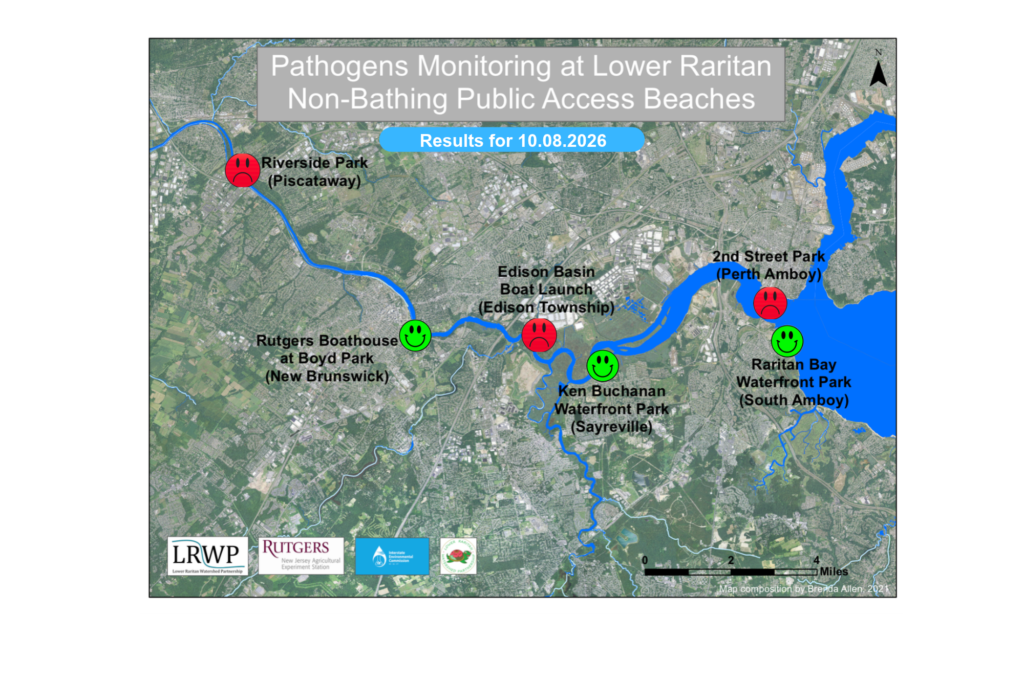
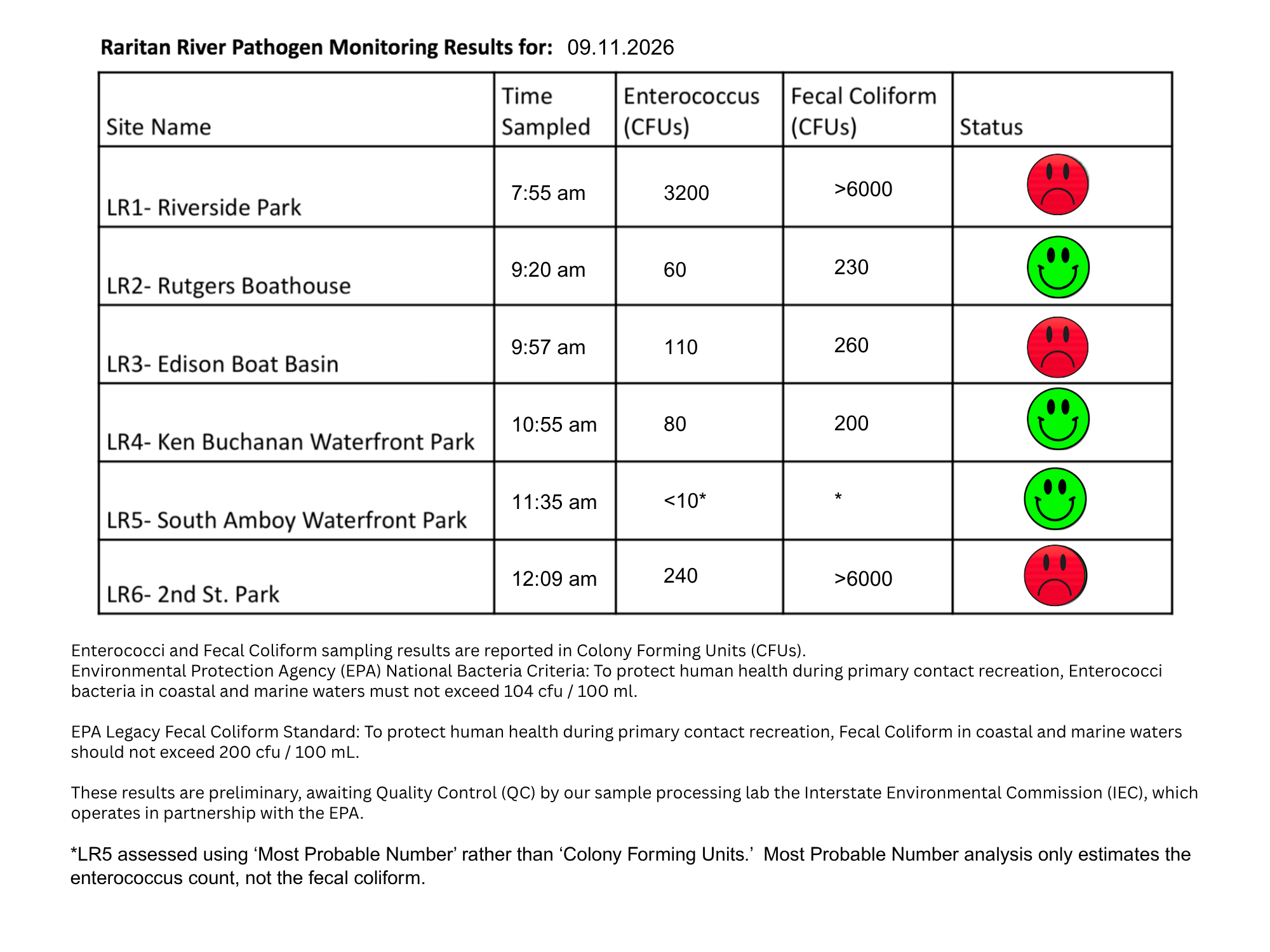
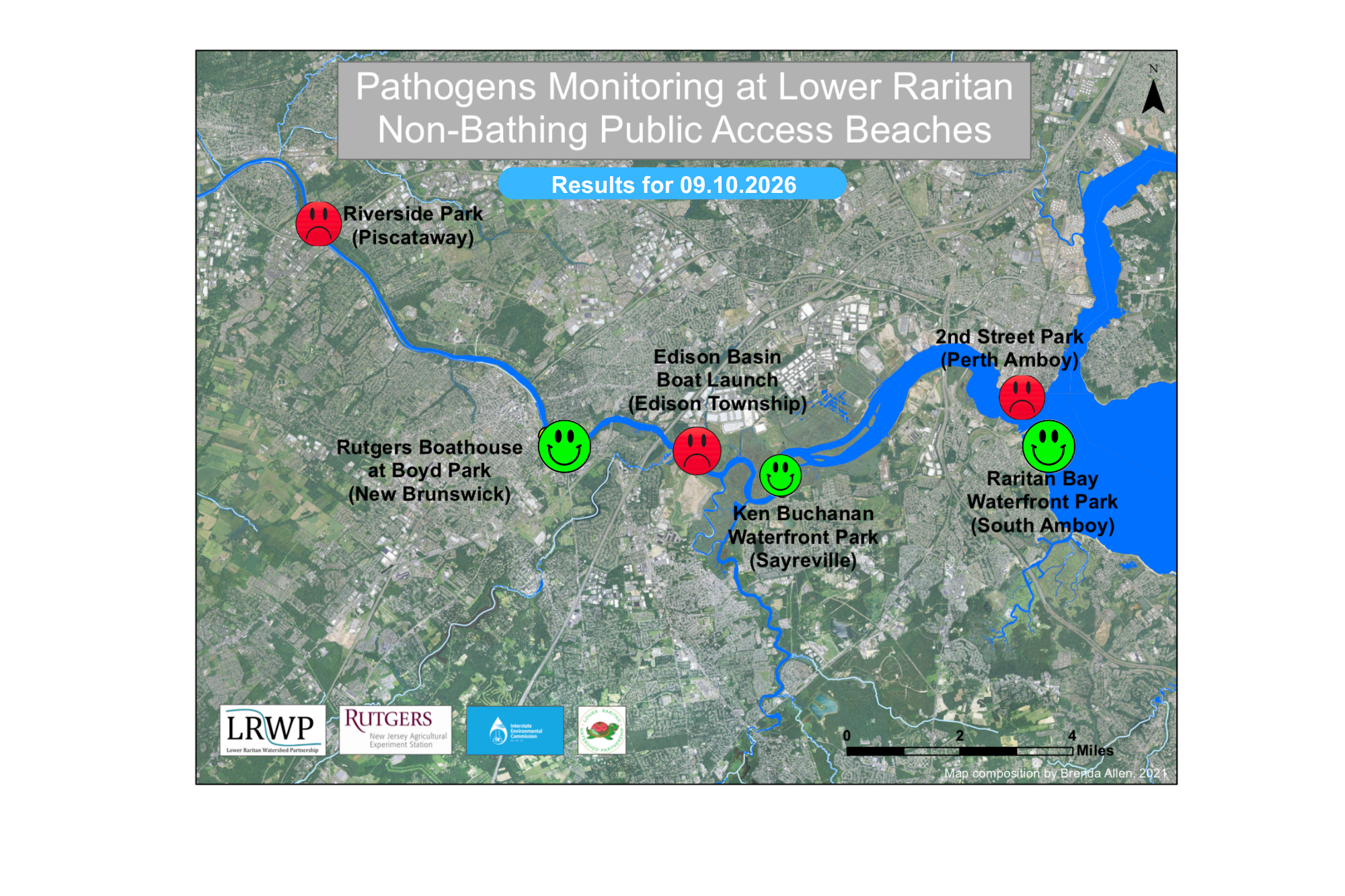
Our lab results for water quality samples taken on Thursday, October 8th, 2026, show Enterococcus bacteria levels exceeding the EPA federal water quality standard of 104 cfu/100mL at three of our regular monitoring sites this week. The problem sites are indicated by the red frown on the map and chart and include Riverside Park (Piscataway), Edison Boat Basin (Edison), and Second Street Park (Perth Amboy).
Green smiles on the chart and map indicate the sites with bacteria levels safe for recreation and include the following: Rutgers Boat Basin (New Brunswick),Ken Buchanan Waterfront Park (Sayreville), and Raritan Bay Waterfront Park (South Amboy).
A note of caution: New Brunswick and Sayreville remain above the legacy EPA standard for Fecal Colony-Forming Units. Wash your hands, and cook your fish.
Pathogens/Enterococci levels are used as indicators of the possible presence of disease-causing bacteria in recreational waters. Such pathogens may pose health risks to people coming in primary contact with the water (touching) through recreational activities like fishing, kayaking or swimming in a water body. Possible sources of bacteria include Combined Sewer Overflows (CSOs), improperly functioning wastewater treatment plants, stormwater runoff, leaking septic systems, animal carcasses, pet waste, wildlife waste, and runoff from manure storage areas.
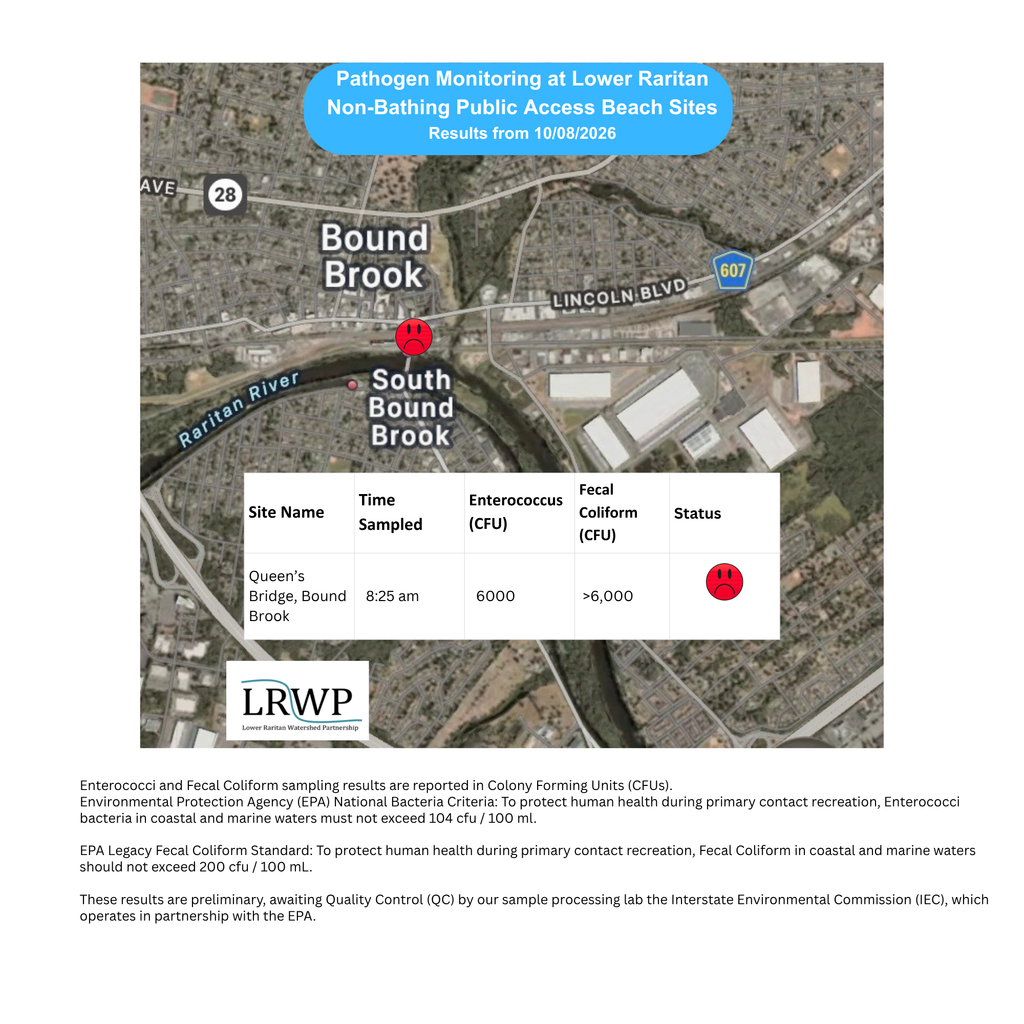
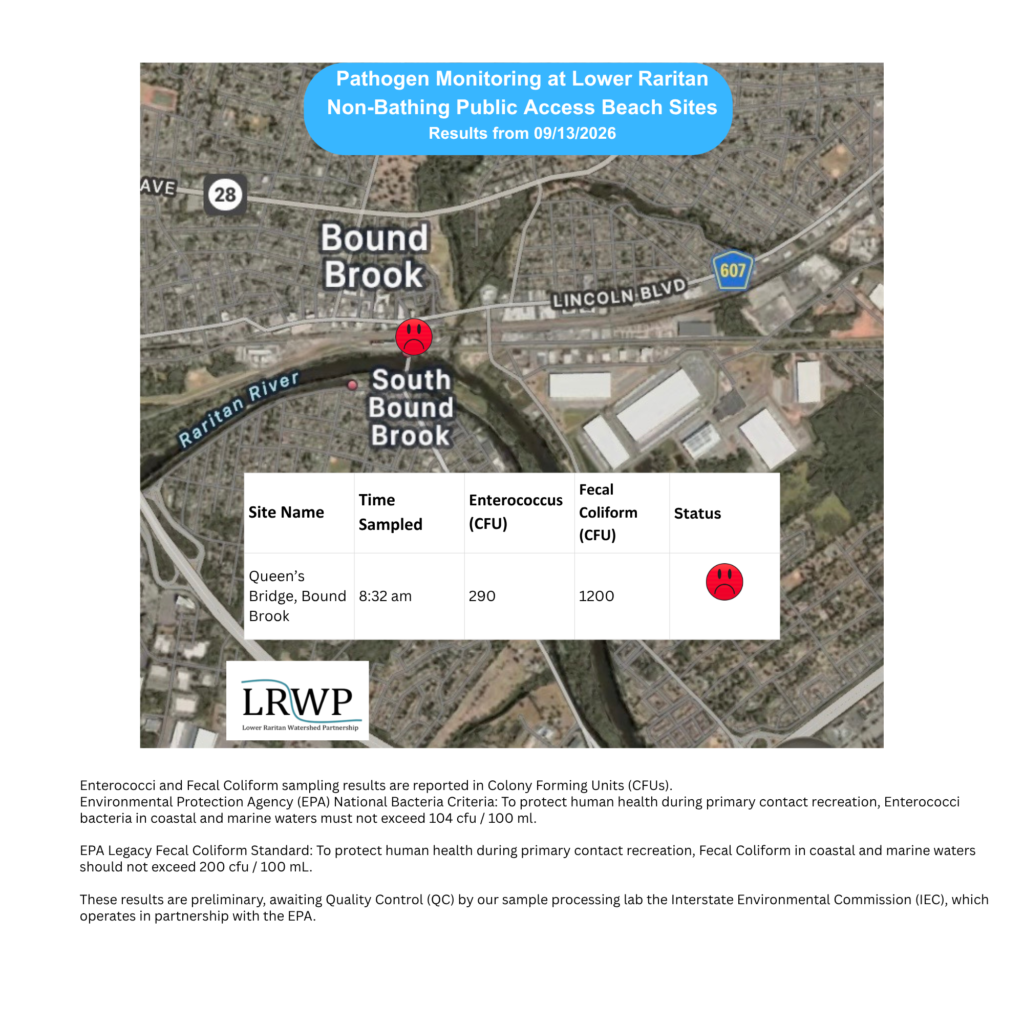
In order to better understand why Riverside Park, Piscataway has been our worst performing site over the past six years, we have started sampling at new sites in the vicinity. On October 8th, we sampled the Queen’s Bridge for a sixth time since we started pathogens monitoring this season. The lab analysis produced 6,000 enterococci cfu per 100mL which is well above the EPA federal water quality standard of 104 cfu/100mL!
Our goal in reporting these results is to give residents a better understanding of the potential health risks related to primary contact during water-based recreation. If you are planning on recreating on the Raritan this weekend, make sure to stay safe and wash up after any activities!
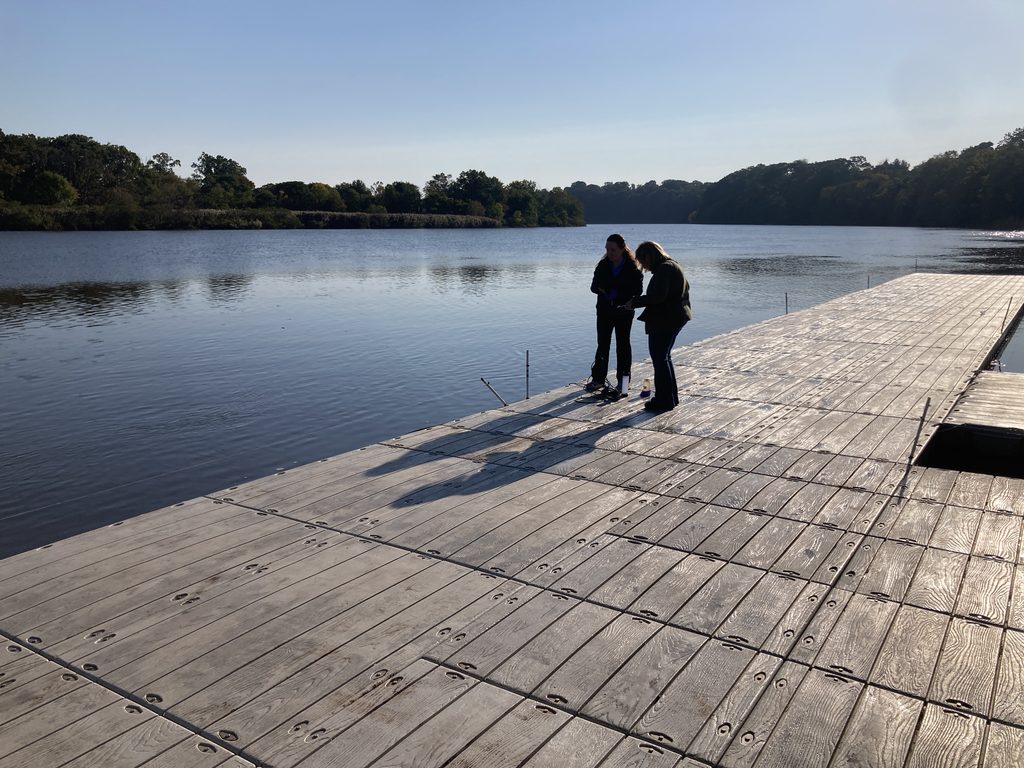
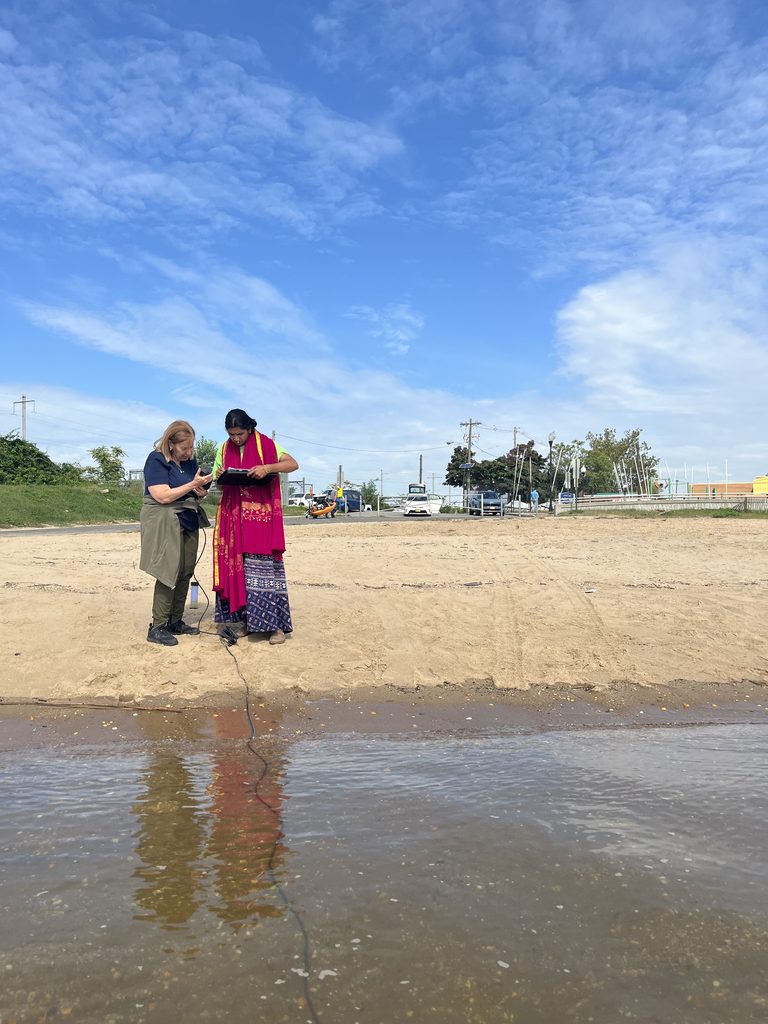
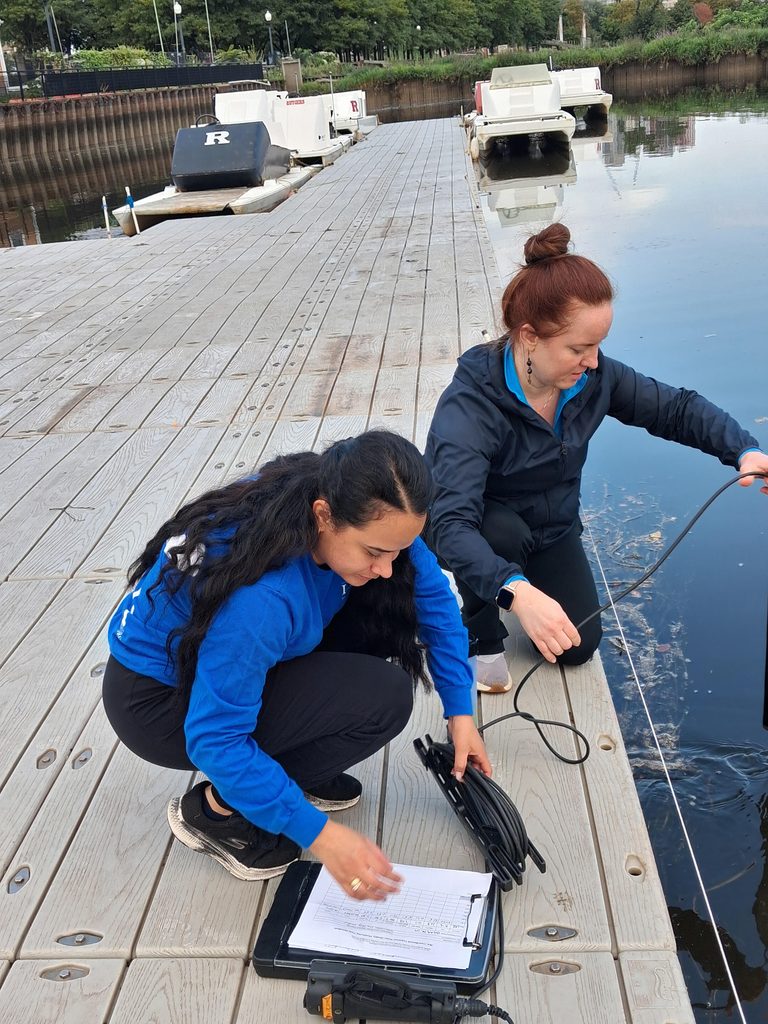
Olesya and Doreen sample the water at Rutgers Boat House for the final time of the season.
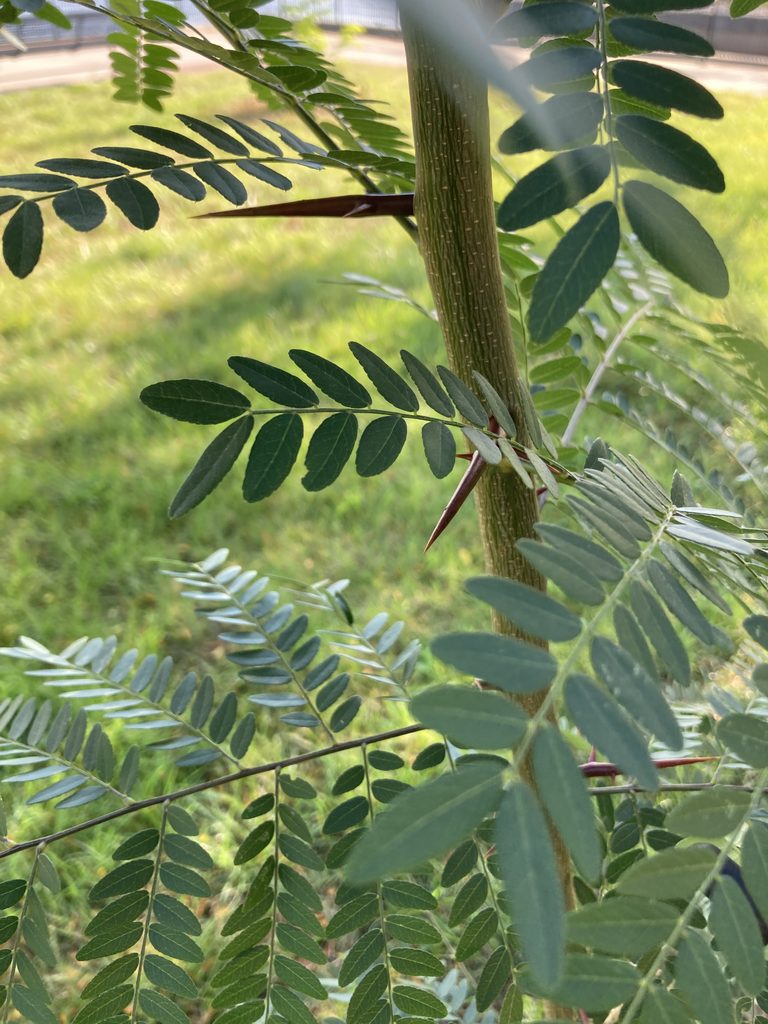
The honey locust trees in New Brunswick continue to put out new leaves each week. Each compound leaf on a honey locust is paired with sharp tri-tongued thorns.
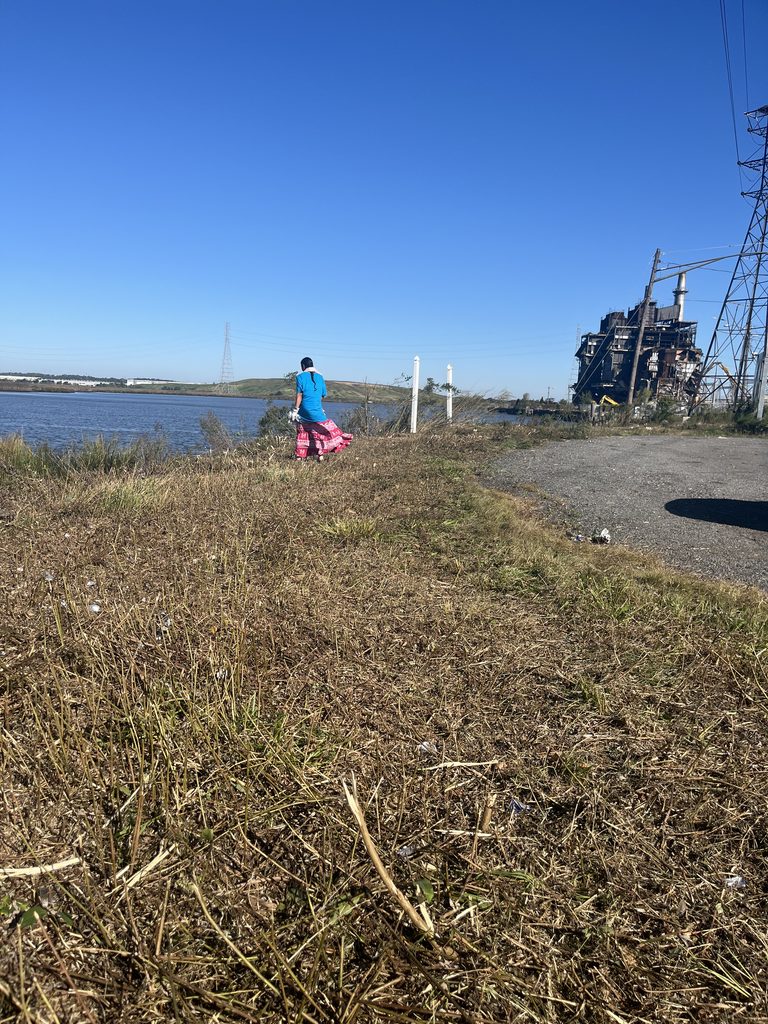
Lakshmi searches for trash among the recently mown riparian zone in Sayreville. The vegetation forms an important buffer between the water and the land. It’s especially effective at trapping plastic and preventing it from washing into the water.
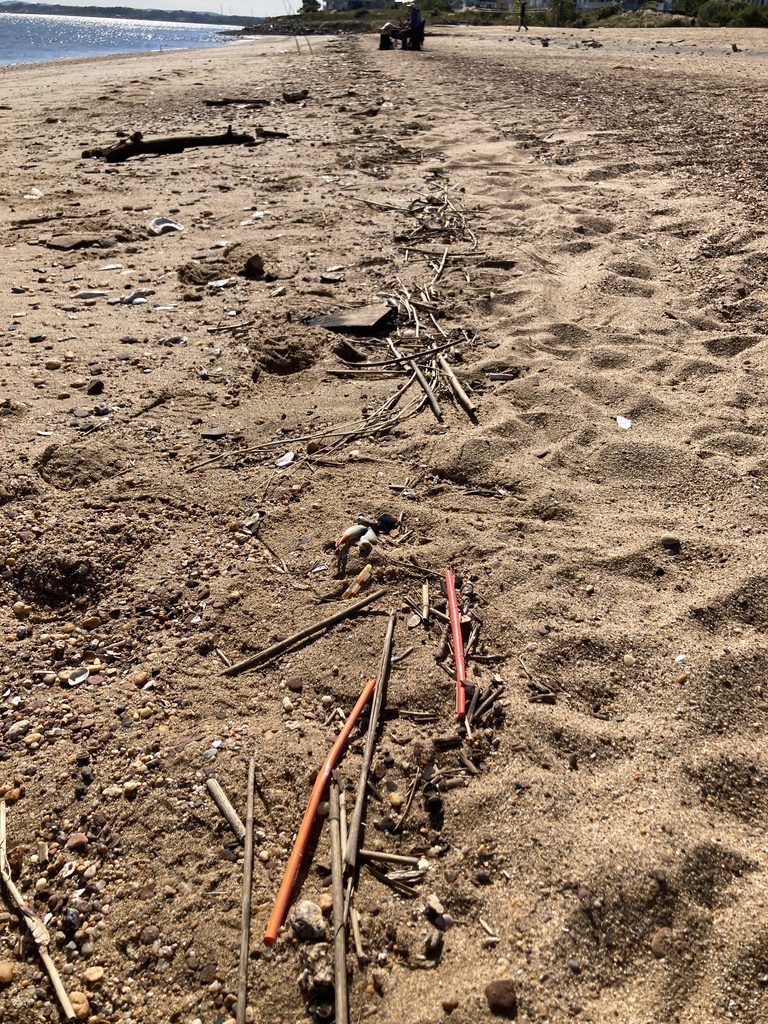
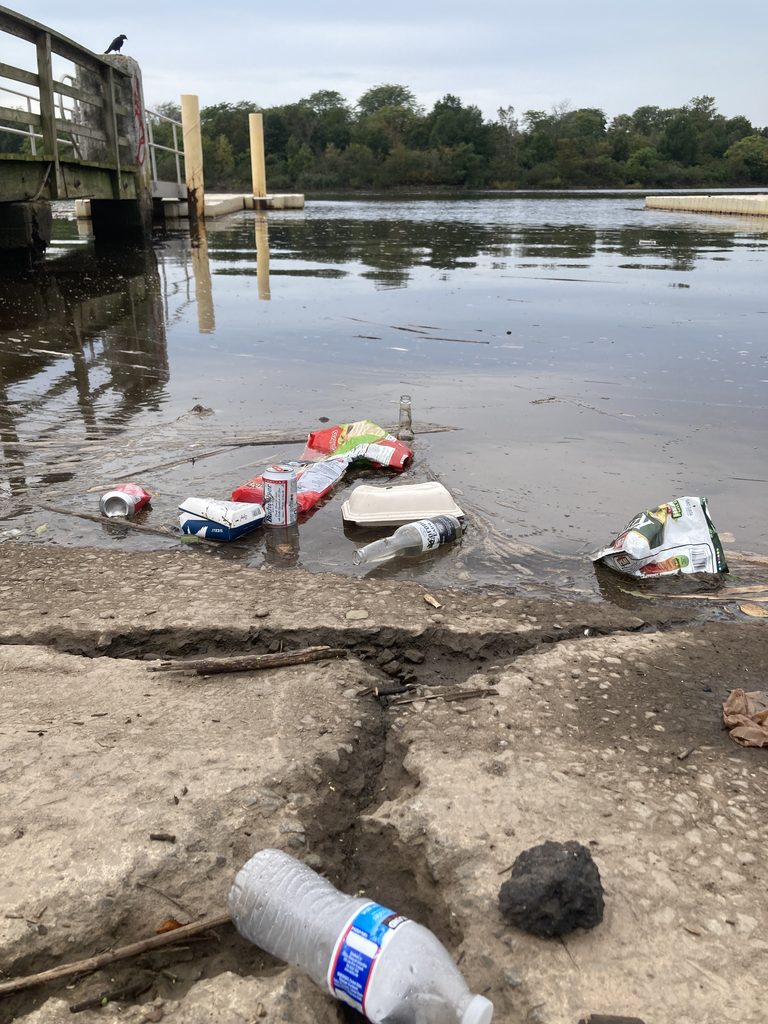
The receding tide always leaves a line of plastic straws and woody debris on the shore at South Amboy.
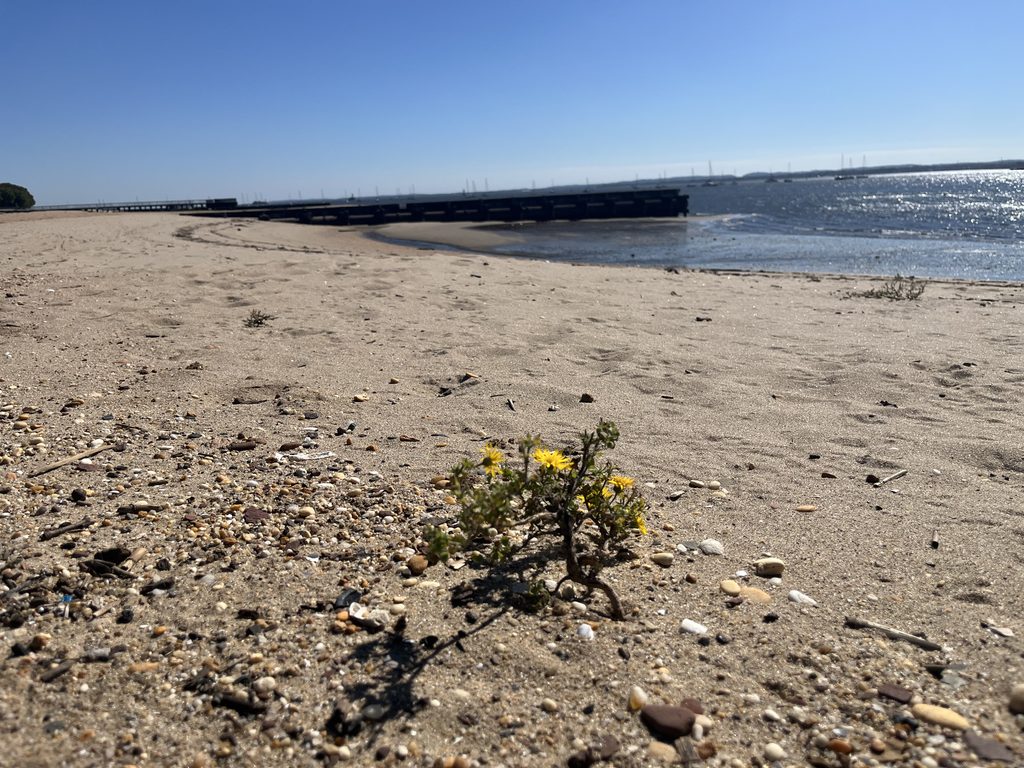
A lonely camphorweed grows along the shore in Perth Amboy, New Jersey. The flower and leaves produce a sharp, resinous scent. –Photo by Olesya Nabokova.
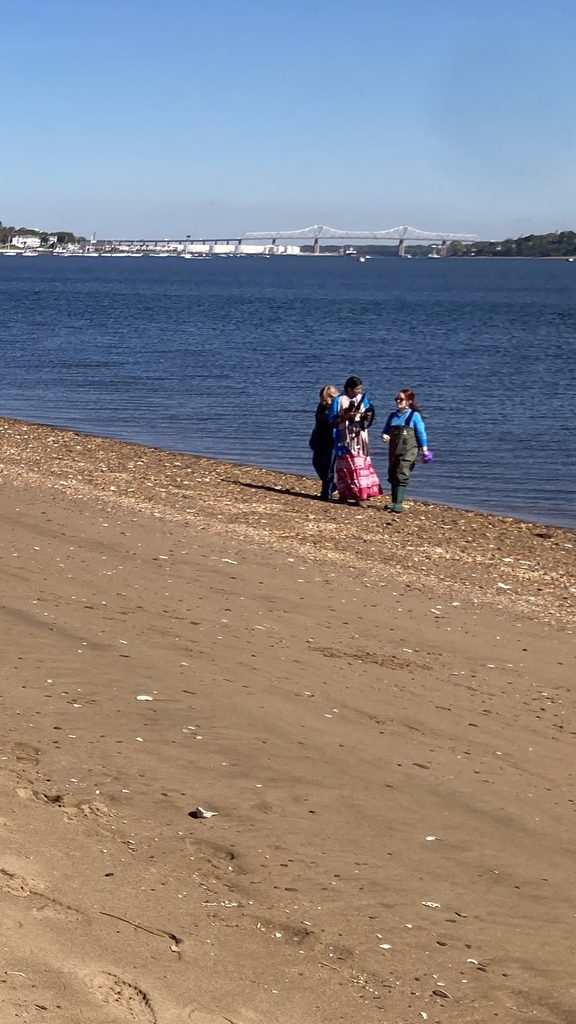
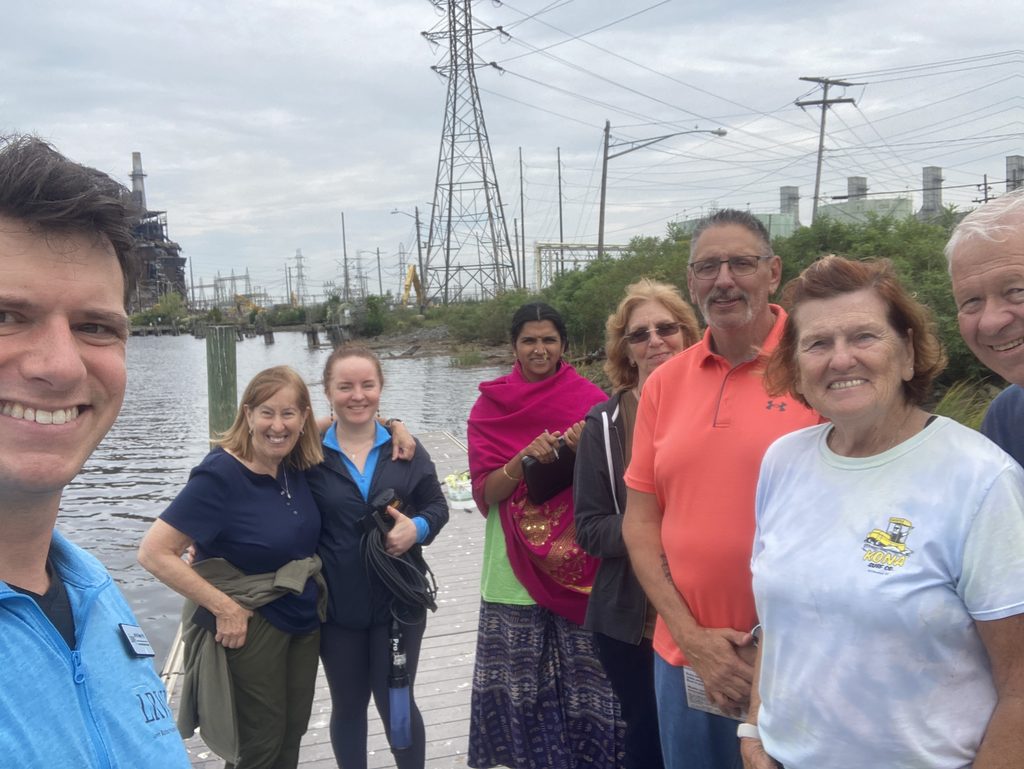
Doreen, Lakshmi, and Olesya leave the shoreline of Raritan Bay after sampling in South Amboy.
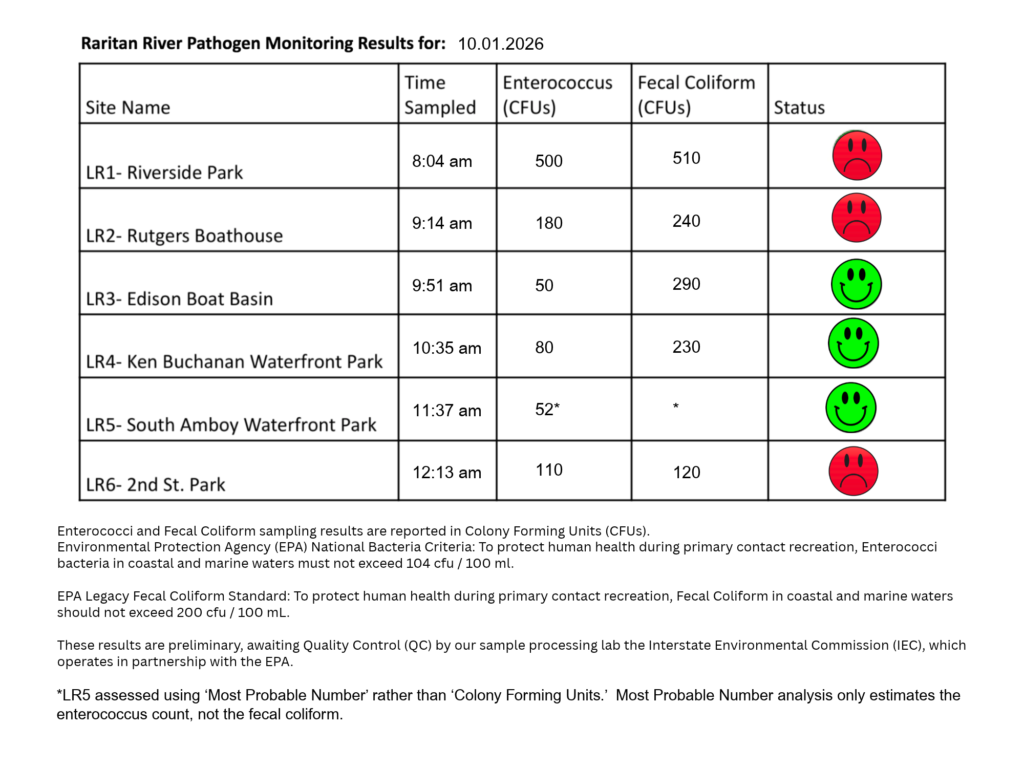
The first pathogen monitoring session of the month took place on Thursday, October 1st. Each week during the summer, from May to October, the Lower Raritan Watershed Partnership and Rutgers Cooperative Extension of Middlesex County run a volunteer-based monitoring program along the Raritan River. We collect water quality samples at six non-bathing public access beach sites, provide our samples to the Interstate Environmental Commission for analysis in their laboratory, and report the results to the public. Our mission is to share this data with the community and partners to ensure the safe use of the Raritan River for all.
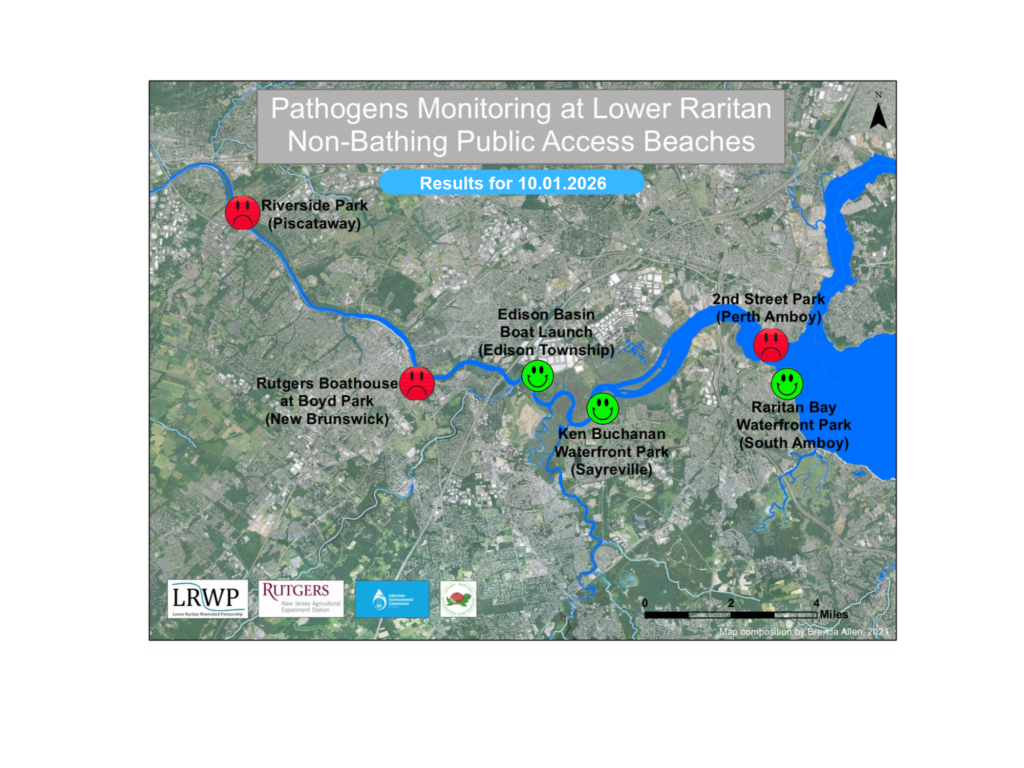
Our lab results for water quality samples taken on Thursday, October 1st, 2026, show Enterococcus bacteria levels exceeding the EPA federal water quality standard of 104 cfu/100mL at three of our regular monitoring sites this week. The problem sites are indicated by the red frown on the map and chart and include Riverside Park (Piscataway), Rutgers Boat House (New Brunswick), and Second Street Park (Perth Amboy).
Green smiles on the chart and map indicate the sites with bacteria levels safe for recreation and include the following: Edison Boat Basin (Edison),Ken Buchanan Waterfront Park (Sayreville), and Raritan Bay Waterfront Park (South Amboy).
A note of caution: in the wake of the nor’easter, none of the sites met the legacy EPA standard for Fecal Colony-Forming Units. Wash your hands, and cook your fish.
Pathogens/Enterococci levels are used as indicators of the possible presence of disease-causing bacteria in recreational waters. Such pathogens may pose health risks to people coming in primary contact with the water (touching) through recreational activities like fishing, kayaking or swimming in a water body. Possible sources of bacteria include Combined Sewer Overflows (CSOs), improperly functioning wastewater treatment plants, stormwater runoff, leaking septic systems, animal carcasses, pet waste, wildlife waste, and runoff from manure storage areas.
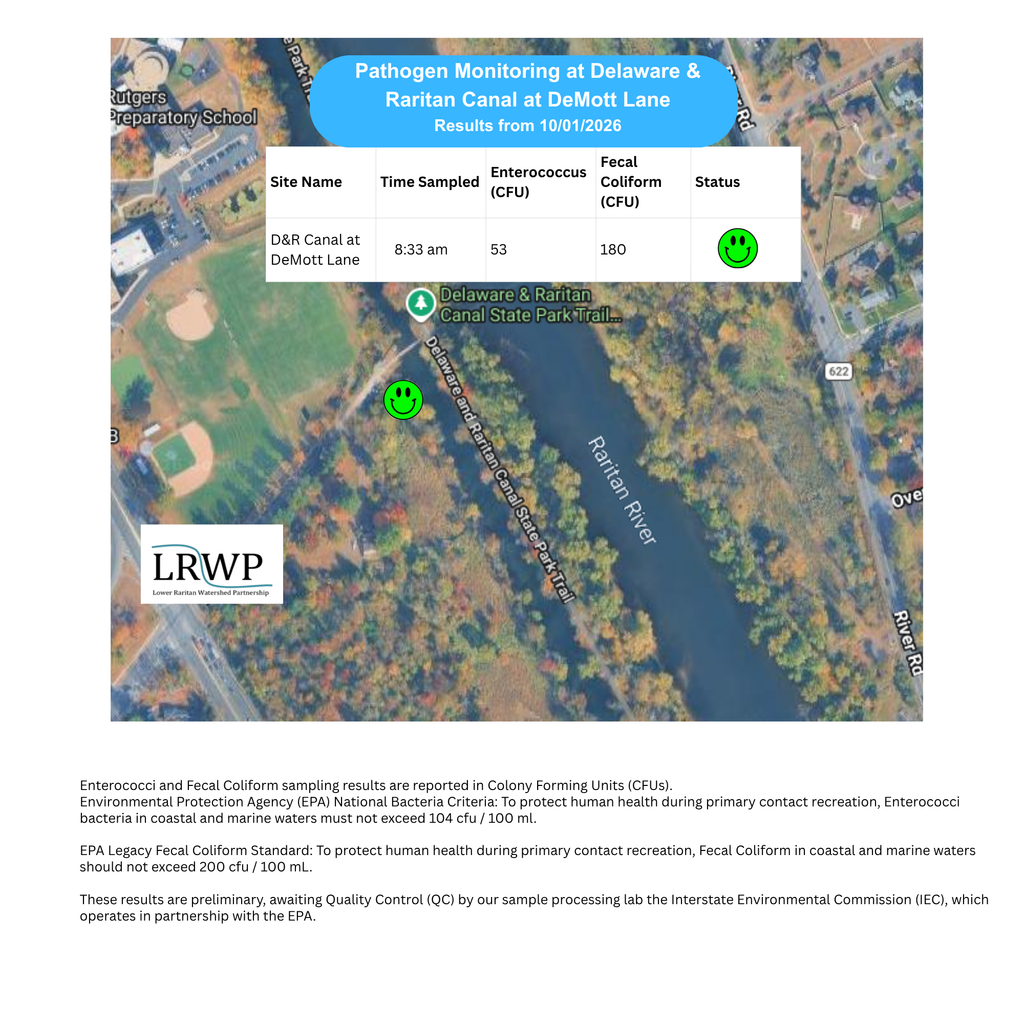
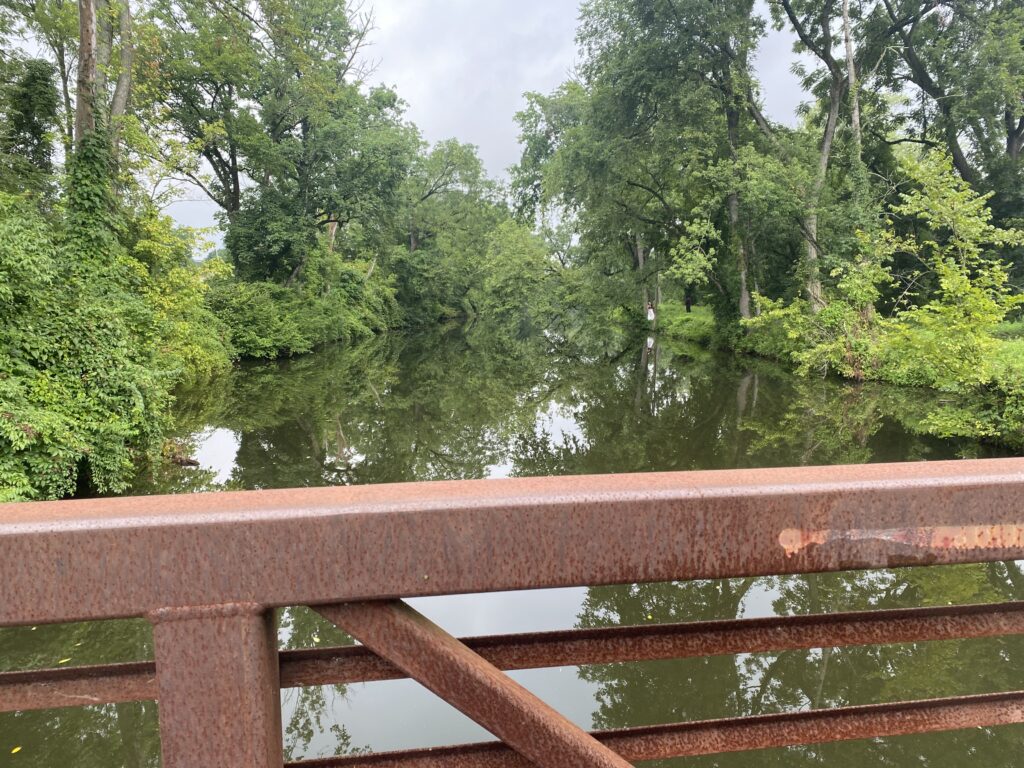
In order to better understand why Riverside Park, Piscataway has been our worst performing site over the past six years, we have started sampling at new sites in the vicinity. On October 1st, we sampled the Delaware & Raritan Canal at DeMott lane for a fifth time since we started pathogens monitoring this season. The lab analysis produced 53 enterococci cfu per 100mL which satisfies the EPA federal water quality standard of 104 cfu/100mL.
Our goal in reporting these results is to give residents a better understanding of the potential health risks related to primary contact during water-based recreation. If you are planning on recreating on the Raritan this weekend, make sure to stay safe and wash up after any activities!
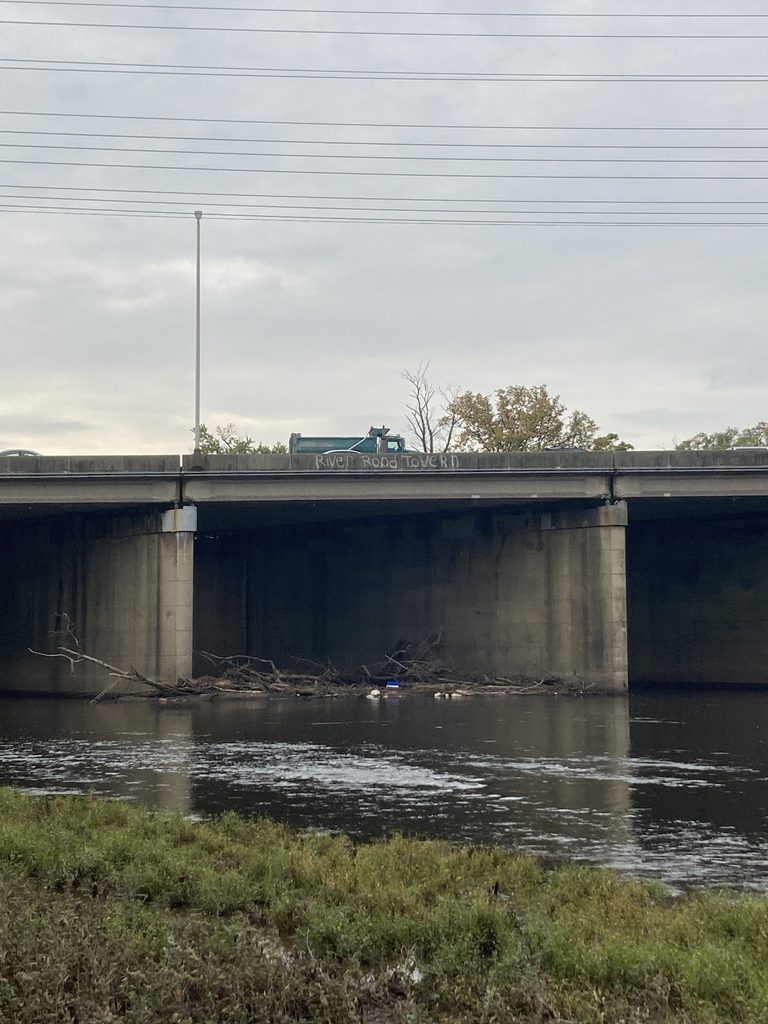
A plastic blue and white ice chest has joined the debris along I 287 in Piscataway. During rain events, the debris rises and falls with the water, and bashes against the concrete. This causes scouring on the piers. An LRWP volunteer contacted the New Jersey Department of Transportation about the issue.
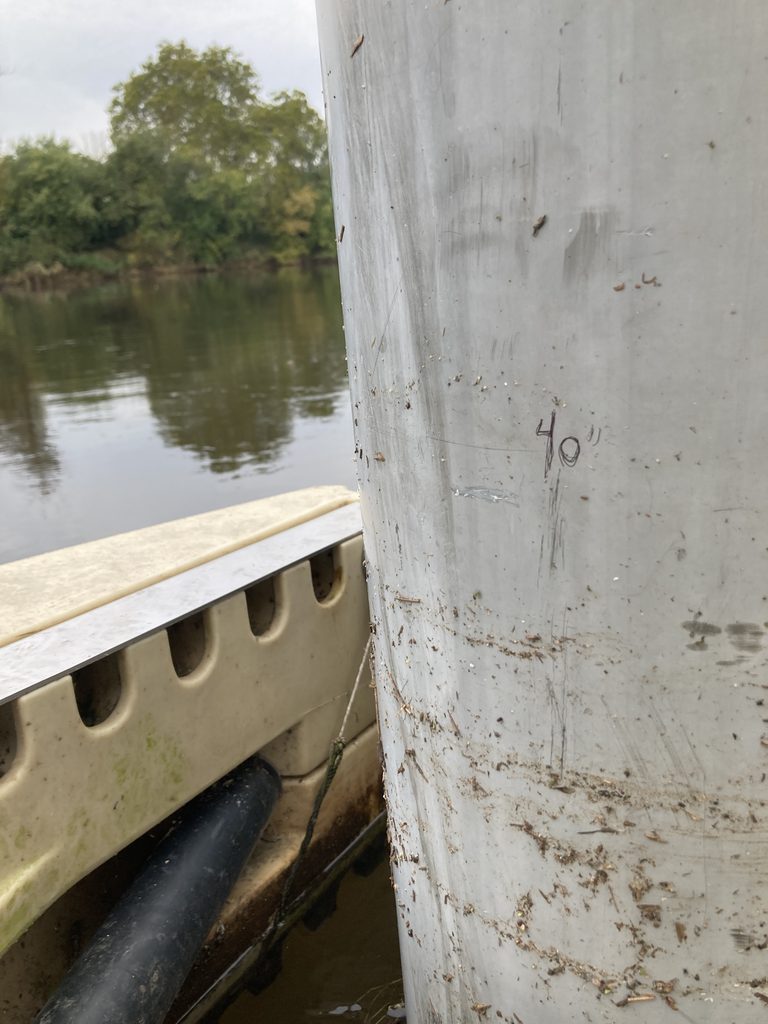
In dry conditions, the river at the Piscataway Riverside Park boat dock is only about ten inches deep. During the nor’easter, the debris line tells us river rose at least another twenty-five inches.
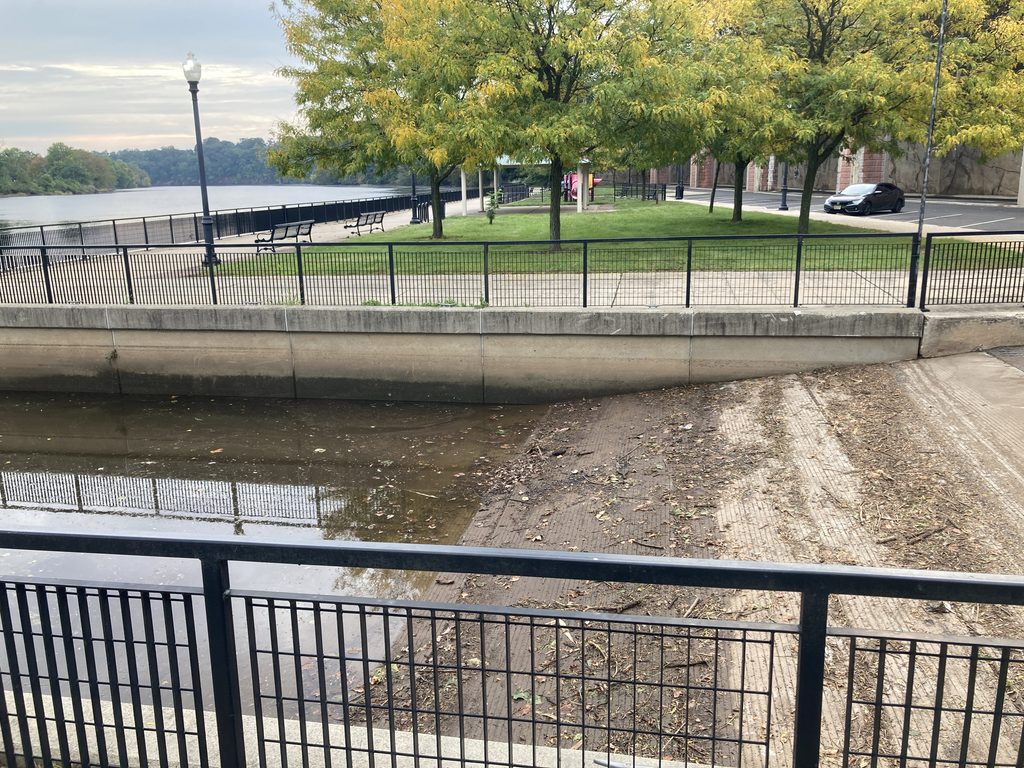
As one would expect, the nor’easter combined with the harvest moon to drive the river over the banks of Boyd Park. New Brunswick Parks did an impressive job cleaning up the park in the wake of the storm — and they even cleaned out the boat ramp!
A reckless driver lined up the trash cans at Edison boat basin and then knock them over with his car. Thank you to the local fishermen, DPW workers, and LRWP volunteers who cleaned up the mess.
Some of the spilled trash at Edison Boat Basin.
One of our standout collaborators is Elyse Barone, the recycling and clean communities coordinator in Sayreville. Thanks to her leadership our water monitoring team briefed the co-chairs of the environmental commission and the director of public works on the water quality of the Raritan River in Sayreville. We appreciate everything they have done to reduce stormwater pollution in the watershed!
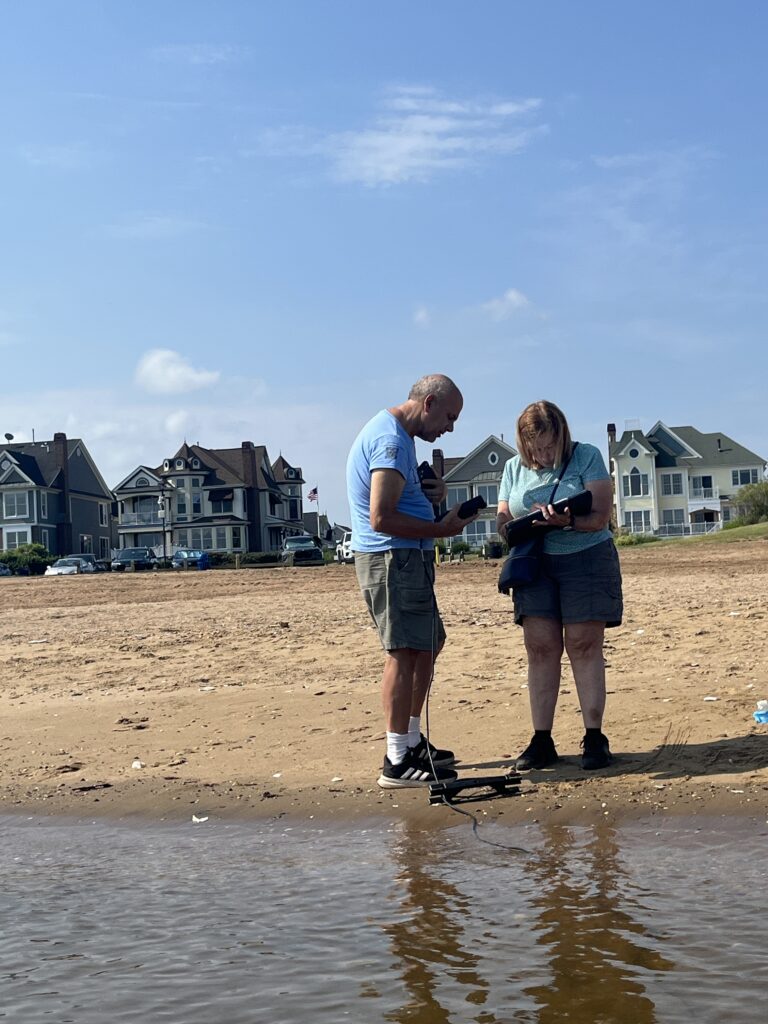
Doreen and Lakshmi record data from the YSI sonde while sampling in South Amboy. — Photo by Olesya Nabokova.
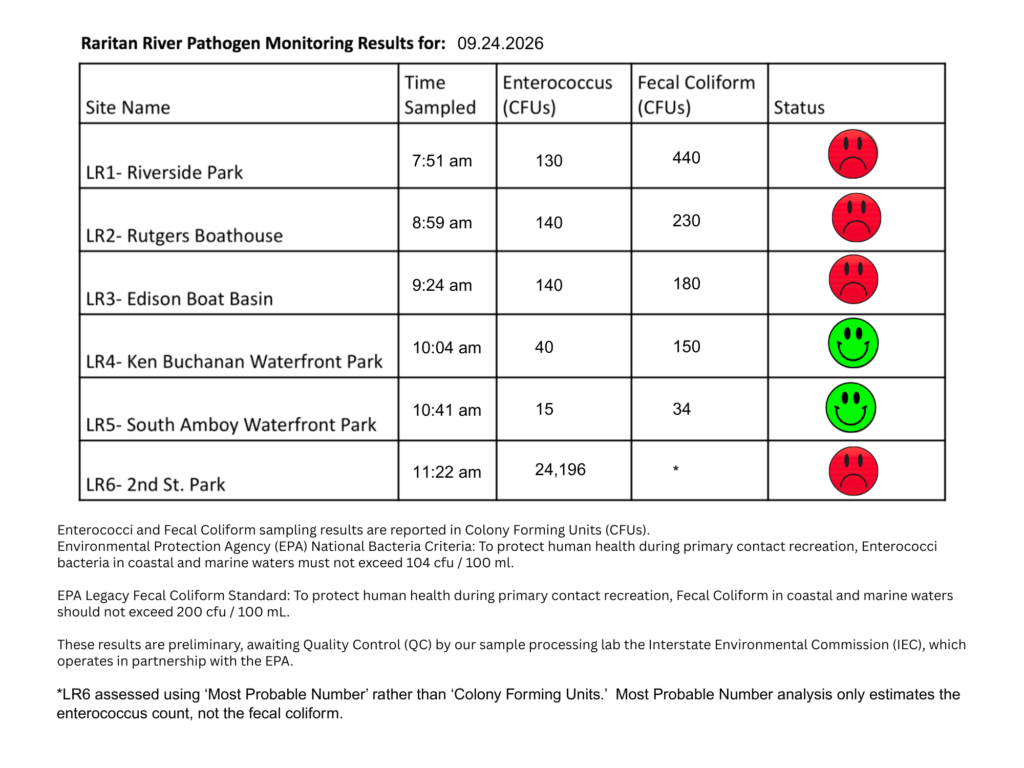
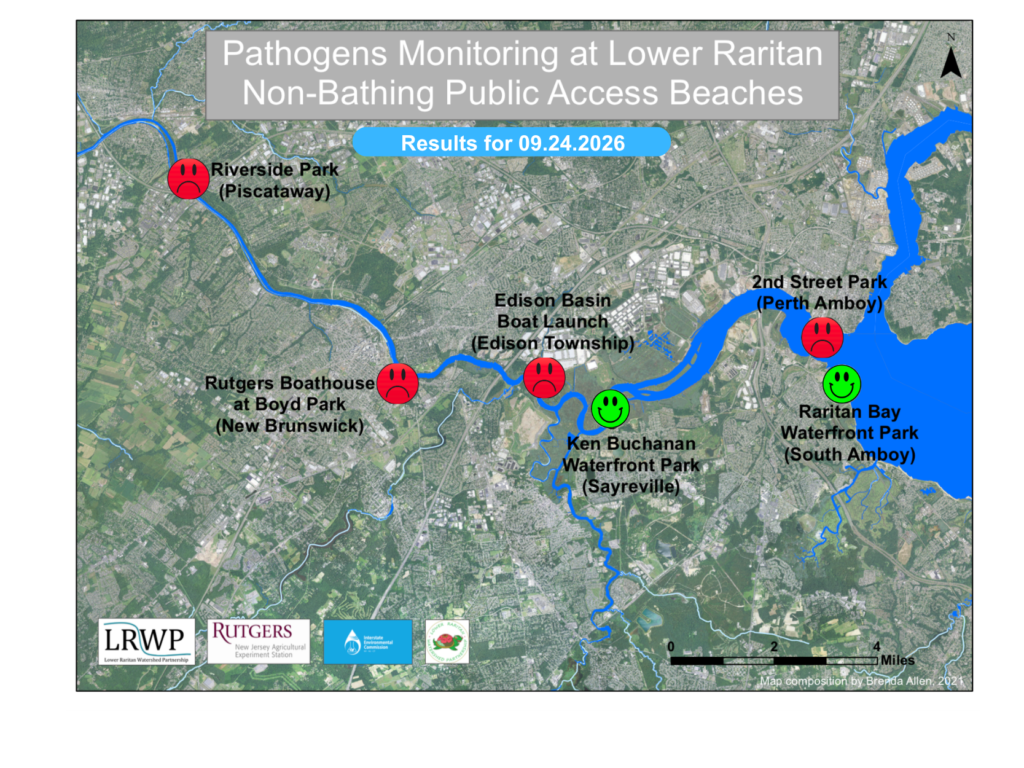
The final pathogen monitoring session of the month took place on Thursday, September 24th. Each week during the summer, from May to October, the Lower Raritan Watershed Partnership and Rutgers Cooperative Extension of Middlesex County run a volunteer-based monitoring program along the Raritan River. We collect water quality samples at six non-bathing public access beach sites, provide our samples to the Interstate Environmental Commission for analysis in their laboratory, and report the results to the public. Our mission is to share this data with the community and partners to ensure the safe use of the Raritan River for all.
Our lab results for water quality samples taken on Thursday, September 24th, 2026, show Enterococcus bacteria levels exceeding the EPA federal water quality standard of 104 cfu/100mL at four of our regular monitoring sites this week. The problem sites are indicated by the red frown on the map and chart and include Riverside Park (Piscataway), Rutgers Boat House (New Brunswick), Edison Boat Basin (Edison), and Second Street Park (Perth Amboy).
Green smiles on the chart and map indicate the sites with bacteria levels safe for recreation and include the following: Ken Buchanan Waterfront Park (Sayreville), and Raritan Bay Waterfront Park (South Amboy).
Pathogens/Enterococci levels are used as indicators of the possible presence of disease-causing bacteria in recreational waters. Such pathogens may pose health risks to people coming in primary contact with the water (touching) through recreational activities like fishing, kayaking or swimming in a water body. Possible sources of bacteria include Combined Sewer Overflows (CSOs), improperly functioning wastewater treatment plants, stormwater runoff, leaking septic systems, animal carcasses, pet waste, wildlife waste, and runoff from manure storage areas.
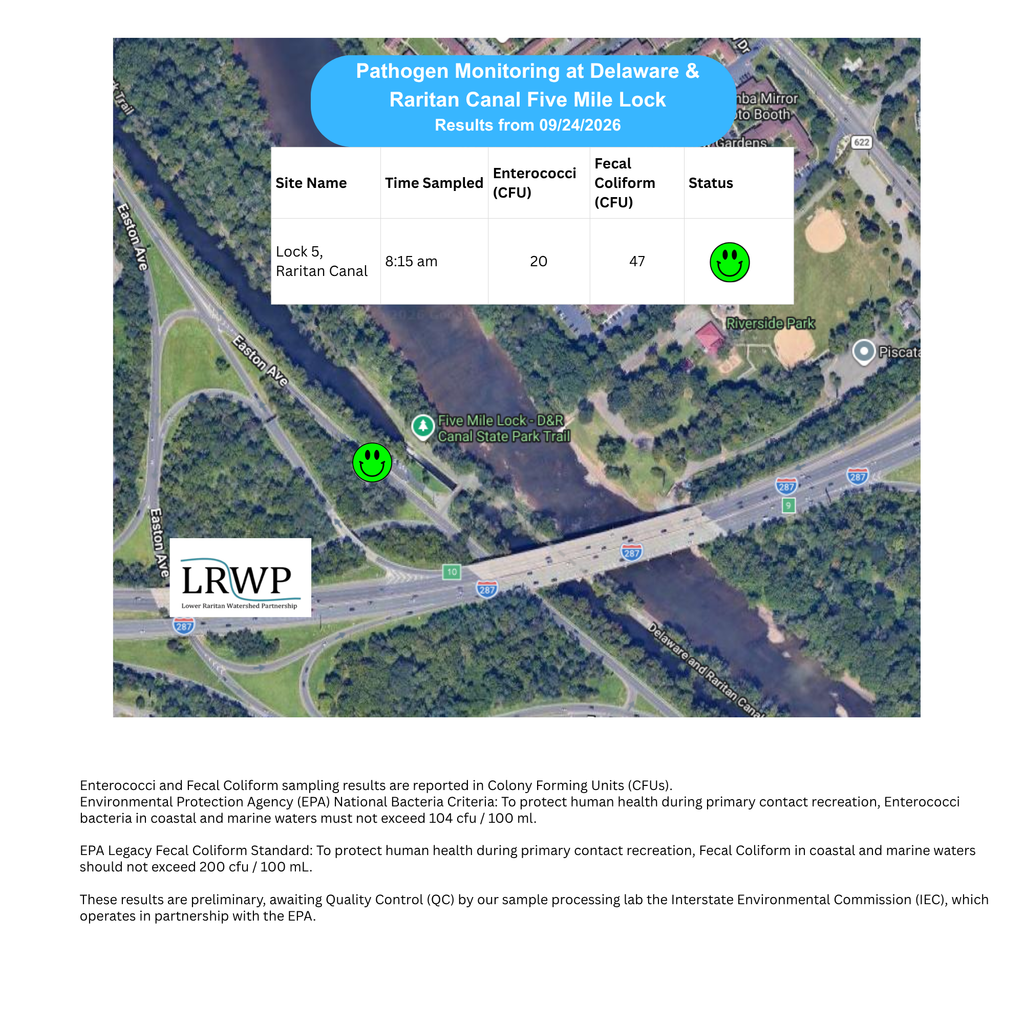
In order to better understand why Riverside Park, Piscataway has been our worst performing site over the past six years, we have started sampling at new sites in the vicinity. On September 17th, we sampled the Raritan River at Lock 11, South Bound Brook for a fifth time since we started pathogens monitoring this season. The lab analysis produced 43 enterococci cfu per 100mL which meets the EPA federal water quality standard of 104 cfu/100mL.
Our goal in reporting these results is to give residents a better understanding of the potential health risks related to primary contact during water-based recreation. If you are planning on recreating on the Raritan this weekend, make sure to stay safe and wash up after any activities!
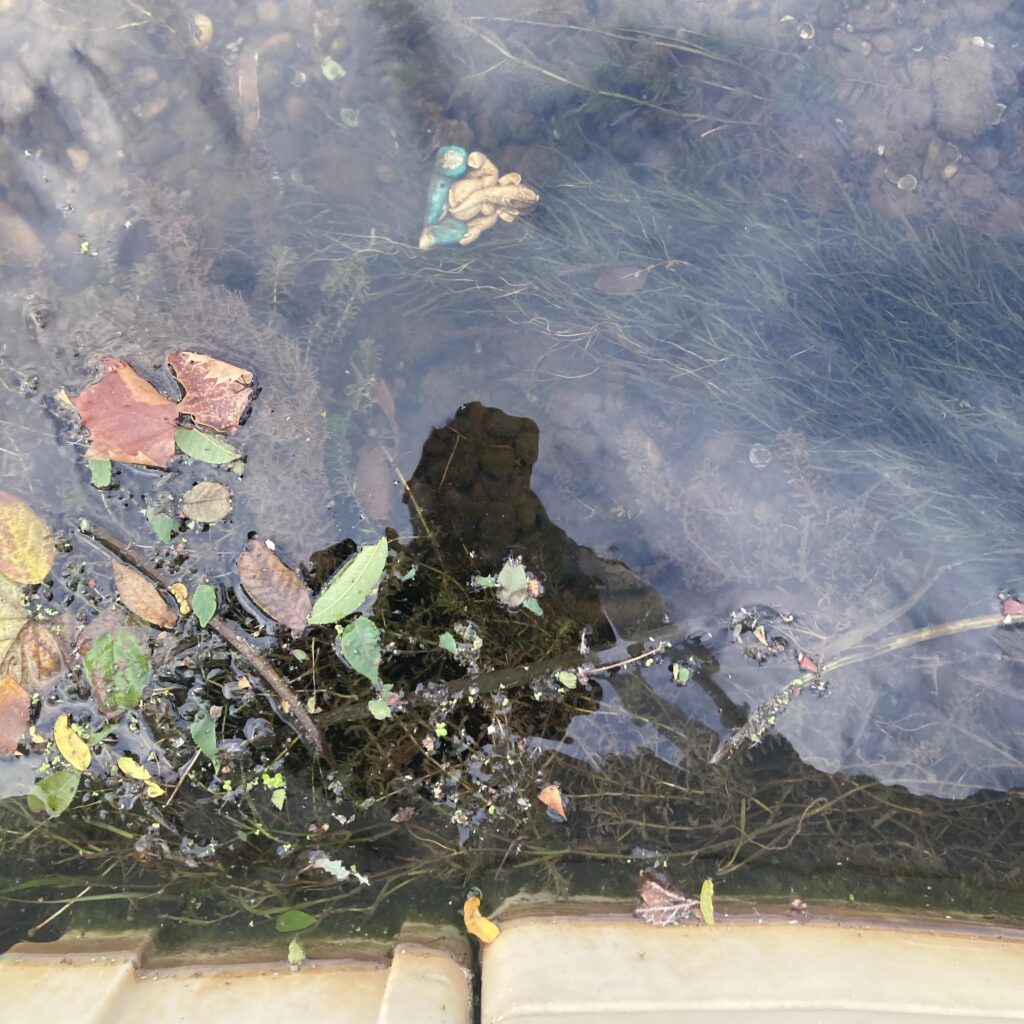
This time of year, many members of our watershed celebrate the festival that marks the birth of Ganesha. All hindu festivals are based on the position of Sun, Moon, stars, and constellations, and they therefore do not fall on specific dates in the 12 month Gregorian calendar. On his birthday, Ganesha comes down to earth and stays for nine days — during this time he witnesses the lives of his devotees and their personal difficulties. On the 10th day, he is taken in a procession with music and submerged in a river (or even a pond, lake, or beach). This act signifies various things: 1) Impermanence of material things. 2) The dissolution of physical form and merging into Universal Conciousness, and 3) The statue of Ganesha is believed to take away the household’s troubles and obstacles, leaving behind peace and prosperity until Ganesha returns the following year. Thank you, Lakshmi, for the excellent explanation this relatively recent Raritan phenomena.
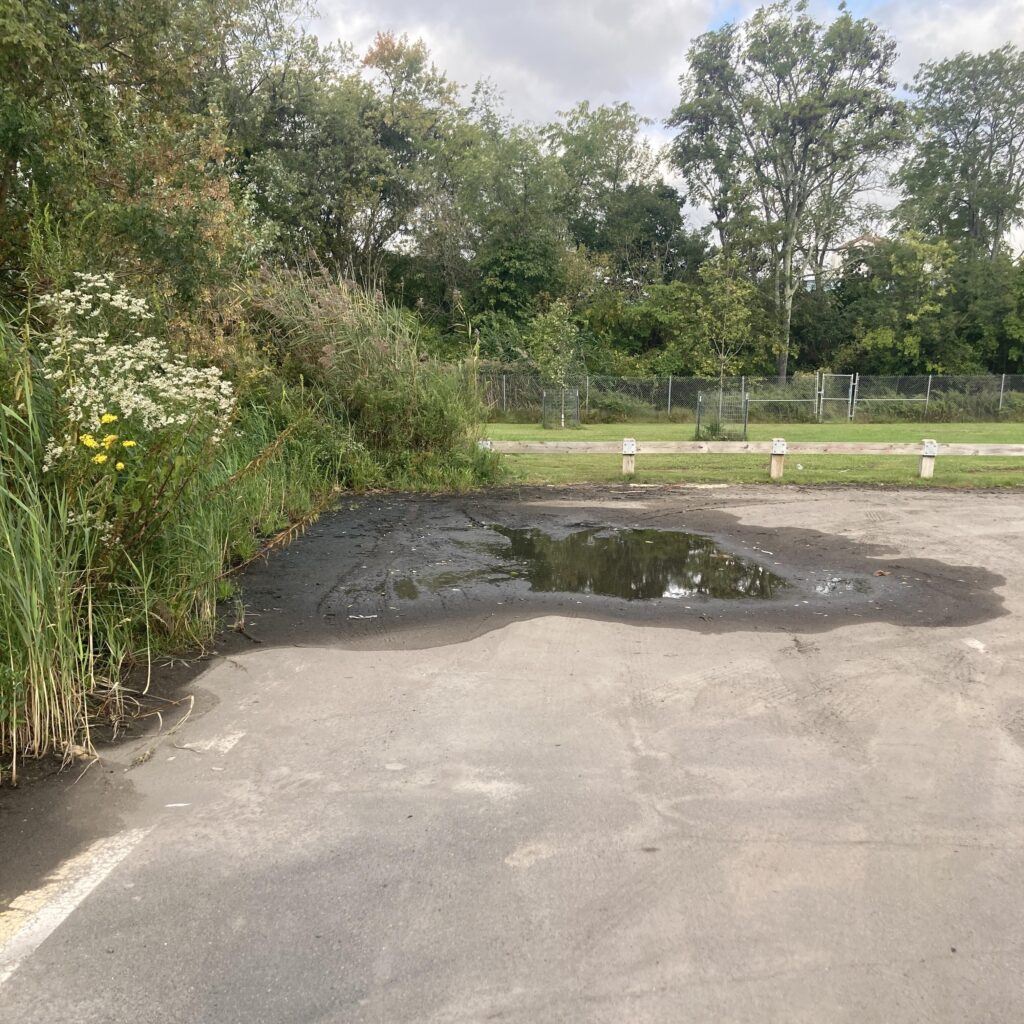
Strong potential for stormwater storage and rain garden in this unused corner of the Edison Boat Basin. If the asphalt in this section were removed, the water could percolate into the ground instead of serving as a breeding ground for mosquitoes.
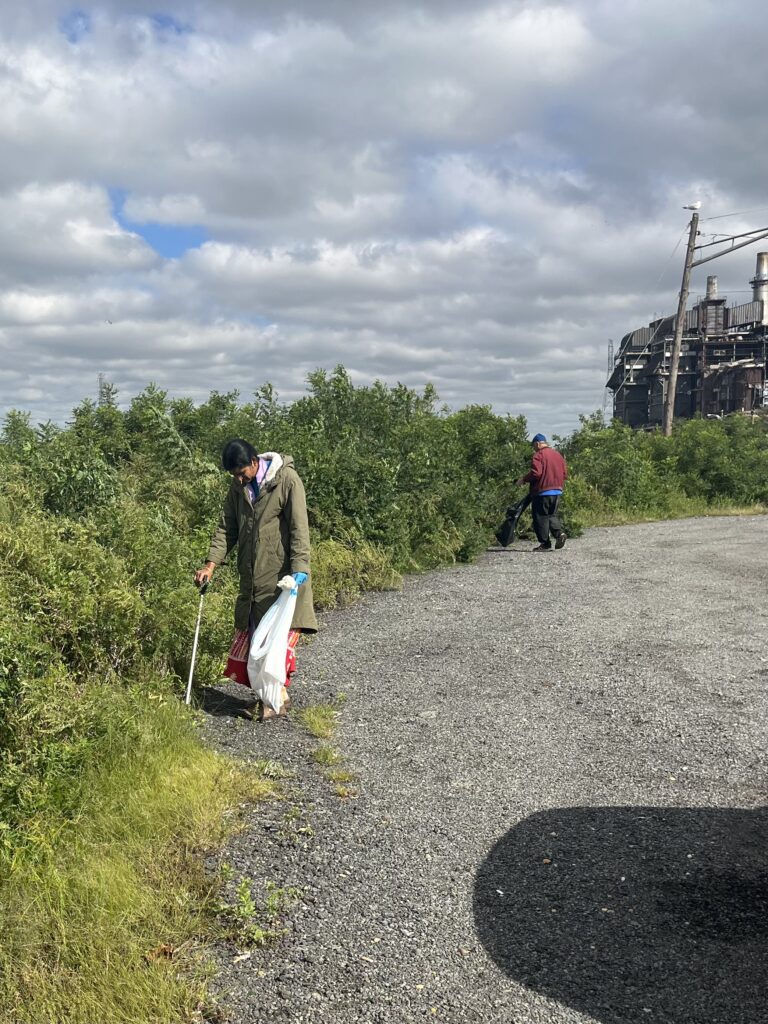
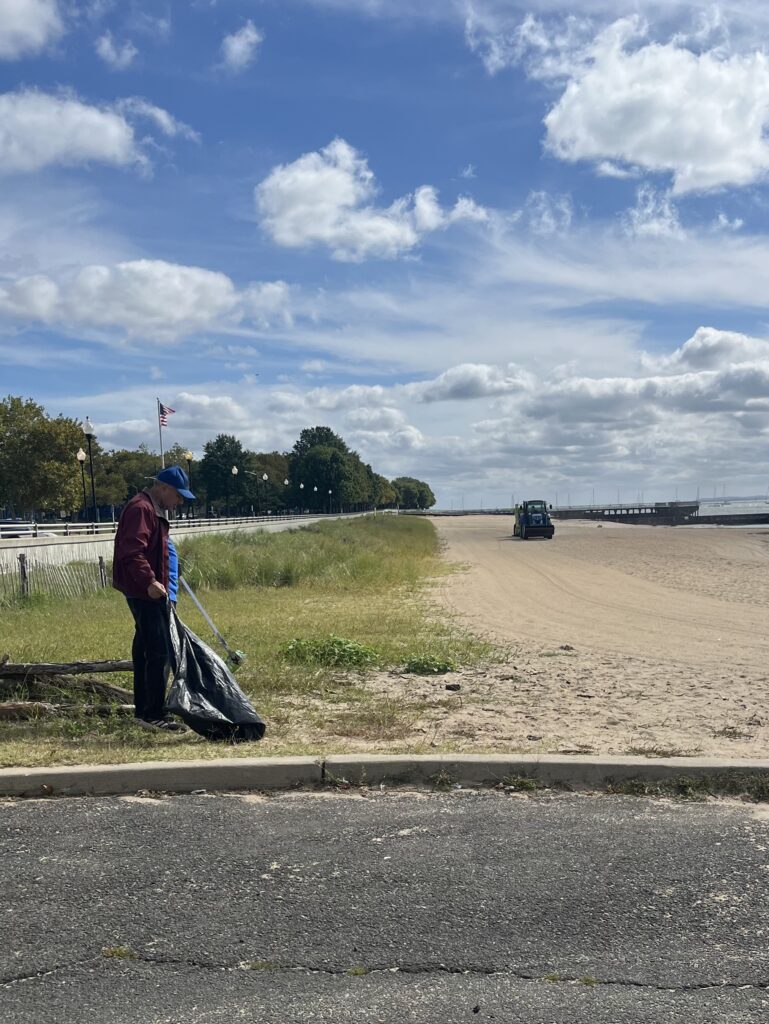
Lakshmi and Art collect litter from Ken Buchanan Waterfront Park. In the background, you can see the old power plant being torn down. — Photo by Olesya Nabokova.
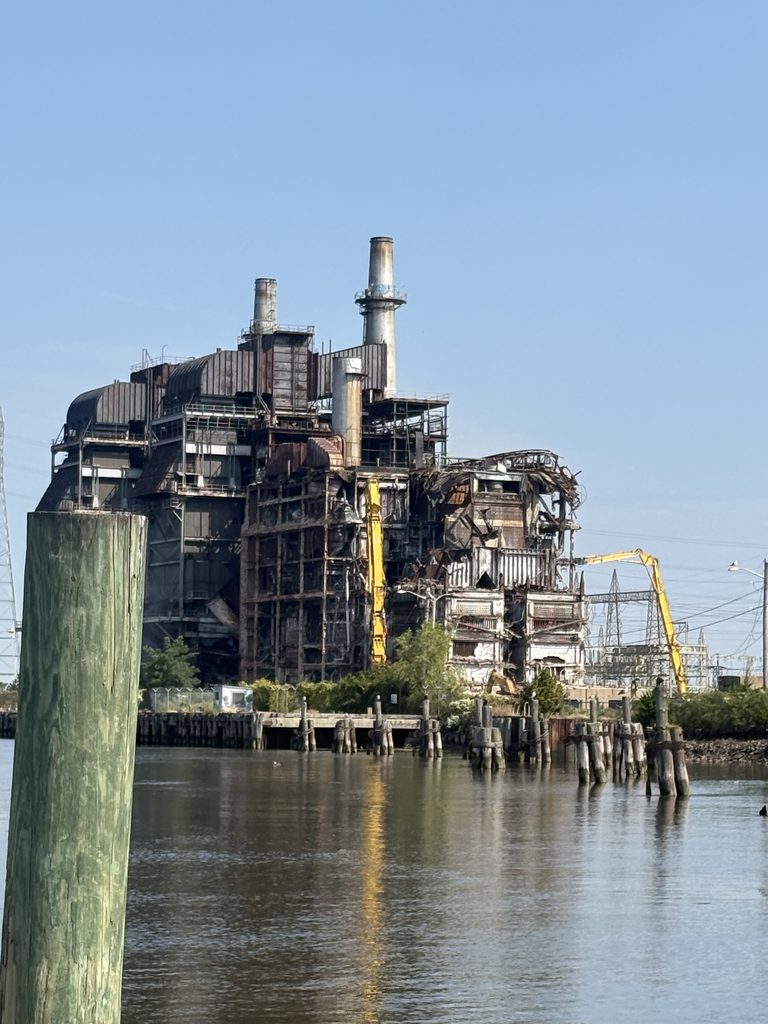
Here’s a photo from last week showing the demo of the old plant.
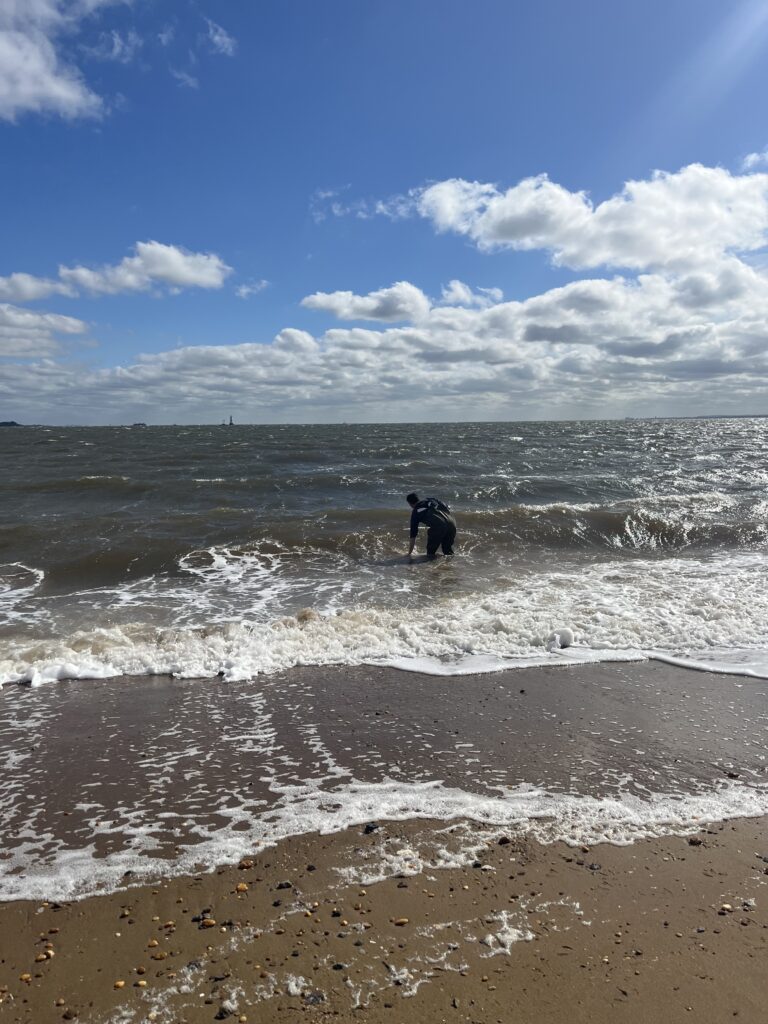
The impending nor’easter causes some of the highest waves of the season in Raritan Bay. Wind also suffused the water with oxygen — a very important part of estuary ecosystems. — Photo by Olesya Nabokova.
In Perth Amboy, we saw them combing the beach for trash using a tractor. Art and the team used lower-tech methods of picking up litter. — Photo by Olesya Nabokova.
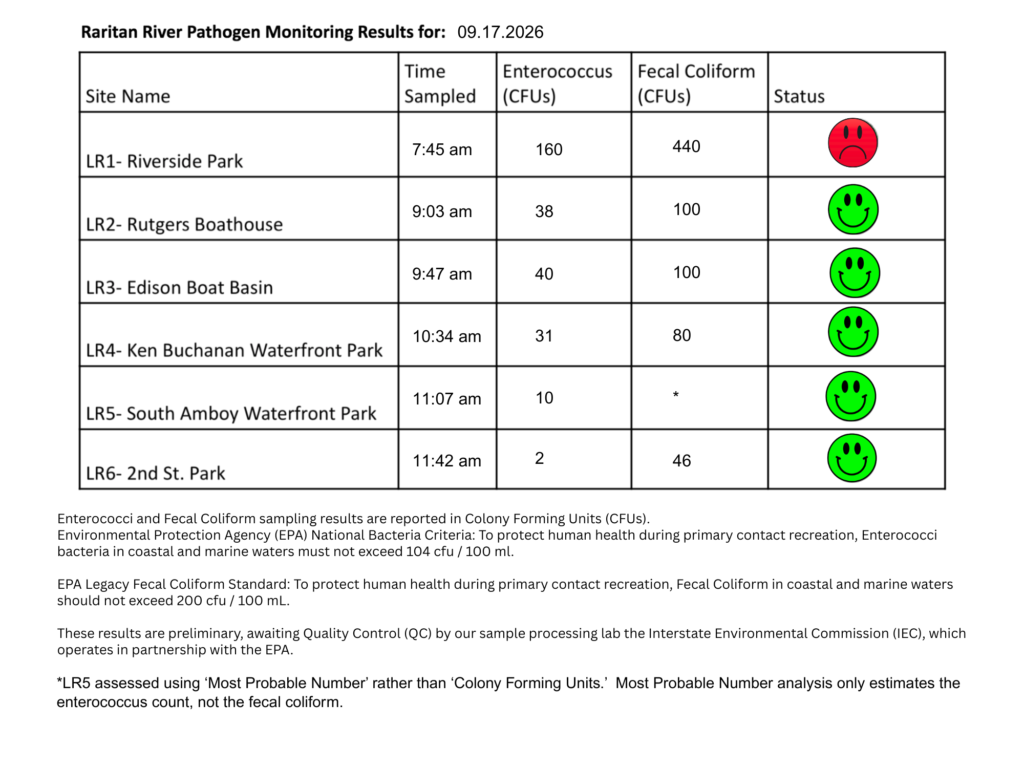
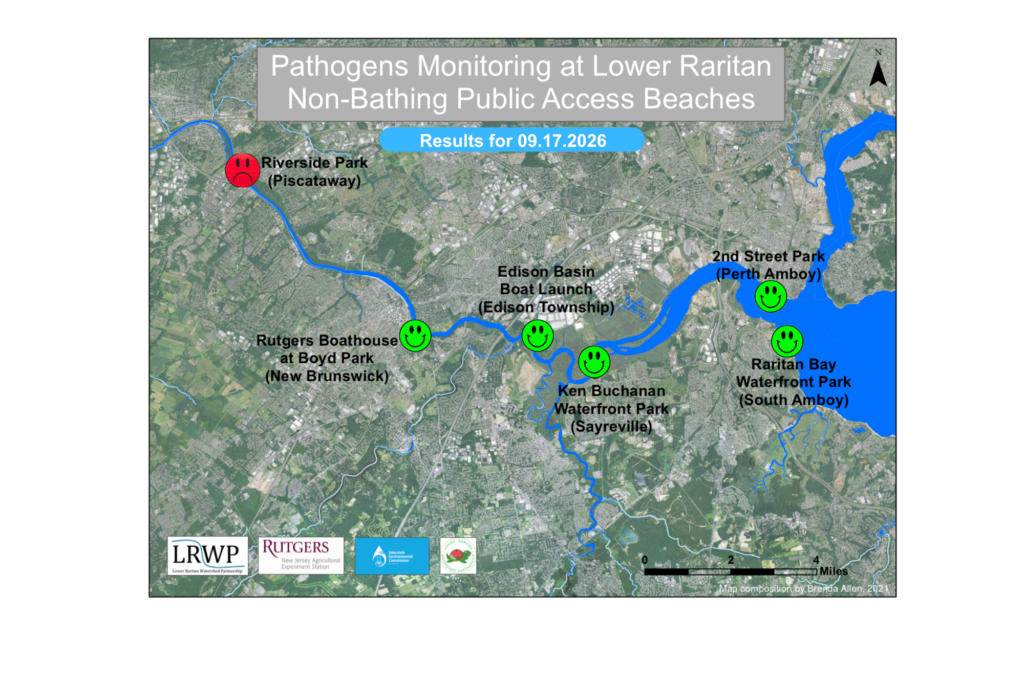
The third pathogen monitoring session of the month took place on Thursday, September 17th. Each week during the summer, from May to October, the Lower Raritan Watershed Partnership and Rutgers Cooperative Extension of Middlesex County run a volunteer-based monitoring program along the Raritan River. We collect water quality samples at six non-bathing public access beach sites, provide our samples to the Interstate Environmental Commission for analysis in their laboratory, and report the results to the public. Our mission is to share this data with the community and partners to ensure the safe use of the Raritan River for all.
Our lab results for water quality samples taken on Thursday, September 17th, 2026, show Enterococcus bacteria levels exceeding the EPA federal water quality standard of 104 cfu/100mL at one of our regular monitoring sites this week. The problem sites are indicated by the red frown on the map and chart and include Riverside Park (Piscataway).
Green smiles on the chart and map indicate the sites with bacteria levels safe for recreation and include the following: Rutgers Boathouse (New Brunswick), Edison Boat Basin (Edison),Ken Buchanan Waterfront Park (Sayreville),Raritan Bay Waterfront Park (South Amboy), and 2nd Street Park (Perth Amboy).
Pathogens/Enterococci levels are used as indicators of the possible presence of disease-causing bacteria in recreational waters. Such pathogens may pose health risks to people coming in primary contact with the water (touching) through recreational activities like fishing, kayaking or swimming in a water body. Possible sources of bacteria include Combined Sewer Overflows (CSOs), improperly functioning wastewater treatment plants, stormwater runoff, leaking septic systems, animal carcasses, pet waste, wildlife waste, and runoff from manure storage areas.
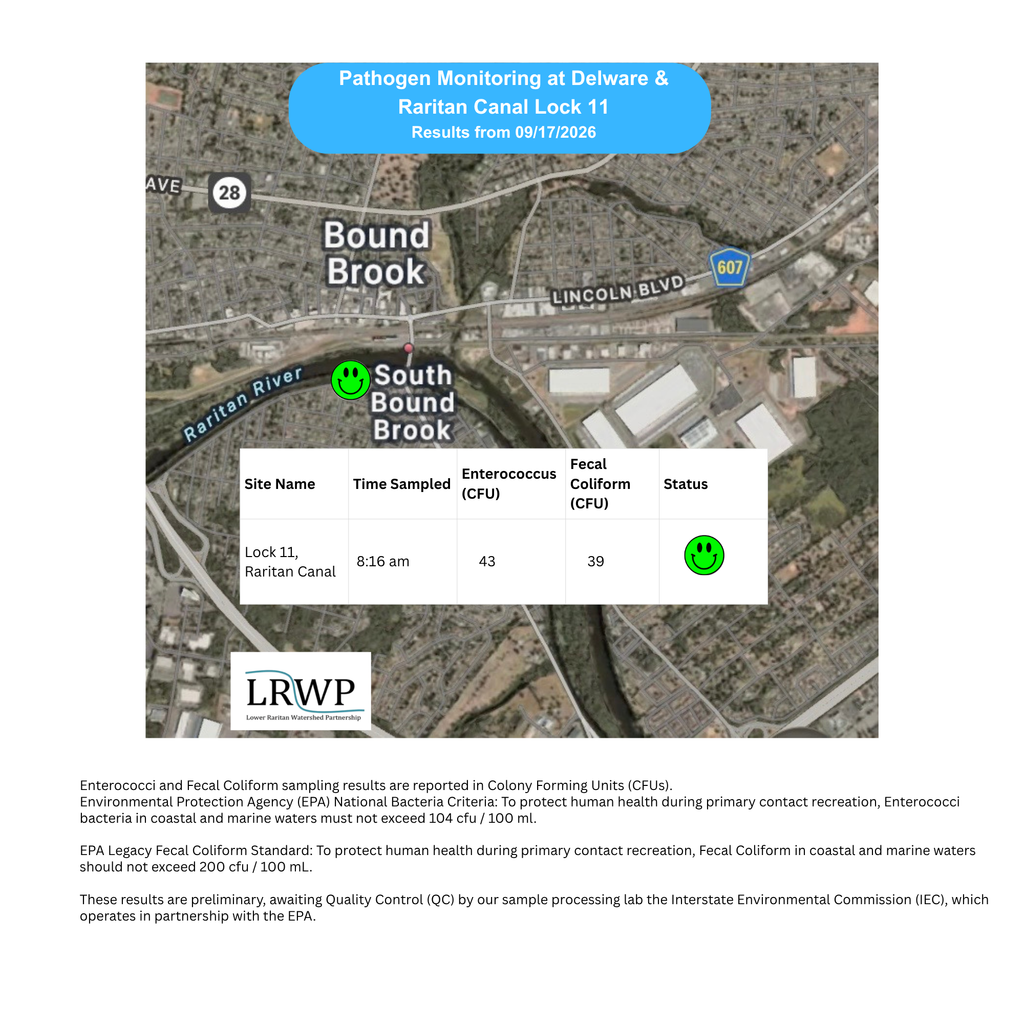
In order to better understand why Riverside Park, Piscataway has been our worst performing site over the past six years, we have started sampling at new sites in the vicinity. On September 17th, we sampled the Raritan River at Lock 11, South Bound Brook for a fifth time since we started pathogens monitoring this season. The lab analysis produced 43 enterococci cfu per 100mL which meets the EPA federal water quality standard of 104 cfu/100mL.
Our goal in reporting these results is to give residents a better understanding of the potential health risks related to primary contact during water-based recreation. If you are planning on recreating on the Raritan this weekend, make sure to stay safe and wash up after any activities!
Paula and Olesya prepare to collect data from the sonde in New Brunswick. Photo by Doreen Camardi.
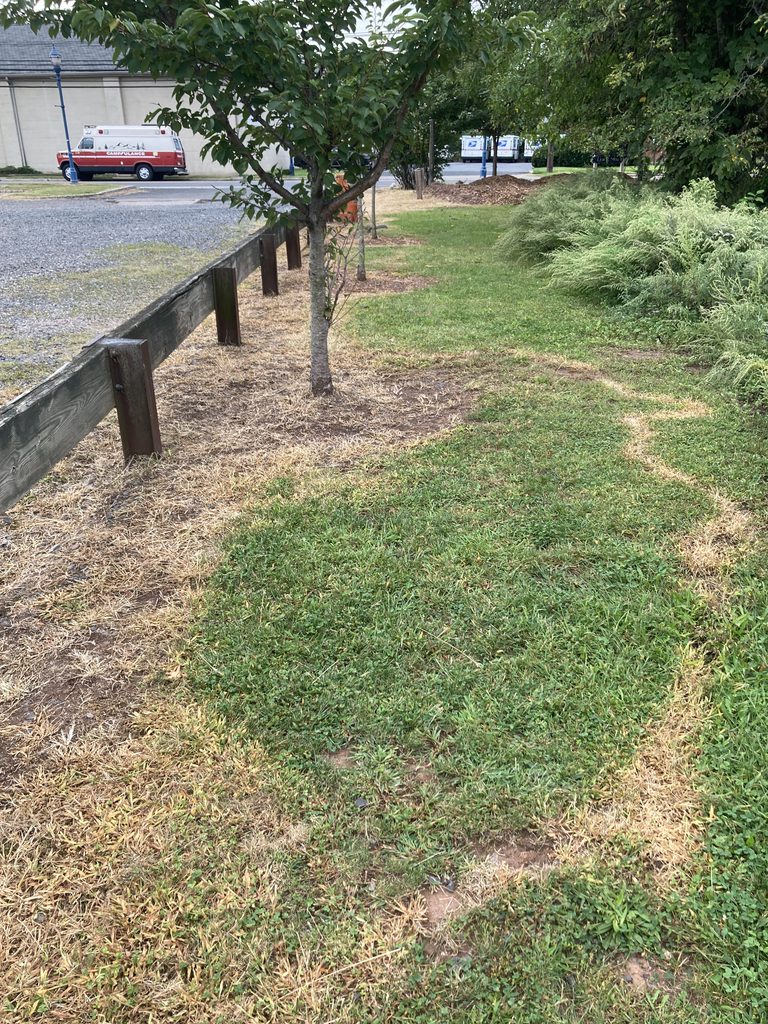
One of the most weirdest landscaping trends of the past ten years is the incompetent use of herbicide. Here’s evidence of a ‘technician’ dribbling herbicide across the Delaware & Raritan Canal State Park.
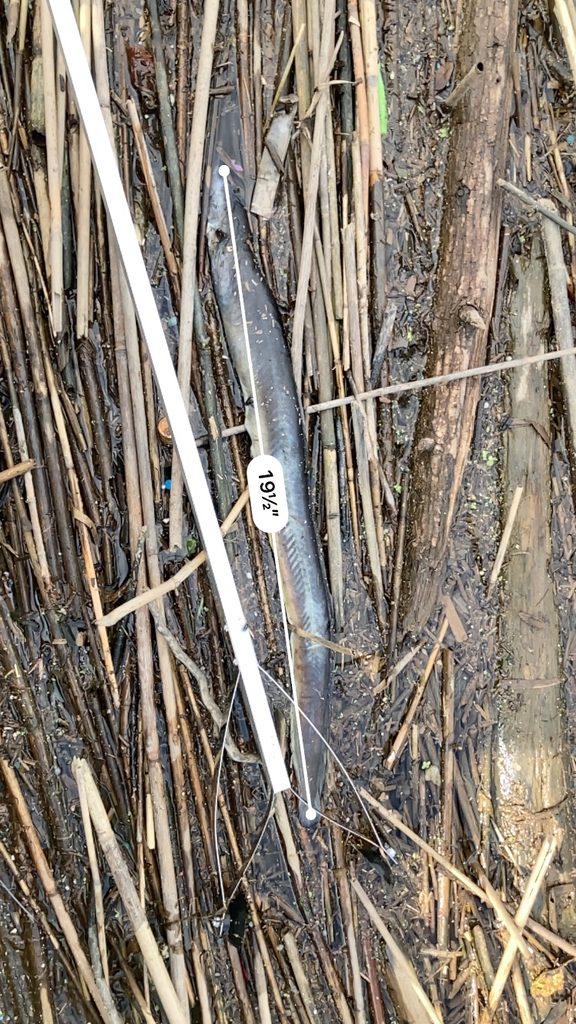
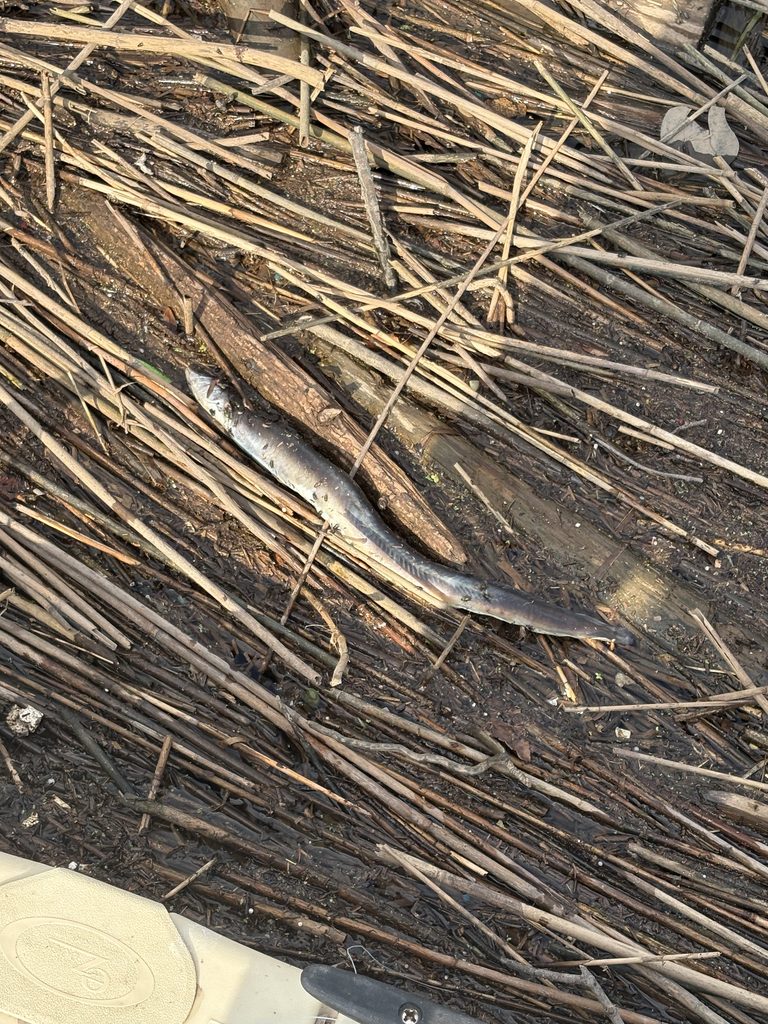
Yellow eels were once a common source of food in our region. This particular eel died of unknown causes, but was found floating among the flotsam at Edison Boat Basin.
Same eel, different photographer. Photo by Art Allgauer.
Volunteer Arthur Allgauer observed that they have finished lead and asbestos remediation and started dismantling the old power plant in Sayreville.
Art and Doreen record YSI data in South Amboy. Photo by Olesya Nabokova.
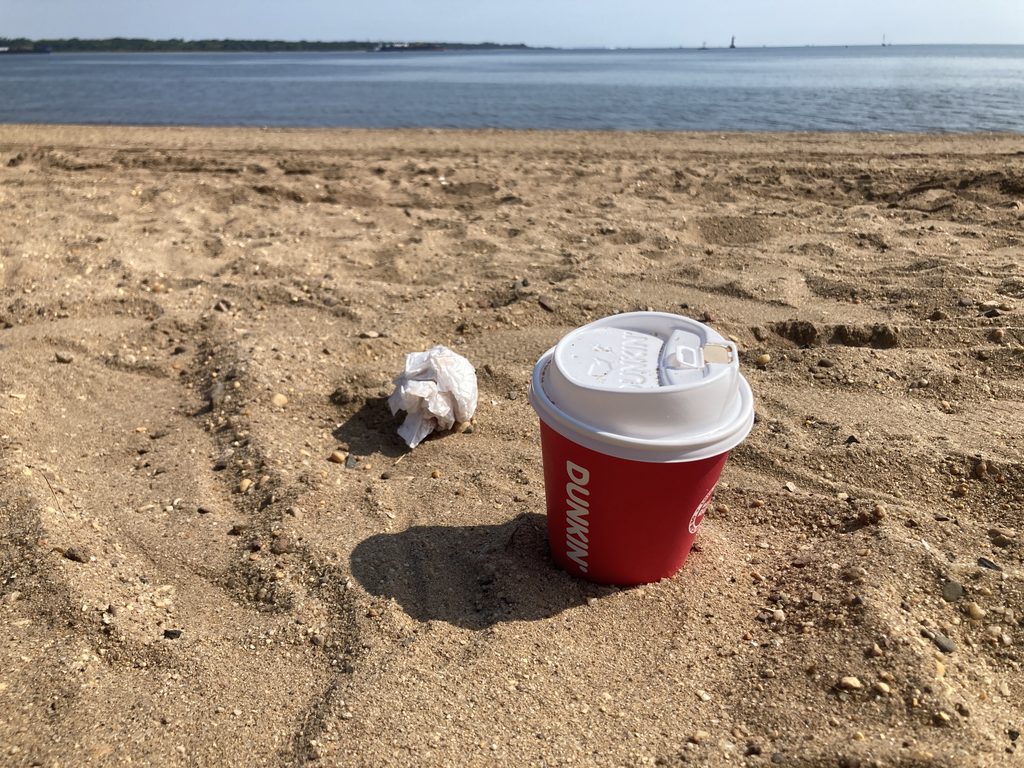
Human behavior is so interesting. Here’s evidence of someone enjoying the beach, and then leaving their trash behind. Why don’t they just dispose of the trash in the provided waste bins?
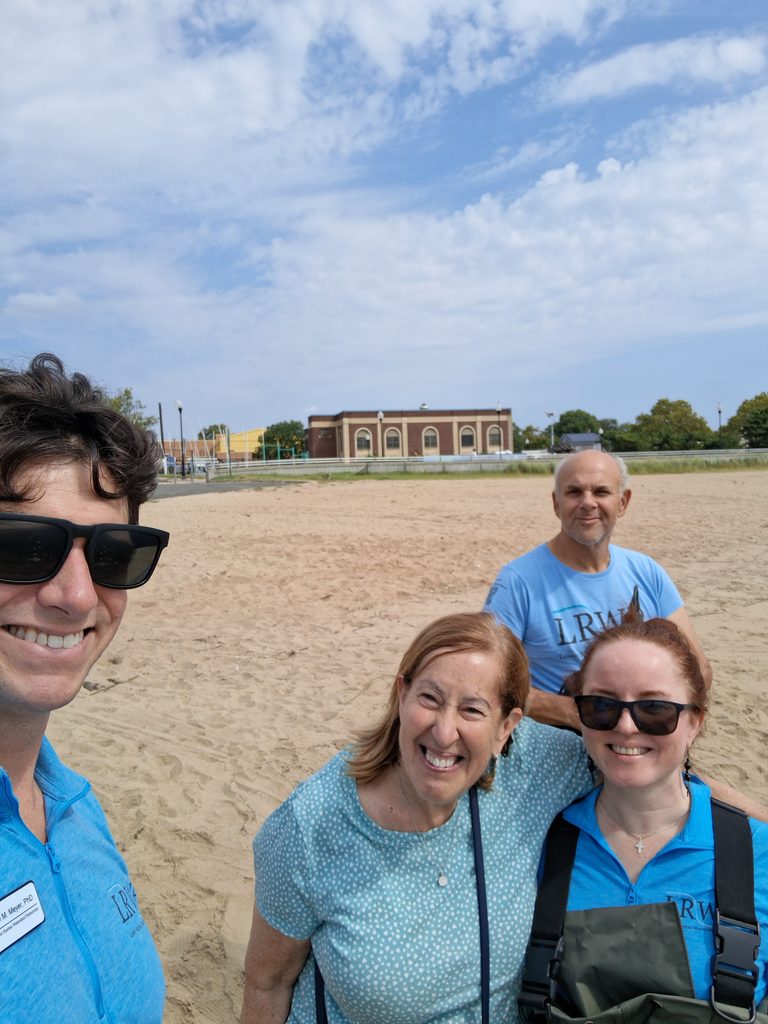
John, Doreen, Art, and Olesya celebrate the end of this week’s water monitoring in Perth Amboy.
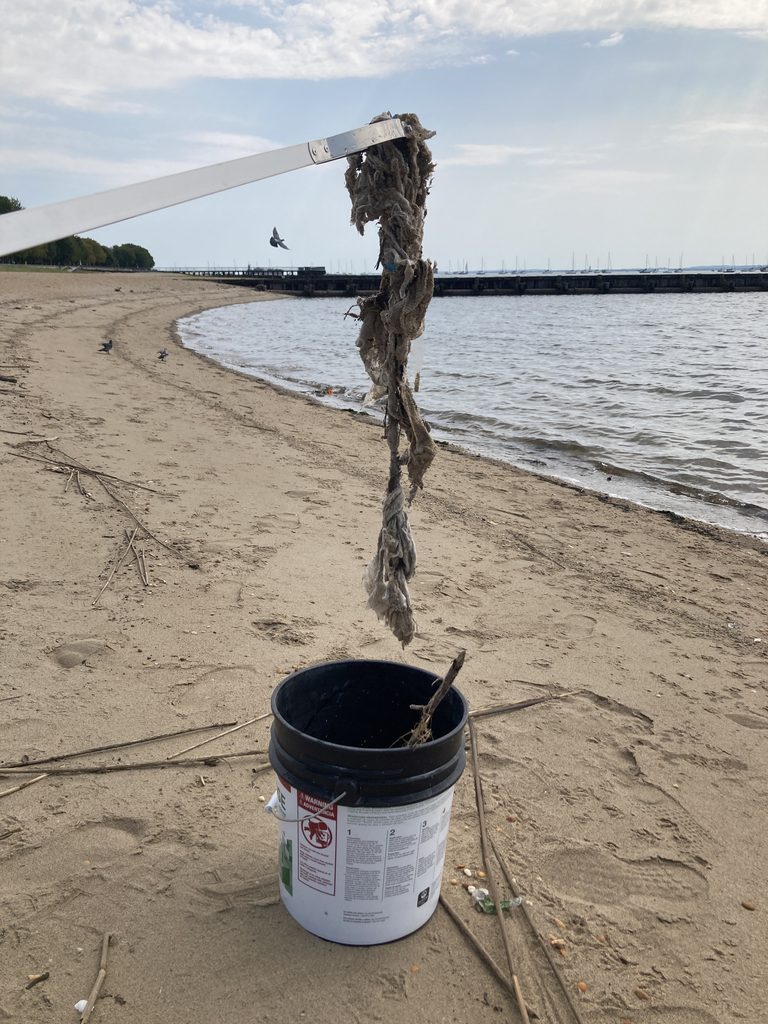
Due to the combined sewer outfalls in Perth Amboy, we always find sanitary wipes in Perth Amboy.
The first pathogen monitoring session of the month took place on Thursday, September 10th. Each week during the summer, from May to October, the Lower Raritan Watershed Partnership and Rutgers Cooperative Extension of Middlesex County run a volunteer-based monitoring program along the Raritan River. We collect water quality samples at six non-bathing public access beach sites, provide our samples to the Interstate Environmental Commission for analysis in their laboratory, and report the results to the public. Our mission is to share this data with the community and partners to ensure the safe use of the Raritan River for all.
Our lab results for water quality samples taken on Thursday, September 10th, 2026, show Enterococcus bacteria levels exceeding the EPA federal water quality standard of 104 cfu/100mL at three of our regular monitoring sites this week. The problem sites are indicated by the red frown on the map and chart and include Riverside Park (Piscataway), Edison Boat Basin(Edison), and 2nd Street Park (Perth Amboy).
Green smiles on the chart and map indicate the sites with bacteria levels safe for recreation and include the following: Rutgers Boathouse (New Brunswick), Ken Buchanan Waterfront Park (Sayreville),Raritan Bay Waterfront Park (South Amboy).
Pathogens/Enterococci levels are used as indicators of the possible presence of disease-causing bacteria in recreational waters. Such pathogens may pose health risks to people coming in primary contact with the water (touching) through recreational activities like fishing, kayaking or swimming in a water body. Possible sources of bacteria include Combined Sewer Overflows (CSOs), improperly functioning wastewater treatment plants, stormwater runoff, leaking septic systems, animal carcasses, pet waste, wildlife waste, and runoff from manure storage areas.
In order to better understand why Riverside Park, Piscataway has been our worst performing site over the past six years, we have started sampling at new sites in the vicinity. On September 10th, we sampled the Raritan River at the Queen’s Bridge, Bound Brook for a fifth time since we started pathogens monitoring this season. The lab analysis produced 290 enterococci cfu per 100mL which fails to meet the EPA federal water quality standard of 104 cfu/100mL. This site has now failed the test every week we’ve tested it! That said, it’s numbers remain far below what we tend to see at Riverside Park, Piscataway.
Our goal in reporting these results is to give residents a better understanding of the potential health risks related to primary contact during water-based recreation. If you are planning on recreating on the Raritan this weekend, make sure to stay safe and wash up after any activities!
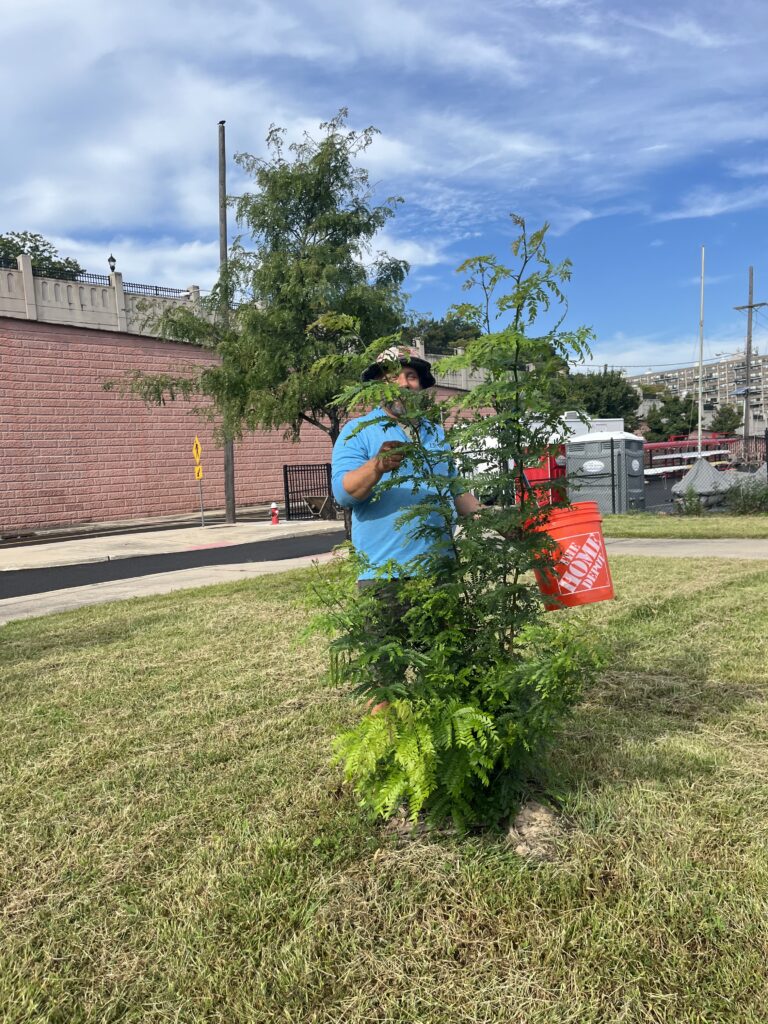
In collaboration with the New Brunswick Parks Department, we helped this volunteer honey locust reach six feet in height in just a couple of short months. Special thanks to Mike Orsini for his leadership on this project, and throughout the pathogens monitoring season!
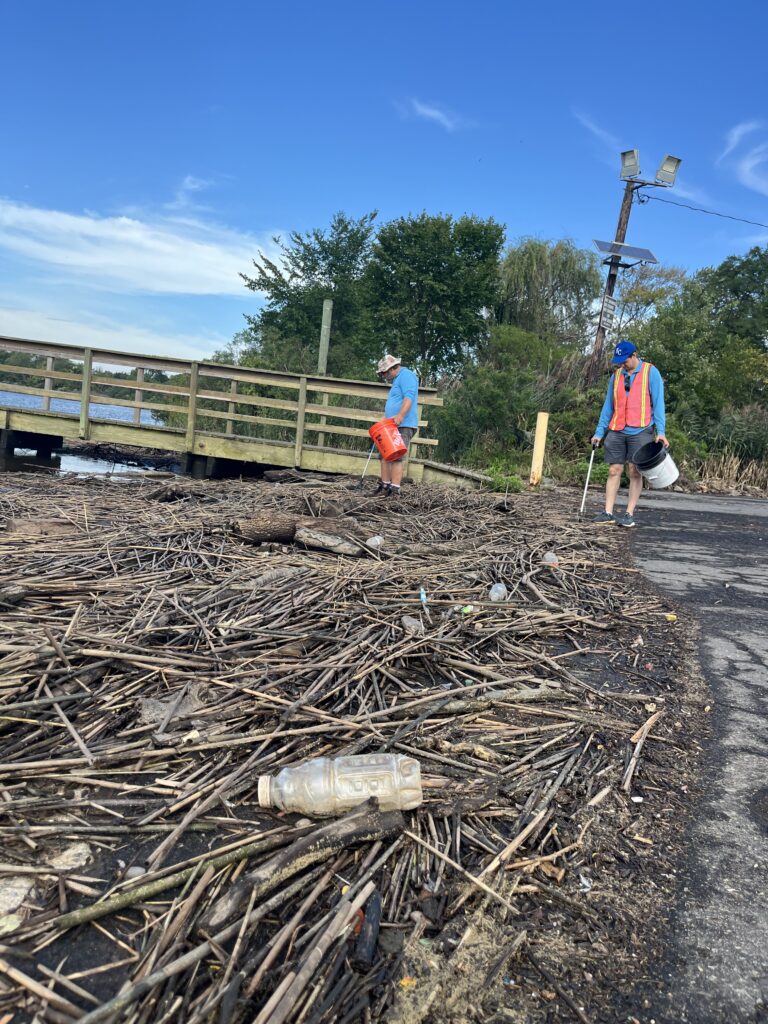
The good news? The ebbing tide left enabled us to pick up seventeen gallons of plastic trash off the shore in Edison. The bad news? The ebbing tide left seventeen gallons of plastic trash on the shore in Edison…
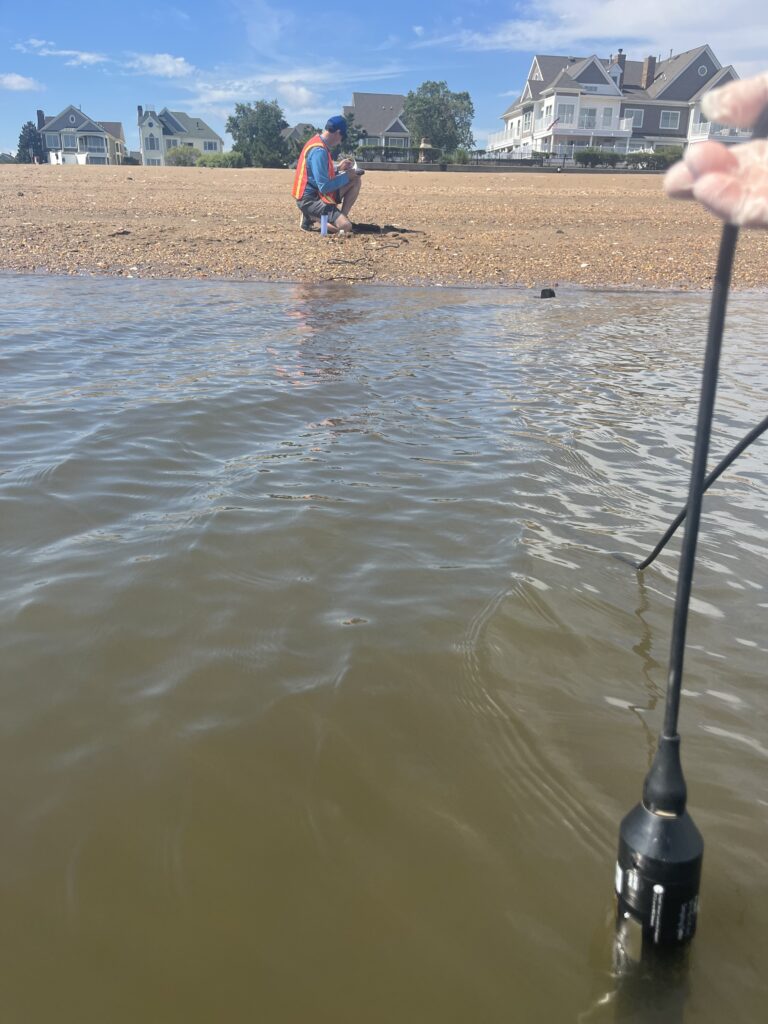
Olesya deftly takes a one-handed photo of John recording measurements from the sonde in South Amboy.
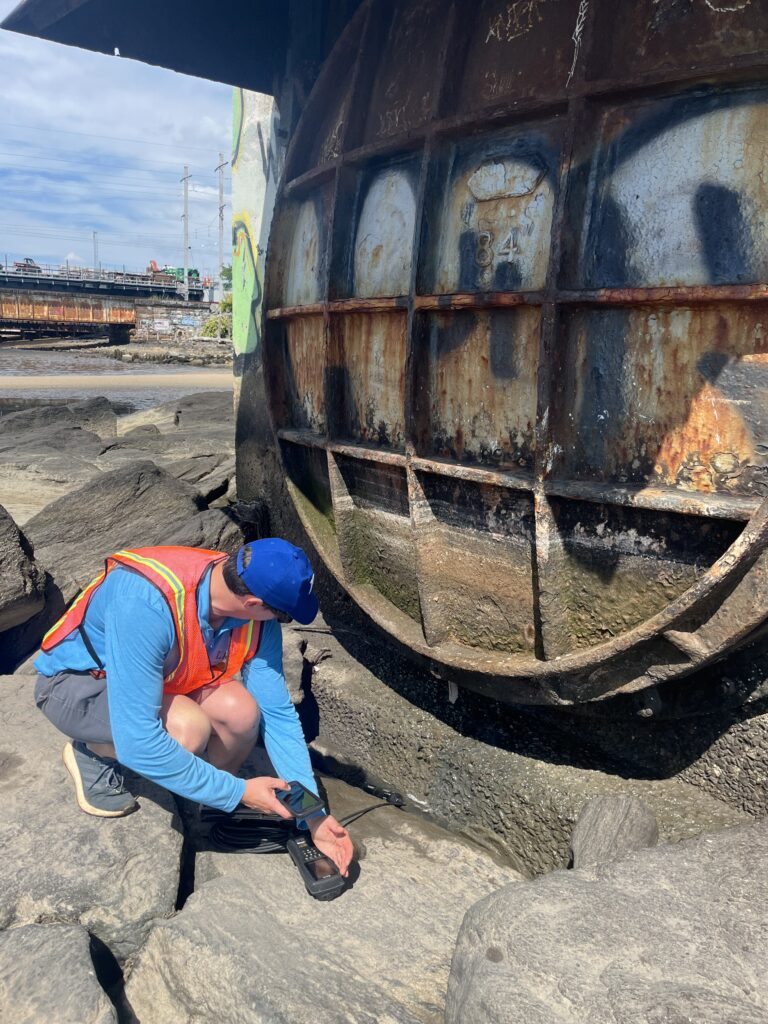
Whereas South Amboy was once again our cleanest site, Perth Amboy’s fecal colony forming units proved too numerous to count. In addition, the team noticed baby wipes dangling from the outfall pipe, and a fluorescent pool next to the grossest piece of infrastructure in Middlesex County. Interestingly, despite the weird color, the salinity and pH of the pool matched that of the surrounding waters.
The first pathogen monitoring session of the month took place on Thursday, September 3rd. Each week during the summer, from May to October, the Lower Raritan Watershed Partnership and Rutgers Cooperative Extension of Middlesex County run a volunteer-based monitoring program along the Raritan River. We collect water quality samples at six non-bathing public access beach sites, provide our samples to the Interstate Environmental Commission for analysis in their laboratory, and report the results to the public. Our mission is to share this data with the community and partners to ensure the safe use of the Raritan River for all.
This week, our sites received one to three inches in the 24 hours prior to water monitoring. This tends to flush feces into the water, and our results reflect this fundamental connection between precipitation and water quality.
Our lab results for water quality samples taken on Thursday, September 3rd, 2026, show Enterococcus bacteria levels exceeding the EPA federal water quality standard of 104 cfu/100mL at five of our regular monitoring sites this week. The problem sites are indicated by the red frown on the map and chart and include Riverside Park (Piscataway), Rutgers Boathouse (New Brunswick), Edison Boat Basin(Edison), Ken Buchanan Waterfront Park (Sayreville), and 2nd Street Park (Perth Amboy).
Green smiles on the chart and map indicate the sites with bacteria levels safe for recreation and include the following: Raritan Bay Waterfront Park (South Amboy).
Pathogens/Enterococci levels are used as indicators of the possible presence of disease-causing bacteria in recreational waters. Such pathogens may pose health risks to people coming in primary contact with the water (touching) through recreational activities like fishing, kayaking or swimming in a water body. Possible sources of bacteria include Combined Sewer Overflows (CSOs), improperly functioning wastewater treatment plants, stormwater runoff, leaking septic systems, animal carcasses, pet waste, wildlife waste, and runoff from manure storage areas.
In order to better understand why Riverside Park, Piscataway has been our worst performing site over the past six years, we have started sampling at new sites in the vicinity. On September 3rd, we sampled the D&R Canal at Demott Lane for a fourth time since we started pathogens monitoring this season. The lab analysis produced 246 enterococci cfu per 100mL which fails to meet the EPA federal water quality standard of 104 cfu/100mL. For the first time, this site has failed the test!
Our goal in reporting these results is to give residents a better understanding of the potential health risks related to primary contact during water-based recreation. If you are planning on recreating on the Raritan this weekend, make sure to stay safe and wash up after any activities!
Art gallantly wades into the water next to the Combined Sewer Outfall in Perth Amboy. You can see a sanitary wipe in the foreground.
Nothing says “welcome to the park” like a Natural Green Lawn Care pesticide flag. The problem with spraying glyphosates and nitrogen fertilizer near the river bank is that much of it washes into the stream, damaging aquatic ecology. Spraying riverbanks is bad for the taxpayer and bad for the environment.
Mike grabbed more than five gallons of plastic and Styrofoam from the New Brunswick boat ramp. If we have to capitalize ‘Styrofoam’, maybe Dow Jones ought to capitalize our cleanups.
In New Brunswick, the pigeons carefully observed the water monitoring team. We tried to talk to the pigeons about volunteering for the Lower Raritan Watershed Partnership, but they ignored every entreaty. Some fowl folks have no sense of civic duty.
Taxpayer Mike Orsini has noticed that the beach in South Amboy suffers from runoff near the paved surfaces. With enough rainfall on impervious surfaces, the water quickly picks up enough energy to carry away the sand. An easy, affordable solution would be to install a swale to catch and filter the rainwater.
Before each session, the team charges the YSI and calibrates the sensors. Here, we can see the screen for calibrating pH, especially in the high (base) range of 10. That number is similar to bleach, and we have thankfully never encountered that in the Raritan.
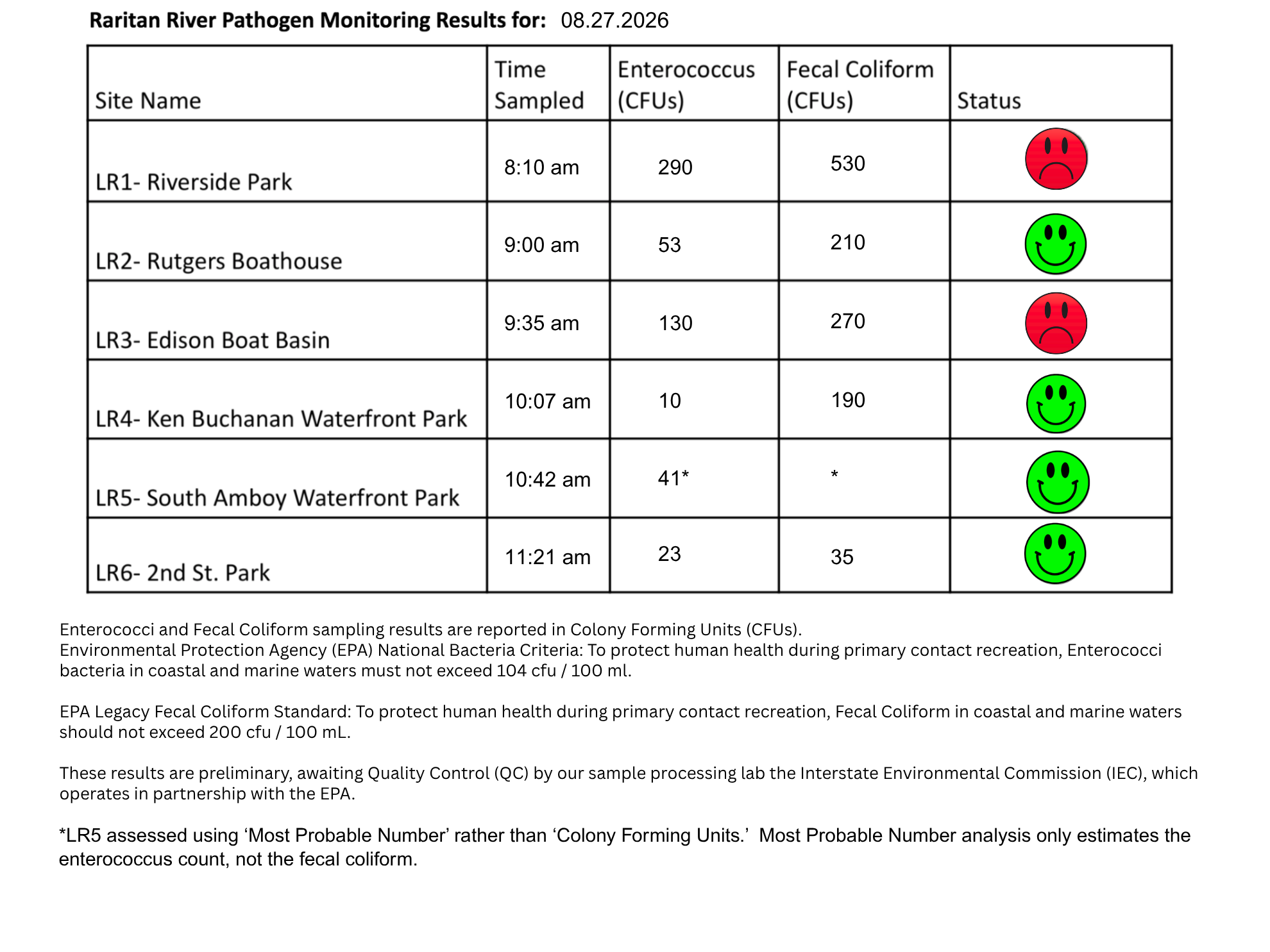
The final pathogen monitoring session of the month took place on Thursday, August 27th. Each week during the summer, from May to October, the Lower Raritan Watershed Partnership and Rutgers Cooperative Extension of Middlesex County run a volunteer-based monitoring program along the Raritan River. We collect water quality samples at six non-bathing public access beach sites, provide our samples to the Interstate Environmental Commission for analysis in their laboratory, and report the results to the public. Our mission is to share this data with the community and partners to ensure the safe use of the Raritan River for all.
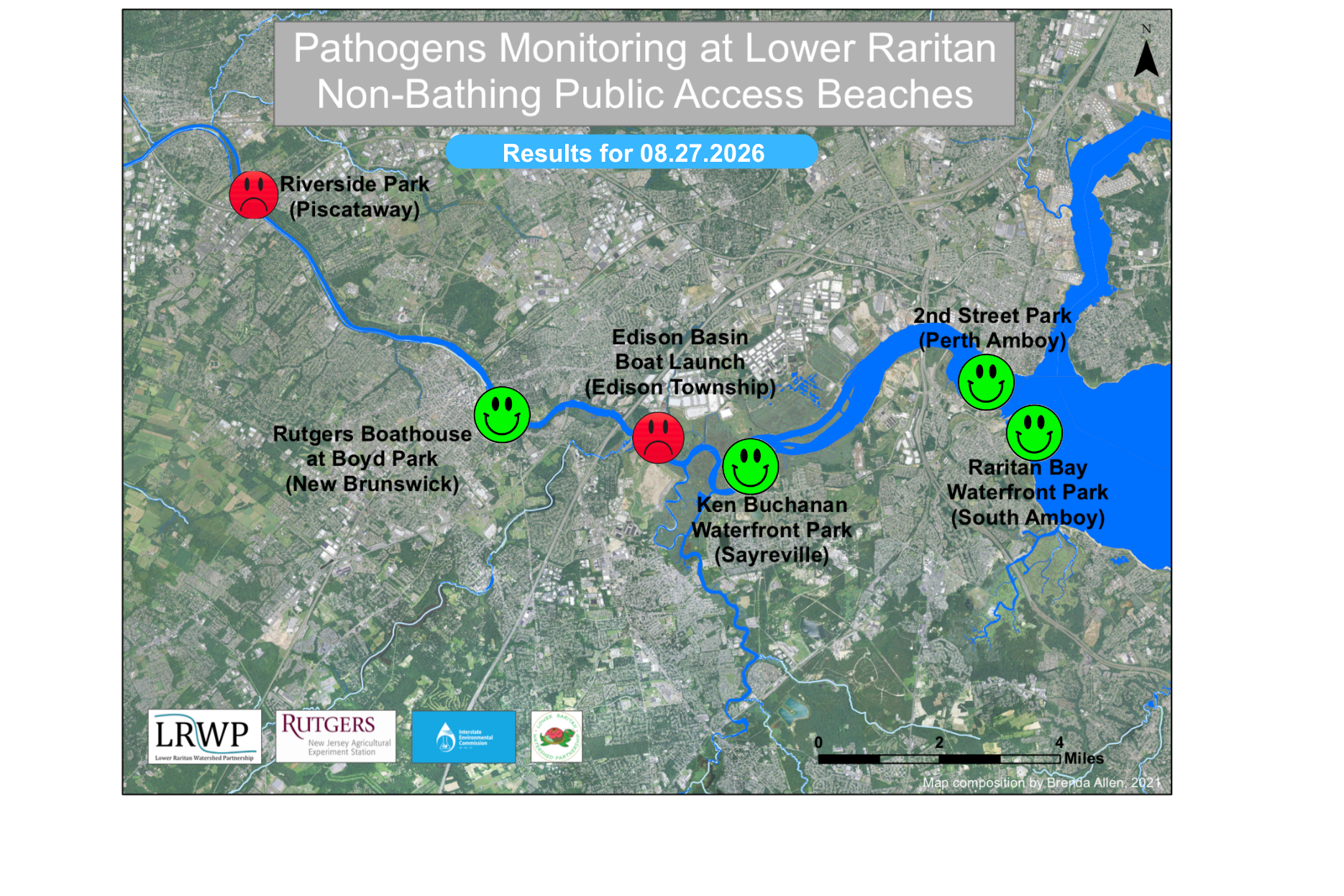
Our lab results for water quality samples taken on Thursday, August 27th, 2026, show Enterococcus bacteria levels exceeding the EPA federal water quality standard of 104 cfu/100mL at two of our regular monitoring sites this week. The problem sites are indicated by the red frown on the map and chart and include Riverside Park (Piscataway) and Edison Boat Basin.
Green smiles on the chart and map indicate the sites with bacteria levels safe for recreation and include the following: Rutgers Boat House (New Brunswick), Ken Buchanan Waterfront Park (Sayreville), 2nd Street Park (Perth Amboy), and South Amboy Waterfront Park.
A note of caution about all our sites: a strong thunderstorm swept through the area after we completed pathogens monitoring on Thursday, and this often flushes enterococci and fecal into the river. Thus, if we had tested on Friday instead of Thursday, we suspect these sites may have failed to meet the EPA standard for primary contact.
Pathogens/Enterococci levels are used as indicators of the possible presence of disease-causing bacteria in recreational waters. Such pathogens may pose health risks to people coming in primary contact with the water (touching) through recreational activities like fishing, kayaking or swimming in a water body. Possible sources of bacteria include Combined Sewer Overflows (CSOs), improperly functioning wastewater treatment plants, stormwater runoff, leaking septic systems, animal carcasses, pet waste, wildlife waste, and runoff from manure storage areas.
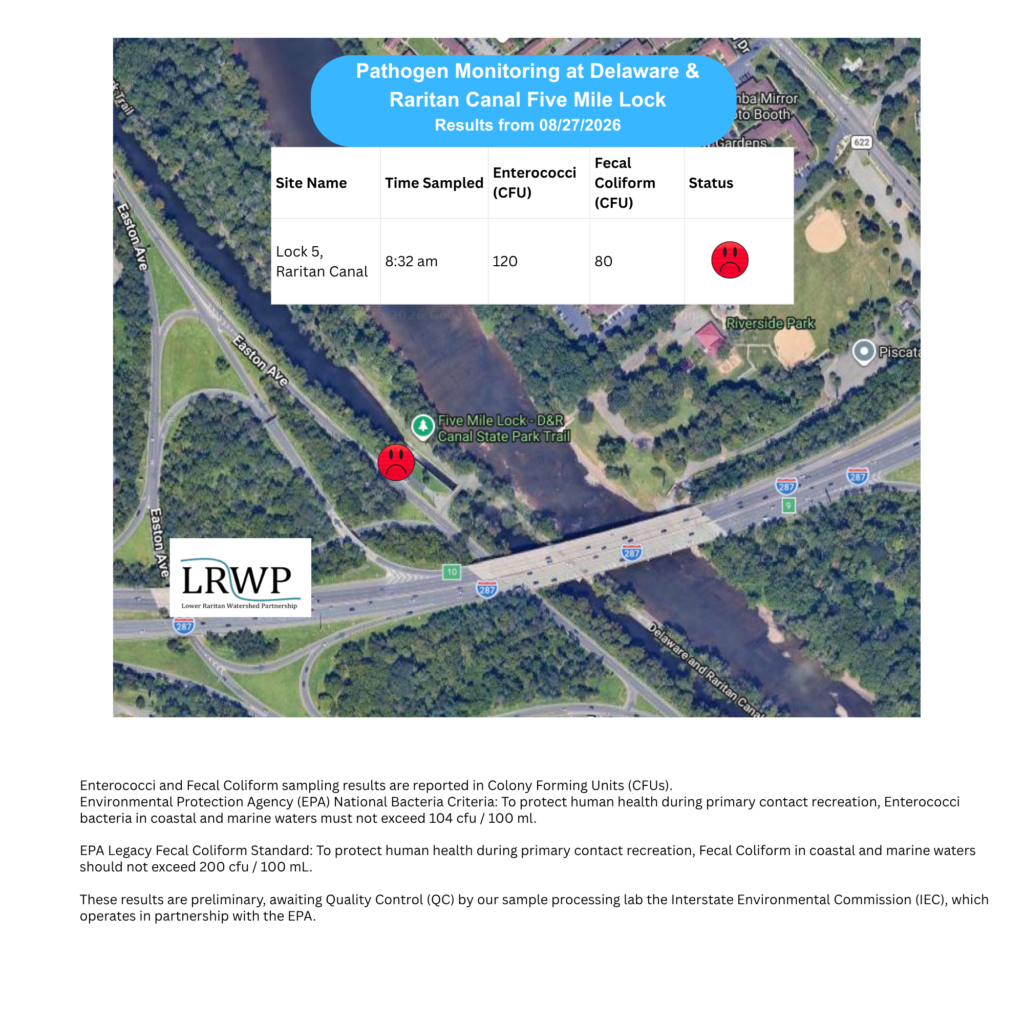
In order to better understand why Riverside Park, Piscataway has been our worst performing site over the past six years, we have started sampling at new sites in the vicinity. On August 27th, we sampled the Raritan Canal Lock 5, Somerset County for a fourth time since we started pathogens monitoring this season. The lab analysis produced 120 enterococci cfu per 100mL which fails to meet the EPA federal water quality standard of 104 cfu/100mL. For the first time, a canal site has failed the test!
Our goal in reporting these results is to give residents a better understanding of the potential health risks related to primary contact during water-based recreation. If you are planning on recreating on the Raritan this weekend, make sure to stay safe and wash up after any activities!
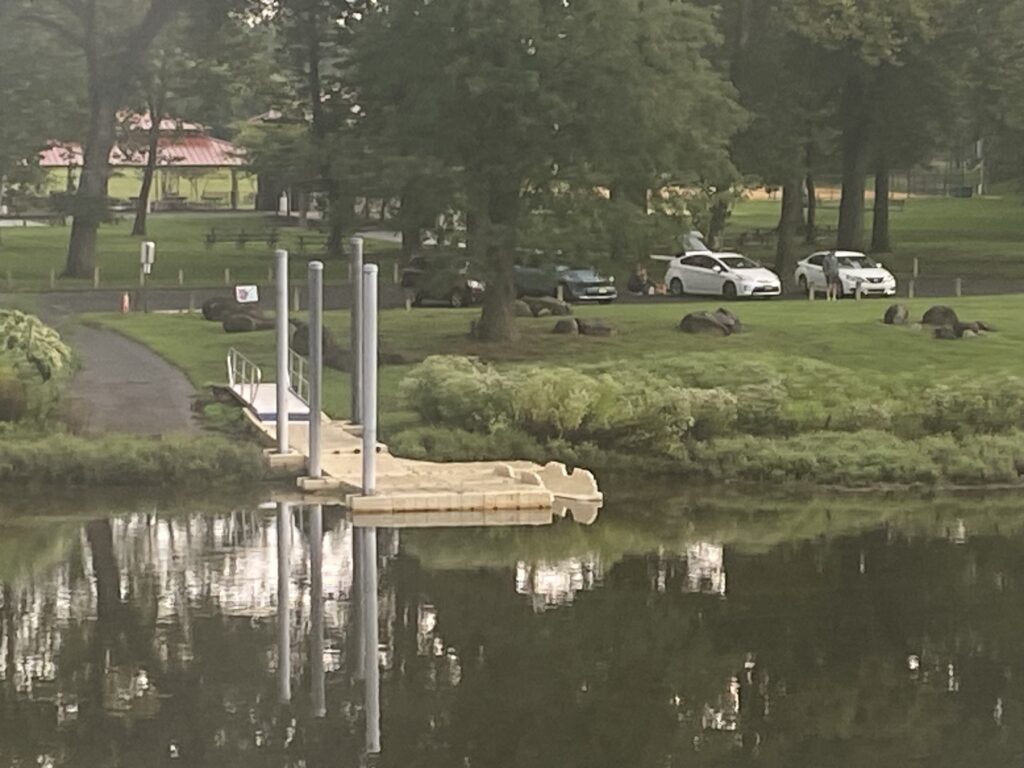
Mike Orsini captured this photo of Riverside Park, Piscataway, from the far shore. From this angle, you can better understand how the plastic ‘floating docks’ along the Raritan are designed to rise and fall with the waters.The large steel piers hold the dock in place.
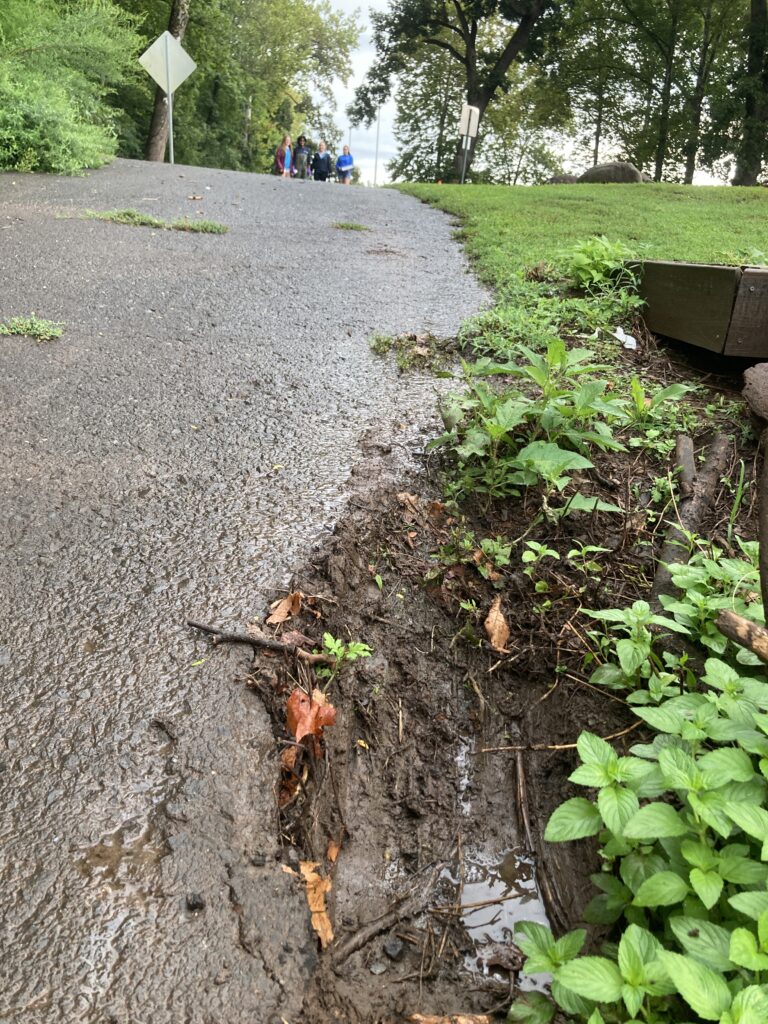
The asphalt boat ramp at Piscataway is starting to erode away and slide into the river due to stormwater runoff from the parking lot. There are some easy fixes for this, like small settlement ponds, rip rap stone, and rain gardens.
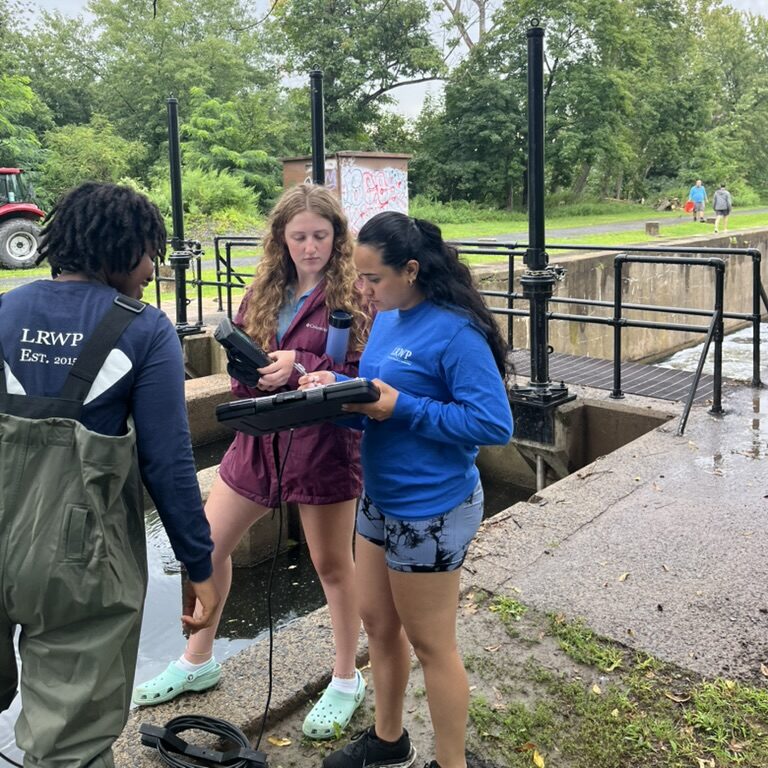
In this photo from Olesya Nabakova, we see Endurance, Ashley, and Paula record results from the sonde. In the background, Mike and John collect trash on the far shore of the canal. This image looks quiet, but the roar of Lock 5 was quite loud.
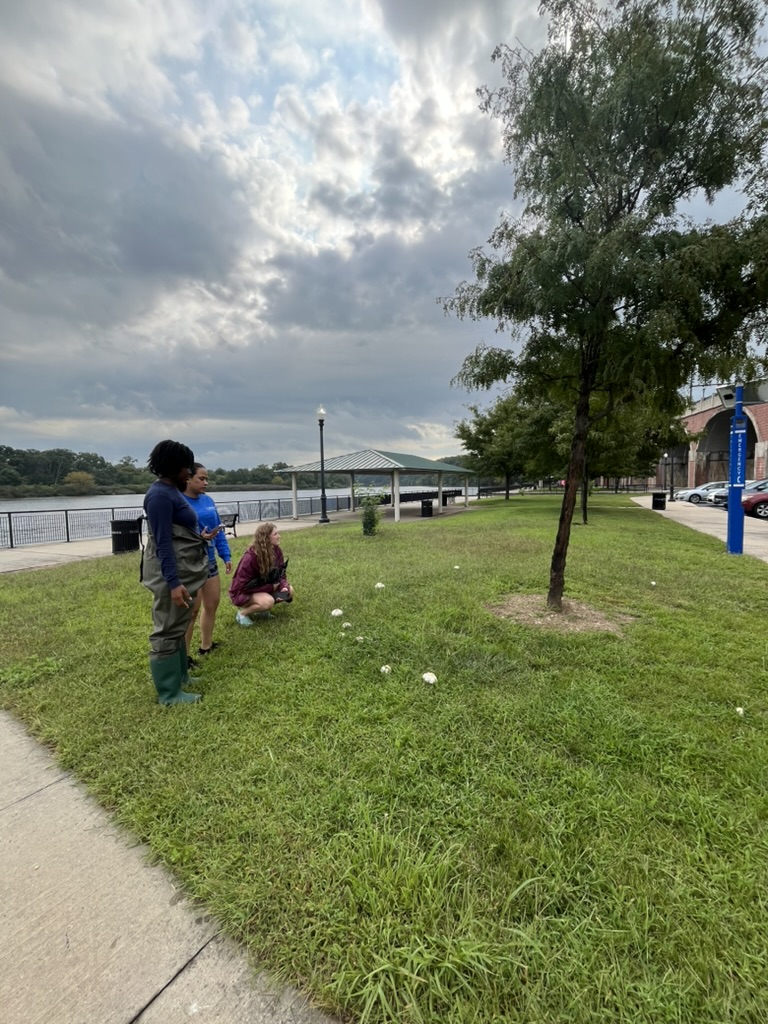
The team was captivated by the mushrooms that sprang up in a circle around a honey locust tree in New Brunswick. Photo by Olesya Nabakova.
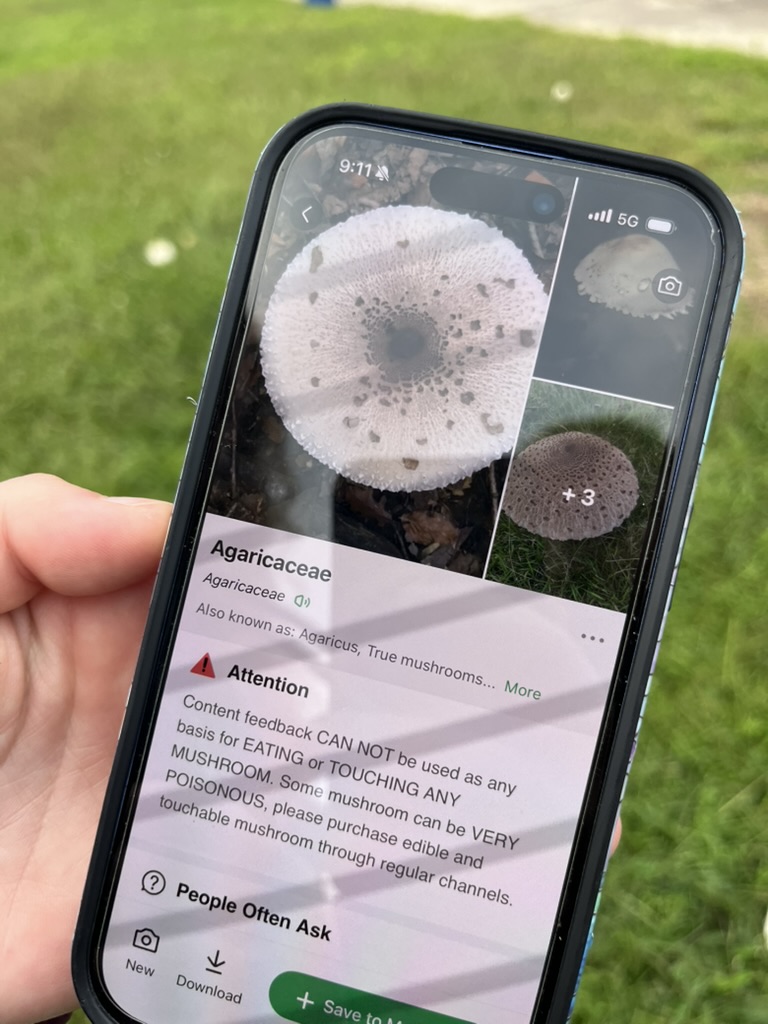
Many ‘organism identification’ apps will not try to identify mushrooms because it is too easy to mistake poisonous mushrooms with edible mushrooms.
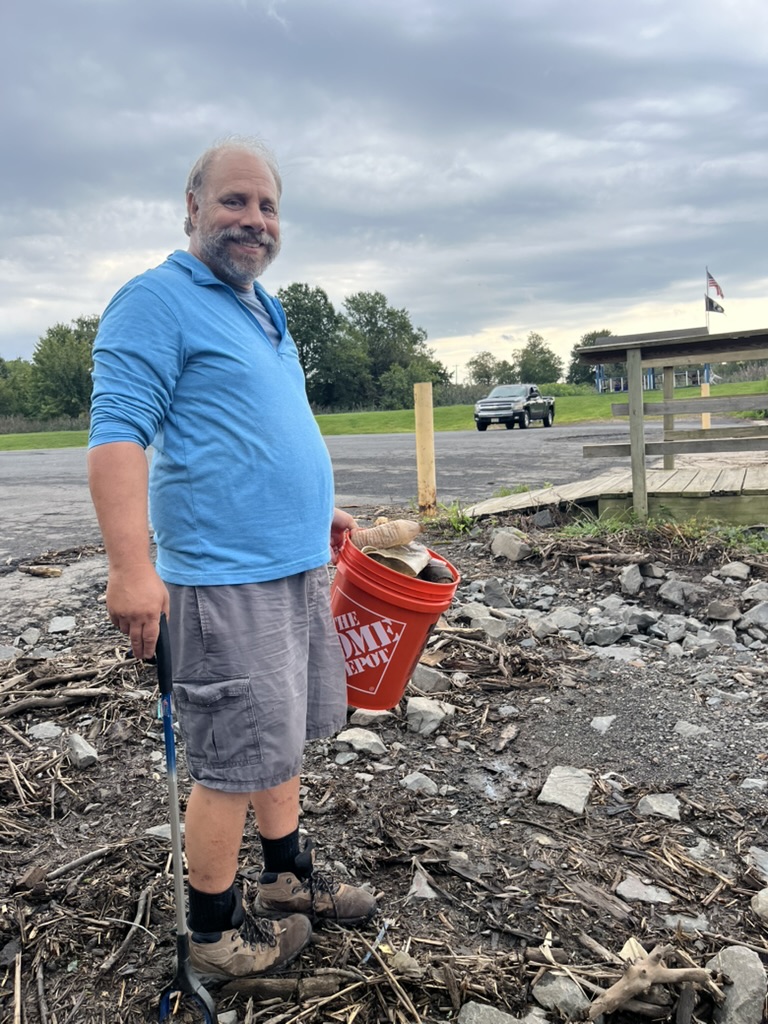
Mike has become the relentless litter gatherer of our group. Here he sweeps the shore in Edison. The five gallon buckets help us measure how much we have cleaned up. Photo by Olesya Nabokova.
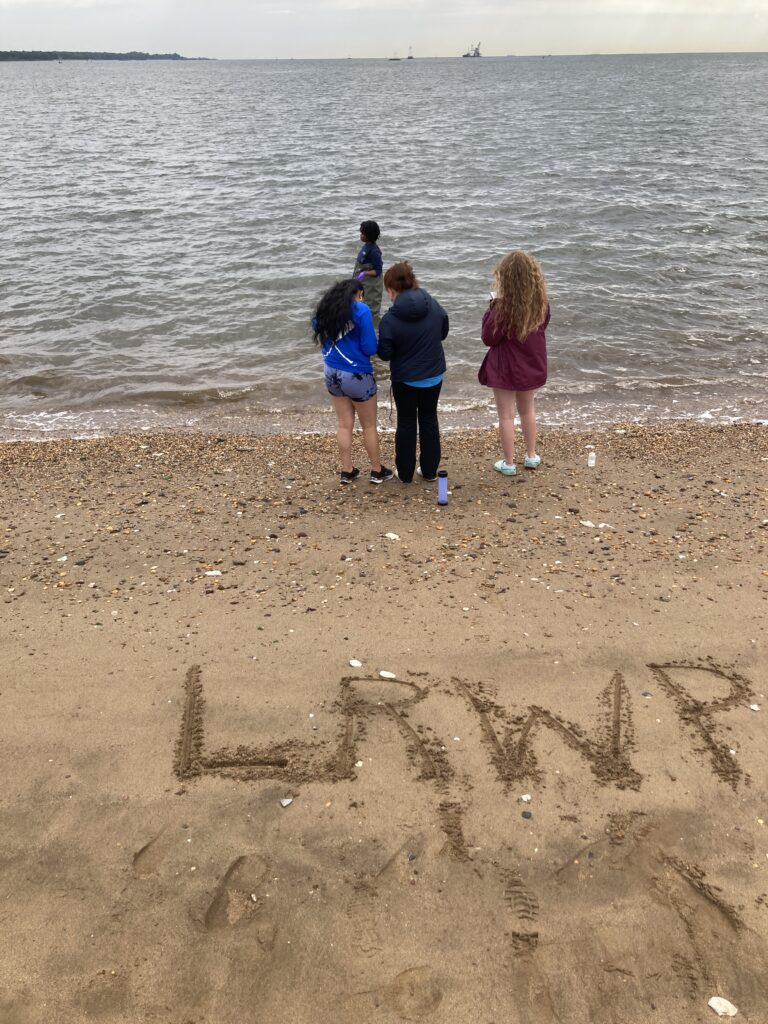
Paula, Endurance, Olesya, and Ashley record the sonde results after ‘tagging’ LRWP in the sands of South Amboy.
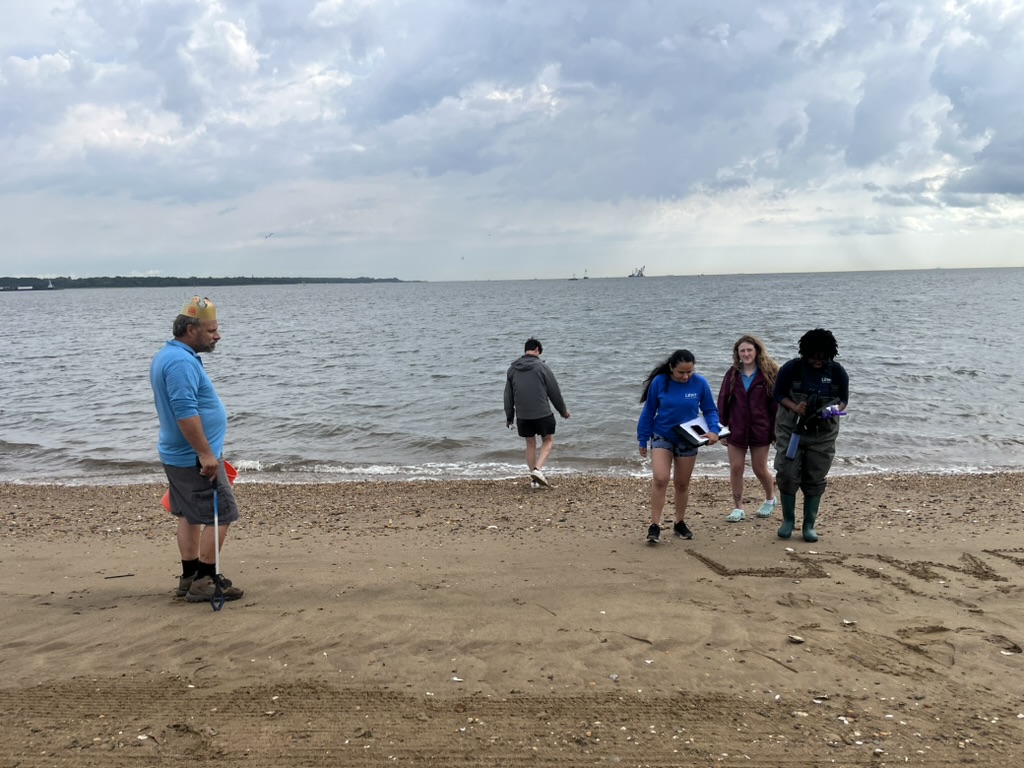
Mike became the ‘Burger King’ of South Amboy after finding a paper crown in the parking lot. A fact that regularly amazes the team is how many people leave their litter behind.Photo by Olesya Nabokova.
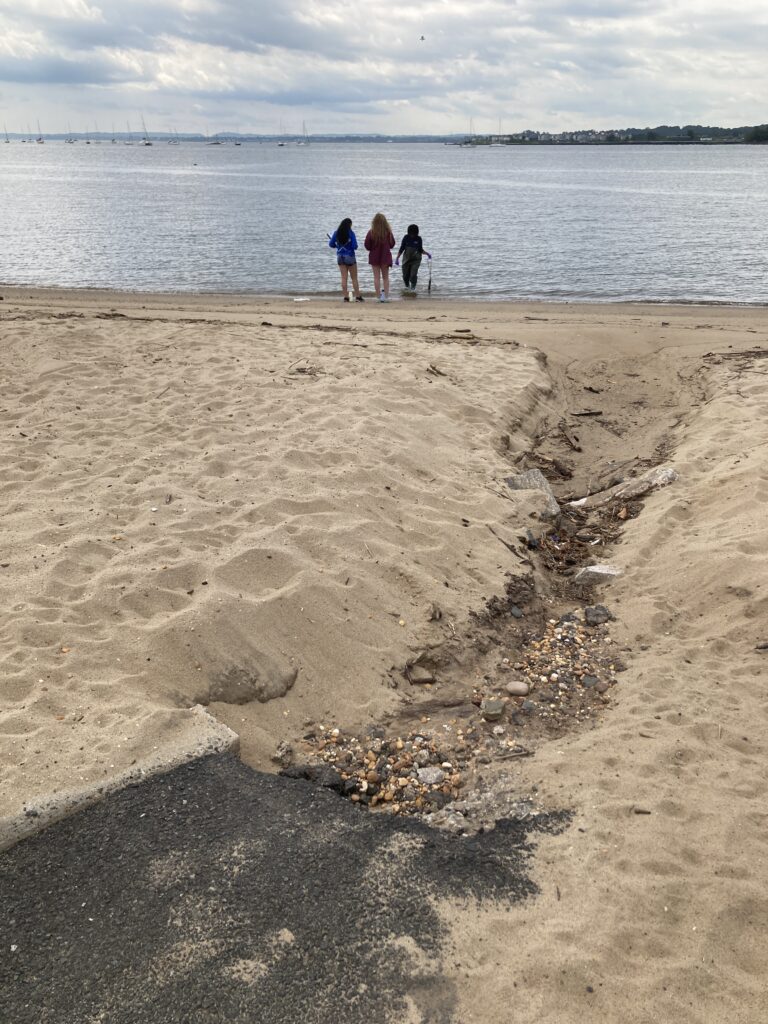
Runoff from the boat ramp in Perth Amboy is eroding the beach and exposing a gravel subsurface, as well as buried baby wipes and sanitary products from the nearby combined sewer outfall.
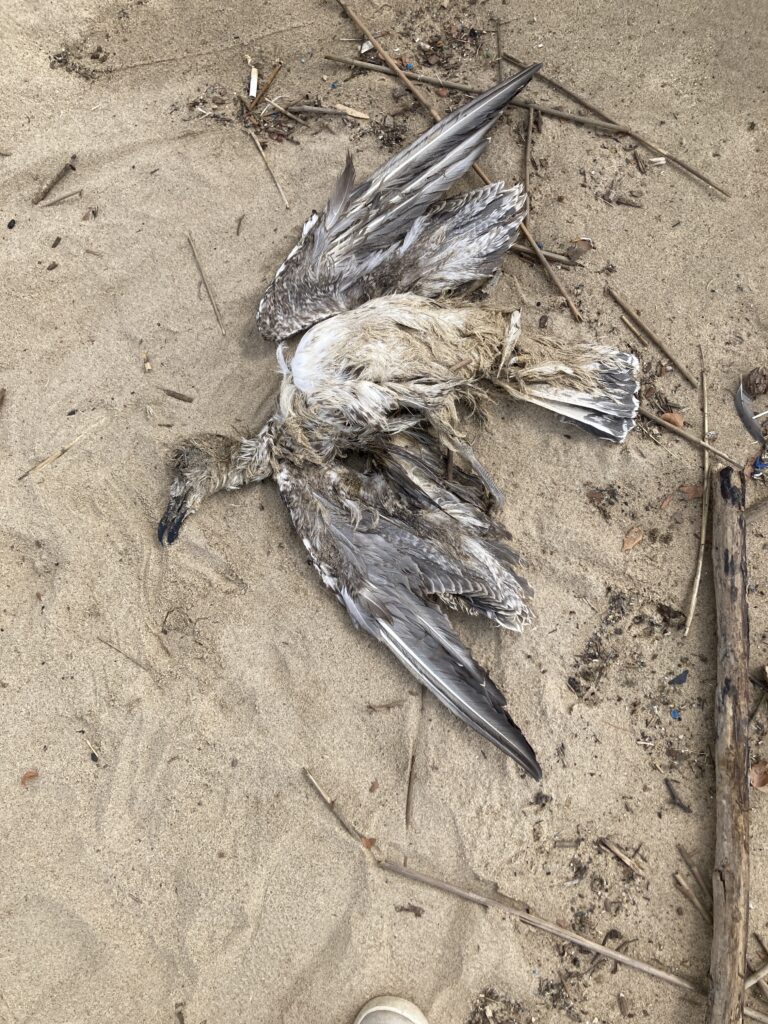
A dead juvenile seagull on the beach in Perth Amboy.
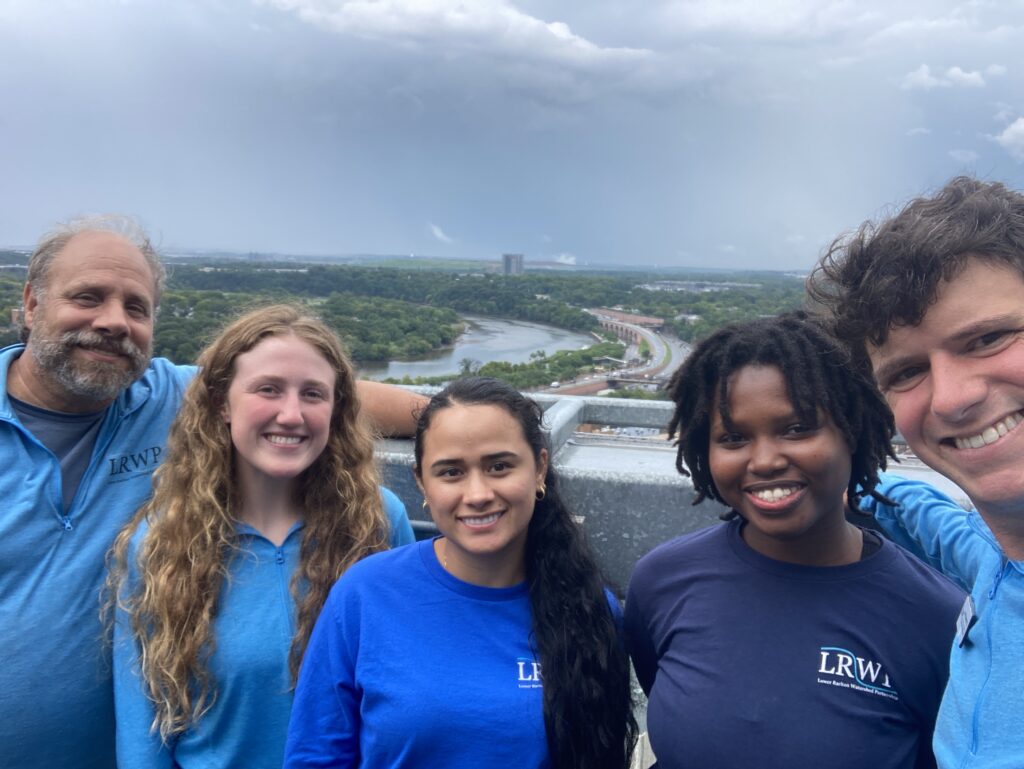
After the water monitoring session, Mike, Ashley, Paula, Endurance and John said ‘farewell’ to August by viewing the Raritan River from downtown New Brunswick.
We also wish Ashley and Endurance a spectacular ‘good luck’ as they head into another semester at Rutgers! They contributed tremendously to the success of this year’s pathogens monitoring program, and we can’t wait to see what they do next! The Lower Raritan Watershed Partnership is so thankful to have such tremendous and dedicated group!
The third pathogen monitoring session of the month took place on Thursday, August 20th. Each week during the summer, from May to October, the Lower Raritan Watershed Partnership and Rutgers Cooperative Extension of Middlesex County run a volunteer-based monitoring program along the Raritan River. We collect water quality samples at six non-bathing public access beach sites, provide our samples to the Interstate Environmental Commission for analysis in their laboratory, and report the results to the public. Our mission is to share this data with the community and partners to ensure the safe use of the Raritan River for all.
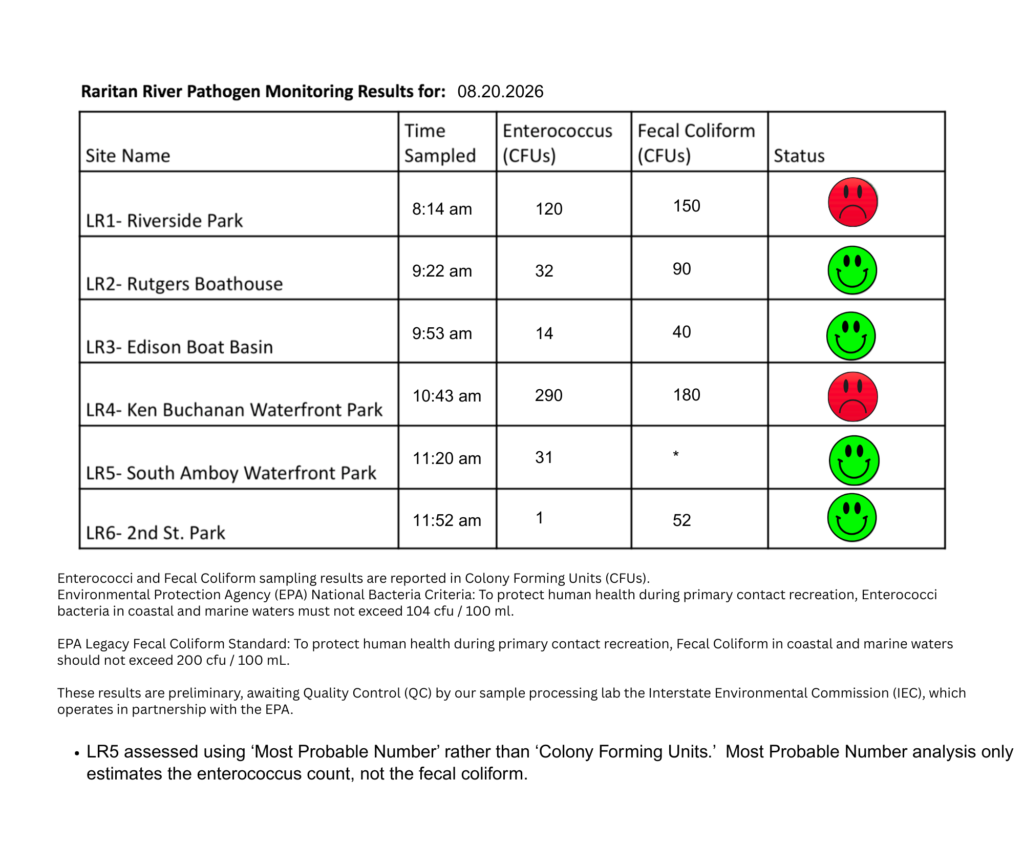
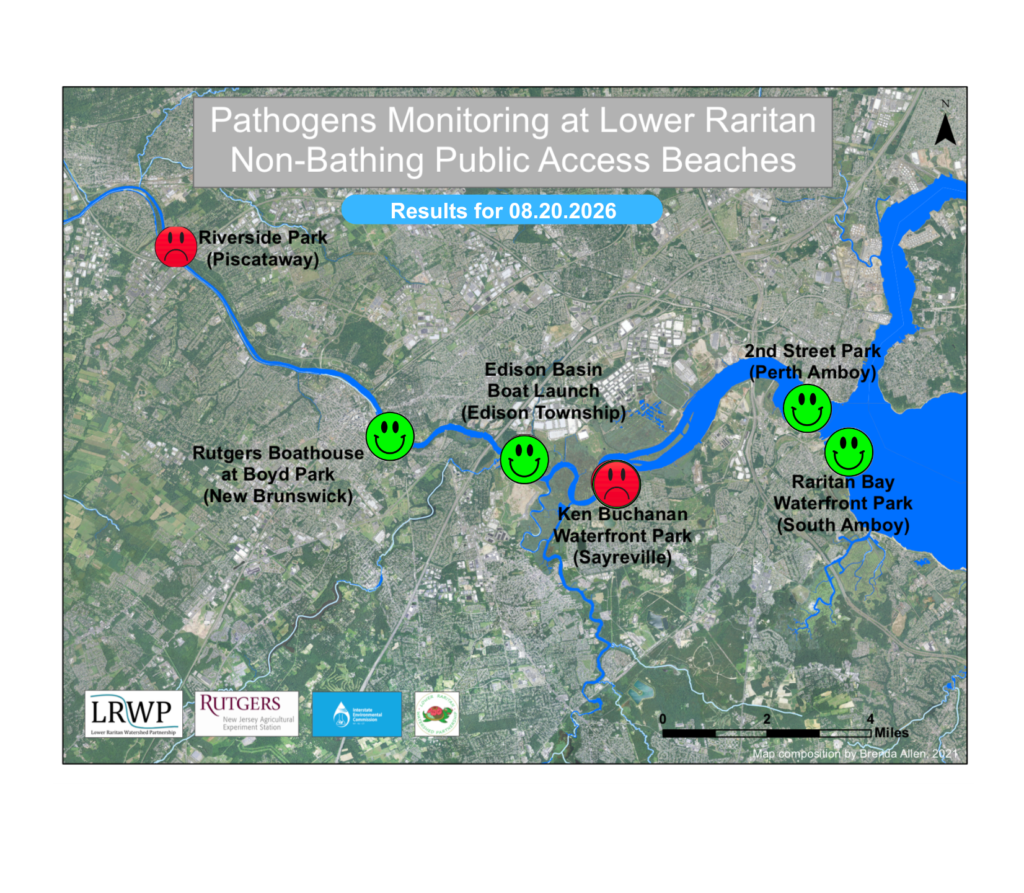
Our lab results for water quality samples taken on Thursday, August 20th, 2026, show Enterococcus bacteria levels exceeding the EPA federal water quality standard of 104 cfu/100mL at two of our regular monitoring sites this week. The problem sites are indicated by the red frown on the map and chart and include Riverside Park (Piscataway) and Ken Buchanan Waterfront Park (Sayreville).
Green smiles on the chart and map indicate the sites with bacteria levels safe for recreation and include the following: Rutgers Boat House (New Brunswick), Edison Boat Basin (Edison), 2nd Street Park (Perth Amboy), and South Amboy Waterfront Park.
A note of caution about Edison and New Brunswick: a strong thunderstorm swept through the area after we completed pathogens monitoring on Thursday, and this often flushes enterococci and fecal into the river. Thus, if we had tested on Friday instead of Thursday, we suspect these sites may have failed to meet the EPA standard for primary contact.
Pathogens/Enterococci levels are used as indicators of the possible presence of disease-causing bacteria in recreational waters. Such pathogens may pose health risks to people coming in primary contact with the water (touching) through recreational activities like fishing, kayaking or swimming in a water body. Possible sources of bacteria include Combined Sewer Overflows (CSOs), improperly functioning wastewater treatment plants, stormwater runoff, leaking septic systems, animal carcasses, pet waste, wildlife waste, and runoff from manure storage areas.
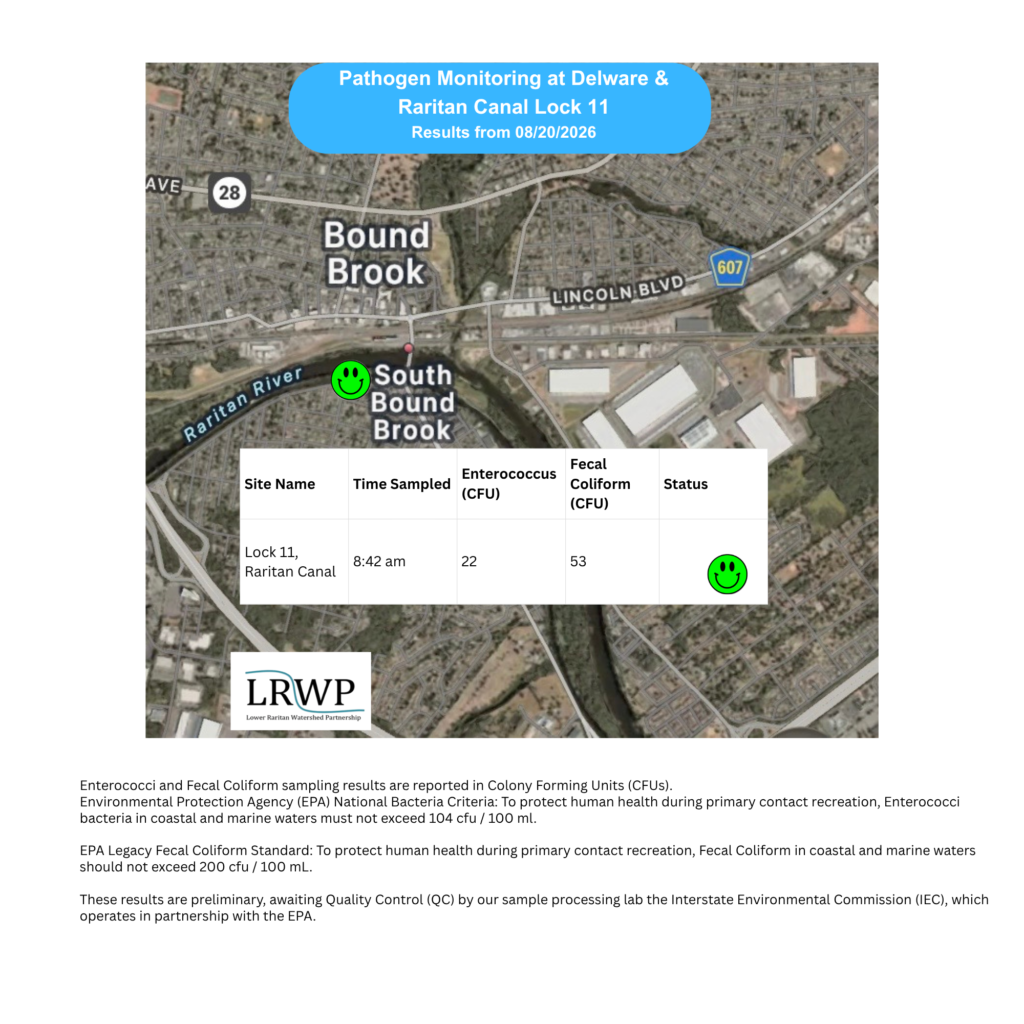
In order to better understand why Riverside Park, Piscataway has been our worst performing site over the past six years, we have started sampling at new sites in the vicinity. On August 20th, we sampled the Raritan Canal Lock 11, South Bound Brook for a fourth time since we started pathogens monitoring this season. The lab analysis produced 22 enterococci cfu per 100mL which is well below the EPA federal water quality standard of 104 cfu/100mL. Again, this site passed the test, as it has every week that we’ve tested it.
Our goal in reporting these results is to give residents a better understanding of the potential health risks related to primary contact during water-based recreation. If you are planning on recreating on the Raritan this weekend, make sure to stay safe and wash up after any activities!
We began with a beautiful, sun shiny day in Piscataway.
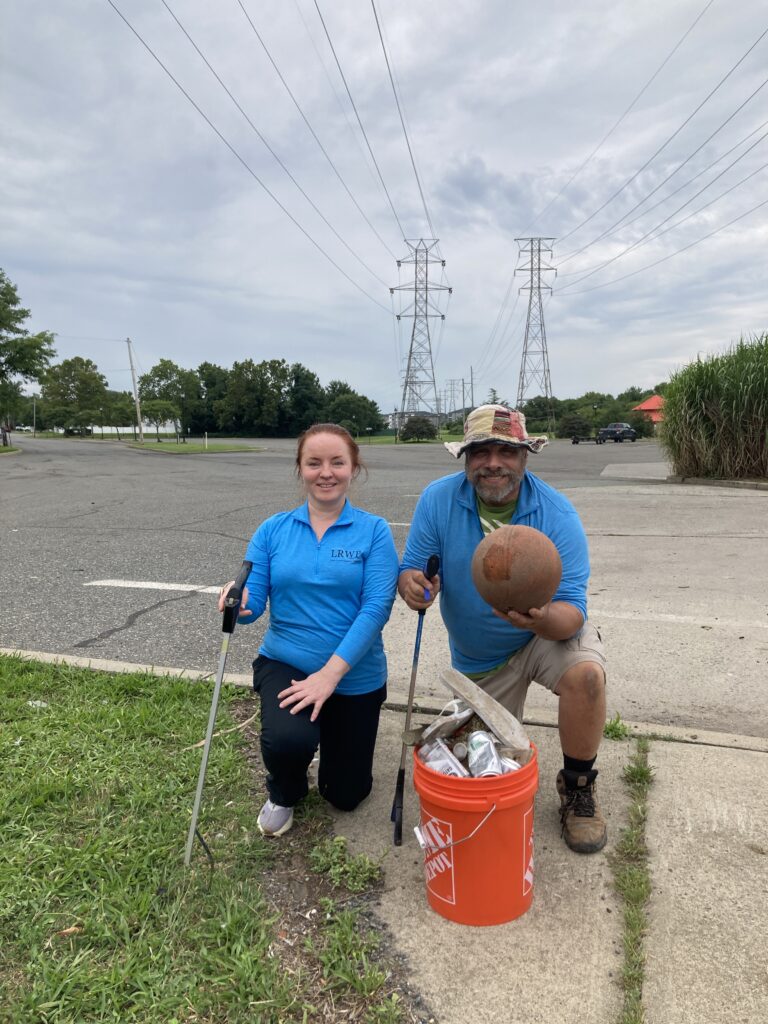
Including the basketball, Olesya and Mike picked up about seven gallons of trash in Sayreville.
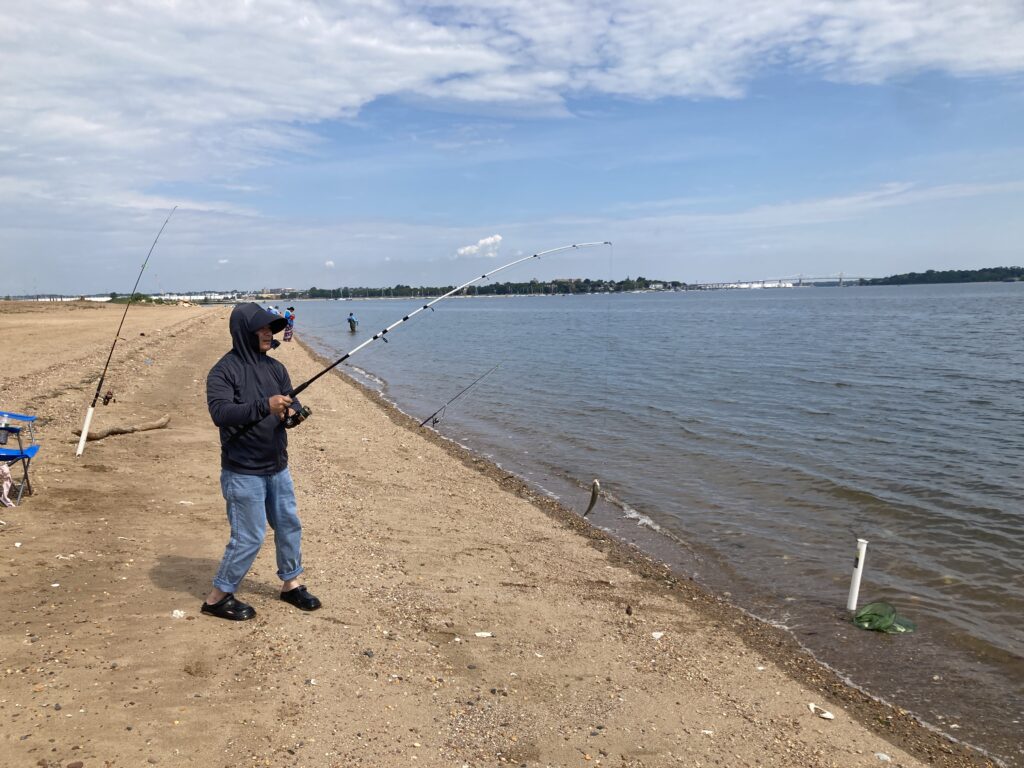
A fisherman in South Amboy reels in a small spot croaker (Leiostomus xanthurus) from Raritan Bay.
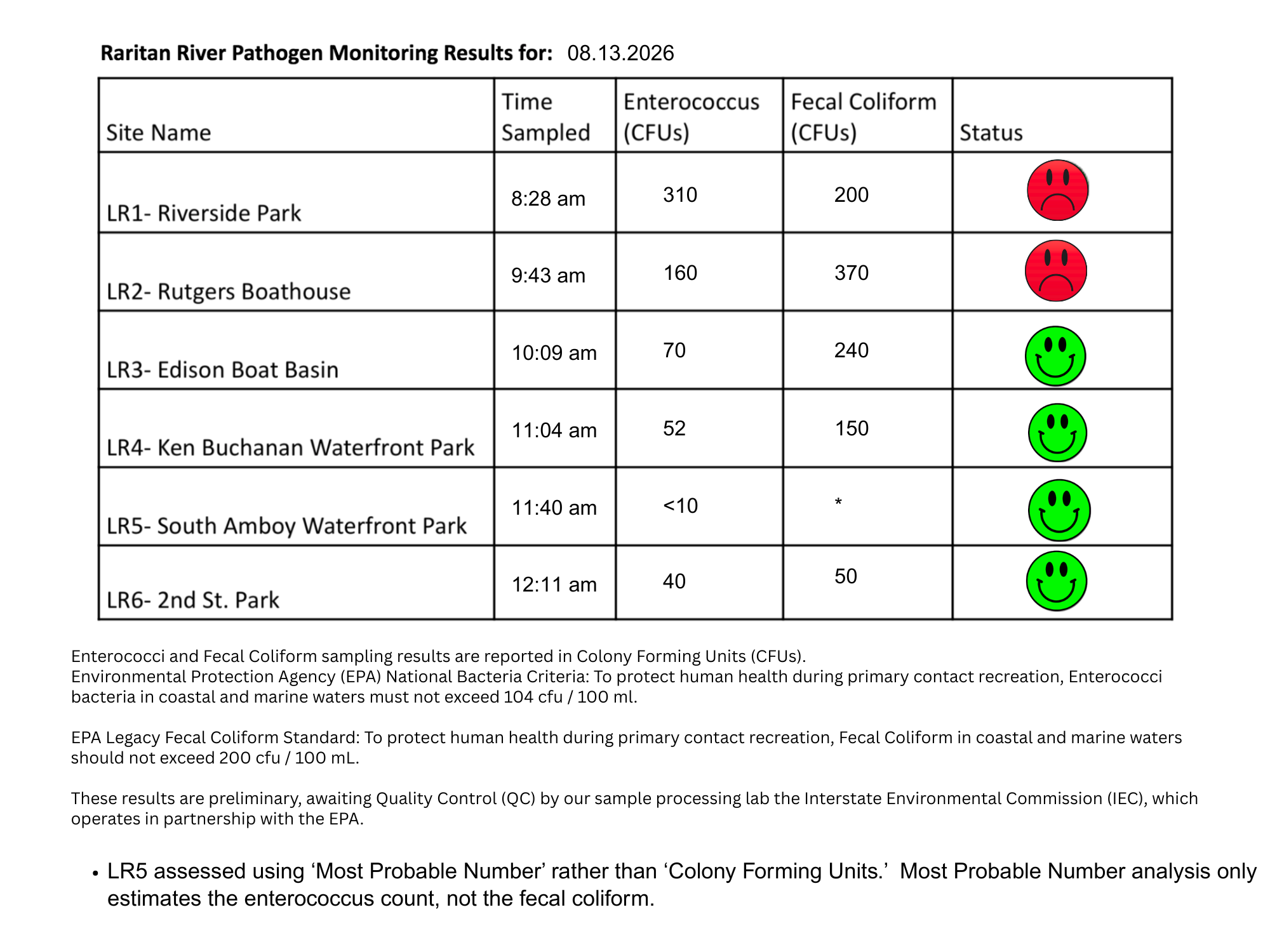
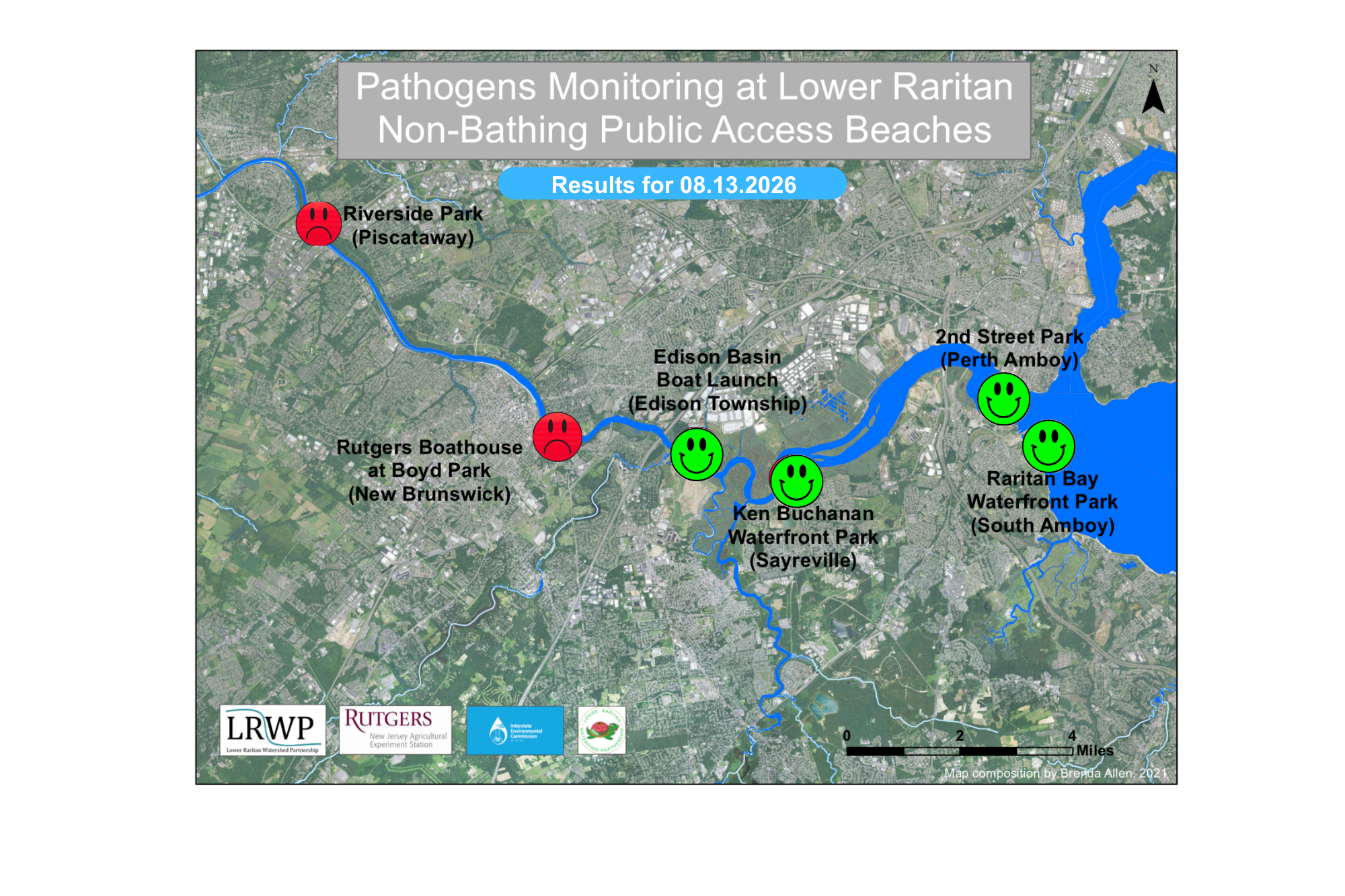
The second pathogen monitoring session of the month took place on Thursday, August 13th. Each week during the summer, from May to October, the Lower Raritan Watershed Partnership and Rutgers Cooperative Extension of Middlesex County run a volunteer-based monitoring program along the Raritan River. We collect water quality samples at six non-bathing public access beach sites, provide our samples to the Interstate Environmental Commission for analysis in their laboratory, and report the results to the public. Our mission is to share this data with the community and partners to ensure the safe use of the Raritan River for all.
Our lab results for water quality samples taken on Thursday, August 13th, 2026, show Enterococcus bacteria levels exceeding the EPA federal water quality standard of 104 cfu/100mL at one of our regular monitoring sites this week. The problem sites are indicated by the red frown on the map and chart and include Riverside Park (Piscataway) and Rutgers Boathouse (New Brunswick).
Green smiles on the chart and map indicate the sites with bacteria levels safe for recreation and include the following: Edison Boat Basin (Edison), Ken Buchanan Waterfront Park (Sayreville), 2nd Street Park (Perth Amboy), and South Amboy Waterfront Park.
A note of caution about Edison Boat Basin: enterococcus better correlates with disease causing bacteria, but the fecal coliform count in Perth Amboy was well above the EPA legacy standard of 200 colony-forming per milliliter.
Pathogens/Enterococci levels are used as indicators of the possible presence of disease-causing bacteria in recreational waters. Such pathogens may pose health risks to people coming in primary contact with the water (touching) through recreational activities like fishing, kayaking or swimming in a water body. Possible sources of bacteria include Combined Sewer Overflows (CSOs), improperly functioning wastewater treatment plants, stormwater runoff, leaking septic systems, animal carcasses, pet waste, wildlife waste, and runoff from manure storage areas.
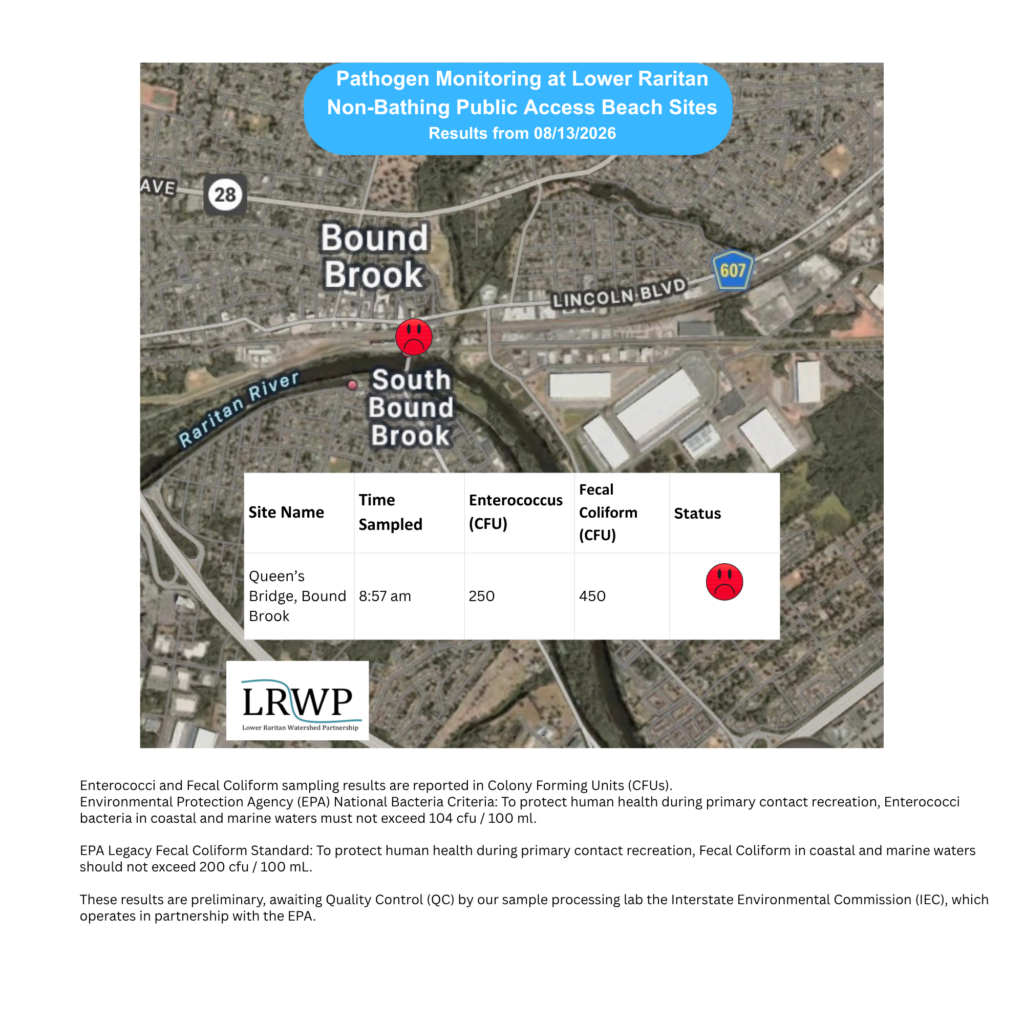
In order to better understand why Riverside Park, Piscataway has been our worst performing site over the past six years, we have started sampling at new sites in the vicinity . On August 13th, we sampled the Raritan River at Queen’s Bridge, Bound Brook for a fourth time since we started pathogens monitoring this season. The lab analysis produced 250 enterococci cfu per 100mL which is well above the EPA federal water quality standard of 104 cfu/100mL. Again, this site failed the test, as it has every week that we’ve tested it.
Our goal in reporting these results is to give residents a better understanding of the potential health risks related to primary contact during water-based recreation. If you are planning on recreating on the Raritan this weekend, make sure to stay safe and wash up after any activities!
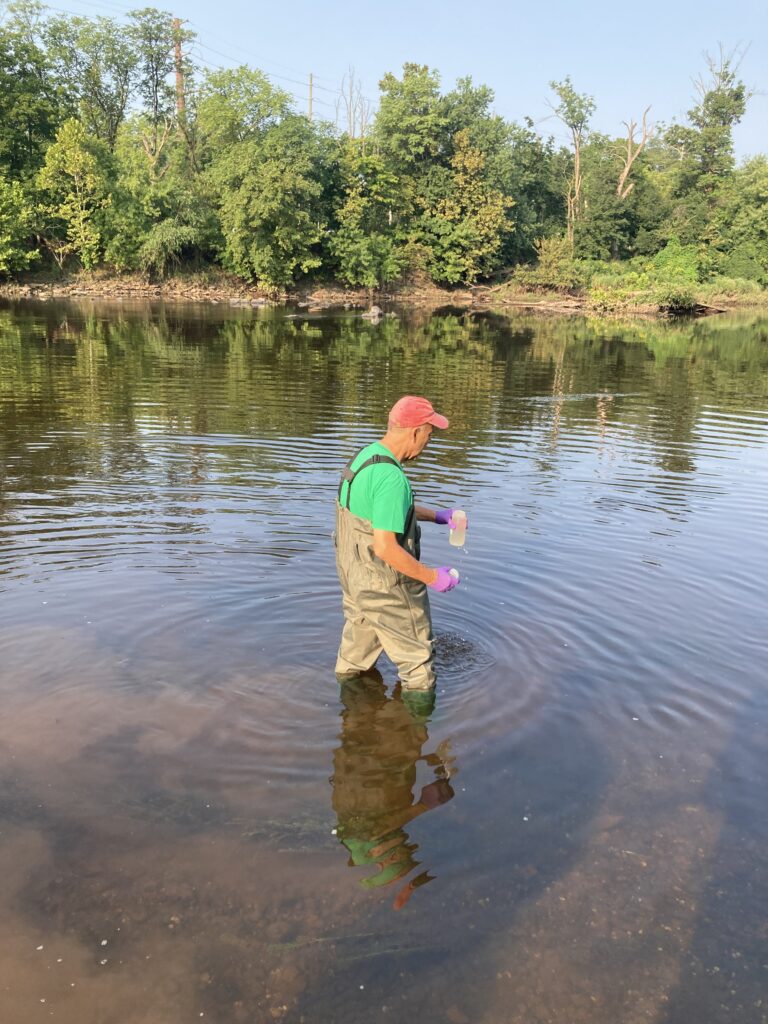
Art gathers a sample at Riverside Park.
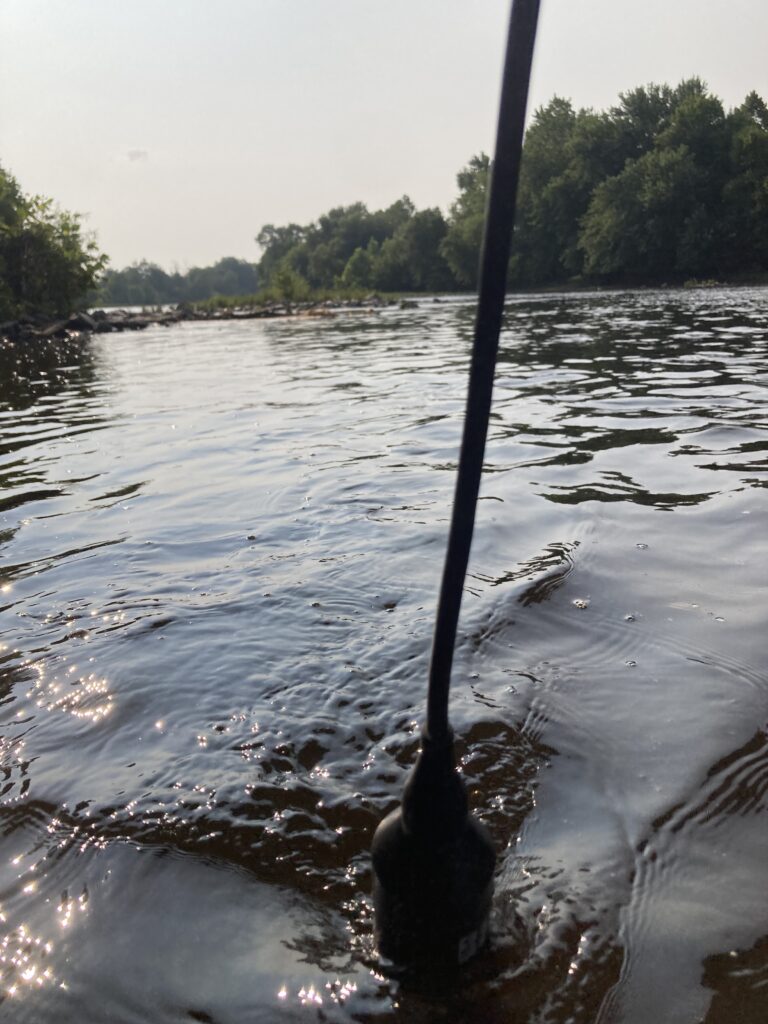
The sonde plunges into the water at Queen’s Bridge, Bound Brook.
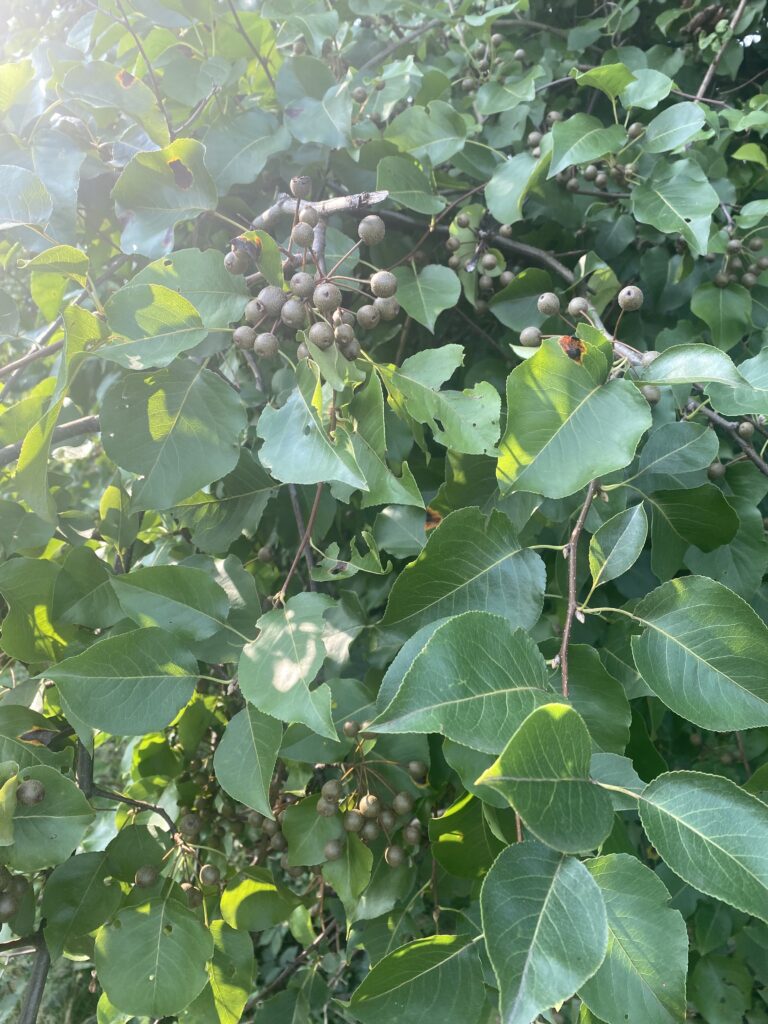
A Bradford pear tree in full fruit. Photo by Mike Orsini.
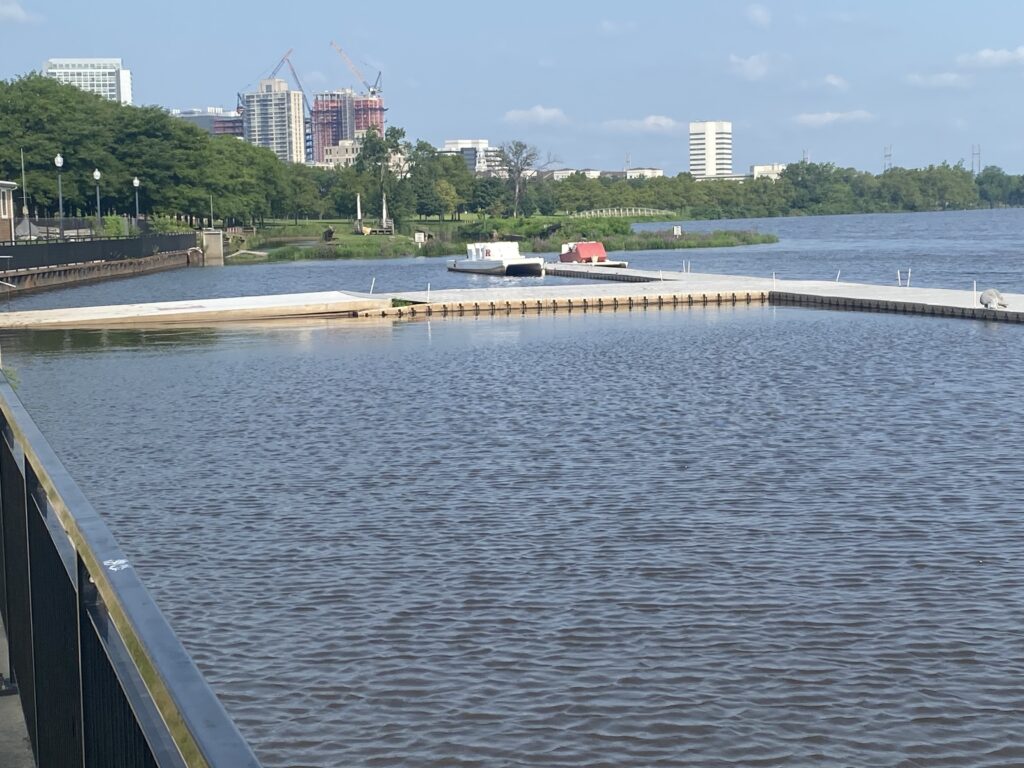
The city of New Brunswick at high tide. To reach this point, the Raritan rose six feet in just six hours. Photo by Mike Orsini.
At high tide, the river begins to pool across the opening of the Rutgers boat dock in New Brunswick. Mike traverses the waterway to deploy the YSI sonde. Photo by J.M. Meyer.
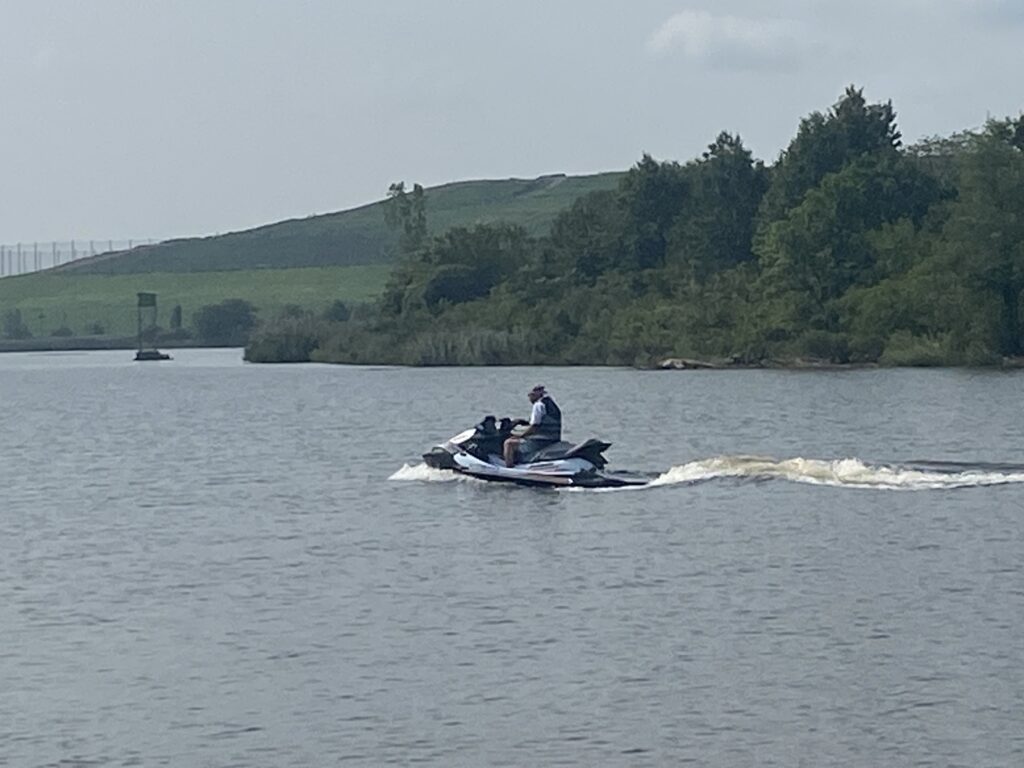
A jet skier on the river near Edison Boat Basin. The Middlesex County landfill rises in the background. Photo by Mike Orsini.
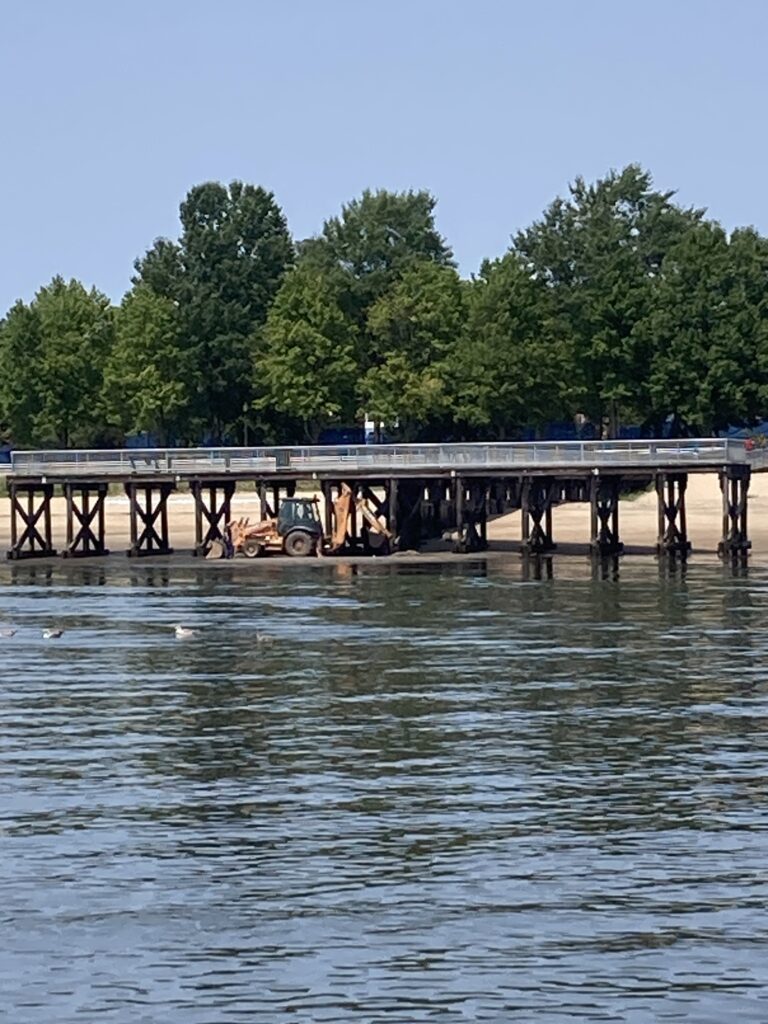
The day before sampling, we saw a backhoe dig sediment out of a Combined Sewer Outfall in Perth Amboy. Without this constant maintenance, the sewage and stormwater in Perth Amboy overflow into 2nd street park.
By Endurance Laryea, LRWP Summer Research Intern and J.M. Meyer.
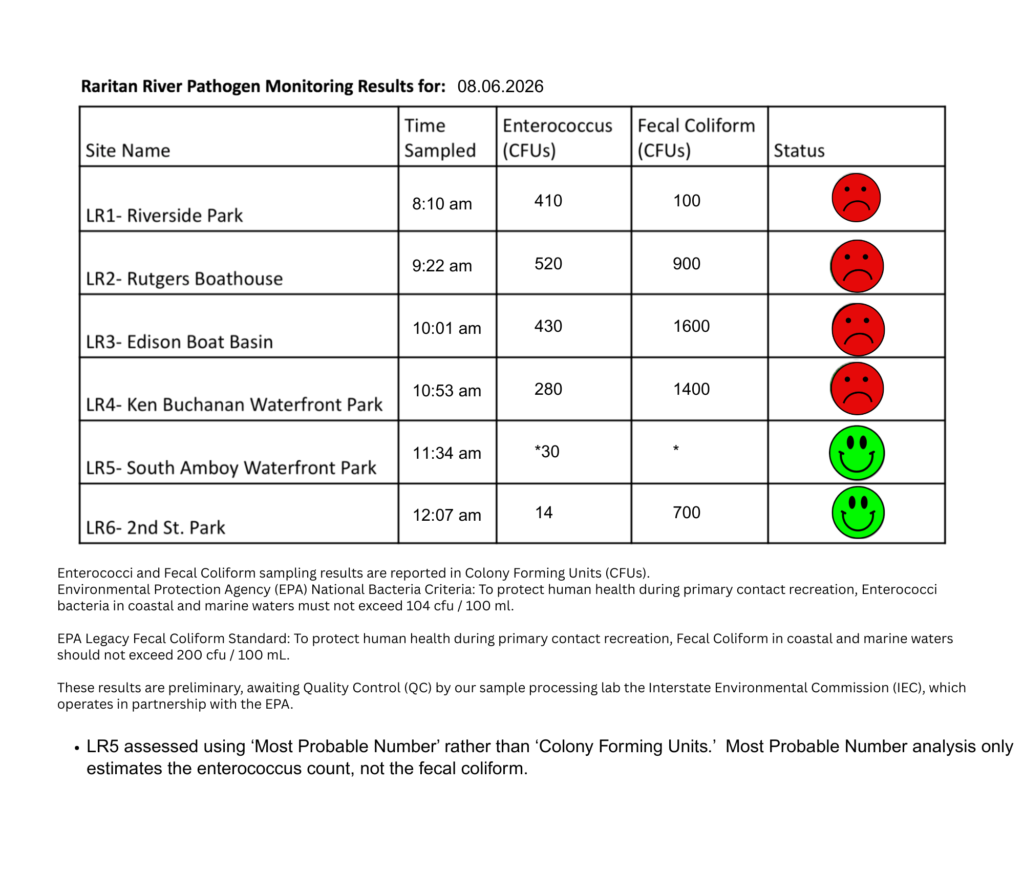
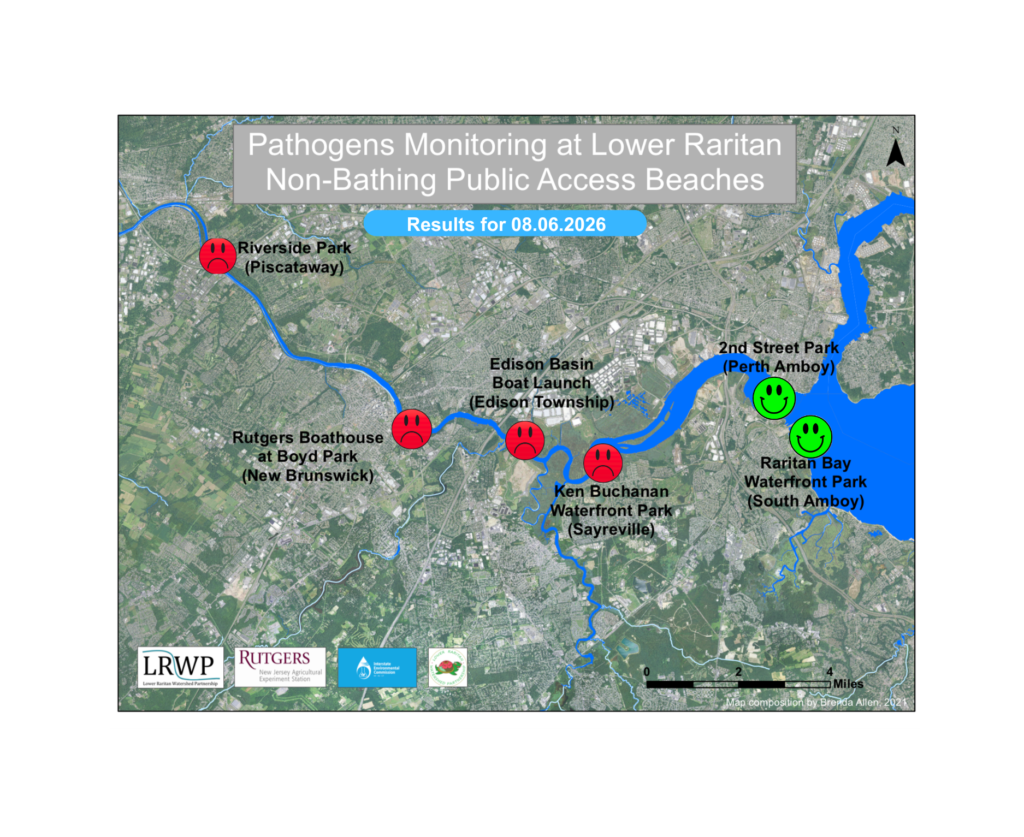
The first pathogen monitoring session of the month took place on Thursday, August 6th. Each week during the summer, from May to October, the Lower Raritan Watershed Partnership and Rutgers Cooperative Extension of Middlesex County run a volunteer-based monitoring program along the Raritan River. We collect water quality samples at six non-bathing public access beach sites, provide our samples to the Interstate Environmental Commission for analysis in their laboratory, and report the results to the public. Our mission is to share this data with the community and partners to ensure the safe use of the Raritan River for all.
Our lab results for water quality samples taken on Thursday, August 6th, 2026, show Enterococcus bacteria levels exceeding the EPA federal water quality standard of 104 cfu/100mL at four of our regular monitoring sites this week. The problem sites are indicated by the red frown on the map and chart and include Riverside Park (Piscataway), Rutgers Boathouse (New Brunswick), Edison Boat Basin (Edison), Ken Buchanan Waterfront Park (Sayreville).
Green smiles on the chart and map indicate the sites with bacteria levels safe for recreation and include the following: 2nd Street Park (Perth Amboy), and South Amboy Waterfront Park.
A note of caution about Perth Amboy: enterococcus better correlates with disease causing bacteria, but the fecal coliform count in Perth Amboy was well above the EPA legacy standard of 200 colony-forming per milliliter.
Pathogens/Enterococci levels are used as indicators of the possible presence of disease-causing bacteria in recreational waters. Such pathogens may pose health risks to people coming in primary contact with the water (touching) through recreational activities like fishing, kayaking or swimming in a water body. Possible sources of bacteria include Combined Sewer Overflows (CSOs), improperly functioning wastewater treatment plants, stormwater runoff, leaking septic systems, animal carcasses, pet waste, wildlife waste, and runoff from manure storage areas.
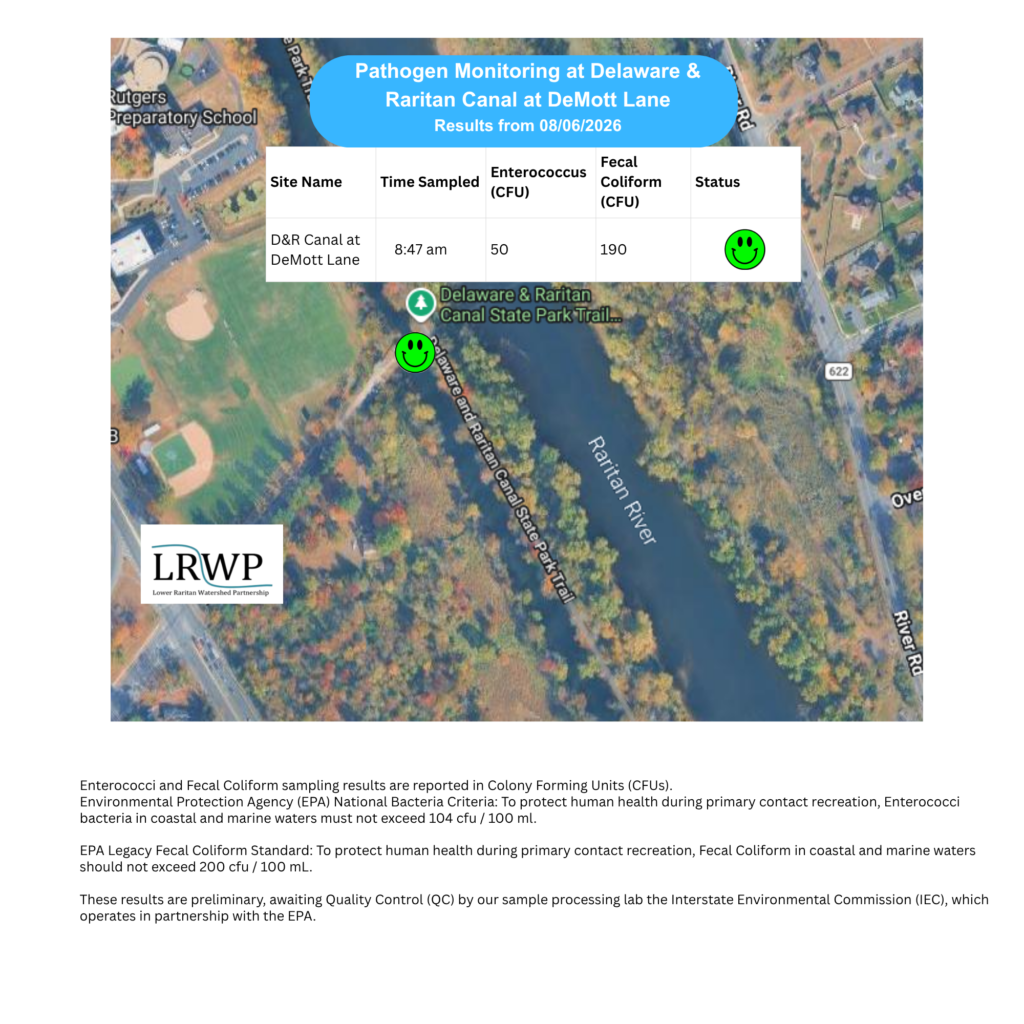
In order to better understand why Riverside Park, Piscataway has been our worst performing site over the past six years, we have started sampling at new sites in the vicinity . On August 6th, we sampled the canal at DeMott Lane for a third time since we started pathogens monitoring this season. The lab analysis produced 50 enterococci cfu per 100mL which passes the EPA federal water quality standard of 104 cfu/100mL. Again, this site passed the test, as it has every week that we’ve tested it.
Our goal in reporting these results is to give residents a better understanding of the potential health risks related to primary contact during water-based recreation. If you are planning on recreating on the Raritan this weekend, make sure to stay safe and wash up after any activities!
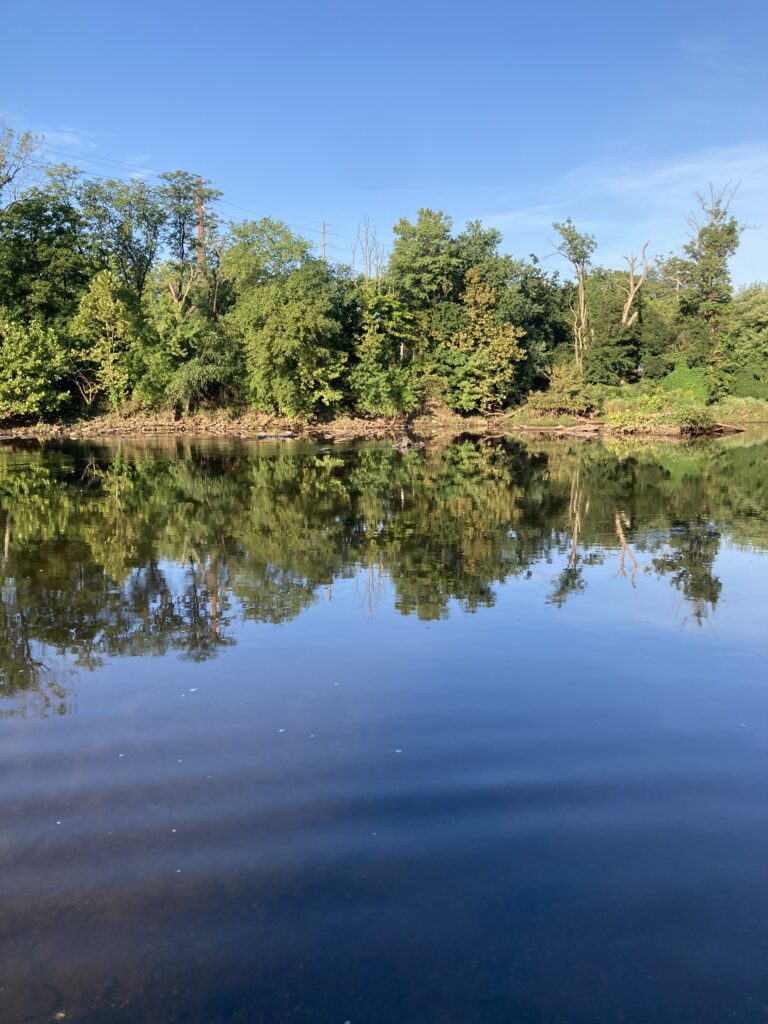
Early morning reflections on the Delaware & Raritan Canal. Photo by Mike Orsini.
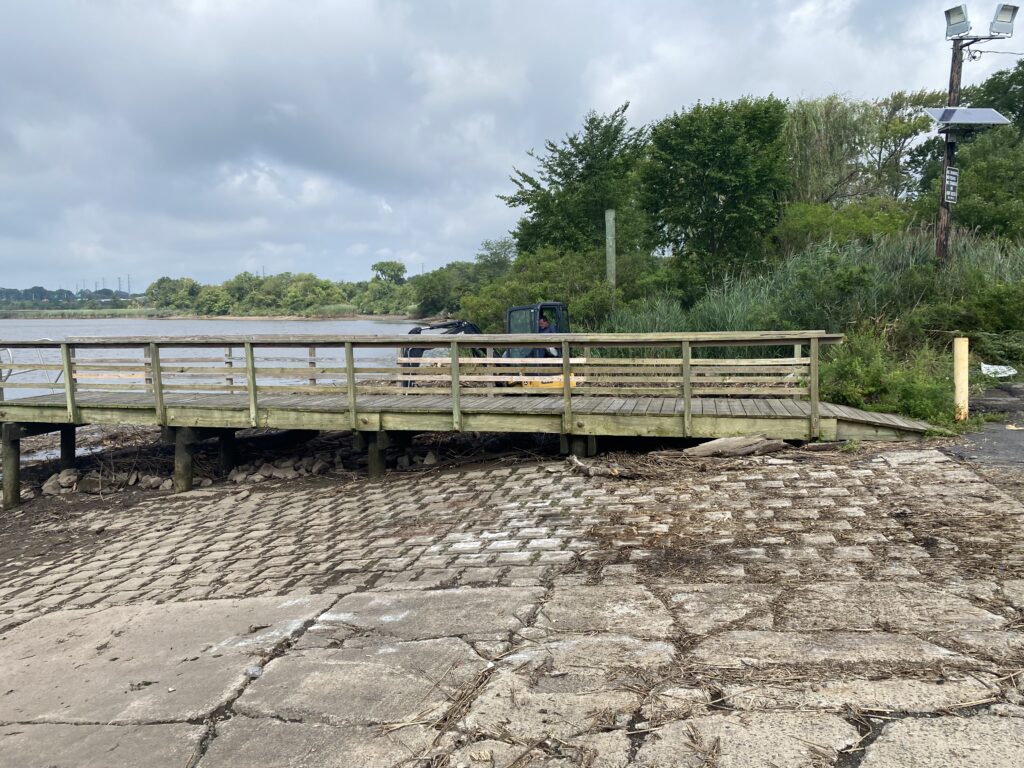
An excavator clears out woody debris lodged against the Edison Boat Basin. Photo by Mike Orsini.