Raritan River Pathogens Results 07.24.2026
By Endurance Laryea, LRWP Summer Research Intern and J.M. Meyer.
The fourth pathogen monitoring session of the month took place on Thursday, July 23rd. Each week during the summer, from May to October, the Lower Raritan Watershed Partnership and Rutgers Cooperative Extension of Middlesex County run a volunteer-based monitoring program along the Raritan River. We collect water quality samples at six non-bathing public access beach sites, provide our samples to the Interstate Environmental Commission for analysis in their laboratory, and report the results to the public. Our mission is to share this data with the community and partners to ensure the safe use of the Raritan River for all.
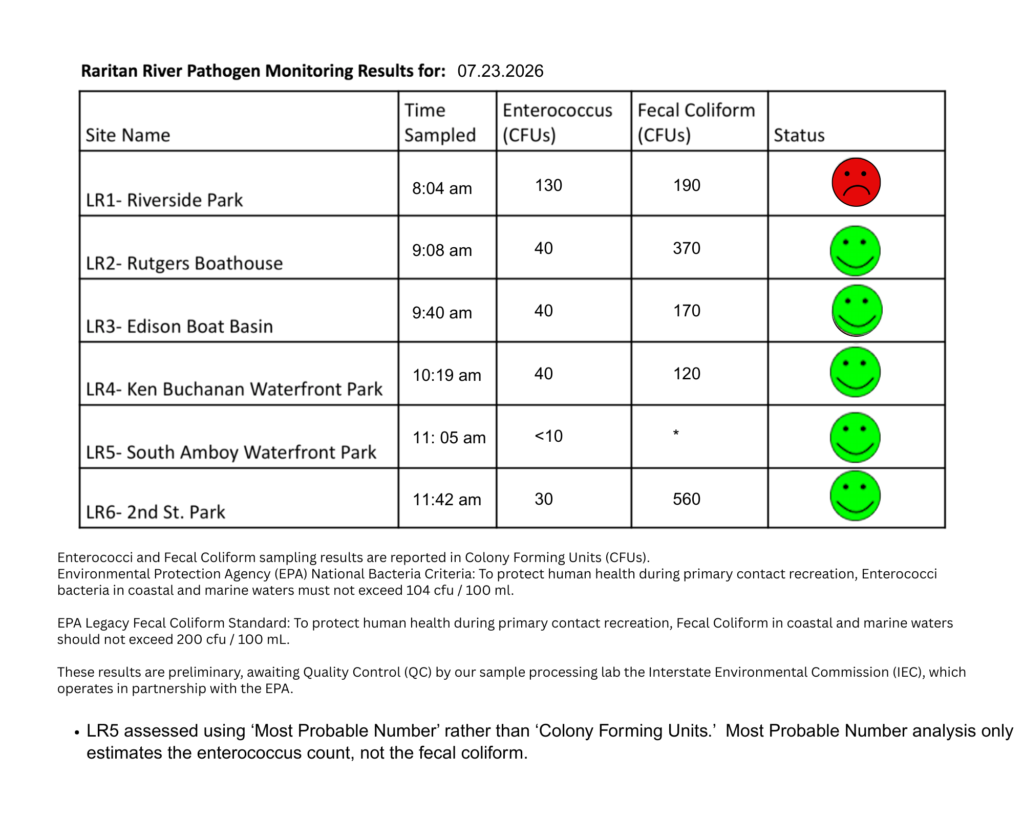
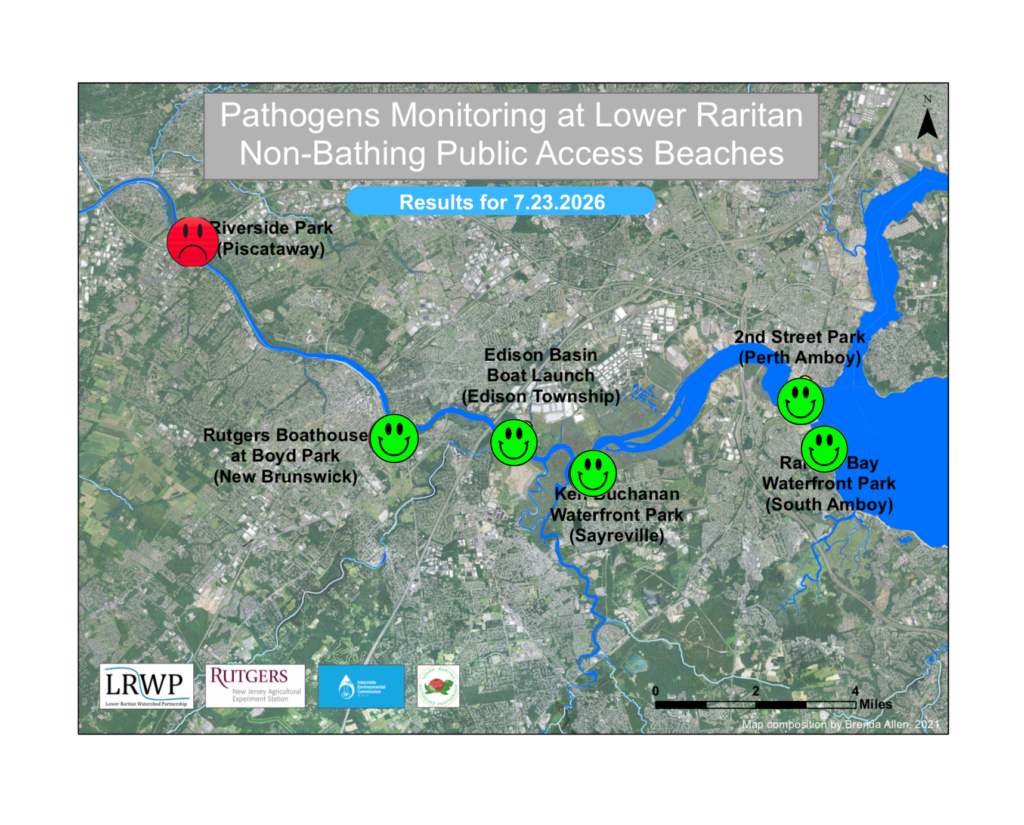
Our lab results for water quality samples taken on Thursday, July 23rd, 2026, show Enterococcus bacteria levels exceeding the EPA federal water quality standard of 104 cfu/100mL at one of our regular monitoring sites this week. The problem sites are indicated by the red frown on the map and chart and include Riverside Park (Piscataway). Green smiles on the chart and map indicate the sites with bacteria levels safe for recreation and include the following: Rutgers Boathouse (New Brunswick), Edison Boat Basin (Edison), Ken Buchanan Waterfront Park (Sayreville), 2nd Street Park (Perth Amboy), and South Amboy Waterfront Park.
Pathogens/Enterococci levels are used as indicators of the possible presence of disease-causing bacteria in recreational waters. Such pathogens may pose health risks to people coming in primary contact with the water (touching) through recreational activities like fishing, kayaking or swimming in a water body. Possible sources of bacteria include Combined Sewer Overflows (CSOs), improperly functioning wastewater treatment plants, stormwater runoff, leaking septic systems, animal carcasses, pet waste, wildlife waste, and runoff from manure storage areas.
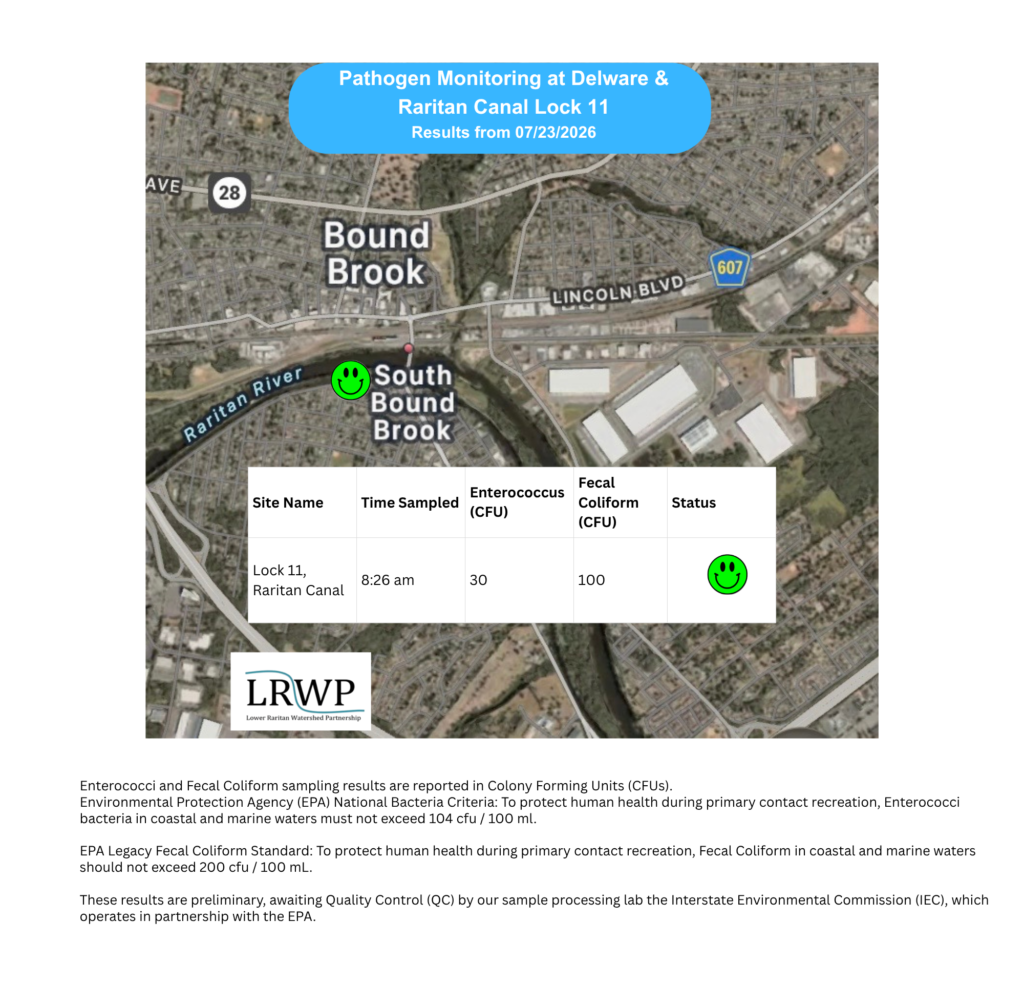
In order to better understand why Riverside Park, Piscataway has been our worst performing site over the past six years, we have started sampling further upstream. On July 23rd, we sampled the canal at Lock 11, South Bound Brook, a third time since we started pathogens monitoring this season. The lab analysis produced 30 enterococci cfu per 100mL which passes the EPA federal water quality standard of 104 cfu/100mL. Again, this site passed the test, as it has every week that we’ve tested it.
Our goal in reporting these results is to give residents a better understanding of the potential health risks related to primary contact during water-based recreation. If you are planning on recreating on the Raritan this weekend, make sure to stay safe and wash up after any activities!
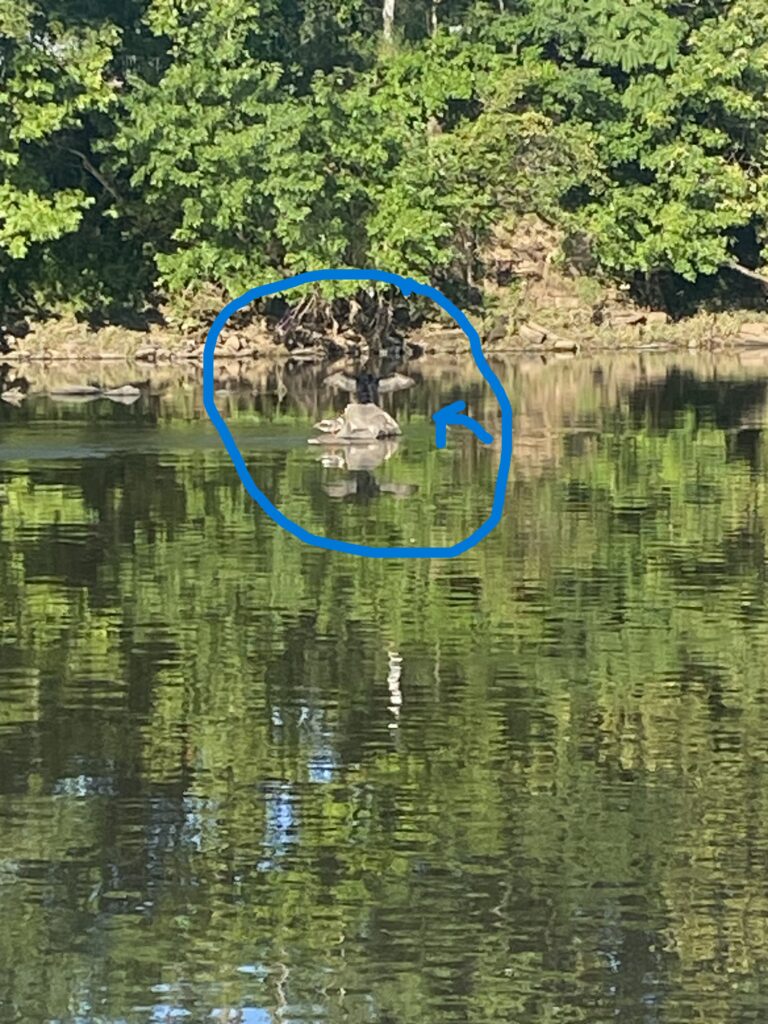
We were greeted by two birds this morning. One with its wings outstretched on a rock in the middle of the river and a smaller bird with orange feet and crest on a smaller rock beside it. Birds may stretch their wings for various reasons like temperature regulation, blood circulation, drying of their feathers or even a territorial sign. Not sure which this one was doing though. From where we stood, we were not able identify what kind of birds they were. Photo by Mike Orsini.
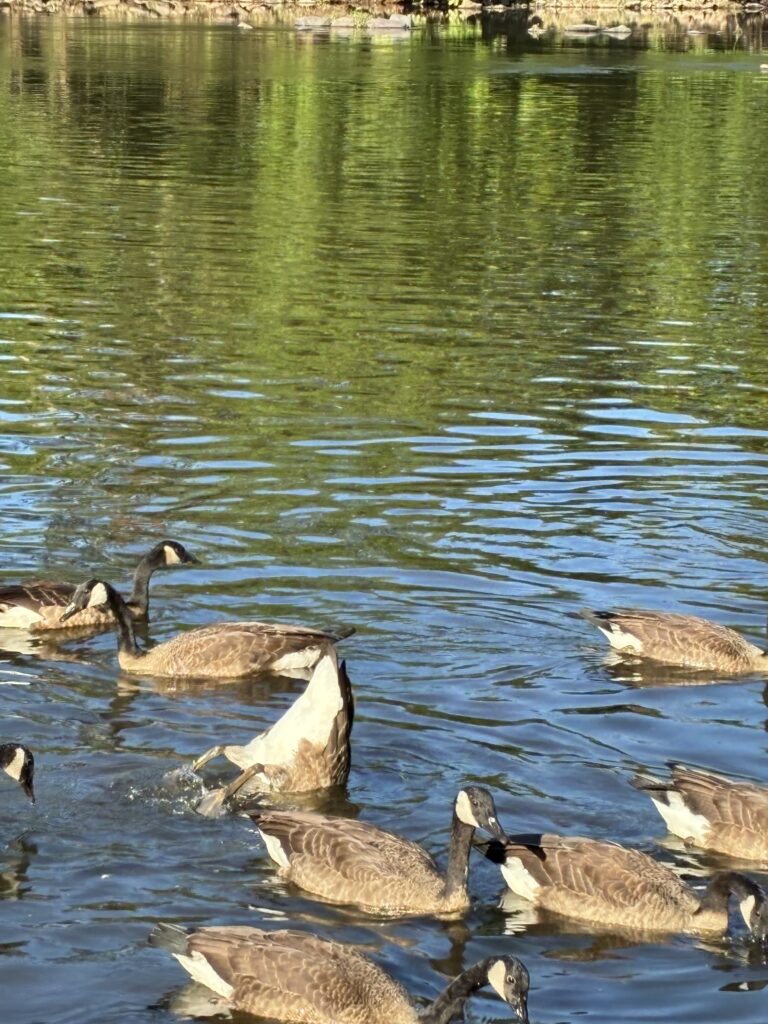
Who knew Canadian geese were into gymnastics? Here is a goose doing a handstand–or in this case, ‘beakstand’–to feed. We did not see them catch any fish, but they fed on some waterweeds while we were there. Photo by Endurance Laryea.
A public notice has been put up at Five Mile Lock, South Bound Brook, New Jersey to warn the community on usage of the D&R canal water. At the moment, there are no fishing or water consumption restrictions, however, there are warnings on the usage of the water for plant irrigation purposes. The canal has been treated with Sonar Genesis, an aquatic herbicide that is sprayed on the surface of the water to impede the photosynthetic processes of water weeds. The purpose of that was to control the growth of Hydrilla in the canal. Hydrilla is an invasive species. As discussed in last week’s post, invasive species are harmful to the ecosystems in which they are non-native hence, the need for management.
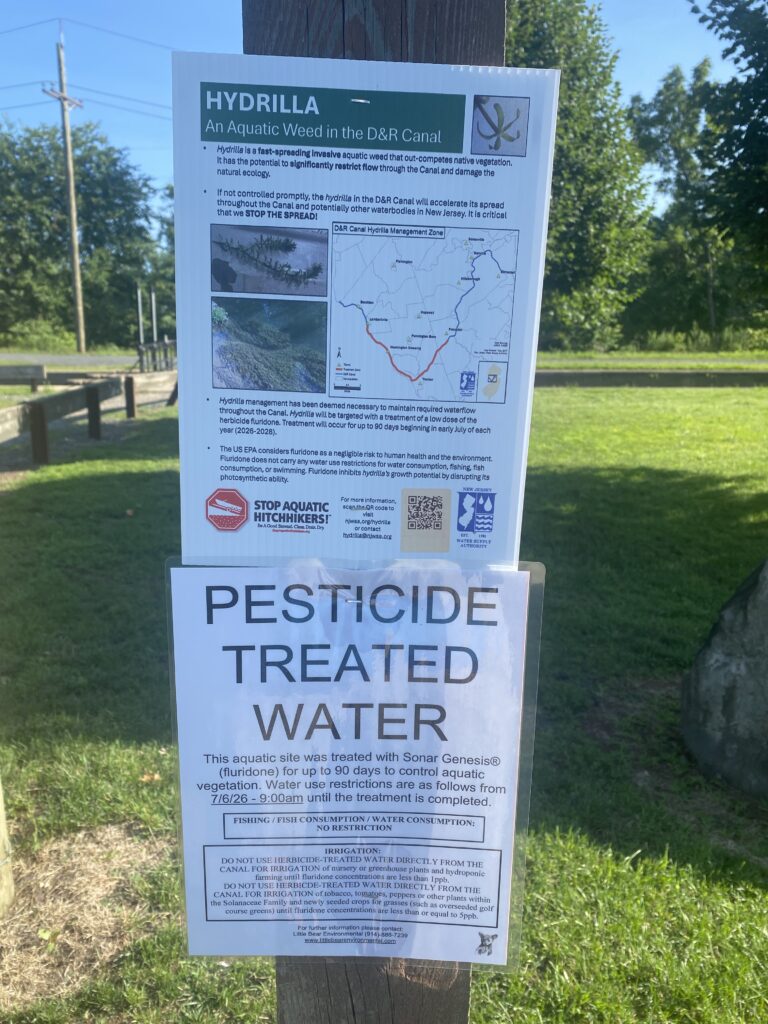
Photo by Mike Orsini.
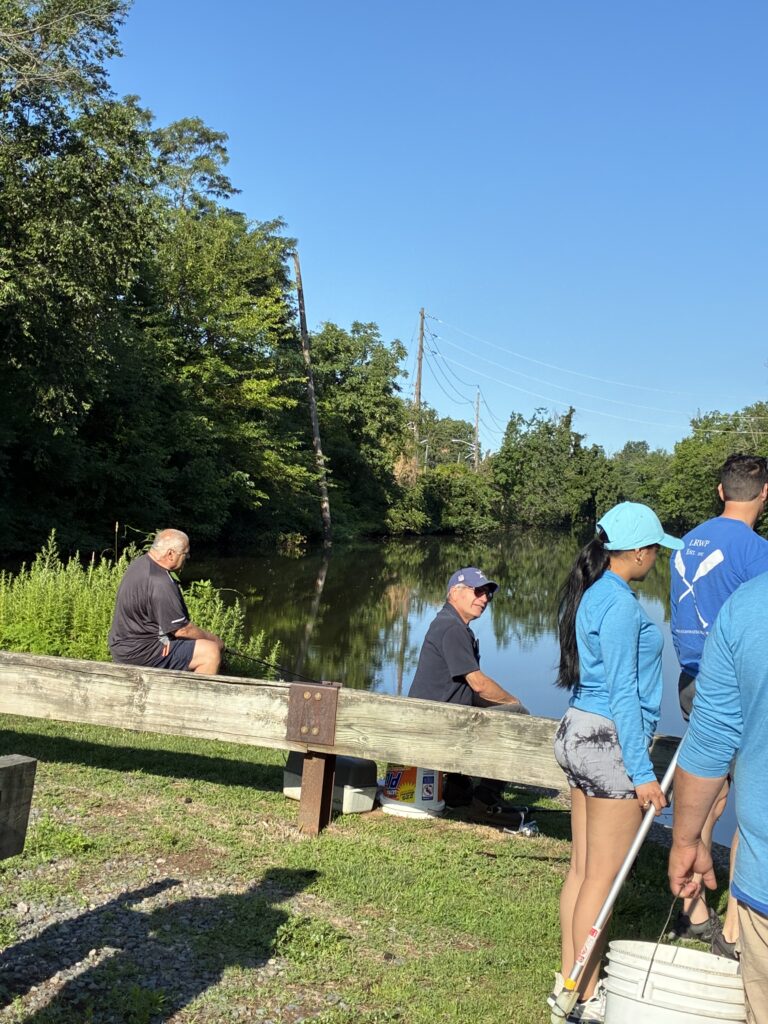
“Where are the fishes”, two fishermen inquired at Five Mile Lock, South Bound Brook
, New Jersey. We have not spotted any fish at this site since we started monitoring this season and this was the first time seeing any fishing activity going on here. Photo by Endurance Laryea.
Photo by Endurance Laryea.
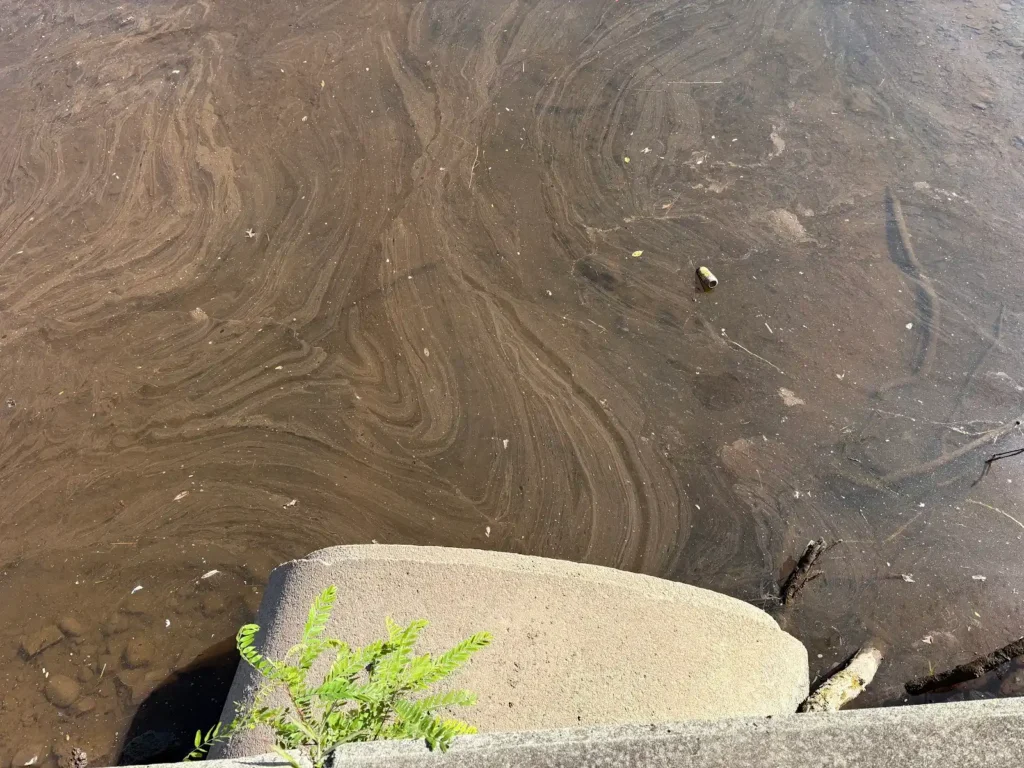
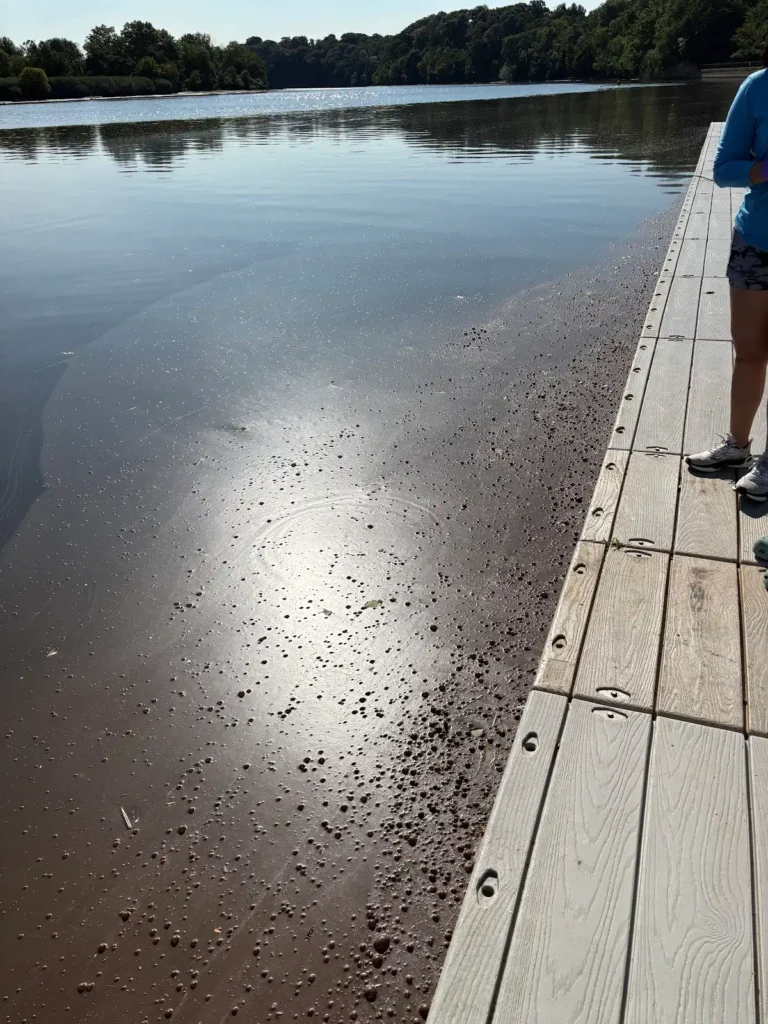
At Rutgers Boat House, New Brunswick, what looked like a biofilm was all over the surface of the water surrounding the dock. It appeared to be coming out of the outfall–possibly, organic matter being washed into the river. Think of a biofilm as a community of bacteria. They form when bacteria attach itself to a surface (In this case, the water surface), produce a glue-like substance called Extracellular Polymeric Substances (EPS) to help them stick to each other and the surface of attachment better, then reproduce forming a slimy layer of film on the surface of attchment. Biofilms can be found in various places, dranaige pipes, water storage tanks, down your kitchen drain, and even your teeth!
Photos by Paula Rubio.
Photo by Ashley Fritz.
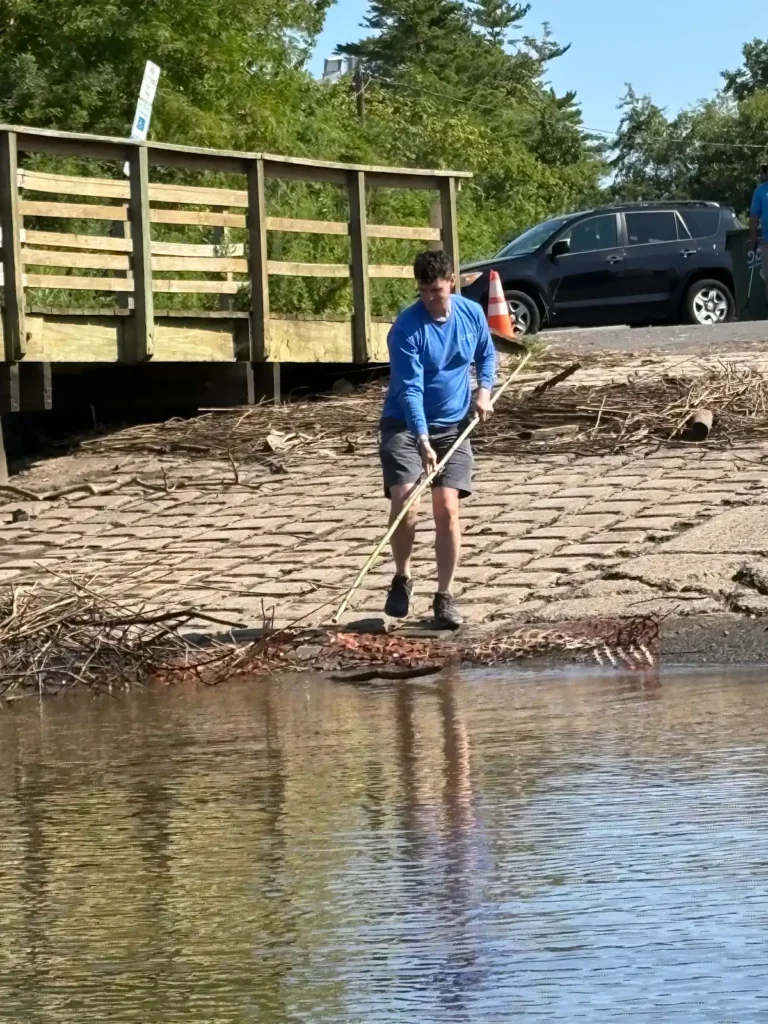
John taking out plastic from the water at Edison Boat Launch. Photo by Ashley Fritz.
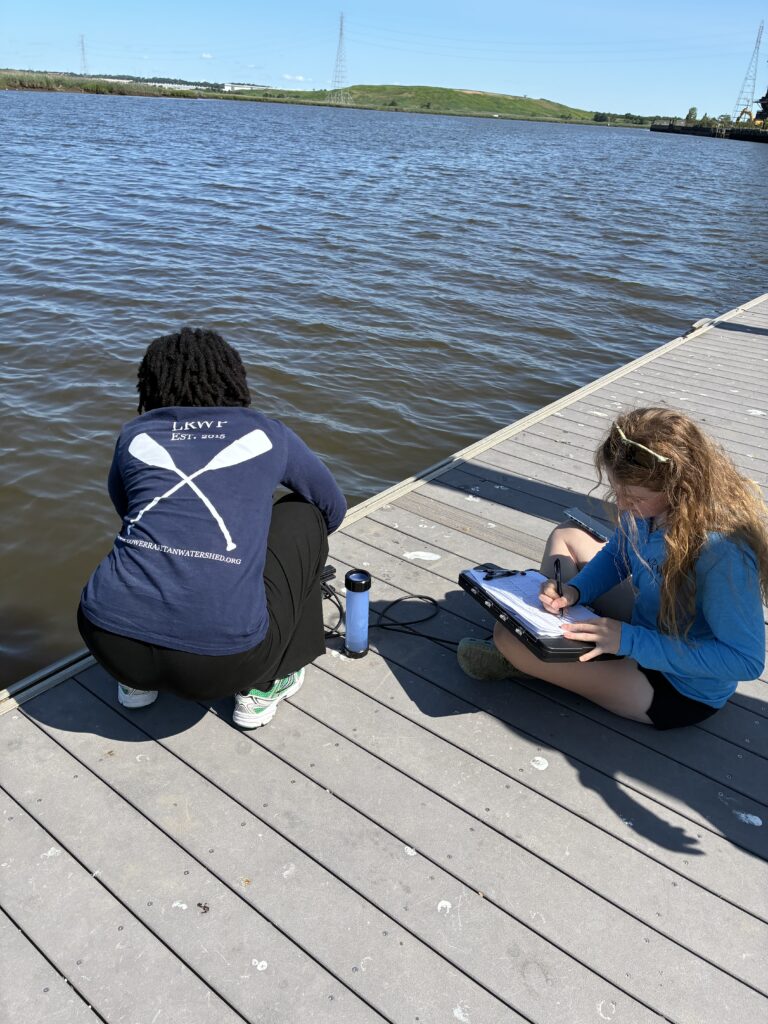
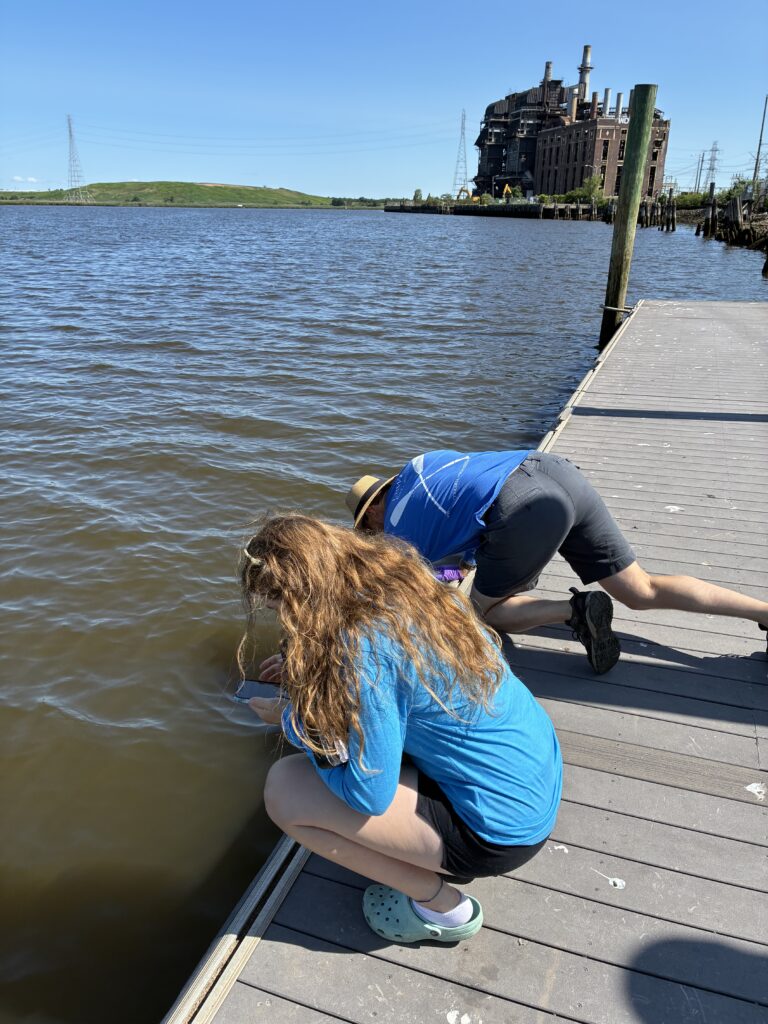
Ashley, John and Endurance on sampling and sonde measurement duties. Photos by Paula Rubio.
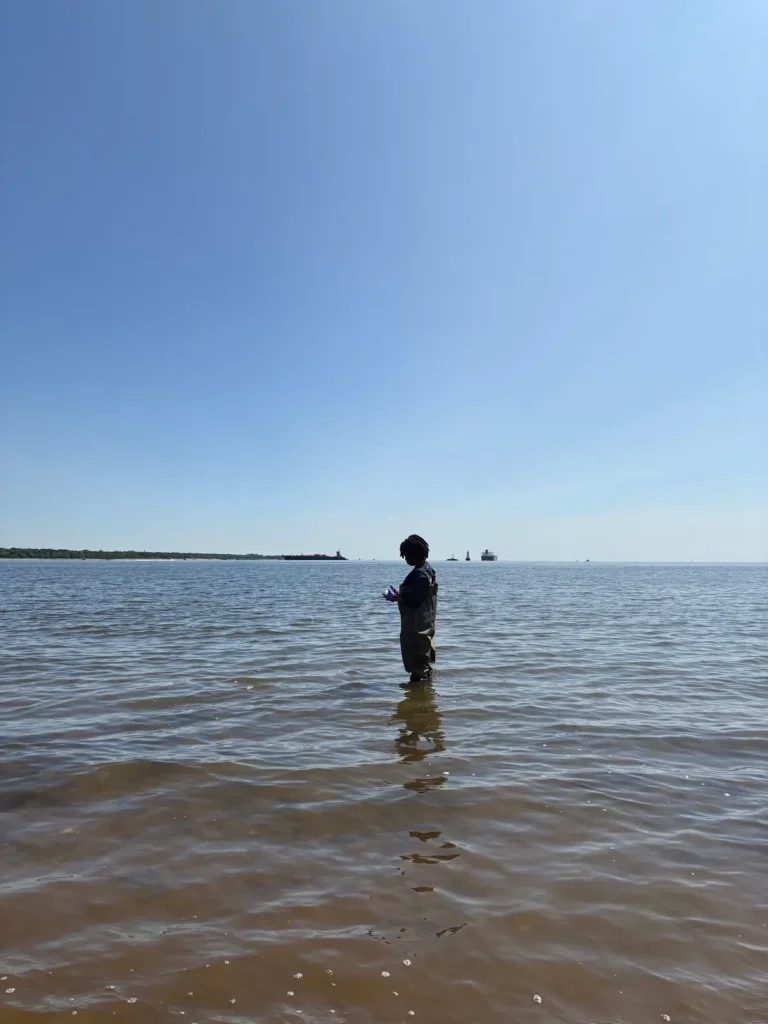
Endurance on sampling duty at South Amboy. Photo by John Meyer.
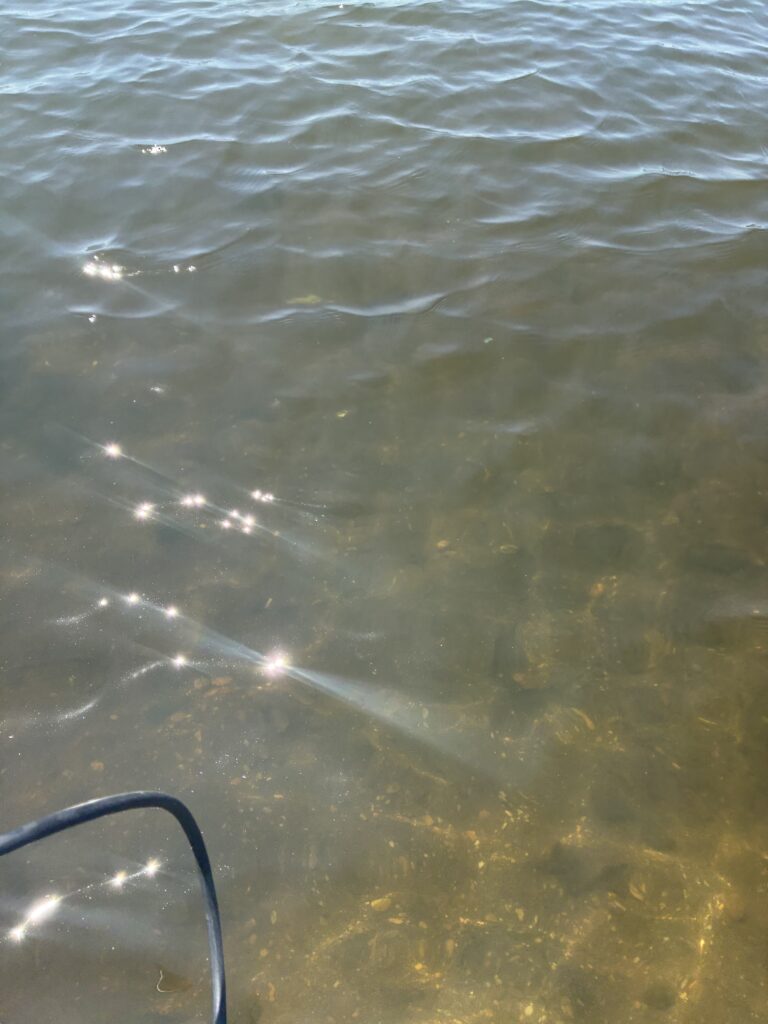
A massive algal bloom at Perth Amboy. The water was greenish and murky unlike the clear color it has had for the past couple of weeks. Photo by Endurance Laryea.
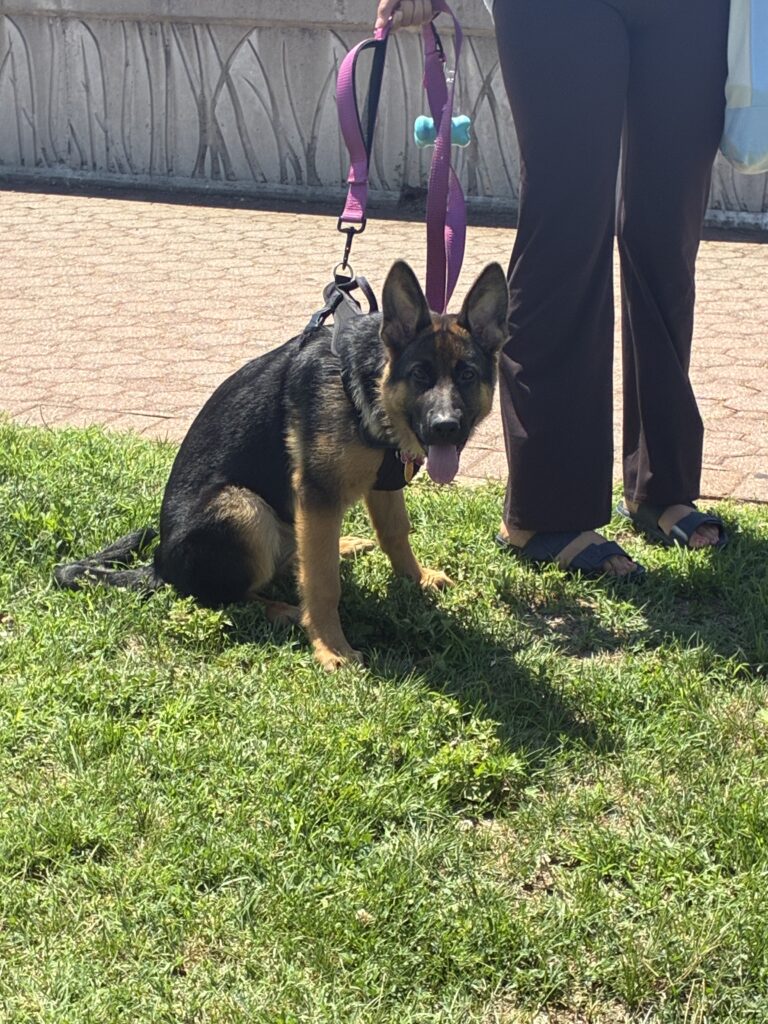
Photo by Endurance Laryea.
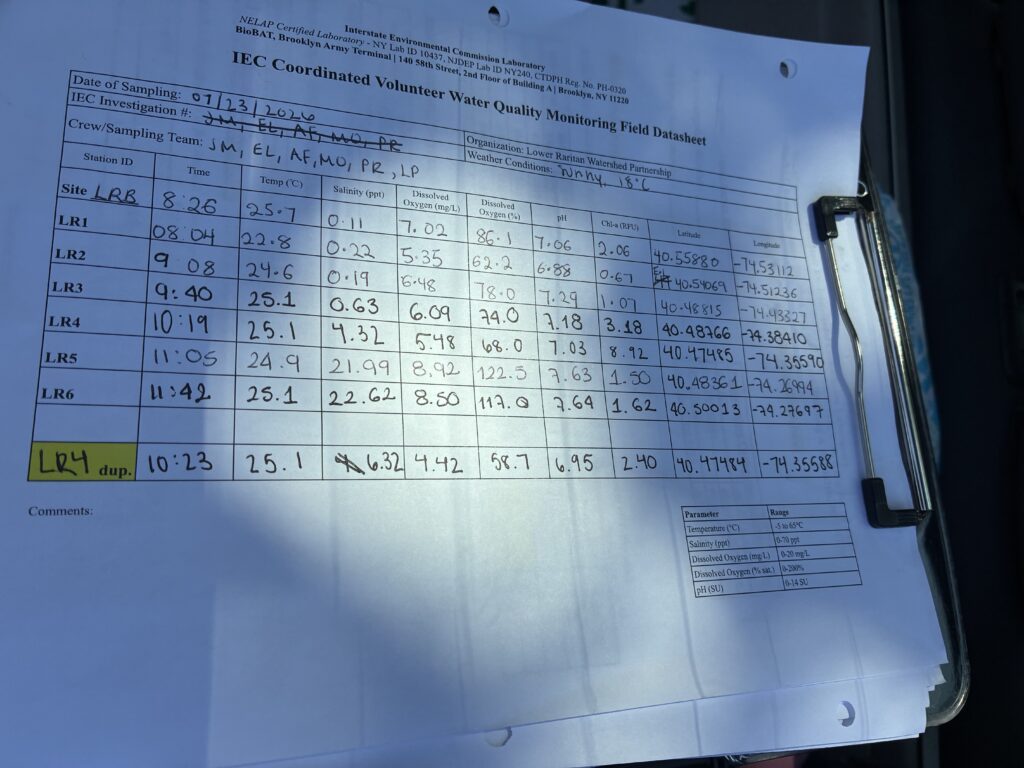
Thankfully, oxygen levels rose back to normal, and we did not experience the fish dead we feared!
Enjoy your weekend and stay safe and cool!
