Raritan River Pathogens Results 06.11.2026
By Endurance Laryea, LRWP Summer Research Intern
The second pathogen monitoring session of the month took place on Thursday, June 11th. Each week during the summer, from May to October, the Lower Raritan Watershed Partnership and Rutgers Cooperative Extension of Middlesex County run a volunteer-based monitoring program along the Raritan River. We collect water quality samples at six non-bathing public access beach sites, provide our samples to the Interstate Environmental Commission for analysis in their laboratory, and report the results to the public. Our mission is to share this data with the community and partners to ensure the safe use of the Raritan river for all.
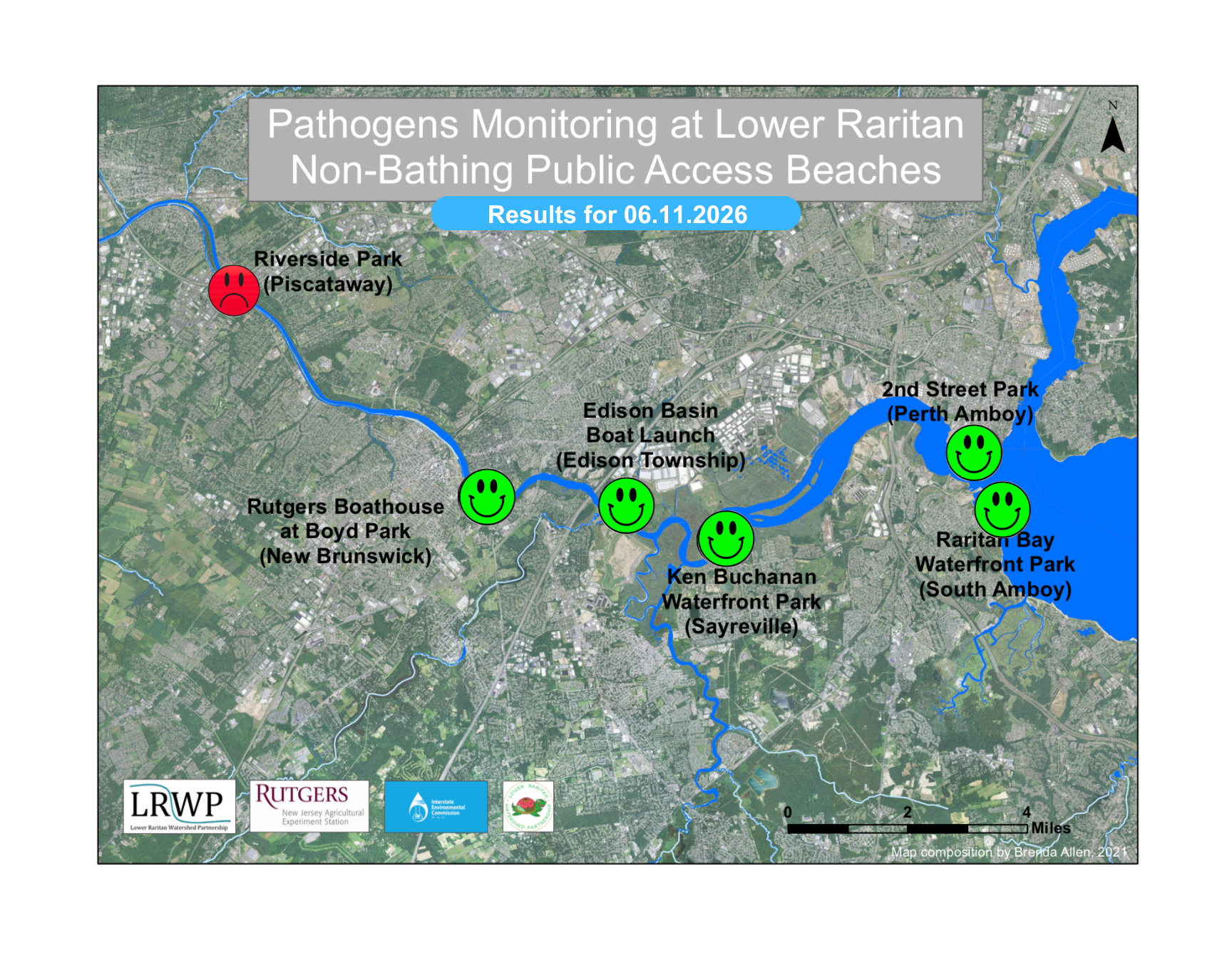
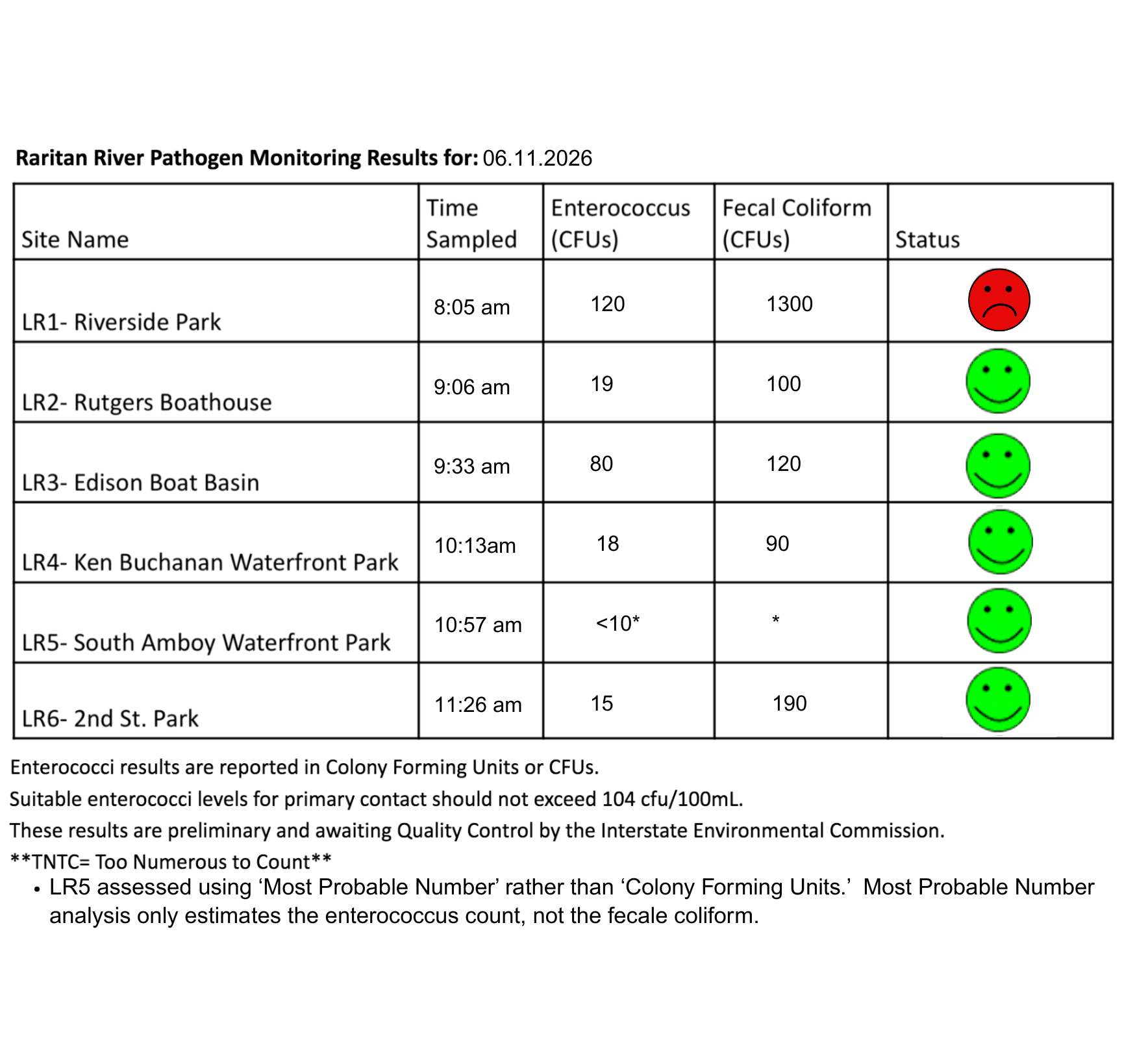
Our lab results for water quality samples taken on Thursday, June 11th, 2026, show Enterococcus bacteria levels exceeding the EPA federal water quality standard of 104 cfu/100mL at one of our monitoring sites this week. Problem sites are indicated by red frowns on the map and chart: Riverside Park (Piscataway). Green smiles on the chart and map indicate the sites with bacteria levels safe for recreation and include the following: Rutgers Boathouse (New Brunswick), Edison Boat Basin (Edison), Ken Buchanan Waterfront Park (Sayreville), Raritan Bay Waterfront Park (South Amboy), 2nd Street Park (Perth Amboy). For South Amboy, we were unable to analyze enough fluid to complete the membrane filtration process required to measure Colony Forming Units. We have therefore marked that site with an asterisk. Statistical analysis of the sample produced a ‘Most Probable Number’ of <10 enterococci per 100 mL, and we were unable to assess fecal coliform.
We also want to advise the public that after we finished testing, our area experienced a brief thunderstorm. The rain almost certainly flushed more entero and fecal pathogens into the river, and so the green smiley faces on our chart and map should be taken with a grain of salt … or a grain of … something.
Pathogens/Enterococci levels are used as indicators of the possible presence of disease-causing bacteria in recreational waters. Such pathogens may pose health risks to people coming in primary contact with the water (touching) through recreational activities like fishing, kayaking or swimming in a water body. Possible sources of bacteria include Combined Sewer Overflows (CSOs), improperly functioning wastewater treatment plants, stormwater runoff, leaking septic systems, animal carcasses, pet waste, wildlife waste, and runoff from manure storage areas.
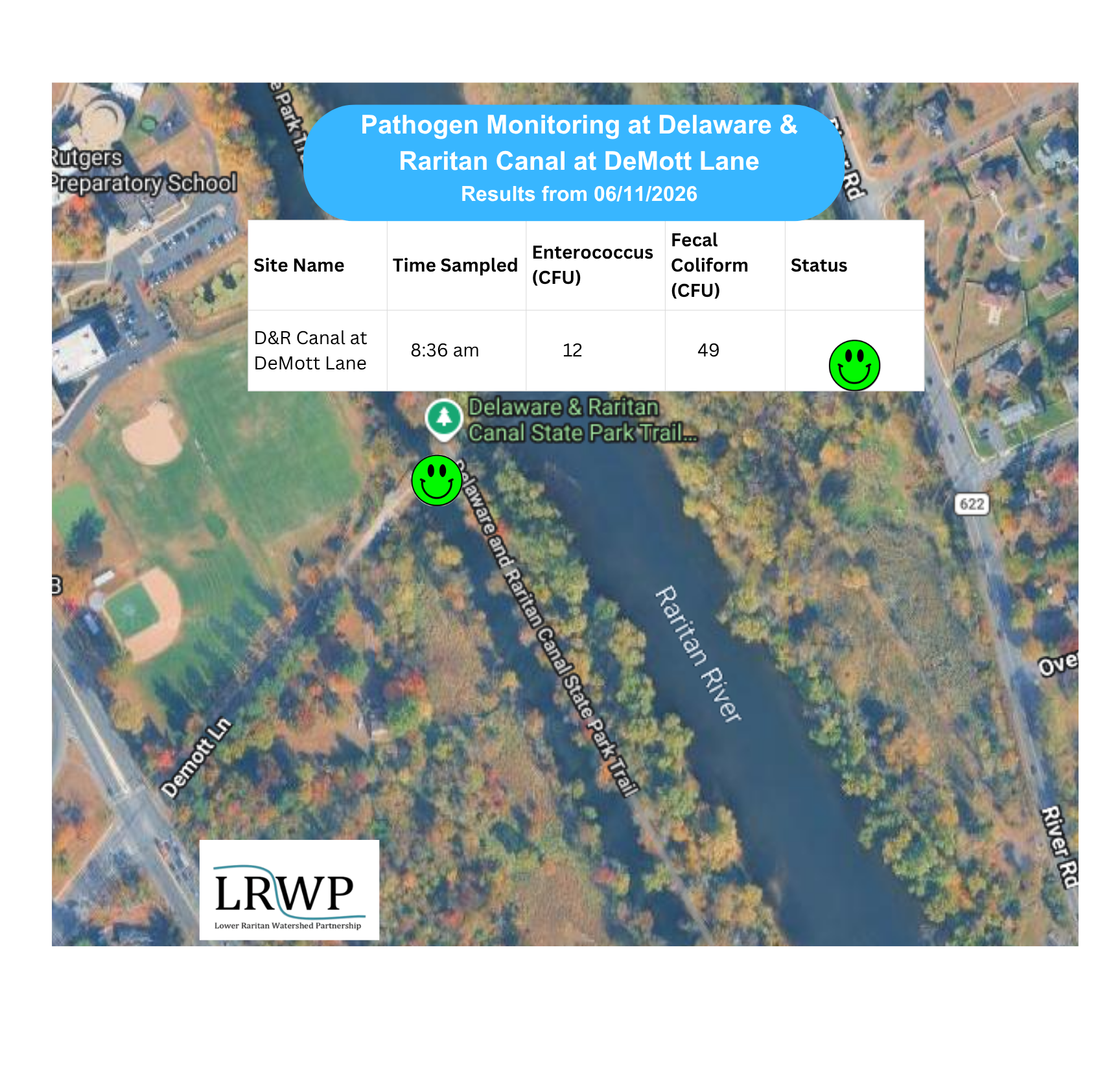
In order to better understand why Riverside Park, Piscataway is our worst performing site over the past six years, we have started sampling further upstream, as well as in the Delaware & Raritan Canal. On June 11th, we sampled the D&R Canal at DeMott Lane in Somerset County, New Jersey. We took our sample at the bridge adjacent to the Van Wickle House. The lab analysis produced an estimate of 12 enterococci ‘colony forming units’ per 100 mL, and 49 fecal. We find it interesting that our first three canal sites have had less entero and fecal than the adjacent river. The waters in the canal appear relatively stagnant and we expected worse results than we see.
Our goal in reporting these results is to give residents a better understanding of the potential health risks related to primary contact during water-based recreation. If you are planning on recreating on the Raritan this weekend, make sure to stay safe and wash up after any activities!
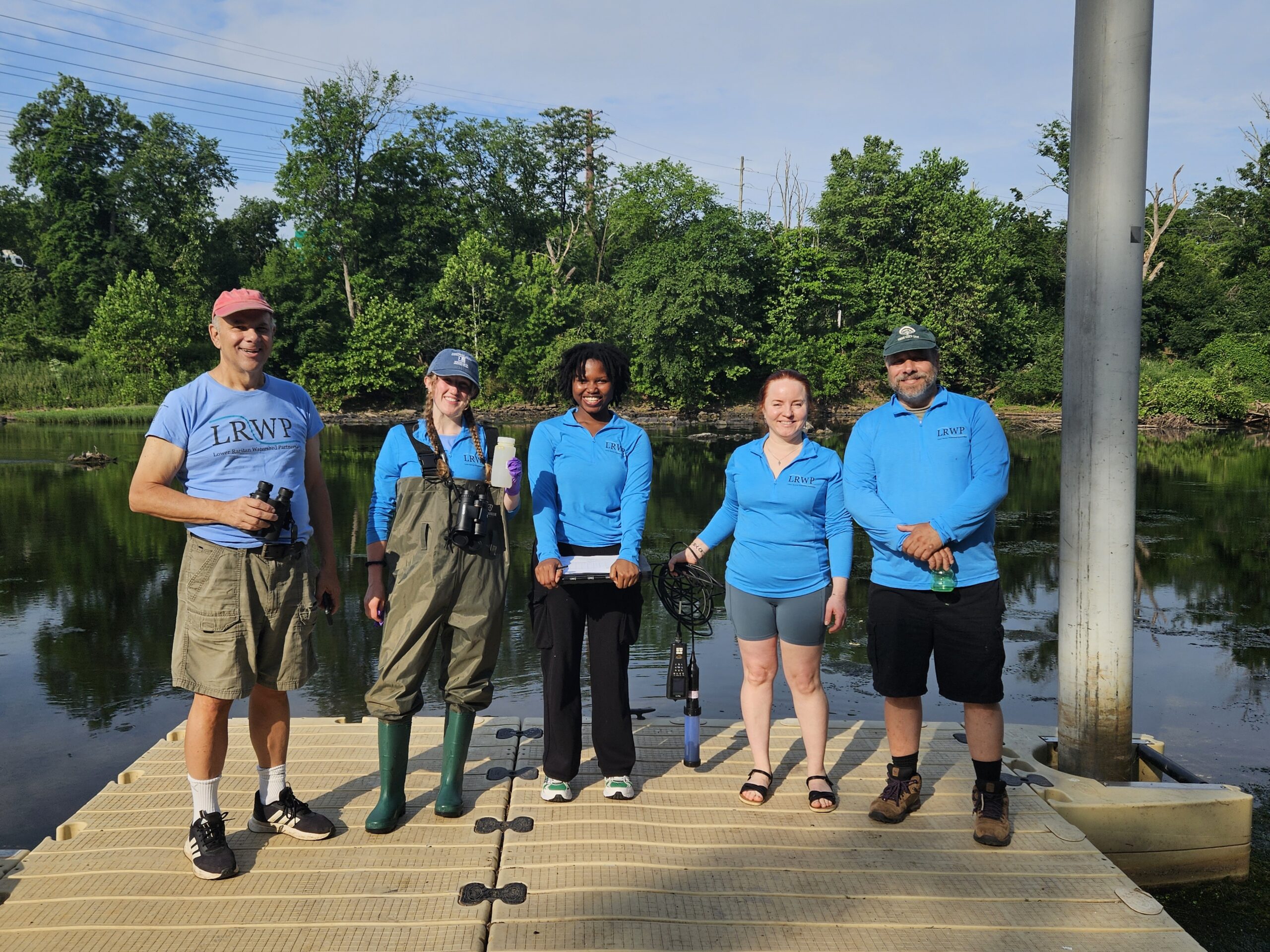
Art, Ashley, Endurance, Olesya and Mike (left to right) kick off pathogens monitoring at Riverside Park on Thursday morning. Photo credit: Heather Fenyk.
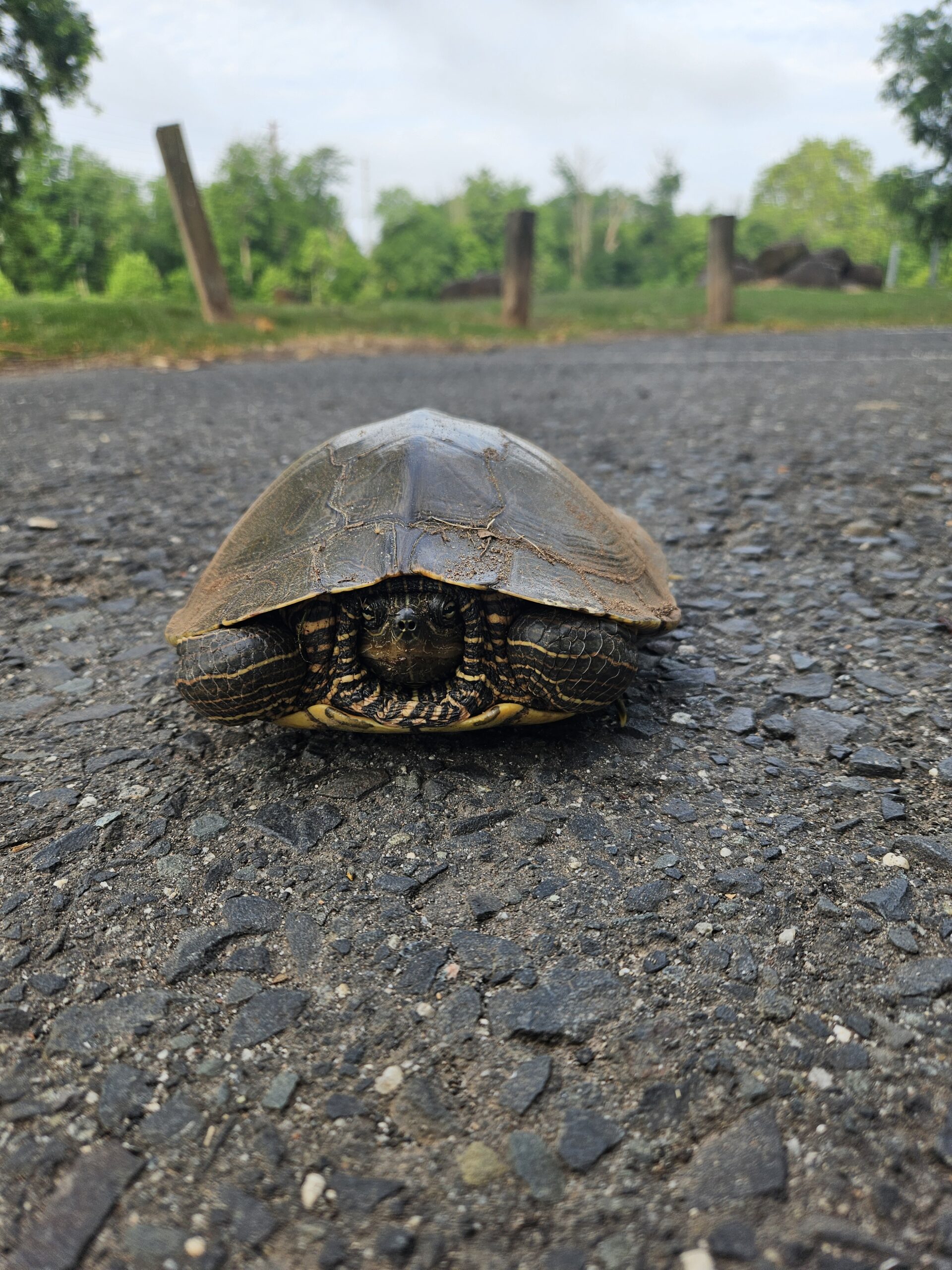
This adorable turtle was spotted on the parking lot by John when we arrived at Riverside Park to start calibrating. It was carefully evaded by the Geese Chasers driver from last week, who succeeded in scaring the gaggle of geese away from the parking lot into the river just by the sight of the car. Photo credit: Heather Fenyk.
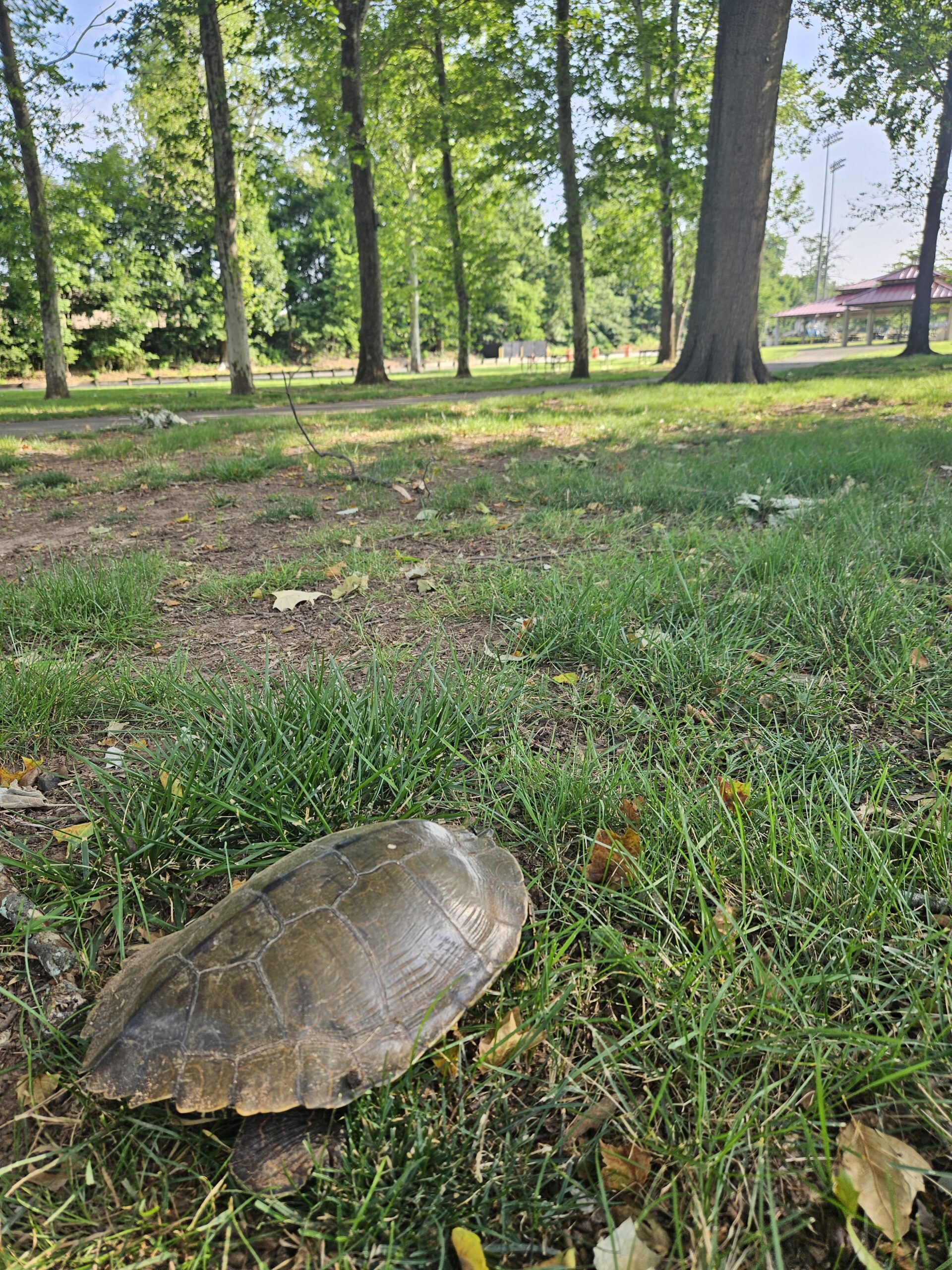
Heather later moved it into the grass for safety in the direction it was initially going. Turtles are likely to return to the path they were on if you moved them away from the direction that they were initially headed which may put them at risk later on when you or anyone else is there to help. Photo credit: Heather Fenyk
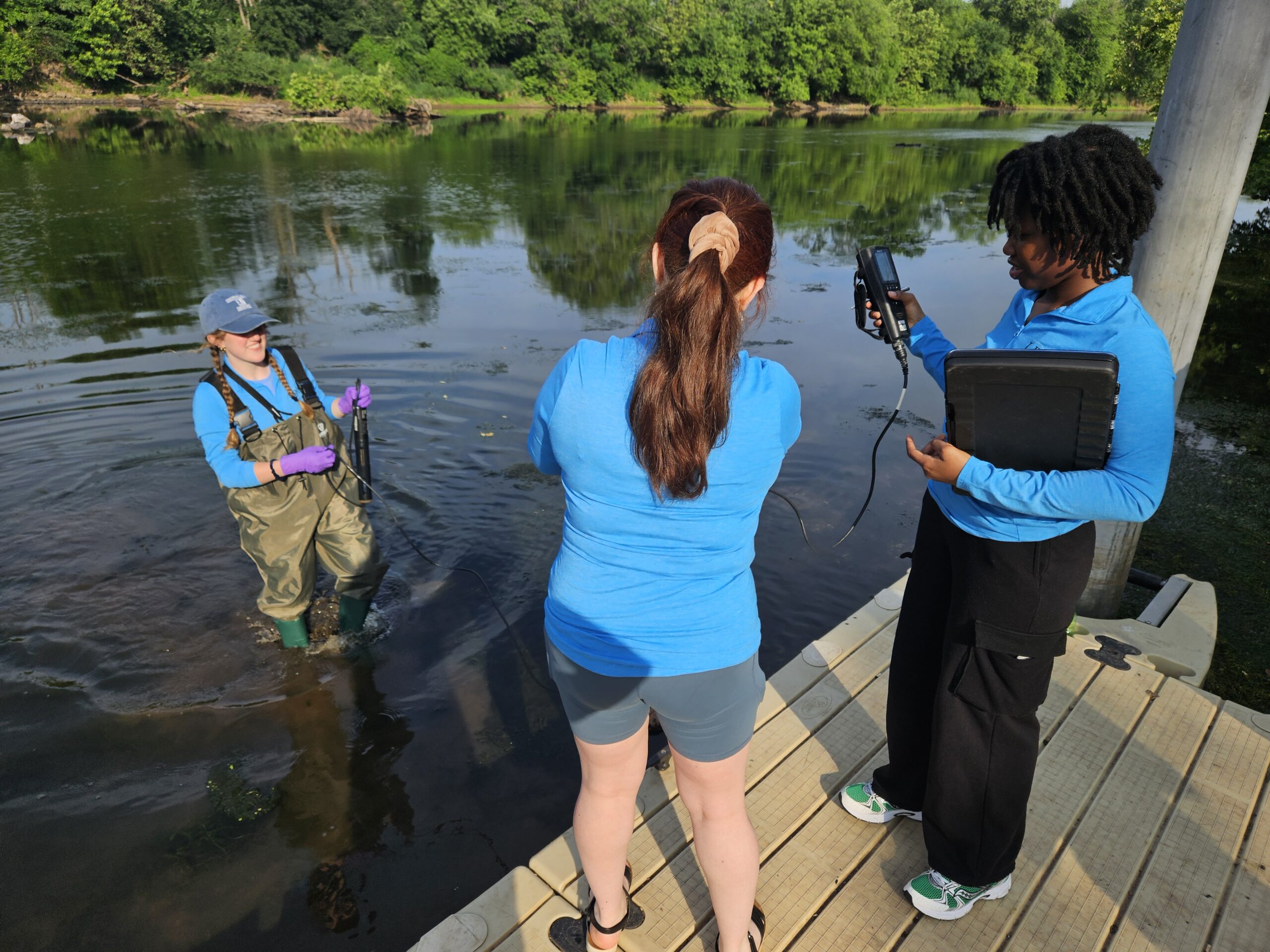
Ashley, Olesya and Endurance wrapping up measurements at Riverside Park. Photo credit: Heather Fenyk.
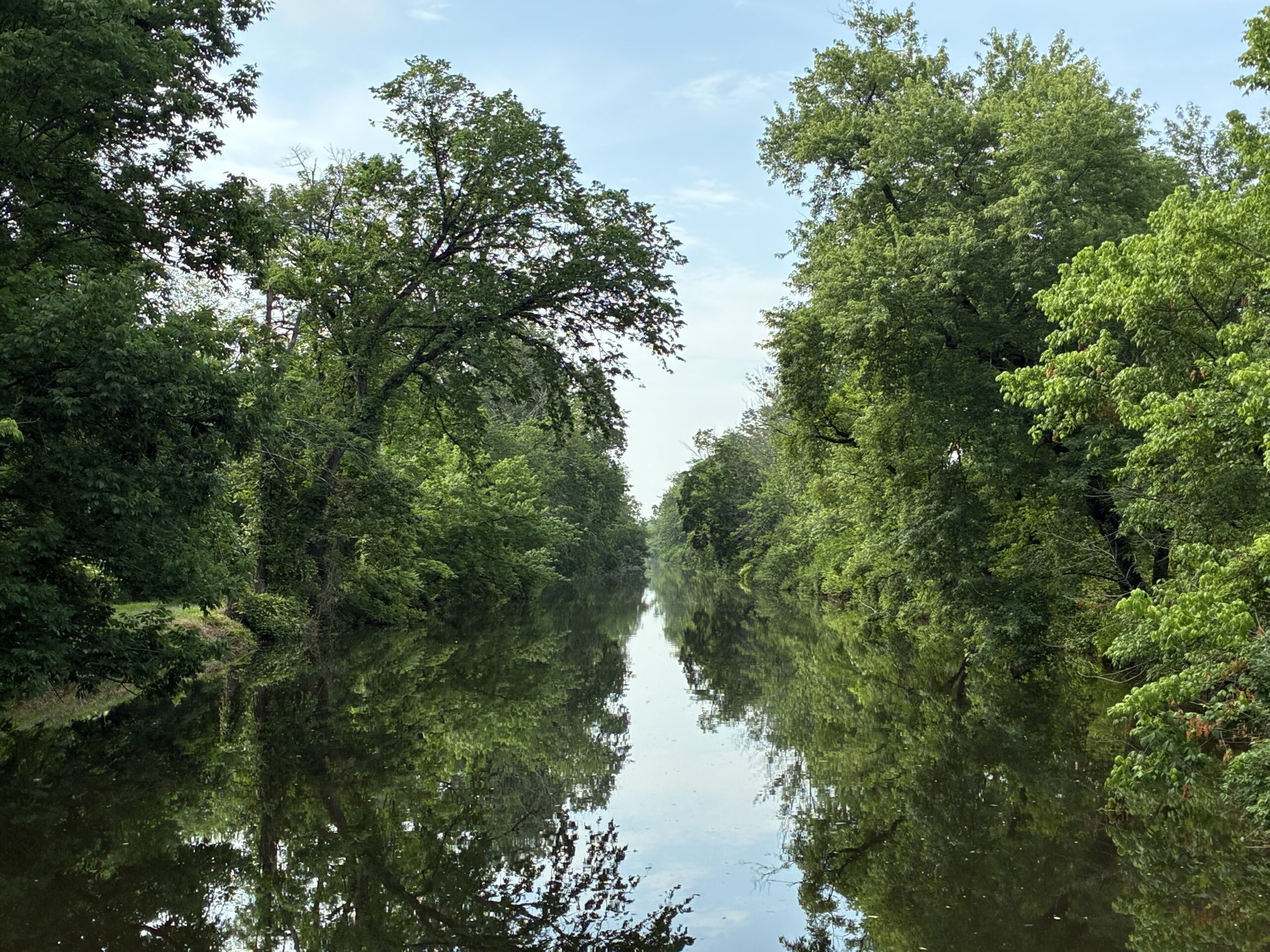
This serene and breathtaking view was taken from the bridge of the D&R Canal, DeMott Lane, Somerset County, near the Van Wickle House. This is the fourth of our new sites this year. Unlike the previous three new sites, this canal does not have lock, just a beautiful bridge. It is a perfect place to go for a walk and just appreciate nature. Photo credit: Endurance Laryea
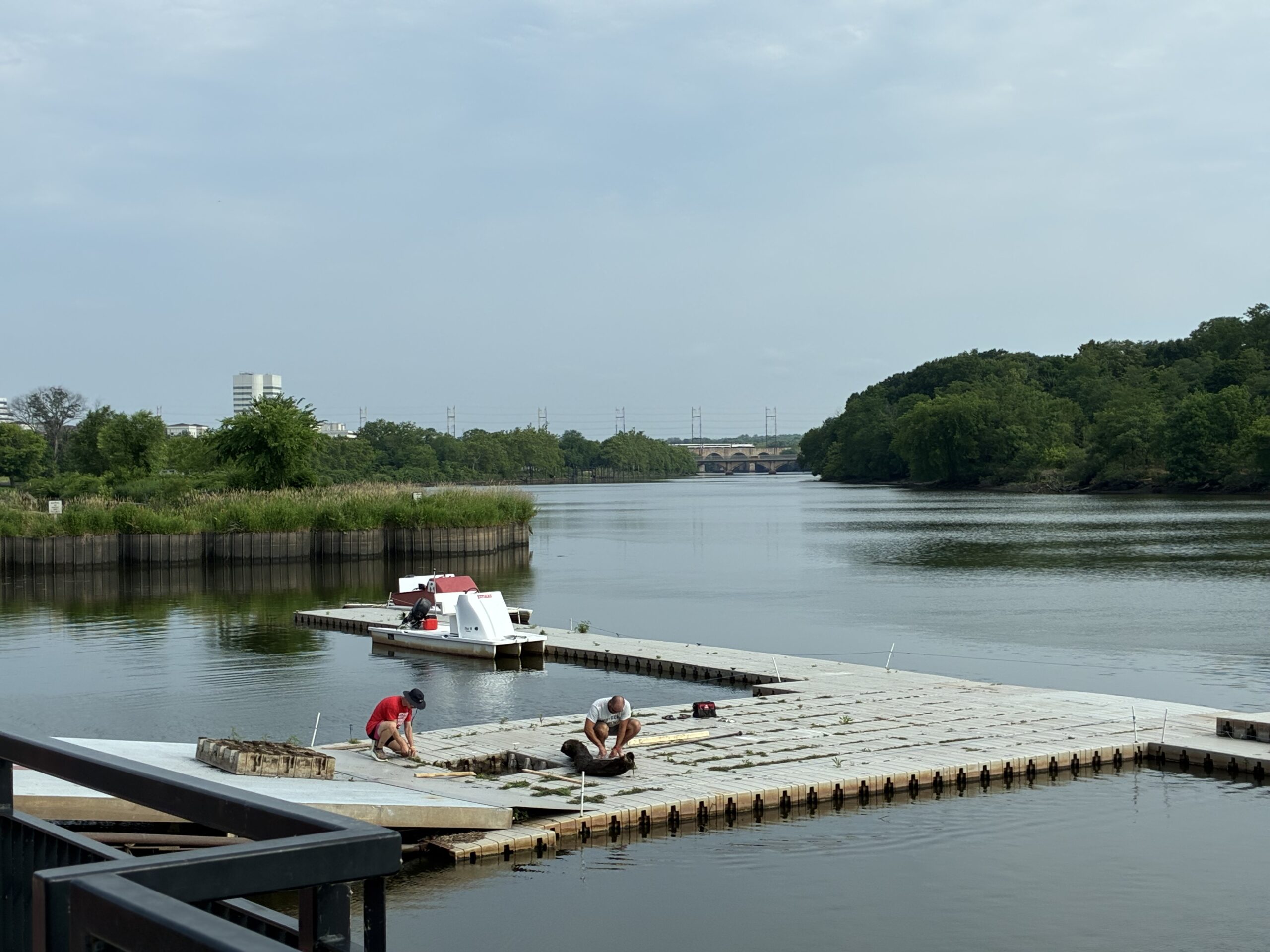
At Rutgers Boat House, New Brunswick, two men work to take out a log that had been caught under the dock and was causing it to be lifted in that area. Photo credit: Endurance Laryea
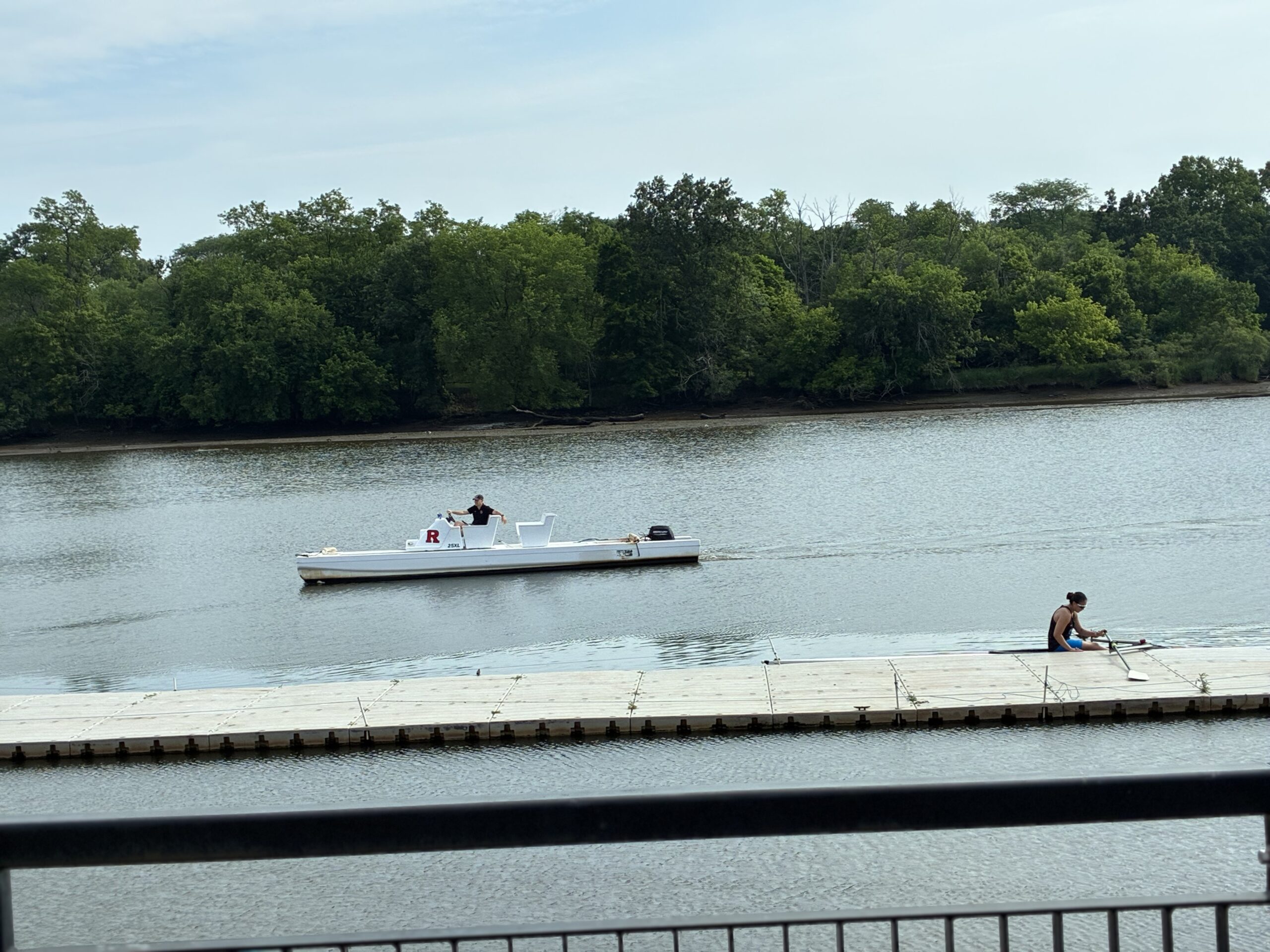
Coaches from the Rutgers rowing team approach the dock. Photo credits: Endurance Laryea.
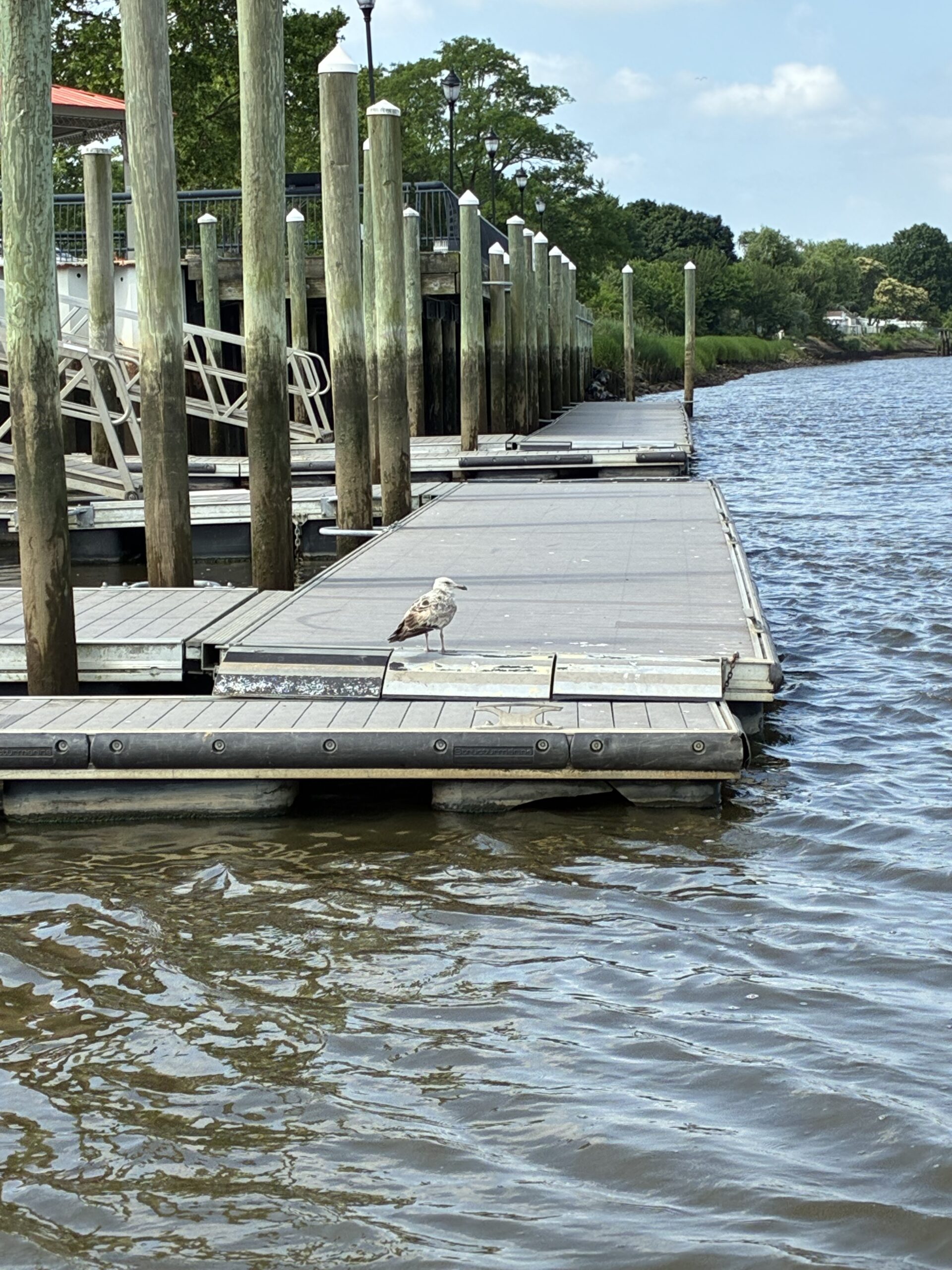
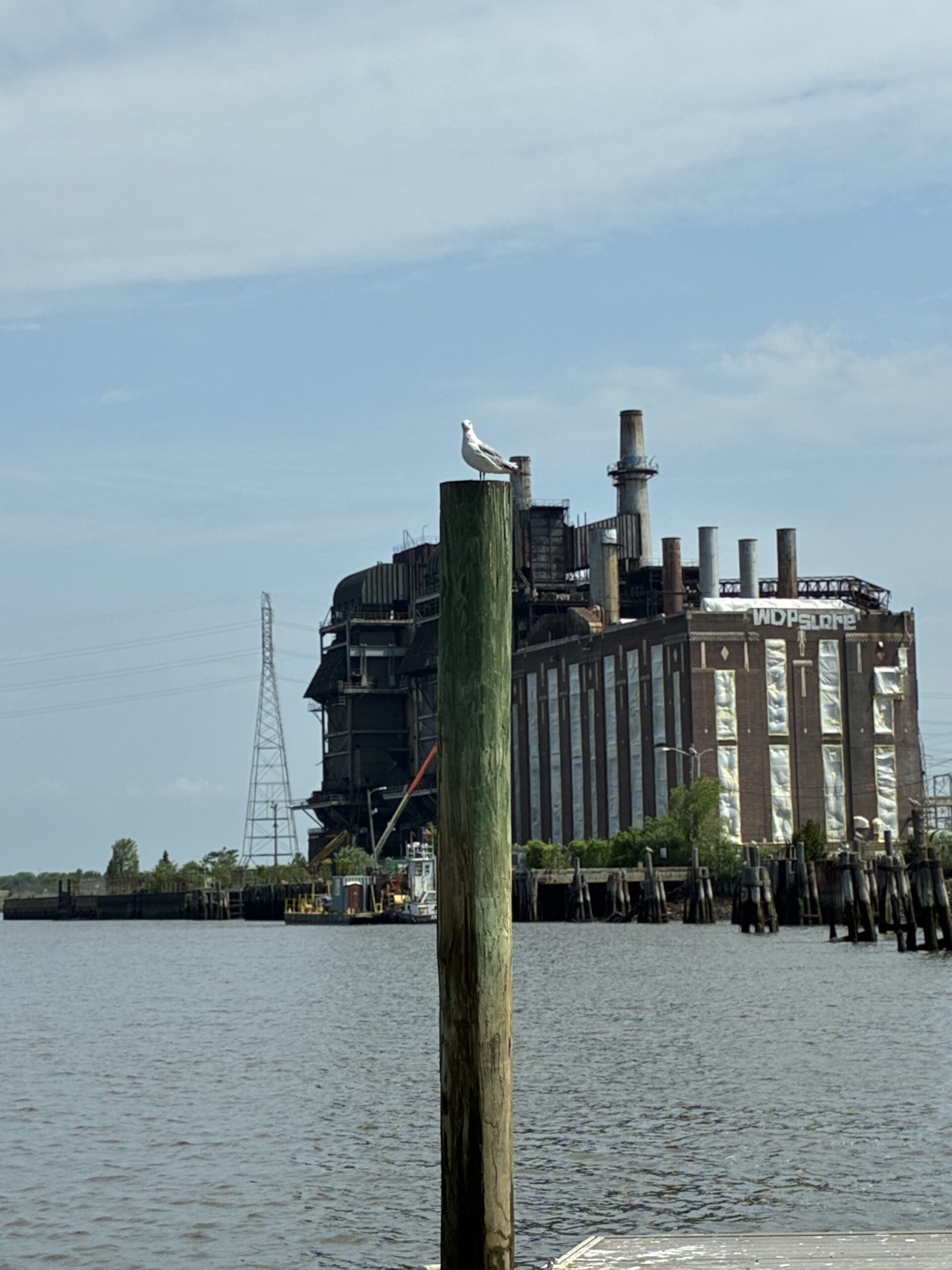
Two different types of seagulls spotted at Ken Buchanan Waterfront Park, Sayreville. Photo credits: Endurance Laryea.
We also spotted the ospreys in their nest today! There were two of them and we watched as one caught a fish in swift dive into the water. For some reason, it did not go directly into its nest after the successful catch but rather lingered around. Unfortunately, we did not catch that on camera.
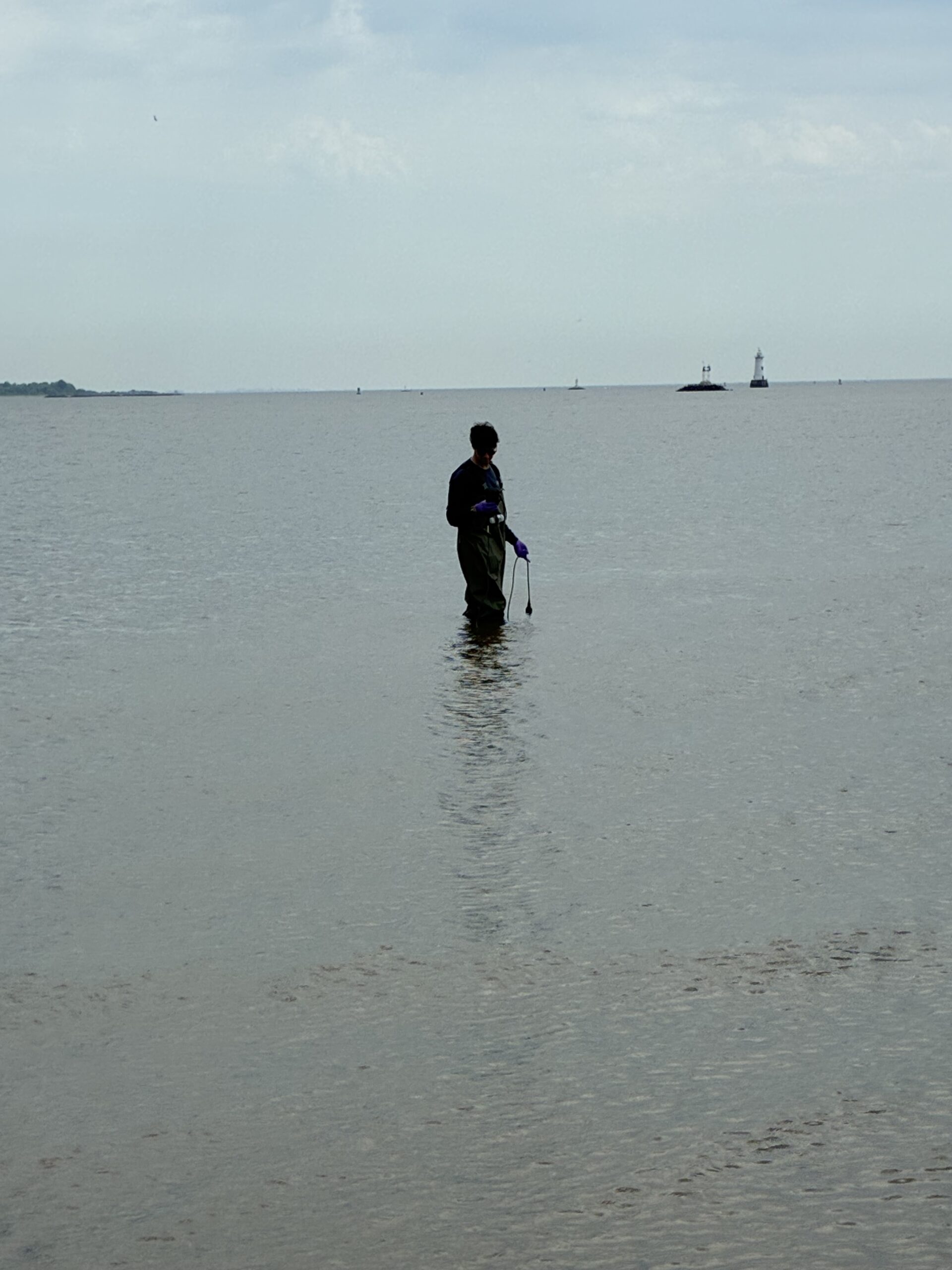
John calling out the measurements to Ashley because he had to take the sonde with him further into the river due to the low tide.
It was a low tide day on the river this morning. Most of the banks were shallower than usual so we had to go further into the river to get samples and measurements. A couple of the banks revealed filamentous algae that would usually be hidden or not clearly seen.
Today’s pathogen monitoring was smooth and fun as always- meeting new people and having great conversations and good laughs. We were done and celebrating a job well done just before the sun hit its full strength! Looking forward to another great time next week 🙂