A children’s game, now fading from collective memory, where an authority figure stood facing away from the players who would ask permission to take steps forward. The question included the refrain, “Mother, may I”. The reply might be, ‘take one giant step forward’ or ‘take two baby steps back’. This game is said to be inspiration for Neil Armstrong’s walk on the moon, when he said, ‘One small step for man. One giant step for mankind’.
The months of May and June are the time turtle step forward, one small step for that turtle and a giant step for preserving that species genetic future as they seek a location to lay eggs.
Turtle species have relied on thousands of years of evolution to reach a relatively stable set of behaviors that has seen them through a millennium of environmental change before the appearance of humans.
If change occurs faster than a species can adapt, it ceases to exist. The changes turtles face today were never included in the genetic mapping that made them so successful for thousands of years. Roads and highways, farming and land development have thrown a curve ball to confound the turtles’ evolutionary success via gradual change. Mower blades spinning at 3,500 revolutions per minute sound a death knell to the species in general and elimination of threatened and endangered reptiles from an already shrinking home range.
The presence of a turtle, no matter the species, is a miracle to behold when you consider it is a time traveler, unchanged in appearance from prehistoric times, who stepped through a wormhole in space into the 21st century.
The most common species found crossing roads, as evidenced by unsuccessful attempts, is the ubiquitous snapping turtle. An aquatic species whose genetic GPS directs it to favorable high ground away from the vagaries of floods and droughts to lay its eggs. Perhaps it is the distance traveled to lay eggs that has made the snapper so successful and vulnerable to predators, among them autos.
Another turtle commonly found crossing roads is the eastern box turtle. Box turtles are often concentrated in upland areas. A terrestrial species, it follows the rule of not laying eggs in the area it normally lives. I speculate that predators know where to find their prey and the prey know that the best chance for eggs to reach term would be somewhere away from the general population. So it is that each spring, female turtles will leave home grounds for a suitable nursery in which to incubate their eggs. Eastern box turtles are assigned a ‘concerned’ classification, given a shrinking environment and loss of genetic variation due to populations isolated on islands of habitat. Continuity of habitat is a critical concern and a prime reason to establish and preserve greenways along rivers and streams.
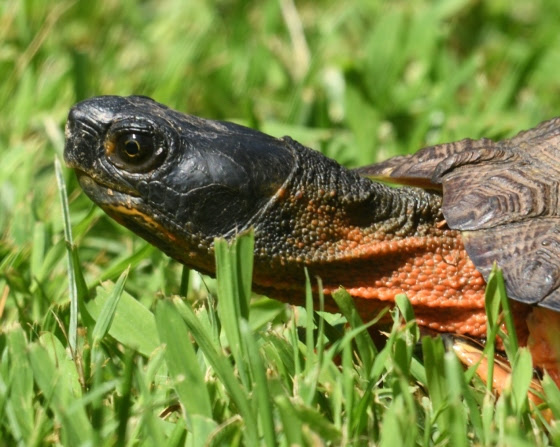
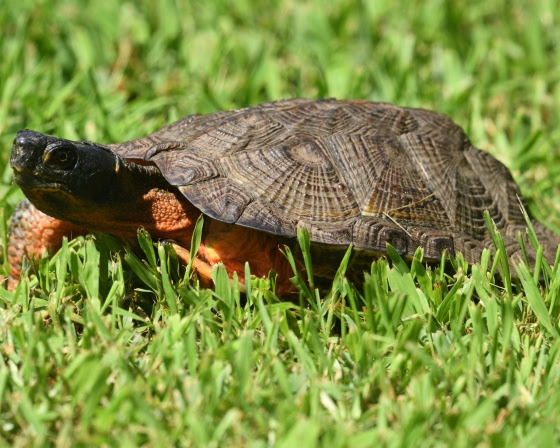
The wood turtle is classified as endangered by state and ‘under review” by federal US Fish and Wildlife Service and is found locally. Aquatic and terrestrial, it spends time in meadows and uplands near rivers and streams making it more vulnerable to mowing not only during spring egg laying but throughout the season from April to October. Wood turtles are long lived and do not reach reproductive age for several years. This makes wood turtle populations very sensitive to loss of any mature adults. Research finds the loss of one or two adults may mark the end of that population over time. From the Wisconsin DNR website “Wood turtle populations are particularly sensitive to removal of reproducing adults, and Compton (1999) determined that removal of only two adults annually from a group of 100 individuals would result in extinction of that population in 76 years, and removal of three adult individuals annually would lead to extinction in 50 years.”
The meadows and uplands along our rivers are prime wood turtle habitat and any mowing must be evaluated for benefit vs harm. Walking trails trod by hikers is preferable to mowing. A mature wood turtle was killed on open space land when a path was mowed for the convenience of some local walkers. This act may have signed a death warrant for the wood turtle population in the area. In this game of survival, the wood turtle may ask ‘Mower, may I ?” when traversing our meadows during egg laying and feeding.
Check these websites, one from Wisconsin and one from New Jersey for more information about Wood Turtles,
and most interesting, the electronic tracking of a female wood turtle at the Great Swamp National Refuge by the US Fish and Wildlife Service!.
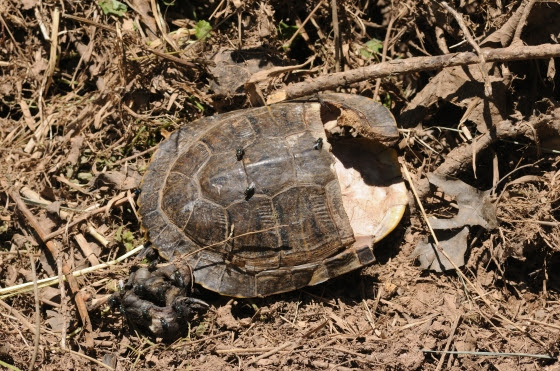
This wood turtle on her way to lay eggs was killed May 16, 2014, by a mower. Considering she was at least 10 years old, the situation is even more tragic. Wood turtles are a natural treasure hidden in plain view and tall grass, who deserves far more than just our consideration.
Another wood turtle barely escaped being run over by a white van in the same area along the South Branch. The location of both turtles was reported to the state, which tracks wood turtle populations. This turtle is missing a left front foot, though well healed over.
Author Joe Mish has been running wild in New Jersey since childhood when he found ways to escape his mother’s watchful eyes. He continues to trek the swamps, rivers and thickets seeking to share, with the residents and visitors, all of the state’s natural beauty hidden within full view. To read more of his writing and view more of his gorgeous photographs visit Winter Bear Rising, his wordpress blog. Joe’s series “Nature on the Raritan, Hidden in Plain View” runs monthly as part of the LRWP “Voices of the Watershed” series. Writing and photos used with permission from the author. Contact jjmish57@msn.com.
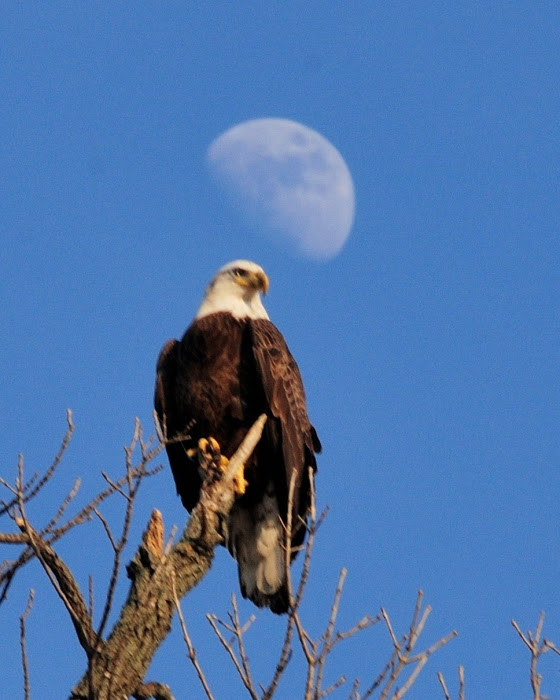
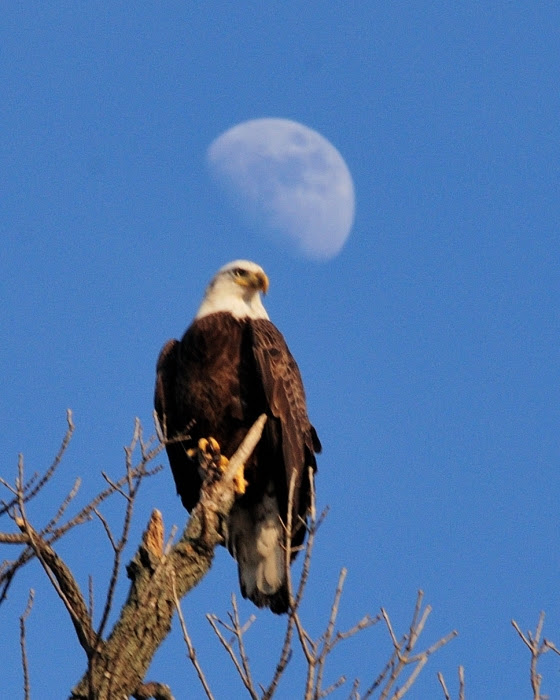
The rebirth of the Raritan River is symbolized by a waxing moon hovering above a Bald Eagle, perched along the river, teeming with ancient fisheries, whose recovery is a result of recent dam removals. A birthstone to define the Raritan River as an entity removes its status as a documented enigma and affords it the respect and honor it deserves.
The Raritan River is the longest river that flows within NJ, its rich, pre and post-colonial history well documented in archives and books. Surprisingly, its location has confused state and federal authorities who have mislabeled the North and South Branch of the Raritan River as the Raritan River. Signs on interstate 78 in Clinton identify the South Branch as the Raritan River. Further east on I-78 the North Branch is designated at the Raritan River. State road 202 at the border of Branchburg and Bridgewater claim the North Branch of the Raritan River as the Raritan River.
Last of the cast irons signs which correctly identify the North Branch of the Raritan River. I know of only two other cast irons signs, long gone, which marked the course of the South Branch and Raritan River proper.
To further muddy the waters of the Raritan, an online search of the River’s length will show anywhere from 69.60 to 115 miles. Imagine, a defined measurement of a major river’s length cannot be established! For the record, based on my two canoe trips down the entire Raritan River, I estimate its length at 33 miles. Given the margin of error, 33 miles referenced against the lowest published estimate of 69.60 miles, creates more of an enigma than a reality.
To bring the Raritan River in focus from an enigma, and accord the respect it deserves, it must be properly defined and labeled. Once the river’s identity is established, a gravitational pull of curiosity arises and compels a quest for more information. A better understanding of the river’s role in its watershed and the community it supports can provide critical perspective needed to make sound land and water management decisions.
The first step in establishing respect, whether a person or a river, is to know their name. It is innate in our nature to respond kindlier when a name is offered upon introduction. Consider a hiker walking across a field, free of obstruction, the path will be a straight line. Point out a single species of grass, and the hiker will alter their path to avoid stepping on the now identifiable plant.
Toward that end, an effort is underway to define the beginning of the Raritan River with a boulder placed at the confluence of its north and south branches. A bronze plaque will be attached and petroglyphs carved into the boulder to memorialize native animals and first people.
This indelible marker will, in a way, serve as a birth certificate in the form of a ‘birthstone’ to legitimize the Raritan River proper.
“Raritan River Birthstone” (DRAFT for plaque) “This stone marks the beginning of the
Raritan River and defines this natural treasure as an entity. The Raritan River’s legacy of beauty, inspiration and use, has nurtured all life since its post glacial formation. Arising from the confluence of its north and south branches, the Raritan River begins its thirty-three mile journey to the sea. The petroglyphs carved into this stone represent wildlife and symbols of the Unami, a branch of the Lenape tribe, which would have been seen in glyphs carved by the earliest people”. “Dedicated by the Lower Raritan Watershed Partnership 2023.”
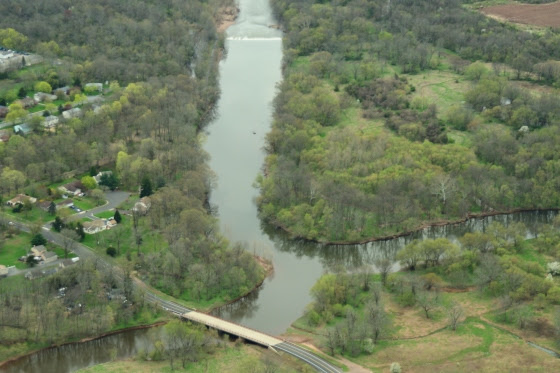
Placement of the ‘birthstone’ and the location of the Headgate dam at the very top center of the image.Image taken on flight compliment of LightHawk and No Water No Life.
In 2023’s Raritan River, dolphins and seals ply the waters up to New Brunswick, while young Hudson Bay striped bass and alewives make their way up river to Bound Brook. As dams are removed and historic fisheries revitalized, the Raritan River is in a way reborn and deserving of a ‘birthstone’ to finally mark it place of birth.
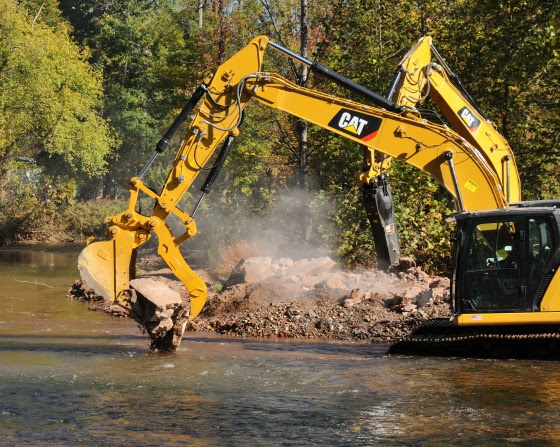
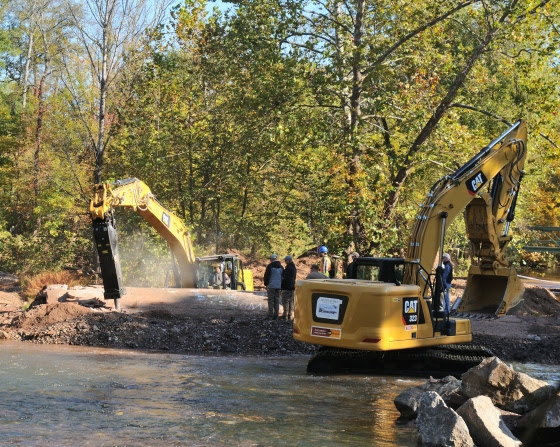
The Burnt Mills dam on the Laminton River which flows into the North Branch and eventually into the Raritan river was removed in 2020.
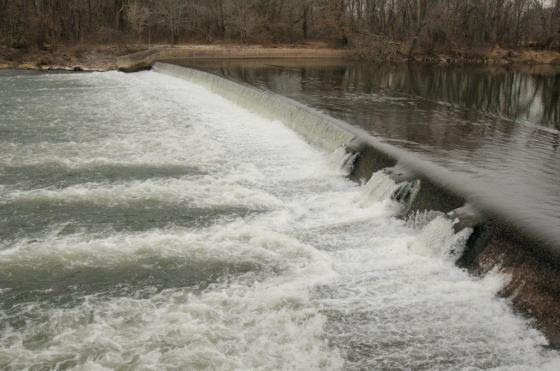
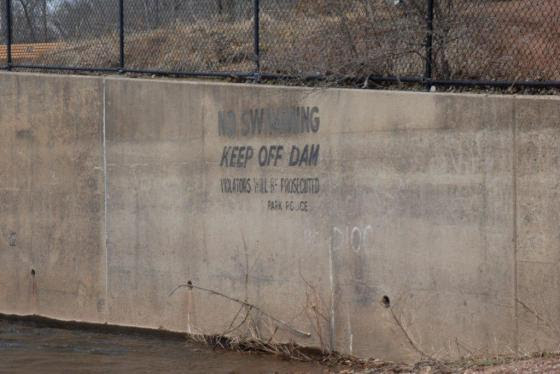
The Headgate dam on the Raritan River, built in 1842, is scheduled for removal. This dam is located a few hundred yards below the beginning of the Raritan River at the confluence of the North and South Branch. The hydraulic created by the dam has caused several deaths over the years.
Author Joe Mish has been running wild in New Jersey since childhood when he found ways to escape his mother’s watchful eyes. He continues to trek the swamps, rivers and thickets seeking to share, with the residents and visitors, all of the state’s natural beauty hidden within full view. To read more of his writing and view more of his gorgeous photographs visit Winter Bear Rising, his wordpress blog. Joe’s series “Nature on the Raritan, Hidden in Plain View” runs monthly as part of the LRWP “Voices of the Watershed” series. Writing and photos used with permission from the author. Contact jjmish57@msn.com.
When the Eagle Lunar Lander set down on the moon in 1969, astronaut Neil Armstrong spoke these immortal words, ‘the eagle has landed’.
Those simple words announced to the world that the man in the moon finally had company. The proximity of the moon to the earth made it a central part of myth and legend and directed human behavior as if it were a nurturing celestial caretaker. That humanity now stood on the moon was unbelievable, the impossible had now been achieved!
That headline, ‘the eagle has landed’, perfectly described my emotion when I scanned the latest NJ eagle report and saw an image of an eagle nest and the word, ‘Keasbey’, as its location. I was stunned as a range of emotions swept over me. Keasbey? Eagles? Eagles associated with Keasbey? The same Keasbey I intimately knew from my youthful wandering among the swamps, streams, and tidal creeks in the 1960s and 70s?
Previously, the only reference to eagles in Keasbey were the Keasbey Eagles, a weight lifting club on the Keasbey Heights overlooking Raritan Bay. Another reference was Eagleswood, a utopian society situated along the shore of Raritan Bay, which ended at what is now the Keasbey border. Visiting naturalist, Henry David Thoreau, linked Eagleswood to Keasbey when he described in his journal on November 2, 1856, a walk two miles upriver from Eagleswood in Perth Amboy to what is now the Keasbey shoreline.
A wooly mammoth might sooner be unearthed in a Keasbey clay bank than the shadow of a bald eagle pass over the land. Eagles existed only in far-away pristine wilderness destinations.
For that matter Canada geese were unknown to the area, mallards were found only in parks and on occasion a deer track might be seen and be a cause of conservation.
Crows Mill Creek, whose source was a clear spring, now tinted acid yellow, after passing through HR Grace property, flowed over the sandy bottom to the tidal creek at Jennings boat yard. HR Grace, Hayden Chemical Company and Hatco dominated the spring fed area. Some nights, downwind of the factories, the wind might burn your eyes, and in the morning, white flakes would cover your car.
The mouth of Red Root Creek which flowed through the arsenal past the restricted areas where phosgene was buried.
During the summer when mosquitoes were nigh, an olive drab military vehicle would ride up and down the streets spraying thick clouds of DDT, through which all the kids rode their bicycles. Keasbey itself had rerouted Crows Mill Road around a large abandoned clay pit and used it to dump garbage. Upstream of Keasbey, in Edison, the Raritan Arsenal buried weapons and explosives in the wetlands along the river. Within the Arsenal property, Phosgene was buried in small isolated fenced in areas. National Lead was situated across the river, lead slag was used to support the shoreline in many locations along the Bay. Lead, among other chemicals, entered the food chain to accumulate in top feeders.
The clay banks and local brick factory produced hollow tile and bricks. The tiles were packed in local sea grass sea grass for shipment all over the country.
Signs along the perimeter fence of the Raritan Arsenal
The lower Raritan and Keasbey were in no way suitable eagle habitat, even though the Raritan is a major migratory extension of the Atlantic flyway. The lower Raritan region is one of, if not, the most naturally diverse regions in the state, it is where the soils of south Jersey meet the soils of the north. From the soil springs a diversity of plants and a cascade of wildlife to make this region a veritable United Nations where all members are represented in one location. This cannot be emphasized enough, the potential for diversity is critical to build upon the success of the eagles. In fact, it is stunted, to look at a single species and not the community in which it exists.
While remediation of the chemical factories is underway and DDT use curtailed, we are still plagued with legacy pollution and a spectrum of novel emerging pollutants. Microplastics combine with pharmaceuticals and other chemicals to attack the immune system of humans and other top food chain feeders such as eagles. Blood samples taken from eagles remain in frozen storage for lack of funding. Even if processed, there is no plan to look at the impact of specific pollutants on the immune system. The preoccupation with lead poisoning diverts attention from the impact other pollutants have on the immune system. We hope the exploding eagle population is not a flash in the pan and only time and further research will tell.
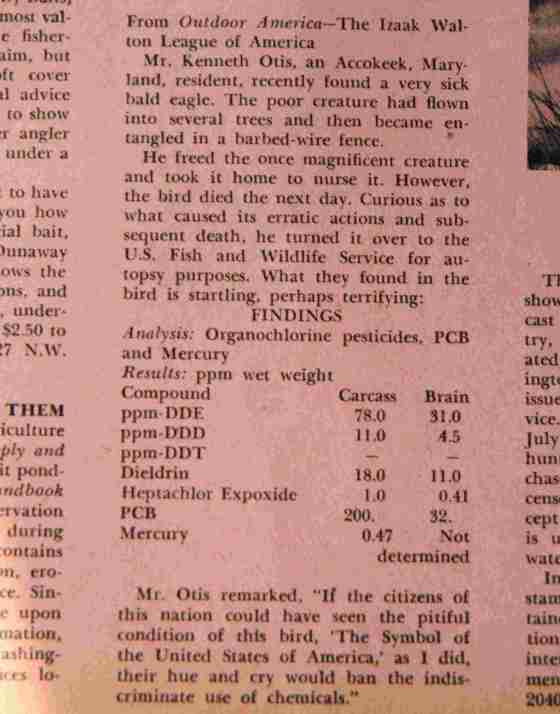
An article from the 1970s revealing a blood sample from an eagle tested for pollutants. We have traded pollutants which still pose a threat as exposure comes from new chemical entities and microplastics.Testing for pollutants which attack the immune system has been a hole in current eagle research at least in NJ.
So, the table had been set for an explosion of natural diversity denied by decades of abuse. When one lives to see the dramatic contrast take place over a lifetime, the impact approaches the status of a miracle. The nesting bald eagle in Keasbey is on the level of man landing on the moon, a cause for celebration in and of itself.
Author Joe Mish has been running wild in New Jersey since childhood when he found ways to escape his mother’s watchful eyes. He continues to trek the swamps, rivers and thickets seeking to share, with the residents and visitors, all of the state’s natural beauty hidden within full view. To read more of his writing and view more of his gorgeous photographs visit Winter Bear Rising, his wordpress blog. Joe’s series “Nature on the Raritan, Hidden in Plain View” runs monthly as part of the LRWP “Voices of the Watershed” series. Writing and photos used with permission from the author. Contact jjmish57@msn.com.
For April Fool’s Day we asked the ChatGBT bots for an AI-generated essay on the LRWP. They delivered with one written in the style of the King James Bible. We think they nailed it:
And it came to pass that the people of the land did recognize the need for the preservation of the waters of the Raritan. And they did gather together, forming a partnership, dedicated to the protection and restoration of the Lower Raritan Watershed.
And they did call this partnership the Lower Raritan Watershed Partnership, and it was a righteous and noble endeavor. For they did understand that the health of the watershed was vital to the well-being of the communities that relied upon it.
And the partnership was blessed, for the people did work together in harmony, each using their unique gifts and abilities for the betterment of the land. And they did implement practices for the conservation of the soil and the water, and the restoration of habitats for the creatures of the earth.
And the waters of the Raritan did run clear and pure, and the land did flourish. And the people did prosper, both in body and in spirit, for they did live in harmony with the land and with one another.
And it was said “This partnership, the Lower Raritan Watershed Partnership, is a shining example of stewardship and care for the land. And it shall be a model for other communities to follow.”
“Therefore, go forth and continue in this good work, for the preservation of the land is vital to the well-being of the people and all creatures that live therein.”
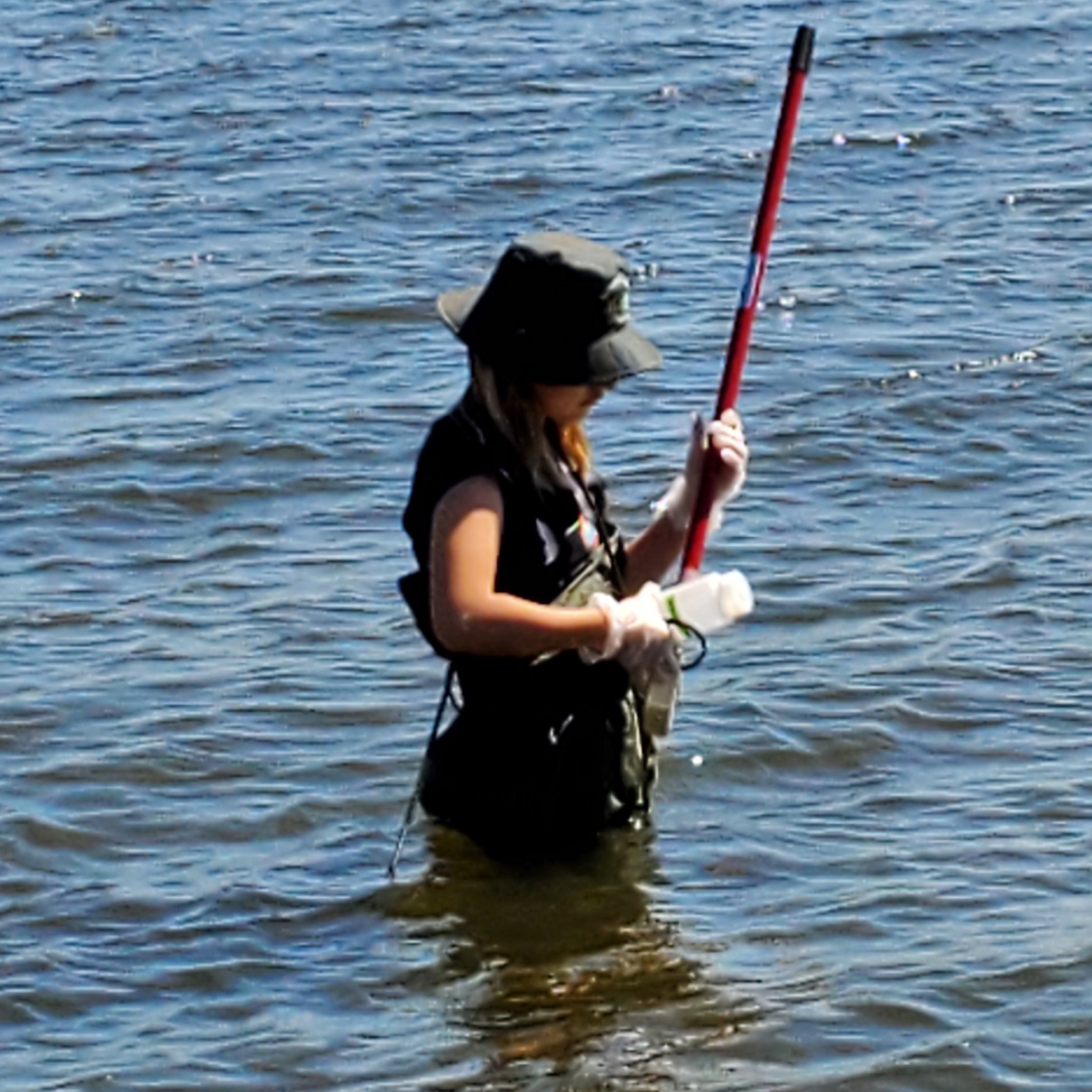
Jocelyn Palomino has worked with the LRWP for the past three years, coordinating community outreach for our Pathogens Monitoring Program. In this interview Raritan Scholar Intern Jonathan Sim interviewed Jocelyn about her work.
Jocelyn Palomino juggles it ALL to help keep our volunteer pathogens monitoring program run smoothly
1. What is your major, and why are you interested in this field?
“My major is Environmental Policy, Institutions, and Behavior with a minor in Public Health. My interest in this field began through the classes I was taking, such as Environmental Justice and Environmental History while learning about the impacts of water contamination and seeing it happen first hand in Newark with the lead crisis in 2016. That was the moment that got me invested in water quality. These are issues that can be prevented through water testing and monitoring, and we should continue to minimize the exposure to diseases and ensure the community members have access to clean drinking water.”
2. How long have you worked with the LRWP, and what have you done in your time with the organization?
“I have been with the LRWP for almost 3 years now. During my time, I have been lucky enough to have joined in on meetings with the EPA, participate in community events like the City of Water Day and El Mercado. I have been leading the summer pathogens monitoring program for about 2 years now with an amazing group of volunteers and have also worked extensively on data entry and sharing that can be accessed and interpreted by all members of the community and our partners.”
3. Why is Spanish language outreach about water quality important? How are you trying to expand this aspect of the program?
“I believe Spanish outreach regarding water quality is critical to the community because a large part of the New Brunswick population is either Hispanic or Latino. Therefore, the information that we are sharing about possible dangers of water contamination needs to be shared in a way that can be interpreted by all. Rivers are an essential resource in the Spanish culture; people have a desire to interact with waterways and they should be able to feel safe within their community rivers for doing so. As the Spanish Outreach Coordinator, whether I’m on the field or at an outreach event, I always try my best to educate Spanish members on the impacts of water contamination and also share the importance of following our weekly results for any recreational activities in the water. To further expand this aspect of the program, I have been working alongside two graduate students to translate our data resources so they can be accessible to all members of the Spanish community.”
4. What is your favorite part of your work with the LRWP?
“I would have to say my favorite part is having the opportunity to meet so many incredibly devoted community members who are all interested in the conservation and restoration of the watershed and of the environment. I get to partake in community events like the Raritan River Festival where apart from sharing our work, I also look at the chance to learn more about other organizations and the work they are doing in the community.”
5. When do you graduate and what do you plan to do after graduation?
“I expect to graduate in 2023. I plan on pursuing a masters in Public Health afterwards to continue my work on disease prevention amongst communities through education.”
6. How do you think your work with the LRWP will help you on your career path?
“Most of my experience with the LRWP has focused on community outreach, which is a major component of public health. Having even a few years of experience with this would stand out most. Additionally, having more than 3 years of water quality experience while working alongside the EPA, IEC, and NYNJ Harbor Estuary will certainly help me on my career path.”
7. In what ways can someone be involved in helping out the environment without needing to devote their career or lifestyle to it?
“People can get involved in this issue by taking even the smallest or simplest measures that reduce the risk of water contamination such as avoiding dumping any hazardous waste on the ground because it can get swept to rivers through runoff. You can make rain barrels at home to collect rain and reduce the amount that enters sewer systems to avoid sewage overflow. You don’t have to change your entire lifestyle to protect the environment, but you can make easy sustainable changes to your life such as being mindful of using less water or even flipping off the light switch before leaving the room.”
Article by Ellie Sroczynski, Team Lead 4H Eco-Maniacs
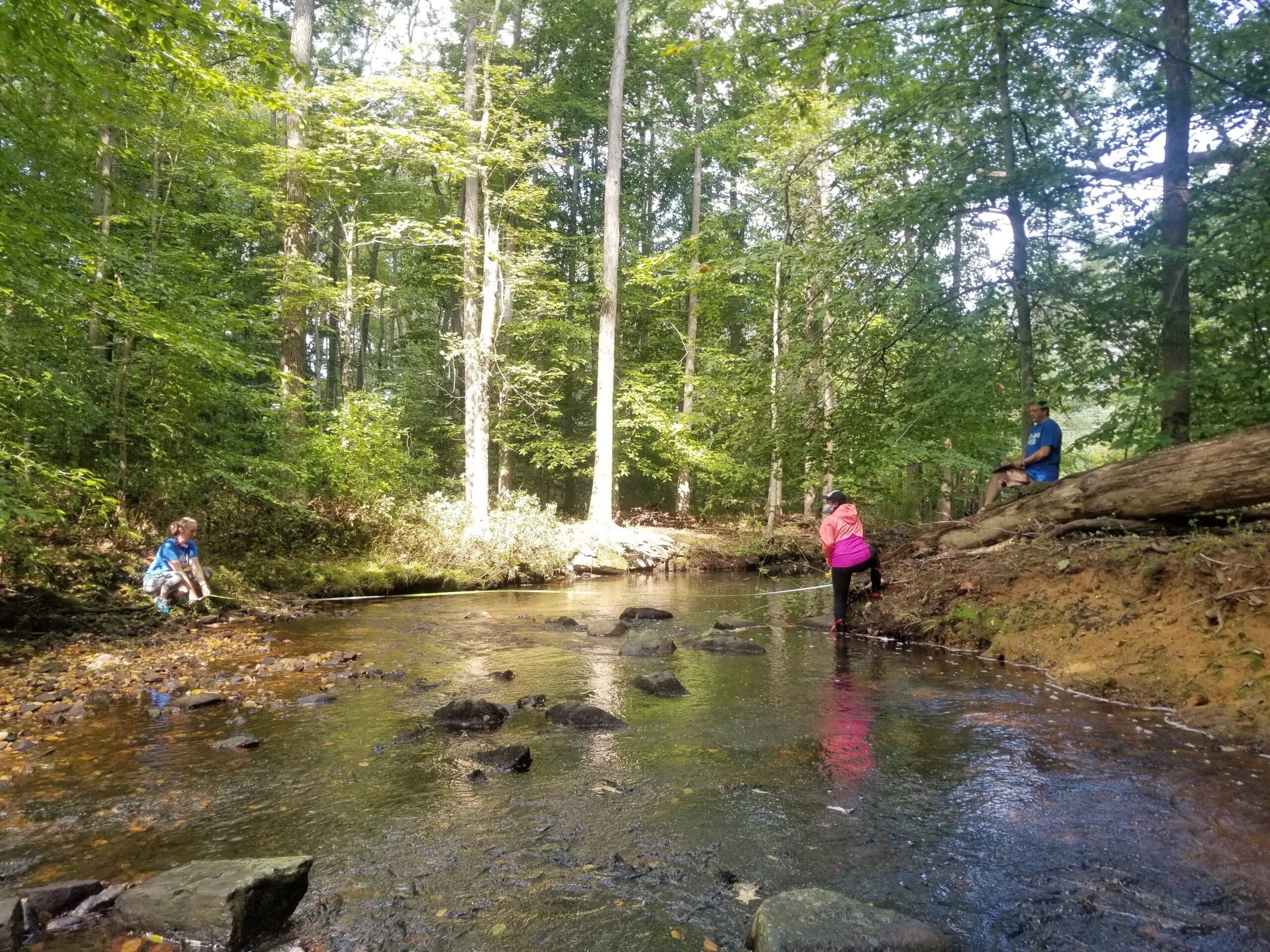
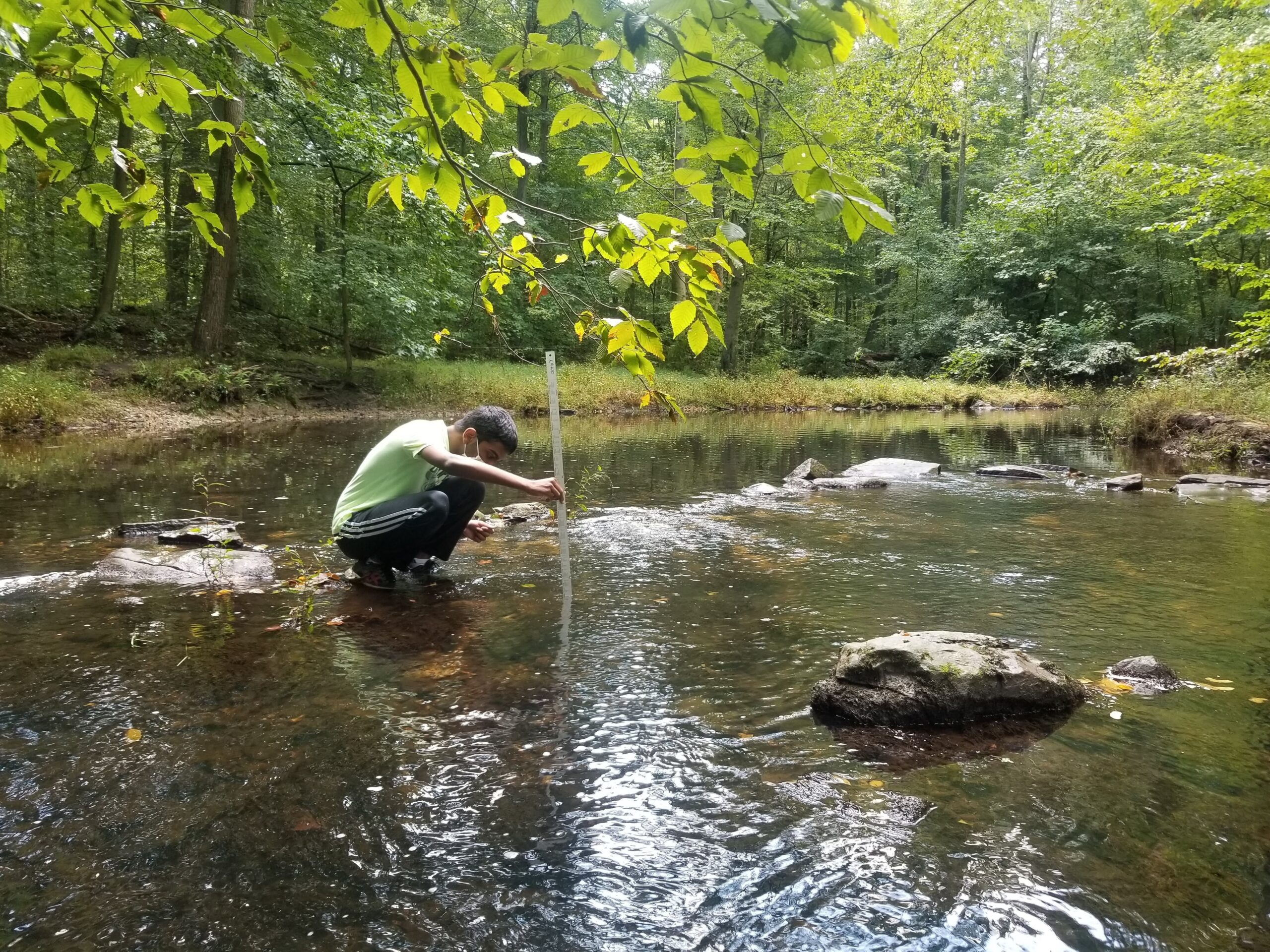
The past two years LRWP Streamkeeper Volunteer Outreach Coordinator, Jon Dugan, trained two groups of Middlesex County 4-H Ecomaniacs. We monitored sites along the Ireland Brook in East Brunswick and Middle Brook in Bound Brook. Both sites were representative of very different habitats, both forested and developed. The 4-H Eco-Maniacs were taught how to take measurements of temperature, velocity, and ten different environmental factors including items like tree canopy cover and aquatic vegetation. The goal of our training is to empower individuals to become stewards of their local watersheds and continue to monitor these sites yearly.
The Eco-Maniacs are part of the Middlesex County 4-H Youth Development program, focusing on educating themselves and others about environmental issues, on providing service to the community, and on enjoying the outdoors and each other! Engaging in one to two events per month, for example hiking, beach clean-ups, service days at the Mary Denver Native Plant Sanctuary in Highland Park, library programs, street fairs, visual stream assessments with the Lower Raritan Watershed Partnership, and many more! More information can be found on their website at https://ecomaniacs.bss.design/index.html and Instagram @eco_maniacs4h.
On a rainy day, you can walk through downtown New Brunswick, NJ and hear the remnants of a historic stream trickling through storm drains. This historic waterway is the Lyell’s Brook– a small side-stream of the Raritan River that was buried as a century of urban development transformed the landscape of New Brunswick.
Here we share a video recording of our March 24 “Lunch & Learn” session, during which special project intern Gavin Wagner presented on his undergraduate project “Finding Historical Streams of the Lower Raritan Watershed.” This project examines how and why streams like the Lyell’s Brook changed over time.
Gavin writes: “Historical maps are my lens, and GIS technology is my focus. With them, I dissect centuries of change throughout the dynamic watershed. This narrative presentation will cover my methods, their greater purpose, and the lessons I learned along the way.”
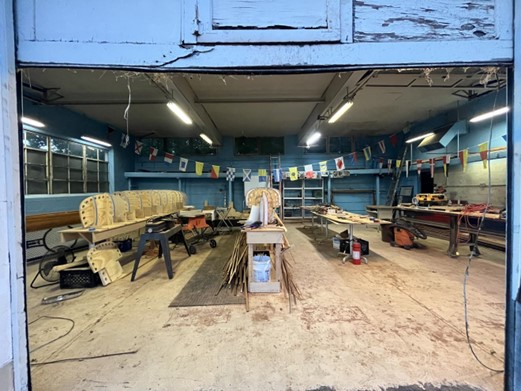
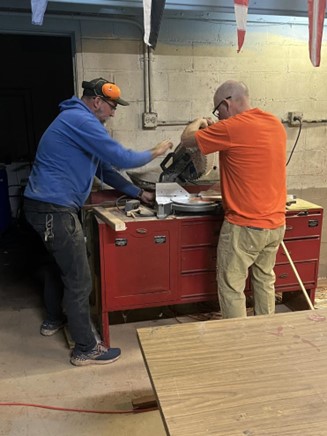
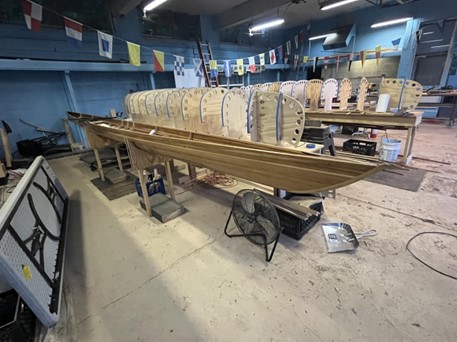
Interior of the LRWP’s Boat House, located at 101 Raritan Avenue in Highland Park
Boat building is one of several programs hosted by the Lower Raritan Watershed Partnership. Located at 101 Raritan Avenue in Highland Park, New Jersey, the once vacant autobody shop is now transformed into a lively home for woodworking projects that are primarily focused on canoe and paddle building intended for use. Here, two sessions a week take place, one on Wednesday from 6 – 8PM and another on Saturday from 9 – 11AM. The LRWP requires that participants attend a one hour safety training session held from 8-9AM on the final Saturday of the month. Anyone from the ages of 15 and up are able to sign up and participate in these free sessions to gain woodworking skills and have fun doing so. See our events page to register!
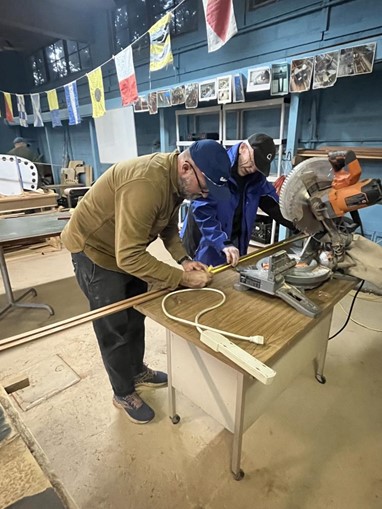
Derek (on right), the captain of the US Paralympics team and Brian (on left), an experienced rower can often be seen leading the sessions. Both have experience with woodworking and using the kinds of boats they create. This offers a unique experience for volunteers, where they learn not only how to build specific parts, but why these parts are essential to the structural integrity and general functions of the boat.
A volunteer from a Wednesday session working with Brian for measurements.
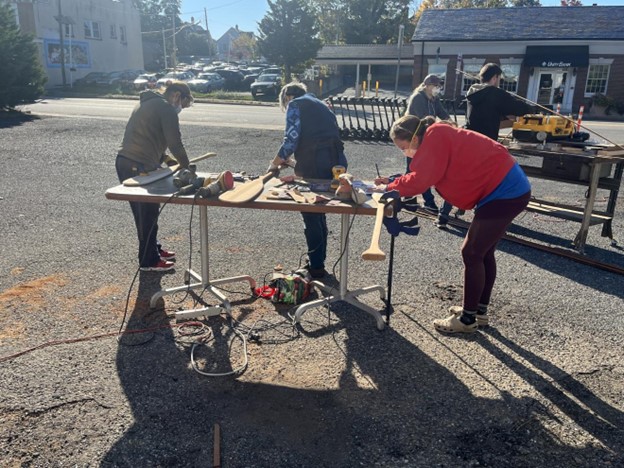
Sometimes, work can be enjoyed outdoors, weather permitting.
Woodworking does not stop at Wednesdays, as the Saturday morning sessions continue the previous work where it is lead by Colin and Amber. Both have found the opportunity to lead the boat builds online, where from knowing Derek, were able to showcase their passion and talents. Beyond just woodworking, Colin and Amber have remarked that the whole experience has given them “more appreciation for our local watershed”, as building and using the boats have offered chances to become closer to the waters.
Colin sanding some of the many pieces needed for the canoe.
Colin is a long-time resident of Highland Park who always wanted a place dedicated to woodworking growing up. Since finding that opportunity in the boat build sessions, he has taken initiatives in the project by cutting out templates of canoe pieces from his home with AutoCAD software and running many of the machines to create or finalize pieces.
A boat template cut out by Colin laid out, next to a nearly complete canoe.
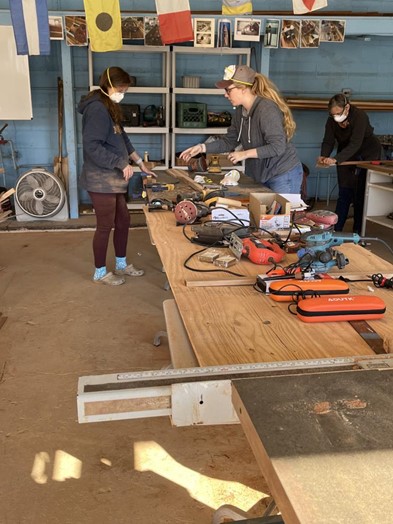
Amber (middle) overseeing and assisting volunteers from the Women’s Paddle build session.
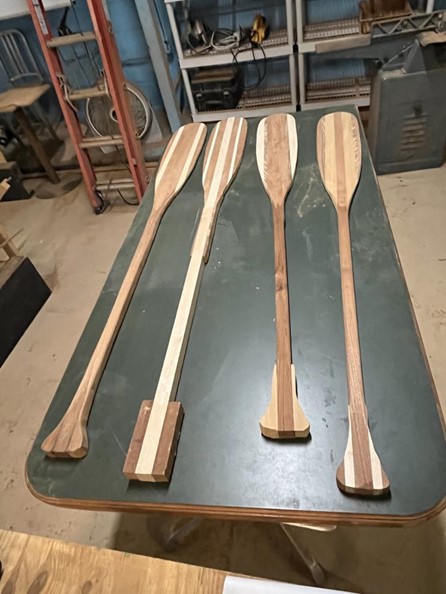
Amber is in charge of the Women’s Paddle build sessions, where she leads a team of women to create personal, individualized paddles from scratch. This involves cutting out the pieces, putting them together, and then sanding them off as a final touch.
Every paddle is unique and fits to the user’s preference.
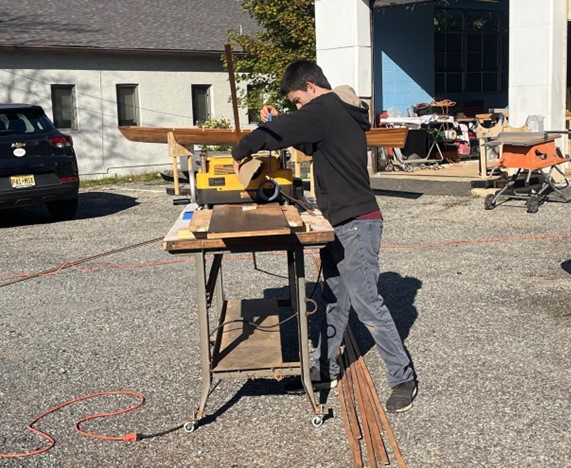
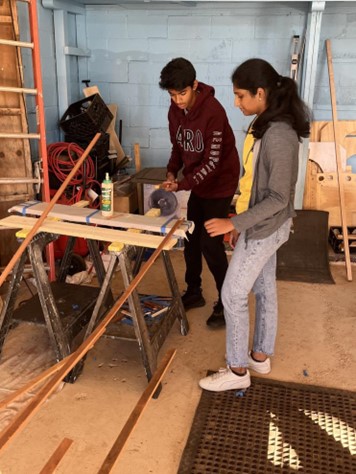
High school volunteers putting together scarf joints, a more stable connection between two pieces of wood in order to lengthen it.
The help of volunteers make the project possible and overall makes for a low stress, interesting learning experience for those that want to get into woodworking or possibly want to find a new hobby. Throughout the sessions as the project becomes increasingly more complete, volunteers get to learn new methods and participate in different activities, whether that be trying out a new tool or moving on from one task to another, never keeping it dull.
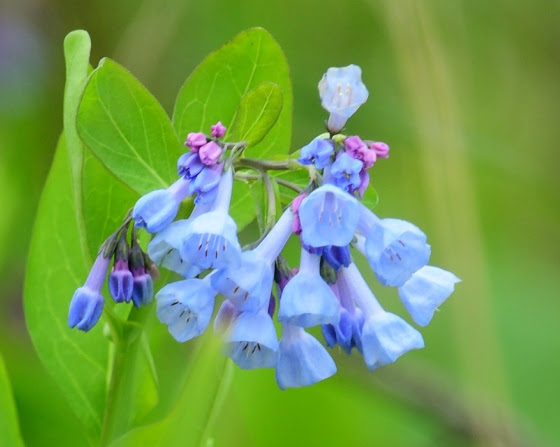
Virginia blue bells grow in profusion wherever they may be found, and appear as a fluffy blue blanket hovering above the ground. Delicate spring beauties dot the short grass along the flood plain and present a spectrum of white to pink flower petals lined with dark pink pinstripes. Each flower is so individual, it begs investigation and comparison.
The green veil of April is laid upon the earth to cover the landscape, washed clean and left bare by the cold wind and melting snow jettisoned during winter’s hasty retreat. The blanket of winter’s white cover cloth is now torn asunder into a patchwork of pale fragments scattered across the land. A mosaic of green tints emerge and expand as April distances itself from winter.
April’s arrival comes just ten days after winter’s meteorological conclusion to make the first full month of spring a mixed bag of weather. Snow squalls, frost, bright sun, cold rain and a sampling of temperatures from freezing to torrid, make April unpredictable; except for its unassailable promise to pave the final path to summer with an explosion of colorful blooms.
Spring’s arrival is heralded in by the last gasp of winter’s fury, whose blustery breath escaped March to shake April’s greenery and ghost it with flakes of vanishing snow.
April’s struggle with the remnants of winter weather is aided by the sunlight, which now dominates the darkness, to give confidence to a profusion of life waiting to emerge from the gravid earth. The path of the earth’s orbit and tilt, makes the sun appear to ride higher above the horizon to shrink shadows and warm the earth. The increasing daylength triggers a cascade of chemical change in all life on earth, to direct behavior in animals and rapid growth in plants.
As April progresses, the translucent, pale green veil, weaves itself into a thick verdant blanket of coarse yarn as grasses and leaves emerge and unfold to partner with the sun, converting light into nutrients and clouds of life sustaining oxygen.
As seen from the perspective of a celestial theater seat, a time lapsed image of spring appears alive as it moves north, leaving a thick green carpet in its wake. Rivers, appearing as long shimmering threads of blue and silver, decorate the green tapestry as if by artistic design. The bright thread appears and disappears, as generous stitches, roughly sewn into a green cloth, penetrate and emerge along a torn seam.
Descending into the greenery, the broken silver-blue thread becomes a gentle flowing river, the sun reflecting off the rippling surface. Beneath the shallow water along the bank, tightly furled spikes of yellow pond lily emerge from the mud with encouragement of the bright sunlight, in preparation for next month’s floral debut.
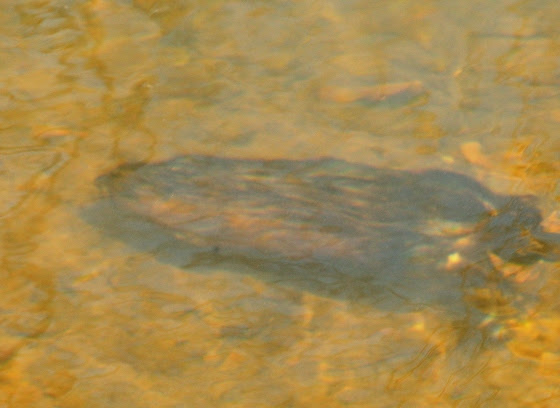
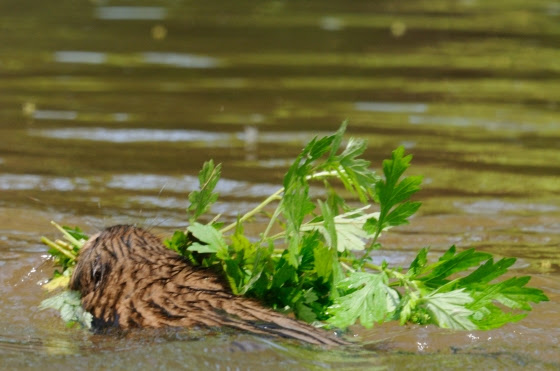
A cloud of muddy water among the expanse of the submerged spikes betrayed the presence of a muskrat. The rat’s trail led ashore leaving an obvious mud-stained path across the matted down fresh green grass. The path ended at a large patch of mugwort, an invasive plant impervious to control, and a bane to gardeners. Likely a female, the muskrat gathered greens for bedding to line her bank den and food to wean her kits.
Beyond the mugwort, in the shade of the river birch and swamp maple, grew a variety of native plants typically found in moist woods along more pristine waterways. Trout lilies and trillium were scattered about, familiar to early season fishermen and the few who gather spring greens like fiddlehead ferns and dandelions.
Trout lilies have distinctive mottled green spear shape leaf with a yellow flower on a single stalk.
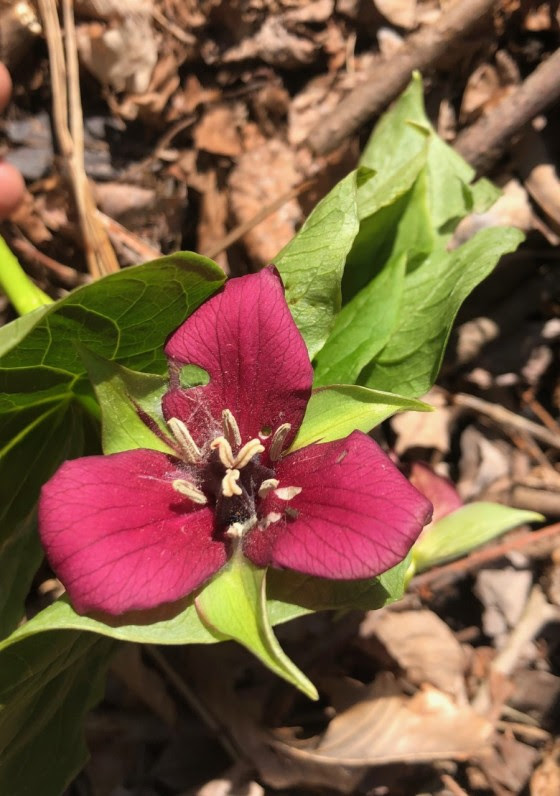
Trillium is an associate of trout lily and said to have four varieties recognized in New Jersey.
Like the yellow trout lily, trillium is a short plant just a few inches high and easily recognized by its three petaled flower. The most common color I have seen is a deep rich burgundy, and appears more as an errant jewel, carelessly lost by a passerby.
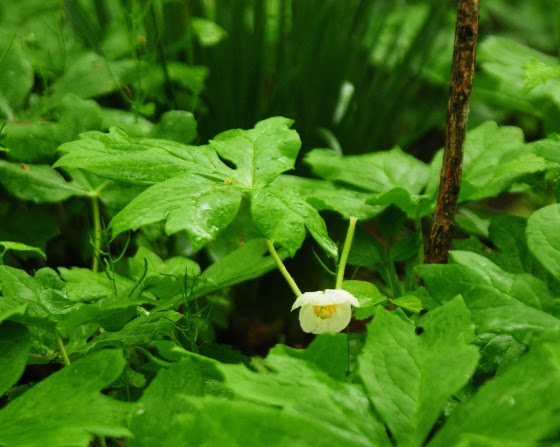
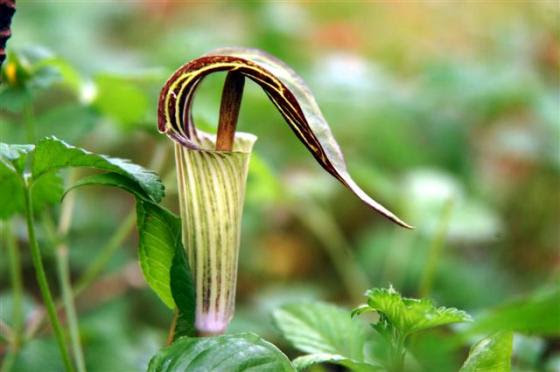
Mayapple grows in enmass as groundcover in moist woods where groups of jack-in-the- pulpit appear ready to preach a sermon.
The native wildflowers which appear briefly in early spring are collectively known as ‘spring ephemerals’. These delicate beauties sprout out of the cold ground in a resurrection inconsistent with expectation, to lend an air of magic to their presence.
The spring ephemerals hide among April’s green veil and whisper the arrival of spring and a promise of summer to anyone who seeks the solace of wild places and open space. They whisper just once, and then they are gone.
Author Joe Mish has been running wild in New Jersey since childhood when he found ways to escape his mother’s watchful eyes. He continues to trek the swamps, rivers and thickets seeking to share, with the residents and visitors, all of the state’s natural beauty hidden within full view. To read more of his writing and view more of his gorgeous photographs visit Winter Bear Rising, his wordpress blog. Joe’s series “Nature on the Raritan, Hidden in Plain View” runs monthly as part of the LRWP “Voices of the Watershed” series. Writing and photos used with permission from the author. Contact jjmish57@msn.com.