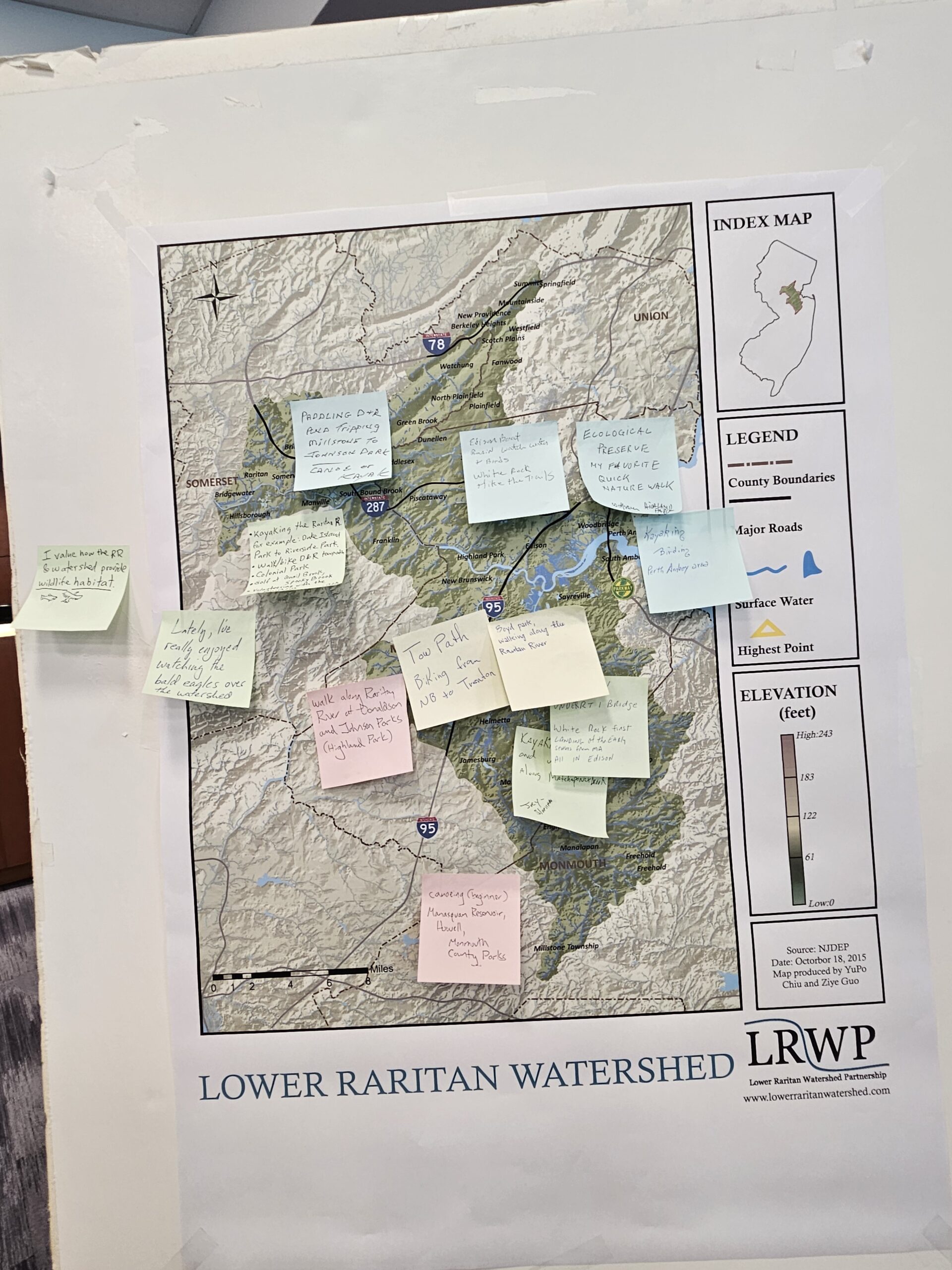
Yesterday, at a special listening session on recreational access to blue and green spaces within the Lower Raritan Watershed, one watershed resident shared their favorite way to access nature: “Lately, I’ve really enjoyed watching the bald eagles over the River.” Even 20 years ago, the idea that bald eagles could be a regular facet of our highly industrialized central New Jersey environment would have sounded like a fever dream, and now it is reality. During the June 11, 2024 listening session, hosted by the Lower Raritan Watershed Partnership (LRWP) and NY/NJ Harbor & Estuary Program (HEP), participants communicated a vision for the next 20 years: a robust network of blueways and greenways connecting local parkland and foot and bike paths within the Lower Raritan Watershed to larger regional and national networks of trails.
The input from this session, summarized below, will not only inform the LRWP’s understanding of recreational priorities but also help shape the HEP Action Agenda for recreation in our region for the next decade and beyond. The session was attended by 31 community members who contributed thoughts on recreational access and the larger state of the watershed. A recording of the session will be available on the LRWP youtube channel, and a bulleted summary of community member responses to a set of questions framed by HEP, is shared here:
Key takeaways can be summarized in response to two questions. The first, “If you could pick one change that’s necessary to have a greener, healthier, and more resilient community — what would that be?” and the second, “What are the challenges and obstacles that face local communities connection and access to nature?”
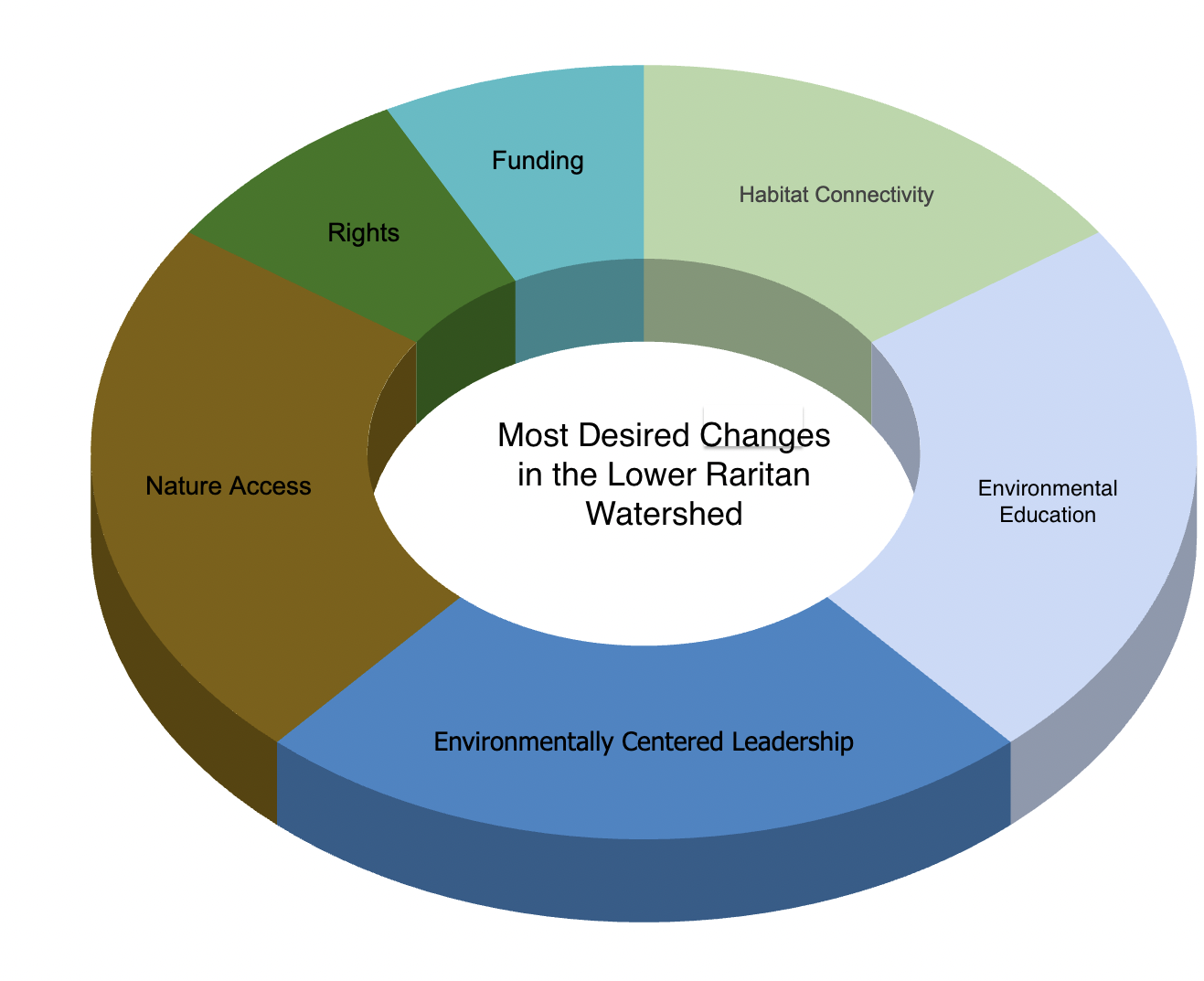
To the first question regarding required changes to realize a greener, healthier, more resilient community, participants communicated six core visions:
23% of respondents advocated for a shift towards environmentally centered leadership, policy, and planning, emphasizing the urgent need for eco-conscious governance.
23% of respondents voiced their desire for increased access to natural features, highlighting the intrinsic connection between human well-being and proximity to nature.
23% of respondents emphasized the critical role of environmental education, advocating for initiatives to raise awareness and empower communities to become stewards of their surroundings.
15% of participants underscored the importance of enhancing habitat connectivity, recognizing the significance of preserving ecological corridors for biodiversity and ecosystem resilience.
8% of respondents pinpointed increased funding as the key catalyst for change in the Lower Raritan Watershed, emphasizing the tangible impact of financial investment in environmental initiatives.
8% advocated for granting rights — akin to human rights — to the Raritan River, signaling a growing movement towards recognizing the intrinsic rights of natural entities.
To the second question regarding challenges and obstacles to realizing this vision, central concerns focused on infrastructure, transportation, and habitat fragmentation.
One participant highlighted how infrastructure like Route 18 acts as a formidable barrier, impeding access to many natural areas. Others pointed to lost opportunities for retrofits that could remedy past disconnections to natural spaces through, e.g. reengineering roadways or repairs of Landing Lane Bridge. As was noted in our session, the construction of Route 18 started as a slum clearing project. This reflects a historical pattern of social injustices where urban planning decisions disregarded not only the environmental impacts but also equity impacts on our communities, and highlights the need for a holistic approach to restoring community health. By acknowledging the historical context of such projects and their environmental implications, we can work towards more equitable and environmentally responsible solutions for our communities.
Limited mass transit connections to green/blue spaces was another concern voiced by participants, with suggestions made to not only prioritize transportation between live-work activities, but also to open and natural spaces. Addressing these challenges requires advocacy for infrastructure improvements, such as championing Boyd Park’s transformation into a state park, as suggested by community members at the session yesterday.
Additional questions included:
Do you wish you had more and/or different opportunities to experience the natural environment?
What kind of opportunities come to mind?
What are other concerns or stressors that your community is currently facing?
How has climate change impacted your community?
Are there places/sites in your community where these concerns are more prevalent?
We invite you to read through the full set of ideas generated during the community engagement session (see above), to watch the video of the session, and welcome your thoughts on how to improve recreational access to blue and green spaces within the Lower Raritan Watershed and beyond.
Although the information in this document has been funded wholly or in part by the United States Environmental Protection Agency under agreement to the Hudson River Foundation for the New York-New Jersey Harbor & Estuary Program, it has not undergone the Agency’s publications review process and therefore, may not necessarily reflect the views of the Agency, and no official endorsement should be inferred. The viewpoints expressed here do not necessarily represent the belief or opinions of the New York-New Jersey Harbor & Estuary Program, Hudson River Foundation, or United States Environmental Protection Agency. They assume no responsibility or liability for the contents or use of the information herein nor does mention of trade names, commercial products, or causes constitute endorsement or recommendation for use.
Photos and article by LRWP Board President Heather Fenyk
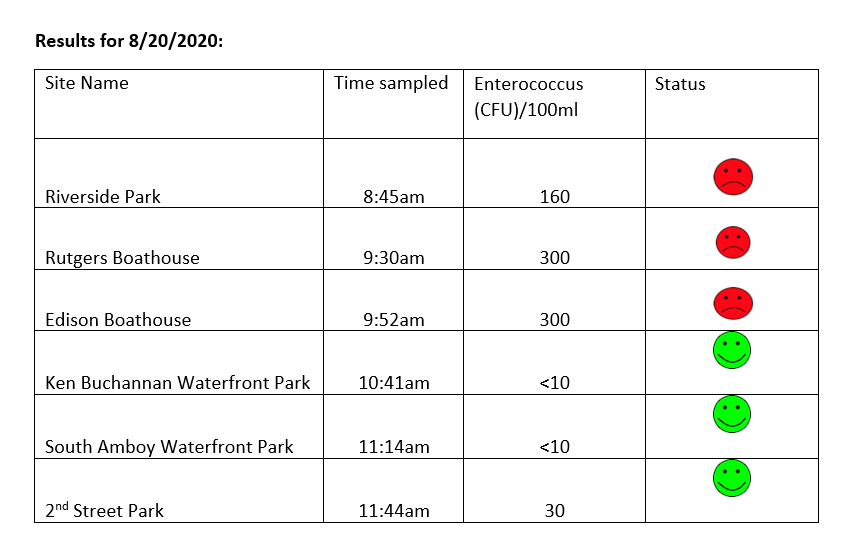
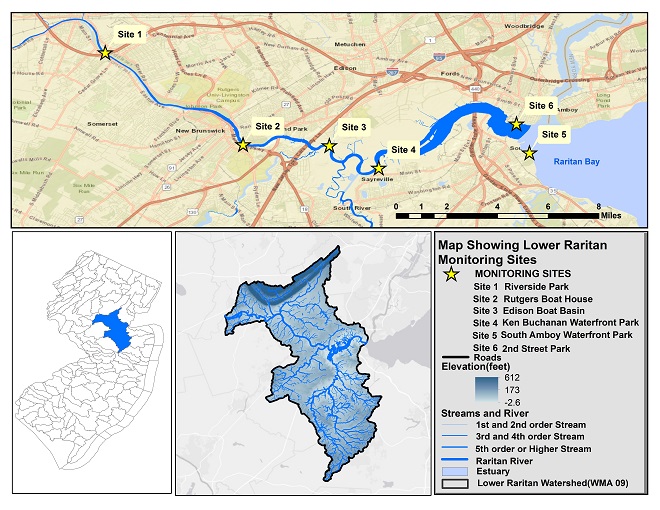
The LRWP and EARTH Center of Middlesex County monitors for Fecal Coliform and Enterococcus at six non-swimming public beach access sites along the Lower Raritan during the warmer summer months. Fecal Coliform and Enterococcus are indicators of disease-causing bacteria in our waterways.
The EPA recommends that a single Enterococcus sample be less than 110 Colony Forming Units (CFU)/100mL for primary contact. Enterococci levels are used as indicators of the possible presence of disease-causing bacteria in recreational waters. Such pathogens may pose health risks to people fishing and swimming in a water body. Sources of bacteria include Combined Sewer Overflows (CSOs), improperly functioning wastewater treatment plants, stormwater runoff, leaking septic systems, animal carcasses, and runoff from manure storage areas. Enterococci levels are often high after heavy or consistent rainfall.
Briefly, our Sayreville, South Amboy and Perth Amboy sites are looking good this week! Please note that these results for August 20, 2020 are preliminary and awaiting Quality Control.
Field Notes
Yesterday was an exquisite day for sampling the Raritan!
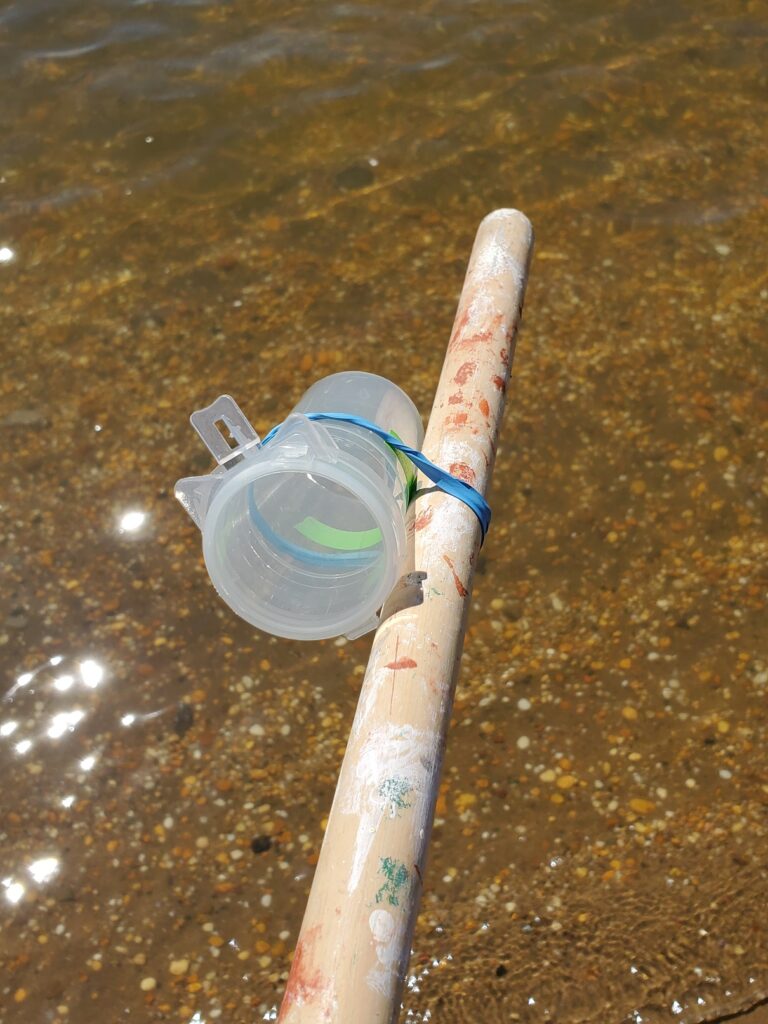
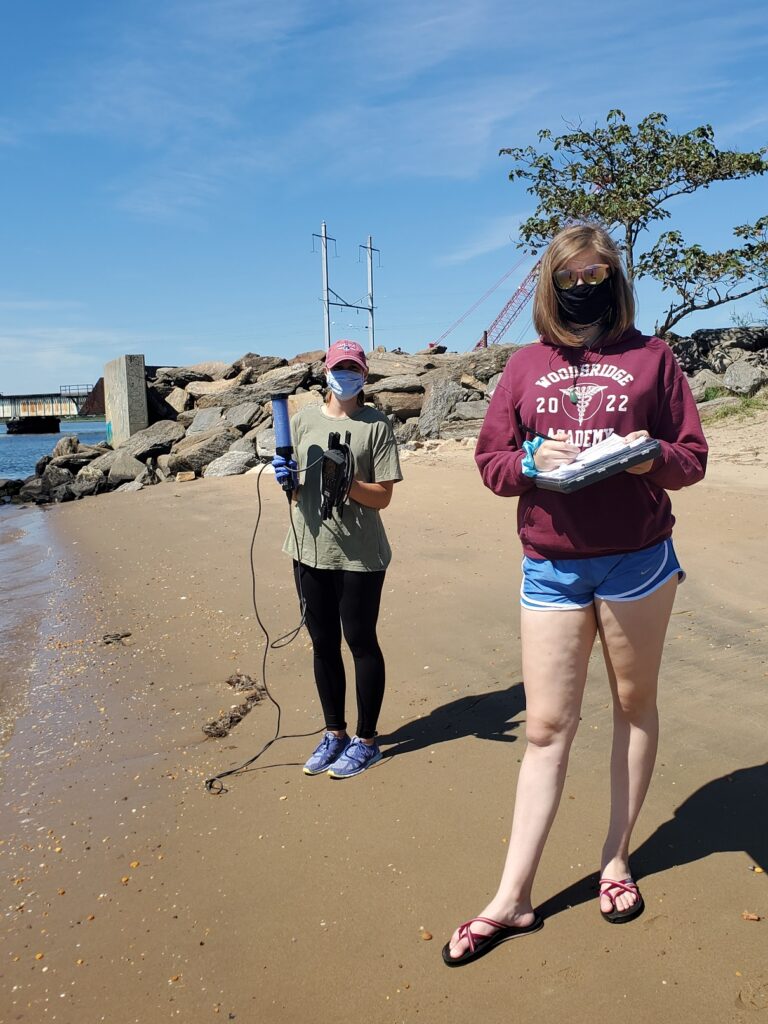
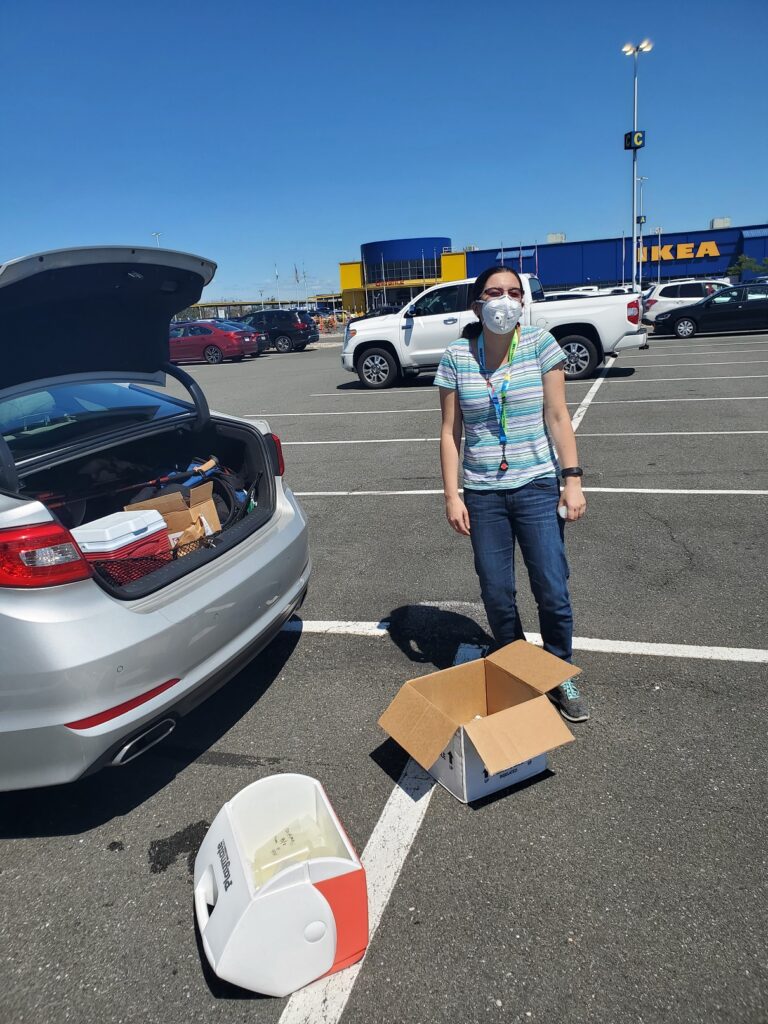
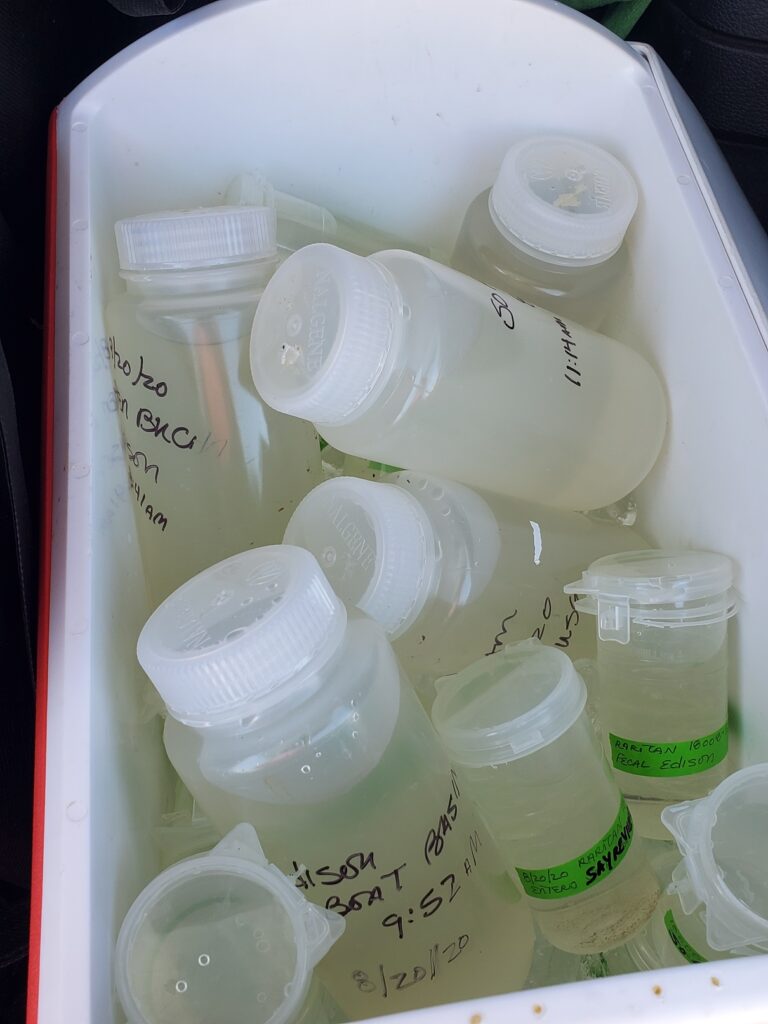
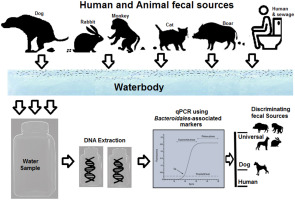
Clear and gorgeous waters, and the re-purposing of a broom handle into our snazzy new sampling stick.Thanks to Maya and NJ Watershed Ambassador Heather Miara for lending a hand in the field.Thanks also to IEC’s wonderful Jessica Bonamusa for meeting us in the Elizabeth IKEA parking lot for the sample handoff.This week we kick off our genetic source trackdown analysis – the larger sample bottle in the mix of pathogens sample bottles will go to a Rutgers lab for filtering and analysis. We’re looking forward to more definitively pinning our pathogens problems on human, beast or fowl.
Summer 2020 Lower Raritan Monitoring Sites
The New Jersey state Department of Environmental Protection and Middlesex County Health Departments typically monitor at sanctioned public swimming beach sites. They do not monitor the water quality for pathogens at public access non-swimming beach sites along the Raritan, despite regular use of these areas for primary contact (fishing and swimming) by members of our urban communities.
The LRWP works with in partnership with the Interstate Environmental Commission for lab analysis of our samples. We have a Quality Assurance Protocol Plan (QAPP) approved by the federal Environmental Protection Agency. We work to report our results as soon as lab analysis is completed.
Article by Maya Fenyk (age 14), photos by Joe Mish and Karen Byrne
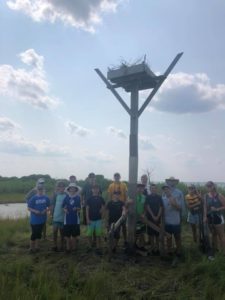
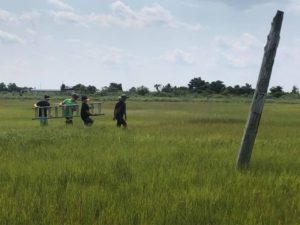
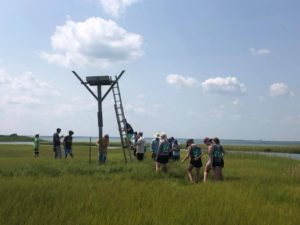
Sedge Island Field Experience youth after relocating an osprey nest, photo by Karen Byrne
In mid-August I had the opportunity to be part of the Sedge Island Field Experience (SIFE), a program run by the New Jersey Department of Fish and Wildlife. Through SIFE I learned about the ecology and history of the marshes in the Barnegat Bay Area, and to study the area’s wildlife including birds and bugs. At the end of SIFE, campers have an opportunity to present what they have learned throughout the week on topics of their choice. I chose to do a presentation on a threatened species that is found in both the Barnegat Bay area and in the Lower Raritan Watershed, osprey.
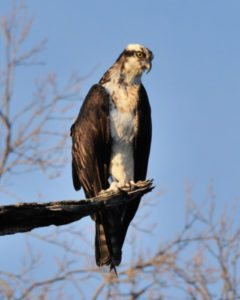
Osprey are beautiful and distinctive birds, with brown feathers covering their back and wings and white feathers covering their stomach. Their heads are also a brilliant white, with a dark eye mask (similar to a raccoons). The osprey are also very big birds, with their height being typically 21-24 inches and their wingspan being 4 feet 6 inches-6 feet. Their voice is also distinctive, loud, high pitched and musical, like a cheeep cheep cheep.
Osprey, photo by Joe Mish
Osprey are not only beautiful birds but they are extremely important to every area they inhabit because they are an indicator species. An indicator species is a species that indicates the level of pollutants in different areas just by where they choose to make their homes. Since indicator species are very pollution sensitive, they won’t choose to live in an area where there is a lot of pollution. In this way they indicate that the level of pollution in the areas they inhabit are fairly clean. Where ospreys choose not to make their homes also indicates the level of pollutants because if there is an area that historically has been the osprey’s home, and osprey are not found there, we know that something is telling the osprey to stay away. Once we know that something is wrong, environmental conservation agencies can then determine the cause and hopefully bring the osprey’s back once the problem is fixed.
Osprey are a migrating species and have a range which spreads across the entire continental United States, the majority of Central and South America and some of Canada. Ospreys make New Jersey their home during their breeding season, which extends from April- August. After breeding season they begin their long trek to Central and South America to countries such as Ecuador and Colombia where they spend their winter.
Unfortunately, ospreys are less common in New Jersey than they used to be prior to the development of their habitat and the inadvertent poisoning of them in the 50’s and 60’s due to the use of the pesticide Dichlorodiphenyltrichloroethane (DDT), used for mosquito control. Though osprey did not consume the pesticide directly, they were poisoned through the process of biomagnification. What this means is that when mosquitoes were treated by DDT, fish then consumed the treated mosquitoes, ingesting DDT themselves. Then when the osprey consumed the fish the concentrated DDT affected them as well. Every time an animal consumed another animal the amount each animal consumed was magnified exponentially. Another effect that DDT had on osprey was that it made their eggshells very brittle and thin so that when the mother osprey went to sit on her eggs, they would break, killing the unborn hatchling.
In 1974 there were only 50 active osprey nests in the state of New Jersey, and that was the point when the New Jersey Department of Fish and Game (now New Jersey Department of Fish and Wildlife), through a program led by Paul D. “Pete ”McClain stepped in. The program brought hatchlings and breeding pairs from Maryland to the Barnegat Bay area to increase the population in New Jersey. The osprey are now protected through State and Federal Laws. They have been taken off the endangered species list and moved to the threatened species list. Forty years ago there were only 50 breeding pairs in New Jersey, but there are now 700 breeding pairs, including many juveniles. Even though the osprey are out of immediate danger, they still need to be protected and their habitats still need to be conserved. Many threats still face the osprey and only 50% of juvenile osprey live to adulthood.
So, what are people doing today to protect the osprey? During my SIFE week I had an opportunity to work to protect the osprey.
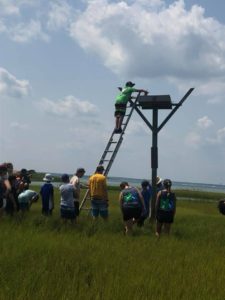
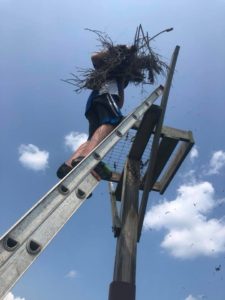
Due to the development of their habitat in the Barnegat Bay area, specifically creation of a canal that removed their roosting lands, the osprey now must live in man-made platforms. Through the SIFE program I had the opportunity to relocate an osprey nest from direct contact with an kayak/canoe trail to a place with more limited human contact. The New Jersey Department of Fish and Wildlife was concerned that the prolonged contact with humans through the osprey nest being on a trail would lead to the abandonment of that nest and thereby decreasing Barnegat Bay’s population of osprey. See the photos below for a visual story of how our group relocated an osprey nest.
The day after we moved the osprey roost, osprey had already moved in, seemingly happy with their relocated home. I was extremely lucky to have the opportunity to help the osprey in such a way, and I recognize that not every can do that, so I encourage everyone to find their own way to help ospreys like making sure that their environment is clean and even donating to organizations who are monitoring and taking care of the osprey. Everyone can help get the osprey off the threatened species list, what are you going to do to help?
Sedge Island Field Experience youth move an osprey nest, photos by Karen Byrne
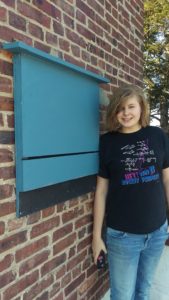
Me with my bat box installed on the roof of a building in downtown New Brunswick
The plight of the Indiana Bat has been on my radar since 2015, when I first researched this species as part of a blog series I wrote about endangered species in the Lower Raritan Watershed. At that time I became aware of several obstacles the bats face, including development of their natural habitats, overcrowding of colonies due to lack of habitat, increased exposure to predators (due to unsubstantial habitat cover) and White Nose Syndrome. This year, as I started my 8th grade service project, I knew I wanted to do something to help the bats. The thing was, I had no idea where to start.
Originally, building a bat box was not even on my mind. I thought I was either going to plant trees that the bats could roost in, or do an outreach campaign to raise awareness on the bat’s plight. It seemed however that it would be difficult to find the exact right place to plant trees, and it would take too long for them to grow. I also felt that general outreach would not make a specific measurable impact. As I continued my research I came across a Youth Service Action article that listed 10 different projects to do to help the environment. Building a bat box was on the list. I thought “Perfect! What’s better to help the bats than to build a safe habitat?”
I downloaded bat box building instructions from the National Wildlife Federation, raised money to fund the project, and reached out to different entities to gain permission to install my bat box on their property. I had three possible sites in mind, two on New Brunswick park land and one on private property – all sites known to have bat activity. The City of New Brunswick never returned my emails or phone calls, but the landlord of an apartment complex gave me permission to install the bat box on the roof of his building.
After securing permissions, I purchased supplies from Home Depot and constructed the bat box with help from my uncle. The building process of the bat box took just a few hours; I hand cut the wood, stained the wood with a non-toxic dark stain, assembled the bat box and painted the box. The whole process took less time than I thought, and I waited two weeks to install the box on April 17th. I decided to wait to install the bat box on April 17th because the 17th is National Bat Awareness Day.
I had an amazing time completing the project, and I am very glad I built the bat box, because it helps address a very serious local environmental issue. I hope my act of service inspires you to also perform service in your local community.
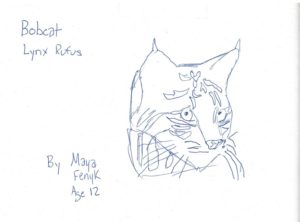
Hello! I am Lynx Rufus, but you can call me Blossom the Bobcat. I am New Jersey’s only native wildcat, and have been on New Jersey’s endangered species list since 1991. Sightings of me in the Lower Raritan Watershed and throughout the state are increasing, but are still rare.
You might think “Oh, bobcats must survive just fine. They are at the top of the food chain. They have no predators.” I am sorry to say, that’s just not true. Some of my predators are mountain lions, coyotes, foxes, owls, wolves and humans. I can’t say I blame them as I also prefer a carnivorous diet. My prey includes rabbits, rats, squirrels, ground-nesting birds, turkeys and even small or sick deer. But predator threats are not my biggest concern.
My species used to be abundant and flourishing in the coniferous and mixed forests of New Jersey until humans started deforesting our homes. Clearing land for retail, corporate and housing developments has a huge impact on my survival. And disruption of our habitat by pipelines has huge impacts on us and other endangered, threatened and special concern species. Other issues that affect me are hunting and being hit by cars. Getting hit by cars, development and pipeline installation are linked. Fragmentation of my habitat makes it hard for me to find shelter from the weather, cover for hunting and raising my babies, and forces me and my family to cross roads to find our dinner and safe spaces to hide. Please slow down through forested areas! When humans ruin my home, push me onto their roads, and drive too fast through the woods it really gets my angry purring going.
The New Jersey Department of Environmental Protection’s Endangered and Nongame Species Program’s Bobcat Recovery and The Nature Conservancy’s Bobcat Alley are both doing a great job restoring bobcats in New Jersey, but plans for pipelines and proposals to reduce protections under the state’s Freshwater Wetlands Protection Act and the federal Clean Water Act put our population recovery into question.
I must head to my den to check on my kittens, but I want to let you humans know how important it is to keep track of the numbers of my species. To report a bobcat or other endangered species sighting, please contact NJDEP. Thanks! And I say that with a final meow!
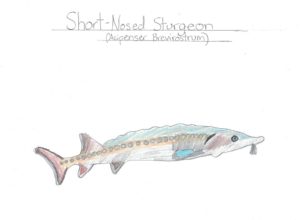
Hi! I’m Acipenser Brevirostrum, but you can call me Simon the Sturgeon. I am here to tell you about the many challenges I face as a two year old, juvenile short nosed sturgeon in the Raritan River. To start, I’d like to say how glad I am to be a sturgeon in 2017, even though my species has been federally endangered since 1973. Being a sturgeon living 120-150 years ago was even worse. Between the years 1870 and 1900, sturgeon were hunted for meat, but especially prized for their eggs for caviar.
We were nearly driven to extinction! Sturgeon are still feeling the effects 120 years later. Our population is only 12,000 in the waters New York and New Jersey, which truth be told is not a lot as female sturgeons lay 40,000 to 200,000 eggs per year. Caviar and hunting weren’t the only obstacle we have had to swim around to be able to survive. Another issue we face is river pollution. As bottom feeders we have a subterminal snout, we use our snout to vacuum our food from the substrate into our protractile mouth. This means that we pick up a lot of pollutants off of the substrate that isn’t food. We deserve to at least eat our meals of crustaceans, clams, mussels, snails, marine worms, flounder and plant matter, without having to guzzle down chemicals for dessert!
My species is considered a living fossil. We have been around for longer than 12,000 years and have retained a lot of primitive features that were common way back then, like our subterminal mouth and our barbels, a whisker like sensory organ. We have been in this area for longer than humans have, we have survived the caviar craze, and even industrial dumping that was common in Raritan for decades. That dumping residue along with the new stuff that has made its way to the Raritan (like expired medication, fertilizers and pesticides). These can turn into Endocrine System Disruptors (E.S.D) which damage our bodies and can either kill us or make us very sick. A lot of the pollutants also contain cadmium, arsenic are heavy metals that are extremely toxic.
Some ways you can help us live our natural life span of 35-70 years is by making sure to protect us from non-point source pollution. (That’s the pollution that is in stormwater runoff like pesticides, fertilizers, road salts and motor oil). You can make sure that streams have adequate buffers of plants and streams, and cleaning up our habitat will help. Also please let the NJDEP know if you see us. We are brown- gray fish with a yellow underbelly with a short rounded snout, heterocercal tail and a subterminal mouth, that is 18-22 inches long. Now I have to be going I see some yummy algae floating by. Though it isn’t fast food, but it sure moves pretty quick. Simon the sturgeon splashes out!
By Maya Fenyk (age 12), LRWP youth consultant and “Endangered & Threatened Species” series contributor
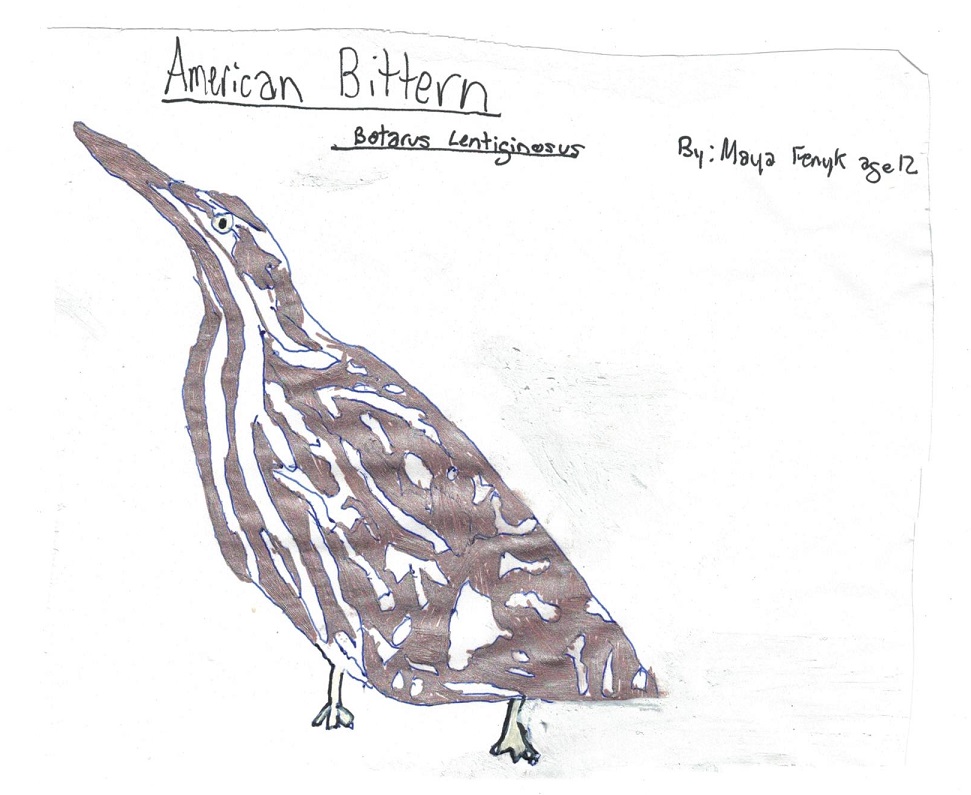
American Bittern, by Maya Fenyk (age 12)
Hi! I am Botaurus Lentiginosis but you can call me Anthony, the American Bittern. I live in thick marshy areas that are dense with vegetation, such as wetlands or freshwater marshes. Unfortunately humans have destroyed and drained most of my natural habitat. This act alone almost diminished my population to 0 throughout the first half of the 20th century. Sadly my species faces even more threats to our survival, such as hunting. Even now in the 21st century where we have a lot of environmentalists looking out for us, there still aren’t enough protective measures in place to take us off the Endangered Species list. We are a shy bird, hard to research, and the amount of American Bitterns in New Jersey is still unknown. Scientists aren’t even sure if our population is increasing or decreasing!
Not much can be done by the ordinary citizen to help bring back our population. I would ask, though, that you don’t hunt my species, and if you see me report the sighting to an environmental agency pronto. I also have a favor to ask of the big development companies. Stop developing on wetlands and other habitats of animals! The act of developing on our homes alone severely destroys our species and others alike. But it’s not just for my sake I am saying this, wetlands are a natural barrier between water and other habitats (of animals and humans). And wetlands decrease flooding risk, which could potentially save lives.
If you saw my species regularly, which I doubt since our feathers camouflage us into the reeds of our marshy habitat, you would say we are kind of cute. We are a stocky medium-sized wading bird that is striped white and brown on our heads, neck and upper part of our body for the rest we are light brown. But watch out, even though we are shy and prefer the flight response instead of fight if we are corned we will use our yellow spear-like bill! At each stage of our life cycle we are pretty cute too. We hatch at about 24 days and stay in the nest for 2 weeks but even after we fledge we remain dependent on our mom for food and shelter for another two weeks.
Humans, don’t worry. Even though I have a spear-like bill I won’t eat you. But still, don’t approach me. My species eats small mammals, amphibians, reptiles, crustaceans, mollusks, fish, and insects. And even though I am the Lower Raritan Watershed’s resident American Bittern, my species can be found from Canada to Mexico! Thank you for reading about me today – and please make a pledge that you won’t damage my habitat further, right? Now excuse me I hear a great horned owl – I must hide! Kok-Kok-Kok. (that’s the sound of my call).
by Maya Fenyk (age 11), LRWP youth consultant and “Endangered & Threatened Species” series contributor
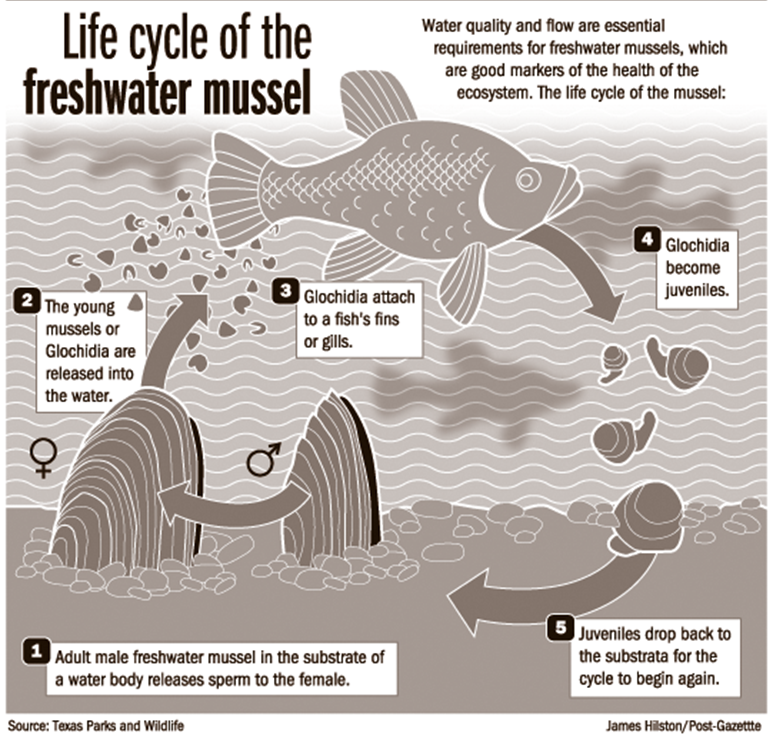
Hello! I’m Maya, a green floater mussel (less commonly known as Lasmigona subviridis). I live in the Lower Raritan Watershed of New Jersey, but my relatives can be found as far south as the Cape Fear River Basin in North Carolina, and as far north as the Lawrence River Basin in New York. I am two years old, no longer a baby glochida relying on a host fish for food and safety. Now that I’m a juvenile I bury under the sediment at the bottom of the Raritan River for protection. My favorite foods are plankton and little bits of plant matter that drift through my filter.
Green Floater Mussel Life Cycle (Image: Texas Parks & Wildlife)
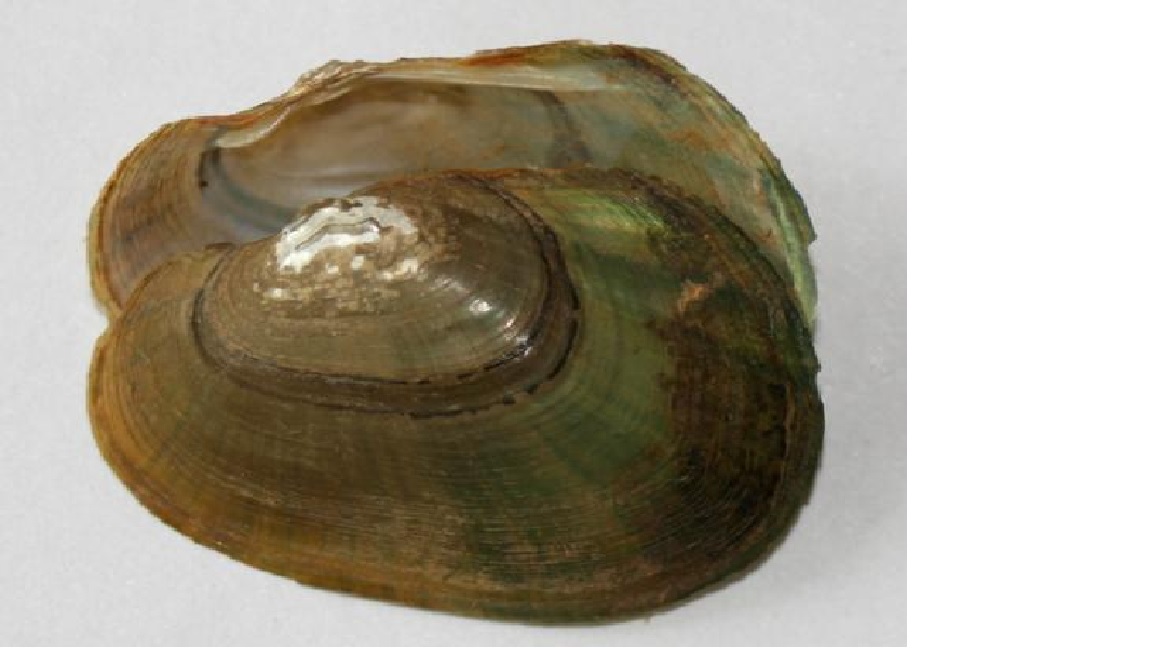
I bet you are wondering what I look like. Well, I have a trapezoid bivalve and my outer shell is yellow and brown with many green streaks. My nacre (the inside, or lining of my shell) is white or blue and iridescent. I am also very small, just a little more than an inch now, but when I’m a grown up I’ll be almost 5 inches! It will take me another four years to get that big, and I can’t wait! Then I will be able to float around the Raritan River looking for food. Some of my relatives have lived until they were 100. If I’m lucky to live that long, I’ll be able to explore a lot of the River in my lifetime!
Green Floater Mussel (Image: New Jersey Conservation Foundation)
Unfortunately, there are a lot of reasons why I might not live to be 3 years old let alone 100. I might be eaten by predators like raccoons, muskrats, bears, otters, heron, waterfowl, turtles or sturgeon. Or my species might go extinct for human-caused reasons. You careless humans are using my home as a trash can, dumping waste right into my river! You have also built a lot of dams, which had led to the removal of some of the host fish our baby glochida rely on to survive until we are juveniles.
Another huge issue is the introduction of foreign species like the Asian clam to our neighborhood. These non-native species compete with us for the same limited food supply and sometimes we don’t get enough to eat. Another problem I’m facing now as a juvenile is the erosion of the sediment on the bottom of the river. This sediment is supposed to be a cozy blanket of protection for me and friends, keeping us hidden from predators as we grow into adults. But erosion makes the silt move, threatening to reveal my hiding place. This erosion happens from things like building and farming, and the use of road salt on the roads in the winter. My corner of the Raritan River also has a history of people dumping not just sewage but toxic industrial waste. Yuck!
Unfortunately, a lot of the river habitat in the United States has been used as a trash can for centuries. Although the 1972 Clean Water Act has made a huge difference in reducing point source pollution, the erosion of sediment in my habitat contimues primarily because of non-point source (NPS) pollution. EVERYONE can do things to help stop NPS, and I would REALLY appreciate your help keeping me safe.
Some of the things you can do to help me survive include:
-Keep debris (litter, pet waste, leaves) out of street gutters and storm drains
-NEVER dispose of used oil, antifreeze, paints or other household chemicals in storm drains or down the sink
-Eat less meat! Animal manure, and the impacts of agriculture (water, fertilizer and pesticide use) associated with animal feed, really does a number on aquatic ecosystems
-Landscape with native plants and plants that have low requirements for water, fertilizers and pesticide
-Leave lawn clippings on your lawn
-Stabilize erosion-prone areas
-Use less water when showering, washing dishes or clothes, or brushing your teeth
-Drive less! Automobiles release a lot of pollution, which increases acid rain that ends up in my River
-Clean up after your pets!
Nice talking to you, but I have to hide quick! I just spotted a hungry sturgeon heading my way!
If you want to know more about me and how to protect my habitat check out this video by Maya and Heather with the Lower Raritan Watershed Partnership:
Click here to read more from the “Voices in the Watershed blog” series.