
Journal Entry: Endurance Laryea
This summer, we have asked some of our pathogen monitoring volunteers and interns to share their story of encountering the Raritan River during out sampling sessions. Our first contributor is Rutgers student Endurance Laryea.
May 28th, 2026.
Today was a lovely, clear, and sunny day. It was about 65°C when we started calibrating the measuring probe used to collect data. Calibration started around 7:30 AM and was done by 8:00 AM.
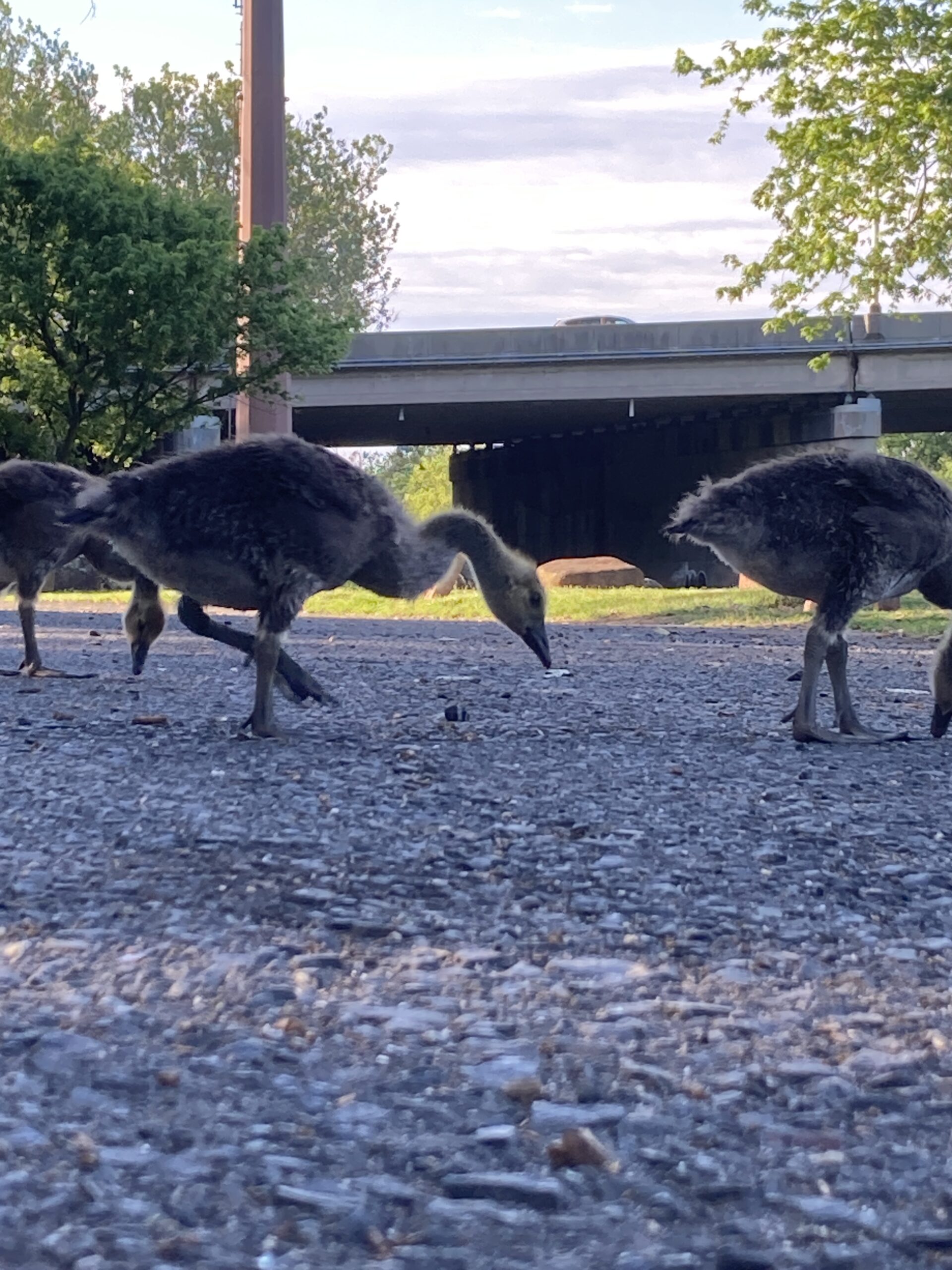
By 8:00 AM, all participating volunteers had arrived, and we began sampling the water at our first site. Riverside Park was calm and beautiful. Some parent geese guided their goslings across the playground and the parking lot close to us, and we were surprised that they didn’t hiss at us.
We also noticed a disturbance in the middle of the river — Art told us it was two carp rushing through the water together.
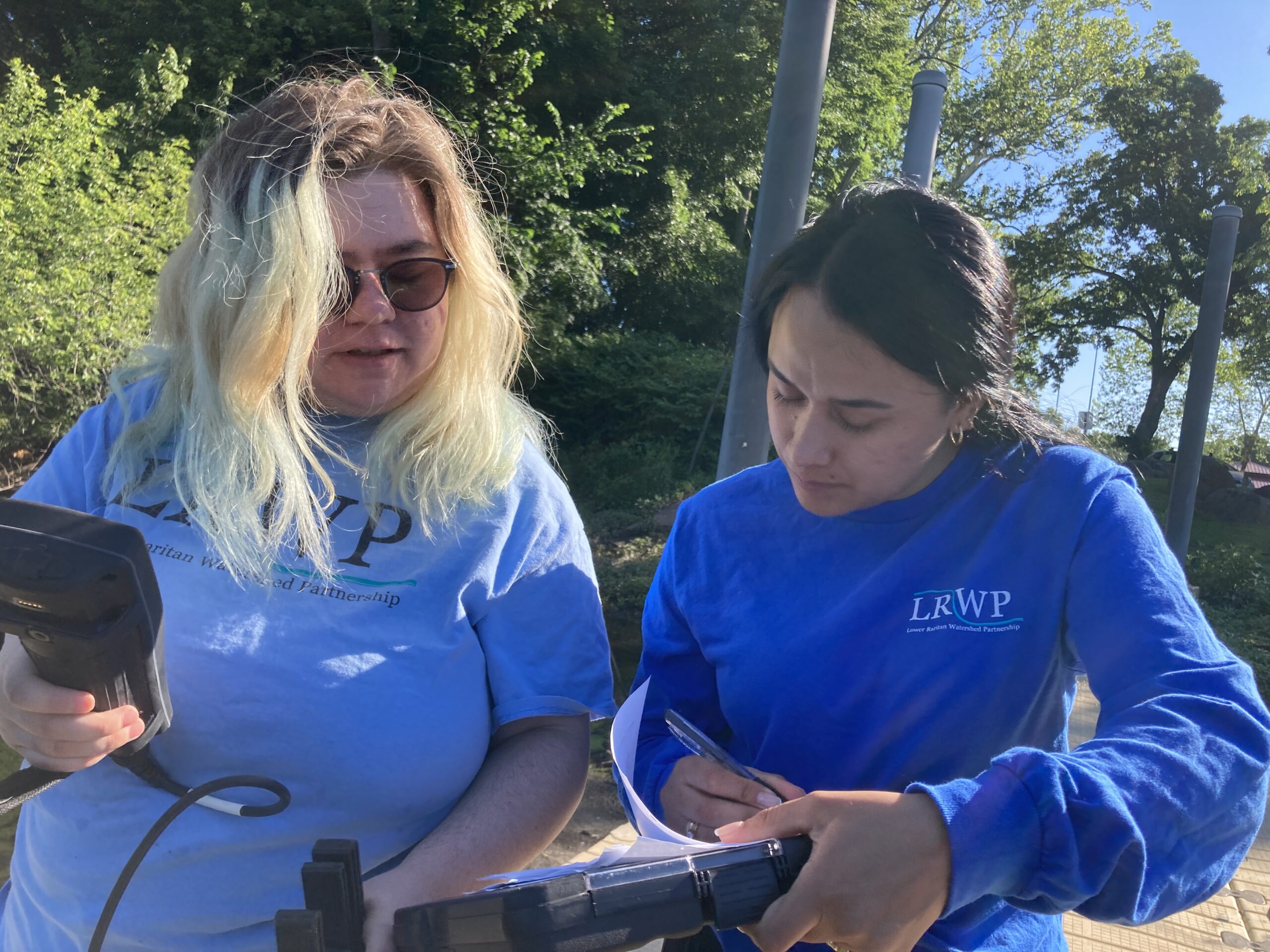
This site does not have a dock that extends very far into the current, so whoever is taking the sample must put on waders and a pair of gloves to get into the water. The person with the measuring probe in the water reads out the values of temperature, pH, salinity, oxygen saturation, etc., while another records the values. As I stepped into the river to collect a sample and take measurements, my colleagues noticed a carp swim around my leg, and it moved too fast for anyone to get a picture. It was a nice start to our day.

The next site was the canal at South Bound Brook. The first thing you notice when you get there is the loud noise of the water rushing through small outlets and falling steeply into a lower canal–it sounds exactly like a natural waterfall. The speed of the water is also faster compared to the previous site; hence, it is very dangerous to get into the water! We collected the sample by dipping a sampling rod into the canal along with the measuring probe.
The third site was at the Rutgers Boat House in New Brunswick. There Dr. John thought he spotted two bald eagles on the other side of the river across from the dock. One of the volunteers used his binoculars to verify and lo and behold, two bald eagles! Unfortunately, they were so far away that we could not take clear pictures of them.

At Edison Boat Launch, groups of men were gathered under a pavilion at the bank conversing, a couple of them in their cars, and two men with their line and hook in the river as they sat at the dock to wait for their catch. We had not observed any human interactions with the river at the previous sites, so this was a lovely sight for me. I was happy to see people relax and enjoy the river, and I was reminded of the reason this pathogen monitoring program is so important. Our goal to monitor the conditions of the lower Raritan is to preserve it for the organisms whose habitat is the river and ensure that it is safe enough for individuals such as these men to enjoy.
Our next site at Sayreville also a couple of men and kayaks at the dock. My view of the water was beautiful and wide, and I wondered how freeing it would feel to be on the water. At this site, the three-hour mark for pH calibration on our probe had been met so, we recalibrated it and went on to take our samples and measurements. At the parking lot, a huge osprey nest has been built on an electricity pole, and I learnt that it had been there for a long while. Ospreys are fish-only eating birds, known for their notorious habit of building nests on poles.
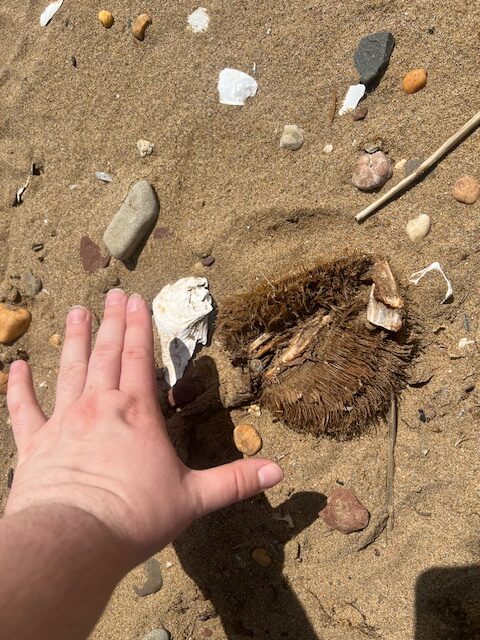
The next site, Raritan Bay Waterfront Park, South Amboy made me feel as though I was at the seashore. But I must emphasize that there are many rocks at the bank. It is the site closest to the sea, and our salinity measurement for this site is testament to that fact. It also has the highest tides of all the sites. Once again, one of the volunteers got to put on the wader and get into the water for the sample and measurements. At the bank of the river we discovered a mysterious looking animal part; Art later told us that Jenna from Save Coastal Wildlife believed it was the gills of a striped bass. She explained that fishermen may have discarded the heads and guts on the beach.
We made our final stop at 2nd Street Park, Perth Amboy. This side of the river also has beachy vibes to it because of how wide it is and its salinity, but the tides are lower than they are at the South Amboy site. The same sampling method as the previous site was used here. I was told by one of the volunteers that they had encountered schoolchildren from a school nearby exploring this site with their teachers in the past. The team got to share information about their work, and the children were genuinely happy to learn about it.
By the time we finished our work at about 11:48 am, the sun was fully out, and it was about 78°F. We dried our waders and recalibrated the measuring probe. It was an exciting day out, and it was heartwarming to be able to communicate so easily with volunteers I barely knew prior to today.
