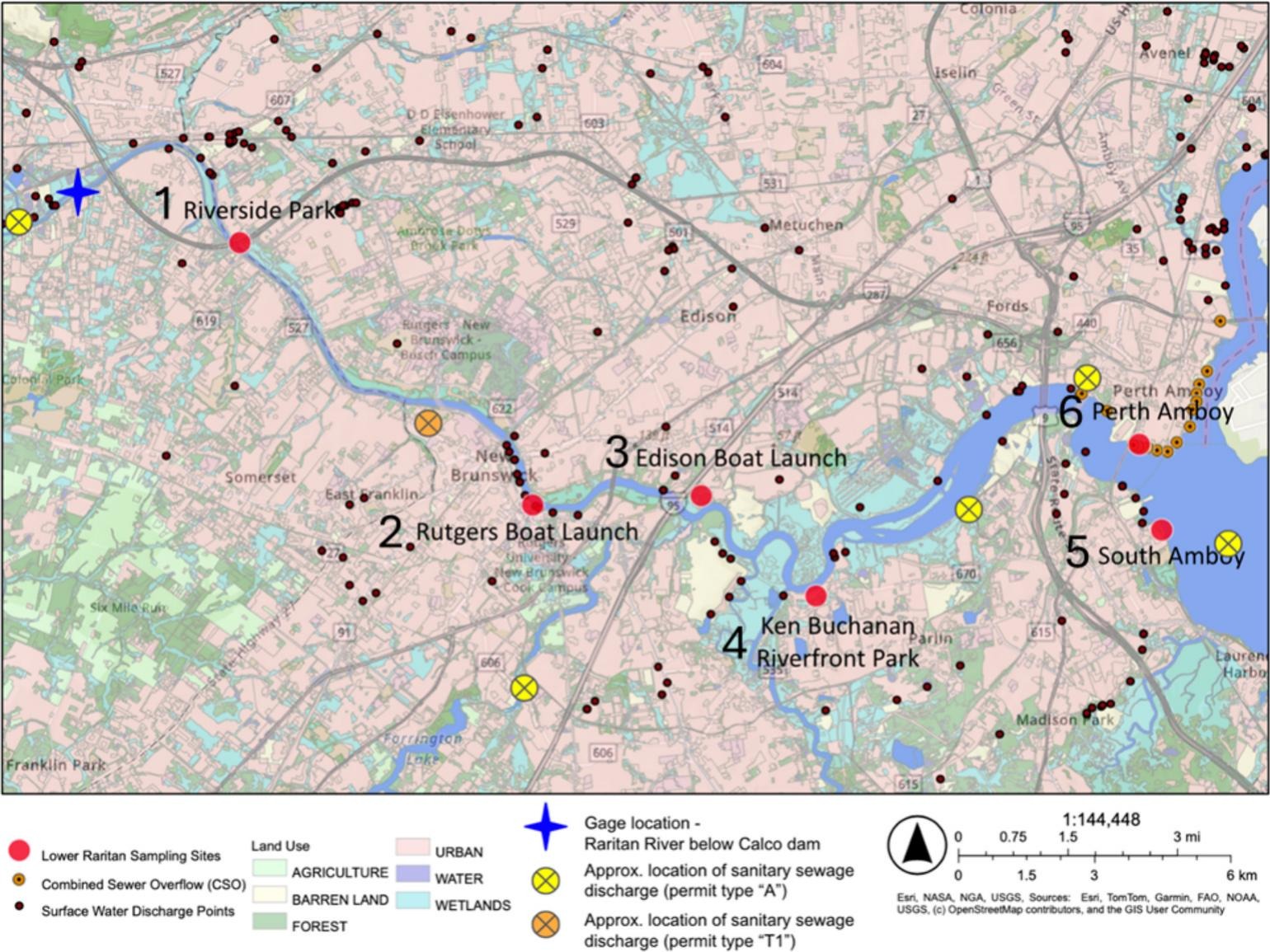
With huge thanks to our partners including Rutgers Cooperative Extension of Middlesex County, the Fahrenfeld Lab at Rutgers – The State University of New Jersey, and NJ Sea Grant, the LRWP is pleased to share that findings based on our Summer Raritan River civic science pathogens monitoring and data gathering efforts were published by Elsevier in Science of the Total Environment:
Ehasz, G., Almosd, L., Ahamed, P., Bakacs, M., Fenyk, H., Fahrenfeld, N.L. 2026. Comparison of propidium monoazide and total-DNA based qPCR and long-read sequencing for microbial source tracking in an estuarine river. Science of the Total Environment. 1013, 181271. 10.1016/j.scitotenv.2025.181271
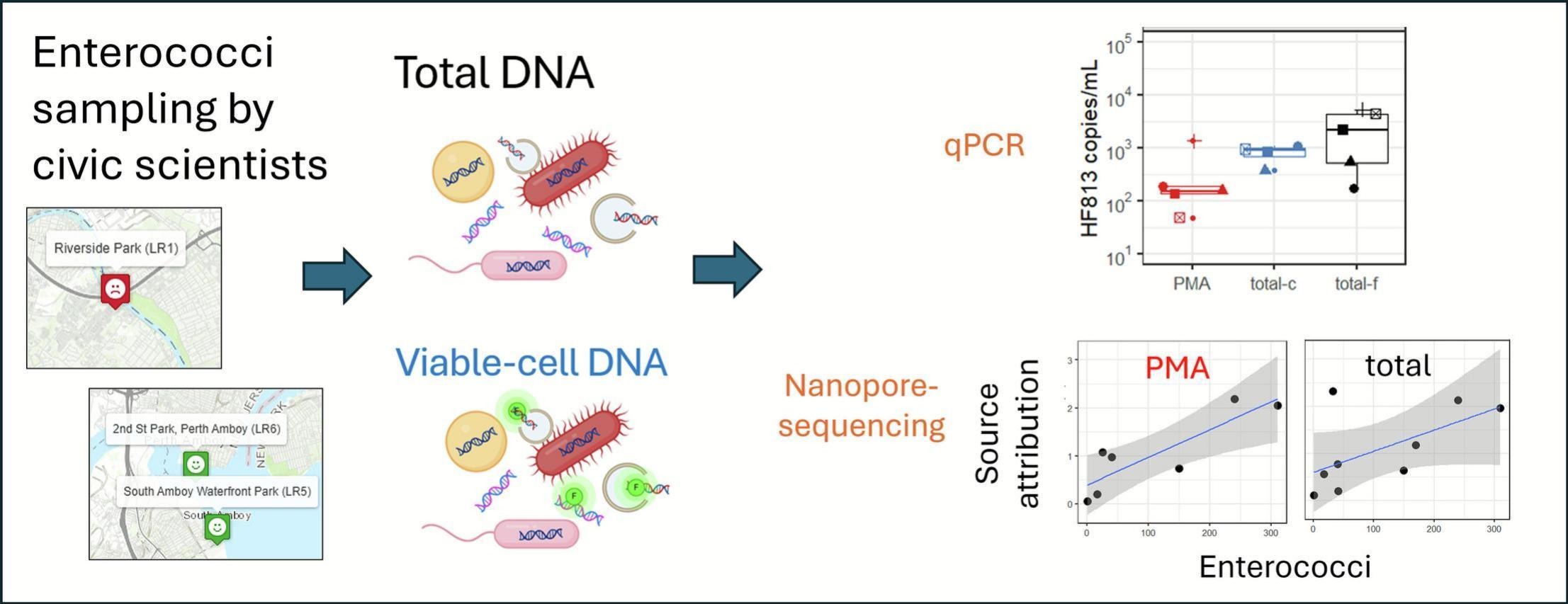
Recap: Fecal pollution is a common cause of water pollution and improved microbial source tracking techniques are needed. A NJ Sea Grant funded team from Rutgers, Middlesex County Extension, and the Lower Raritan Watershed Partnership conducted microbial monitoring on the Lower Raritan River. Total-DNA and viable-cell DNA techniques were compared.
Results: Using viable-cell DNA rather than total DNA resulted in better correlations between fecal pollution and source measurements. The techniques demonstrated in the Lower Raritan can be applied in any watershed with fecal pollution issues and may improve results.
With huge thanks to partners including Rutgers Cooperative Extension of Middlesex County, the Fahrenfeld Lab at Rutgers – The State University of New Jersey, and NJ Sea Grant, the LRWP is pleased to share that findings based on our Summer Raritan River civic science pathogens monitoring and data gathering efforts were published by Elsevier in Science of the Total Environment:
Ehasz, G., Almosd, L., Ahamed, P., Bakacs, M., Fenyk, H., Fahrenfeld, N.L. 2026. Comparison of propidium monoazide and total-DNA based qPCR and long-read sequencing for microbial source tracking in an estuarine river. Science of the Total Environment. 1013, 181271. 10.1016/j.scitotenv.2025.181271
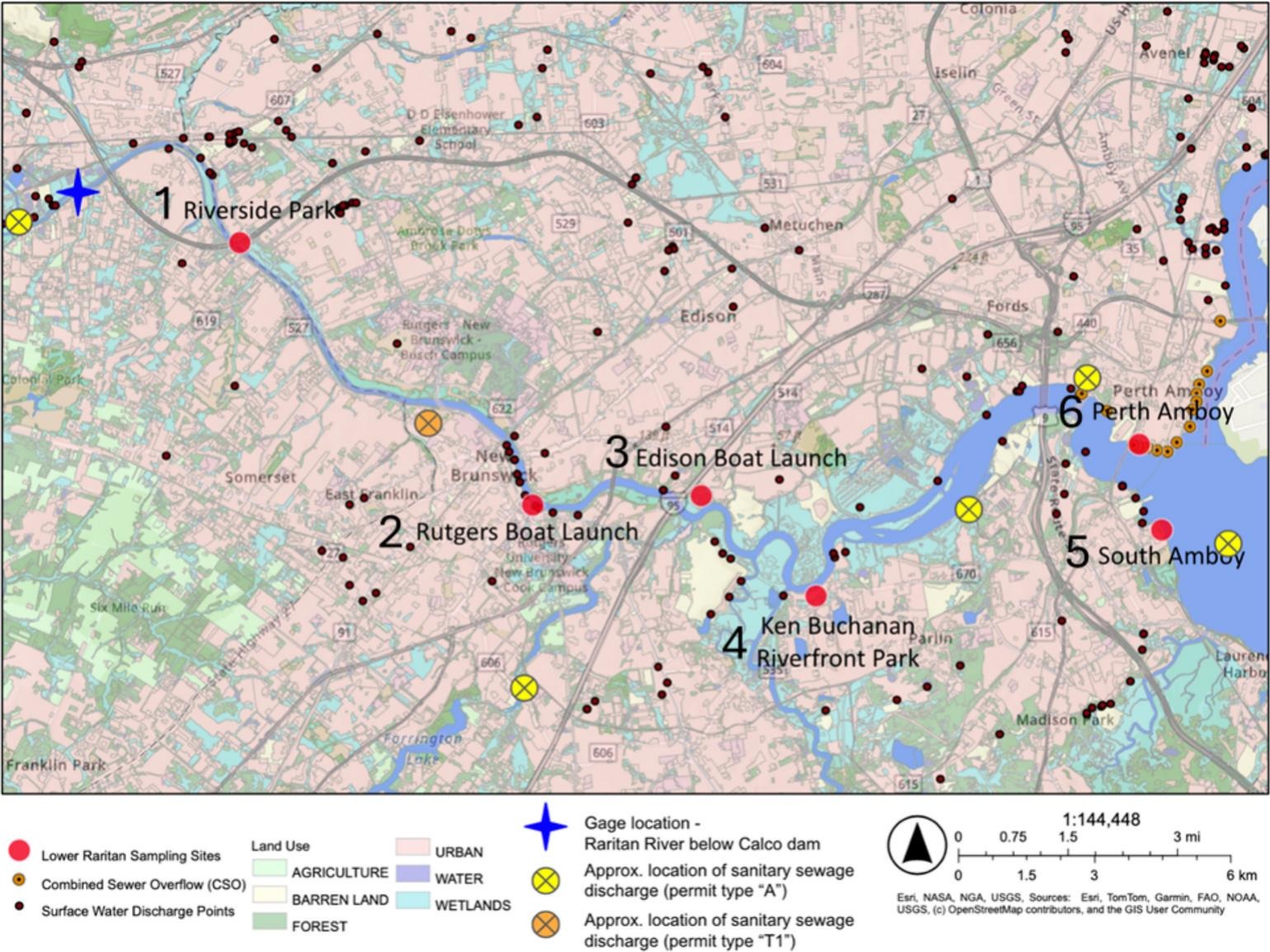
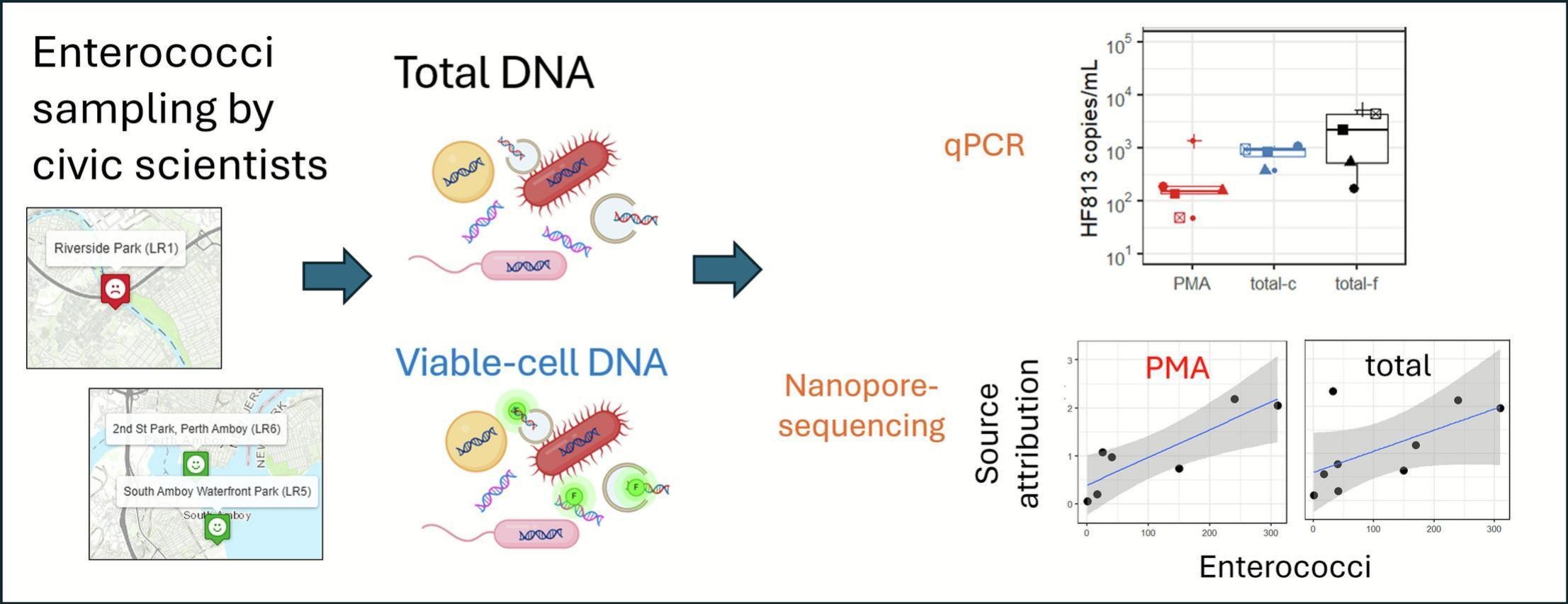
Recap: Fecal pollution from humans and birds was identified using DNA-based techniques in the Lower Raritan. Fecal pollution is a common cause of beach and shellfish harvest closures and microbial source tracking can help identify the source of this pollution. A NJ Sea Grant funded team from Rutgers, Middlesex County Extension, and the Lower Raritan Watershed Partnership conducted microbial monitoring on the Lower Raritan River. Multiple techniques for fecal source tracking were tested and compared.
Results: Microbial pollution in the Lower Raritan was linked to both human and bird sources using both qPCR and microbiome-based techniques that focus on living cells rather than total DNA. Results were shared with local utilities and governmental agencies who can find solutions for these pollution sources. The techniques demonstrated in the Lower Raritan can be applied in any watershed with fecal pollution issues.
The LRWP invites you to join us for a great series of FREE workshops and trainings in advance of our Summer 2026 pathogens monitoring kick-off on May 21. Pre-registration required for all events:
Monday May 18, 5-8pm @ the Middlesex County EARTH Center in North Brunswick: Pathogens Monitoring Training with EPA and the Interstate Environmental Commission.
Flyer Photo Credits: Alison M. Jones, image taken on flight compliments of LightHawk and No Water No Life.
Heather Fenyk, image from Summer 2020 pathogens monitoring.