Tag: SEWA

July 5th Litter Trap Count with Sewa

The LRWP and SEWA volunteers went out to the litter trap in the Green Brook on Saturday, July 5th, 2025, to conduct a litter tally. The water was low, with moderate trash flows, despite a dangerous storm that passed through on July 3rd. Huge thanks to our SEWA International Central Jersey youth partners! Thanks to their efforts, we’ll have much better data on how the litter trap keeps our watershed clean. Learn more about the litter trap initiative here. And learn more about the LRWP’s litter tally project with SEWA here. Below, you’ll find Sewa’s Aasmi Bora describing the litter we picked up, and the relationship between increased stormwater flows and passive litter collection.


Blog post by Yashashvi Pabbisetty

Since we, Sewa International Central Jersey chapter, had our initial cleanup of the Litter Trap in the Greenbook stream, our goal has been to assess and hypothesize possible changes for improvement with the trap to stop the waste from reaching the Raritan River. During our previous cleanup,  we noticed a significant amount of debris collecting outside the litter trap, specifically in the trees, raising concern over the placement of the Litter Trap and the flow of the stream.

On July 3rd, a heavy storm suddenly came through the area, knocked down hundreds of trees, and temporarily increased the waterflow. This natural event brought new data and insights to be interpreted for our project.

Data for inside the litter trap:

  • 2 markers
  • 52 water bottles 
  • 1 cigarette butt
  • many pieces of styrofoam 
  • 1 nerf gun bullet
  • 23 small alcohol bottles
  • 7 aluminum cans
  • 1 hair mask
  • 1 cigar casing
  • 1 wooden piece 
  • 1 foam ball
  • 1 baseball
  • 1 tennis ball
  • 1 stress ball
  • 2 fishing balls
  • 2 basketballs
  • 1 soccer ball
  • 2 pen
  • 1 piece of broken pipe
  • 1 balloon
  • 1 floss
  • 1 straw
  • 1 colored pencil
  • 4 pieces of rubber
  • 1 eye dropper
A photo of the trash collected outside the litter trap.

Data for outside the litter trap:

  • 45 plastic bags/pieces
  • 11 aluminum bags/wrappers
  • 7 aluminum cans
  • 18 glass bottles/pieces
  • 8 flattened plastic bottles
  • 2 styrofoam pieces
  • 1 shopping bag
  • 3 fabric pieces
  • 2 plastic cups
  • 1 rubber item
  • 1 air freshener
  • 1 sign

Since Sewa International Central Jersey chapter’s last cleanup, what has changed? Our main hypothesis is that the storm was the biggest difference maker in the data. The storm has likely caused increased water flow, which could have dislodged debris that was caught in the trees from before. The storm could have also pushed trash on the surface into the stream, causing the litter trap to catch more trash, but also moving the trash from the land behind the trap.

Looking ahead: This second set of data suggests that weather can affect the trash collected from both inside and outside the litter trap. It seems that the increased water flow pushed more debris into the litter trap, but the storm could have also pushed trash from the land into the stream behind the trap. Moving forward, we plan to continue collecting trash and recording the data to understand the effect of different external forces on the litter trap. During this week, we were able to understand how the storm impacted the data. Similarly, we hope to see how different implications, both natural and unnatural, impact the data we collect. By understanding these patterns we can find different ways to maximize the efficiency of the litter trap.

LRWP Boat Building Inspires Connection to the Raritan River

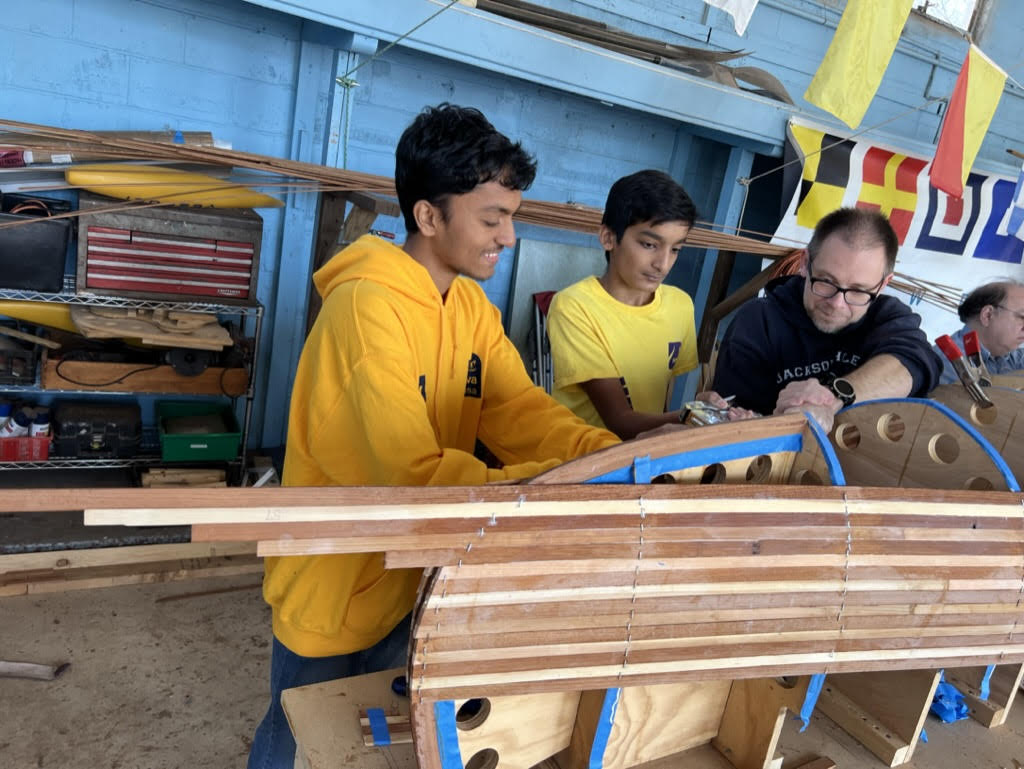
Article and photos by Theo McDermott-Hughes. The LRWP is grateful to the PSEG Foundation for generous funding support through the PSEG Neighborhood Partners Grant Program for our “Youth Empowerment Through Boat Building”.

Aadharsh, 16, has always feared the water, making him a perhaps unlikely volunteer for the Lower Raritan Watershed Partnership boat build. This LRWP program aims to increase engagement with and understanding of the Raritan River. Moving water is something Aadharsh had avoided for years, yet this was his second year participating in building a canoe as a member of the Sewa International Central Jersey youth program, which he participates in as a junior at JP Stevens high school.

Aadharsh was drawn to the boat building project and the LRWP because of his love for the environment and dream of being an engineer. After building these boats, starting from the paper designs and research all the way through the construction process of fixing the panels in place and weaving the cane seats, Aadharsh now leads his engineering class at school as they use the same processes and skills he’s already learned in the boat house.
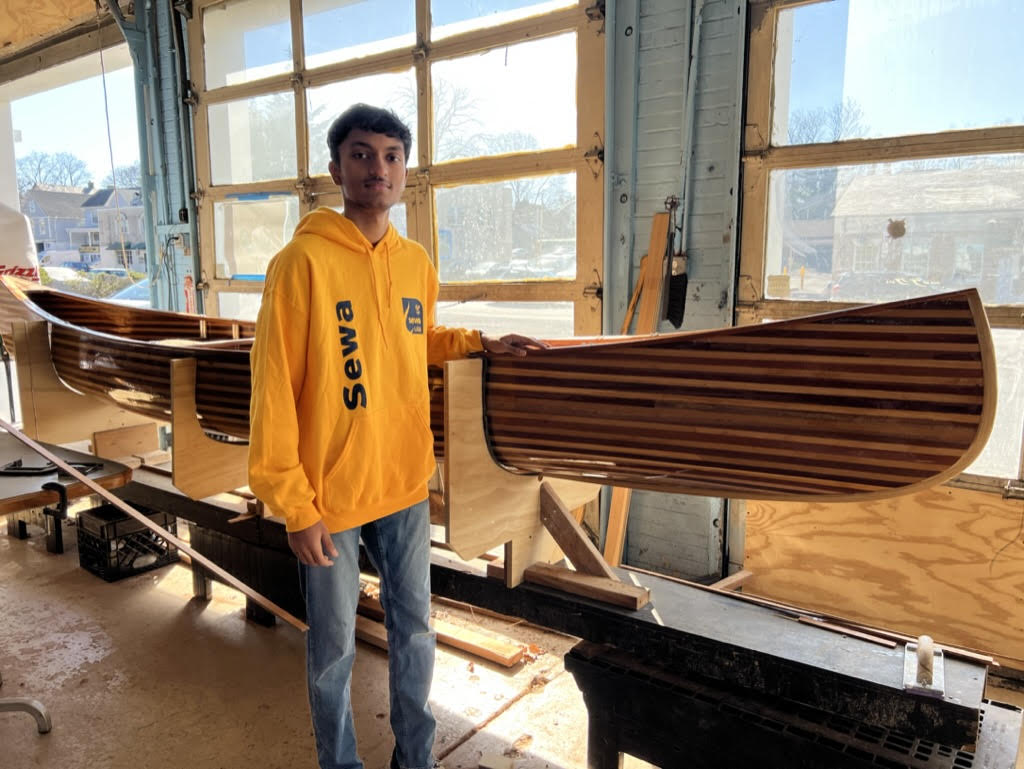
Even more than practical skills and insight into the engineering process, he’s gained deep sense of fulfillment, one he struggled to express as he laid his hands on the lacquered hull of last year’s canoe. “Watching the boat come to life” under his hands gives him the energy to come back each week. He gazed at the panels striping the side of the boat with a sense of awe, bordering on reverence. “You see that?,” he said. “We did that.”

As Aadharsh’s father, Sakkaravarthy, watched his son work with other volunteers to attach the paneling, he expressed his great pride. He always tries to sign up to chaperone the teen volunteers when Aadharsh comes to the build. Not only does he get to watch his son explore his passion, when they return home and Aadharsh inevitably spends dinner enthusiastically talking about what he did at the boat build, Amid can smile along with understanding and pride.
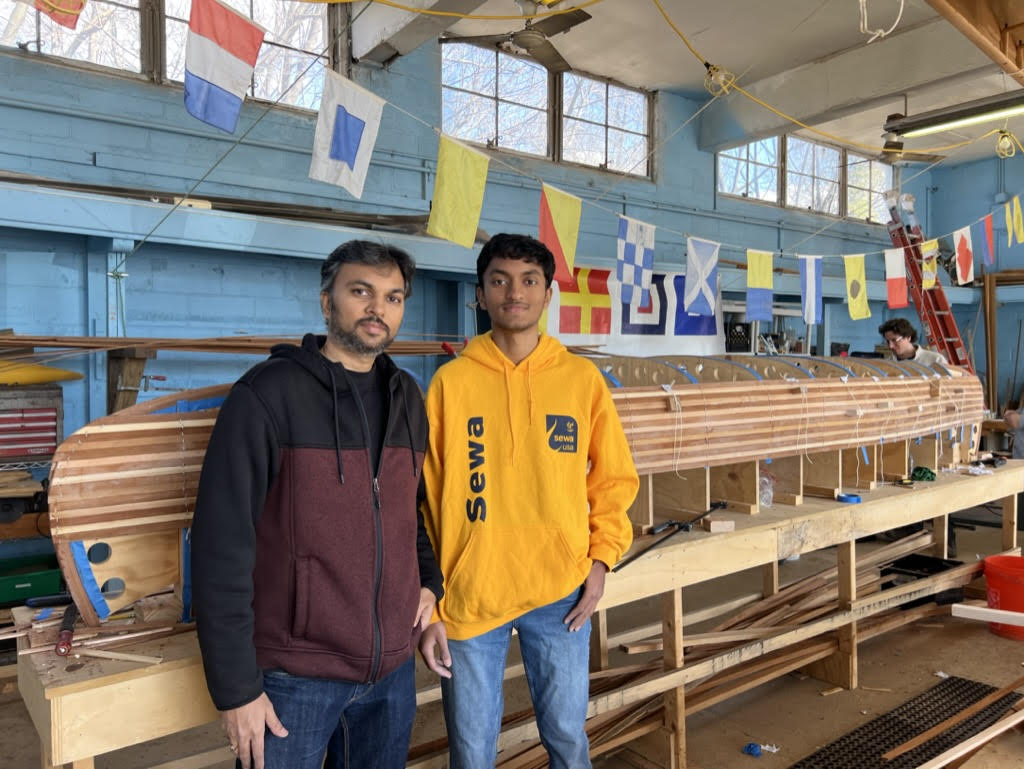
Now, both father and son look forward to the boat launch, when the new canoe will hit the water for the first time this summer along with past years’ boats. Aadharsh can’t wait to paddle down the river that was once such a source of fear.

Join LRWP volunteers like Aadharsh and Sakkaravarthy at our boat-building session on Wednesdays from 6-8 and Saturdays 9-11. Pre-registration required. See you soon!